








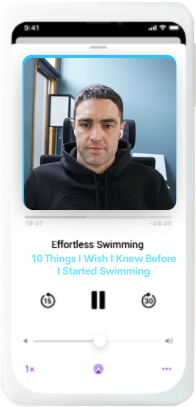
In today’s episode, I’m sharing 10 things I wish I knew when I first started swimming. Whether you’re just beginning or have been in the water for a while, these lessons can help you take your swimming to the next level.
Let’s face it—most beginners train too hard, focus on the wrong details, and waste a lot of time and energy. That not only slows progress but can lead to frustrating plateaus or even injuries like shoulder pain.
These 10 key insights will help you avoid those common mistakes. We’ll break down what truly matters when it comes to gear, technique, training, and mindset—so you can swim smarter, stay injury-free, and start seeing real improvement in the pool.
In this episode
- 2:00 — Essential gear only
- 3:24 — Basics first
- 4:56 — Training
- 6:40 — Open-water challenges
- 8:09 — Interval training works
- 11:56 — More Than The Pool
- 12:56 — Drills Equals Fast Swimming
- 13:57 — Staying Consistent
- 15:02 — Persistence pays off
- 16:13 — The Real Reward
Links from this episode
- Get your NanoClear swimming goggles here and get 15% off your first purchase with code PODCAST15.
- https://effortlessswimming.com/camps/
- Change your technique and swim a smoother, easier freestyle with the Effortless Swimming membership
Transcript
Read the full transcript
Stop training like a runner. You're a swimmer now when people run they often go for long runs and it's just all at the same pace and there's no breaks in between and For running that can be a really good way to approach it a lot of the time But in swing if you look at any of the best swimmers in the world They are all breaking their sessions into sets warm-up Cool down main set preset and more importantly, they're breaking it down into intervals of hundreds and two hundreds and fifties with rest in between and the thing about doing that is it feels like it's actually Not going to help you because you're taking rest in between But even five or ten seconds in between the intervals gives you this short amount of rest Where if you take ten seconds on the wall your heart rate comes down a little bit and your muscles get that little bit of Recovery so by the time you push off for that next interval you are refreshed and then you can get your technique back on track Welcome to the effortless swimming podcast to show that helps swimmers and triathletes love the water become a better swimmer and live a Better life. Here's your host Brenton Ford In this video, I'm going to share with you ten things that I wish someone had told me when I first started swimming Or if you've been swimming for a while These tips will also help you get to the next stage with your swimming goals because let's be honest most beginners train too hard focus on the wrong things and waste a lot of time that stops them from getting to under two minutes per hundred and
they end up wasting a lot of effort and Sometimes it leads to shoulder injuries and other things when they focus on the wrong things But these ten lessons will give you clarity on the gear technique training mindset and what actually leads to progress These are the things that make the biggest difference for me and the swimmers that I coach and when you apply them You'll feel more confident. You'll swim smoother and faster with less effort and swimming might just become one of the best parts of your life Let's start in not all swim gear is worth it. Here's what actually helps There's a lot of stuff that you are told to get when you start swimming but in reality you could get away with just having a pair of swimwear and Goggles that is really all that you need to get started But there are some things that can help you Progress faster the things that I recommend my swimmers get number one is a good pair of fins a pair of fins that are comfortable Flexible and give you a good amount of propulsion without changing your stroke something like the damn sea fins Very very good for the majority of swimmers out there There are other brands that have stiff and rigid fins that actually can make your swimming worse So it's best to avoid those when it comes to snorkels Most snorkels are all pretty much the same as long as you find a comfortable front snorkel Then that can be a good tool for the majority of swimmers out there It helps take away the need to turn your head to breathe and that can be a good thing when looking to develop Your catch and your pull and your kick and rotation. So that's also another piece of equipment that I'd recommend
Another thing if you are doing triathlons or open water swimming You may want to build your strength using a pool buoy and paddles So getting a pair of those can be worthwhile for some types of swimmers But in reality some swimming some swimwear some goggles will take you a long way in your journey Technique overwhelm is a real thing and if you've watched any of our videos or you've scrolled on Instagram or on YouTube You've probably been inundated with technique advice But the thing with too much advice is if there's too much there You're probably not going to do any of it. If you look at learn to swim lessons for children quite often They'll start with breathing and bubbles and then they progress from there as an adult There's a good chance you should probably follow the same sort of progression now You might be able to go through some of those Aspects of the stroke a little bit quicker than young kids might be able to however We still need to learn good foundations and fundamentals So don't try and work on your catch if you're still struggling to swim more than 50 meters You probably need to go back to the basics of breathing blowing bubbles Floating getting your body horizontal in the water. Some of these fundamentals are where we need to start and Sometimes our ego and our pride gets in the way. Well, I thought I don't need to do that I'm an adult kids kids can do it But I don't need to but quite often the stuff that we're teaching adults in our clinics It stems from a lot of learn to swim stuff and getting those basics, right?
So if you can get your ego out of the way and be willing to go through something that might seem really basic There's a good chance that long term to three years down the track You're going to progress a lot quicker and a lot more Sustainably where you can reach higher levels in your swimming if you get good at those fundamentals By trying too hard and got slower When I look back at my swimming career as a teenager one thing that I realized is that I went too hard Too often in the easy stuff. So I was in that gray zone where my slow stuff was too fast My fast stuff was too slow. So I was in that training gray zone where I wasn't really training in the right zones Now as a result of that I feel like I probably didn't progress as far as I could have If I had been willing to do my aerobic sets at an aerobic heart rate and my faster stuff actually to have the speed and Have that recovery in there where I could hit Faster faster speeds and and higher levels there So one of the mistakes a lot of people make is they don't look at those different zones They train in that middle section and I think the reason I did that was because I thought the harder I train the harder I work The more I'll progress Which is true to a certain extent. However Sometimes if we get stuck in that zone, then we're not hitting the right heart rates and other things So I feel like that probably stunted my progress a bit as a teenager now for you as an adult
maybe you're doing everything at one speed and You're not changing the pace that you're doing or perhaps you're stuck in that gray zone as well So it's good to make sure that we follow a good training plan follow something with some structure and we're Committing to it and sticking to it something like the LES squad workouts that we've got in their membership They break it down into different speeds What efforts what speed you should be going to so you actually see real progression and you don't get stuck at that one zone Open water swimming isn't just a pool without walls You know from what out there are so many variable conditions that it can really feel like a different sport in a way And so if you're coming from Swimming in the pool with a background in it and you're very comfortable in the pool You might have a bit of a shock when it comes to open water swimming where you feel like everything you've lands in the pool Doesn't apply in the open water now It does Except that it just takes a bit of getting used to the variable conditions where the water wasn't flat It's not smooth and you're probably having to Almost go against some of those things you learned in the pool in terms of your breathing You might need to turn a little bit higher You might need to begin your catch a little bit sooner your stroke rate might need to come up There's certain things that you do need to change in the open water Compared to in the pool, but it is something that you can get good at even if you come from that pool background it just takes time and it takes practice and There's not really any shortcuts to it apart from putting in the work
so if you can get really good at siding at maybe coming over the water a little bit higher a little bit quicker over the top and Knowing how much you need to increase your stroke rate in the open water and being willing to be Imperfect and a little bit choppy with it Then you can become very good at open water But it does sometimes feel like it's a different sport when you first come to it Though it does take time to get used to At effortless swimming our mission is simple make swimming more enjoyable Whether you're training for your next race swimming for fitness or just love being in the water We're here to help you swim faster smoother and with more confidence And one thing that can make or break a swim is your goggles if you've ever struggled with foggy lenses mid-session You know how frustrating it can be that's why we created the effortless swimming hydro clear Anti-fog goggles for long-lasting crystal clear vision I've been using them myself and the difference is night and day and I'm not the only one Deborah swam 36 kilometers down the Derwent River and the entire time her vision stayed crystal clear no fog no frustration Just an uninterrupted swim. So what makes a hydro clear goggles different? It's all in the technology Unlike ordinary anti-fog coatings that wear off over time Hydro-clear super hydrophilic technology is built into the lens material itself Here's how it works instead of fog forming as tiny droplets water spreads evenly across the lens creating a thin film that prevents the fog from even starting and the result
Consistently clear vision swim after swim and the durability our lenses are CNAS certified Tests show that even after 2,000 rubs with a wet cloth under a 200 gram load the lens stays fog-free No gimmicks, just serious performance that lasts Using them is simple. Just wet the lenses before putting them on and you're set for a fog-free swim Ready to see the difference yourself get 15% off your first pair of hydro clear anti-fog goggles with the code podcast at shop dot effortless swimming dot com That's 15% off your first pair of goggles with the code podcast at shop dot effortless swimming dot com We also have a 30-day money back guarantee So if you're not happy with the goggles for any reason you can simply return them for a refund Don't let foggy goggles ruin another swim. Try hydro clear today and experience clear vision from start to finish
Stop training like a runner. You're a swimmer now When people run they often go for long runs and it's just all at the same pace and there's no breaks in between And for running that can be a really good way to approach it a lot of the time But in swimming if you look at any of the best swimmers in the world They are all breaking their sessions into sets warm up cool down main set preset and more importantly they're breaking it down into intervals of Hundreds and two hundreds and fifties with rest in between and the thing about doing that is it feels like it's actually Not going to help you because you're taking rest in between but even five or ten seconds in between your intervals gives you this short amount of rest where if you Take 10 seconds on the wall your heart rate comes down a little bit and your muscles get that little bit of recovery So by the time you push off for that next interval you are refreshed and then you can get your technique back on track So quite often when someone's going to a pool swimming one kilometer two kilometers straight. No change in pace No Rest in between they start to fatigue and their technique and form begins to fall away So if you can get used to breaking your session into intervals, even if it's 10 100s With 10 seconds rest in between you'll find that you're much more likely to maintain good form And good form leads to speed and that speed leads to faster times in a in a brace So even if you feel like it's not as good of a workout necessarily because you've had some short rest in between
More than likely it's actually going to help you because you'll maintain your form and you've got to maintain form to maintain your speed Swimming isn't only racing in the pool. There is a whole world out there When I grew up it was all about pool competitions and racing In the pool short course and long course when I became an adult when I started coaching adults I learned about the world of open water swimming and swimming camps and swimming trips and just going for Swims with your friends. There is so much more to swimming than just racing in the pool and especially as an adult you have so many opportunities out there to be able to Do more than just race in the pool So what I thought swimming was all about just going up and down in the pool But in reality there is so many other things that you can do So if you find that like I don't actually love going up and down the black line while there's open water swimming There's swimming holidays that you can take like our male dive strip and our Thailand trip There's so many other things out there that you can do if you find that following the black line is not necessarily for you simple drills equal fast swimming Whenever i've filmed olympic level swimmers quite often they're all doing very similar drills And they're not just doing that because that's just what they were taught They're often doing it because there are a couple of drills that if done really well have a great correlation between your swimming technique So a lot of the drills that I see olympic level swimmers doing particularly for freestyle a lot of them are doing sculling drills
single arm drills And something like long dog paddle or underwater recovery freestyle They're the main drills I see olympic level swimmers doing as part of their warm-up because it can set up all those key things that they're working on Lengthen the stroke good catch and pull the right rotation and connection within the stroke So if you've got a good staple of drills that you can do as part of your warm-up each session and you know How you need to be doing them then that can go a very long way to helping you progress in your swimming What's the secret to staying consistent when you swim? It's absolutely fine to begin your swimming journey on your own going to the pool trying to figure things out And working working it out and what you can do to get swim a little bit further However, if you want to be able to maintain your swimming and really stick with it Most people i've seen stick with it. They find a squad They find a friend or a group of friends that they swing with it's that accountability It's that social aspect of it that keeps a lot of people in the sport So once you get going and you learn the basics of swimming It's worthwhile trying to find a group or some friends out there that you can go swimming with because that's what makes it much more Enjoyable and even though it's a very solo thing to do swimming up and down You don't really get to talk to people when you swim Outside of that in the intervals on the wall before and after a session That's often when you get that social aspect of it So if you can find a master's group or a triathlon group or something similar
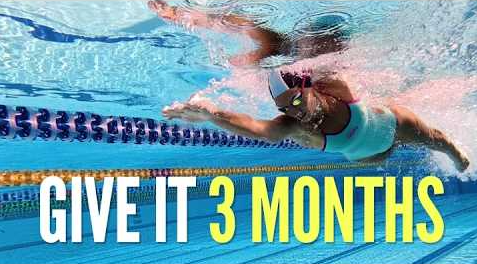
That's often where people stick with it for much longer and find it so much more enjoyable Learning to swim is frustrating and it's not very appealing to get to the pool But once you get good enough at swimming It's frustrating when you don't get to the pool So whenever we learn a new skill, particularly something like swimming that there can be a bit of a learning curve, too It's very frustrating in the beginning because we don't know what we need to do to get faster We're not getting that enjoyable feeling of gliding through the water And so that is where a lot of people stop and they give up on their swing journey But once you eventually get over that learning curve You get to the point where swimming is enjoyable and it's fun because you get that Feeling of all that endorphin release after a good training session Get that feeling of gliding through the water the water rushing over your arms and your shoulders where you're going side to side It's a very good feeling and you actually miss it when you don't do it But it takes a while to get to that point So if you can persist with your swimming for three months or six months and get to that point where it is enjoyable That is when You're over that that hard part where you actually miss it where if you don't get to a session You're kind of frustrated, but you didn't get to do it. The real reward Isn't speed It's who you become I remember growing up. My dad was my coach and every single morning we'd go into the pool and we'd train He would always remind myself and the other swimmers there that There's no one else our age who was up at four thirty in the morning
Going to the pool early training hard. We were doing all this stuff before most of our Friends were awake and so he made the point that it was about who we were becoming the skills We were learning that that's actually more important than getting good at swimming Now obviously getting good at swimming is a is a byproduct of doing all these things But the the main thing that comes out of it I think of getting good at any skill like swimming is the person that you become it's the the dedication It's the commitment that it requires and so there's so much more to it than just getting faster and that's why I think swimming in particular is one of the The best sports for most people to be able to do because they're they can see that progress It takes a lot of effort and time And and thought to be able to get To be able to progress this for me So that is why I think it's not so much about just getting faster But it's about the person become by doing the hard work If you're not sure what to focus on next have a look at this next video Where I break down freestyle in a lot of detail so you know exactly what to do to get faster Thanks for listening to the effortless swimming podcast If you'd like us to help you become a faster more efficient swimmer go to
Effortlessswimming.com