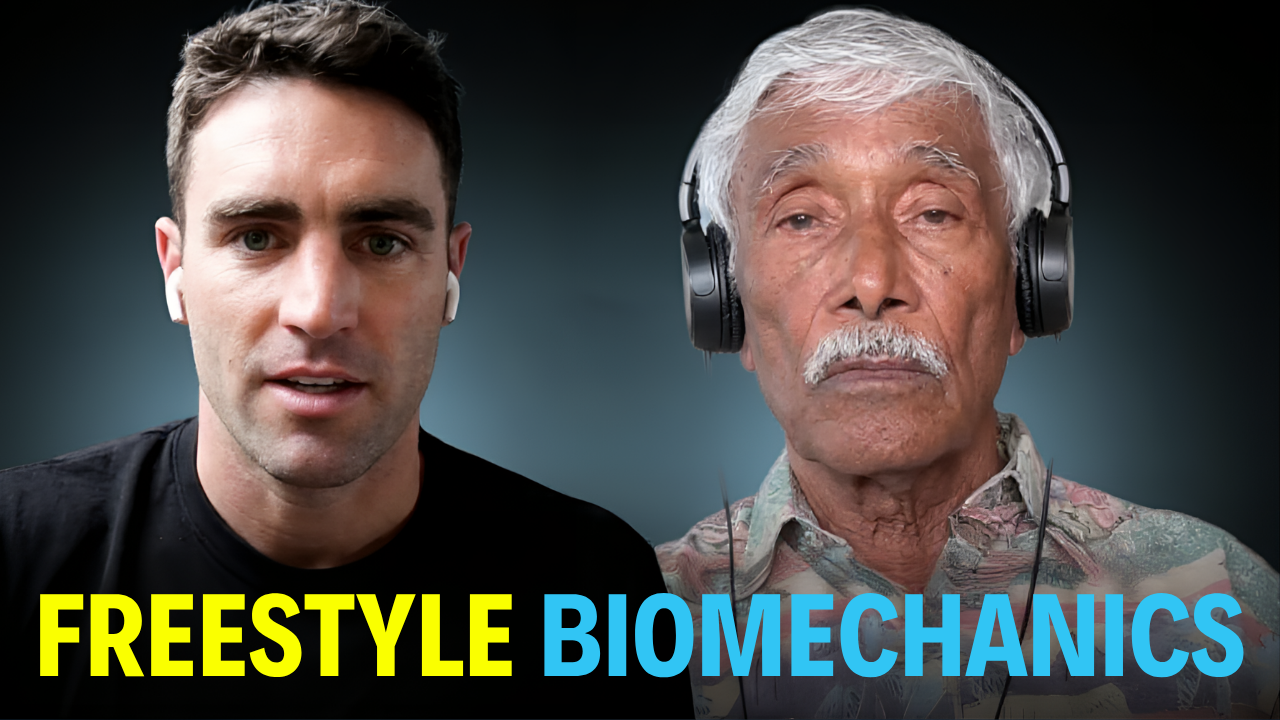








 Today’s guest is professional triathlete, Josh Amberger. In the last 12 months, he’s won a range of 70.3 distance events including Port Macquarie, Challenge Half Shepparton and Western Sydney 70.3. He’s first out of the water in most triathlons.
We talk to Josh about how he became such a good swimmer and triathlete.
02:40 – Suffering pays off…
05:17 – When to be messy with your stroke
09:04 – Going head-to-head with Olympic swimmers
10:31 – Training When You Are At Your Best
13:00 – How often do you need to train in the open water?
17:36 – From breathing one side to bilateral breathing
21:41 – Gears, Gears, Gears
24:38 – Using injury as motivation
Get in touch with Josh Amberger by visiting his website: www.josh-amberger.com
Transcript
Read the full transcript
Welcome to Effortless Swimming, the podcast for swimmers, triathletes and coaches. Join Australian swim coach Brenton Ford as he reveals the latest techniques and information to improve your swimming. Let’s dive right in. Welcome to the Effortless Swimming podcast. My name is Brenton Ford and if this is your first time listening, the Effortless Swimming podcast is all about helping you become a better swimmer. Whether you’re a triathlete, an open water swimmer or a pool swimmer, we feature a range of guests who provide their insight into becoming a faster swimmer. And today’s guest is professional triathlete Josh Amberger and in the last 12 months he’s won a range of 70.3 distance events including Port Macquarie, Challenge Half Shepardon, Western Sydney and as well as some shorter distance events. And Josh lives up in Brisbane in Queensland and he leads out about 75% of the swims in each of the triathlons that he does.
So he’s an excellent swimmer. So today we’re talking about how he’s become such a strong swimmer, what sorts of things he does in training, what he thinks about in terms of his stroke and his technique, and what sort of sets he does and how he goes about attacking his races. So listen in, this is Josh Amberger talking about how he got started in swimming. I think by the time I was about 10 years old I was already swimming maybe eight sessions a week. And then I kind of stepped into my first real swim squad when I was about 12 I think and really started to get some high volume. So I was pretty young when I first started. Do you think that doing that hard training when you were younger? Because I think swimming is one of the hardest sports you can do as a young kid because you’re in the water so much. Even compared to footy over here, some of the guys who are training a lot might be doing two or three sessions a week. But as a swimmer you’re in there so often and you just learn to have such a good work ethic.
Do you think that’s giving you a bit of an advantage going into triathlon where you’ve obviously got to train so much every week? Yeah, I definitely think that’s a proper, it’s a good way to look at it. I think being 12, 13, 14 years old and swimming up to 10 times a week, I can’t really remember what volume I was doing back then. But we were doing six, seven K sessions. You definitely just learn how to suffer and it sounds kind of cruel being so young. But something in Australia that we really buy into is the swimming squads when you’re young and trying to progress through the ranks. We’ve got so many competitions here that literally from I think when I was about eight or nine years old I was just breathing the competition every weekend. I just couldn’t wait to get to the pool to the carnivals on the weekend. Even though you’re really young, it definitely is a lifestyle and it certainly helps with the longer hours. Today is a triathlete.
Yeah, absolutely. When you transitioned to triathlon at 14, did you find your swimming style changed at all or did you start to feel different in the water when you had to do more miles on the bike and the run? So obviously your legs are heavier, they’re sore from all that sort of training. Was there much of a change to your stroke? It’s kind of hard to answer that. I don’t really know how much my stroke has changed over the years. I can certainly comment on the feeling. I remember when I was young and just pure swimming, I’d be able to do monster kick sets. We’d do 2K worth of kick sets. By the time I was 16, 17, I was still swimming in a squad, but obviously only four sessions a week tops. I’d do a hill wrap session on the bike in the morning. With that load of the bike, I would get to the afternoon to the swim squad and hardly even be able to kick a few hundred metres. So I definitely know the way I swam definitely changed. Now I started focusing a lot less on the legs and just more on the upper body.
Just a lot of pool kind of strength work rather than kind of pure finesse swimming. So I think that’s probably the only way I can really answer that. I’ve sort of transitioned more to that as well. I know coming from a pool swimming background and coaching for the last 10 years or so, I used to teach them to go for that cleaner, smoother stroke. But now I’m coaching more triathletes and it’s just trying to teach them to not be afraid to be a little bit messy with their stroke and have a bit more drive and force with their entry. It’s okay to create a bit of splash because in the open water, you’re going to have to be a little bit choppy with your stroke in order to deal with the waves and the wind and all that sort of stuff. Yeah, it is a bit of a different style of swimming. Yeah, especially when you go up in the water, you notice it because the guys I coach, a lot of them have that pool swimming background and they go to open water and it takes them a good year or two to actually just develop that style of swimming.
Yeah, of course. I know whenever I want to swim by myself, I’ve got a squad that I swim with, but I’m just looking for a kind of lonely workout. I’ve got a 15-meter pool down the road here and there’s a squad there. And I know the coach always just kind of frowns on me while I’m doing my own thing. In the other lane, I’m always got paddles on and I know he just thinks that’s the wrong way to do it. And I think he’d love to get stuck into me, but I think at the end of the day as triathletes, it’s just a different style of swimming to pool swimmers. So I definitely think you’re right there. I mean, we do so much pool paddles work now just for that strength because you want to rest your legs. A lot of times, at least in Victoria, we’ve got the wetsuit on, so you’ve got a bit of a kick, but it’s not much of a kick. So it’s just about building that upper body strength to get you through whatever distance that you’re training for.
And I’m working with a triathlete who’s off to Kona next month. I mean, for her, it’s just getting that strength through her shoulders because it’s really good on the bike, really good with her running. But she hasn’t got much upper body strength, so the best way for her to build it is a lot of pool paddles work. And you’ve swung with some pretty decent swimmers, Bronte Barrett, Kylie Palmer, Trent Grimsey. So what sort of impact did that have on your swimming growing up and training with athletes at that sort of level? It was actually really interesting. You know, I’ve swung with Trent Grimsey. For those who don’t know, he holds the record for the fastest English channel swim. I’ve swung with him since I think I was about seven years old. And, you know, he was really nothing special until he was about 15, 16 when he went from just being a little scrawny kid to being an absolute, you know, powerhouse kind of, you know, six foot real strength swimmer.
And that’s, I guess that’s the reason why I stopped swimming full time in the first place because I just, at the end of the day, I didn’t really have the physique to keep swimming full time. I was just getting, I’m a small guy. I was just getting throttled because I didn’t grow really. So it was just interesting seeing the way that people progressed as swimmers. And because I was smaller, I kind of just had to accept that I was never going to be a professional swimmer, as I guess you’d say. So what I used to do when Trent would throttle me was I’d step back a couple slots in the line and swim against the chicks, you know. But, you know, all of a sudden I’m swimming against Olympic medalists. And it was actually a lot of fun trying to go head to head against swimmers like Bronte Barrett and Kylie Palmer. So I can actually match them quite well in the pool. So they actually think it’s a good match for me to swim against the female swimmers.
Yeah, that’s awesome. I find training with guys who are at that sort of level, it just helps you. It kind of lifts your own standard of what you think you can do in the water. And to see them train, you know, you’re not going to be the athlete who’s there who’s slacking off when you’ve got Olympic medalists next to you. Like it’s, you know, you’re just not going to let it happen to yourself. So yeah, if you can train with someone who’s the same or slightly better than you, that’s what sort of helps to keep pushing you along. I know in our emails last week when we were sort of organising this, you mentioned that, you know, you’re swimming sort of plateaued a little bit, but you don’t really need to improve your swim because it’s, you know, you’re sort of front of the field most of the time anyway. So I think that’s an important point is, you know, especially in triathlon you’ve got the three disciplines
and especially, you know, you could train maybe an extra two or three sessions a week and you might find a really small improvement. But in terms of the value of where your time should be spent, there’s no point in doing that. Can you talk a little more about, you know, where you see the need to train now that your swims were as good as it can get? Yeah. You know, I think my best years as a swimmer were when I was about 18 or 19, so I’m 26 now. So since leaving the squad with, you know, swimmers like Trent Grimsie, I just started doing a lot more tri-swimming. So basically for me triathlon swimming involves sprints at the start of the race and then just being able to swim tempo and, you know, keeping that lactic acid under control for the rest of the swim however long it may be. So basically I think I do four max five swims a week. Three of those are going to be probably involving some tempo that I swim at in the race
and then also with some sprints to just simulate, you know, the start of the race and then kind of settling into that pace. You know, swimming is also a really good tool for recovery just to flush all the, you know, all the crap out from the hard training. So they’re probably my other two sessions a week are just recovery. I think I’ve probably wandered on a bit of a tangent here. No, it’s good. Yeah, but I kind of, I know the sessions that get me fit and I think I’m pretty lucky that they’re the sessions that I need to do that are specific for the race. So, you know, I’m only 26 but I’ve really been swimming most of my life. I’ve been swimming a long time. So it’s, for me, I know what I need to do in the pool and it’s easy to kind of get in there and get up to race shape pretty quickly. And in terms of open water skills, are you doing any open water sessions or do you practice those in the pool or you feel they’re under control
so you’re just on race day, you’re right to go? Yeah, I think I’ve been pretty lucky with my open water ability. I’m not really sure what it is. Some athletes just really seem to struggle in the open water even when they’re great in the pool. I think it’s almost kind of like a bit of an X factor but I’ve always been able to swim open water relatively well and I don’t really have to train specifically for it. But that being said, I do try and do at least one open water workout a week whether that be just for, you know, put the wetsuit on and get the feel for the wetsuit or just for recovery. I definitely think it’s important to be in the environment of the open water and have a bit of extra chop around you and having to, you know, practice your navigation skills and things like that. And how do you pace or position yourself for most of your races? I mean, obviously, front of the field, do you just go out with thinking,
all right, I’m going to be leading this so I’ve just got to know where the boys are and just not expect to follow feet? Yeah, you know, it’s hard for me to know but I think I’ve probably let out the water about 75% of the races I’ve ever done. For me, it’s important to know my competition before I start a race. I know, obviously, know everyone’s swimming ability but also know their current form. There’s a lot of guys in triathlon that seem to be very inconsistent with swimming. They can be leading a swim one week and getting dropped from the front pack the next. So I always try and keep up with who’s doing what and who’s in good shape. So I always kind of know before I start a race where I can expect to be. Sometimes if it’s a really big race and I really need to save my bike and run legs I might say to myself, okay, don’t be an idiot. You know, let’s keep this controlled or let someone else lead. But sometimes it never happens.
And I can quite easily get frustrated sitting on someone’s feet with them when they’re not swimming fast enough and just go to the front. And I guess the main takeaway for me is basically you can have an idea of what the race is, how the race is going to pan out. But I always kind of have an instinct where I might need to just get out there and do my own thing and can’t rely on anyone else to either swim in a straight line or swim fast enough. Yeah, that’s it. Especially in open water racing sometimes a race can play out completely differently to what you expect. So it’s just being able to deal with that. And when I coach my squad, we always like to simulate what could happen in a race, whether it’s your goggles coming off or whether it’s getting kicked in the face or someone swimming over the top. You want to be prepared for those things and you want to have that with them in training before you experience it in a race.
Because if you’ve experienced it before, you know how to deal with it. So just preparing yourself through the training that you do can make a big difference. Yeah, I mean, more on that. I know the first time I actually let out the first 70.3 World Championship was 2012 in Las Vegas. I was swimming behind Andy Potts who was leading the swim and this guy’s kind of notoriously bad. He’s also one of the best swimmers Triathlons have ever seen, but he’s notoriously bad for navigating. And he swam 1,800 metres at the front and then for some reason 100 metres to go, he just kind of steered off to the left and was going to overshoot the swim exit. So I kind of had the confidence to just do my own thing. And in that last 100 metres, I think I put four or five seconds on him and just from swimming straight and ended up leading out of the water in a World Championship. So yeah, it’s just for open water. I think you just always need to have the confidence
in your own abilities and not rely on following someone or anything like that. Yeah, you can’t be caught sleeping, can you? The person leading can easily just switch off and if you’re switched off as well, you’ll follow them like you’re talking about or you might not notice that there’s another pack off to the side and they might be the ones going ahead. So yeah, you’ve just got to always be switched on for the swim leg. What sort of aspects of your stroke do you focus on? Just in terms of techniques, so what are you sort of looking to feel when you know that you’re swimming well?
I’ll actually talk about some changes that I have made. I’ve actually, in the last two years, I’ve gone from swimming, breathing one side my whole life to actually trying to introduce some bilateral breathing. So it’s… In racing as well? In racing as well, yeah. I was basically getting a lot of back pain while I was swimming just on the opposite side to what I was breathing. So I’ve just tried to really have to work hard on that functional movement to the opposite side to what I’m used to just to try and level myself out in the water a bit. I found when I was just breathing to one side, I was just really heavy swinging with one arm and that arm was whipping through the water and the other arm was just kind of going through the motions and I just wasn’t getting… I was getting a lot of back pain, but I also just wasn’t getting as much out of my propulsion from my stroke as I needed to. So for me, it’s the feeling good in the water now
is just about kind of trying to gain an equilibrium in my stroke, in my breathing. And it’s taken really a good couple of years to be able to get that functional movement in my neck good enough to be able to swim comfortably breathing bilateral. So that’s kind of been my focus technically the last two years. I think as well trying to… I mean, on the same… I sort of breathe to one side when I’m racing in training. It’s bilateral most of the time, but trying to breathe bilaterally when you’re racing, with that faster stroke rate, can take quite a bit of time to change. And it’s a very different feeling, especially if you’ve been doing that for the last 15 years or so. So now do you breathe every three when you’re racing or is it you still sort of mix it up and it’s the occasional other side breath or it’s always three? I think I definitely mix it up. I’d be lying if I said, I’d do it bilateral the whole race.
You’re still in that situation in the race where you kind of have to be stubborn enough just to do whatever you feel is going to get you to the end faster even if it’s not technically correct. So my goal is to get to a point where I can breathe bilaterally comfortably the whole race. Maybe that would be something I’d probably only be able to do in Ironman where the pace would be a bit slower. But I certainly know what you mean. When you’re sprinting off the start line, you just go back to habit. And when you start getting low on oxygen you kind of hit that VO2 max 100 metres into the race. Breathing every three actually gets pretty tough. You just have to kind of do whatever’s right in the moment. I think it’s a trap that newer swimmers or newer athletes fall into is thinking that they need to hold the same breathing cycle for the whole race or even if it’s in training for the whole lap. But that’s not the case though.
It’s okay to go 2, 2, 3, 2, 2, whatever. Just as long as you do get some breathing to the other side happening. You don’t want to be short on oxygen but just as a trade-off for breathing bilaterally every single stroke. As you said, it’s what gets you to the end fastest and sometimes it might not be the most technically correct thing to do but the end goal is it’s all about the speed there. With some of your sort of swimming sponsors who do you work with? What sort of companies do you work with when it comes to providing all the stuff for your swimming? So I’m exclusively with Tia for all my swim gear, my race suits, my wetsuits, swim skins, goggles, caps, pool equipment. One thing I’ve really been enjoying is they’ve been around a while but it’s new for Tia is the snorkel. Just being able to kind of not have to worry about any of those breathing elements and just kind of really when you’re swimming, let’s say snorkel is great, I find with paddles
when you can just throw the breathing out, keep that head still, keep it locked in that one position and just really focus on gaining strength with your upper body. So I’ve been finding those tools obviously with a pool boy they work really well. I find as a coach I think breathing is probably the number one thing that will impact someone’s stroke when it comes to whether it’s their catch or their rotation but it usually all comes down to when they get the breath. So training with a snorkel can be really good just for getting rid of that, getting the stroke right, whether it’s with the recovery or under the water and then when you’re swimming really well with the snorkel take it off and then try and keep the stroke pretty much the same with the snorkel off because if the breath can impact your stroke as little as possible that’s when you’re going to have the best results with your swimming because with newer swimmers coming in
they have a tendency, as you know, to sort of look a little too far around when they breathe or over rotate through the shoulders and the hips and go really deep with the catch. So yeah, like a snorkel and pool boy as well are really good tools for developing that balanced stroke. Yeah, it’s exactly right. I mean when you take the pool boy out it’s obviously a good thing if you can try and get your body position as close to as it can be without the pool boy as to when you have it in. So I think if someone’s tending, if their head position’s wrong and they’re dropping their feet and tending to sink a bit that’s really going to be made aware to them when they take the pool boy out and they feel that the position that they’re in versus to perhaps closer to what they should be in. And we run a lot of swimming clinics around Australia and we sort of take each part of the stroke, break it down, but we start with the very basics
and it’s kind of like building blocks. So we start with, first of all, it’s the breathing. So you’ve got to get the breathing right, making sure you’re not holding your breath, you’re constantly exhaling. And then we look at the body position and the balance and then building it up from there and the very last thing that we really work on is the catch and pull and then it’s sort of your rhythm and timing and all that sort of stuff. But you’ve got to get those, the very basic fundamental stuff right first and then the whole stroke becomes so much easier and if you can have a similar body position to when you’ve got a pool boy in, that’s when it becomes a whole lot easier because if your feet and your legs are dragging through the water you’re going to have a tough time getting any sort of speed going with that. Yeah, of course. And so what have you got on the card? So what’s next for you in terms of races? So I’ve actually just had the tough time
of watching the 70.3 Worlds on TV on Sunday. I was supposed to be over there racing but I had to pull out two weeks prior with an injury but it was nothing major, it was just bad timing. So I’m actually looking to be racing for the rest of the year all the way up until December. I think we’re really fortunate in Australia to our season doesn’t match up with the European and American seasons. We can kind of come home after the racing in Europe and America tapers out and then really race all the way through to December. So I’m starting with the Sunday Coast 70.3 next weekend and then heading up to Beijing for the Beijing International Triathlon and then I’ll be racing Challenge Bahrain, Port Macquarie 70.3, Western Sydney 70.3 and then I might finish with a Ballarat 70.3 mid-December. So I actually haven’t raced that much this year so I’m really looking to get some scores on the board soon. Does that fire you up not being over there at Worlds
and seeing the guys race and does that make you hungrier to do well with the next couple of races coming up? Yeah, for sure. I was training with Sebastian Keenler in Germany so I kind of knew where I was at from training with him. I was in pretty good shape. Seeing him go on the second was unreal and I was really happy for him. Not saying I would have been up there because it certainly looked like a really tough race but the hardest thing about me, for me not racing that course was maybe the first time where I’ve actually really felt suited to a World Championship course with the 14 kilometre climb on the bike.
I’ve always been a good climber. I weigh 65 kilos. It kind of just really worked in my favour. So yeah, I’ve got two titles that I’m defending coming up so that’s Port Macquarie and Western Sydney and I’d also love to try and to snatch a podium at the Big On and Challenge Bahrain so I’m really pumped for the rest of the year. Awesome. A lot of good races coming up. For sure. And if you do go to Ballarat, I’ll be there as well so we’ll have to say good day and hopefully you do make it there down to Cold Victoria. Yeah, cool. It would just be a timing thing with Ballarat. I mean it’s pretty late in the year. It’s mid-December so Western Sydney’s two weeks before and two weeks doesn’t sound like much but when it starts getting really hot and closer to Christmas two weeks is kind of a big commitment when you could be sitting back and enjoying some cold beverages. Yeah, that’s right. I remember when I was younger swimming we’d always have our state champs.
What was it straight after? It was like the first or second third and fourth of January. Yeah. And so you’d have Christmas and you’d have New Year’s and stuff and you could never eat as much as you wanted. You could never kind of let loose as much as you wanted. You always had this thing hanging over your head so whenever you can kind of switch off for Christmas and know that you can just relax it’s a good feeling. Yeah, I know exactly what you mean. I think we had our state titles in Queensland on the same weekend. Yeah. And we’d go camping as a family and mum and dad, it always well not strictly dad. I think dad was a bit more relaxed but mum would always find some pool that I could get special entry into or some lake where I had to go swim. Yeah, I don’t think I ever had a holiday where we just slacked off when I was growing up. It was always in the pool every day or at least every second day. But now every time I go away
if I’m sitting around for more than two days I get a bit edgy and need to go for a run or a swim or something. So it’s kind of giving me some good habits I guess. Yeah. When people, if someone wants to get in touch with you, where can they find you? They can find me on all the social media outlets, I guess Facebook, Twitter. I’ve got a website josh-anberger.com and there’s a contact form there or my email’s joshanberger.com and happy to answer any swim or try related questions. Awesome, thanks so much for being on the podcast and best of luck for the races coming up over the next couple of weeks. Thanks so much, friend.