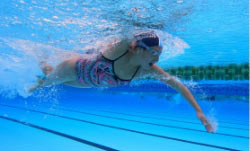


We asked Olympian Kiah Melverton how she swims so fast.
Improve your swimming here:
https://effortlessswimming.com/training-and-membership-plans/
8 Week Faster Freestyle Course
https://effortlessswimming.com/8wffc/
Transcript
Read the full transcript
This actually came from Ken McEvoy years and years ago, but he’s like having a super long neck and like keeping your neck extended. You don’t want to be crouched down. You don’t want to be looking too far down. You don’t want to be looking too far up. I think the biggest thing on recovery is just being relaxed. You don’t want to be bringing your arms over and being super tense and throwing them into the water super stiff. You know, that’s your chance to recover before you actually work that part of the stroke. Welcome to the Effortless Swimming Podcast to show that help swimmers and triathletes love the water, become a better swimmer and live a better life. Here’s your host, Brenton Ford. Kim Elverton is a former world record holder, Olympian and world championship silver medalist. She’s been coached by Dean Boxle and trained alongside Ariane Titmus, Milo Callahan and a host of other athletes. I caught up with Kia to ask her about
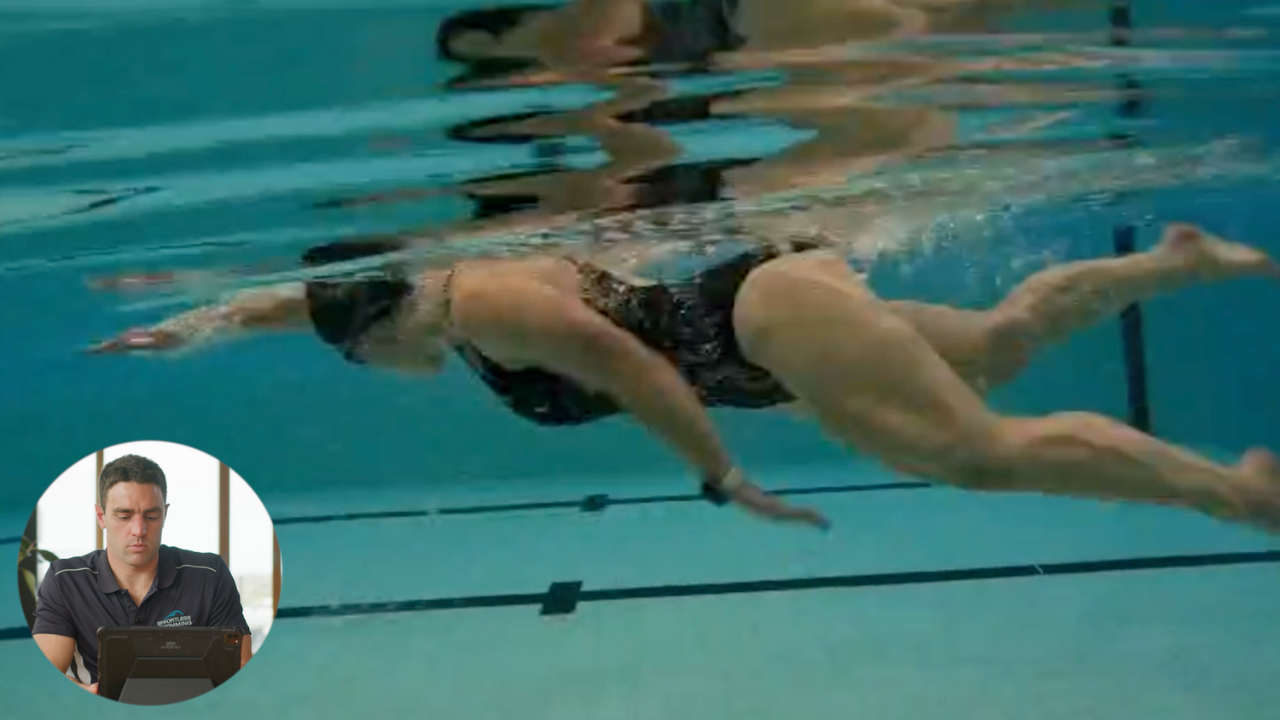
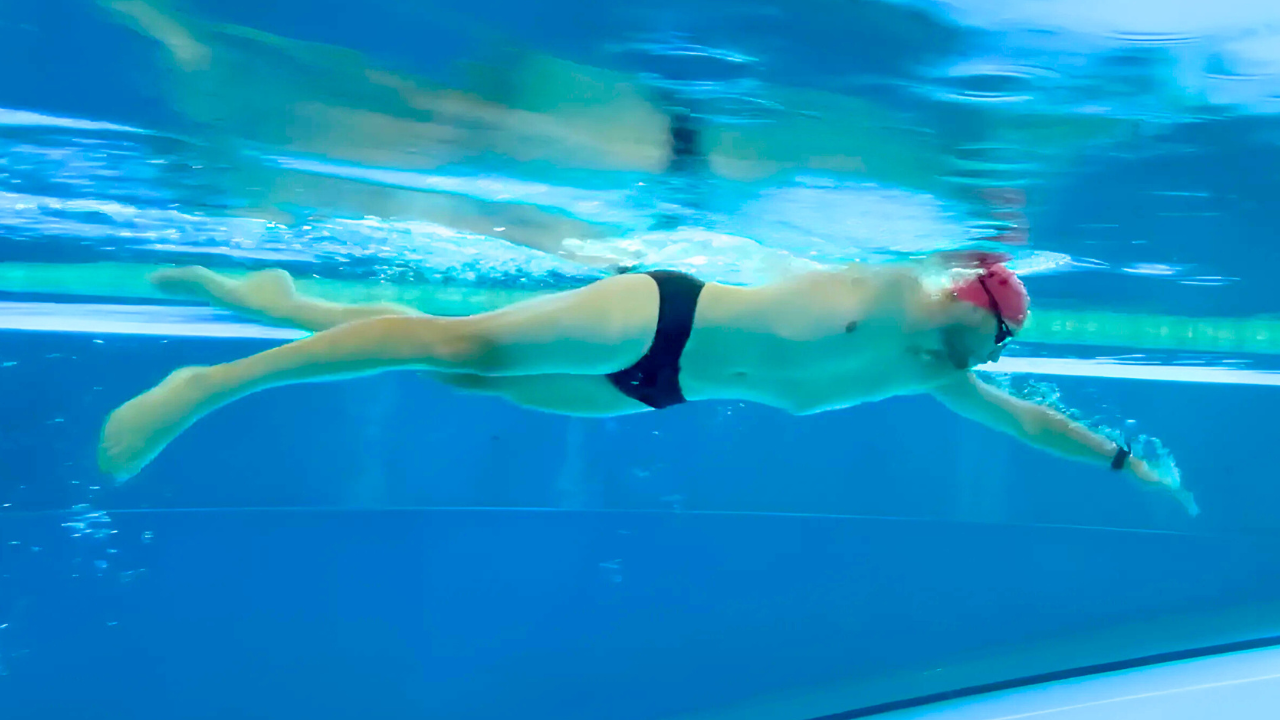
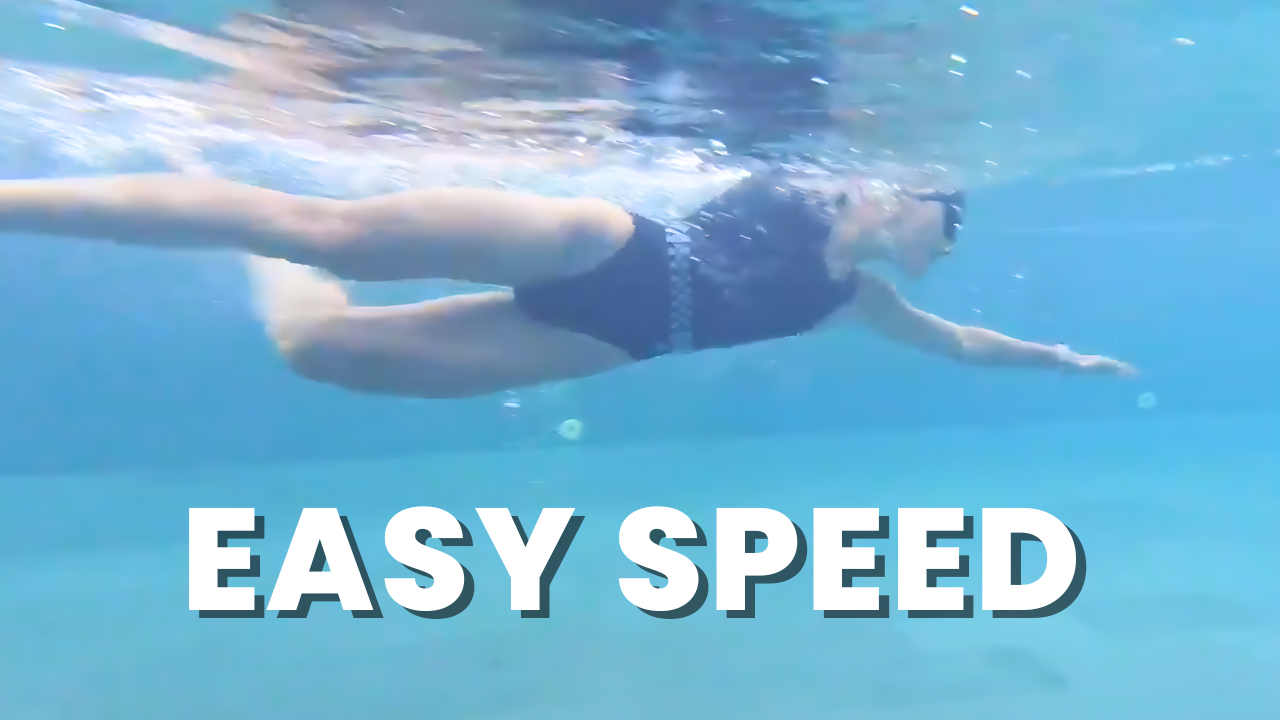
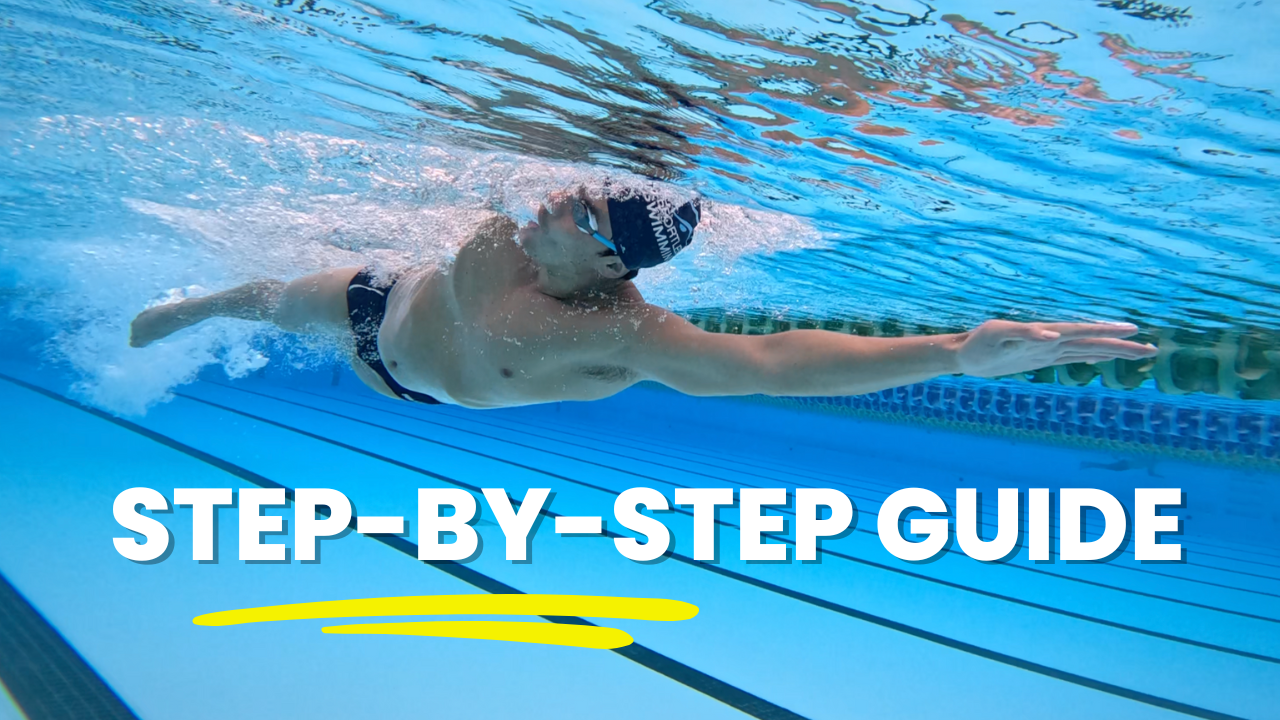
her freestyle technique. What are the most important elements to focus on and how can others develop a fast and efficient stroke? Head and body position when I’m thinking about freestyle is this actually came from Camp Mackable years and years ago, but it’s like having a super long neck and like keeping your neck extended. You don’t want to be crouched down. You don’t want to be looking too far down. You don’t want to be looking too far up. So like keeping that long elevated neck and then we do, I do a lot of body position kicks. So arms by my side with a snorkel on and just making sure my shoulders are back and I’m like in that nice tight position. And then I can like replicate that in my swimming. So long neck and like nice and shoulders back through my body position. Yeah. Did you ever change the way that you kicked? Yeah. So in terms of kicking on my freestyle, I had a bit of like a lazy four beat kick in like an 800
or 1500, but then come to a 200, 400 and six beat kick the whole way. And I think that when you’re doing those shorter events and you’ve got that kick going, you can keep your hips way more stable and you’re way more centered through the, like the middle of your stroke, you know, you’re holding a bit more water, your legs going the whole time, hips aren’t moving everywhere. Whereas in 800 or 1500, I found it a lot easier to let my legs float every now and then because that was kind of giving me the recovery that I needed in those longer events where I could like sit on my stroke a little bit longer, give myself a bit more time to get through the water. And, you know, I’m not having to waste that extra energy kicking full stop. 200, 400 you’re flat out on the legs the whole way. And what about when it comes to rotation? Yeah. So I did actually end up doing a lot of work on rotation in my stroke with my biomech.
I was really, really bad at flicking my hips everywhere. So I kind of breathe and then let my hips drop and my legs would roll out and my leg would flip out to the side. And, you know, it was all over the place. So a lot of swimming with a snorkel on, slow swimming with a snorkel on, continuous kick. And you can really feel that your hips are locked in and then taking that snorkel off and adding in the breath and just trying to keep those hips still as possible. So like when the right hand enters, your hips are still, you know, you’ve got to make sure that like, you’re not over rotating, you’re not reaching, just really keeping those hips locked in as you go through the stroke. And I think like putting a snorkel on and doing some easy swimming, which is just a soft six beat kick. Like it doesn’t have to be a hard six beat kick. You’re not, you know, putting a snorkel on and doing easy arms and your legs
are going crazy. You know, you’re just kind of floating those legs behind you, but keeping those hips really still and centered was one of the things that I worked on all the way up until I retired. And when you changed distance, did your rotation change or that was always pretty constant? My rotation probably changed when I did change distances. So in the 200, I’m way more stable. If you filmed me front on doing a 50 at 200 pace, I would be way more stable, way more strong through my, through my core, through my hips. And if you filmed me doing 1500 pace, there’d be a lot more flow and rotation. And I think that’s just the variables and the races, right? So 200 free, you’ve got to be holding a lot of water, super strong. Your kick’s going full speed. Whereas a 1500, you’re probably, your rate’s probably a little bit higher, but you’re holding less water. So you’re like kind of almost spinning your arms a little bit more. You’re not holding as much water. It’s a bit
more of an easier stroke. You’re really trying to just like settle into that comfortable, comfortable rhythm compared to a 200 free where you can literally only hold that pace for 450s. Whereas in a 1500, you know, you’re holding it for 30, 50s. It’s got to be a bit more comfortable. The hips are swaying a bit more. You’re getting a bit more rotation. You’re getting a bit more length. And what did you think about with your recovery over the top of the water? Yeah. So recovery wasn’t necessarily a huge focus for me, but I think having done a little bit of coaching now too, I think the biggest thing on recovery is just being relaxed. You know, you don’t want to be bringing your arms over and being super tense and throwing them into the water super stiff, you know, that’s your chance to recover before you actually work that part of the stroke. So making sure your recovery is super relaxed. You’re not wasting energy. You’re not throwing your arms forward and like being super tense in
that position. And did you have any particular cues or things that you were aiming for with your catch and pull? Yeah. So when I was working on my catch and pull when I’m swimming, it’s making sure that I’m coming down the center of my body. I’m not crossing over the midline. I wasn’t swinging out wide. You know, my hand isn’t floating out to the side as I pull. It’s not floating in as I pull. And I did a lot of work with my biomech, like filming myself front on and making sure my hand was coming down like this, you know, couldn’t see my pink, like my palm on that side, palm on this side coming straight down that center line. And I think you can get a lot of feedback doing skull or single arm or like a long dog where you’re like in that position, you can really feel it. And then the other thing is like at the back of the stroke, making sure I’m finishing all the way through the back of the stroke.
You know, I’m not pulling my arm out early. I’m not just flinging through the stroke and pulling it out early. I’m making sure I’m getting a length the whole way through. So I’m like settling into it at the front of the stroke, up shoulders up, you know, getting that pull my elbows up and then all the way through the end of my stroke. And was there anything that you thought about with the rhythm and connection in your stroke? Yeah. So for like rhythm and connection, all that stuff. I’m a little bit funny. I’m probably one of the few people that breathes to the left on one way and to the right on the other. You know, I kind of swap my sides of breathing, but I always breathe every two or every four. So the shorter races, like the hundred free, two hundred free. I try to get breathing four in because I just think I was a lot more stable in that position, but the longer events I’m breathing every two. And I used to always practice in training, breathing to the left one way and
breathing to the right so that no matter who I was racing, I could breathe facing them. I think that’s something that people can play around with, you know, breathing to each side. And I think that also allows you the ability to work on your hip position. You don’t just get used to breathing to the left and then you’re really great at breathing to the left. And then all of a sudden you have to breathe to the right and your hips are all over the place. So you know, switching it up every now and then I think helps.
This podcast has brought you by Great Ocean Wetsuits, an up and coming Australian performance wetsuit brand for triathletes and open water swimmers. The wetsuits are designed and tested in Melbourne, Australia for fast, easy and enjoyable swimming for athletes of all levels. They’re worn in and raced by Olympians, triathletes and open water swimmers from all over the world. And I personally use Great Ocean Wetsuits even before they became a sponsor of the podcast. I’ve personally found that the buoyancy, the freedom through the shoulders and the fit are the best that I’ve ever had in a wetsuit. So I highly recommend them. And you can currently get 20% off either the gold or silver wetsuit models using our own code effort20 at checkout. So enter the code effort20 at checkout at greatoceanwetsuits.com and no matter where you are in the world, if you’re in Australia, the US, Europe, there’s free shipping worldwide. So get yourself a Great Ocean Wetsuit. I personally use the gold
model of the wetsuit. It just depends on what your goals are. So greatoceanwetsuits.com effort20 at checkout. I know you’ll like them. Were there any cues that you used when you were racing? So the biggest cue for me when I was racing, I would kind of stand behind the blocks and I would always say to myself either lengthen extend. So that’s like lengthening at the front of the stroke, extending at the back of the stroke, or it would be rate and power. So especially on those shorter races where I’m having to swim fast, I knew I had to get my rate up. But I didn’t want to get my rate up and slip through the water and just pull half happily and just hope for the best. I was making sure I still had the power in that stroke. So getting my rate up but maintaining that power and the length and the extension through my stroke, not shortening up that stroke because you want to be faster, making sure you’re
actually holding water the whole way through the stroke. How much focus did you put on your technique throughout your career? I’ll admit when I was younger it wasn’t really a focus. You know, I was kind of thrown in to doing more K’s and more and more and more. And then as I got older, I realized that there was so much more to gain out of putting focus on my technique rather than just doing more work. There’s a certain amount of work that you can do that gets you somewhere. But if you have poor technique and you’re just doing K after K with poor technique, you’re not going to get anywhere. You know, those technical gains can make such a big difference. Such little things can make such a big difference in your swimming. So the older I got and the wiser I got, the more I figured out that technique has to take a priority in my training. What were the main things that you worked on throughout your career?
Yeah. So in terms of like my own technical focus, when the things that I was working on are my elbow position at the start of my catch. So making sure I’m really strong in this position. I’m not sweeping out. I’m not crossing over with my body. I’m really strong pulling under. And a big thing for me that Dean actually picked up on was that I was breathing backwards. So I used to take my stroke and breathe under my arm pit. And so I’d spend all this energy and almost over rotate and I’d breathe under my arm pit. So it’s keeping that head like nice and still one goggle out of the water, one goggle. And you know, kind of the things that they tell 10 year olds, but it’s still up the cool when you’re like way later in your career. So that was a big thing for me being very aware of my breathing, my hip position and my catch at the front of my stroke. Talk to me about the best race that you ever had and why it was your best race.
Yeah. So I think for me, my best ever race looking back is probably my 800 freestyle at the world champs in 2022. I ended up second to Katie Ledecky, but 24 hours before that race, we spun the heats to the 800 and I qualified in eighth. And it was a shocking swim. I didn’t want to do it. I went to Dean. I pulled my eyes out. I was like, there’s no way I’m doing this 800 freestyle final. I don’t want to do it. Let me pull out and Dean kind of sat me down and gave me this big speech, this big motivating speech. And I had 24 hours to turn it around. I got up behind the blocks in that final and I was like, screw it. In my head, I was like, you’ve already screwed up your heats. Like who cares what happens in the final? It doesn’t matter anymore. So my first 100 turn looked across the pool and all I could see was Katie. There’s me and Katie and no one else was there. And I just thought, oh crap. And then
just went for it for the rest of the race and ended up touching the wall second. And it’s like, probably still one of the proudest things that I’ve done in my career. And what’s the best advice that you’ve ever received for your swimming? The best advice I’ve ever received in my swimming is probably just enjoying it. I think it’s like the biggest thing and learning off the people around you and like putting yourself in an environment where you can learn and have people of support around you. You know, there’s a saying that like your reflection of like the five people that you spend most of your time with. And I think being in an environment that I was in where it’s such a high performance environment and being able to learn off people like Arnie and Elijah and Molly and Shayna and Dean and, you know, that kind of environment, you get to pick up on little nuances that not only are reflected in your training and your training styles and your
technique and how much work you’re putting in, but just like little things outside of the pool, like how you talk to people, how you communicate with people, how you respect people. And I think like that’s super important advice that’s not in the apical world of swimming, but things in the outside world as well. And what about the worst advice you’ve ever received? Worst advice I’ve ever received. I don’t know. I think for me, the worst advice is when people start throwing numbers at me, like, you’ve got a 200 freestyle, make sure you’re at 28 and then a 29 and then 29 and then a 30. And in my head, that just doesn’t work. And I have always hated when people do that. And I think like someone just telling me like, you know, you’ve put in all the work, you’ve put in all the effort, like just go out there and have fun. That’s always a way better way for me in like to approach things. And I think like a lot of people actually work that way, you know, you start throwing numbers at them and
you over complicate things, like especially on race day, not so much in training and training. It’s fine. You need that kind of feedback, but come to race day, you’ve done all this work you don’t need to then sit down and think about the numbers, you know what you’ve got to do. You’ve just got to get in and do it. So yeah, I think probably that’s the only situation where it’s been worst advice. And what are the hardest sets you’ve ever done and some of your favorite sets that you’ve done? Hardest set I’ve ever done. Dean’s thrown a few big ones at me, but one that stands out and like one that I haven’t done in years and years, but it’s super hard. And I think a lot of people can probably try this set or do this set. It’s 10 ones best average on two minutes and it doesn’t seem like anything odd. You think like 100 meters, like two minutes, like I’ll get plenty of rest. But if you’re actually going like full
effort for those 10 ones on two minutes by the time you hit that 10th one and touch the wall, it’s like, thank God that set is over. So it’s such a simple set, but it ends up being super, super hard. Favorite sets for me are sets where I can work on hitting my stroke count and hitting times. I find that super valuable in my training. It’s a big thing that I use was hitting stroke counts. So I like sets where say, like just off the top of my head, for example, there’s like three sets of 850s and I’m descending my times, like 800 pace, 400 pace, 200 pace, but I’m trying to hold my stroke count. So whatever stroke count I’m taking when I’m doing 800 pace and I’m a little bit slower, I’m trying to replicate that when I’m doing 200 pace. And so how can I do that when I’m hitting 200 pace and having to be a bit faster? Do I need to up my kick? Is it more power in the stroke? Am I holding enough water? Things like that that
just give me a lot of feedback without having to like, do this big crazy set, but you’re getting a lot of like very specific feedback. That’s like what I found most, or that was like most effective in my swimming. Thanks for listening to the Effortless Swimming Podcast. If you’d like us to help you become a faster, more efficient swimmer, go to www.effortlesswimming.com.