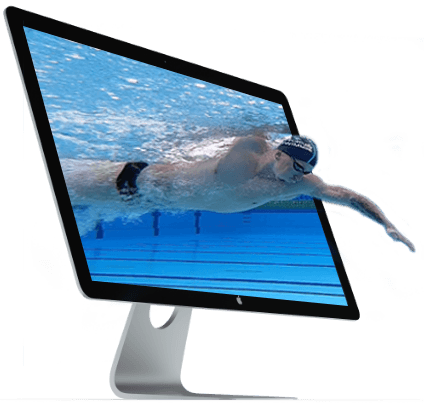









Shawn is an Ironman triathlete based in Nova Scotia, Canada. A year ago, he started some changes in his stroke, and in the course over the last year, he has effectively gone from a 2:25 per hundred paces down to 1:31 per hundred. Shawn will share how he has done that, what changes he’s made to his stroke and how might incorporate these changes to your own stroke.
00:56 Impressive Improvements
03:49 Everything Was Wrong With What I Was Trying To Do
04:56 Increasing Your Stroke Rate
06:44 Finding The Sweet Spot For Stroke Rate
11:33 Timing Your Kick With The Rest Of The Stroke
12:32 What Are You Thinking About When You’re Swimming In Terms Of Technique
14:08 Swimming From The Inside Out
16:42 Keeping The Videos Simple
Effortless Swimming
Online Membership
Freestyle Clinics Around Australia
Transcript
Read the full transcript
Welcome to episode number 159 of the Effortless Swimming Podcast. My guest today is Sean Muse and Sean is an Ironman triathlete based out of Nova Scotia in Canada and Sean and I have been in contact over Instagram over the last couple of months because Sean, a year ago, he started to make some changes to his stroke and in the course of the last year he’s effectively gone from a 220 to 225 per 100 pace down to a 131 per 100. In this episode we’re going to talk about how he’s done that, what changes he’s made to his stroke and how you might be able to incorporate some of these changes to your own stroke to swim faster. So let’s get into the episode with Sean Muse. Welcome to the Effortless Swimming Podcast to show that help swimmers and triathletes love the water, become a better swimmer and live a better life. Here’s your host, Brenton Ford.
So Sean, welcome to the podcast. We’ve been in touch just over Instagram because you tell me about some pretty impressive changes and improvements that you’ve made to your swimming over the course of the last few months. Do you want to give everyone listening just a quick
breakdown on where you were in terms of your pace and where you’re currently at now?
Sure. So again, thanks for having me here. At the start of last summer getting ready for Ironman and Montran Blanc, I was generally like in the 220, 230 on some of the longer swims per 100 and sometimes I felt absolutely gas when I hit the shore. I’ve worked on that all summer that, you know, the endurance part of it came, but the pace never really never come around at all and the harder I tried, I guess the slower I go. It’s not like running, you put more energy in and you see speed, but swimming was just totally the opposite and it was so frustrating for me. But that one video that you had shared on Instagram when I saw it was the turning point. I mean, it’s changed everything just and it was few simple things like the entry of the hand, the fingers pointing down, the high elbow catch and maybe not reaching out as far. So the stroke cadence increased a lot and it did a whole bunch of things. It allowed me to exhale all the air out, which was key because I needed all the air back in
and it’s really made like it’s changed everything. So I focused on that. I didn’t try anything with the feet, legs, actually I was dragging them along and probably creating way more drag, but I focused on that catch and by the time I got to Tremblant, I had gone from like basically a 225 swimmer to 205 for the iron distance and it was the first year in five years there that I felt confident on the shores of that lake getting into the water with 3,000 people. And that’s, so what was, was it advice that you’d heard before that you were like overreaching and stretching out too far or was it just what you thought you should do and then you obviously made that change and improve it? Where did that original technique come from? I had heard from a friend of mine who’s a very good swimmer. I mean, he’s a some one hour iron distance swimmer and he was keep telling me reach and it worked for him, but he also saw this video of yours at the same time and he tried it and he gained 2-3 seconds,
which for him was a lot at a 130 pace to gain a couple seconds. So the next morning in the lake I tried it and it just felt so comfortable and with those fingers pointing slightly down on entry, it automatically made the catch, it would start the catch for you because your hand was down and it would kind of pull back instantly. So, but yeah, it changed and then by increasing the cadence, it times my breath with when I need the air not when my stroke was telling me I needed air because often I’d be trying to take a breath of air underwater or like everything was wrong with what I was trying to do, but that started it all and then the rest of your videos during the year have I’ve tweaked a little things and now I mean I swam a 131 pace this morning.
Yeah, I saw that one of your posts, you know, I’ll ask you a few weeks, it looks like you do like a 750 meter swim and you’ve been bringing that pace down to a 131, which is, it’s not nine man distance swim, but that pace of 131, I think most people would be pretty happy with being able to get down to that and that is such a significant change from where you were. And I mean with increasing your stroke rate and not going for too much of a reach, like it’s counterintuitive, you would think that with a slower stroke rate and a longer stroke, it would be easier and in some cases, yeah, that’s true, but just by keeping your momentum going and keeping your speed with it more constant, that is why it can become so much easier because it is common to see people just reach out and glide and there’s too much of a dead spot, too much of a pause in their stroke. Do you think that’s what was happening with you? That’s exactly what
was happening besides the fact that my elbow would sometimes lead in the water first before my hand was that sloppy, but trying to that long pause, there was like a dead spot in the stroke and really just all drag or it wasn’t working. So now I’ve tried that higher cadence and I’ve got it as high as 40 at some point. Now it only got me so far. I’ve changed a few things and now it’s around 34, 35 at best, but my stroke, I was finishing like before my hip and on the recovery of the next part of the stroke when I needed air, that hand was staying in the water by my hip creating a little more drag. So I’ve lengthened the part of the stroke where I go past my hip now and that hand never stops, so I don’t have that drag dead spot and that was like 17 seconds right away when I stopped doing that. So every little thing you talk about, I see instant feedback which is fantastic because now I try to mimic everything every day, but I have so many
things to think of while I’m swimming that I struggle sometimes doing it all right, so I hope I become automatic someday. Yeah, that’s awesome. And in regards to the stroke rate, so
you’ve gotten up to 40, which would be the equivalent of 80. So we’re talking 40 in terms of that sort of two strokes and bringing it back down to 34, 35 without having seen your swim, that’s probably around the sweet spot for you being around 70 strokes per minute because if you’re going at 80, look, there’s not a lot of swimmers that I know that can sustain 80 comfortably, so you might find that a stroke rate of 70 strokes a minute or 35 and then going to work on the catch and a couple of other things along with that would be your time best spent rather than just trying to continually increase it, which sounds like you’re not doing that, but instead of just trying to go for the faster stroke rate, a lot of times, especially if you swim with a wetsuit on, it’s about, yeah, basically a better catch, better rhythm in the water and finding that sweet spot which it sounds like you’ve probably found and let’s say, how long ago, was it a year ago where you first started to make some changes?
It was maybe like two and a half weeks before Montreux Blanc, which was I think August 21st last year. I was still quite panicked for this. I mean, I’ve done this race before and I knew, okay, it is what it is, just get through the swim, get me on the bike as fast as I can and move on, but seeing that small gain last year and then I wasn’t tired was the thing, like I could swim three and a half k and I would get out of the water. I was like, I hadn’t even been in. So that was huge. I mean, I come out of the water last year with a big smile. Usually I come out of the water in hard shape. Yeah, that’s awesome. I love hearing that and it makes an Iron Man event so much better to do. I was the opposite when I did Iron Man, I was big smile through the swim and then it pretty quickly turned into a frown the entire way through. But yeah, that’s awesome to hear. Thinking back to a year ago, did you ever think that you
got to get down to a 130 pace? Did you know what that would look like or feel like in your swimming? No, it’s quite hard to believe really. And I’ve had some of my friends say, I always knew you could swim better, but I really didn’t see this coming. And that’s an understatement, like I was striving for two minutes per 100. And when I reached that last year after Travla, I focused on everything. I’ve been watching your videos and I focused on all that. And then of course our lakes get too cold to swim in with no pool. I reached that point, 155 was quite comfy for 1500 meters. This year I knew I was in decent shape when I got no water, about 10th of June for our lakes warm up enough. I was 205 right out the gate. So I said, okay, it’s still there. I haven’t lost everything. Now let’s work on endurance and keep in that two minutes. I was just focused on two minutes. It wasn’t long. I could swim 2k at two minute
pace within, you know, five or six swims. But what I’ve, by watching all your stuff here, what’s changed to get that extra was now I’m trying to kick. But not hard so I don’t blow up, but two beat kick, but timing it with the stroke that it automatically rolls into the next stroke. And it almost gave me 25 seconds per 100. If you see my Strava files, I went from like 155 to 130 one pace overnight. And I haven’t swam, well, I don’t think I’ve swam under or over 135 in the last three weeks. And what were you doing before with the kick? Nothing, just dragging them along which would keep them, you know, they were, they were probably not above the surface hardly ever. And it was just, I was basically focusing on this catch and feeling the water and, you know, proper pull. So I said, okay, I feel confident with that, we’re going to try to kick. And I’ve added that in it. And my heels are always above water. Now my kick doesn’t drive me forward,
but at least there’s no more drag. And if I can get that timing right that I roll into each stroke, because most of my friends that have watched me swim say I swim pretty flat, I don’t, I don’t rotate enough. That kick, if it’s time just right rotates me in each stroke. And I find I, of course, your head comes out of water at the right time to breathe. So that alone gave me another 20, 25 seconds per 100 instantly. How do you time your kick with the rest of your stroke? Are you just going by feel or have you got a cue in your mind? Yeah, it’s a lot of, that’s, that’s the part, one of the things I have to remember the most, like I really have to concentrate on that part of it. So that’s another reason why I kind of left that aspect alone until I got the catch to where I thought that part was automatic. And so I’m still playing with this kick this morning. I tried, I said, I’m going to sprint all I can. So, and I left
in the first 500 meters according to the file was at 122 pace. But the next 500 meters was at 140 pace. So I pulled up. And I couldn’t, and I couldn’t keep it up. But, you know, the potential is there to swim well. And I’m not looking for a 130 pace next Ironman, but if I could be comfy and 145, I would be thrilled. Yeah, that’d be a huge, huge improvement. So, and then what’s, so in terms, there’s a lot to sort of think about, Dan, you said you’ve tried a lot of different things. Once you found the things that worked for you, did you just focus on those? Or were you still experimenting? Because I’m curious as to what, yeah, what are you thinking about when you’re, when you’re swimming and how’s that changed over the last year? Well, I didn’t dare try anything too different on that catch part because that seemed to work. And, and now with the timing of the breath with the stroke and having all the air out of your lungs
and getting all new air in at the right time was, was big because before, like, I felt like I had to breathe when the stroke told me to breathe, not when I really needed the air or, or I would force that last little bit out. Now, like the stroke rate and the breath seems to work together. So I feel like I can sprint and not get tired. And before that was in the case. So swimming doesn’t tire me anymore. But I don’t want to mess around with anything I’ve learned on that part yet until someone tells me differently. Or if you saw a video of myself, I feel like the most improving I need to do is the on the back end, like proper kick and not kick so hard that I tire my my legs out. But to get that roll, the right the right rotation, which I just saw a video of yours, an hour ago on that proper rotation, which will get your head out of the water at the right time for, for the air. And I think the, with the, the kick, it’s because there’s so much nuance to everything in
swimming technique related is that same thing with like the reach, like you don’t want to be really short with it, but you don’t want to be too long with it either. There’s so much nuance to it. And I think getting the kick to coordinate with the rest of the, the stroke can be one of the harder things for people to do. And for me, I think it’s one of the harder things to teach. It really has to be just sort of, you kind of have to figure it out when you’re swimming. And I think a lot of it tends to come down to just feeling, feeling for that timing. But I think one of the reasons that you probably had such a big improvement there when you got your kick sorted was, well, number one, your legs may have not been dragging as much as, which is obviously a big change. But the other thing too is if your legs are just sort of moving along and there’s, there’s nothing happening there. There’s no kick whatsoever. Then it’s really just your upper body working independently of the rest of your,
of your body. And once you get even just like a small kick, it’s that little bit of a downwards kick that you get this transfer of energy that goes through your legs through to your hip and then your core. And then you can kind of brace yourself against your catch. You’ve kind of got something to anchor against or pull against. And that’s what is sort of called swimming from the inside out, like everything’s got to start from the hips and the core and move out to the extremities. Because if there’s no sort of tautness to that, then everything’s just kind of going, you know, or working independently. Whereas when you get that kick, that’s what gives you that stability through the rest of the body. So it’s, I’m amazed how much that did improve your, your speed. But it, you know, probably when you, if you see if you had saw a video of it from what you were doing to what you’re doing now, you’d probably see just a much more rhythmic stroke, I imagine.
You know, definitely it’s, it seems to be symmetrical. Both arms are doing equal amount of work was before it wasn’t the case. Left side was always dead. Now that, like I said, just timing that kick and I, I’m so untrained and swimming. I don’t know if I have what beat kick I really have, but I know I time it that it fits with the arm when it enters the water and it rotates me into the next stroke. And I think I watched something a while back that you drive that hip forward a little bit and that rolls you into the stroke as well. So again, with the fingers pointing down, the high elbow in the water, all that, I mean, everything’s come together. Your videos are helpful for, for all my friends and some of them are fantastic swimmers because what they’ve noticed is when we found you, you’ll stop the video, you’ll draw a line from the elbow to the wrist to the hand. And, and for a non swimmer like myself, it just made sense. It really, it really
worked. I appreciate that. And I mean, I try and keep it as simple as possible and try and avoid too much jargon when we’re explaining things because I mean, if I, even when I’m, if I hear someone explaining something about swimming, like I’ve had coaches where I’ve had to sort of stop and go, all right, what does that actually sort of mean? I’ve had to sort of break it down. I think, man, if I can’t understand it, I’ve been doing this for, I’ve been swimming since I was five, you know, then it’s probably going to be too complicated for someone who’s only been swimming for a couple of years and who doesn’t necessarily live and breathe it. So I appreciate that. And I mean, I just want to also give credit to you because this stuff doesn’t just happen on its own. You’ve obviously got to put the work in. But I also want you to just talk about your swim training and how, look, you can’t swim year round. So just a little bit of background on
what your general swimming would look like for a year. For me, like I said, by the time our lakes are warm or warm enough, it’s generally about June 10th. And unfortunately, by October 1st, I need to put the wetsuit away. Then my busy season for my work will start. I may not get a chance to get in the pool on a normal year before February. So I’d swim, you know, a little bit February and March, maybe a dozen, 15 swims in those months, April and Mays, no swimming, no training of any kind, no biking. June 1st, our lobster season is closed. So I start full on Ironman training and I have 10 weeks to get ready for an Ironman, which is not easy to do and things have to go right. So, you know, the bike in the run is not as complicated to me as swimming was. So it was always the anxious part. But like say, last year, I’ve never felt so calm standing on the shores of that lake while they’re playing the national anthem in my life.
And it was like, I’m just, I’m going for a swim. Like I’m going to have fun today. That’s awesome. And when you can finally put all of that practice into, put it, put all of that into practice at the next race, maybe it’ll be next year or it will be next year, I’m sure that would be great to see what you can get that that swim speed down to, because it’s been a huge change in the course for you. So thank you for coming on and sharing this. I thought it’d be worthwhile just having share your experience because I’m sure there’s a lot of other people who could who can learn from it. And yeah, thank you very much for your time and all the best for the next little while. Thank you. I appreciate it. Thanks for listening to the Effortless Swimming Podcast. If you’d like us to help you become a faster, more efficient swimmer, go to www.effortlesswimming.com.