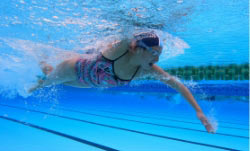










I’ll share some helpful tips from the clinics and sessions we run that will improve your swimming speed and efficiency on today’s podcast. I’ll also discuss some new equipment I’ve purchased that has improved my strength, made swimming more enjoyable, and boosted my overall performance.
00:18 Introduction
00:47 Avoiding Early Breathing in Freestyle: Head vs. Shoulder Rotation
02:37 Exploring Different Kick Techniques
06:09 Addressing Fatigue and Comfort in the Water
09:07 Improving Balance and Efficiency in the Water
13:37 The Game-Changing Custom Earplugs for Swimming
15:32 How a Chin Up Bar Helped Improve My Upper Body Strength
18:07 The Benefits of Anti Fog Goggles
20:10 How This Magnesium Powder Transformed My Sleep
21:25 ES Squad: Level Up Your Swim Workouts
24:25 Exciting Camps Planned for Next Year
Do you want to work with me personally to improve your technique? Join my swim technique coaching here:
https://effortlessswimming.com/stroke-analysis-membership/?el=blog
View our freestyle clinic schedule around Australia:
https://effortlessswimming.com/freestyle-clinics
Use code SQUAD when joining the Effortless Swimming membership to get 50% off your first month:
https://www.effortlessswimming.coach/video-membership-checkout-monthly/?promo=squad
Get 15% off our 8-week Faster Freestyle course by using the code 8week15
https://effortlessswimming.com/8-week-faster-freestyle-course/
Try PILLAR today, head to pillarperformance.shop and enter code EFFORTLESS for 15% off, or for any North American listeners, enter the same code at TheFeed.com.
Watch the episode on YouTube:
Transcript
Read the full transcript
We know if you’re doing any sort of open water swimming or triathlon, your kick is more there to support you and balance you and not to provide much propulsion. However, your kick can also be there as a can kind of work against you sometimes before that, I just couldn’t support myself. I wasn’t strong enough to do it. So in the space of about four weeks, I’ve managed to to make pretty big gains in that in the upper body strength. And I’m starting to feel it now in my swimming. Welcome to the Effortless Swimming Podcast to show that help swimmers and triathletes love the water, become a better swimmer and live a better life. Here’s your host, Brenton Ford.
Welcome to episode number 340 of the Effortless Swimming Podcast. Today is a solo episode. I’m going to talk about a couple of things that I’ve seen work well for people in some clinics and some sessions that I’ve run that might give you a few ideas of where you could find additional speed and efficiency in your stroke. I also want to talk about some things that I’ve bought recently as well that have helped me in terms of strength, enjoyment of swimming or just generally with my swimming. And then I want to talk about some things that we’ve got planned for 2024, 2025 with Effortless Swimming and with the business. So we’ll talk a little bit about that as well at the end. Now, in terms of some things that I’ve seen recently at clinics. So I’ve had a few people who are actually breathing too early in their freestyle. So the head is going before the rotation of their shoulders. And I think it sometimes comes from when people making sure
they don’t want to breathe too late because that’s a really common thing as well. But if you turn your head too early, then it can actually throw the rest of your stroke out and make things a little bit awkward. So what I would aim for there and good timing of your breathing is turn your head along with the rotation of your shoulders as you go out to breathe and then bring it back with the rotation of your shoulders. Now your head is going to have to turn more than your shoulders because if you turn your shoulders to 90 degrees, well, it’s going to be too much, but you want to turn it at the same time to initiate it and then turn the head that little bit further to get the breath and then come back along with that shoulder rotation. So how to swim. I did a session with and he was breathing just way too early head was turning before the shoulders had gone and it was really impacting his ability to to get a good catch and
to keep things well aligned and straight and streamlined. So when he got their breathing in sync with the rest of his rotation, then everything just kind of came together. So that was a bit of a bottleneck for him that was stopping him from from progressing and achieving some of the other things that we were trying to do. So sometimes there’s a little thing in the strike like that that can actually be stopping some other things falling into place. So it’s always good to see or try and check what that might be and a good order to follow things in is so the five core principles that we have inside the membership like follow those along in terms of breathing want to get that right first then we can move on to head and body position and those sorts of things as well. Now another thing that I’ve seen recently as well is kicking now. We know if you’re doing any sort of open water swimming or triathlon your kick is more there to support you
and balance you and not to provide much propulsion. However, your kick can also be there as a can kind of work against you sometimes. So I did a session with a young kid. He was doing almost like a three beat kick. He was just doing a kick on one stroke and then this sort of two kicks on on the other stroke. So it’s kind of like a three beat kick and it was okay, but it wasn’t really working very well for him. So his upper body was looking pretty good. His his catch was quite good, especially on one arm. He had the right rotation. He was breathing well, but he just was lacking a little bit of connection through the stroke. And one thing that we saw was that his kick was was just not really connecting very well with the rest of his stroke. So what I had him do was try and do a more of a four beat kick and really get into the the tempo and the mantra of it. And for a four beat kick, you can sort of think of it
sort of two ways. It’s it’s typically going to be one kick on one leg was a one kick on one stroke and then three kicks on another. And so the tempo will the mantra in your mind can be one, two, three, four, one, two, three, four. So that’s the timing of the kick. But there’s another way that you can think of that timing and I see it depending on the different swimmer. The other way that people will sometimes do it is it’s like a one, two, three, four, one, two, three, four. So there’s that break in between because they’re only going to do one kick on one stroke and there’s going to be a bit of a delay or a pause while they’re kind of writing that out and then getting into the next stroke. So either one of those tempos for a four beat kick can work and it just depends on what what works best for you. Now I saw with this young kid that when he was going easy, anything easier than 80%, he had the one, two, three, four, one, two, three, four.
When he picked up the pace, it was a little bit more continuous. So it was the one, two, three, four, one, two, three, four. So similar thing, but there’s basically a little bit less of a break after the three kicks there. So it’s a good thing to play around with and develop your your kick, especially if especially if you’re not doing as a typical six beat kick. If you know that in a wetsuit, you might have a two beat kick, maybe you do a four beat kick. It can be good to experiment with some of those things and just to find what works and actually found with him, he did 30 36.5 with a better kick for a 50 and he did 37 eight for the for his standard kick at the same effort and he actually took three less strokes with with the different kick as well. So we can see that the the result was was pretty positive. A second and 1.3 seconds difference for a 50 is a is a big improvement there. So it’s always good to just assess with the
kick and he said, I’m not kicking any harder. I’m not trying any harder, but it just feels like everything is much better connected and the rhythm is there and it’s a bit easier and you can see it when he was swimming. It was it was night and day between the two different ones. So that’s something that’s always good to check in with. Now, the next one is just in terms of what the things that make you tired. So if you’re relatively new and you feel like you get gassed out a lot quicker than what you should a lot quicker than what your general fitness should should allow. It’s usually from the way that you breathe kicking too hard and not feeling like you are relaxed and comfortable in the water. So it’s usually combination of those couple of things and I did a session with someone recently and he was kind of getting tired after 50 meters, sometimes 100 meters and generally fit guy, but was just struggling to push past
that 50 meter distance without needing a break at the end. So the first thing that we we did was just work on getting comfortable with the breathing. So what I noticed was he was breathing into hard and out too hard trying to take in too much air. So we just worked on smaller inhales smaller exhales. You don’t need to get that much air in to be to be feeling like you’ve got enough air like it just doesn’t have to be that much. The other thing was I got to do some sink downs. So it’s where go to the end of the pool. Take a breath in and then exhale everything. So there’s nothing in the lungs and you’ll find yourself sinking to the bottom of the pool. Once you’ve emptied the lungs, you jump up get another breath and then you exhale again and sink to the bottom and I’ll find that that can just get people to calm down and relax and just be okay with feeling like they haven’t got much air when they’re swimming as opposed
to that short and shallow upper chest breathing. The other thing I got him to do there was just to work on floating and feeling the lungs or the lungs support or provide the buoyancy. So your lungs are what fills with air. It’s like pushing a balloon down into the water. If they’re pushed down to the water, then they want to come come up. So by practicing just like a ball float where you’re you take a big breath in, you tuck into a ball, you hold yourself there. That way you’ll feel yourself floating at the surface of the water. No matter what your buoyancy profile is, no matter how tall you are, how short you are, everyone can float in that position. So I got him to do a little bit of that and just feel that support through the through the lungs and then we did a little bit of swimming where I had him just lean on his chest and practice just pressing that chest into the water, almost where your sternum is and
getting used to using that for that balance and support. Now what happened initially was that he was ducking or he’s pushing his head too deep as well as pushing his or leaning on his chest. So he found it hard to get a breath. So I just made sure that he the top of his head was just above the surface of the water as he was swimming while he was leaning on his chest and that made a lot easier for him to turn to breathe to the side and then come back down. So we worked on that. Then we also just worked on holding the right posture. So like Tracy Bowman talked about last week, it’s get your head away from your shoulders. We want that tall and that proud posture and that allowed him to just get out of his legs to take that effort out of the kick which he was doing too much of because then he had better balance in the water. So there’s much less of a need to be kicking hard. So going in that order of the breathing the posture
then can help with the legs rather than just thinking about trying to back off or be easier with the legs. And the last one is and I heard Dan Smith mention this. So Dan Smith, he’s featured in one of our one of our most watched videos on YouTube where he does a one minute 10 for a hundred meters, but it looks like he’s going at two minute pace. I was chatting to him recently and he was saying that like one of the one of the things he gets his swimmers to think about and he thinks about when he swims is when you’re about to start your stroke, your catch out in front. You want to be on that side. So let’s say you’re going to begin your right arm catch. You want to be on your right side, which makes sense. Then as you go through your catch and you’re about to begin your your pool as you’re coming under your shoulders. You want to start to rotate from there and then as you release out the back you’re going to be opening up through
the hips and releasing there. So you’re on one side to start you’re on the other side to finish. Now it seems obvious when you when you talk about it like that, but what I say with a lot of swimmers and I’ve been doing some follow up filming videos and some yes, some filming with with people who have come to clinics and I’ve seen it with it with a few of them where they’ve been on their side for too long through the stroke. So they kind of get stuck on their side and they’ve gone through their catch. They’ve gone through that like the power diamond when their hands past under their shoulders and then they start to rotate back but by then it’s too late and so their arm kind of gets stuck underneath them. They get this wriggle or the snaking through the hips and through the body and it really throws their timing out now. Conversely, I’ve also had a few swimmers who are doing doing it the other way where they’re starting to rotate too
early. So they’re on their side as they’re going to begin their catch. They start rotating back to the other side immediately. And what I was saying there was when I was looking at their front on view rather than being flat or back to neutral as their hand has passed underneath their shoulder. They were already on their other side which was too early. But if you look at any any really good swimming, you look at the footage that we’ve got of Andy Donaldson, Kim, Alburton, Dan Smith, you’ll see they’re pretty much back to neutral or close to it as their hands passing under their shoulder. They’re not already on that other side because if you’re on your other side you’re not really anchored in the water very well with your arm. So getting the timing of the rotation right can make a really big difference. So think about it as you want to be on your side as you’re beginning your catch that way you can anchor with that arm once you’re down in
the catch. Once you’ve anchored then you can start to rotate back to the other side and you’re on your other side as you release out the back with that hand. So getting that timing right is another one that I’ve seen quite a bit of lately and trying to get that dialed in as well.
This episode is brought to you by Pillar Performance. Our new sponsors Pillar are a sports micronutrition company and the easiest way to describe it is that while hydration and carbohydrates products will take you through to touch the wall as fast as possible. Pillar’s mission is to get consumers to the starting blocks in the best condition over and over again. I recently started taking Pillar triple magnesium after a friend had recommended it and it’s been a game changer for my sleep and recovery. I take one scoop 30 minutes before bed each night in the same way that you might start your day with a coffee. I finish it up with the magnesium and recover better for tomorrow’s session in the pool. Pillar Performance is used by some of the biggest names in swimming and triathlon including Zack Stubbulty Cook, Jan Frodeno, Ben Canute, Ash Gentle, Taylor Nib amongst the host of other well-known swimmers and triathletes. Where Pillar differs from other
micronutrition you may have taken before is both the quality of the types of magnesium and the tangible results that I see on my garment each morning. If you’d like to try Pillar today head to pillarperformance.shop and enter code effortless for 15% off. That’s effortless for 15% off all first-time purchases or for anyone in North America enter the same code at thefeed.com.
Now some things that I bought recently which have made a big difference to my swimming. The first one was is custom earplugs. So I used to use these $10 Zog’s earplugs which were okay, but I still got a lot of water in. I was always fiddling with them and it was just wasn’t very reliable. So I went to a place in Melbourne called ear lab and this isn’t sponsored or anything. I went to ear lab. They did a custom custom mold of my ear or both ears and then I just got some custom earplugs and they stay in without needing to have a cap over the top. So I don’t even need to wear a cap to keep these things in and they stop the water 99% of the water getting in so they’re really reliable and not only has that been great for in the pool but also in the ocean. So it’s pretty cold down here. It’s about 13 degrees 14 degrees Celsius in the water at the moment when I go for an open water swim and I used to hate that feeling of getting really cold water
in in my ears and you get this bone growth as well that kind of covers covers your ears so you can’t hear as well. That happens over time. So one thing I didn’t want to do was keep doing this cold water swimming without any ear protection. So getting some custom earplugs has made a massive difference to my enjoyment of swimming out in the open water but also just in training in the pool because I used to just really bug me where I’d get water stuck in there for half a day and it was never an issue when I was younger but the last three years four years it’s really become a bit of an issue. So some custom earplugs was was money well spent and they cost a few like couple hundred dollars but you know the amount of times I swim to me that’s been a good good investment. So I’ve actually recommended that to a couple other people and they’re getting some done as well. So depends if you have issues with water stuck in your ear but yeah these these ones are
great. Now the next thing that I’ve bought recently in this I bought this about a month ago is a chin up bar for just for home. So I got from base blocks. I got it’s called the big bar and it’s a chin up bar and it’s also got some dip bars coming off that as well. And I got that because on a recent recent podcast one of the guests was talking about how he started doing a lot of dead hangs from a chin up bar and I’d start to do a little bit of that I was already doing some chin ups and things like that I was getting a little bit stronger but not really progressing as much as I’d like. So I got a chin up bar for home and I got this this big bar and every day I’ll go out there a couple times a day in between analyzing videos or doing a video a YouTube video or doing a podcast and just go through a sequence of exercises and in the last four weeks I have made huge improvements on not only just overhead strength and on dead hangs and
chin ups but also progressing with some core exercises. So being able to hold on and then lift both legs up vertically to touch the bar and come back. I can do four or five of those now whereas before I couldn’t do couldn’t do any. The other thing I noticed was I went to the playground with my kids last week and this was the first time in my adult life where I’ve been able to actually go across the monkey bars before that I just couldn’t support myself. I wasn’t strong enough to do it. So in the space of about four weeks I’ve managed to to make pretty big gains in that in upper body strength and I’m starting to feel it now in my swimming. I did notice that I because I started doing more of this it was quite tiring and I was feeling pretty fatigued and tight through my not tight through my shoulders but just fatigued through my lats and back when I was going to training but I’m starting to get on the other side of it now where I’ve got
that base level of strength and now it’s starting to result in some you know some better times in the pool especially for shorter stuff 25s 50s and that sort of thing and hundreds as well. So I feel like I’ve kind of gotten slower over the last four weeks while I’ve had to build this strength and I’m turning up to training pretty fatigued and heavy but now I’m starting to come out the other end of that. So that’s been money well worth spending on a chin up bar for home. I didn’t want to secure anything to the wall because I just don’t trust my handyman skills to be able to do that. So getting this base belt this called the big bar from base box has been has been a really good investment. The next one is anti foggoggle. So I actually got sent a pair of these just pretty basic goggles but the person who sent them to me said like the anti fog on these is meant to be like 10 times 8 times or 10 times better than your standard pair of goggles.
It’s meant to last a lot longer and one of the things that really bugged me when I was going on these trips like to the Galapagos Islands to the Witsundays we’re doing these beautiful open water swims so much sea life and coral and things to see but my goggles would be quite foggy. That really irritated me. So he sent me some goggles and I took them to the Witsundays trip at the start of June which is up in Queensland doing some swims there and the visibility that I had with these goggles was amazing. They just didn’t fog at all and that was big contrast to the goggles that I’d normally wear and normally I’d get a pair of goggles and after 2 to 3 swims they would start to fog up fog up after 5 to 10 minutes. These ones I’ve worn how many times now? Probably 20 plus times if not more and they’re still as clear as they were on the day I got them and it’s just I love swimming in the pool. I love swimming in the ocean with them because I can just
see so much. So it’s been a massive difference with just again my enjoyment of swimming having these these fog free goggles that actually work. It’s the first time I’ve actually had goggles that have have actually lasted for more than a couple of swims. So I’m talking to the person who sent me these goggles and just seeing if we if I if we can do a deal there where I can get these goggles for cheaper and if we do like a big order and then we can get them cheaper for you guys. So I’ll keep you updated with that if you’re interested in it especially if you swim open water and you do like to kind of see to how to see what’s beneath you and see the bill is easier. I think it’s again well worth while we’re spending some money on these things. The fourth one is actually a magnesium product that when I went to Thailand last year one of the coaches who came on the trip Mitch he’s a close mate of mine. He gave me some magnesium powder
at night and I tried that because I normally have like magnesium tablets just from my supermarket. He gave me some magnesium powder from Pillar and like well man I slept like a log last night like I just feel like I’ve I’m rejuvenated in the morning. So I bought some of this magnesium powder and just started having this 30 minutes before bed and just started doing that a couple of weeks ago and it’s been terrific with just how I wake up in the morning feel refreshed. I feel like I’ve had a really deep sleep and I’m ready to go in the morning. So I actually contacted them and I said look this I love this stuff. Would you like to sponsor the podcast because I use it already and I think it’s a really good product and they’ve jumped on board. So depending on when you’re listening to this they’re a new sponsor of our podcast for the next couple of months. So if you want to try a good quality magnesium product then I’d recommend check these guys out.
I’ve found a big difference with it. So I’d highly recommend it and I approached them because I was already using the product itself.
Now the one thing that we’ve just started doing is I’ve just released the ES squad. So if you’re a member you will have already seen this but the ES squad each week I’m providing three workouts and there’s two different levels and level one is between one to two kilometers per session level two is between two to three kilometers per session and in the CS squad we’re just providing you with the workouts that you can take to the pool and follow along with. So if you’re not sure what you should be doing in order to get fitter and faster and improve your your stroke and your efficiency you can follow along with these workouts. Each month I’ve structured it as the first week is a test and technique week. So you’ll go through a bit of a test set on the first session and then you’ll go through two primarily technique based sessions which will focus on different aspects of your of your stroke and then the next three weeks within the month will build upon each week.
So within four weeks you got test and technique week then two, three, four you’re progressively building up on the sessions that you would do the week before and then we’ll sort of go back retest and start again each month and this sort of structure can really just help you obviously track your improvement and track your progression but it can also just help you build that that fitness and strength and knowing exactly what to do and what I wanted to make sure was clear on there is each of the workouts has not I wouldn’t say a lengthy description but I wanted to explain exactly what you should focus on for the drills and in each set because I find what some what a lot of sets or workout planning is is lacking is the description behind why you’re doing it what you should be focused on and what the what the goal is and so what I try and do if I’m ever coaching a squad or you’re running a session is make it clear on why we’re doing something
what the key things would be to actually focus on there and and how you can approach it and maybe what you should feel or what times and paces you should be should be doing. So that’s what I’ve I’ve done here with the ES squad so we’ve just released our first month what I’ve done if you listen to this you can go and try it I’ve set up a coupon code for podcast listeners put the code squad in when you go to join the effortless swimming membership that’ll give you 50% off the first month and that’ll bring it down to 16 US dollars for the for the first month there. So if you want to go and try out the ES squad go put squad in the check out page there if you want to try it and and join our squad because I find a lot of people have asked me what should I be doing in my workouts? How do I incorporate good workouts with working on my technique? We’ve taken care of that with these ES squad. So I’d love for you to try it get your feedback
and just going to continue to make these workouts better and more effective and just continue to build from there. And the the last thing is the camps that we’ve got planned for this year and next year. So one thing I really love to do is going away on trips and meeting new people and being able to coach people in these great locations and destinations. So next year we’ve got quite a few that will be running. There’ll be more details coming very soon and once I do have these camps available for booking I’ll let you know but so far we’ve got the Maldives and Thailand in September and October they’re fully booked at the moment so there’s just so you won’t be able to get on those but for next year we’re going to have a Galapagos trip in May and Olympic coach and New Zealand swimmer Gary Haring is going to run that trip and Gary and I have worked together for the last couple of years with our Maldives trips and our Thailand trips so he’s going to
he’s going to run that that camp over there and that I went on that trip this year in May one of the most amazing experiences that I’ve ever ever had. So if you’ve wanted to get to the Galapagos Islands and just see some of the like the the turtles their iguanas the seals the the sharks the fish absolutely amazing over there so I wanted to put that on again for next year so that that will be in or late April I think 2025 so I’ll have more details about that soon we’re going to run two trips in the Whits Sundays one will be our our normal camp where we’ll where you do two to three kilometers a swim we went there again this year amazing fish and coral and and sea life stingrays turtles so much stuff there and a beautiful location in Australia so it’s along the great great barrier reef there so we’re going to run one normal trip and then a distance trip as well so for anyone who’s training for events that are a bit longer 5K but probably more you sort of 10 to 10 to 20K
this trip will be for you and there’ll be a certain criteria that you’ll have to meet to be able to join this trip because there’s going to be quite a bit of swimming for this five or six day trip so you will want to have some K’s on the about and it’s probably going to be a minimum of a sort of 145 pace for a K so you need to be able to hold 145 for a kilometer to be able to join that trip so there will be some some qualifications there then later in the year we will have male lives Thailand and then one potentially two trips in in Europe so I know a lot of European listeners have has have asked if we’ll go over there so we’ll have one possibly two trips over there most likely for October potentially November and again we’ll have more details to come soon but we’ve got a big year of clinic of camps next year so if you’d like to join us on on any of those we will have those details coming out soon on our website so this has been a little bit of a sort of catch up episode but thanks
so much for listening when I first started this podcast I didn’t know who would want to listen and and how we’d go but that was over 10 years ago and now just the amount of people that I see at the pool or at clinics who say I listen to the podcast that means a lot to me so thank you very much for for listening and if you haven’t reviewed the show on Spotify or Apple iTunes that would mean a lot if you could because that helps more people see that people enjoy this podcast so that’d be a small favor I’d ask if you’re listening at the moment just to go and review the show and rate it if you haven’t already so thanks for listening I’ll see you all next week with another episode of the effortless swimming podcast thanks for listening to the effortless swimming podcast if you’d like us to help you become a faster more efficient swimmer go to www.effortlesswimming.com