







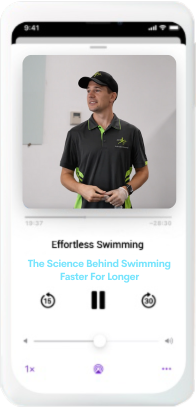
In this episode, we welcome back Nick Jankovskis, a sports scientist and endurance performance coach at METS Performance Consulting. Nick is an expert in improving endurance performance through accurate analysis of physiological testing. We dive into fueling and how to test physiology for endurance sports, particularly focusing on Ironman events and long-distance races. Nick shares insights on the new equipment at METS Performance that allows for more detailed testing and provides better numbers for fueling requirements. Tune in now!
Related Content: Don’t Let The Numbers Rule Your Swimming with Nick Jankovskis
In this episode
- 00:49 Introduction and Upgrade in Equipment
- 03:37 Understanding the Breakdown of Fuel Utilization
- 08:35 Common Issues with Fueling
- 14:01 Timing and Frequency of Fuel Intake in Training Sessions
- 18:38 The Importance of Flexibility in Fueling
- 25:40 How Proper Fueling Can Improve Performance in Long Swimming Sessions
- 29:30 Challenges of Testing for Swimmers
- 39:41 Understanding Individual Differences in Fueling
- 52:12 The Power of Implementing Basic Fundamentals
- 53:18 Get in touch: Testing and Consultation Services
Links from this episode
- Website
- Change your technique and swim a smoother, easier freestyle with the Effortless Swimming membership
- Do you want to work with me personally to improve your technique? Join my swim technique coaching here
- View our freestyle clinic schedule around Australia
- Get 15% off our 8-week Faster Freestyle course by using the code 8week15
This podcast is brought to you by NanoClear — our own range of anti-fog swim goggles, designed by Effortless Swimming with the anti-fog treatment bonded into the lens itself (not sprayed on, so it doesn’t wear off after a few swims). Check out the NanoClear range here and use code PODCAST15 for 15% off.
Transcript
Read the full transcript
Welcome to the Effortless Swimming Podcast to show that help swimmers and triathletes love the water, become a better swimmer and live a better life. Here’s your host, Brenton Ford. Welcome to the Effortless Swimming Podcast. My guest today is someone who was on a couple of years back and we’re talking about fueling and how to test physiology for endurance sports. And I’ve got Nick from Mess Performance back on the podcast because they’ve recently got some new equipment in the lab where they can test things in a little bit more detail and get better numbers around what’s required for fueling when it comes to doing Ironman events, doing any sort of long distance events. And so I want to get stuck into the details and the data with what you’re looking at at the moment. So Nick, welcome back to the podcast. Now, good to be back on. So tell me about the recent upgrade in equipment that you’ve got in the lab and how
does that improve the ability for you guys to look at what’s required in terms of fueling for these long distance events? Yeah, so I guess the simple explanation is that the really major change is we just can measure carbon dioxide. So for those who don’t really understand the capability of that, it’s all of our old equipment and most metabolic devices or all metabolic devices have a capability to measure option consumption, which is great and tells us a lot of information around training zones, what we can implement in terms of training strategy, etc. But it doesn’t tell us necessarily about the breakdown of fuel utilization. It can tell us how much energy is required, but we don’t know what’s the percentage fat versus carb or how many grams an hour of carbohydrate, for example, are we expending at a particular intensity? And that’s where being able to measure someone’s carbon dioxide production can be really, really critical
because now we can have a look at what’s the ratio between carbon dioxide being produced and oxygen consumption being taken in, basically take that CO2 number divided by VO2, we then get an understanding of what’s the breakdown versus fat versus carb. And essentially, that comes from more carbon dioxide being produced is an indicator that more carbohydrates been being utilized. So that really is just kind of an add on to what we’re already able to look at to then enable us to be a bit more refined in, or how do we understand and assess someone’s ability to utilize different fuels at different intensities and how do they do that? But then also off the back end, how can we manipulate or utilize some of that data to best inform how an athlete would be able to fuel up for a race? We’ve already been able to be pretty good at understanding maybe their pacing in the past and relative percentage of physiology, but now it’s
taking it that one step further to just open up that last little bit, which we know a lot of insurance athletes, they train the house down, they race pretty well, but then just fall over on the fueling side of things. And this is a way for us to get a clearer insight on how could we maybe get ahead of that and be able to ultimately prevent a little bit of that bonking effect or fuel flat, that most people sort of feel middle to back end of races. Like, can we eliminate that as a bit of a factor so that the race can go as best you can the whole way through. And in particular, we’re really talking the long distance stuff. So most of this data is only really going to be massively important for those events that go for two, two and a half, three hours plus. Think shorter than that, not as massive requirement in terms of the fueling. And most people intuitively know, like if you’re a 10k runner, probably not going to need to take much fuel if your
race is done in 40 odd minutes. Whereas when you’re out there for four, five, seven, 10, 15 hours, however long, yeah, it’s pretty important we get the fuel back in and we do it in a way that it’s going to mean we get the most out of ourselves, but maintain as much of our performance as we can. So what are the issues that you would come across when someone’s not fueling correctly? Like you talk about overfueling, underfueling, the maybe having taking out on the wrong type of fuel as well. So like, what are those issues that people do run into? Yeah, the classic, the classic ones are like gastrointestinal upset is that is the classic one, like a feeling of sickness, vomiting, whatever it might be, that can come from a few different, few different means. It can be set up by what you ate in the days leading in. So what was your, what was your fueling strategy leading into the event? Are you more sensitive to certain types of foods
that day to day in your training, probably it’s needed here or there, but in a race circumstance, when the pace is on your working hard, you then trying to smash in something quite potent, like a gel or, or lots of sports drinks, whatever it might be, you might have already delivered a bit of gut damage there. So heading into the race, you kind of already you’re kind of setting yourself up for a little bit of failure there. So that can be part of it. But then the other ones are like significantly overfueling, never really ends well. And also significantly overfueling, like there’s probably an argument to say, if you’re taking it a bit much on the bike and then a little less on the run, it kind of can balance it out a little bit. But if you consistently weigh over a good example, just arbitrary numbers, he would be like, if someone only needed 80 grams of carbs an hour, but they were trying to take 120 just because it’s more doesn’t necessarily
mean it’s better in your individual circumstance for other athletes, it might, but you might not. And then what you end up with is a bunch of carbs sitting in your gut. We get redistribution of blood flow away from your digestive system in endurance. So the more you work, the more you start sweating, blood flow goes away from the guts. Okay, it’s harder to break down. So what’s it going to do? It’s just going to sit there. And that’s that sick feeling you’re starting, you’re starting to get. We just aren’t able to break it down. So over over can be an issue. The other side of things is maybe not necessarily from a gastrointestinal upset, but significant underfueling is the one that probably most of us at some point in time of experience of hitting the wall. And you just go, I just feel like I can’t. I don’t feel too bad, but I just feel like I can’t produce the intensity. Workload drops. Why we’re running out of carbohydrate, we don’t have
we don’t have the capacity to get enough back in. So we have to start utilizing fat as more of a fuel source. What does that mean? Well, if we’re doing that, requires more and more option, it takes a longer time to break down to get the same energy requirement. So our intensity has to drop. So you feel not too bad. You just have that that sensation of just can’t keep going at the same pace I was before. That’s probably the other side of it. When you get that fueling wrong more so from an underfueling perspective, rather than the over, but then it also comes down to like, well, what was the combination? And you point out there like taking sports drinks, gels, like those who can, like you ask most athletes, like that typically go, gels and fluids is a bit easier. And yeah, the more simple the source or the more liquid, I guess, if you want to put on a scale of solids through the liquids, more liquid, typically the
easier it is to get down. But I mean, some athletes can take bars and solids. That’s great. What’s within that? Even in the more highly or the easier stuff to get down, like fluids and gels, like what’s the mix? The classic one that’s been around for a number of years at most to be aware of is, well, a bit of research showed that 60 grams of glucose was all we can really absorb in an hour. So how do I get 80 or 90 and will I have to use something like a fructose or a different, like a different method of transporting that carbohydrate or a different kind of carbohydrate, which is where we start to see the multidections of sucrose, like different combinations, these two to one mixes in gels now. But positive in that regard, we can get more in. Negative, like if you’ve got an intolerance to fructose, gels that have a high amount of fructose in them are going to be no good. Like, so there’s this, there’s a lot of individuality that has to come
into play here to get that fueling aspect right. And as we mentioned before, I mean, like that’s where some of the testing can come into it to understand, well, how much do you actually need to dial in the amount of fuel to put back in, which makes it then a little bit easier to navigate that, like it can help prevent you from significantly overfueling. Or if you need a lot of carbs, well, what is actually the best method? What ratio for you is going to be a little bit better? What sits best in your guts practicalities, like some guys might want to go all fluids, but if you’re in an Ironman, you’re on the bike and you can only carry maybe two, maybe a third bottle, is that going to be enough of your own customized nutrition to get you through the bike leg? Or are you going to have to pick up on course and how does that change the dynamic? So that individual aspect plays a big role in terms of then getting that right. And as a result, we’ve
got all these factors laid out so many more. You can see why a lot of athletes do often get it wrong. Yeah, exactly right. There’s just so many different factors, right? So how do you recommend someone figure out what works for them? So obviously the testing, I want to talk about how you do the testing in a moment, but how would you recommend that someone say in training, I guess to figure out what what they can hold, what what tastes good, what they can keep down, that sort of thing. Well, the obvious thing is you have to practice what you’re about to race with, at the very least at an equal amount in the exact nutrition. Like four, six weeks before, ideally, so the latest it’s like you should have a couple of times in your training gone out, practiced exactly what the race nutrition is going to look like because you’ll find out really, really quickly in a training session if that’s going to work or not. The number of times I’ve had
conversations where an athlete and it might not even been their own foal in terms of I lost a gel out the back of my pocket, coming off the bike and so I got onto the run and I had to pick up a different brand on course and I had no issues in training and then on the day I just had a gastrointestinal upset because the gel was a different brand, it was a different mix. So something like that can be a bit of an issue. So going and practicing it like anything else in your acts, like you practice your swim bike run, you go and practice your transitions, you practice being aero, like those things we need to practice, but you need to practice what does your nutrition look like because then you can also you’ll get a pretty good feel of what feels about right. You don’t have to initially go and completely race your whole race four weeks out to then go oh it’s the exact intensity I’ve done, what was that like it some practicalities involved as
getting it close to but for the most part you’ll have a pretty good idea of well can I tolerate like 10 gels across a three hour ride for example you’ll know pretty quick because you get pretty sick pretty quick. This sits with it a bit but if it’s constantly an issue of okay after the seventh gel I have issues but anything seven gels or less I don’t okay maybe the additional source of carbohydrate has to come through fluids. So there’s a bit of trial and error of what your body responds to, tolerates what you like things like flavor fatigue are big like you want to do this a couple of times but don’t use your favorite gel all the time because then when you get to race day like if you’re sick of it by the before you even start probably not going to want to take it in like how do you respond to caffeinated gels versus non-caffeinated gels is a good example. Some people don’t have really any difference, some people find
they get a different response when you add caffeine into their mix. So like first and foremost go out train practice it start pretty cautiously so I’d probably if you’re doing this practically with no data inside it’s like I’d start on the lower side take a little bit less than you think train through train through and you can gradually sort of raise that and sort of see where that limit is of okay I’m probably tipping the limit of feeling a bit sick here versus like well what do I need and you typically going to find a pretty good mark. Like often you find most people are going to be pretty okay pending the type of event like we want to use iron man as an example most people should be pretty okay somewhere between 70 to 90 grams an hour and this is regard like if we’re taking in most people’s body size like that that all plays a factor most males in particular going to be like 70 to 90 you’re probably going to be okay as an
amateur. It’s still a broad range and that’s why you just need to go and do a bit of trial and error if you don’t have any data. If you do have the data though then it’s easier because we can pinpoint well what are we trying to raise that as an intensity well what does that mean as a grams of carbohydrate being used per hour as an example so that it’s a little bit more plug-and-play to narrow that target or even start looking at we know and people here all the time it’s like well the pros are using 120, 130, 140 grams an hour potentially or higher well okay there’s a reason for that because they’re writing average or normalised powers of like 320 watts for 90 k like it’s it’s significantly greater when the average amateur can cold so there’s an added energy expenditure in that most of us who are writing mid to low 200 as an example in in a 70.3 probably don’t need to be fueling at 120 grams an hour you just probably not expending that much
energy so well there’s a way that maybe we could keep the energy expenditure down by just focusing on a different part of our performance but baseline point is like you just have to go and practice it and then probably the second part to that is once you get a bit of a strategy and you go okay I reckon this is going to be pretty good let’s say that was 80 grams an hour the one I like to do is go out a couple of times with some more difficult sources than what you’re going to take on race day so training session might be instead of taking all my stuff through gels and fluids like I’m going to do on race day I’m going to try and do a couple of those gels and some of that fluids as some solids so maybe take some bananas with you or bars choose whatever might be not with any intent to use them on race day but just to get you a little bit a little bit more comfortable with some gut tolerance whether it has a significant effect or not it’s a bit
debatable which was but arguably it’s like most of the anecdotal evidence is most people go out they train with a bit more difficult source body gets a little bit better or they feel a little bit better at breaking it down and take and keeping it down so that when they take the gels and the fluids it’s like this feels nice and easy I can get it down it’s not an issue on race day and the icing on the cake to that would be if you’re going to race at 80 grams an hour if you could train maybe at 85 or 90 grams an hour a couple of times just to give you a taste of that harder stuff you then go back on race day and you race a little bit lower you’re pretty good there’s sort of some practical ones you can use before you get into the details of testing and what about how regularly you should be taking it in do you have a sort of rule of thumb does it differ for people what’s that timeline look like yeah it’s going to differ it’s going
to differ a little bit and then ultimately it’s going to differ a bit based on the source you’re taking in so something like a like if you’re going solids and bars of course they’re going to take a bit longer to break down so you’re clearly not going to have to take it in as frequently like you probably don’t need to put a bar a power bar for example down every 20 minutes you’d make yourself sick really quick typically gels like again pending the race and how much you’re trying to get back in and what the size of the gel is like the precision like 90 gram gels now like the massive ones you might you might want to take a third of that every half hour for example like that that might work often like we tend to say gels sort of every 20 to 30 minutes is a pretty typical window for most athletes are pretty comfortable with fluids is kind of a floating one of it plays a bit into your hydration so
how much fluid are you taking on is probably going to be a little bit linked to how thirsty you feel as well
some days you might be taking more fluids more regularly other days you might take bigger bigger blocks of fluid like every 30 to 40 minutes tip it like something like a gel like if you worked off a strategy of I’m going to take it roughly every 30 odd minutes in a race as an example probably isn’t going to be too much of an issue it’s then more looking at like well what’s the big picture like if I’m going to be on the bike for four four or five six hours have a long or I’m out there running for three hours four hours whatever might be what is my total energy requirement likely to be what do I need to get overall to kind of manage that deficit and then ultimately like how much do I need to put in an hour to kind of keep me in the range once you get that like and this is where the testing is useful it’s like now you can start to go well that does probably mean a gel every a gel at least every 40 minutes and so you can now go okay
if a gel’s got 24 grams you can start to calculate it out and work out that spacing but then the individual plays like if you’re if you’re feeling like you’re needing a bit of extra fuel like you’re going to start a fade a little here back into the back end of Iran or whatever it might be like top yourself up like it’s probably a pretty clear sign no difference to when you see from a dehydration perspective if you feel thirsty drink like that that’s not that’s not a bad thing like your body’s telling you a needs more fluid so if you can tune yourself to understand that sort of change as well like you’re probably going to be able to adjust that on the fly but I I’ve never been a big fan nutrition or hydration wise of here is the exact you cannot deviate from every 20 minutes you have to take this gel every 20 but it’s like there’s a lot more play to that and what happens in the race circumstance that you need to be a little bit more
flexible with something as simple as aid stations like okay we know where they are in an Ironman course but we get to race day and there’s a howling headwind so it’s going to take you 10 minutes longer to get to that aid station you don’t want to run out of gels 20 minutes ago you still got another 10 minutes you now you got nothing to get through for half an hour till you get to the aid station and you’re like now I have to pick something up and it’s probably a bit late near you scrambling your best plan might have been great but it gets thrown out the window because of a headwind so like there’s there’s a little bit of back and forth so I always encourage a little bit of flexibility with that have a clear idea of where you roughly want to be but then it’s a case of be flexible with what happens on race day how it plays out and be flexible with okay if things go wrong well what’s my backup plan or if I lose a bottle what’s my backup plan
that how much am I going to pick up or how can I make that up or substitute it which that’s where I’ve always liked some of the brands that have very seamless nutrition like a good good example is like back when I think they’re still around performance was a thing it’s like on the the side of their gels and their like drink mix it was like the same combination so how it like can’t remember the exact numbers but like how many scoops of your drink mix meant it equal to gel etc like if you can know that kind of math and a lot of brands had that near but like if you know that kind of mass it gives you more of that flexibility when things go wrong to then make decisions on the fly to then either get back on track or or make up for something you’ve lost but for me from the psychological stress of I didn’t take a gel like my race is blown up like no yeah used to gel on the 20-minute mark and you took it on the 23 like it’s
it’s probably going to be pretty insignificant yeah absolutely and and what about with training sessions so is there kind of a with with training sessions let’s say it goes for an hour is that something that you should be fueling for and then if not what sort of point should someone start to take on some sort of nutrition with their with their training sessions depending on the duration because most people are probably swimming for I’d say 45 minutes to an hour some some people would then be going an hour to an hour 30 and then if you’re doing some probably more endurance based swimming or longer distance swimming you’ll have some sessions that are in the two hours possibly more if you’re training for you know doing a solid 8k to 10k session but what’s it what are your thoughts there with the duration of sessions and when you should start to take fuel on yeah I think it’s a really interesting one from a training perspective and definitely like there’s
there’s a little bit more noise around it I reckon particularly from what the Norwegian triathlon program’s doing like and they put it really well they talk about like a calorie budget so everything that we do is essentially governed by energy in versus energy out like so if you look at us like a swimmy a tibial swimming week of I don’t know if you had you’ll keep it simple if you swim every day of the week so seven days a week seven sessions within that you’re probably gonna have some sessions of the longer sessions of the shorter more intense less intense realistically like across that whole week there is there’s an amount of energy you are going to have to expend to get through all seven of those sessions as long as you are fueled up appropriately for that and can balance that out effectively you should get to the end of the week and like the calories that were expended were were pretty much met by the calories that you put back in
so where it starts to become interesting is some sessions you probably won’t have to feel you go and do a nice easy 30 40 minute sort of recovery swim cool you’re probably not going to need to take a lot there having said that if you had a like an hour and a half swim in the morning big long endurance set we just accumulating some volume you probably want to fill up within the back end of that if you had to jump back in the pool later that day and double up into a second session because there’s only so many opportunities for you to get that fuel back in okay it’s a low intensity you’re you’re not expending a lot at the time and you could probably make that up pretty well immediately afterwards by you jump in first thing in the morning you have a bit of a meal afterwards you’re probably okay but what we’re actually looking for there is the fueling during that session is probably actually just trying to get you ahead for the next one
where you’re going to jump in and do some hard hundreds fifties whatever it might be intensities up energy expenditures up so we’re not initially fueling for now we’re kind of fueling for that that future as well if you approach your week kind of like that you’ll start to see opportunities where it’s like yeah probably do need to maybe top up a bit more here you might get through and go yeah okay all I’ve got today is a an hour pretty easy tomorrow is going to be a rest day well yeah you can have more than enough time to fuel up off the back of that hour the rest of that day the rest of the following day big hard session on the following day after that you go okay I’m pretty topped up ready to go for it but I know this is going to be a big energy cost so what is then coming up after that do I now need to fuel in that big hard session for then the day after that but I think yeah that perspective of looking at the whole week and going
well I’m going to need fuel for everything here but where the more important sessions where I definitely need a lot where I’m going to be expending a lot more aka longer more intense typically and as a result you can start to play around with like a session leading into that probably need to take a little bit more having said that as well like you then look at some opportunities in the week where you’re like probably okay to be on pretty low fuel if I if I don’t have if I had a solid day yesterday I fueled up though have a kind of rest day and then I’m going into like an hour of just cruising like volume building aerobic k’s maybe some technique work you can potentially go into that session off of the back of a rest day where you’ve fueled up heaps you can then go to sleep overnight basically be 10 hours fast to jump in the pool to an hour and not have any issues fuel up afterwards and go so you can start to build this sort of undulation throughout the week and
plan for it in terms of so that kind of looks at less traditionally then often it would normally be where you fuel in your long sessions because you’re in there for a long time like you get past an hour you’re going to be start you’re going to be starting to need maybe a little bit anyway if it’s sort of less than 40 minutes you’re probably more often than not don’t need to take much or anything at all maybe tiny bits like from a sport performance perspective recommendation on nutrition typically it’s like anything less than 60 minutes most of the time we you don’t really worry about like if you want to take something it’s pretty minimal like you might like one that gets thrown around in different environments probably not the swimming side of things but like team sport would be like carbohydrate rinsing so if it’s a short intense game basketball you might not want to actually drink a lot of calories or eat a lot but you might just
swirl some Gatorade in the mouth and spit it back out and we actually get a little like sort of neurological stimulus from that that can aid a bit of performance we get out to 90 minutes okay you probably want to take a little bit two two and a half hours plus is more the length of session we’re looking at where it’s like you kind of have to be taking something now if you had a time trial pretty much as solid as you could go for 90 minutes
pretty fair to say by the end of that 90 you’re pretty much going to be out of carbohydrate so like that if the intensity is down you go a bit longer it’s like yeah I’m probably gonna have to fuel if the intensity is up but it’s a bit shorter yeah maybe I need a bit as well they’re the kind of levers we can start to pull but often anything really 60 minutes or less it’s kind of like there’s going to be a low need to put carbs in at the time but that doesn’t mean you don’t then finish the session jump out and don’t don’t take anything in for hours it’s like well you would just have to make sure you’re taking in something immediately post to top up what you expended but as I said before like if you’re doing like double training days like that’s probably the one that for me where I go a lot of athletes who do a session don’t take fuel during just try and top up afterwards and then get into another session might be missing out a little bit there
it might just be an opportunity get some extra fuel early bank that you’re still expending at the time finish that session have a bit of rest sure you can get some in but based on time pressures etc you might have have a huge amount of time get to the second session you just want to make sure that you’re meeting the requirements enough because it’s pretty easy when the case go up or volume goes up weight to weight most injurious athletes and it’s pretty easy to then start see start seeing the weight come down pretty quickly on the scales and really a lot of that is why I’m in a deficit typically like I’m taking in not enough calories for what I’m expending
which if you’re trying to get the weight down not too bad if you’re trying to maintain performance and in the session and you don’t really want the weight down well clearly we’re not putting enough back in so are we missing an ability to push harder in those sessions because you don’t have the fuel to do it maybe yeah yeah it’s I think in swimming in particular it’s like helping the tourists for not really fueling within sessions and I’m guilty of that as well and
towards the end of a session if you are trying for an hour and a half and you’re doing some pretty solid work in there yeah you’re likely to start to fill it in that last 15 to 20 minutes but yeah it’s just something that I think because we’re in the pool we haven’t really got you do have options to fuel but it’s just something that’s probably less considered than it is for the running or the or the riding I think so it’s I’ve told this on the podcast quite a few times but every year we do 100 hundreds we do a 10k swim prior to Christmas and it’s only been the last two three years that I’ve actually fueled properly and I’ve gotten faster through that 100 hundreds because I’ve kind of loosened up gotten into the groove and I’ve got that fuel to to use whereas 10 years ago when we were doing that I would fade so hard in those last 30 100s and it’s all no surprise because I’ve I’ve had probably 30 grams maybe 40 grams of carbs an hour when it really had to be
probably twice that so yeah just that is a realization that came really late to to me but in hindsight it’s just so obvious but it’s just one of those things that I’ve never really considered because it wasn’t you know with swimming it’s lots of intervals our events are very short but the training sessions are often quite long so I think it’s just something as a as a kid we never really considered a whole lot of it was are you drinking enough but not really about the fuel side of it yeah and that that’s where like 100 hundreds it’s a great example of like it’s probably an extreme end of no one’s really going out doing that session as a regular session but you think about that principle of you get to that same point you feel like you’re starting to fade from a training perspective if you get into that point in training sessions and you feel like you’re starting to fade just think about the the difference of well if I can prevent my if I can prevent that
fading effect or enhance my ability to maintain the quality through that back end of the session
logically it has to have a better training stimulus doesn’t it it’s like if there was if you get through or 100 hundreds out of that or you get through 60 or 70 of them pretty good and then you start fading in the last 30 if that was actually a training stimulus as the example I go imagine the difference consistently if you were able to hit those extra 20 even extra 20 or 30 typically 30 of those efforts more consistently all the way through like because you’ve got the energy to do it well if you were then applying that to a race circumstance we had to be on do at 10k or or you were racing if your race was 100 hundreds as a race quickly could then it’s kind of like or as consistent as you could you go I’m going to be better serve because I’ve got better training stimulus because I’m not fading I could keep the same pace up for another 20 reps which means the muscular endurance component has got a far greater stimulus like we’re influencing these other factors
as well and that’s the important bit so if you’ve got the fuel there your training quality typically when that volume is up there it’s just going to be a bit higher and if any any way we can get your training quality higher largely is going to mean we’re going to recover like if you’re going to recover better from that you’re probably going to perform better off the back and I’d even say too probably without the sports as well but for swimming you’re going to maintain your form and your technique a lot better because you can hold those positions and hold that technique which is going to be training training better technique but on the other side of that too is when you do fatigue and you might be rotating more and you’re dropping your arm and you’re compromising some of those positions so that can lead to injury as well so I think it’s got benefits outside of what you mentioned as well
yeah definitely now just in terms of the like the testing where should someone start so someone who’s an endurance athlete whether that’s long distance swimming or triathlons long distance running what would you say would be necessary things for them to do if they are considering their their fueling as in when they come to someone like you what are what are those couple of tests that you think this is what you need to do
this podcast is proudly brought to you by form smart swim goggles the smart swim too is the next generation of forms award winning augmented reality technology they have an integrated heart rate monitor for constant real time heart rate monitoring which allows you to accurately train your heart rate zones which is the first time that you can do this in the pool something we’ve had when biking and running but the first time that you can now do it in the pool another huge feature that they have released is the swim straight feature this is something that allows you to swim in a straight line without needing to sight it’s a digital compass in the goggle display and it’s race approved by world triathlon USA triathlon as well as other leading race organizers and athletes are already shaving valuable time off their swims by swimming straighter I’m a huge fan of these goggles I’ve used them for the last couple of years and it’s something that I use
each and every week and even just the simplest features of being able to see your splits after every turn makes a huge difference to not only the way that you train but the enjoyment that you can have in the pool and the new smart swim too has a reduced tech pack size by 15% making them slightly smaller the new ice seals fit a wider variety of facial structures and the new straps and anchor points have been moved and adjusted so that it has a more stable fit there’s additional features which I haven’t mentioned like the head coach workouts training plans as well as integrations with training peaks Strava and more this is something for all abilities and levels of swimmer and available worldwide from formswim.com forward slash effortless and to get 10% off the smart swim one goggles use the code effortless swim on checkout that’s formswim.com forward slash effortless and use the code effortless swim on checkout for 10% off the smart swim one goggles
yeah so there’s kind of like the way we sort of split it up is for the most part you need you need pretty long periods of time to assess like specific intensity so we’ve identified as like we really want at least sort of five minutes at a particular intensity so often that can look a bit like a step test like traditionally where we looked like things like VO2 max you know one minute or three minute step tests and things like that you probably want a bit longer time to steady state to look at it we sort of provide that as a bit of a starting point for most amateur athletes in particular if we’re looking really at the refined end though I go for the elite and pro side of things you can go much longer and you can be as much you can kind of get as specific as you like in terms of and we have a discussion with guys around do we want to come in and do half an hour of race intensity or do we want to get you on the trainer for like we’re discussing this
the other day with guys like do we want to get you on the trainer for three hours like not put anything on and then we’ll start assessment at the end of that three hours because we’ve put you in a very specific state so like you can go quite extreme with that I guess the the purpose is well what are we trying to look for
but then it’s also like we’ll practicalities I mean not everyone’s got the time to be able to come in ride say ride for three hours on the bike at race intensity and then be able to go and assess what is their fuel utilization look like at the end of that so we sort of look at a bit of like a five-minute step test go very gradually in intensity not trying to get you to max at all like as I mentioned right at the start that fat carb contribution really kind of is only important to us until about well until we get what a we call a value of one as a respiratory quotient so that would indicate 100% carbohydrate that pretty much lines up with most people’s threshold so that like that traditional like 40 to an hour so anything above that 100% carbohydrate so it’s it’s kind of like it’s not really relevant to us we want everything from below that to look at that percentage split so yeah we’ll put some on the bike say five minutes at something really low
maybe like 100 watts and then every five minute blocking like over 20 or 30 watts very gradually until we get up to that that’s what a threshold point call the test there because that gives us more than enough scope to look at those refined intensities but then where I see these working really effectively is doing this is as part of that lead-up preparation so you might have six or eight or so weeks before a key event you’ve got a pretty good idea of where you’re going to be sitting like it there might be some added little fitness you might gain on the top but we’re not talking you’re going to be 20% better in that time you might be a couple of percent better over that last six weeks
so a good example would be from a triathlon sense like on the bike okay you’re pretty we’re pretty confident based on your training based on all of your other data and some assessment we might have done previously at the start of your prep it’s pretty clear you might be able to hold roughly between 200 let’s call it 220 to 250 watts throughout the Ironman like that that’s kind of the range you’re going I reckon it’s somewhere there let’s try narrow it in this is where that this testing becomes really useful because then we can look really specifically at well what do you like at 200 what do you like at 220 what do you like at 240 what do you like at 260 that there is going to be very clear as to the energy requirement the fat versus carb utilization at each of those intensities to then also make a clear picture of 200 watts yeah like you might be 70 30 split in favor of fat utilization awesome like he’s super effective you get the 220
it’s like yeah it’s still pretty good you got a 240 watts and now it’s kind of 70 30 the other way like that’s a bit of a break point for you okay pretty clear that if you’re going to try and race on that limit of 240 to 50 is that doable from a carbohydrate utilization maybe maybe not whereas say 220 could be really effective like based on how many grams an hour you’re utilizing what’s like armetry numbers let’s say it was like 120 grams an hour you’re using it at that intensity 110
a lot of people can sort of put that back or get close to putting that back in especially on the bike so you go we could kind of be not net zero completely because you’ll never be but pretty close to minimizing how much we’ve actually expended or got left by the time we’ve expended and put it back in by the end of the bike you go up that stage up 20 30 watts it’s like well now this is becoming unrealistic for us in terms of what we can carry how much we can actually put in and tolerate so
looking at that at that timing as I said like six to eight weeks then gives you that scope to take that information and as we mentioned before go and practice it and go and actually say well how does this work practically what do I have to carry with me how much how often you can plan out that does that now mean it’s 20 30 40 minutes apart those gels or so it gives you that ability to go and play with it we’re still enough time before race day to still tweak and refine some of that that individual adjustment or that that sort of trial and error aspect that you have to do with some parts of it at least we’ve narrowed the gap really really close to go this is pretty much where we’re at
go and jump in training sessions see how that plays around then we can make some further adjustments so then you’re not going straight into a race off oh well we tested we tested on Monday and I was feeling a little bit fatigued because I hadn’t fully finished my taper yet like oh okay Nick said I’d probably need to take about 85 grams now but I’ve been training at 60 races on Sunday the first time I’m going to do it is race day terrible idea so that that’s where I sort of see that part of it working really effectively the bonus of our new equipment though is like at the beginning of a preparation you could still assess that to then have a look at well what has changed over a training block so over a 12 week block at 220 watts have we become less reliant on carbohydrate as a result of our significant increase in aerobic form or fitness like how is that that profile slight slightly shifted you can get some insights there and we can get some of that
little bit of insight from our
typical testing protocols that we do when we look at things like VO2 max like we’re still assessing that covered off so production in the background it’s just most accurate when you get those longer periods to let it really stabilise and steady statement intensity and and ultimately that’s what you’re doing on race day like most of these events we’re talking two and a half three hours four hours plus you’re not going to be very volatile in your intensity it’s it’s going to be pretty consistent pretty constant so we want to lock in and get a really accurate representation of where you’re out there so yeah there’s no ways you can do it but the the way we’re finding is going to be quite effective and practical to then come in do a session and get some pretty close numbers is is doing something like a five minute little step test to then get some get some more clarity and really zone in and I think that’s that’s an important one to remember here is like
we’re not we’re not necessarily claiming to be able to 100% be like bang this is the number this is exactly what you need to take and it’s going to be foolproof it’s not like it’s it’s narrowing narrowing the focus as close as we can because we understand that there are so many other little variables like hot conditions most people expend more calories in hot conditions so we can talk about these numbers great for a Melbourne based race but if you then head up to Cairns later in the year or the next year and go on race and try and utilize that exact combination of numbers it probably is going to be slightly different because you’re utilizing more just because it’s hot like so we it gives us that ability to narrow it in and eliminate some of the big error
that subtle refinement still is a bit of the art behind it of how it works for you and actually like okay do we need to go five five grams up five grams down like is it more bottles less bottles more gels less gels like that type of stuff is then you just have to kind of work with the numbers to then get to well what is the exact outcome for you because that the numbers on paper could look very similar athlete ABC but then what that translates to on course on race day could look a little bit different because of those individual differences and what about a swimmer who maybe listen to this and they’re not not doing triathlons but they’re into the longer distance from being how how does the testing apply to them so you said it’s on the on the bike does that still apply like you’re looking at you’re looking at heart rate and then how many carbs they’re burning at a certain heart rate like what’s how’s that work for swimmers yeah it’s it’s an interesting one
because it it’s it’s just difficult to test right so the the optimal scenario would be fine for us to find a way that we could test in the water which most of the text not really water friendly but like where we’ve done a bit before with particularly some of the open water swimmers on the bikes probably the getting into the lab and looking at some things on the bike as much as it’s not exactly the same you can then have a look at well there’s going to be some similarities around well what’s maybe a heart rate response or your total energy expenditure what does that sort of break down to the major difficulty you’re always going to find from a swimming perspective of some of this testing unless you can specifically test at a pool or in the water or at the very least on some form of swimming erg so to speak like I’ve seen them you were saying and like that’s the pool hand pool handle things that that look a bit ridiculous but like that’s at least closer to mimic it
that like the specificity aspect is is pretty key in terms of like how well you move through the water because swimming is a really great example right similar no different to I guess cycling aerodynamics where you move through the water really well your energy cost is probably going to be a little bit lower for the same speed as someone who moves through the water poorly so that then plays into total calories which plays into fat best carb percentage and ultimately grams of carbs per hour I’ve played around a little bit with some more portable devices like that don’t measure the carbon dioxide but oxygen consumption at the pool and I think that’s potentially one further that I want to keep looking out to get some comparisons of well what does that oxygen consumption look like from a swimming perspective it’s a bit tricky and it’s a bit estimated but you can get kind of close but then how do we take some of those numbers and compare that to
say how the same person would react in a bike test look at the oxygen consumption the energy the energy cost and try and overlay and match that a bit to get it a bit closer that’s definitely something I’d like to be exploring a bit more in the future I think that’s kind of the practical way to look at it I mean you’re going to get a good indication but like like I said like the difference the difference between say 160 beats per minute in the pool and 160 beats per minute on the bike for the same person could actually still have quite a bit of variance in how to utilize and fuel again talking about a sport that’s very low body dominant versus up body dominant and that specificity is going to throw it out a touch so that’s where it does like in all honesty it does become hard like is it something that yeah if we had unlimited budget it would be nice if we could have an endless pool or a or an ability to be able to test guys in the water
because I think that would be that would be perfect but also the reality I think as well from a swimming perspective
you can ask this probably better for me it’s like
for most people other than if you’re going and swimming like an English channel right is it fair to say that like most swimming events most even like long distance swimming events would be two hours and less
yes
yeah I’m thinking like a a 10k swim which is kind of the start of what you consider a marathon swim for most people that’s the elite guys will do that just under two hours yep so most people will take yeah three probably somewhere in the sort of three hours there I’d think so but yeah most most of the events would be would be pretty well under that two hour two hour mark unless they’re starting to do marathon swims yeah and so that’s where I go like the marathon swims become significantly different but those most of those events under sort of like two hours as we said before like you’ve probably got about 90 90 to two hours of carbohydrate at a solid intensity if you’re swimming at a pretty low intensity relative to be sustainable enough you go you might want to top up 30 40 grams an hour maybe 50 grams an hour if you feel like you need a bit more you probably get away with that if you went higher like if you’re a bigger bigger athlete
you feel like maybe you don’t move through the water as effectively as someone else like you just sort of powering along you might want to go a bit higher to 60 or 70 but
within that that’s kind of like if across that two hour period like if you took say four typical gels so that’s that’s going to be like 24 25 grams an hour and maybe you had a way of getting some liquid carbs in like if you could get 250 mils down of a carbohydrate mix in a bottle partway through that or even across the event you get through a whole 500 mil bottle of carbohydrate you might get another 40 to 60 there okay that would typically for me probably be more than enough and again the time duration is your big saviour so like unless you’re going to go swim for six hours like that that’s where it probably becomes far more relevant to really be pumping up really specific amounts but if you if you’re swimming for say like an hour hour and a half solid distance major things have made sure you got enough fuel in you before you start and then if you’ve got an ability to take something during it’s going to be useful probably no different to
like an olympic distance triathlete like it’s for most people it’s too too in a bit out it’s like you can get away with taking a couple of gels but you don’t probably don’t need to plan it as as specifically because of the duration requirement like you might be expending a lot but the duration requirement dictates that you’ve probably got enough to get you through that kind of event but yeah I mean optimal scenario would be like if you’re doing something longer like that’s definitely you got four or five six marathon swim type stuff six hour plus like yeah you you probably want to be having a look at like what are you specifically utilising at different intensities as best you can because there’s just much more risk of you running out of fuel
yeah definitely and I mean I can I know a lot of and coach quite a few people who are doing those longer longer swims and it’s just yeah something that they’ve got a they’ve got a really consider and yeah I was curious about the testing and the relevance of it if they’re they’re on the bike and whether that just like looking at the heart rate and the oxygen consumption how how well that ties in but as you said it’s it’s very it’s quite a different sport being on the bike compared to swimming so and then you’ve also got the factor of sometimes they’re in cold water sometimes they’re in in warm water and that can obviously play a part of it too so yeah and it’s it’s kind of like you know what’s the you know how how does someone swim fastest like it’s just so different right it’s like it’s why you come get a swim analysis because what you need to work on is very different than another person same with the nutrition requirements so yeah a lot of different
different factors there and just to sort of finish off here I mean you’ve you’ve done what you’ve done for a very long time work with a lot of different athletes what any sort of lessons or things that you’ve come to learn over the last couple of years where is common knowledge for you and you’re like well everyone would know this right but when you see someone who’s sort of brand new and you’re talking about this stuff they’re like my god I can’t believe like I never knew this before and I know I’ve talked about a few things already but does anything else spring to mind? in terms of like fueling specifically or or anything else that comes to mind as well yeah I think like if you if you’re talking sort of brand new like you make the assumption that we’ve sort of got like an amateur there and I go most most of the time most people are getting into it think a lot of the stuff that we do and I I do in particular is exclusively pro and elite at lowest
at lowest level if you like top and age group and it’s like well no like the same principles we get from what the pro and elite guys do we’re looking at maybe can I find half a percent so
great example is take some of the best swimmers in the world like
the one that always sticks in my mind when I talk swimmers always Michael Phelps because I grew up watching him and unbelievable but you go yeah there’s probably a few things we could talk to him about about swim technique but the end of the day is the fastest bloke on the planet like maybe he’s doing something pretty well oh like we might be able to find we want to find half a percent but like he’s already right up there the bonus of working with somebody who’s brand new is a lot of the stuff that we do to find that half a percent in that top end athlete will give the brand newbie amateur like 15 20 percent because it’s easy wins right we’re looking at on your side the technique aspect I go like yeah teach someone to swim properly like is it such a fundamental part of the sport to make them swim better like we can talk about training sessions and zones and all that but like if you can’t swim you can’t swim triathlon and that no different like
cycling wise the number of amateur athletes who go who come in and like we put them through so testing we’re like gee you can punch in pretty good numbers and then you look at their race time and then you look at a photo of their race and you’re like on the bike
they move they’re like their movement and flexibility is pretty good but they just have never even considered well what could I do to be a bit more aero because I actually punched them pretty I can punch them good power and I feel okay and I don’t have any issues in a race pretty okay but like they didn’t even consider that aerodynamics was something they have to worry about like choice of skin suit like how many of us as amateurs in the past you go I’ll just get the one that’s on sale it’s like well if you spent the extra 50 bucks like that could have actually been a time saver of a minute two minutes like so like things like that I think not like making sure that even as the amateur is like you’re not necessarily showing away from some of these things that seem complex and sports science he’s like oh it’s just for professionals because quite often like some of the little things that we can take from that those learnings will then make big differences
like number of times we’ve seen people have just got into running or triathlon and they come in they do a test and then six months based on those zones that they’ve got they just implement really a simple training strategy but they’ve refined it because of the numbers in the lab they come back in six months time they’re miles ahead like it’s that’s the type of thing that we’re just trying to help accelerate for you by using these principles like there’s a reason the things we learned from elite athletes are useful it’s because like they’re the best in the world and they’re like we’re finding ways to improve them if if those little things improve them there’s probably parts of that that we can take and implement to the newbie who is then going to get significantly better as a result like it’s not going to turn you into a pro overnight and we some of the really refined stuff probably still we go okay we might not use some of that because that’s a bit advanced
or complex particularly on the training side of things like I’m not going to ask a brand new athlete to go and do like fight like 30 seconds at 500 watts on a bike like straight out the gate like yeah probably going to work our way to that but like some of the basic stuff is like just keeping a zone two like he keeping it and in a zone two that is actually your zone two not just one that Garmin told you it’s like well we actually assessed it and he is the marker and the threshold well you go and implement that for three months you’re going to be significantly better off so like that is kind of an overall principle is the way I approach it like it’s no like real one thing it’s it’s just embracing the fact that yes sport sport science is is far bigger than just Olympic level world championship type stuff it’s like yeah plays a big role there but what we can learn from those people is is just as important to then apply to someone who’s
getting into it for the first time because if you can if you can train a little bit more effectively I can guarantee you if you’re an amateur who’s got to work a nine to five and you go I can’t do 300 k’s a week like a professional marathon runner can but I can do 50 k’s a week well how do we make that 50 k’s as effective as possible so that you can still rock up to work and not be exhausted and then get home and see kids and not be exhausted like there’s other factors at play like best in the world sometimes all they have to worry about is wake up, train, eat, sleep go again yeah but yeah that’s where that the sports science side just helps dial it in a little bit you don’t have to go overkill but it’s just like taking those little bits and just really like trying to learn the little tips and tricks that’ll make you significantly better at your level with the realistic expectations it’s like okay yeah we can probably gain a fair bit out of this
but it’s not going to mean I was not going to turn me into a pro athlete and I don’t have to be a pro athlete to go and do it but all I’m trying to do is find ways to get me better like if you look at like that that’s that’s the best way to approach it yeah I remember listening to like yesterday the day before I was listening to a guy who used to be a personal trainer and he was talking about how over like the like 10 years you know he’d just get people in the gym they wanted to lose weight and you know for them it’s just like it feels like it’s a really big thing but he’s like well look if you just yeah if you eat less eat better food start moving more it’s like it’s just it’s really straight forwards right and so he’d have thousands of different people come in get these results and he’s just like yeah like obviously that’s gonna gonna happen but for that person it can feel like you know really really big deal kind of thing and like it’s hard for them
to achieve the results that they see with others but I think the benefit that like we see working with a lot of different kinds of people it’s like well if you implement these things it’s like it’s gonna it’s gonna happen it’s like it’s not surprising if you follow these these steps and have good good fundamentals and just follow the basics and you might not know what the basics are right now but it doesn’t mean that you can’t you can’t learn them and take them on board and yeah you know give it enough time with following those things and you’re gonna you’re gonna see the results it’s just not not a surprise anymore so that’s it’s really good point and and for those that are listening I mean you’re you guys are primarily based in in Melbourne how can people get in touch with you go through the tests that we’ve talked about if they’re looking to perhaps work on their their fueling or just know what training zones to stick to and that kind of thing
yeah so easiest way to get in contact my email nickatmetsperformance.com you can find us on social media so atmetsperformance Instagram from the easiest or or on my personal account but yeah it’s like click as an email get in touch yes we are primarily based in Melbourne we have thought and maybe at some point we’ll try and get interstate a little bit but it’s just difficult with a few other commitments but but yeah get in touch even if you are interstate and you’re able to get access to maybe to a university nearby and and do some testing more than happy to to tee up something online to have a chat through the data because like sometimes just the way that it is explained or or broken down can be the key difference like whether you’re in our specific lab and do the test like says a lot of people who’ve reached out about setting up their own labs whether it’s overseas interstate and it’s sort of like well running the test is the easy bit but like how do you know
all this data stuff it’s like a lot of it just takes time in terms of we spend a lot of time looking at a lot of data over the years but but breaking down that data and understanding how it applies is the key bit so even if you’ve got some data you’re able to go to somewhere that’s that’s not us and you want us to have a look at it like yeah feel free to get in touch as well because like that can that can be a really good way especially for anyone who’s listening overseas I’ve had that a few times go and get a test and then get in contact with us and we can help break it down because as well we know sometimes you go to a university it’s like they’ll do the test what you did as a research study but it’s not really their job or or role to explain it because they’re they’re worried about just the data collection like that’s cool yeah if you’re able to if you want to send through some data and us to have a look at it yeah more than happy to do that
but if you are in Melbourne yeah coming up to the lab I’d love to get people in there to test it and keep collecting some more data on our end to keep understanding how different people respond I think that’s going to be a key one for us over the next little while is continuing to say well what patterns can we find and different kinds of athletes or similar athletes and then how can we further utilize some of that data to to make better decisions on our end as well
Fantastic Nick thanks again for being on the podcast I said we’ll go for 30 or 40 minutes but as always we know how to go over we’ve got lots to talk about so I appreciate being on the podcast again thanks mate all good thanks for having us Thanks for listening to the Effortless Swimming Podcast If you’d like us to help you become a faster more efficient swimmer go to www.effortlessswimming.com