








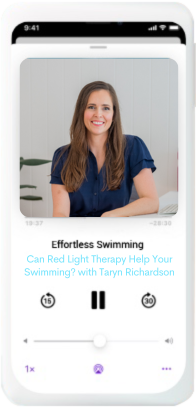
In this episode, sports dietitian and researcher Taryn Richardson dives into the science behind red light therapy, exploring its potential for recovery, performance, and overall health. She shares practical advice on device selection, optimal usage, and the science-supported benefits for athletes seeking faster recovery and better performance.
00:39 What is red light therapy and its scientific basis
01:25 Historical research and terminology: photobiomodulation
02:22 Claims and benefits of red light therapy
03:19 Applications in physiotherapy, veterinary, and sports
05:17 How red light interacts with the body and mitochondria
07:37 Mitochondria as batteries and the effect of light wavelengths
08:59 Impact on performance, recovery, and sleep
10:34 Best timing for red light therapy: post-exercise recovery
12:31 Using red light therapy for injury and tissue repair
13:37 Types of devices and market options
16:12 Choosing quality devices and verification
18:01 Optimal distance and wavelength considerations
18:47 Personal routine and practical tips
20:39 Additional light exposure strategies
21:40 Athletes adopting red light therapy
22:37 How to access Taryn’s masterclass
23:31 Infrared vs red light therapy: differences
24:22 Expected benefits and user experiences
Transform your freestyle to be effortless and smooth with online video analysis:
https://effortlessswimming.com/courses-membership/
Try the new Nanoclear Anti-fog Goggles: https://bit.ly/nanocleargoggles
Taryn Richardson
https://www.dietitianapproved.com/academy
Transcript
Read the full transcript
Welcome to the Effortless Swimming Podcast to show that help swimmers and triathletes love the water, become a better swimmer and live a better life. Here’s your host, Brenton Ford. Welcome to the Effortless Swimming Podcast. I guess today is someone who’s been on multiple times. Taryn Richardson, almost like our resident dietician, sports nutritionist. You’ve been on a number of times. Sports dietician. Sorry, sports dietician. Helping with nutrition, though, for athletes who are either doing triathlon, swimming as well. You’ve got a swimming background. So we’ve had you on multiple times, but we’ve got a slightly different topic we’re going to cover today because you’ve been diving very deep into red light therapy. So I’d love to kind of get into that and what is it firstly? And then what made you want to look into red light therapy as for recovery, health, and what are the benefits of it? So firstly, welcome back. It’s been a
little while. Thank you. Good to be back. And yeah, I did get like super nerdy on red light therapy. It tends to be something that I do, I think. I really want to understand the science behind things and whether it’s actually evidence-based and then how to apply that science to an athlete is kind of my happy place. And so when did this sort of start for you and how long was it that you were looking into red light therapy? I probably started at the end of 2025 and spent about three months diving into the literature and there is six decades of research in red light therapy. So I’m necessarily called red light therapy though in the literature. Its technical term is photobiomodulation, which is a bit of a handful. So it’s basically the health effects and the physiological effects of light that happen in our body. And it’s just everywhere at the moment. I’m sure you’ve seen it and we’ll probably see it more in our feed now that we’re talking about it today,
but it’s just been exploding in the athlete space. And I wanted to understand if it was actually beneficial, is it something that we should be looking at? And obviously, what are the mechanism? How is this thing working? And how can we apply that to an athlete perspective to help our health and performance? So what are the broader benefits or claims of using red light therapy? There’s so many and you almost have to keep your wits about you a little bit when it comes to this because it claims to do so many things from like hair loss, college reduction, decreasing doms, increasing performance, wound healing, tissue repair, like Alzheimer’s dementia. There’s basically no medical space that it has left untouched, but originally started in physiotherapy and a lot of chiropractic clinics will use it in terms of an injury recovery type situation. So you may have been to a physio or a chiropractor where they’ve shone some red light on an injured
knee or something like that to try and get you better faster. And it’s also been used widely in the animal space. A lot of vets will use it on say horses who have got a sore knee to try and get them back to walking and running faster. And out of those ones, is there any wild claims that you sort of looked into and like, okay, it’s, it’s definitely not not helping with that. And that’s just a little bit of a stretch.
There’s quite a lot of things that have been studied in the literature over the last six decades. And I think we’re getting clearer and clearer now. The thing that’s unclear is actually athletic performance. And I think the problem with the athlete space is that we’ll talk a little bit about like what actually red light therapy or long wavelength light therapy is and the wavelengths and how many minutes you do it for and the power and the distance away from your body and all those sorts of things. So it’s actually really hard to put research into practice because when we talk about all these varied health spaces, the literature has got, you know, research in certain wavelengths for that type of thing. And then in other papers used a different wavelength again, trying to deal with it. So it’s really hard to try and just steal it down. In the athlete performance space, they’re using it pre exercise or not pre exercise and that can
make a difference and an impact in our performance. So in terms of swimming, they’ve used it in terms of time trial performance for 100 meters, 200 meters. And I think 400 meters off the top of my head and it didn’t show any change in time trial performance. But it just means that we haven’t kind of nutted down to exactly what that protocol might be or they’ve used a wavelength that maybe it wasn’t effective. And then when they have actually used the red light therapy or long wavelength light therapy is also variable too. So I think actually athlete performance like from a time trial perspective is where it’s not so clear just yet. And then how does it actually work? So how does actually interact with the with the body? Yep. So can we take a step back? Can we talk about light? Now I’m a sports dietitian, right? Light is not my area of expertise. But what I did in my total nerd hole of trying to understand red light therapy was speak to a lot of experts in
this space and read I read a lot of research. Our current modern environment is set up where we are inside under LEDs all day. And we know that that is not good for us. So just generally from a light and a health perspective, we need to be outside in the sun, not necessarily outside getting burnt, but outside say in the morning at dawn, when the sun’s coming up and also sort of dusk when the sun is setting. It’s a great time to be outside and having the sun hit our skin because the sun is the complete spectrum of light. Okay, it has all of the wavelengths in it. It’s it’s complete. When we talk about LEDs and like UVs and x-rays and stuff, it’s the lower end of the light spectrum, like small wavelength. So the waves are tight. And then when we talk about red light therapy or photobiomodulation or long wavelength light therapy or low level laser therapy or their multiple different names in the literature around what this actually is called. They use
longer wavelengths of light as therapy to stimulate these biological processes. So taking away red light therapy altogether, you need to be outside more in the sun because you’ve got that full, you know, visible and non visible spectrum of light that’s helping to interact with our cells. So you might have seen that around. Like I know Huberman’s doing a lot of talk about light and health and being outside. In terms of how red light therapy actually works, what it does is it the light shines into our skin, the longer the wavelength, the deeper it goes. However, too long and it doesn’t penetrate our skin anymore. It just kind of does surface heating, but you know, that’s a story for another day. It stimulates our mitochondria. Do you remember mitochondria from like school biology back in the day? The powerhouse of the cell. It is its main job is to produce energy or ATP for us. So the the light therapy shines on the little mitochondria and if you want to
get real nerdy, it increases nitric oxide bioavailability. So that’s a basodilator. It also increases reactive oxygen species and it also lubricates the electron transport chain. So if none of that makes sense, what I like to talk about is thinking about long wavelength light therapy as a battery recharger. So if you think about the mitochondria as a battery, long wavelength light will recharge your batteries whereas a lot shorter wavelengths like LEDs or UV will discharge the battery and that is a really nice analogy to try and understand what is actually going on here. If we can expose ourselves to more longer wavelengths, which are missing in the modern environment, then that’s going to help us recharge so that we can do more things, kick more goals, train harder, recover faster, which everyone wants to do. And then so how does that then relate to other things like sleep inflammation, our overall performance and things like
that? Yeah, so if we’ve got a full battery, it’s almost like carb loading, but if you’ve got a full battery, you should be able to, you know, recover faster from training and train harder the next time you train rather than always cruising around on empty. There’s lots of stuff in sleep, but it’s almost a different story because we’ve got our sleep and wake hormones, we’ve got our melatonin and serotonin and our gut also has its own mechanisms for action. It’s got its own circadian rhythm, which is very cool. So a lot of people have been using long wavelength light exposure before bed to almost help with the sleep process and a lot of people will report that they sleep better after that long wavelength light exposure before bed. But all of the research in trying to trigger our little mitochondria is to produce more energy is actually done in the morning when they’re more awake, it seems. I know this is super nerdy, but all
of the research is generally done before midday. So if you think of an athlete who’s training in the morning, doing some long wavelength light exposure either in the sunlight or with a red light therapy device after training is going to recharge your batteries after you’ve depleted them and then your little mitochondria produce more energy. That’s pretty cool. And so would you say it’s primarily, it should be primarily used as a recovery device as opposed to beforehand? A lot of the literature in exercise, they’ve done long wavelength light exposure pre-exercise. And I think that’s where the performance and the exercise performance with photobiomodulation is not really showing us performance improvement yet because it’s been done pre-exercise as a performance trial, like as in a time trial performance, like a hundred meter swim, for example. I think if we’re using it after exercise and we’re starting to think about that
because I work with endurance athletes, I only work with triathletes. These guys are discharging their batteries all day long, training at least once, often twice, sometimes three or four times. If you have, you know, done it after exercise from a recovery perspective to recharge the batteries, then you should be able to have, you know, more energy, the body’s humming along to train better again that day and also the next day. There’s also some research in doing it for recovery. They’re still doing it pre-exercise. I think this will change, right? I think in the next 10 years we’ll see a lot of change in protocols and studies coming out where they’re doing light exposure post-exercise to help recharge batteries. At the moment a lot of it’s being done pre-exercise, but the stuff in recovery is showing like improvement in doms and also making, like, helping to lower those markers of muscle damage after exercise, so lower CK, which is
one of those markers, reducing inflammation and also improving wound healing, which is pretty cute. It’s very cool. So if you’re using it to help recharge, then hopefully we’re getting that faster muscle recovery, better muscle recovery, reduced soreness and ultimately improved performance. And is there any other times that you think athletes should consider using red light therapy? I definitely think if you are injured, you should add this to your recovery path. I interviewed Emma Jeffcoat on my podcast recently and she had a full ankle reconstruction after sort of rolling an ankle in a run. She threw everything at it. She’s an Australian elite triathlete. She was doing like hyperbaric chamber, she was doing red light therapy, she was eating like so well and she was back up and out of the moon boot off crutches in record time. So if you are injured and you’ve got, you know, that pain, wound healing, any sort of tissue repair, then
I would definitely look at adding some long wavelength light therapy to your recovery process. Now someone who knows, like, I’ve heard about it, I’ve seen a few things here and there, but I don’t really know what kinds of devices out there. Like, what does the range of devices look like and then what should we consider using? Because how big is it? How small is it? I haven’t looked that deeply into it. So, yeah, what sort of things do you see out there in the market? Don’t worry, you’re going to start getting ads in your feed now for all sorts of things. No doubt. Yeah. They range, okay, and this is the problem with red light therapy or light therapy is that the devices are honestly a bit of the Wild West. You have, like, really small torches that like a physiotherapist might use or a vet and it’s like one LED, it’s tiny and it’s, you know, maybe battery operated and you can travel with it. All the way up to full body panels, like Lioner kind
of MRI machine or a sauna almost of, like, full body panels top and bottom, but there’s, you know, face masks there. I’ve seen undies with red light therapy on them. All sorts of wrap based things. There’s just going to be more and more products coming on the market. I’ve seen it toothbrush as well. So, the problem with the devices is they can go from, you know, a couple of hundred dollars up to, like, tens of thousands of dollars for essentially the same thing, but you’re also not going to get any more benefit from exposing your body to more light. It definitely is a switch type process. So, we turn on the switch, takes about three minutes for the mitochondria to be stimulated by that light to have an effect and then the more you do it, the more it seems to kind of wash it out and the effect becomes soggy. So, please don’t spend thousands and thousands on a massive device. Just get something small if you want to use it. And the other
thing that’s really so cool that I discovered is that mitochondria have this communication pathway. So, if you’ve got a sore knee, you might shine your red light therapy device on your knee, but within 24 hours, the mitochondria in your whole body have communicated and they’ve picked up some of the benefit and are improving their ATP production as a result. So, another reason why you don’t want a massive panel. Interesting. Okay. So, let’s say you’ve got a sore knee and a sore shoulder. You’ve got one device. What you’re saying there is it doesn’t, like, it doesn’t matter too much where you shine it because it’s going to have that effect through the body. Yeah. I would shine it on your knee for, like, three minutes. I call it five minutes. Shine it on your shoulder for five minutes and do that not every day, but maybe every couple of days. Is there a difference in the quality of devices or, like, is it fairly standard
and you’re not necessarily, the more you pay, the better the quality of the red light is. Yeah, no. It’s really hard. I think the barrier to entry into this market is very, very low because there’s so many products and a lot of them are coming out of China and the components that go into it is literally, like, cheap LED lights. What you want to look for though, I wrote an entire masterclass and walked people through how to find a good device, is you want to find a company that has actually tested the wavelength of light that their device is spitting out with a light spectrometer. That’s really important and not many do that. I found a couple of companies that I’ve listed in my masterclass that do do that. Otherwise, you’re kind of winging it with someone that may not necessarily have all that much trust in it if they aren’t being really up front and clear around how much, like, this thing is kicking out. So you’re looking for
particular wavelengths and you’re also looking for, like, a radiance it’s called, so the power. Okay, and so they’ll be the things that will kind of vary between the devices but you can’t trust what the company’s saying unless they’ve verified it externally. Which, you know, I think it’s really important, right? I talk about supplements all the time and from an athlete perspective, you want third party batch tested supplements to make sure there’s no wider prohibited substances in there. It’s almost like that with red light therapy. You want to make sure that they’ve done, like, it probably costs a lot of money to do it so not everyone’s going to do it but look for a company that’s tested their devices with a light spectrometer and giving you the numbers, like, super clear on the website to say this is how much power this thing’s kicking out at these wavelengths. And then how far apart would you, so how far away from the body would
you, do you need to have it? It depends what you’re trying to treat but relatively close. So the companies will tell you at a certain distance what the power is so whether that’s like two inches, three inches, seven inches away, you want it fairly close
so that it gets into the skin. The longer the wavelength, the deeper it will penetrate. So if you’re looking at treating something like muscle then you want wavelengths at around the 850 nanometers but if you want to treat something surface level like you want, you know, beautiful skin, Brenton. Increase collagen production in your skin or you’re trying to heal a wound then you’d go a slightly shorter wavelength that’s sort of 660 nanometers.
Interesting, okay, wow. And now with me, it’s all up here. I remembered every wavelength, every number. I’ll have to watch this one back. So then for you, what has changed for you? Like what does your kind of weekly routine look like with red light therapy? Yeah, so it is something that I’m using personally. I think pretty much every athlete would benefit from using it and I don’t say that lightly. I say that because there’s no real harm. There’s nothing bad that’s going to come from exposing your body to some long wavelengths of light particularly if you work indoors and you’re sitting under LEDs all day. So I have a red light therapy device. It’s actually on behind me at the moment kicking out that beautiful light. It’s forming two functions in my life. Podcasting light. I use that two to three times a week because once you’ve stimulated those little mitochondria guys, like I said, more is not better. You don’t want to wash it out and
make it go all soggy. The effect should last for about five days. So twice a week is enough or, you know, up to three. Like so do it every sort of two to three days. Ideally in the morning after a training session when maybe your battery is on the lower end and like no more than 20 minutes really at a time. The other thing that I’ve done like if we’re not even talking about red light therapy is to put an incandescent globe on my desk. I also have that on right now at the moment. An incandescent bulb is the old school ones with the little filament in there. It is also the full spectrum just like the sun. So I sit with that at my desk in the mornings until about lunchtime and then I turn that off so that I’ve got my exposure to the long wavelength light even though I’m sitting inside at my desk.
And even just having it like off in the corner is kind of a enough like it doesn’t need to be that close. No, those incandescents kick out a lot of heat. I don’t know if you if you remember them from childhood they don’t tend to make them anymore. You can buy them online. They do kick out a lot of heat so in winter it’s really nice and warm and light from that just bounces around everywhere. Yeah, okay. Something I would never have thought of. The interesting thing here like I know from previous like podcasts and knowing you you don’t mince words like you’ll tell it how it is and you’ll tell you and like you’re very direct direct in what you in what you think. So you wouldn’t be saying would be saying this if you hadn’t studied it and everything. So it’s I think it’s such a yes that’s an interesting thing to be looking at and considering and obviously I imagine a lot of athletes have now started to pick this up and
started to started to use it as well. Yeah they have. I am very much a sports dietitian but I love to improve people’s health for the long term and also performance in their sport and I’m a very holistic type person so I’ll sort out somebody’s nutrition but I’m not afraid to tackle sleep and all the other things that go into making your body just this like humming little machine that’s working at its best. So a lot of my athletes do use it. They have a small device. They have a company that I’ve recommended for them because they’ve done that diligence of testing there with a light spectrometer that’s global and I’ve sort of also helped them. My masterclass helps people with the protocol of how to do it from an athlete perspective. And where can people find that and we’ll also include this on the show notes but all your research you’ve kind of condensed into this masterclass and all the all the all the work and and study has sort of gone
into this so how would you how can people find that? Yeah definitely don’t do what I did. Definitely don’t do what I did and spend three months or more just getting real nerdy and reading six decades of research. It did take me a lot of time to go through. The masterclass is available on my website dietitianapproved.com. If you go to the home page you’ll be able to find it and I can share the direct link with you too.
Excellent thank you we’ll put that in the show notes and anything we haven’t covered that you think would that we think we should mention as well for this stuff. Yeah one of the things one of the common questions I get is can I just go to an infrared sauna and they’re two completely different things. So the red light therapy or photobiomodulation is long wavelength light therapy and infrared sauna is it is still a very long wavelength but it’s too long it’s gone too far to the point where it’s not actually penetrating into your under your skin and stimulating those biological processes with your mitochondria anymore. It’s causing your skin the surface of your skin to heat up which is why I feel sort of hot and sweaty in an infrared sauna. So two completely different things even though they both have red in the name you might be able to go to an infrared sauna though and ask them like a lot of places locally now have a red light tower
that you can request to add on for an extra ten dollars or something if you go into the sauna. You could also try red light therapy or long wavelength light therapy at a lot of gyms like I said this is exploding so there might be a way that you can try before you buy it is a long it’s a bit of a long game though like you know you need to wait about probably 12 weeks to feel a benefit and it’s not like drinking a cup of coffee and you’re like yeah feel awesome. It is a more of a slow burn benefit and something you can do at any age at any stage and has no harm really if you’re doing it the right way.
And what would what would those benefits like be that you would would feel like is it that faster recovery less less Dom’s that sort of thing. Yeah I have I’ve got some personal examples like the first time I used mine I felt like I just drunk a coffee doesn’t feel like that anymore like it just felt so much energy I felt super charged. I’ve also used it on like really sore quads just gone too heavy in the gym and had really bad muscles on us and use that and by the end of the day it was gone like that’s anecdotal evidence you’d have to see how it felt for yourself but like it’s some of a lot of it is instantaneous and then other is more slower burn of like feeling more energized less run down wound healing is faster. You know maybe you’ve got some more hair growth on your head if you’re starting to lose that I lost all mind through having baby so I’m looking forward to that coming back with some red light therapy actually.
Yeah nice well I appreciate you jumping on the podcast again and completely different topic this time but something I knew of but didn’t know much about so this has been really insightful and I think I’m on my way to
get a red light device after that because I trust your trust your opinion and obviously you’ve done the research on it so yeah I don’t need a whole lot of convincing after that so yeah that’s my next purchase that’ll be this afternoon I think so yeah thank you so much and for those that are listening how can they best get in touch with you whether that’s the red light stuff or for anything dietitian related. Best place to find me is website at dietitianapproved.com I’m also on Instagram at dietitian.approved on YouTube the same name Facebook as well LinkedIn pretty much everywhere I have my own podcast called the triathlon nutrition academy and I’m going to send you the master class Brenton you can watch it on two times the speed and I’ll give you my recommendation on what product you should buy with discount code if you’re lucky fantastic that’s going to be my next question so yeah thanks again Sharon great to chat and no doubt we’ll have you back
on in the next couple of months thanks Brenton thanks for listening to the Effortless Swimming podcast if you’d like us to help you become a faster more efficient swimmer go to www.effortlesswimming.com