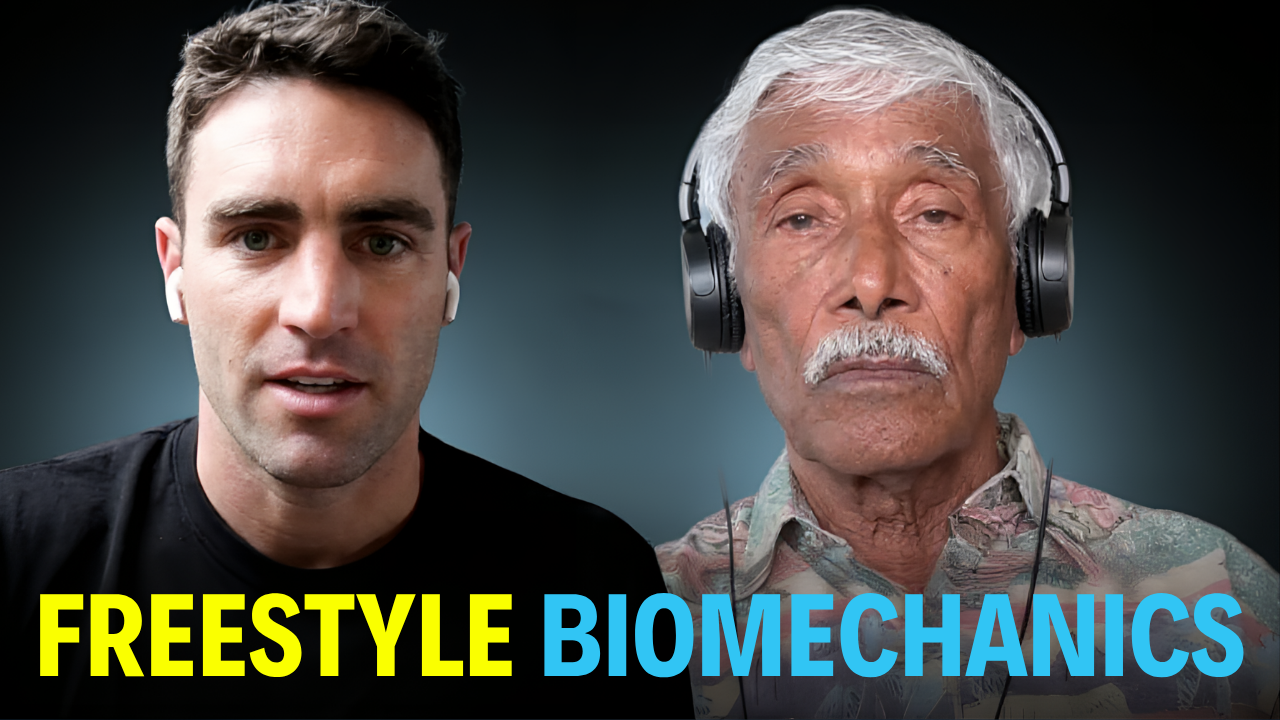








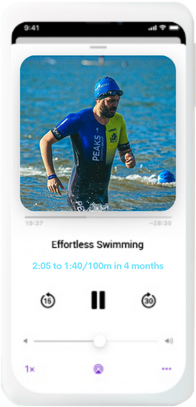
I’ve got another guest on today’s podcast. He is someone who I started working with recently to help improve his swimming, and he’s gone from around 205 pace per 100 and down to the low 140s. I hope you enjoy it!
01:31 Swimming Background
04:14 Started Triathlon
05:25 I Found Effortless Swimming
06:38 5 Day Catch Challenge
08:37 Joining The Membership
12:50 Coaching And Feedback
19:57 First Race Win
22:06 Impressive Improvement
25:01 I Don’t Hate Swimming Anymore
27:00 What’s Next?
Check out the Effortless Swimming membership for online coaching options.
View our freestyle clinic schedule around Australia.
Join the 5 Day Catch Challenge
Form Goggles
Watch the episode on YouTube:
Transcript
Read the full transcript
Welcome to the Effortless Swimming Podcast, the show that helps swimmers and triathletes love the water, become a better swimmer, and live a better life. Here’s your host, Brenton Ford.
Welcome back to another episode of the Effortless Swimming podcast. I’ve got another guest on today, someone who started working with fairly recently, to help improve his swimming, and he’s gone from around 205 paces per 100, and down to the low 140s. And he sent me an email last week, and I said, I’d love to get you on to a podcast, chat about what you’ve changed over the last couple of months to see where that improvement has come from. Because I know a lot of the swimmers and the triathletes that listen to this podcast, that watch our YouTube channel, they are round about that two minute pace when they first start. And I think breaking that two minute barrier is one of the first things that a lot of people look to do. So Felipe, welcome to the podcast. Oh, thank you, Brenton. It’s a very nice pleasure to be here. And I was so happy to have our improvements. I had to email you and congratulate you. And that’s why I’m here. I’m here to tell
good things because the program is incredible. And I want more people to hear about it. I appreciate that very much. And I mean, all the all the coaching in the world doesn’t do anything unless the swimmer themselves actually does the work. So put that right right back on you because you’ve obviously done some things very well to make such a good improvement in a short amount of time. So when you first started, I guess when you first came across effortless swimming and stuff that we do, what were you what was your your swimming like before you started with this? So I always been an athlete, actually, I love to run my father’s ultra marathoner. He runs 100 ks 160 ks he loves it. And he still does. Yeah, he’s 63 was his birthday yesterday actually. Wow, that’s amazing. Yeah. And he loves to do this stuff. And I start to run because of him. So all my life I’ve been running, I’ve been playing American football,
soccer, wrestling, I love to do sports, but I never been a swimmer. So during the pandemics, like most people happened to most people, I got very fat. I gained a lot of weight. I gained almost 35 kilos. I was with 103 kilos. So I wanted to lose that weight. And I had a knee problem. I couldn’t run too much. I love to run but I couldn’t run too much. And because of my weight, I couldn’t run even like five minutes because my knee would start to hurt. So I had to start doing another things to start to get back on running. So I started biking. And it was very nice. And I really appreciated the time that I biked and I lost some weight. But I felt that I needed more. And right next to my house, there was a gym that had a swimming. So my wife, she used to be a very good swimmer and she stopped because of all the our business and the pandemic. And she said, Oh, why don’t we go back to swimming? So you can start
swimming. I love to swim. You can swim with me. You get motivated. We lose weight together. I said, Okay, good. And I tell you, I didn’t like swimming. I hated swimming. Because swimming lacks something that other sports don’t. It’s not natural for most people. It’s different than running. Because when you run, you, you say, I want to get faster, just move your leg faster, you know, you want to bike faster, you just move your, you just put my power in your legs. But if you say, I want to swim faster, sometimes you, you swing your arms very fast, and you go nowhere, you actually swing slower. So I was getting very frustrated. But I still I still went with her and I started to do triathlons because I kind of I was losing weight, I could go back to running. But swimming was also something that I have to swim. I have to swim because triathlons have to swimming. But I wasn’t seeing much improvement. So we hired a coach here to do private
lessons because me and my wife live in a small city here in Brazil, very small city. And we didn’t have coaches right on the side of the pool. And we hired a coach was very expensive. And we thought, oh, okay, so she will help me get faster, she will improve my technique. And what I saw was that the coach didn’t help much. She was she she fixed some of my technique. She had some drills on training. But it was very superficial. And so I started to look at videos on YouTube to see how I could improve my swimming because I wasn’t really happy. And I realized that there was a lot of things that could have done that was much easier than what was being taught to me that would improve my swim. So I came across your channel. And I started to learn about the catch and how to position myself in the water. And this changed a lot. It was much easier to me to understand how to swim. And that thing that I said earlier,
because swimming doesn’t have and it’s not natural, started to feel natural, because I understand how to swim, how to move my arms under the water, something that most of the coaches, they don’t do. They just tell you, oh, you have to swing like that and do like that. But they never tell you what to do, and what to fix and how to fix or why you do this, why you do that. And when I start to practice what you said, it was like night and day. And so I had to fire this coach and we start to work out just with the lessons, with the videos and also the workouts that my coach, my triathlon coach used to send me. But the improvement wasn’t that great. Also, I was swimming like 205 to 200 meters. So my wife said, oh, look, this guy is Brenton, he has this five day catch challenge. I said, I don’t know, man, five day, what, what, what will help? I don’t believe much because I’ve been swimming for like four months,
five months, and I’ve been trying nothing helps, how, how comes, how come my five day challenge, a five day catch challenge will help me. But I mean, it’s not something that I would waste a lot of time or money, it was just five days. And it was, I don’t even remember the price was so cheap. So I said, okay, let’s try. And it was really, really cool because the first lesson you taught something really, really nice, that is the entry. Because that’s something that I had, I had a lot of, lots of problems before, because I never knew how to do the proper entry. And they was, they were like, always telling me, oh, you have to do it like this, have to do like this. Okay, well, what is this? How do I do this? So you talk, no, you have to do with the tip of your fingers and push forward. And you hear a noise when you hear the noise. That’s when you see that is you’re doing the right. And you see the bubbles come
out. So it was very easy to understand what should I do? And how should I not do? And what was I had to do, right? And it was, it was incredible. This first day that we practice, I could see that my time was a little faster. Of course, it’s not easy to see like one, two seconds, but I could see that was streaming faster. So I got really excited because it was so easy to put the lesson on on the swimming or in practice. So okay, let’s finish this. And right after the five days, I could see that my times have dropped for like 510 seconds per 100 meters. So it was really nice. And then I went to the membership, where you do the video analysis. And then and I thought to myself, wow, I don’t know if this will change much. I cannot believe that one video analysis will change a lot. And I was swimming 150, 150 during this time. And then you do the analysis and right after the analysis, something you told me, and I was swimming 145 right
in the next session. So it was really incredible. Can you remember what that was? Yes, because my head was like this. I was swimming like this. Too deep. Too deep. Yeah, and my shoulders was rotating a lot. So this was creating a drag and just it was incredible to see. I’m telling you, because right after I put my head up, I could see that I was swimming so much faster. I mean, I could feel I was swimming so much faster. And and also my shoulder. So it was really an easy adjustment that if you didn’t tell me I would do this for months and months and months and months without somebody to tell me, oh, this was is wrong. And how much time would I waste how much said, would I waste trying to train properly and do the workouts and don’t see the easy results because this is easy results. It’s results that you can change like this, you know, of course, you have to someone to tell you to do the analysis. But how much time
would I waste if I didn’t have this proper analysis? So I was really happy to have you seen my video and taught me how to do well and to put in practices and it working. That’s great to hear. And I mean, what you’re talking about there is safe. There’s sort of two levels of membership is we’ve got the stroke analysis membership where people send videos every week or two. And I work with them one on one. And then we’ve got just we’ve got our general video membership, which is what you’re a part of. And each month I do a member’s call where people will send in their videos and I’ll I’ll analyze them and I’ll give them one or two things just to focus on like what you had there with with head position. And I had a swimmer on the weekend who was he had trouble with his hips and legs sinking. And so the queue that he thought was well head it’s all about head position. So he was swimming with his head about 30 centimetres
underneath the water. So he was really, really deep and was basically swimming underwater. And then we got him to change it said look, you don’t need to go that far down with your head to bring your legs up. It’s one factor. But there’s a lot of other things that contribute to good body position. And so then we just got him to change it. So the top of his head was still out of the water. He was looking slightly forwards, not straight down slightly forwards. And his body position was exactly the same. He was still horizontal there. But it’s a much easier position to be in rather than trying to swim underneath the water. So sometimes there’s queues that people will pick up from coaches or videos and they can take it a little bit too far. So without that guidance, they’re like, you know, they might be doing the thing that they’re told to do, but they might be doing it too much or might not be completely there. So I
think that’s why it’s good to be able to get that sort of feedback from someone who knows whether or not you’re doing the right thing. Because there’s just so much to think about in swimming, but it’s very easy to either not know what you’re doing wrong or not know what the right thing to do is just like your entry. Because there’s a bit going on when you come over the top of the water. But as you mentioned, if you enter fingertips first, your elbow is up and then you just reach out in front and straighten the arm, you’ll often hear the elbow slap down a little bit. And if you are in a very quiet place, you listen to a good swimmer, you’ll hear that elbow just slapping down. Now it doesn’t mean you need to have this big splash every time. You don’t want that, but you will hear that elbow slap. So it’s a good queue that you’ve actually entered in the right position. So you mentioned with the first coach you started working with that the changes were
superficial. So by that, do you mean as in more like visually, it might make your stroke look better, but it didn’t lead to faster times? Is that what got that right? What happened is that I move a lot by feedback and I understand that your coaching
teaches how to listen to your body properly or feel the water properly. So what usually she would tell me was, oh, don’t cross your arm like that. Don’t cross your arm in front of your head. I said, okay, I won’t cross my arm. So I was trying to swim and I was crossing my arm. And this was like for weeks. And she went, oh, you’re crossing your arm. You’re crossing your arm. You’re crossing your arm. And I said, okay, how can I improve that? And you told me something that really clicked on me. And he said, oh, think that you are swimming on rails, that you’re moving through rails. So I said, oh, that’s really nice. That’s really easy to understand and to memorize and to put in practice because you said, oh, don’t swing your arm. So okay, so should I go here? Should I go here? Should I go here? When you said, oh, swing like you’re swimming on rails, it’s easy to understand. And you say, oh, listen to the water splashing. It’s something that you
can understand. And you see, oh, I’m doing wrong. I’m doing right or am I doing wrong? And also with the other drills because sometimes the coaches tell you oh, your head is too deep or it’s too close to your body or anything just like me. And sometimes you don’t know, okay, so what should I do? Oh, just move your head upwards. But how upwards? How much? So because you can see in your videos that you show the proper position and what to look for when you do these kinds of things. It’s much easier to understand and to put in practice, you know. When you say, oh, so let’s prepare for the catch, this phase of the catch. Okay, so you do the drill where you feel the water hitting your hands and how you should feel about the water hitting your arms. So this prepares you. You feel the feedback from your body and can put that in practice. It’s different than said, oh, just do like this with your arms. And because the coach sometimes
is not inside the pool, he won’t tell you, oh, you’re doing it this right or you’re doing it this wrong. And this is what happened with my wife because she’s been a swimmer for like five years and she never heard of the catch property. She never done the catch property because all the coaches were told, oh, you have to put your elbow upwards. You have to swing your elbow upwards. Okay, so what else? Okay, just put your elbow upwards and that that will help. But it’s not that it’s not just that it’s a lot of things that come before and come after. And so this helped a lot to understand why, to understand how and to, and the better thing is to see how your body or the water responds to what you’re doing. So this changes everything. It’s much easier to put in practice than just oh, don’t cross your arms, you know. Yeah, that’s the, and I’ve, yeah, I’ve experienced that too. And I had, again, some swimmers on the weekend at some
clinics were running. And one of the swimmers was saying, a coach would say, you drop in your elbow. You’re dropping your elbow. It’s like, I don’t even know what that means. Like, I don’t know what it’s really talking about and what I should be doing instead. So it’s all well and good to point out what someone’s doing wrong in their stroke. But if you don’t give them the way to fix it, you don’t explain it properly on what they actually need to do, and then how they can start to retrain that movement. So like, well, there’s no point really sort of pointing it out. So yeah, then that’s something that I’ve tried to do with the coaching and explain it in a way where you can actually understand why you do it, what you should actually do, and then how it should feel. Because swing is very much a feeling sort of sport. There’s a lot going on. And if you know how it should feel and know that when you do make some changes that it won’t
necessarily feel better straight away, because it might be different than what you’ve done. And sometimes different feels awkward and uncomfortable, which is often the case. Then you’ll be willing to put up with that awkward feeling for a couple of weeks until it starts to become natural. So yeah, I think that’s a really important part that sometimes gets missed when people are being coached. This podcast is brought to you by our sponsor, Form Goggles. Form combines the world’s smartest goggles, real-time metrics and guided workouts to make swimming fun. It’s the game-changing membership that’s redefining swimming. Form Smart Swim Goggles feature a transparent display that shows your time, distance and pace as you swim. And with the monthly or annual memberships you get a huge library of guided workouts that give you workout instructions and tips as you swim for an incredible workout. The Form Goggles are very much like what a Garmin does, but
it’s right in your goggles. So that display of time, pace and distance is something that I really love. So for the majority of the workouts that I do, I’ll wear my Form Goggles because that way I can hit the exact speed and pace that I want to hit. So every time I do a turn, it’ll tell me what my speed was for that turn and it’ll tell me my cumulative time. So if you’ve ever got any sets that we need to hit a certain pace or we need to progressively get quicker, then I know exactly whether I’m on track or falling behind. So that’s one of the main reasons that I love the Form Goggles and use them nearly every swim that I do. I have a lot of clients as well that use these in the open water to tell them what their pace is, because it can be a really hard thing to gauge when you go open water, but the Form Goggles will tell you what your pace is when you’re swimming open water, which is a really beneficial thing to do, especially if you find it
difficult to not go out too fast or to sustain the same speed across a 1k or 2k swim. The other thing I really like about the Form Goggles is that the form swim map, it breaks down everything about your session. So for a lot of sessions I’ll look back and see what was my stroke rate, what was my stroke count for certain parts of the main set, and with that feedback you can see your progression over time. So as you get fitter, as your technique improves, you can see those things getting better. So I really like to have a detailed analysis of each swim that I’m doing, especially as we can see those improvements. And when you purchase your Form Swim Goggles, you can save $15 US off the purchase price by using our coupon code effortless on checkout or go to formswim.com forward slash effortless. That’s formswim.com forward slash effortless. All right, back to the podcast. So now you had a race on the weekend and you said you, I think
was that your first, your first win in your age group for triathlon? Yes, this was my first, first, first place in my age group. So I had a PR on, this is me because people don’t see, I had a PR on the swim for a spring triathlon. My, my best time was 16 minutes. So I could reach 12, 12 minutes in 15 seconds design. So I was really happy and this 16 minutes was like four months ago. So it’s a really big improvement. Yeah. And, and this changed just right after I started to do the lessons and start to practice what you, you teach. And I mean the evolution is incredible. I was, I was telling my wife before the race, I was on the Coral with the others competitors. And that was a guy that used to run with me and he was very, very fast. And, and, and I always, always the time that was running with him I was very scared when he was doing with me because I knew that I would have to put a lot of work to catch him. And I knew that he
was a very good triathlete and a very good swimmer. So, and I said, okay, here we go again. I would suffer to catch this guy either on the bike or the run because I know that I won’t be able to catch him on the swim because I’ve been swimming for so little time and I don’t know if I’m a good swimmer. I don’t know how much I have improved. So, we went to the swim and it was an open water swing on the ocean. It was really nice. But then you don’t see much during the water, during the open water swim. It’s everybody and the waves and the sun. You cannot see much. But when we were getting up to, to take off our wetsuits and run for the transition, I saw the guy right on my side and I said, wow, I really have improved a lot because it’s not usual. This guy you used to swim when he was a kid, he was a child. So, for me it was really impressive because all I hear from people that other triathletes, oh, when you start to swim, when you’re old, it’s much
harder. Oh, you won’t be able to catch people that have been swimming since they were kids or these guys, you have to swim for many years to be in the front of the pack. But I mean, I don’t think that’s true. I think that people sometimes they don’t have the right coaching or the right teaching or they sometimes focus on things that are not like time, they won’t improve your time so much in the space. So, I was very happy to see my improvement. I was very happy to see this guy. And also, something that I always focus on is to spend as little time on my training and do these little hacks. Of course, they are not hacks but some things to pick up speed very easily. Like, if you can use a triathlon bike, a time trial bike, to bike your triathlon, it’s easier than using a road bike. If you have carbon shoes for your running, you should use your carbon shoes. So, I can tell you that your coaching was like carbon shoes for the swimming
because so much has improved. Carbon shoes for your swimming. Yeah, it’s really, it was really something that was amazing. I could not believe it. That’s fantastic. And speaking before the call, you also mentioned that you, you hadn’t really done one before but you, you did just recently like an all-out 100 just to see what you could get down to and you said you were down to a 122. Yes, I did. Right before the call, I wanted to see how much have I have improved because my fastest time was like 130 to something like two months ago and I don’t practice too much 100 sets. But this last Friday, my coach sent me 100 sets, five 100 sets and my last one was 122. So, I was very, very, very, very happy. That’s great. It’s funny that we had another guest on Matthew Tones and similar sort of progression to you. I think when he started from Emma, he might have been about a 210 and then he did a, he did an all-out 100 just to see where he’s at and he
was also 122. So, maybe your Matthew can be in competition with each other across the world. Yeah, that’s terrific and a huge improvement. So, before we finish up,
what does your swimming feel like now compared to four or five months ago? What do you feel in the water? Oh, the first thing is, I feel like I’m not hating swimming anymore. So, that’s a big win? Yeah, that’s like the huge win because I was riding so much to go to swim because, I mean, it’s hard. When you progress in the running, when you start running, like you start to run one kilometer, the next week you’re running two, the next week you’re running three and swimming is not like that. Actually, it wasn’t like that because now I can see that I can improve a lot. I can, my technique is so, has improved a lot that my body can perform much better and I can improve my times just by improving my stamina, my endurance. So, this changed a lot. I feel like confident that I am doing the right thing inside the water, not something that, oh, I think it’s right. I think that’s how you do it. Now I know that, okay, for me to swim
fast I have to have a good entry and then do the catch and pull and leave the water. And I know how to position my body. I know how to see if my breathing is right, how should I breathe. So, these kinds of things, they help a lot because you don’t feel like you’re just there in the water doing something that sometimes you don’t know if it’s the right thing or if it’s improving or if it’s getting worse because that’s how I felt in the beginning. Okay, is my stroke right? How do I know that my body position is okay? So, this helps a lot and it helps to see that I’m improving. And I feel that that’s something that rewards you. It’s very nice to go out in the pool and see that you improve at least one second. So, this was the thing that I liked the most of this program. We’ve got another member’s call coming up today where you’ve sent in another video. So, I’ll have a look and see what would the next one or two things
be for you to improve. And I think a great aim would be looking to get under or around you. That 130 mark would be a huge, a really big result. And I think you’ve got a half Ironman coming up in September from memory. September, yes. My goal was to swim 140 but I’m swimming 142 now. Maybe I can move up my goal. Let’s see. Yeah, let’s see. That’d be a good challenge. Well, I think come September after race, it’d be great to have you on the podcast and see how you’ve gone. So, no pressure leading into September but it’d be yeah, great to see how you’ve gone. It would be a pleasure, of course. To continue to follow the story. So, Felipe, I appreciate you being on the podcast and thanks very much for putting your trust in myself and the coaching to make you a better swimmer. And it’s awesome to see that you’ve been able to do that because I just love working with people who are open to changing and they get those results. So, thanks very much and
yeah, appreciate you being on the podcast. Thank you, Brenton. Just like I told you, I love to give people back what they deserve and you deserve a lot. I feel that there’s a lot of people that may be watching this podcast that are on the fence. How should I try his technique, his coaching, should I try this, should I try that and say, man, you just try it because the lessons are so short and they have so much improvement, they help you a lot and you feel much better. If you hate swimming just like I did if you are struggling to catch people on the water, I mean, I was that triathlete four or five months ago and now I cannot believe how the results I’m getting. So, that’s why I sent you an email just to send my best emotions to thank you because it really is incredible. I was hearing people said, oh, you never gonna be a good swimmer if you don’t swim four times a week, four kilometers every session and doing for three years and no, it’s not
like that. Of course it’s health but there’s something that you can do that will help you much more. Yeah, technique is a big one. Well, I think a good aim would be to beat your running friend out of the water and trying to catch on the bike. It’s a good aim. So, thanks again for your power. Appreciate you being on the podcast. Thank you, Renton. Thanks for listening to the Effortless Swimming Podcast. If you’d like us to help you become a faster, more efficient swimmer, go to www.effortlesswimming.com.