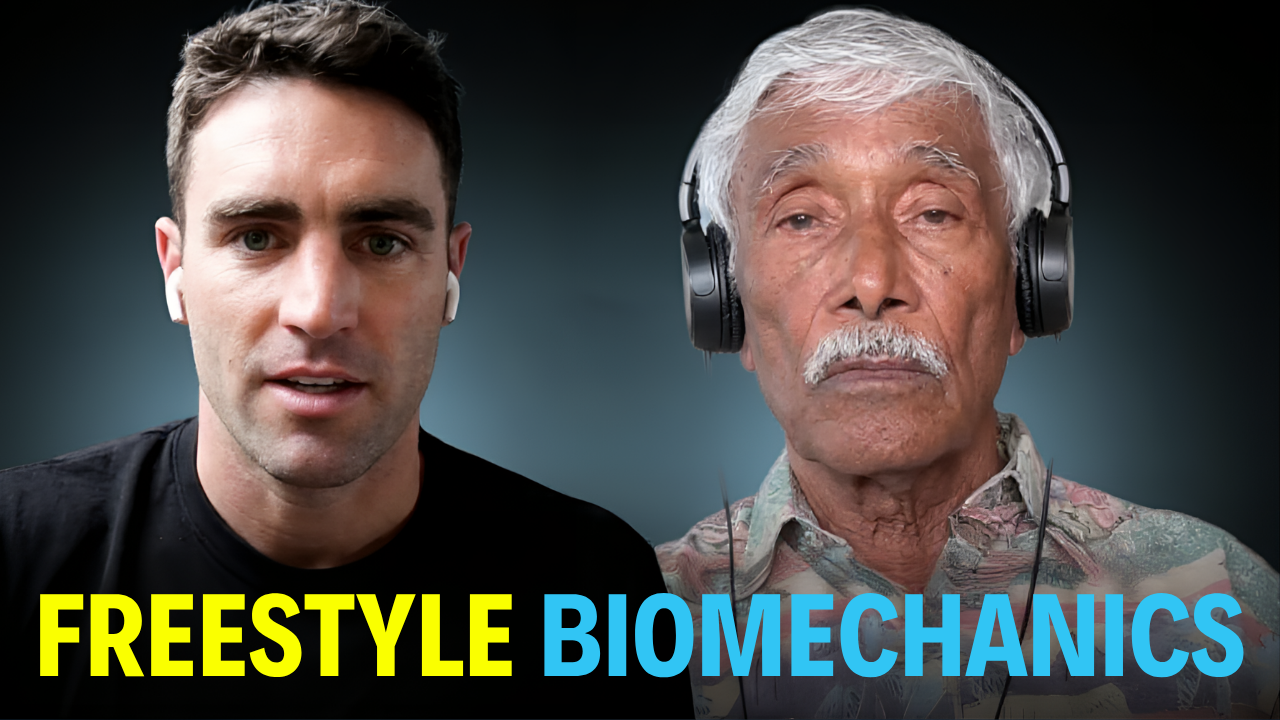








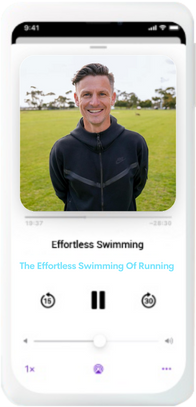
Today, my guest is Paul Mackinnon, a professional running technique coach who helped many runners and triathletes worldwide. We discussed running cues, how to improve your running skill, and more about coaching. I hope you enjoy this episode!
01:16 Coaching Athletes
03:07 Nike’s latest shoes
05:54 Running Cues
11:13 Common Mistakes For The Average Runner
12:26 Arm Swing Is Important To Running
13:52 Asking The Right Questions
19:57 Self Awareness
23:48 Is There Not Much Technique To Running?
27:46 Different Paces
32:16 One Cue At A Time
36:27 Focus On One To Two Things
40:03 The Balanced Runner Membership
45:14 What’s Next?
The Balanced Runner Membership
Get 25% off the first month!
Coupon code: EFFORTLESS
Therabody:
https://www.therabody.com/us/en-us/recoveryair-compression-boots/
Form Goggles:
http://formswim.com/effortless
Watch the episode on YouTube:
Transcript
Read the full transcript
Welcome to the Effortless Swimming podcast to show that help swimmers and triathletes love the water, become a better swimmer and live a better life. Here’s your host, Brenton Ford. Welcome to the Effortless Swimming podcast. My guest today is the man with the best haircut in the southern end of Australia here, Paul McKinnon, the Balanced Runner. Welcome to the podcast, Paul. Thanks, I knew he was going to come at some stuff. It’s going to be so early after the weekend. Might as well start off that way. If you’re listening to this podcast, Paul’s got what we call here in Australia a mullet, which is it’s almost it’s the national haircut, I think at the moment, 2022. I like to call mine a little bit more of a mane because it’s you know, it’s the same length the whole way through that middle. It’s not short at the front. Let’s know. There’s no business at the front. There’s a bit more of a mane. Yeah, it’s a very trendy, trendy mane. It
does look good. Paul, you, so I first heard of you through a friend, a mutual friend, Simon, heard and then I also heard that you’re on the triathlon Taran podcast, probably three years ago now and you got a huge response from that podcast because I think, I mean, from what I can see, you coach in a way that I really like and how I like to coach people where you explain things very, very well, very simply and you can relate to what people are doing, how they should feel and and you break things down in a way where it’s it’s just like, well, okay, well, that makes so much sense and I think that’s why you’ve got the the reputation that you you do now and you I mean, you’ve just come back from the States. You’ve done a lot of work with Nike and and the Nike athletes recently. So what was what was that all about? Well, firstly, thank you. Thanks for the commendation. It was really eye-opening in a few different ways. Like it
was awesome to work with them and like when they’ve got such a wealth of talent over there and even sort of like the the sublet they’re amazing athletes of similar to kind of like outlets like it’s it’s it’s incredible how many they have. I think the the working with so that in particular someone like Galen Rapp or Emily Infeld who are you know seasoned pros over there to to get over their work with them and understand that they haven’t had that opportunity to have that improvement in in the technique side of things was was really a bit eye-opening given that is kind of the mecca of distance running and or middle distance and distance running. So to get that kind of confidence bill to get the reception and the feedback from them in a positive such a positive manner was really really cool and then start to see how it can kind of influence and and be a part of a broader improvement of of running as a you know
worldwide sort of thing which was really really cool because they do have the other news to have to do that and to to get that out to a broader to a broader audience. One of the things that we spoke about in the last couple of weeks as we’ve been leading up to this is with so with Nike with their their latest shoes they found that you get more improvement with better technique from their latest shoes and and that’s a a part of why you’ve been I think doing some work with their their athletes there so do you want to talk a bit about about that and and why that is? Yeah so like the original contact I had over there was a guy by the name of Chris Cook who was a guy that I stayed with and you know spent a lot of time with over there now he’s a part of the designer development of the Nike Vaporfly the Nike Alpha Fly so he’s if he hasn’t been the actual designer he’s overseen at all. So that was kind of the introduction to him and he was really interested in
how I did what I did and why it was sort of getting those really good results because he was seeing it from a shoe design and shoe development side of things. He’s got a really inquisitive mind and his biomechanical kind of background but it was that side of things then subsequently so over the last 18 months they started to see a real pattern of athletes who moved in a particular manner or actually you know for one for a better term and odd is like with good mechanics and they were getting more efficiency economy improvement out of the shoe than those that didn’t so they did have improvements irrespective of the movement pattern that they showed improvements irrespective of the movement patterns that they were presenting however the ones that moved really well were getting more out of it so for him he was starting to click and go okay so I met Paul I can see the retraining which is essentially what I do is like the gate retraining
rather just like the biomechanical analysis historically that’s been a bit of a missing link and it’s highlighted now that the good movers getting more out of the shoe and I’ve got this guy who’s you know really delving into the retraining side of things so how can we kind of put it together and that was kind of the real the reason to go over there because he was he was just as inquisitive of going okay how’s it going to be received you know what can Paul do with a multiple different levels of athletes I was working with you know like one of the best distance runners us have had through to some high school athletes over there and everything in between just to see what would happen in the reception and he sat into all the sessions and for him it was like a bit of opening to say we can get these improvements at all these different ranges so that we can actually make the most of the shoes that he’s developing and that was kind of then okay how
we then put it into the design of the shoe how do we put into like the retraining or the training packages for each of these athletes from all these different levels so that was the main reason for it and then it’s kind of grown a little bit from there and one of the thing the one of the ways that you love to teach is to use cues and I mean for me the way I see a cue is it’s almost like all these different movements all these things that go into a certain movement if you’re thinking of every single step you know for swimming it’s like okay enter your hand in front of your head then reach forward and rotate your body and then your fingertips it’s too much for people to remember so a cue just brings it all together in this nice little package that you can just think of and it’s much easier to actually do the movement because you’re not overthinking things so for you like when did cues become a way that you like to teach things and how did
you come up with the cues that you use um I think there’s probably a couple parts to it so I think with running it’s always been about like foot up whereas I’m very much top down so everything that kind of influences the foot strike the foot movement the time on ground and the mechanics of the leg are influenced by you know the arm pattern the body position and I think that’s become one of the really key parts of the differences that what I do being you know it’s completely flipped and the way I see it is what should be most still or what is the foundation of the movement in this case being run in so what should be most still and it is the torso so trying to make that the best almost likely the first protocol and then kind of working off that rather than trying to aim at the foot which is what is moving most and trying to change that it’s kind of really flipped on its head and I sort of think about it in like you know
strengthening addition in terms you think so I’d you know a squat or a deadlift you’re thinking okay what is most still it’s the feet and make sure that they’re in the right position for the person and then you can kind of build up from that if the feet are in the wrong position or in a golf swing the feet are in the wrong position you start so kind of work up and then out to what’s moving most you know and go from there so if we’ve been running it’s actually flipped so you know for me it’s like torso and then work down from there so that part’s a really different part I think when I started to realize that was when I was running myself I was trying to actually influence my feet and I started by arms I was almost like for me it was intuitive to go okay well if they sound off beat if they don’t sound even then how about I just kind of swing my arms in a manner that even and see how that influences the feet and straight away start to change
and I think that for me started to go okay well what’s the influencer and if that’s the cue that I want to work on or if that’s something that’s going to influence always thinking about what is going to influence most and then work from there and that’s why I started to use cues so much more in a running sense but it’s also sort of the influence infiltrated in just other things like what cues can I use to kind of create a better moving pattern in a golf swing or this or this and I’m no you know golf pro but it just started to make me think about how they work and they just work so much better because it’s an influencer rather than a result based outcome focused yeah and that yeah that’s that’s really helped and and being able to as you said focus on one thing at a time and give it time to become habit because it’s such a repetitive movement both you know running in and swimming it’s just repeated movements open cycle open good keep going
just give it time to become habit so you don’t have to think about it again and then we can work on the next piece and the next piece and the next piece uh it’s really interesting that you said people would often think about the feet first trying to change that you went top down I heard this is a couple years ago I heard a coach say that a swim coach talk about he says he looks you know look at the feet and then and you can determine like look at that first and that’s determining what happens out the front of the body but for me it’s always been the other way it’s always been been top down and I don’t know why it’s been that way but similar thing I find like often the legs and the feet and the kick is more influenced by what’s happening out in front because the legs will typically be a counterbalance to what is happening out in front of the head so I’ve seen it really the same way in swimming so yeah to me that’s interesting because it just it never
really worked for me just looking at the the feet first because for me it’s always it’s more been what’s the head doing what what are you doing through your shoulders and your body because if your shoulders are going to 90 degrees which is too much rotation so I will of course the feet are going to kick out wide to stop your from continue to going continue going too far on your side so yeah I think that’s quite an interesting one just listening to you talk about that there well it’s almost like what we’re talking about just before we got on the call as well about the body position if you don’t have you know like and then coming down that that chain as you talked about you know like kind of top down if you don’t have your body shape and the neutral spinal position that you kind of talking about to then allow the roll and I mean your hips are down low and your feet are down lower anyway so you can try and get like in my head like without again
knowing much about the swimming side of if you’re trying to get the feet higher but you’ve got like a real you know extended thoracic spine and therefore kind of increased lumbar flexion or it’s kind of pulling it down you can’t have your feet up so it’s impossible to get a feet position where you want to be if you haven’t got the first you know the torso in the right position and you know everything kind of sinking off that for you
what a like cross the board you know what a maybe one or two of those really common mistakes you’ll see with with the average triathlete or average average runner
I guess the two if we start with the top down and you’re thinking about it so if you’re getting about like a footstrike or anything like that because that’s all influenced by what what you’re doing I think the two things is not understanding what arms are for and can do for you
would be one of the really important things it’s like they’re not they’re not just super force to the body when running they’re actually a really important part to the running mechanic however they do not give you force like no part of the arm or the top half of the torso is touching the ground so no amount of force that you’re trying to put through or tension that you’re trying to put through your body is actually implemented to propulsion so can’t actually work harder up top and get anything down bottom in fact it actually restricts the amount of movement you can get from the legs it’s it’s about trying to be as free and flowy and move as much movement as possible to allow the legs to move so I think it’s without understanding what the arms can do for you so I think the way that I explained it to people is like that for the arms are for tempo for balance and to create lift so if you don’t actually swing your arms up at any
point if it’s a flat movement if it’s a blocked movement if it’s a short movement and you’re not creating a vertical force up you are not creating any lift so we’re not creating any flats or floats or bounce if you’re not creating any up force it’s almost like trying to jump without throwing your arms up in the air just like having your hands in your pockets and trying to jump up like all you’re doing is just pushing yourself off the ground without any additional arm swing if they are not even you know even if they are really poor movements but at least if they were even that at least it’s sending the same message left and right down the body so often you just see two different movement patterns because it’s left to right dominate just it just a lack of awareness of what the arms are actually doing so at least they got to be even to create some semblance of balance and yeah that tempo that timing of movement sometimes it’s off beat
the rhythm is off left and right um is that pretty common is it like that people aren’t even with their their arm movements really yeah really common yeah um and it’s amazing it’s not amazing but it is amazing to a lot of people when they realize geez that is actually a lot different right and left and do you use video to show that or just usually you’re usually i’ll pick it up in a like in the first five meters but then the key or the really important part is actually me getting to getting the athlete to feel the difference rather than just tell them or show them because you could show someone they go oh geez that’s different but i don’t feel that but asking the right questions throughout the session to actually get them their own self-awareness of difference rather than me telling them and say okay feel right that’s what that’s doing feel left that’s what it’s doing it’s like giving them reference points and kind of asking questions to
get them to answer it rather than lead them as well yeah that becomes part of it or the trick of it is like knowing that it’s happening but not giving away and asking them the right questions for them to feel and give you the answer without you telling of it and that becomes the hard part as well because you’re like i can see it um and i can’t believe you can’t feel it but still going through that process of you know and just think of the funny bone in relation to the ribs what’s the right doing and then think about the left on the return what’s it doing is it more is it less is it different is it the same and trying to really tease it out until they get to feel the difference
well then they take they take ownership of the um well of that thing that they’re doing because they’re like okay i recognize this rather than you know i get we’ll get uh sometimes people get told like you’re you drop in your elbow or you’re crossing over this is like and especially with some junior kids it’s like they’ll get told they’re doing the wrong thing they know they’re doing the wrong thing but they just don’t like if you just told that it’s like well great how do i fix it or you never really quite take that on board to actually do anything to change it so that that art of coaching especially by asking the right questions and getting the person to uncover that themselves is um is great and one of the things we do when we’re in clinics is uh we’ll get we’ll play through the video of someone’s stroke and i’ll ask them uh after we play through it is there anything that you notice there that you might be doing doing wrong in the stroke or you
could do could do better and most of the time especially as we go through two or three or four people when they’ve had a chance to actually see what you know some of those things are they they recognize it straight away and after the sixth person i’m just thinking oh you don’t even need me here you can pick this stuff out yourself which is great because because they then they know what they’re looking for yeah yeah then you can see that in running as well i can you and i could be standing watching i think we talked about on the weekend standing watching two people run at the same pace and whether you have a really good knowledge of running or not if they’re at the same pace but one person moves really well one moves really poorly like it’s really natural for us to pick out which one is actually moving really well the next piece is someone might know why that is like why is that person moving better than the other person someone i don’t know i
know that one’s better i don’t know why and the next piece is okay what are the movements and the position they’re creating to notice that and then getting the person to feel it and then the fourth part is like okay what would you change or what call to change it you know and then that becomes back into your place so the person that sixth person go oh this this isn’t this and then you go what do you start with or what do how do i change it you know okay now comes back into law your area of expertise to go okay we’ll start with this then with this then with this yeah there’s a lot of uh that’s right there’s a lot of steps along the way one of the things i’ve found really um helpful with like i’ve put out a lot of youtube content we do the podcast and stuff is most people who come along they’ve got an understanding of what they should be doing just from seeing the videos and they visually they know what they should do
and then uh either like doing a video analysis or some clinics then they like then it’s kind of that that last step of right what am i what am i doing and then what how do i actually change my stroke in those those certain ways so there’s a lot of steps that um that go into it this podcast is brought to you by our sponsor form goggles form combines the world’s smartest goggles real-time metrics and guided workouts to make swimming fun it’s the game changing membership that’s redefining swimming form smart swim goggles feature a transparent display that shows your time distance and pace as you swim and with the monthly or annual memberships you get a huge library of guided workouts that give you workout instructions and tips as you swim for an incredible workout the form goggles are very much like what a garment does but it’s right in your goggles so that display of time pace and distance is something that i really love so for the
majority of the workouts that i do i’ll wear my form goggles because that way i can hit the exact speed and pace that i want to hit so every time i do a turn it’ll tell me what my speed was for that turn and it’ll tell me my cumulative time so if you’ve ever got any sets that we need to hit a certain pace or we need to progressively get quicker then i know exactly whether i’m on track or falling behind so that’s one of the main reasons that i love the form goggles and use them nearly every swim that i do i have a lot of clients as well that use these in the open water to tell them what their pace is because it can be a really hard thing to gauge when you go open water but the forms from goggles will tell you what your pace is when you’re swimming open water which is a really beneficial thing to do especially if you find it difficult to not go out too fast or to sustain the same speed across a 1k or 2k swim the other thing i really like
about the form goggles is that the form swim map it breaks down everything about your session so for a lot of sessions i’ll look back and see what was my stroke rate what was my stroke count for certain parts of the main set and with that feedback you can see your progression over time so as you get fitter as your technique improves you can see those things getting better so i really like to have a detailed analysis of each swim that i’m doing especially as we can see those improvements and when you purchase your form swim goggles you can save 15 us dollars off the purchase price by using our coupon code effortless on checkout or go to form swim dot com forward slash effortless that’s form swim dot com forward slash effortless all right back to the podcast the critical part of what i do in my collection which is like a real i mean streets don’t know what i’m um trying to teach and even on to the
online membership stuff is like the self awareness portion yeah in that understanding of current because the the skill acquisition model that i use is this this new way old way or old way new way yeah right you get that contrast and and the old way new way the first that the old way or current ways yeah breaking down the movement pattern so the first session you spend about half an hour actually just getting a feel of that current so they understand what old way feels like so they’ve really got this proprioception or kinesthetic awareness of what it feels like so then when we make a change they have their own internal contrast so that piece of you know as you’re saying you know feel this you’re doing this oh sorry you’re doing this and now i want you to do that if they go off by themselves if they don’t have their own internal awareness you know coaching tool to say okay this is what this feels like when i’m doing it
or this is what it feels like when i’m not and when i’m not it’s abc and d is happening and when i am abc and d is happening then they can actually create that awareness of okay when i’m doing it this is what it feels like when i’m not so i want to do it i want to do it and i want to create that repetition because most times i even remember like playing hockey when i was growing up and being taught a specific skill and i was pretty disciplined and i go off and do my own training like and you know i’ll be by myself i’d be you know flicking corners or whatever it is and thinking i’m doing it because you know like this is the position or this is the movement that are being coached but then coming back and not quite getting it or not getting it at all it’s like what are you doing i’ve been trying to know you weren’t doing what you were supposed to be doing you know okay well how about you teach me what i’m not supposed to be doing so it’s
almost unlearning the old version and knowing what that feels like so that i can create a repetition so i can create the habit and that becomes the real cornerstone of what i do and then the cues on top of it being a really the secondary important part it’s uh yeah that we do quite a few contrast drills and one of the things we’ve we’ve done in the this five day catch challenge that had a lot of people go through is is that you do the wrong thing first and the wrong thing might be what you are currently doing and for example when someone enters and they reach forwards some people will drift up and their fingers are pointing up and it slows them down and so we’re getting the kick in that position feel how slow it is what’s it like when you when you’re doing that and then when you change it you get to the right position how does that feel and and that builds up that awareness where that if they do if they do start swimming again and they
can feel i’ve got all this turbulence all this resistance on my hand out in front i’m probably in the wrong position so then they know know how to change it so it’s it is it’s that at that awareness especially most athletes are self-coached that you know that you and i probably probably work with and even ones in squad i mean i i know a lot of elite level swimmers who they won’t get much technique feedback at all within a session because the coach has got 30 swimmers in there so essentially technique wise they’re probably self-coached still so they need to have that awareness still yeah well that’s i mean that’s running to a tee you know because they don’t do technique so it’s literally yes your group run run more run faster and that’s how you get faster like that’s literally so if someone wants to technique it’s it’s what they’ve picked up as a kid it’s how they’ve done it’s how they’ve always done it or it’s you know oh
shoot i keep getting injured so i’ll try and do this myself or what am i doing wrong that’s like that is pretty much running one-on-one so the variation between good technique to bad is quite broad because it’s just you know throw some eggs at a wall and off you go
yeah it’s just an ideal that was with swimming it’s techniques so obviously it’s so obviously important do you come up against people who will say well there’s not much technique to running like you just you just run like what what would you say to those people well i think and i used swimming a lot to say like how important technique is and and obviously it’s a real understanding of it because if you i mean the consequences of not being able to swim are pretty dire you know but then when it gets into like performance sort of things like the the hydrodynamics that can hold you back becomes much more influential than say what aerodynamics in running the thing that’s really important in running though is the amount of shock and load that is going through the body upon each footstep so it’s actually not about performance it’s actually about injury prevention and injury and prevention and performance are on the same spectrum it’s just that you see
a lot more of the former rather than the latter because people just go out and run so yeah you hear it a bit and i think for a long period of time because i think technique hasn’t been done well it has just been oh well you just run how you run and and you just kind of manage it but i think the importance of understanding that retraining is possible done the right way is actually going to be really beneficial and i think that’s been the missing link for such a long time for running i mean of all the of all the people that come to clinics you i’d say a large part of them are triathletes and i get a lot of people actually who were runners distance runners ultramarathon runners who can’t run anymore and so they’ve started swimming because they still need they still want to keep fit and but their their needs have given out and lots of other things and so i think if people if people who love running if they could avoid
that that point at that ending point where they just can no longer physically do it probably because of bad technique along the way there somewhere it’s um yeah what a difference that their life uh that would how different their life would be as a result of uh just getting some technique help particularly if that’s something that they really really love and obviously they love an endurance based activity that’s why they’ve gone from running and they can’t do anymore so come to swimming or for some people cycling which is a similar kind of um pathway after running if it’s not possible anymore because i think that we can load different tissues within the body and we talk about you know specific loading within training programs being you know that five to ten percent increase and you know being really safe and and um conscious of not building up too much too soon which a lot of people still do wrong so there’s like one one
poor part of it even movement aside but if you’re not loading tissue that can adapt in that manner then it doesn’t matter how safe you are so if you’re moving in in a really poor manner and you’re hitting and loading bones and joints with muscles and tendons as an assister then it doesn’t matter how safe you are you’re going to hit a breaking point and then if you’re loading those you know bones and joints they’re going to break down and at one point enough they’re not going to recover whereas if you actually flip it and if you are moving in a manner that you load muscles and tendons over joints and bones as as the the supporters then all of a sudden you can build up resilience and conditioning because you’re actually loading a tissue that can adapt and adopt to a movement pattern but the movement patterns are really different it’s almost the difference between walking which is a leverage full leg bone system mechanic to running which
should be a little bit more upper upper leg and using muscles and tendons to create stored energy and almost like a springboard kind of return of energy that’s two different movements and is there much difference between between the different paces now i’m not talking about 100 meter sprint here i’m talking about something from like a an all-day steady pace with your running like a jog compared to where you’re starting to get into into that sort of 5k 10k sort of pace and effort is there much difference in the the technique or how you would teach someone or does that pretty much carry across the board no it should it should carry across the the whole board and even up into to sprinting for some into some regard because an efficient powerful movement isn’t efficient powerful movement irrespective if you’re going at you know six minute pace where you’re running it flat out if you’re getting it from the right area and
you’re doing it the right amount of times or more times or big range or whatever it may be like somewhere in that range it’s just a smaller or a bigger version of a powerful efficient movement so if you look at someone like you know someone who’s probably the flag bearer of technique at the moment because he’s phenomenal at running but also because of how he moves is is Elliot Kibchogi like he’s a phenomenal mover but he moves the same whether he’s running at you know he probably wouldn’t run much slower than five minute pace which is which is really disappointing really disappointing but then he runs it to 40 per kilometer pace it’s the same movement pattern done bigger and or more often doesn’t change so you can just see him as the same pattern and he goes faster or slower so even when you start to go faster so it doesn’t much it doesn’t look different it’s just a bigger or smaller version this podcast is also brought to you by
TheraBody now i’ve been a big fan of TheraBody ever since i started using their products four years ago to help with my recovery after swims and their latest product is TheraBody’s revolutionary new recovery air jet boots the recovery air jet boots are the world’s most advanced pneumatic compression system ever created and for years runners bikers and everyone who spends hours on their feet have had to suffer through leg pains and aches after a hard day clinically proven treatments like the compression boots pro athletes use have always been out of reach and the recovery area is a groundbreaking pressure massage for everybody anywhere with TheraBody’s exclusive fast flush technology recovery air flushes out metabolic waste more fully and brings back fresh blood to your legs at three times the speed of competitors faster cycles means faster recovery so you don’t have to wait for legs to feel great TheraBody’s recovery air jet boots are
the first of its kind they’re truly wireless for anywhere on the go recovery boosting circulation and radically reducing muscle soreness and thanks to recovery is super intuitive easy to use one touch controls recovering fast that is a breeze the reason I like the recovery air is because after a big day of being on my feet from coaching or from running or doing other more leg-based exercises even after swimming I find that these work quickly and TheraBody to me is the leading brand in recovery products like this and they make the products to last they make them to work and so they’re not these cheap ripoffs that we see some other competitors coming out with so I’m a huge fan of the product and using the recovery air they also have 250 professional sports teams exclusively use TheraBody products and they’re trusted by world-class athletes like NBA All-Star Paul George superstar footballer Trent Alexander Arnold and champion golfer Colin
Morikawa sit back relax and recover go to TheraBody.com slash effortless to get your TheraBody recovery air today starting at just 699 dollars or as low as 59 dollars a month with a firm plus with recovery airs 60 day money back guarantee and free shipping there’s no risk TheraBody.com slash effortless yeah gotcha and with
with these things that you teach you’ve got quite a few cues you mentioned your online membership like there’s the number of cues there
how long do you do you see it taking for people to notice a difference with their running and then how do you how do you recommend that they implement this stuff because when we do our clinics we talk about doing couple of drills in every session in your warm-up to set yourself up and then just go about your main set because it’s about the frequency of doing things it’s not about how long you do them for because it’s changing that muscle memory and the technique in so we harp on about frequency and just doing a little bit of it in the beginning what’s your approach
the way I work is very much you know like one cue at a time and allowing someone you know a good four to six weeks of actually just focusing on that one thing easy pace, session, speed work whatever it is it’s like this is your this is your cue to work on for the next could be three to six weeks now depending on the cue depending on the individual depending how often they run you know how quick they adapt it just depends you know there’s a varying range of how quick someone can adapt and implement it into their their habitual movement pattern and that becomes into each individual so the stuff that you talk about on the online stuff it’s you know all the cues are set out but it’s also set out in a manner that
gives the athlete the knowledge to understand when they’d implement it how long they’d hold it for and then what to go to next so it’s all kind of set out in that in that regard and it is very much give yourself time thinking about one thing don’t think about anything else be aware what it’s doing for you and what it feels like when you’re doing it be aware what it feels like when you’re not doing it and there’ll come a time where it becomes a natural movement pattern and then that’s the time where you can actually move on to the next cue yeah yeah most most people don’t give give the things that they’re practicing enough time for it to kick in and and make a difference and I had had someone on the podcast probably 12 months ago now and she she said she came to a clinic she was was practicing things for I think it was like 10 weeks she was practicing those things for 10 weeks time stayed exactly the same and then all of a sudden something
clicked and it came together and then right away she was down like 10 or 15 seconds per 100 when it all just started to come together and and it’s that’s when it becomes the the habit that you don’t need to think about it it becomes subconscious and you can just go you can go out there you can focus on your pacing in your effort and you don’t need necessarily need to think that much about the the stroke you because it’s just that new new habit that you’ve formed so yeah it takes it takes time some people are a lot quicker obviously you know four to six weeks some people it takes a little bit a little bit longer yeah yeah yeah for sure and I mean that just becomes absolutely individual some it’s like similar to like you’d coach different individuals differently just because of their their language patterns their the experiences previously like you need to kind of you know
and I work not because everyone’s different which they are it’s more about allowing that individual the best possibility of understanding and therefore implementing it but I think the thing about running is that because it is such a you know like heavily heavy impact or body impact sport I mean if you’re doing something better and you have that new old way awareness if it doesn’t feel better immediately it probably isn’t it might be hard to continually implement it because it’s not your habit and that becomes a really strong cue like that that brain is aware it’s like geez that actually feels better I’ve got to concentrate on it and I do have to make sure that I’m continually doing it but I can feel when I’m not doing it because it doesn’t feel as light as free as you know explode your whatever it is depending on that cue so you get that real kinesthetic awareness of better and go shit I’m chasing that all the time until it becomes habitual
but if you’ve got like you mentioned like if you’ve got
two or three or five things like it become really critical of like
running in particular like programs or you know two hour long
sessions and seminars where people are running in a big group for starters and then being given like five or six different things to go home for and practice now they might be the right thing so like I’ve not been critical of you know the information given it’s like they go home and if you’re focusing on one thing there’s five things that aren’t being focused on and then you okay well focus on the second thing and then there’s still five things that aren’t getting focused on and all of a sudden three or four or five weeks down the track you’ve been thinking about these four or five or six different things none of them are habit and straight away someone will just go I stuff it like it hasn’t changed anything I forget it I’m just thinking of all these different things and none of them are becoming habit because it doesn’t have time
and it doesn’t have focus and so it doesn’t become habit yeah yeah that’s that’s what I say to people at the end of a clinic is will often give them three things sometimes two to the the big rocks that are going to help them move forward but then I’ll normally say it will spend the next four weeks or so on this thing or maybe two things together if they’re sort of related you can you can do the two but yeah that’s it don’t try and do them all at once don’t even got three things don’t try and do them all at once just just pick one maybe two and then you can move on to the next thing and there’s an order of things you should work through we’ve got our five core principles that follow that follow that order you’ve got your cues on the on the membership there you’ve got you’ve got the order there working sort of top down so yeah and like it’s it requires patience it requires people to know what to expect going forwards in in how they will
how they will react to it and to and to not be looking for those speed gains straight away necessarily because it just it takes time but with that long-term focused person they’re the ones that six months 12 months down the track they’re gonna be the ones that are running better because they’re being willing to just just commit to it and take the time to practice there’s a there’s a blessing and curse we’re running in regards to how many steps take in a minute so how many how many strokes per minute like is a gauge or a rough you know between easy pace and you know when they’re going harder but where is that range sitting for swimming yeah you say most people would average like 50 strokes a minute just if they’re swimming comfortably and that might go to between 60 to 70 for for your average person when they’re going fast you do have like a little bit of time per stroke to probably work on you know two or three different things because once you do a catch
and then a pool then you’ve got the other side or let’s just say for those if I might have no idea because I’m horrible
but you’ve got maybe you know one second or maybe slightly more slightly less per stroke in running you’ve got three steps two to three steps in each second so it’s like it’s happening really almost impossible to think about you know one or two things I’m sorry two or more things each step or each movement pattern because there’s going to be two and a half to three per second yeah just happening so it’s like it’s almost impossible whereas I can’t fully understand because you’ve got like a bit over a second people are pretty good to kind of go bang bang and then next bang bang and then next whatever it means and then until it becomes have it where’s he ever running I mean you just it’s a blessing that you can get so many repetitions in one run but it’s also a curse because you can’t think of anything more than one thing yeah yeah that’s that’s exactly right I didn’t think about didn’t think about it that way but that that is one of the good things
about swimming is you know they can do too if it’s head position and maybe your alignment you can focus on those too could because yeah you’ve got that a little bit more more time but yeah running happens very very quickly
and so for someone listening to this they and as I said we’ve got a lot of triathletes who listen and people who run for general fitness where can they find out more about some of these cues that you’re talking about and and where to find you so there’s a there’s a fair bit of information about the the membership program on tbrunner.com
so the balanced runner that is tbrunner.com
information about the program what it looks like how to be sitting up so there’s that sort of stuff and then in regards to what I do how I do it there’s a fair bit of information on Instagram about
something new and old some of the success stories so they’re probably the two best ways to kind of look at it so Instagram is at the balanced runner or one word they’re probably the two best ways but yeah
membership specific on the on the website what I do on Instagram that’s probably the two best ways yeah fantastic and those that are listening to this if you do want to become a member to to Paul’s membership there and improve your running use the code effortless on checkout and we’ve set up a discount there for the for the first month so Paul appreciate you coming on and when I when I sort of first saw what you you were doing with your coaching I thought though this is like the this is the effortless swimming for for running I really like your approach there and I appreciate you coming on sharing some of those some of those things and we got to catch up on the weekend it’s just yeah I mean it’s I think we’re in a pretty similar similar place in terms of our coaching and who we like to work with how we like to to do it and I mean I’m learning all the time and I like learning from people in different sports and even just some of the cues that you use
and how you approach it like working top down it’s good to see how you how you do it because there’s just so much you can learn from from different sports so I’m yeah I’m going through your membership at the moment and even just I was watching one then you’re talking about like the how you hold your hands so it’s like hands sort of up near like your your pecs almost and got the elbows bent you’re talking about this triangle if you’re looking front on from the elbows to the hands we talk about a power diamond in a similar position when you’re under the water so oh my god there’s so many so many correlations here that it’s yeah it’s quite funny seeing seeing that so yeah I mean enjoying watching that well and I appreciate you being on the podcast no it’s like on the the similarities like you’re talking about we’re all similarly shaped body so there’s going to be like similar angles like we’re all coming from the the same bit of plasticine
and then it’s like the movement’s different and what angles are we going to use from there so that’s why it becomes probably cool in regards to like where we’re using a similar plasticine model to start with but then we’re
I look really appreciate
you having me on the podcast and but also I think for some of the listeners like Brent’s been really influential in helping me get to the point where I’m at with it with the membership program like you’re really influential saying well you know you’ve got people who want to actually get better at running but don’t want to do one on one and you know you’re not really providing them opportunities so you’ve probably given these guys more opportunity as a result just in the running sense you know which has been really cool and and like I’m very appreciative of that that side of things too so keep my ass into gear a little bit and but also provide a different perspective to it which has been really I appreciate it but like I remember chatting those couple of years ago where you had a like it’s a little bit of a hang up on like I want to make sure people are doing these things correctly so I’m only doing one-on-ones and and I had a similar thing
when I first started it’s like I want to make sure that people are doing this 100% so I’m just I’m not going to put put stuff out there but the thing is like there’s people that want to improve their running and if you don’t if you don’t teach them the stuff that you would teach in person then you’re going to be limiting it to probably 1% of those people who could learn that stuff and improve and the amount of people who have just watched my youtube videos and they’ve emailed me and said like I’ve gone from this time to this time and and I love swimming it’s like well that wouldn’t have happened if I if I was just too caught up in just like only doing one-on-ones and so I’m glad you took that step and and put that together in a in a program online where people can wherever they are in the world they can go through it on their own time and they can learn those those things that you do do teach in person but I think as a coach you know we are perfectionists
and we want to make sure that everyone gets a good result it’s it is hard to sometimes just let that go but yeah yeah well it’s it’s kind of yeah it was a bit of letting go and not you know I mean the quality is my number one value for what what we’re kind of doing so but you can still create quality in that format and understanding that you know it’s it’s not the same format so whilst it’s still yeah it’s not it’s it’s still creating that quality that I pride myself on just in a different way and I think that became really important for my mindset as well I wasn’t trying to you know scale a business I wasn’t trying to create anything more in regards to a financial side of things it was creating another option of quality and then that that really flipped my thinking as well I was like no okay so now and then it’s I spent nine ten months just of creating the quality so it took ages to kind of put it down I wasn’t just like you know record go back
it was literally okay make sure that I’m explaining it in a manner that will give the best opportunity to get the outcome from this format
yeah it’s it’s good I’m kind of going to that moment with our beginner freestyle course I was hoping to have it done by like January or February and I’m just not yeah there’s still a bit more work I need to need to do and but that’s yeah that’s that’s right you know you you want to keep the quality up there because that’s what your reputation is is built on is the quality and and it’s it’s really important so yeah and you’ve certainly done that with the with the membership so yeah thanks again for being I don’t know and I’ll get you back on down down the track as well once I’m once to get a chance to implement some cues into my own running and
be sub three minute pace for the 10k yeah well look if you can do that and I’ll hang my hat on that put me on the front page of your website buddy oh maybe I need to start the I’ll do similar and start to get in the pool a little bit although coming in coming into winter is the it’s the wrong time of you getting in the pool I see yeah yeah using your Friday catch thing thanks mate I appreciate you being on no thanks mate thanks thanks for listening to the Effortless Swimming Podcast if you’d like us to help you become a faster more efficient swimmer go to www.effortlesswimming.com