







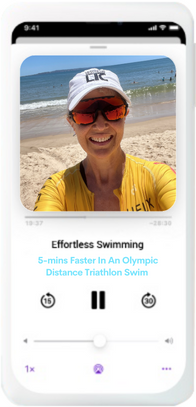
My guest in today’s episode is Melissa Hughes from Tasmania. We will talk about her remarkable journey into the world of triathlon.
01:19 I swim like a runner
02:30 Arms are a bit wide
04:17 How many swim sessions a week?
06:08 What is YMCA Drill?
08:43 Building Confidence in the race
11:44 I’ve got to overtake all the heroes!
13:08 Diagnosed with Rheumatoid Arthritis
17:30 Thinking about doing the triathlon
19:19 Do you think you can continue training without doing any long-term damage?
20:29 What are you working towards or focusing on with your swimming?
Change your technique and swim smoother, easier freestyle in the Effortless Swimming membership:
https://effortlessswimming.com/stroke-analysis-membership/
View our freestyle clinic schedule around Australia:
https://effortlessswimming.com/freestyle-stroke-correction-clinics/
Form Goggles:
http://formswim.com/effortless
Watch the episode on YouTube:
Transcript
Read the full transcript
Welcome to the Effortless Swimming Podcast to show that help swimmers and triathletes love the water, become a better swimmer and live a better life. Here’s your host, Brenton Ford.
Welcome to the Effortless Swimming Podcast. My guest today is Melissa Hughes. You are a triathlete based down in Tasmania. And you had a really good result in the Noosa Triathlon swim, shaving off five minutes from your overall time from 29 minutes down to 24, which is an impressive jump in pace. So I wanted to get you on to talk about what you’ve done to see such a significant improvement. And just to talk about a couple other things as well, particularly what you’ve been through to be able to get to that point in your triathlon over the last couple of years. So Melissa, welcome to the podcast. Thanks, Brenton. Lovely to be here. So about a month and a half ago, the Noosa Triathlon was held and you had to swim 24 minutes, which is a five minute improvement. What was your reaction when you hit that time you came out of the water and had a look at your watch? How did you know? I was running up the beach and I
looked down and went, I can’t believe it. That is awesome. And I thought, if that’s all I do today, I’m stoked. I still have the bike ride to do. So I’ve got to finish it. Yeah. Yeah, I couldn’t believe it. And I thought, I must have been courage-assisted. But no, I just I’ve been working really hard on my technique, particularly since your last clinic. And it’s paid off. What were some of those things that you’ve been working on? Well, a little bit of history. I was taught to swim by my dad in a very small pool, 10-metre pool, not heated in Tasmania. And I thought I was a pretty good swimmer until I joined a master swimming club about five years ago and realised I had so much technique I didn’t know and lots of bad technique to unlearn. So it’s been a bit of a process since then. And you probably heard this before, I swam like a runner, really fast technique. And I had no idea what I was meant to be doing under the water. And so someone said, Oh, it’s all
about the catch. What does this mean? And it wasn’t until you broke it down. People had tried to explain it to me into that YMCA drill, like, Oh, that’s what I meant to be doing. And you know, that whole swimming slower to get faster is hard to do, but it was really worth it. And someone else had said to me, Oh, the good thing about swimming in a pool is you can see where your arms are going. I thought, I can’t see my arms. Where are my arms? And you’re scraping the side of the pool, not the bottom of the pool. And you know, there was no power diamond. And it’s made a real difference. So I looked it back at your video this morning, actually, just to sort of see what it was like. And yeah, the arms were quite wide, quite far away, the body so that you’re missing quite a bit of that connection with the catch in the pool with the rest of your body. Is that something that you’re able to feel a difference with and change
quickly? Or did that take time? Yeah, I had to work at it. And you told me I’d have to work at it that it would take some time for those drills to to actually result in it coming naturally when you’re swimming and not thinking about doing a drill. And the wide arm finger drag was really good too, because previously I could not do finger drag. I hated that drill. And, and I’m, you know, slowing down and doing that it’s it’s really helped with my arm position and straightening everything out. But yes, you really do have to practice your drills regularly and be persistent. And, and then all of a sudden it just clicked and I was doing it. And how do you feel connected to the water and gliding through not all the time, but I tend to lose a bit of technique if I try to sprint, but I guess that will come. Yeah. And over the water with the recovery, looking at the video, it was again fairly wide. And I guess I’d say
it’s kind of swimming, it was swimming around a bit too much. And the elbow was pointing behind you more than pointing up. So when you, I guess, brought the had the elbow pointing up a bit more hand, maybe a little closer to the body. Is that what helped you be able to drag the fingertips? Yes. Yes. And I think you also mentioned that I was over correcting. So I was trying to do that big long catch. And so my arm was coming out of the water way too late to get relaxed. Everyone said you should be relaxed in recovery. Like, how can you do that? And, and when you shortened it a little bit, which meant I could reach furthermore, make a huge difference. And with your training leading up to there, the art of news to triathlon, how many swim sessions a week were you doing? And what kind of distance were you doing? Three to four. And usually a minimum of 2K up to 2.5, 2.6. Doing a little bit more now, but yeah, and a lot of speed work. So
not, not just constant speed. People have told me that’s a mistake triathletes made. They’re just going to the pool. They swim up, down, up, down, up, down and don’t vary pace. So that’s another thing that really helped me in the race because we practised sprinting, slowing down, sprinting, slowing down. I knew that when people were in front of me, I could pick up my pace to get past them and then drop back down into a comfortable level. So just having the confidence to know that you can do that really helped. And how did you work in the drills or the technique work in those sessions? I swim in the club, which is great. It’s great camaraderie and competition. And some of those sessions include drills at the start, but because we start at 6am and the pool opens at 6am, well, I’d like to get there earlier to do my drills first. That doesn’t often happen. So sometimes I’ll work them in at the end as well. Ask the cooldown. And was there a period of time
where it felt uncoordinated for you as you were making the changes or did it feel better? Yeah, it did. So it didn’t feel better straight away. Some parts, yes, the wide arm finger drag just worked well for my body rather than the narrower arm. You suggested that I do that one. That one, oh, that feels better. The YMCA doing that really slowly took me a long time to get that smooth, but it was worth it. Yeah, because there’s a lot going on in terms of the reach, the catch, the pull and the exit to think about all that. Who knew you had to think about so much when you were swimming? Yeah. And for anyone who’s listening, he doesn’t know what the YMCA drill is, just look it up on YouTube. I’ve got a video of it up there. Just look up YMCA Drill Effortless Swimming. And there’s the three drills in that sequence that made up a couple of years ago because when I was working with people like yourself who want, you
kind of know what the catch and the pull is, you have a rough idea of like, okay, I know it’s this part of the stroke, but where should I be through the different parts of it? The drills that we were doing, which can be really beneficial, but I find it, it just didn’t quite sort of tick all the boxes with breaking it down simply enough. So the YMCA drills just pass through the four positions that I see all the really good freestylers moving through. And I’ve analyzed thousands and thousands of swimmers over my time as a coach. And all the really good swimmers were moving through these four positions, which is the start of the catch when you just go to begin, high elbow position, your power diamond, which is when your hands are underneath the shoulders and your elbows are out to the side. And if you had both arms there, it looks like a diamond from the from the front. And then you’ve obviously got the exit, which is when the hand presses
back just past the the hip. And they’re kind of, they’re funny drills. They’re a little bit awkward. It’s much better to do with fins on and a snorkel. I think it’s so much easier. Probably feel like you’re gonna drown if you go through some of them without that equipment. But even though they’re a little, they take a bit of time to learn and do right. I think it’s worth the time investment for for most people because then it starts to make it more automatically. You don’t have to think about every little movement that you’re you’re making. Was that the experience that you had going through the YMCA drills where you’re really thinking hard, lots of concentration, but then it was able to just become part of your subconscious. Yes. So learning them at the clinic, I’ll give you a little plug. You’re really good at explaining it. I’m breaking it down. So having that base, I could then take it away and practice on my own. But yeah, when you’re
doing a lot of your own in the pool, you feel like an idiot. But it worked. It worked. And every now and then, oh, that’s not right. Or I’m rushing to it through fast, break it down and just focus on one thing. And yeah, it’s like anything you have that it takes a while for it to really consolidate and for it to run smoothly. And you have the added benefit of seeing the village people the whole time you’re doing it. Yeah, that’s right. And the other benefit too is you’ll be able to spot another person who’s either done a clinic or done like one of our programs is yeah, there’s no one else doing a YMCA drill who hasn’t been through one of our things. So you’ll have an instant friend at the pool if you see someone else doing it. So that’s the other upside. And one of the things you mentioned was the confidence that you had in the race. It was maybe about what that confidence, where that confidence came from and how that
was different to how you were previously in some other triathlons before that. Well, it’s interesting because a couple of years ago, I had my first panic attack in the water. And, you know, I usually care about going out deep. Tasmania, the water is cold. So that shouldn’t have been a surprise, but I’m thinking about why I just lost my breast and I couldn’t get it back. So breast stroking and people are going past me is more stress because I’m slowing down. I pushed on, but that was a real heads up to me, how do I fix that? And so I had to train harder in the pool. So when I was in race conditions, it wasn’t a surprise. So you’re used to performing under a bit of stress and talk to other people about, you know, going from a lot of the pool swimming into the ocean is how to enter the water calmly and, you know, the importance of getting wet for the race and warming up properly. So all those little learnings just added up to build
my confidence. So I swam at NUSA. On my first NUSA races in 2019 and the water was horrible. There was a really strong current. So they had to change the course. So you could only swim in one direction and you had to run back up the beach. And I survived that. So that helped as well because then you think, okay, well, if I could swim in that, not very fast, but that really helped. I know I’ve done that before. So it’s like that again, I can get through it. My swimming is better now. Practicing, running in, running out. What happens if your goggles come off? How to stop that? All those little things helped with confidence. I think that’s such an important point is that when you do something that’s challenging outside of your comfort zone and you get it done, you’ve got that memory there to draw from. So you’re like, all right, I’m back in this situation or maybe something that’s even a little bit more challenging than where I was previously.
You’ve just got that confidence there knowing that you can first of all do it and knowing what to expect as well. And the more races you do, the more experience you get in the open water, you just build that confidence. And then you can get to that point where you’re able to relax and enjoy the process and even enjoy it if the conditions are horrible. If it’s your big waves, if it’s choppy, if the wind’s howling in your face, you can have some sense of comfort and enjoyment out there. Whereas first time, if you’ve never been in the open water and that’s your first experience, it’s probably going to be terrifying, but
you can have either either response and I think it comes with the experience of being out there, but also just knowing what to do in those situations. And it sounds as though you were able to do that maybe with the help of coach or other swimmers and be able to develop those skills. Couple of open water clinics really helped. And another, I’m not sure if it’s a confidence thing or a mindset thing often in open water, you get stuck behind a swimmer who’s slow or someone’s kicking and you can’t get around them and that sometimes that’s made me angry. And if you’re angry, you tighten up and you don’t swim as well. Whereas this time, I just thought, here we go again. And as I said before, I could swim past them. You I could settle down and go on again. But that is an issue with self-selection of your speed. Races like this. If you’re breast stroking, you should not go out and zone one. That’s just a side. But I like the way you
phrase it. I hope you don’t mind me showing this, but when you’re talking about the news to swim in the messages, you said, I’ve got to I’ve got to overtake all the heroes, all the people who went out and zone one when they shouldn’t have been there. Yeah, yeah. And that maybe helped because I think look at me passing these people and it just helps you keep going. That it just felt really good. And it was nice. I could actually compare the times between this year’s no zone last year’s because the course was the same and the conditions were the same. We’re really lucky it was calm. Yeah, it was 2449. So just under 25. That’s pretty good.
Yeah, I reckon then for anyone listening who doesn’t know about the news triathlon, that’s an Olympic distance race. So 1500 meter swim. Now it’s only been a couple of years where you’ve actually been able to build up your training to a to a level will actually to be able to train really because 30 years ago you said you had a diagnosed with rheumatoid arthritis and that left you on the couch basically for several years there. And it’s only been the last couple of years where you’ve actually been able to get out and do triathlon. Can you talk to me a little bit about about what happened 30 years ago? This episode of the podcast is proudly brought to you by our sponsor form goggles. They’re more than a pair of goggles meet the world’s most powerful swim platform. See yourself improve with form smart swim goggles, including a free one year membership. When you purchase your goggles for only 228 US dollars. Now they’ve currently changed
up the offer where you can now get the goggles and you have that one year membership included for free. And then if you’d like to continue with the membership going forward, it’s only 15 US dollars a month where you get access to their workouts, training plans and their custom workout builder. But you’ll always have access to the real time data of the goggles. So you’ll never lose access to that. So if you’d like to swim without stopping to look at a pace clock or your watch and get live metrics right inside your goggles, including your time, distance, pace, they are right there in your goggles with form goggles. I’ve used these for over 12 months now and I’m a huge fan of these goggles and use them for a majority of my sessions and find them very helpful, especially for gauging my time, my effort and my pace. And I think it’s a very helpful tool for the majority of swimmers that I would normally work with to get your pair of form goggles and say
15% off, use our link formswim.com forward slash effortless or use the coupon effortless at checkout. And that will get you 15% off your pair of form goggles using our special link formswim.com forward slash effortless or use the coupon code effortless at checkout. I’m sure I just after baby number three, I woke up what it was almost overnight. I woke up with swollen joints and pain, swelling and the wasyptom people don’t know about arthritis is fatigue and very tired. And I was pretty sure I knew what it was because my mother has it. I thought I’d escaped it because she got it when she was 19 I was a bit older. So I was put on three immunosuppressive drugs. One of those is a cancer chemotherapy and it made me very sick, very tired and I just couldn’t move and having been fit had a reasonable level of fitness before then. It was very frustrating and after five years, the good thing was I haven’t got any joint damage because I went on those drugs
early. I got a second opinion and I’m now on a once weekly injection that I give myself and it changed my life. So after weaning off those other drugs which did take some time anyone that’s been on prednisolone knows took me eight months to get off five milligrams of prednisolone because your body just becomes so used to it. I had that if you’re not in pain anymore and you’ve got a clarity mental clarity. So I changed my career strategy. So I could think about that and I could also finally verbalize and be confident that I want to try triathlon and I thought I was a reasonable swimmer and we’ve talked about that had to learn how to ride a bike could always run and have been able to train to improve for about five years now. And I mentioned before I spoke to my rheumatologist and I’d always held back a bit in a race because I thought if I push myself like some people in collapse over the line that I’d cause a flare above my arthritis
and he said look you’re really well controlled next time give it a go. So we knew sir I gave it a go and I was really happy with the result. I got a PB 14 minute PB overall and just made the leaderboard in my age group 15. So I guess the message is that it’s possible. You know to it I’m quite determined and it’s about continuity for me and consistency don’t necessarily want a PB every time I race just to be able to keep moving. So to have these little wings is is lovely. Oh I can imagine after after going through that you mentioned that when you’re able to wean off the pregnancy loan that you’re able to verbalize that you wanted to do a triathlon. Is it something that you had been thinking about for a while? Yes yes probably 20 years. I had a friend who’d done it when I guess we’re in our 20s and I thought that’d be cool but I just you know a lot of people perceive barriers to entering triathlon. You have to be really fair and you have to have all the gear
and just being in a position and that’s not the case and I’m saying that with my president of triathlon Tasmania had on that’s not the case you can start and it’s a really welcoming community and and as I’ve done slowly improve and you know people very willing to share advice and help and have swim clinics have open water swim clinics and cycle skills classes learning how to change a tyre it’s a I’ve gone off track there sorry No that’s it’s definitely one of the most welcoming communities I think like because so many people well everyone pretty much gets into it with no experience yeah maybe they’ve got experience in one or two of the the legs but it’s it’s a very welcoming community and there’s so many teams out there so many coaches who are willing to work with people who who are coming from from no experience so that’s why I think it’s such a an inclusive sport and why so many people find a lot of enjoyment from it and I mean I’m sure you’d see
that with your role as as president of Tasmania and triathlon
and I guess the other thing too is I wasn’t sure if my body would hold up to three different disciplines so can be a lot of training that a health practitioner said to me it’s actually better than just running all the time or just cycling all the time or just swimming all the time because you give you know you get a bit of variation in the muscle worker you do so she was right yeah that’s so now what you’re where you’re at in terms of your health are you you’re confident that you can just continue the training and you can push in those triathlons without doing any long-term damage or putting yourself out for a couple of months now
yes at the current level but I’m going to attempt my first 70.3 in Hobart in February so my training loads increasing nice and slowly so it’s it’s doable at the moment so I’ll be pretty chuffed when I cross that finish line yeah well that’s exciting isn’t the first half Ironman down in Tasmania I know there’s quite a few from Victoria who are who are going to that with a new course and a new half Ironman in Australia which is which is very exciting so and you won’t have to travel too far at all just a short two three hour drive up to yeah to Hobart so that’s a very long trip for Tasmania and I can tell you it’s an overnight stay so yes depending on road works it can be two or three hours it’ll be fantastic atmosphere and so all the training group training together so being part of that building towards it’s very exciting and so the swimming distance has got to get a bit longer
and what are you what are you working towards with or focusing on with your swimming now with where you’re currently at well I’d really like to be able to hold one minute 30 pace per 100 for a bit longer than a couple of hundreds but building in speed is probably not quite right at the moment if I’m building endurance but so there’s there’s two goals there I guess I did write this down because I knew you’ve been asked for that
and my coach did say that on New Year’s Day and this is the sort of
psyche of triathlete let’s do a hundred hundreds I just thought no I don’t think so it’s just such a shame I’m into state and she teased me and said there are pools there you know
that’s 10 k’s I’ve never swum I’ve never swum more than you know three and a bit so I don’t know if I’ll be doing that New Year’s Day but you know building to be able to do that sort of thing having that level of fitness would be something I’d like to do that I’d like to hit the 130 pace first yeah fantastic or look if you’re in Victoria on Christmas Eve I think that’s when we’re looking to do our our hundred hundreds so oh excuse if you’re out in Victoria at that time but yeah it’s a good I know a lot of squads do it around like New Year’s or you know week before Christmas I like doing it day or Christmas Eve because then you’ve just got the debauchery of the next couple of days and you don’t feel too guilty so it’s yeah it’s a good thing to do and you might surprise yourself too like if you take enough rest after we’d normally take a break after every 30 take a few minutes have some food and then get back into it and if you mix it up with
some fins do a bit of pool boy and paddles just doesn’t have to be hard it’s just yeah yeah just mixing it up I think is a is a good way to do it because we’d normally do the first 10 with fins on and then we’d do a mix of yeah mix of swim pool boy pool boy paddles sometimes some other strokes just just depends so yeah you can do it it’s where I’m it was where I’m leading
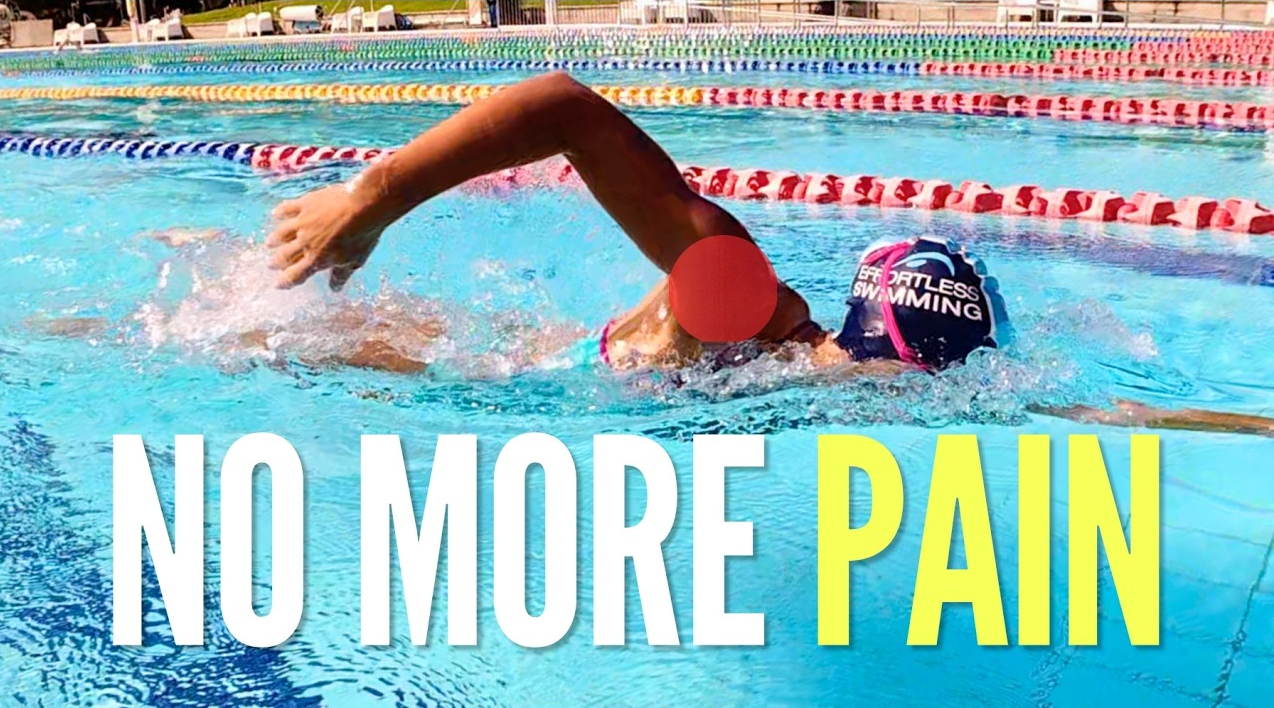
well it’s interesting you’re going back to learning new skills at first time I started swimming with a pool boy it was so hard because I didn’t have all that underwater technique happening I was a kicker and I still am slower in a wetsuit I’ve got to work on that because it takes away your kick a bit and I’m very proud of myself this morning I did six two hundreds with paddles pool boy and band and a snorkel all the gear this morning so for my shoulders to be able to cope with that is amazing that’s excellent because you I think before the call you mentioned that you had some pain through the front of the shoulders and you thought it might have been the arthritis but then you can’t realize it it might have been from being so wide underwater yes yeah exactly right and I was doing backstroke this morning because someone finally told me what to do with my arms and backstroke under the water and I ah quicker and it doesn’t hurt so it’s you know just being prepared
to ask those questions because when you’re swimming you can’t see yourself so that was the value of you doing the video formula oh that’s what I’m doing wrong I can see it now and I mentioned before we got on the call that someone had said to me the good thing about swimming in a pool is that you can see where your arms go and I thought I can’t see my arms where are they and you know just people giving you that feedback make sure you think about what am I doing with them yeah fit out of your peripherals in there yeah yeah yeah well Melissa thanks so much for being on there on the podcast and it’s been great to hear what an amazing result you’ve had over the last couple of months and I’m looking forward to seeing how you’re going in February with the Half-I man thanks Britain great to chat thank you thanks for listening to the effortless swimming podcast if you’d like us to help you become a faster more efficient swimmer go to www.effortlesswimming.com