








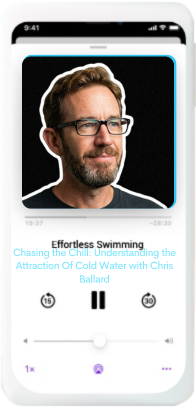
Most people assume ice swimming is just for the crazy or extreme athletes — but what if it’s really a gateway to resilience, mental clarity, and community? In this episode, journalist and ice swimming champion Chris Ballard reveals how daring to step into freezing water can transform your mind, body, and life. Whether you’re skeptical or curious, Chris shares mind-blowing stories of how cold water exposure can push you past perceived limits and build unshakeable confidence.
From the early days of cold showers to competing in the UK’s elite ice swimming events and even becoming a national champion — Chris demystifies the science and psychology behind this ancient practice. You’ll discover: the surprisingly simple ways to get started with cold plunges, how mental toughness overrides fear, and the powerful benefits that extend far beyond the water. He breaks down the core principles that help seasoned swimmers keep pushing, and reveals how this challenging ritual is a ‘quick fix’ for mental health, emotional regulation, and resilience—especially for those facing trauma or life’s hardships.
This isn’t just about cold water — it’s about how you can use the cold to unlock a more resilient, focused, and connected version of yourself. If you’ve ever wondered what it takes to turn discomfort into a catalyst for growth, or if you’re searching for a community that’s as committed as you are to doing the hard things, listen now. Perfect for anyone curious about the transformative power of cold water, or eager to break free from comfort zones—this episode may just redefine what’s possible for you.
Chris Ballard is a renowned journalist, author of The Plunge, and a competitive ice swimmer who’s shattered stereotypes and myths along his journey. His insights into endurance, community, and mental health offer invaluable lessons for both beginners and seasoned athletes alike.
Get ready to shiver, learn, and be inspired to dive into your own personal plunge. The cold isn’t the challenge — it’s the doorway to a stronger, calmer, and more fearless you.
00:12 The Journey into Cold Water Swimming
09:46 The Historical Context of Cold Water Swimming
15:16 Community and Mental Health Benefits of Cold Water Swimming
20:41 Personal Reflections and Future of Cold Water Swimming
20:49 Cold Water Therapy and Its Benefits
23:53 Getting Started with Cold Exposure
27:14 The Challenge of Open Water Swimming
28:32 Swimming Technique and Injury Prevention
34:48 The Journey of Writing and Swimming
Transform your freestyle to be effortless and smooth with online video analysis:
https://effortlessswimming.com/courses-membership/
Try the new Nanoclear Anti-fog Goggles: https://bit.ly/nanocleargoggles
https://www.chrisballardwritings.com/
Transcript
Read the full transcript
Welcome to the Effortless Swimming podcast to show that help swimmers and triathletes love the water, become a better swimmer and live a better life. Here’s your host, Brenton Ford. Welcome to the Effortless Swimming podcast. My guest today is Chris Ballard and Chris has recently written a book that’s just been released called The Plunge, which I’ve got here. I was lucky to get an early edition of it to read through it and the book is all about cold water and cold water swimming and I was amazed how interesting and engaging a book about cold water could be, especially when it’s written so well for a journalist like yourself, Chris. So firstly welcome to the podcast and what inspired you to write a book about cold water swimming? This is great. Thanks for having me on. As we mentioned before, we’re starting I’m a big fan of your videos and your channels and it ended up playing a role in the book itself. I’ve long been a land sport guy.
I did basketball in college here. I was a track and field athlete and I enjoyed swimming. I enjoyed being out in water but I’d never done swimming swimming and so it was when I was in my 40s that my body just started breaking down from all that like just joint pounding you know basketball outdoors running outdoors concrete asphalt. I eventually got a hip replacement in my early 40s and the doctors you know like you can’t run you can’t play basketball and it sort of put me into a bit of a spiral. I think anyone who really loves exercise has that feeling where it’s your identity it’s your stress release it’s your community it is how you work through things sometimes almost like therapy a lot of swimmers have that sensation of like a moving meditation and for me it was really basketball and running and so I hit that point where I was ready to like whatever it was it was going to keep me on the court I was ready for it and that’s when I heard
I write a lot of sports for the last 20 years for sports illustrated about the NBA and an NBA contact was like you got to check this out it’s like the hot new recovery technique you know LeBron and Steph Curry in the honesty using it and he’s like intense cold I was like that doesn’t sound that innovative right I’ve been icing for decades now and then he described this a little bit different you know you alternate with heat and rather than you know just putting your ankle in the bucket or doing like 55 degrees you do like 39 degrees or lower and it’s like this blast and it works essentially like cardiovascular conditioning you know your body vasodilates and then it vasoconstricts and I was like I’ll try it and so I started doing that and I got hooked on it I got hooked not just because the recovery but because that whole feeling you get like that you’re just boosted with neurochemicals you know dopamine, adrenaline is why people feel like it’s like the high
you get after cold water and that’s what led me down this rabbit hole to learn about oh there’s this whole world especially like in UK it’s really big of wild swimming cold water swimming and then eventually ice swimming and as a journalist and a narrative non-fiction writer I was like this world is so fascinating to me these people are authentic they’re passionate and what you’re looking for when you’re writer is undiscovered stories about people who really believe in what they’re doing and that’s what I found here and so ice swimming is for us it’s five degrees celsius under five degrees celsius is it five or under five technically five if you’re if you’re right there you know rhombarchide the founder says if it’s over five degrees it’s a nice swim not a nice swim and so it’s you know it’s sort of an arbitrary line but that’s what that’s what the founders of ice swimming the early 2000s decided almost five degrees or lower
you wear like a silicone cap goggles and a swimsuit so no gloves no neoprene no booties and you’re you’re going everywhere from the the shortest race I’ve seen is 25 meters up to the longest is a thousand meters at the competition and then outside of competition people do something called the ice mile which is trying to swim a mile in this you know 40 41 degree fahrenheit five degrees celsius or lower and that’s where you know it’s really more battle against hypothermia than anything else and for you when did that transition happen you went from essentially journalist writing about the the sport to becoming a participant and spoiler alert a national champion in in ice swimming so when did that transition take place for you I I think I knew all along that if I was going to write about this world you can’t just stand on the sidelines and explain it to people I had to at least try it I didn’t know how far I would go with that
so I started you know with cold showers and cold plunges and then I’d go down I live in bay area California so the water the lowest it gets is about you know what’s that 10 degrees celsius in the winter so it’s chilly plenty plenty chilly anything you know under 60 degrees fahrenheit or not you’re going to get that physical reaction so I was researching looking at the history and I was profiling the US national team coach there’s national teams for ice swimming New Zealand actually has a really strong ice swimming program the the frozen ferns Australia is building there’s up right now and and I was profiling him and was going to go cover the national championships the United States was having and he’s like you know it’s an open technically you can compete you know and I don’t know and he’s like really you know if you’re going to write about it you should try it so that was the entry point was I could enter this as an open event
and then four months to get ready which was just that training both for cold water exposure and then I’d never been a swimmer swimmer so I had to try to work on sprint speed as well and with with that like was there any sort of fear or doubt like can I do it or are you just like you saw people doing it and thought okay well that’s like proof in the pudding that it can be done but like what was mentally how was that for you going into it because I look at something like an eye smile and I went in a five degree cold plunger the day and I thought how I don’t know how on earth you can stay in there and swim for that long like it is cold so yeah how was it for you mentally it’s very very challenging you know I think for each person they’ve got a different sort of you know how how risk averse are you how does your body react to things you know I’ve spoke to a lot of scientists for the book and one of them described us as being essentially warmies like we’re genetically
predisposed to seek warmth or coldies like those are the people that get hot really quick you know they don’t mind being cold winter and I’m definitely a warmie and I also have something called Reynolds which is when the circulation isn’t great in your extremities which is not good for ice swimming as you can imagine so I had a couple strikes against me it also helps to to carry more body fat if you’re going to do ice swimming yeah it’s just literally insulation and it also provides better buoyancy those are the two things that are really helpful so I was terrible candidate for it I think mentally I thought to myself there’s no way I can do this but it’ll be interesting for readers to watch me go into it and you know and what do I learn along the way it’ll be let’s be entertaining and so I think to me that was the biggest takeaway from the experience is that I totally underestimated myself and the thing about like this is your body will acclimate to cold water
within a week but the first time you get in the first time you get into you know like seven degree of water and you’re trying to get in your hyperventilating and your body is essentially going into fight or flight it’s like this is a threat we need to prepare and get tunnel vision and we’re going to have adrenaline and we’re going to we’re going to be as alert as possible so that’s happening and then your hyperventilating and choose your body to sucking in air and so this combination makes it very challenging to think oh I could do this repeatedly and put my head under and swim so that was a stumbling block for me as I got to the point where I could sit in the sit in the cold tub and you know you could hang out for a couple minutes but then the idea of full submersion you know you might get an ice cream headache and you’re focusing and so that was very daunting and a lot of it is just building up your
ability to do hard things you know you get in that cold plunge you just stick it out for 30 seconds and then the next day it’s 45 seconds and each time you do it you’re proud of yourself it’s like wow I didn’t know I could do that you know I didn’t think I could do that and then it gets easier and easier because your body finds this stressor and says okay we’re gonna prepare for it the next time it’s like anything like if you start lifting weights at first it’s really really hard and you’re really sore and then after four months six months eight months whatever it is your body will build back stronger and what do you think what percentage do you think is mental with it and then the body actually adapting to it the mental is the requisite you have to be willing to to get in and do it right and there’s a there’s a paralympic movement around this there’s paralympic ice swimmers and that’s their thing is well here’s here’s something that 99% of the
population won’t do it’s not that they can’t do it anyone can technically acclimate to this it’s that they won’t and so there’s this feeling of pride you get from it but you need to be willing to stick it out so that’s the mental part is the getting in and then physically to get to the point where you’re swimming that takes some physical acclimation wherein you don’t want to be gasping when you’re trying to swim right because you’re just going to suck down water and you’ll see people at competitions will do that they’ll take a big mouthful water at the same time whereas you know I’m sure if you’re sprint swimming you might just hold your breath and you know all the way down you know the first 25 or 50 meters you’re going to get into a situation where your body’s a total oxygen hog so you know a Keaton Jones who was fifth of the Olympics in the backstroke is a nice swimmer as well and you watch him in these sprints and he
is going every stroke breath every stroke breath just to keep that oxygen going because your body needs so much more of it huh interesting right and for like in the in the book you write about how this sort of cold water swimming and adaptation to it is something that we’ve kind of lost with with modern society can you talk a bit about the I guess the history of it and I guess how we may have used to live quite a few decades ago yeah if you think about people who have grown up in a country like Norway at a young age a lot of it they’ve done studies on this you’ll look at people who’ve grown up where their parents just took them out in the cold in a stroller and like hung out for a while I think they walked to and from school in the cold and they have this natural acclimation to extreme temperatures because they just it was just part of their existence and if you go way back to the Serengeti like we want to exist at
82 degrees that’s like our preferred air temperature but for the majority of human civilization anyway we’re like hot and then we’re cold and like you got to 82 you were pretty excited but today I mean literally where I live you could go like from your house you could keep it if you wanted it 82 you could get in your car which could be 82 you could go to your office it could be 82 so there’s no physical stressors you don’t necessarily need to exercise unless you want to now so people have to go out of their way to you know essentially trick themselves into exercising sometimes if you don’t love it whatever it might be right so we have this this you know this this modern life where all the stressors are now psychological rather than physical so you know social media loneliness depression you know the headlines whatever might be but we can’t really respond to that the same way so I think that’s where you find a value
in this and people have been doing it for centuries you know the rippities the realmans they took cold water banks over the 1600s 1700s the Irish have been sea swimming you know and Dublin promontory for decades and centuries partly just to feel alive to do that thing that afterwards you just flush and you’re like wow you know that’s that’s what I’ve been missing you know sitting there watching Netflix or doom scrolling or whatever it is and so you made really good friends and built a really good community with cold water swimmers and ice swimmers what are some of the things you noticed amongst the people in those in those groups with the demeanor how welcoming are they those sorts of things the amazing thing about it and you probably have run into this as well with swim communities is in the open water swimming community you really you can do it alone technically but it’s not a great idea because you’re you’re out even whether it’s you know warm or cold you’re out in
open water you know there’s there’s dangers there’s boats there’s you know sea life marine life so generally you want to do it with other people and so there’s this necessity to do it with other people now make it cold water and you’ve just force multiplied that requirement because afterwards you get out of the cold water you feel amazing but immediately your internal temperature starts dropping because all that blood that was pooled here at your heart trying to keep warm now goes back out to your cold extremities and when it does it brings all that cold blood back in and they call that after drop and if you haven’t done cold water swimming it the first time it just hits you like you feel great you’re on the beach like I don’t need a coat this is yeah I don’t need a blanket yes let’s go and then like four minutes later you’re shivering like crazy and so it really helps to be around other people if you’re going to put yourself yourself in these situations
and that creates what one swimmer Elaine Howley described as essentially like a manufactured shared crisis so you’re creating this crisis by all going in doing this hard thing together and then you get out and then so that community you know a bunch of people you may never met before you’re immediately bonded and you’re bonded because you all chose to do this slightly crazy thing together so that was really that was the bar when I came in as a journalist I was worried people wouldn’t accept me into this world and they had one question and it was like are you swimming and are you competing and then once I said yes they’re like oh great you know come on in you know let me tell you everything about it give you a you know stay at my place when you’re in Maryland and so that was amazing to me to see this community where it’s like we’re all willing to do this thing and you’re not doing it you know performatively for instagram you’re not doing it once you know
you’re like if you’re ice swimming you’re you’re all in and so that creates this really powerful bond to the community so that’d be the first one and the second one which you you know you probably are aware as well was the the power for mental health and for you having done this for a little while now what have you noticed outside of the pool just seeing I guess day to day life that changed for you because of what you’ve developed and learnt from cold water swimming yeah I put it in two buckets one was the swimming bucket I’d never really been as I mentioned a swimmer swimmer and so learning technique and also learning how good it is for your body especially as you age you know in my case I’m now you know I’m 50 years old and my joints aren’t great but being able to get these great workouts in the water you know hydrostatic pressure there’s all these really benefits to the sport you can do the longest so the
swimming part of it that’s been life changing for me I can cross train more I can play basketball which I didn’t used to be able to do but I can also keep my cardio up and then the cold water element of it was essentially emotional regulation so that was you know this people get sometimes for meditation as well where you’re doing this thing and a daily practice or a couple times a week that when you need to you can call on it so for me it’s like you know if you’re on like an eight hour flight it’s a cramped flight in the middle seat whatever I can call upon that same calmness that you get in the water like oh I can do this you know I tried to swim a kilometer in Boston Harbor in the winter I can do this there’s that feeling of it and you become much better at managing crises and I feel like more you know you from from that you go more like this you can become more level and I’m sure you can do that other ways like this isn’t
you know specific to cold water swimming but it’s a way you can do it and for me I’d never been good at sitting there for 30 minutes of meditating I wanted to do something active so it was an active way to achieve that and with the with the swimmers that that do it do you feel in terms of like psychologically is it a a lot of people running from something or are they drawn towards it for for some sort of reason because I think we all we all do hard things for for different reasons but you know sometimes it’s because we yeah we just want to push ourselves sometimes we’re trying to avoid other things you know so yeah where do you where do you think the motivation lies for a lot of people in this particular community I was surprised at first to see how many people had trauma in their life and you know there’s a phrase that when the organizer of a festival in Vermont uses which is the idea that you’re drowning on drought
and you know people who had things that were things you couldn’t resolve in their life you know a loved one had passed away in a hardship and then here was a place where if only for five minutes right you clear your mind and you find this community that’s super supportive and you get out into nature and that seemed to have this effect on people where they came back to it for that right and and you know there was one analogy I heard which is like an island of misfit toys we’re all broken but we’re broken in the same way and so part of that obviously is the neurochemicals you get you literally feel great and that’s because your body is responding to this threat like giving you a bunch of you know adrenaline and dopamine so you literally feel great and you’ll feel great for about two hours or more afterwards even when you’re out and dry that’s part of the reason plungers do it but you’re adding the swimming element of it obviously now you’ve got the endorphins
from the exercise and the community and it’s like this Venn diagram of things we know will make us feel good and you sort of smoosh them all together and for for people who have done it for a long time do you see that they need to keep going more extreme with colder temperatures longer distances or are they happy kind of being keeping that the same is it something that you just need to keep yeah keep pushing and pushing well I think there’s like two types of people who do ice swimming maybe even three but one of them are those people that are chasing the next thing you know the people who love you know the ultramarathon or the triathlete type of personality and here is something that sounds really hard you know it’s like 8,000 people have climbed Everest and fewer than a thousand have pulled off a nice mile so here’s something you can do and be one of the first people ever to do it and it’s dangerous and it’s you know
more people fail than succeed and it takes like a good year of training for some people that’s total catnip you know like oh sure I you know I want to I want to flirt with hypothermia I want to push myself to that breaking points and I I totally got that like that I understood was you you find out things about yourself when you push yourself where you didn’t know you could go so there’s that element and there’s other people who just enjoy that feeling the repeated feeling they don’t need to go you know chase an accomplishment they don’t need to set a record you know maybe there’s going with a swimming group every sunday and through the winter and they find that camaraderie in that community and a lot of places those two communities would be separate they wouldn’t really overlap in a sport and that’s what I found to be interesting is they do overlap here they all go to the same competitions yet they’ve got like 75 year old
grandmother is competing in the age group competition and then you have these hardcore sponsored polish sprinters who are like 22 and jacked and you know and there’s like I think there’s a handful like six former olympians at the ice swimming world championships in malveno so like really elite athletes who are shaving down before swims and then you know wonderful women who are enjoying the idea of being among others and competing into their 70s you mentioned that it might be a third sort of category what’s what’s that one and I think you know those are the people that I mentioned earlier who are coming to this for for that mental health right so some do it for the community some to to chase you know greatness or maybe find their limits and there’s a third who do this almost because now they need to in a certain way this has become the most effective thing they can find to help with this and they’re doing this giant longitudinal study in the uk right now
like a three-year study with 800 people looking at the effects of cold water swimming on mental health part because it’s you know it’s non-pharmaceutical it’s relatively easy to do as long as you have some water accessible and especially for men who they found are less likely to go to therapy and for those type of interventions here is something you can do outdoors with other people there’ll be a relatively easy thing to implement for mental health and with like your own say setup how how have you continued this continue to do this for yourself because it’s one thing to yeah be a journalist write about it get involved in it but then do you stick with it that’s the uh that’s a big question i guess yeah that’s the question everyone asked me and a lot of my friends who aren’t swimmers or cold water people are always you know they’re skeptical like so are you gonna continue doing this and i think it would be it would be interesting
for the book if i didn’t like it i would have wanted to be honest about that i feel fortunate that i ended up really responding to it and enjoyed it so i you know the area i’m in the water doesn’t get that cold but i can swim in the bay i can it’s about a three-hour drive here in the bay area up to lake Tahoe which does get down to right around five six degrees in the winter and then i now have this this sort of jury-rigged cold tub in my backyard that my kids love to make fun of me for but i’ll go out there in the morning and do like a morning cold plunge for a few minutes whatever it might be i’d love to have a sauna i access to the saunas is great if you go someplace like finland and their saunas are everywhere i want to research that for the book i think that’s the ideal combination is if you get that hot cold because if you get hot enough getting in a cold water is a relief rather than something fear and then just feel fantastic afterwards um
yeah and then i keep swimming and i’ve got a couple good pools around here competition bowls swimming keep touch with people the u.s uh you know national team is looking for a place to hold its next competition and then the next worlds will be in january of 2027 in aradia so where’s that where’s aradia yeah it’s in poland so we’re headed headed to where this is sort of one of the the hot spots for the sport right now cool okay that’s uh i actually was looking up because i’m in a little bit of not research for the book or anything but yeah i’ve been reading the book and really enjoying it and i’ve been doing a few dips and swims here and there just around home it’s only about 14 degrees at the moment so it’s not it’s not super cold but uh i kind of like you said it doesn’t take that long to adapt you know it’s the first couple so painful really uncomfortable but then i just have the mindset of i’m just going to go in until i start to
shiver and like that’s just that’s that’s my sort of triggers like just just getting in until you actually get cold and now start to look forward to it and beforehand i was like oh this this sucks i i dread it but it’s even just that alone that mental shift is i think a really good one to make and it doesn’t take that much to kind of get to that point yeah i think the analogy is to people who don’t like running and they run especially the first they never actually enjoy the running they dread the running they don’t enjoy the running but afterwards they’re so happy they ran i think that’s similar to the cold water exposure is spent to me for writing this right the same way because like it’s it sucks to write it’s great to have written i think there’s something to that with with cold plunging as well also i should say i was wrong already is in romania not poland so i apologize to everyone who may have already
taught that correction it has some angry emails coming your way so i corrected it and so with so i’m gonna get this part out so let’s have a look at this last part here there we go all right so sorry one second chris i’m just gonna make a note so i can get this edited and it’s cool i’d also love at some point to get your take on adam walker stroke and the total immersion stroke yeah yeah sure i’ll yeah i’ll chat about that after if you like because they’re pretty yeah the reasonably similar sort of stroke so yeah yeah that’d be good all right do it now in in terms of someone who’s looking to get started with this what’s an easy way to begin and is there a minimum effective dose to get the benefits yeah the easiest way is cold shower you know everyone’s got access to a shower independent on where you are what time of the year it is that water temperature is going to be different in your cold shower but usually it’s chilly enough to do the trick
it’s also unfortunately one of the least pleasant ways to do it because rather than being out in nature you know you’re in your bathroom and there’s something about the the spray of a shower that is in some ways i find it more challenging than being fully immersed in water so if you have access if it’s a lake it’s a river it’s a stream it’s the ocean whatever you have that’s always the best way because you’re just going to enjoy the rest of it as well but you can start acclimating by doing the cold showers if you haven’t had a gym that’s got a cold plunge tub that’s great if you’re going into cold water outside the best way to do it a lot of people talk about is to walk in about to your to your waist and count to maybe 30 let your lower body acclimate then go in to your chest and count to 30 again this is going to get most of the hyperventilation out of the way and and then go in and there’s like a three-part
process that’ll make it you know less intimidated and also keep you from sucking into water so you can do it any of these ways doing it with someone else is so much better because you’re doing this you know it’s like any like going on a roller coaster with someone else and you know you’re having this slightly scary experience together but then you share it together afterwards and they’ll keep you honest if you’re gonna say let’s meet every sunday and there’s a plunge group you know then there’s that social you know peer-positive pressure that gets you back out there the next sunday so i would recommend that as well i’ve seen where i live in talky down like outside of melbourne there’s quite a few quite a few groups called teabaggers plunger and then a lot of them will then start to start to get into swimming like those groups have really grown and they’re they’re pretty big because they’ve got that great sense of community they all meet
there together same time every week and and just grows and grows and that’s not exclusive to to hear you see it all over the world and yeah i think it’s just such a such a good way to do it i mean in terms of my swim training monday wednesday friday everyone’s going to be at the pool at this time and that’s why i get there otherwise if it’s up to me you know i might sleep in a bit longer i might may or may not go so i think just that small small sense of accountability with other people is sometimes all you need to get you out the door for sure yeah and and at the same time having that goal oriented approach to it right so it’s like i’m going to drop it by three degrees this week or five degrees or i’m going to swim x amount further i think for a lot of people one of the assembly blocks is just open water swimming regardless of temperature is that idea of being out there in water or you don’t necessarily know
what’s below you and and then the concept to me it’s far more far harder to imagine going from you know swimming on a beach to swimming in ocean channel you know like so many people do then it is to imagine swimming for four minutes in cold water which is one of the ways where ice swimming is a much more achievable thing because you know the amount of training as you know you need to do to swim the english channel or you know the north channel is you know years of training and you got to get a tide window and you got to get a boat and you got to get a team so this is like a bite-sized way to take on something really hard have you have you asked anyone who’s done say north channel and the ice mile which one have they found harder yeah it’s been interesting some of them call it basically a channel crossing compressed into 30 minutes that’s if you’re fast some will some will say the ice miles harder it probably depends partly upon
your body time right so if you’re super fast if you’re like a if you’re gonna knock on a smile on you know 22 minutes you’re not going to get into deep hypothermia if you are you know relatively slower let’s say and you are a relatively lean if you’re talking now you’re more in like a 30 to 40 minute range it’s going to be a much bigger struggles both physiologically and psychologically to get through that because that hypothermia is going to kick in and you’re you know your legs are going to sink you’re going to get brain fog your hands are going to claw up a bit but some people would would counter that that’s actually the reward if you can fly through an ice mile in you know in 20 minutes you’re not really getting to the point where it’s super super hard and once again these are the same people that run like the Berkeley marathons and like you know you’re looking to push the limits of you know physical endurance and and see what’s in the locker
upstairs when you do it yeah yeah it in turn a little bit of a shift here for your own swimming in terms of technique because obviously that’s what I I love that’s what we specialize in were there anything was anything in particular for you that helped you with your swimming along the way any particular cues or things that you had worked on for your own strike yeah I like I said as I started literally watching your videos and going out to the pool and mimicking the tips you were giving but I’ve got I’m at a point where I’ve got a bad right shoulders arthritic so if I was doing a head down sprinting for speed which is the events I was doing was at the 50 and the 100 and the 250 I just couldn’t do that much sprint training and I wanted to up my distance and that’s when I looked into alternatives and I’m really curious your take on this I came across both total immersion and then I went to UK and trained some with Adam Walker
who has something called the ocean walker stroke and then I also ran across people who were doing this naturally and the whole concept is essentially you’re never raising your shoulder above if you could see I’ve got my arms straight out here so when you basically turn 90 degrees and you don’t get your elbow higher than here and then use your body to rotate and so you’re not getting it supinated above your head and so I train like this and I mean I don’t think it’s good for sprint training necessarily but for distance it did help reduce the stress on the shoulder yeah and that’s like that rotation is and particularly the recovery because a lot of people let’s say with like say sprint training for example what they’ll teach at the elite level is hips will stay pretty still shoulders will do most of the rotation and you might be higher with the hand with the recovery and stuff but I think for like a majority of people you’re better off having
similar amount of rotation through the hips and the shoulders and particularly with that rotation out of the water you want to the main one of the main reasons of rotation is you need to rotate enough so you can easily get the arm over because as you said if you’re too flat it’s just going to load up that that joint there I can feel that now actually so you like the I think the recovery sometimes gets misinterpreted because people think I need this high elbow recovery and when that arm goes back behind the shoulder that’s when you’re getting into trouble so I think yeah enough rotation to comfortably just bring that arm through and especially if you do have any shoulder issues that recovery is typically one and another big one is just how you extend forwards and how you reach because a lot of people have that tendency to to drift up and then they apply in pressure with that hand higher than the shoulder and that’s where they
load up that joint as well so of the amount of people that have come to clinics that we’ve run and they’re like I’ve got a sore shoulder I’m pretty sure it’s from swing I don’t know exactly why and we look at their footage and it’s like it is so obvious it’s like if you look at this position that you’re in 3 000 times every session that you do it’s like it is no surprise that you’re having having trouble with it so I think a lot of issues with shoulders do come down to to techniques so it sounds like that was probably the case for you as well yeah yeah I was I was I’m sure I was reaching and then patting right on the catch and one of the things that I learned was to basically get your arm down closer to 45 degrees and so now you’re losing that part of the propulsion but once you start pulling from here it’s more of a straight back motion this is one of the things that I want for teachers so I get it here I pull
from here and I’m sure before I was just flinging my arms forward and now I was trying to get to a point maybe every five minutes we’re actually got a glide going you know and so then I was able to use the body more and you know you basically get the feet streamlined so you’re not creating drag on the back yeah that’s good I mean like I normally teach hand hand is about shoulder depth depending on my ability if you’re really tight like if you do like this overhead sort of test a lot of people can’t get their arms back beyond you know above their head so at that point you might you might go a little bit deeper so if if you can comfortably get the arm or the hand at shoulder depth and that’s comfortable then that’s where I like people to get to because it’s a bit more streamlined but if that’s causing any pain then you go a little bit deeper and through that sort of main part of the stroke is the hand comes under the
shoulder that’s when you want to be using your your lats a bit more and that’s where often people are rounding that shoulder and rolling that forwards and that’s where again when they get into trouble so just learning how to keep the shoulder down and back through that power phase of the stroke can just make sure you use the right the right muscles so it’s yeah it sounds like it made a big difference just getting in there in the right position for you yeah and especially over you know when when you’re probably when you’re that cold you probably like you probably can’t feel like what’s what’s going on with the shoulders and how much damage you could be doing to them so it’s probably even more important to get the positions right when you can’t feel what’s going on yeah well the interesting thing about is the majority of the training you do for ice swimming competitions at least is in normal water you know regular pool
water so you train there and then it’s you know unless you have access to really cold water which some of these people do you know part of it’s just your immediate ability to adjust and I thought it was interesting to watch these elite swimmers who would come in and basically do very little training other than a couple cold plunges and then get into that pool and like okay I’m just gonna try to do exactly what I do in a regular pool but in this temperature water and it came down like the elite elite swimmers could do that because they just like swimming and swimming and they immensely were so strong and then more of the amateur people is where you would see you know you’re like hyper aware of the fact that the water is that cold and you know those people that start you know carping their head a little bit during it trying to get their head out of the water and and of course afterwards you’re all you’re all proud of yourself like everyone was was excited
and your times are nowhere near where they are in in regular swimming because there’s no doubt there’s no flip turns it’s open turns on everything keep your your head in the water so you know versus normal but the the best swimmers you’d still see them being you know like Keaton Jones was like three and a half seconds off in his 50 free what he would have been in a pool so and that’s with no dive and no exactly yeah it was that in a 50 meter pool or a 25 meter pool yeah so we had a 50 meter pool and we were doing there’s no underwaters no dives and no so you still that’s not far off at all if you can take away the dive underwater that’s pretty yeah pretty quick there you go well Chris thank you so much for being on the on the podcast and also the book if you’re listening to this highly recommend it great like you can tell when someone’s a professional writer professional journalist just so well written and
yeah really really engaging so um yeah terrific book all the best with the launch which by the time this podcast comes out will have just been released but yeah wish you all the best with that and yeah great to say that you continued swimming and cold plunging even after writing it and and the fact that you can still do the thing you like most which is basketball seems like a testament to the things that came out of the writing the book yeah yeah thanks and the fact that it’s swimming is the great complementary sport like you can do it plus anything else that’s what I learned and what I wish I’d been doing for the last couple decades yeah well we’ll put all the links in the show notes and yeah I love it when someone gets converted to uh to swimming from from another sport it’s just because I mean I get we get so many runners who who come to us and they can’t run anymore but um yeah hopefully with this sort of stuff it can help them continue to
to run and take away some of the pain that they get from it so uh Chris thanks again and uh yeah all the best with the book launch great thanks for having me on thanks for listening to the effortless swimming podcast if you’d like us to help you become a faster more efficient swimmer go to www.effortlesswimming.com