









How do you break through a swimming plateau when it feels like you’ve already tried everything?
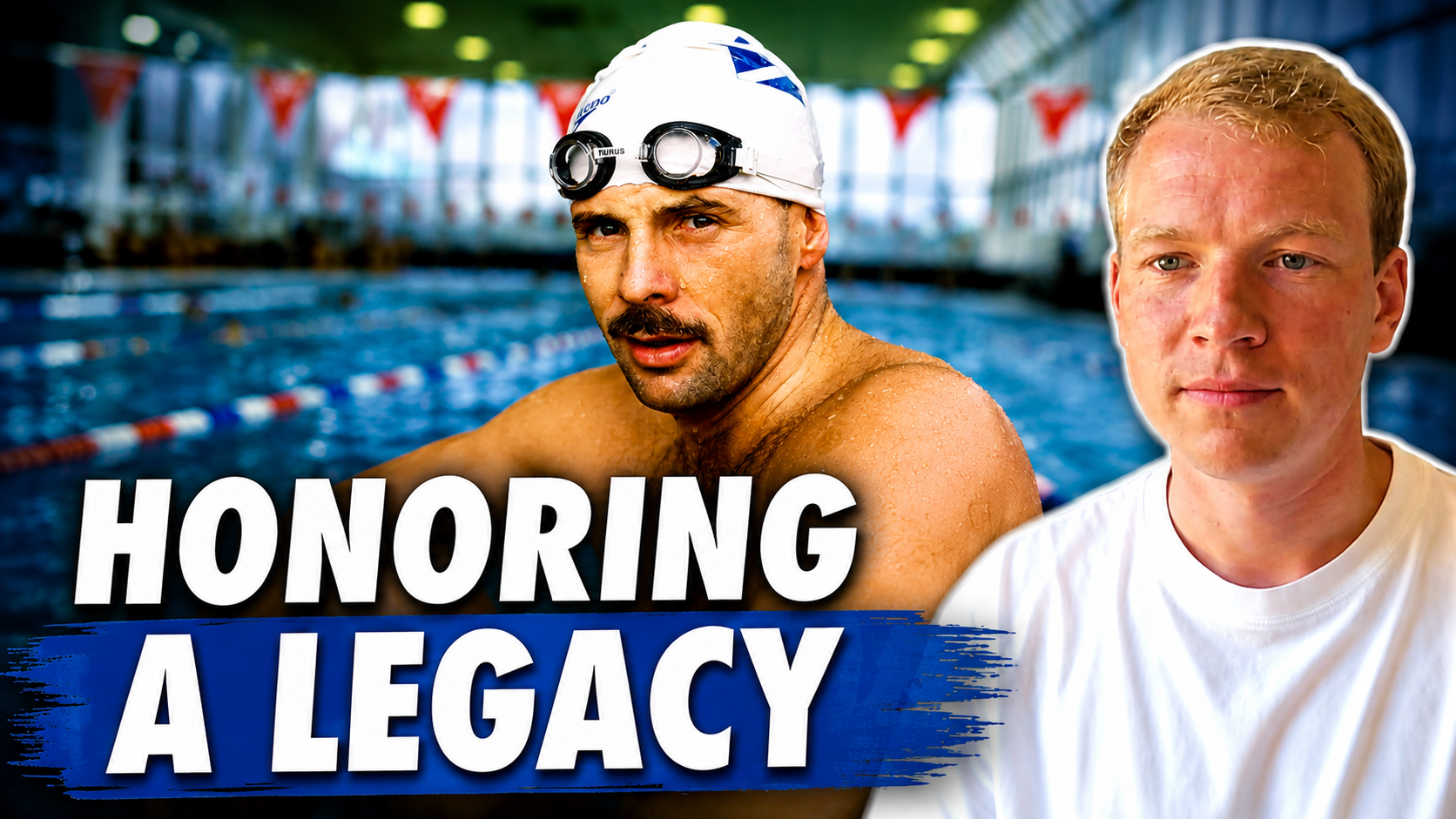
In this episode, I sit down with Sandra Surkamp to discuss her incredible swimming journey—from struggling to swim 25 meters without stopping to swimming comfortably in open water and dropping her pace by nearly 50 seconds per 100 meters.
Sandra shares the key lessons she’s learned over the last few years, including how revisiting the fundamentals, improving body position, refining her catch, and finding the right coaching cues helped unlock a major breakthrough in her swimming. We also talk about the frustrations that come with progress, why improvements don’t always happen in a straight line, and what it takes to make lasting technique changes.
Whether you’re stuck at a plateau, learning to swim more efficiently, or looking for motivation to keep improving, Sandra’s story is packed with valuable insights and practical takeaways.
00:00 Introduction to Sandra’s Swimming Journey
01:18 Overcoming Initial Challenges in Swimming
03:24 The Importance of Technique and Coaching
05:48 Experiencing Breakthroughs and New Goals
08:33 Key Insights on Swimming Technique
11:06 The Role of Mindset in Performance
14:42 Navigating Setbacks and Maintaining Progress
18:21 The Value of Video Analysis in Improvement
20:55 Revisiting Basics for Continued Growth
23:43 Current Focus and Future Goals
Transform your freestyle to be effortless and smooth with online video analysis:
https://effortlessswimming.com/courses-membership/
Try the new Nanoclear Anti-fog Goggles: https://bit.ly/nanocleargoggles
Transcript
Read the full transcript
Welcome to the Effortless Swimming podcast to show that help swimmers and triathletes love the water, become a better swimmer and live a better life. Here’s your host, Brenton Ford.
Welcome to the Effortless Swimming podcast. I guess today is Sandra Serkamp. And Sandra came along to one of our clinics in Brisbane a couple of years ago and has been doing some filming sessions in the past and has just continually worked with us. And recently you’ve had a bit of a breakthrough in terms of your times. And I wanted to get you on to talk about what you did, what those changes were, and then what you’ve seen and experienced since then because I think the people who listen to this podcast, they are looking to improve, but I think it’s also very relevant to know what you experience when you do make an improvement, whether you stay there forever, whether you go back, whether you go, how it all works. And I think people will be able to pull a lot from themselves from listening to your story. So Sandra, firstly, welcome to the podcast. Thanks, Brenton. It’s great to be here. Tell me about your swimming journey.
Where did it start for you? Yeah, so I grew up in Brazil and I had some swimming lessons when I was about 20-something. And I came to Australia about 20 years ago, but during COVID, my health went really downhill. And I have a really good friend who is a very strong swimmer and she was always telling me, Sandra, you should just go swimming and we should go into the ocean, et cetera. And to me, that was also so scary. One day, she lives in Melbourne. One day, she came up to Brisbane where I live and we went to a very small pool, a 25-meter pool. And I couldn’t even swim the 25 meters without having to stop halfway. Like, I would be completely breathless. But she was so positive and she was like, you should really try. You have great potential, et cetera. And that’s associated with my health. I decided, okay, I will try. And she gave me a target. She gave me the target of going and doing the port sea swim, which is one and a half kilometers.
You are assisted by the current, which is great. But for me, that felt like an enormous gap from not being able to swim the 25 meters to get to the one and a half kilometers. So that was November, 2022, more or less. I kept swimming pretty much three to four times per week, every week, and trying to increase my distance every week. And by the time, like the week before going to port sea, I could pretty much swim that kilometer and a half, like to a good degree, to a good somewhat, a good pace. And what I experienced during that time and with that swim was that, wow, how amazing you, you know, I was in a place where I didn’t know where to go. And I managed to create a plan to get there, to do the swim, and now I didn’t go. So I don’t stop and I don’t go back in my health. So since then, I kept just signing up to pretty much every swim that I could, but I also recognized that I needed some guidance because my swimming technique wasn’t there,
even though every time I saw my friends, and since then we created like a swimming group. So every time we see each other, we go swimming together and we help each other with the drills, et cetera, et cetera. So a couple of things that I thought was the internet, you always find information on YouTube and definitely swimming videos were actually really good and really amazing to help structuring a pathway to improve that technique. Very early actually, I did get your swim faster in five days program and I did do quite a lot of those drills for a long time. I did realize that in isolation day, it was just too quick and it is effective. Like I did manage to improve my times at that time, but I did sign up also to the eight week program which was extremely helpful at reducing my times. I did do a little bit of a timeline, so I’m looking at my other screen, but so yes, when I did my first critical swim speed test
at the pool, it was about like two minutes 37 seconds and I’m pretty sure then after that, so that did improve like after doing the eight week program that did improve to like two minutes 28 ish. So that was like a pretty good jump and I did do like one of your clinics at that time too, which was great also to troubleshoot and identify more or less where I needed to go to start with.
As I looked for more things to or more opportunities to improve my swimming and experience like open water swimming, I did join swimming holiday in Fiji and that was probably like the most challenging point and it was like a turnaround point in terms of being able to hold the same time for a long time for like long periods because we would be doing like five kilometers a day over two swims in the day. And that was the point when I realized I needed like some more coaching or like something that would be more consistent that I could get some advice in more regularly and it was one of the people with one of the persons that you interviewed from the Swing Mastery team that made me connect with them because they are local, they are here in Brisbane and so I started getting being coached by one of their team, which is a completely different experience because what the way that your clinics work and the way that most of the advice
that is on the internet works, it breaks down the stroke into smaller parts and then so you deconstruct your stroke and you put it back together once you could improve certain areas and the Swing Mastery team, they made me go back to square one. They made me go back to, okay, like what’s your body position? How do you like get more, the more string line as possible and how do you float better to be able to swim?
The way that they approach it was very, I guess, challenging to start with, but I could relate to most of the advice that I received, but it was, it feels like you are going back, it feels like you are, okay, I need to revisit this. It feels like it’s something I have done before. It feels like it’s something that I was good already at, but it’s obviously, it wasn’t because as they help me correct my body position, that improved or it made me go back to the same times that I was before I started the coaching sessions.
An important aspect, my husband also joins me on the swim. So he’s actually extremely, he’s much better than I am, maybe because he’s bigger, maybe because he’s more muscular, maybe because he grew up swimming. I don’t know, but he was the one who suggested to join your clinic earlier this year in April here in Brisbane. And whilst I was like, okay, I’ll join you, it’s fine. I don’t think it’s a problem that I mixed the both styles again, but it was very interesting because I think there were a lot of aspects that we covered at your clinic that is the work complementary to what I was going through with the Swing Mastery team. And it actually by doing the drills that we worked with and to correct certain issues that I was, that we identified like I was crossing my arm and I think my head position was also a little bit off. So that together with another cue that my coach gave me, my time improved like ridiculously.
So I was swimming at like a pace of like two minutes nine and then it went down to like a minute 48, two minutes 46. And what was that cue? Sorry? What was the focus? What was the cue? Well, the cue, so the cue was to swim like a monster. I don’t know if it’s nothing that you heard before. Like a monster? Yes. And what did that, what did that mean to you? It meant to me, first it meant freedom from a set position. I love on reflection and looking back when I started trying to think what is swimming like a monster. I felt that I was too rigid in my position and I was not, I was not allowing enough space to go wide with my stroke. And that space meant that I was patting the cat or that lack of space immense that I was patting the cat. So I couldn’t get a catch that would create the amount of energy that I need to, to move the water. And also it was creating difficulties with a high elbow. So it’s, yeah, it was very, it was very interesting.
And do you, so when you made that change to the way you were swimming, swimming like a monster, just a bit more, more freedom and not trying to be as contained and tight and narrow. Do you feel like that, that big increase in speed came primarily from holding more water because it allowed you to be a bit wider with the arms and the elbows to get more out of it? I think that’s one components. But I think also I think I float better because when you are, when your arm goes wider, you, you kind of cover more surface and that makes you more stable. So I think I was more unstable before. I got the notes from your last analysis here because the thing that made me reach out was you sent a message maybe a couple of weeks after the session. So about 100 paces improved by five to seven seconds. And then you sent another one not long after saying it’s increased by another five to seven seconds. So all right, let’s, let’s chat and see like what caused it
because I think a lot of people find themselves stuck at a bit of a plateau and they’re like, I don’t know what to do. And so one of the notes there was your right arm was swinging across the head rather than swinging forwards. And as you said, it was crossing over and that just leads to a lot of instability. Whereas when it’s in line with the shoulder, it allows that stability and streamline and length. And then also with your catch, it was like we saw that your elbows were quite narrow in that catch position. So yeah, laying them to go out wide with the elbow out wide. It’s just got so much more surface area for that high elbow catch. And the one of the key points to try and get across at clinics is in terms of getting that, that catch position, like the only way to do it is to have the upper arm and the elbow wide. It’s got to be out to the side because otherwise you’re just going to have that surface area that you’re
working with. And like it’s a kind of a simple way to think of a high elbow catch. So yeah, that’s a big increase in speed. And I think and you might be able to relate to this. It’s like when we think so much about our stroke and our technique, we tend to get this tension and rigidity and how that we move and hold the body. But you think of, you kind of want to be like water. You want to just flow. You want to be able to move kind of with it. Obviously there needs to be some form of tension and control there, but it’s only just enough to keep our shape and our form. And so we have to step out of that thinking side of our brain into that feeling side of our brain and just allow that sort of rhythm and flow to come into the stroke, which can be a bit of a challenge. And it sounds like you will be able to make that transition to that kind of stroke with that cue, which is an interesting one. I haven’t heard that before and it’s yeah, it’s a
good one to like just to try for people who feel like they just get contained by trying to get everything perfectly and not allowing themselves the freedom to move freely in the water. Yeah, and that would be me, you know, a little bit because of my own nature. I want to do things perfectly. So it does it does an interesting way to like release. Okay. I can actually just go crazy and swim like a monster. But yeah, I think something else that was interesting is that so when I reached out and I shared my this achievement with you and then I think there was a time or a whole week that it was pretty cold here and I didn’t go swimming that week and then I had the compounded with like going out to Victoria for work and like I was in original Victoria where it’s sometimes you don’t have a pool everywhere you go. So I think I had like a period of a week or so a little bit more that I didn’t do any swimming. And then next time I was in the pool, I
couldn’t repeat those times, which was quite frustrating and and quite annoying and it did make me feel a little bit like, oh, you know, was this was I making this up? Was I seeing too much on this or was my watch looking, you know, bad and funny or so? I had a couple of days that I was pretty frustrated and annoyed at myself. But after going back to the pool on a regular basis and then like going back to the basis. So doing the drills slowly and with intention and swimming following the cues. I managed to go back to that same time in a short period of time. So it’s obvious that it was not my physical condition that was stopping it. It was like my lack of technique, I guess, or the refinement of the technique that was impeding at you in those times.
Yeah, it’s such a good, good point to to make there is like, for example, I was working with a triathlete yesterday, a pro triathlete and in when was it in March made a good couple of seconds in improvement in his stroke and was feeling great. And then it’s just kind of going back to where it was prior to that. And so I had to look at his stroke and it’s like, well, unless it’s something say physical, like maybe having an off day, which always happens, but if you have a look at the stroke, well, it’s because those things that he had improved and changed that just that come back into the stroke. It’s like that. You got a rubber band and least initially that rubber band wants to go back to its original shape, its original movements. And so we just have to stretch it enough so that we change the shape of it for good. So we just went through basically the same process that we did in the previous session, working on just better body line, slightly better
kick and then just making sure that you had a catch in the pool where they had to be. And I think from here, we’ll start to see those times come back down, but it’s not, it might feel like a mystery. It’s like, why is this happened? But if we just look at it objectively, it’s like, well, the stroke has just gone back to what it was doing. So going through a bit of a drill progression and sequence and yeah, not, not trying to, this is a little bit, we were, we were, I guess, but like, if you, if you’re like looking at that and you’re frustrated, it’s like, man, I should be faster than this. I think it’s always good just to kind of accept, right? Well, this is, this is happening, right? Great. What can we do? What can we do to improve it? And just, I think that not trying to force things, not being like that frame of mind can make a big difference to how you swim. And when I look at the best swims I’ve done, there’s often been the combination of a bit
of maybe excitement or nerves if it’s a race, but it’s been combined with actually being quite like quite relaxed and sort of in a good mood. And I think that plays a big part in the way that we swim. Have you felt or experienced that with your own swimming? So I’m here like trying to think about, it’s, it’s an interesting, I think the ocean swim, it’s always, it always gives me a little bit of a buzz before you get in. But I did have quite some quite good swims that, yes, because I was not trying to do anything or because I got used to the, you know, like you get in and you get out and the ocean was not looking too, too rough. And I did have situations where it, yeah, sometimes the ocean was also looking rough and I would be like, okay, I’ll just go in and have fun and try to work with what nature is giving me. Yeah. But it definitely, it does,
it, I think it’s, the state of mind is also a matter of training it to like, you can like train yourself to think, okay, I’m getting to this pathway now and you are looking at it the long term, you know, when I started back in October 2022, I didn’t think I would be at this point talking to you about how much I have progressed. So, yeah. Yeah, it’s, and that’s the thing. I was sometimes, it’s like watching a, if you say the parent of a kid, you watch a kid grow up and they like, because the change is so slow, you kind of like, well, they haven’t really changed, but you look at a photo from three years ago and like, oh my God, so different. And the same thing with our technique and our stroke is, and just our abilities is if we do take that look back from a couple of years, yeah, it can be quite, quite surprising and quite a big improvement. And a few as well. So what role has there, has seeing yourself swim in that kind of video
and video analysis made for you in understanding your stroke and then how to change it? I think it’s, it’s pretty helpful because we don’t see ourselves unless, you know, unless we have a mirror at the bottom of the pool or, so it’s, it definitely assisted in identifying, okay, this is, this is what’s going on and perhaps that’s the reason why, why there is water going into my mouth. I don’t know why, but yeah, it’s, I think it’s, it’s pretty good and definitely I should be doing it more often to be able to have that record because this is also very good to look at, you know, a movie that you have done in this month versus one that was three years ago. It also shows that trajectory and how, how much flatter you look in the water. And yeah, it’s a, it’s a good indicator. Yeah. And one thing that you mentioned earlier also was just about where like going back to basics when, you know, worked with another coach going back to basics
and it’s just like, well, I thought I’d mastered this. I thought I’d like already got this, but it’s, and I do find that we’ve had the occasional persons go through our eight week course and they might do week one or week two and they’re like, now this course is too basic for me. But, you know, as you progress on, it gets more to the more, I guess complicated parts of the stroke. But if you haven’t got those foundations in place, then you’re going to find that you hit a plateau much earlier. And so getting those foundation in place and you get your breathing right. And often even swimmers who are very like, very quick swimmers like a, let’s say like a 130 average swimmer. Quite often there’ll be things that they can do with their head position or their breathing or their, like for example, I had a pro triathlete, like she was one of the best in the world a couple of years ago. She, she came to me and said, I’m struggling with my breathing.
I just find like it throws my entire timing of my stroke out and it just doesn’t feel comfortable. Everything else feels pretty good, but it’s just like my breathing is not right. And so what we, we just found that her head was too deep. So when she was turning, it was quite late to get the breath and then she was almost like underwater trying to get the breath and she was, her body was through the rest of the stroke. And so what we had to do is just have her head a little bit higher so she could turn quickly, get the breath and then it just flowed beautifully with the rest of her stroke and immediately she was like, yeah, that’s, that’s kind of what I needed. So, you know, it’s like basics like head position and breathing. No one’s above it, you know, it was like there’s always things we can do no matter how fast or how long we’ve done it. But I think it does take, I’m not being humble, but it’s like, yeah, it’s just knowing
that that’s actually the path forward. Yeah, I think there is nothing wrong in like revisiting those drills and those techniques like as you progress your swimming pathway for me is not a career, it’s just a pathway. But because when you, when you did that for the first time, you were a different person and you had a different technique and what you, what your body learned from that experience at a point in time is going to be different from how you do it now. So give you an example at the last clinic that attended with you, you did get us to, to be in a little bowl and then to stretch in the pool and then try to find what is their floating point where, you know, my, my heels and my bum in the top of my head are like on the surface of the water. And that was such a simple way to learn how to position yourself and it’s something that I haven’t done like that before but it was, for me, it was revealing. I was like, oh yeah, so I need to push a little bit more
this way or that way. So I think it’s part of, it’s part of the journey and revisiting those basics. It’s actually going to add value.
Yeah, absolutely. That’s one of my, when I do, when we do run clinics it’s their floating drills. So we go ball float, we go into what we call a Y float trying to be horizontal in the water. When people find that point of balance or even if they have say like muscular legs and heavier legs and they can’t actually float, they still get a pretty good sense of how you need to hold yourself in the water to basically, you know, float horizontally. And it’s that, I think like that discovery and that feeling that allows them to then just relax when they’re swimming and then when they’re relaxed, they, when they hold that position, they’re going to be horizontal when they swim and they don’t need to work so hard to keep their hips and their legs up which is a pretty common thing. And from there, everything else just seems to flow and what we like to do after that point is we do an easy 25 and an easy 50 of freestyle and try to make it as effortless as you possibly can.
And a lot of people after that, they’re just like, well, okay, like swimming can be super easy. I can, like, I don’t have to try. I can still move through the water at a moderate pace if I learn how to balance in the water. And I think that’s like, that’s the unlock for a lot of people where they’re like, oh, it’s always just felt like it’s hard work and it’s my heart rates up. But once you get that, then I think that’s a great starting point to progress from there. Yeah. Yeah. Are there any other cues or things that you’ve learned along the way that’s helped you with your own swimming? I think another one that was pretty good was that you are like a shish kebab as you are swimming. So the center of your body is actually almost always in the same position and it’s the sides that will move that was helpful. At some point, I decided, I don’t know, I think under the advice from my coach and I think quite a lot of the people
that you interviewed also support that you should be able to breathe to both sides. So I will naturally just breathe to the right-hand side but I was like, okay, I’ll try my left and keep going. And it was terrible in the beginning. I’ll be drinking water like all the way but also I realized that I would have like a little bit of a twist to the left-hand side that I couldn’t just move my head. So that cue was really helpful where to just keeping the center of my body fixed pretty much or like stable and then just try to move the heads. So I wouldn’t drink water and I wouldn’t be twisting. That’s a good one. I think like that thought of it like a skewer head still you want to rotate around the spine. That’s it. Yeah, we want to rotate on that axis and that’s whereas I think without, if you don’t know that it’s like, well, you think you have to move through the water like this, like this lizard or something but we always just want to rotate around the, around the spine
and then learning to breathe to the other side that’s probably going to suck. It’s not, you’re going to have a period of time where it sucks and you’re drinking water and you might have to stop halfway down but there’s always, well, that’s one because it’s, you know, haven’t practiced it and two, there’s probably some things that you’re doing that are causing that side to be more difficult as well and yeah, you mentioned one of those like you need to make sure that you rotate the right amount. If you rotate too far, you’re probably going to tip over and your arm will drop too flat. It’s quite awkward to get the breath and then with the arm in front as well a lot of people do crossover with it and then it’s very difficult to kind of balance with that arm and so we want to get them on the train tracks and just make sure they keep that arm out in front long enough to give them support and balance as well rather than pulling straight through.
So yeah, it’s such a good skill to do and it’s such a common question that I get at clinics and online is like, do I need to breathe both sides and how do I, how do I fix it? And like my answer is that’s always it’s totally fine to breathe every two strokes absolutely fine in a race to breathe the one side depending on the distance but you should be able to breathe the other side and in training you should mix it up. Maybe 30% of your session should be to the opposite side. Again, whether that’s every two or you’re doing some threes like it doesn’t matter too much but it is a skill worth developing and yeah, it gives you options in the open water as well. Yeah, especially not open water when you have like those days that it feels like you’re swimming in a washing machine. So it’s, it has been helpful. It was a long journey to like get it somewhat working effectively but yeah, I, in the beginning I was like going down the pool breathing to one side
and then coming back breathing to the other side but I started doing like just changing it every 100 meters and that’s because I felt that my brain was getting too confused because when I’m breathing to the right I need to focus on one thing and when I need to breathe to the left I needed to focus on a different thing and that felt overwhelming after a couple of, you know, after 500 meters you’re like, nah, I can’t do this. So I felt, I feel that if I go and I do 100 meters like solid to the same side it’s much better. Yeah, gotcha, gotcha. That’s good. Yeah, like I’m, I like to go, we’re in a 50 meter pool so I’ll go often 25 left side, 25 right side which just for me feels quite, quite balanced but yeah, everyone’s different and like the breathing pattern can change as well. It might, you can do like a two, three, two, three, two, three like play around with it, see what works best and going forward is there,
what are you working on at the moment? What’s your, what’s your focus here and what are you, what are you sort of feeling and experience with the thing you’re focused on? Yeah, so I’ll continue a little bit further with the master swimming. I will be off to Heron Island this coming week for a swim clinic with the swim mastery team. So I’m sure they are going to be adding more things for me to think about but there is still like on my last coach session is still I can lengthen a little bit further. So it’s still trying to be as flat as possible and try to move effortlessly. I think the master swimming also revealed that I can extend the rotation to my hips which was something that was not easy before or I tried before but it felt awkward because if you have the arm too close to your body it’s hard to achieve the rotation to that level. So it’s something that I’m excited to try a little bit further and see how it feels.
Sounds good. Well, thank you for being on the podcast sharing Bivvy your journey and how you’ve gone from 230 to 240 down to somewhere in the 140s. So that’s a great improvement over a couple of years and I’ve seen a lot of people continue to get better and I mean, particularly if you didn’t swim as a kid necessarily like there’s still so much more that you can get out of the stroke in terms of speed and it’s not always about speed as you know it’s just the fitness and social aspect of it there’s so much more than just speed but it’s always a good challenge to see what you can do to get better and it’s a bit like a video game I think in a way where you can just look into sort of level up your stroke and your character. So yeah, I appreciate you working with us over the last couple of years and yeah, looking forward to seeing how you go in the next 12 to 24 months. Oh, thank you and I appreciate your support too.
I think it’s so hard as like an older person not around that old but like as a, you know not a teenager or not a child to find someone that actually is happy to work with you and get you along the journey. So definitely same as my friend that’s, you know inspired me to start this. You were part of the journey that got me here. Thank you. Thank you very much. Appreciate it. Thanks for listening to the Effortless Swimming podcast. If you’d like us to help you become a faster, more efficient swimmer go to www.effortlesswimming.com