







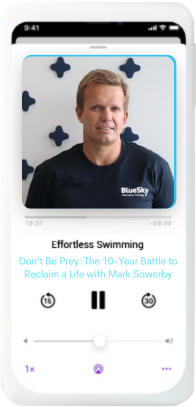
What would drive someone to voluntarily swim through the most dangerous ocean channels on the planet — no wetsuit, no cage, no way out except forward?
In this episode, we sit down with Mark Sowerby, one of the few athletes in the world to complete the Ocean’s Seven — often described as the Everest of open water swimming — a feat achieved by just 36 swimmers.
His new film, Don’t Be Prey, captures a decade-long pursuit across five continents and seven of the most brutal channels on Earth. From the freezing Irish Sea to the shark-patrolled waters of Hawaii, it’s raw, unfiltered man versus nature — no protection, no shortcuts.
But this isn’t just a story about distance or danger.
After a life-changing event leaves him searching for direction, Mark channels his anguish into purpose with the help of coach Tim Denyer. Together, they build a mindset around one simple but powerful mantra: keep the stroke steady, don’t splash, keep the heart rate down — don’t be prey.
We go beyond the film to explore the swims that nearly broke him, the unseen moments of doubt, and what the ocean taught him about fear, patience, resilience, and staying calm when everything around you is chaos.
This is a conversation about endurance — not just in the water, but in life.
Let’s dive in.
3:50 Swimming The Ocean Seven
7:12 “I Needed Something”
8:25 Headspace
10:51 Filming During The Swim
13:12 “It Is Not About Me”
15:41 The Toughest Swim
18:56 Strategies
21:15 Don’t Be Prey Mentality
23:42 You’re A Big Ocean Swimmer
27:51 Controlling Your Own Mind
29:10 Managing Trauma
34:05 “I Am Not A Very Good Swimmer”
35:50 Takeaway from The Film
37:23 Inspire Change
38:30 Showing Dates
Trailer for film:
Transform your freestyle to be effortless and smooth with online video analysis:
https://effortlessswimming.com/courses-membership/
Try the new Nanoclear Anti-fog Goggles: https://bit.ly/nanocleargoggles
Transcript
Read the full transcript
Yeah well you’ve got to have a good reason to do it and ideally for me I like layering, I like the idea of having layers of reasons and what I found when I get into those really difficult times I start to literally like a picture of a Rolodex, the old Rolodex I’d be almost going through the files of all of the things in my life and trying to find something to grab onto that is the reason for this swim and it’s funny what matters to you at different times so having one reason is probably not enough it might be enough for one swim but it’s not enough for all of them and so I had you know layers and layers of reasons and you know sometimes it was that you know I wanted to rebuild my courage to go after some of the people that that had done these things to us so you know at some level there’s justice and there’s revenge and I’ll picture them in my head and all that sort of stuff and all the but other times there was it was very personal or and and or it might you know might
have been too you know for Heidi or the boys and so I think having all those layers and then being able in your own mind to choose what’s important to you on the day not knowing what that’s going to be and it was funny it’s funny and you throw lines at yourself so I throw lines at myself so with the cook straight it was because I was really you know not fit enough for that one is is you know one on the ocean seven list it’s got you know one remaining two remaining three remaining if I got the cook straight down I have one remaining so it was just one remaining because it’s not as long a swim but for the north channel it was what the thing that got me over in the end was I said to myself because I knew it was a swimmable day the only thing that stops you today is you and once I owned the success or failure of the swim it was like I dug in so I took away all the excuses of other things that were going to stop me and decided the
only thing that could stop me was me and that wasn’t a better thing that was going to stop me welcome to the effortless swimming podcast to show that helps swimmers and triathletes love the water become a better swimmer and live a better life here’s your host Brenton Ford
what would drive someone to voluntarily swim through the most dangerous ocean channels on the planet without a wetsuit without a cage and no way out except forward today’s guest is Mark Salaby one of the very few people to take on the ocean seven and just one of 36 swimmers to have completed it successfully and it’s often described as the Everest of open water swimming in his new film don’t be prey it follows a decade long pursuit across five continents and seven of the world’s most brutal channels from the freezing Irish sea to the shark patrolled waters of Hawaii no wetsuit no protection just man versus mother nature I’ve already seen the film and honestly it’s the best swimming film I’ve ever watched not because of the distances or the danger but because of what sits underneath it all after a life changing event it leaves Mark searching for direction and his coach Tim Denier helps him turn anguish into purpose
and the mantra becomes simple but critical keep the stroke rate steady don’t splash keep the heart rate down don’t be prey and it’s not just a story about survival in open water it’s about resilience healing and what happens when you commit to something so big it reshapes who you are in this episode we go behind the film the swims that nearly broke him the moments of doubt that no one sees and what the ocean taught Mark about fear patience and staying calm when everything around you is chaos let’s get into it so um Mark in 2015 you’re something with channel yep you raised 1.2 million for charity and then it wasn’t another until seven years later that you did your next swim as part of the ocean seven yeah so what led to wanting to do the ocean seven yeah so I’d heard about the ocean seven when I did the English channel and thought that is something that I never want to do and then I knew Lytton Mortensen a little bit as well
and he was the first Australian to complete the ocean seven and and I think was seventh or eight or something like that in the world and everyone was racing to be the first from their country and so I followed his journey I suppose you know sometimes things in life don’t go the way that you would hope and we’ve done the English channel I’d quit my work and a bit under two years later that company ended up being uh attacked in a very public short selling campaign uh through Australia and and that ultimately led to that company um being taken out so as part of that process I found that to be it was quite a traumatic process and I suppose the definition I didn’t see it coming you know the definition of of trauma really is that it happened suddenly and it’s unexpected and and it hurts but I you know I sort of thought I was um
I thought I was a pretty resilient tough guy I you know I was mid 40s by then you myself pretty well and uh and had done the English channel I had raised all that money had built a really big company um and you learn a lot through that process and then when it really came down to an awful event I ended up falling in a heap and that really lasted for a few years so I ended up at at one point uh twice actually sitting out on a what I call the burly bench at burly heads and and you know looking out at the ocean and seriously considering um swimming out uh so when you get to that level of pain and suffering I think uh clearly you know you need help and the help for me came in the form of Tim Det Tim Denier who was my English channel coach who who popped in for a half an hour let’s have a beer for Christmas on his way through because he’s married to an Australian girl and and uh and I know he was shocked at at my condition and and where I was at and ended
up staying for seven hours and several coronas and and through the course of that uh convinced me that uh that the ocean seven would be a good purpose now this was November 2019 so it’s literally two months before three months before COVID so probably just as well and so so the the line that Tim got me on was um because I said no I like I’ve been this channel was so hard I didn’t have wanted to do that again and couldn’t imagine doing swims that were harder and particularly over you know what was going to be a multi-year project and Tim said to me um you know I’ve never coached anyone to do the ocean seven before why don’t we do it together
so we did and that’s how that’s how it started so back into training and you know takes a quite a while to get a middle-aged man body moving again and and that gave me some purpose do you do you feel like him asking to do it together was something that really helped like to have a teammate there because it’s a for the most part you know it’s a solo sport with all the training but obviously it’s a team thing with all of the uh trips over and you know your wife helping a lot and all that sort of stuff like was it that that really sort of triggered things for you or yeah that was uh that was the winning line like I you know life’s about winning moments and Tim won that moment and for me really and so uh you know I remember it vividly and and uh and from that and then sort of started to think oh my god what have I can but then you sort of jump on the internet a bit more and start looking at it and reading
the horror stories of shark attacks and jellyfish dings and intensive care units and all those things so but for sure it was that was Tim’s I mean you know Tim and I had a really great bond with Tim I think Tim’s a special human on many levels and um and so you know it was a privilege to be asked and it seemed I suppose I understood that I needed something and you know I’d been in a hole for a couple of years and it still wasn’t over and so I needed something else to to to grab on to and then leading to that first swim what was your headspace like were you were you thinking uh like this is doable but it’s going to be a real challenge or were you doubting yourself going into that swim how how were you so similar I did apply myself really well because I always when I did the trend rooms he trained me for the English channel and he had hit a lot of Ks for trend so I did every single lap he told me to do
exactly the pace he told me to do it I just figured that he would have a process that would get me fit enough then Tim was the person that took me across and and so I followed I was point and shoot and same as this I just figure that the only way to get across these big things particularly not being you know very good swimmer is was to was to follow the process and to be diligent and that’s not just on the physical side but you’re also trying to develop your mental side now the Molokai channeling I was straight to the stats and and in the year before COVID so the year before was just when I committed myself to these swims because Molokai was first which is a bit scary so I think there were 17 attempts eight people didn’t get across four knocked out with jellyfish and four knocked out with shark attacks and then only two actually made it so the rest were just exhaustion so that’s 45 ks overnight through shark infested
waters no shark no shark cage or anything so and I look looking back at I mean in terms of the training I trained well but looking back at that swim I remember I’m says oh wow that’s so brave and actually but but to be frank it wasn’t that brave in a sense I suppose to be brutally honest I was still at that point that if I got eaten I wouldn’t have minded you know so it was sort of like a false courage because I didn’t really care what happened and and and the nice thing about that the whole journey is that changes but but at that point it was like well if I get taken it’s you know it’s better than doing what I was thinking about doing just swimming out from Burley so yeah so along the way we got fit again and I was very lucky the group down in Melbourne got me and Chloe McCartle organized for me to go on the U24 swim as training and then you know the community’s so amazing Val Kalmokov stepped up out of the blue and said looking at do something
else before Molokai’s at 10 days before he took me down the Derwent even though he was heading home and so we did a nine hours from down the Derwent knocked over that 34 ks and and that got me ready physically and mentally for the Molokai challenge and with the with the movie so sort of just
fell into fell into a place where you had someone there filming the English Channel swim and then ultimately all the other swims as well and that’s how you’re able to put together this documentary in this film and did you feel a extra pressure with having everything on on camera did that add a certain element to the swims it did for the English Channel like I didn’t want the documentary guy to be there but we hadn’t raised enough money so that was very kind of him to to do it for free and then to put together this sort of 41 minute you know YouTube English Channel film and the script that day sort of played out pretty well it was quite tight and and that’s become a really good resource for English Channel swimmers to see actually how it all works and how you get fed and and how it looks at the end and all those things so so that was just a gift it was you know this is an accident of history and and because that
was so good when I went back to Molokai I wasn’t really I knew no one had done an Ocean 7 documentary but I didn’t expect to get it done so what we decided to do is rather I think in these situations it’s better to keep the optionality open if it turned out which is the way it’s turned out imagine if I had to go back and swim it to get you know good I’d probably get eaten so so you know I think you just Russian rule it out of Molokai so so so I just got a local guy that had been that the captain recommended just to film it and film us before and after and just to see just in case I made it and not really expecting to get across but then we did so then I went back to the documentary guy Jeff Sanger who originally did it and said to him can you come and film the rest and just to see what happens and he said to me but mate swimming’s so boring you know no one’s going to want to watch this I said well let’s just film it and see
what you think and then after he saw Catalita and saw me jump in the in the dark and you know great white breeding ground and I don’t think there’s anything more primal for a human being that’s seen jaws or anything then to jump into the dark ocean and great white breeding ground he’s like this is nuts no one’s going to believe this and and then it just we just sort of rolled it out and we did no script there was so everything was filmed as we went there’s not reenactments or anything and and then of course then he you know he started to meet the other swimmers and the community and that was what really grabbed him and that’s one thing that I noticed watching the film is and you mentioned this to me when you allowed me to watch it you said like it’s it’s not about me it’s about it’s about everyone else and it certainly certainly is and I think I mean anyone who’s probably listened to this podcast is part of some swing community and
there’s there’s so many different open water groups all over the world and they’re really tight knit they’ve got this love for just being in the water often cold water as well but it really bonds people together and and when I think about a lot of my really good friends it’s come from swimming because there’s something about just putting in the hours and the and the case in the pool or in the open water that that can bond you together in a in a very special sort of way yeah and so on this sort of you know rehab journey that I was on which is really what it was I mean there were layers to the ocean seven journey for me and one of those was getting myself back to you know so hopefully a better version but also you know trying to rebuild my courage and various things and there’s nothing quite like those ocean swims to help you with that but the turning point where the was the Gibraltar swim and I had you know Bengi from Turkey and Jamie from Scotland and Paul from
England and and obviously we had Tim with us as well and so we got to swim that as a you do that as a pot of four and something about this group and and the quality of those humans their joy and their love of swimming their excitement and the day we got and all the things that went with it that you suddenly can build a lifelong bond with someone that you’re with for three or four days now some of them were then the Croatia swim camp that Tim had on afterwards which is the cold water swim camp which I was there for the north channel because getting cold water in Australia is a bit challenging so then I went to Croatia and met another 30 or 40 people a lot of whom were coming into their first swim but there’s something beautiful about this group of people from all walks of life who don’t care what you do or where you’re from all heading towards the same goal the same experience the openness and the and the joy and
I don’t know there’s a there’s like a happiness to people that are living out on the edge a different happiness it’s like a self-discovery you know some level I suppose of pride in
in having the willingness to take on something that’s really awful and then there’s the learnings that come as you as you do those things too and with with all those swims you want to you mentioned the north channel was the toughest swim that you did take me through the the moment that you realise in the swim like this is going to be a long day out this is this is going to be one of the big challenges pretty experienced by then so so the two toughest uh in well I mean in terms of toughness the English channel was really tough because it was the first time I’d ever experienced that level of pain and suffering for that long and it was cold enough back then so it was sort of 15 16 when I did it it seems to have been a bit warmer in recent years but and then Molokai is obviously really really long it’s dark you know swimming at night and you can feel sharks coming in and various stuff so the big thing with Molokai I found was uh dealing with fear and then but I think that the north
channel’s dealing with something altogether more horrible than that and and it’s the cold and I did a lot of cold water training I was getting pretty good at it too so I’ve been and I’ve been through that process so I understood mentally how to deal with it but you just never know when the cold’s going to get you and I knew I was in trouble with the cold two and a half hours in like I’m two and a half hours in and going oh my god I can feel this getting into me already and I’m and I’m swimming you know swimming you try and swim at a higher cadence to to keep your your warmth and all those things and I thought well I’ve got 10 hours to go how how am I possibly gonna get this done and you know it was 11 12 degrees when I got in I think most of the day I got a pretty good day as far as north channels go probably in the top quartile uh that was ended up being sort of 13 14 um we got some crazy weather at different
times but then it died down I got stung but not too much uh so from the Lines mains um and they were you can treat them like a bit of an electric shock and get me going again but once that cold started to get into me um then my whole body started to really suffer
and you know so that’s the only swim I’ve really thought about getting out
at six and a half hours halfway basically and I couldn’t imagine finishing this thing at all and then nine and a half hours was by then it was six and a half hours looked good
I just have an experience suffering like that branch and I just can’t I can’t explain you know I mean I’ve had an accident since then I broke my leg and blew my knee out and that pain I’d never experienced before but it was nowhere near as bad as every moment of the north channel you make it sound so appealing oh my god yeah but you learn so much like it’s like I’ve never been the beauty of the north channel and that experience is that it’s stricken me completely and it’s almost like when you’re out in the ocean and suffering like that in every moment that you get to look into your own soul and you see you get to see what’s there good or bad
and so we you know in the end Tim did a magnificent job of just getting to the next feed and doing different things immensely and physically and feeds hearty was there as well and we you know we eventually found a way across well what are some strategies that you either use that day or you’ve you’ve learned so long in the way that’s helping you that you know to help you get through those tough situations yeah well you’ve got to have a good reason to do it I can’t and ideally for me I like layering I like the idea of having layers of reasons and and what I found when I when I get into those really difficult times I start to literally like a picture of Rolodex the old Rolodex I’ve been almost going through the files of all of the things in my life and and trying to find something to grab on to that is the reason for this swim and it’s funny what matters to you at different times so having one reason is probably not enough
it might be enough for one swim but it’s not enough for all of them and so I had you know layers and layers of reasons and you know sometimes it was that you know I wanted to build rebuild my courage to go after some of the people that that had done these things to us so you know at some level there’s justice and there’s revenge and I’ll picture them in my head and all that sort of stuff and all the but other times there was it was very personal or and and or it might you know might have been too you know for Heidi or the boys and so you I think having all those layers and then being able in your own mind to choose what’s important to you on the day not knowing what that’s going to be and it was funny it’s funny and you throw lines at yourself so I throw lines at myself so with the cook straight it was um because I was really you know not fit enough for that one is is you know one on the ocean seven list
it’s got you know one remaining two remaining three remaining if I got the cook straight down I had one remaining so it was just one remaining um because it’s not as long a swim um but for the north channel it was um what the thing that got me over in the end was I said to myself um because I knew it was a swimmable day the only thing that stops you today is you and once I owned the success or failure of the swim it was like I dug in so I took away all the excuses of other things that were going to stop me and decided the only thing that could stop me was me and that wasn’t going to be the thing that was going to stop me I remember doing the rotten ass swim and and I got cold about 13 k’s in and I just said to myself you’re lucky to be here you’re lucky to be here as in like you know it’s fortunate that this is a problem that you’ve created for yourself so it’s like yeah there was just that line that I kept
repeating to myself you can solve that if you want that skinny like if you’re you know one of my skills is staying fat so it’s not fat enough Brenton
well next next time yeah hopefully there won’t be a next time you know well I’ll just like I’ll get better prepared I think that’s right more food yeah yeah so um yeah it’s uh it’s funny what can’t what goes through your through your mind in these these tough situations and I’ve found that even within like difficult uh like training sessions you know when you yes you might you can tell that your mind is saying to you it’s like like you don’t need to do this it’s like you can get out like it’s but if you can identify those thoughts and then go actually I don’t need to listen to that you can just let it fall by the wayside well that’s the power of it well that’s been the power of it for me is that when I was doing the two hour training sessions and uh in the water and I didn’t use music or anything else so I decided that I needed to be used to being in my own head but being in my own head when I was in a really bad way was just an awful place and so you know you’re crying into your goal sometimes
like it’s um and you’re screaming at yourself how can this be me and how can this be my life and how did these things happen to me you know what did I do to deserve this and all the things that people do when they’re in that sort of victim mentality and and I suppose that’s where I think partly the beauty of the film comes in is that is that don’t be prey mentality which is sort of for me was don’t be a victim and take control of those things in your life that that you can you can’t take control of everything and that’s the other thing I suppose that the swims do is that you know you control everything you can your nutrition everything else but ultimately you have to sort of give yourself to the ocean and the day not knowing what you’re going to get and find a way across so you get very comfortable with uncertainty but in the face of knowing you’ve done the perfect preparation yeah you have to allow allow the possibility of failure to
to happen because there’s only so much you you can do isn’t there just make sure you’re not the reason yes yeah you don’t pull yourself out of the water and all those sorts of things which only did even even in the North Channel with the where that line came from don’t be don’t be prey you’re telling that story last night at dinner and I can you tell that tell that story again and I quite like how you used it on that swim as well because I yeah I find that quite interesting and I don’t it’s it was quite a good one. Well there’s a very famous lady Dr. Angel Yanagihira who’s the sort of world expert in jellyfish and she’s a shark expert as well and and literally a mermaid so we were Tim and I went to to her house and she’s a professor at the University of Hawaii and what she’s famous for amongst other things is that she’s developed a jellyfish cream for box jellyfish in particular for the Navy SEALs so it was a seven-year project she told us and
you can imagine with Navy SEALs like they’re doing an operation and they put this stuff around their necks as particularly so that they can breathe if they get stung there then they’re dead not from the jellyfish sting but from people shooting them and so she developed that and we all use that as in the Molokai Channel and it lasts about four hours and it’s certainly better than nothing and definitely I was getting stung early and it seemed to help I definitely helped so we’re in her her house is a lab too she’s one of those people and she’s got all these 20 litre sort of paint buckets everywhere full of dangerous crazy creatures that she’s getting venom out of and various other things and and that she gets this cheeky look on her face and she says to Tim and I she says so boys we need to talk about sharks and you know obviously Molokai Channel is just chockers full of sharks you’re at 700 meters of water there’s sharks
everywhere and she said to us boys don’t worry about it there’s going to be any sharks around when you’re swimming they’ll be around you the entire time that you’re out there they’ll just be there and they’ll know you’re there she said so the only way you get across this thing is that you need to remember that you’re a big ocean swimmer which is what they call them you’re a big ocean swimmer you belong out there you need to keep your heart rate down keep your stroke rate down stay consistent don’t be prey and there was just like this moment like this light by my head exploded I thought oh my god and I realized that she you know she’d literally changed my life because I straight away flipped that to the problems that I was having and realized that I’d actually been prey and so there was that’s that layer for me but also then she talked to us about you know how to keep your heart rate down and keeping your breath the same and
really being consistent in the water not sending off those signals that you’re something that’s worth eating and so in the swim so it happened twice that about you know you get a really good the ocean was washing machine so we’re in a pretty rough night and we’re getting into the night so we’re three and a half hours in and I feel this sort of switch next to me and we’ve got the so you got a kayak and it’s got a a shark shield on the front and back the boats are hundred or two or three hundred meters ahead of you because it attracts sharks and it’s just bobbing away so sharks are sort of around it so it can’t be near you until they feed you then they sort of scoot out come back and feed you and then they take off again so it’s you and the kayak and then you’re out in the dark and it’s just got these few little red lights on the side it’s just you in the middle of the ocean literally in the middle of the Pacific and so
the way those shark shields work obviously it hits them on the nose so the sharks might come in and have a sniff and then if they hit some on the nose they turn around really quickly and go away and you can feel that that switch so I felt the switch I thought oh wow that’s a shark and I stayed really cool but then at about four hours now I know it’s about four hours because I felt was feeling hungry you know you feel you get into that routine of feeling hungry and and there’s this big switch and I thought oh it’s the boat and and I hit the side of the kayak and the kayak has gone oh what was that I look up thinking it’s the boat and the boat’s not there and I’m like oh my god what is next to me in the water here that is big enough to swish me that far across the two meters into the side of the kayak and then I look down and there’s like this box jellyfish that’s avatar blue or something and I thought oh my god and then I but I’m but I
did all those things like I immediately applied don’t be prey and I’d all I had done since I’d seen Angel on that week since just thought about that and my mind was perfect like I literally went back to the rhythm kept my heart rate down and stayed cool and didn’t send off any signals and you know and I survived it’s such a good metaphor for going through life as well don’t you think like it’s just if you can keep that that calmness about you no matter what situations thrown at you yes you’re much better positioned to to deal with it and react in the in the best way possible yeah I like lots a lot about controlling our own minds isn’t it and and particularly in situations that are difficult whether that you know there can be lots of different things and so I have found that very powerful yeah but don’t be prey for me what I liked about it it wasn’t be a predator it wasn’t be aggressive and attack other people it was just
don’t curl up in a ball you know don’t give up don’t you know don’t allow things to happen to you and there’s this great line in the in the movie from Jen Schumacher she says you know how do you make something that’s work for you rather than against you and and so that’s what you’re trying to do is you’re trying to turn you know what might be an enormous negative or appear like an enormous negative to you because it’s always relative we always think those things that may be worse than they are how do you turn that into a net positive and life’s not perfect there’s a lot there’s not black and white so how do you how do you make this the best that you can and that’s that’s worked really well for me for me it’s been life changing from that one comment yeah well and it’s um quite often when I if I reflect back on some of the things in my life that at the time where you know some of the some of the toughest things I’d been
through down the track it’s like yeah I actually could take that learn from it and that’s actually become a positive thing but it can be a challenge to recognize that in the at the time yeah and mostly you know everyone says oh you know it doesn’t kill you it makes you stronger all sort of stuff and they’re all nice lines but nobody you know I wish these things had never happened to us and I’m sure for almost everyone else in their life they don’t want those bad things to happen to them and but unfortunately you know that you cannot get through life without trauma so how do you and everyone has their own different trauma so how do you how do you do a better job of managing that trauma and preparing for it and how do you make it so that the holes not so deep you can’t get out of it and I know it ends up at the bottom of that hole it’s a long way out to be four years to get to some level of turning point what was that moment for you when you felt you had made
that that turn I think the um probably the north channel post the north channel um cook straight was also important I felt like at the end of cook straight I remember sitting on the boat and and thinking that that I had sort of been rebuilt and then which meant that Japan which was my my last of the seven and Japan had had one out of four to get across which was Annie Johnson the year before and that doesn’t count because he’s special so you know so basically nobody got across um so nobody normal got across so so effectively it was a hundred percent failure right the year before and so Japan felt much more about the process the event the swim
preparation doing things differently for this particular swim the team dealing with the uncertainty of whether the channel would let you across or not being the last one all those sorts of things so so it’s not a spreadsheet but but certainly at the end of the north channel I think because I was stripped so bare and then didn’t end up back on the burly bench like when I was in Catalina I ended up in a really big hole I got sick from the diesel fumes which is just a rookie era with by me I got really sick but I was also worried about a bunch of things and I ended up spiraling down I literally was begging for a great white to eat me like I just wanted to be gone um and I just would have thought it was a mercy killing but when I got to that sort of level of pain in or beyond that in north channel I didn’t go there I only went to good things wow well in the film so Suguru straight’s the last win and like high spoilers no
spoilers okay I won’t reveal whether or not um you made it I don’t get eaten obviously so uh but um but for me watching yeah you’re watching that just was really quite a really emotional part of the the film and I wouldn’t say I’m I wouldn’t say I’m an easy cry for a for a movie um but I’m also not a tough cry but it’s just like really sort of stirred up um some emotions and I think it gives such a good insight into the actual things that someone like yourself goes through through the ocean seven because I think you know only what is it 36 people have done it so far you’re the 29th and I don’t think you can you can’t grasp the challenges that you that you face and how how difficult it really is but for me that gave me probably the best insight into what what challenges you faced and then also having the team around you and what that feeling’s like yes when you when you get to the end like it to me is like I felt like
I was a bit of a part of that yeah well everybody does so I that’s the beauty of the film you know obviously we didn’t make it so I did the swims and whatever else and we got really lucky we Tim Daniel my coach had been in in a documentary in 2005 2006 that was a Channel 4 which is a UK documentary and that documentary at the time was quite famous called Two Swimmers and the guy that did that that made that film ended up being our editor so he already knew Tim understood channels but he is an Emmy award-winning editor and writer as well so he’s world class and so where they’ve landed this thing is quite astonishing and so it’s you know documentaries don’t go into cinemas anymore but the distributors all want to put it into cinema partly because obviously being part of the ocean and everything else it looks it’s better on cinema you know in that cinema experience but also also because they think that you know that if
it gets the right marketing and the right push that it could be one of the better documentaries that’s been made in a long long time I think they’ve done a beautiful job yeah I absolutely agree and listening to this yeah somebody’s listening to this might think you have to be an extraordinary swimmer to get across these channels but you told a interesting story about a good friend of yours Olympian Michael Klim who gave you some coaching advice yeah so I’m not a very good swimmer so I own and technically you know pretty awful but obviously you build a bunch of skills to get across these swims and so the swimming technique is part of that but Klimmy before the English Channel said to me oh look I really want to help you with your English Channel experience why don’t we do a technical session down at my pool so I went down to an hour and a half training session with him and he said he was going to give me
a couple little tips and we sat down for breakfast and I said so you know what have you got for me said mate so we just need to find some rhythm that was terrible and so when I finished the English Channel you know I was in Dover and the phone rings and it’s Michael and and each you know drills into my head for 45 minutes because the Olympian he wants to know what it was like mentally you know it’s a whole new experience and at the end of it he says he goes well mate he said I just can’t believe a swimmer as bad as you can get across the channel like thank you thank you Michael so but anyway it’s so you know those that’s sort of true actually and I said you know there’s a really good line when when part of the filming process is that you have to bring your kids on that journey and hours at 21 and 23 and the eldest son Lachlan got to watch it an early version and by himself with the film guys because they needed to show him some
stuff that was a bit confronting and and I asked him how would you describe the film he said that’s easy dad ordinary people doing extraordinary things I thought that was such a good line because it’s obviously a lot of other swimmers that are in it as well and so I think that’s sort of a pretty good description of of what it is
you can sort of touch on that but what message would you hope that people take away from watching the film oh there’s there’s a lot of layers to it so I know where people are landing so people are getting to the end of the film and if they’ve been through trauma then they understand the film and they’re applying their own trauma to the experience that’s depicted in the film and it’s the same it’s a metaphor the film the swimming really for that journey so for people with trauma it gives them hope that you know it does end actually it all it does actually end and that you can you can manage that through and then for other people that haven’t necessarily been through really difficult things yet they’re definitely landing at the end of this thing and they’re inspired to go and do something else so they they don’t understand they don’t need to be an Olympian or a national level swimmer or anything else to to do something that can really change their lives that is really interesting and can
can you know help them be a better version of themselves I think that’s a lot of people that have seen this in sort of the focus group things have come out and they’ve gone back running swimming and not only that they’ve they’ve picked something big to do they haven’t just said I’m going to go down they might do some bite size chunks some little ones along the way but they’re thinking about something really big that can take them well outside their comfort zone not just outside their comfort zone and that’s cool yeah and that’s that’s the thing that a really good film or documentary can can do is it can inspire that that change and actually like booking in a big a big swim or a big run or just you know getting getting people to shift course on their life even even a little bit by a few degrees well we go though we gave uh when I was talking to Jeff and Steve and they said what do you want to get out of the film and I said I I want um that someone who’s done the English Channel
is sitting watching this with their family and that and the film ends their family look at them and go oh my god I had no idea now I understand what you’ve done so there’s sort of that and that and that an ocean swimmer can watch it and they can go that’s what we go through that’s that’s what it’s like and and they’ve delivered that it’s very authentic definitely
I think every swimmer every swimmer I know every swimmer is going to love this movie but it’s probably any endurance sport but it’s mostly I think got more appeal to general public everyone who’s sitting there thinking that they can or should go and do something I’m hoping that this once by them to actually go and do something you gotta you gotta live not exist and the film so you’ve got some dates coming up for UK and then Australia do you want to share those yeah yeah sure so in the UK so we’re going to get to the UK first I think and in fact I found out today that we’re going to kick off and folks and where we’re all started so we’re going to kick off where the English Channel finished for me on the 4th of March but we’re doing advanced screenings around the UK so I’m going to go to all those I think this is like a holiday with purpose and and then Q&A and then there’s eventually the proper cinema release
across the UK is on the 20th of March I really wanted to respect Tim Denier and all of the wonderful people in the Red Totsamming Group by being going there first and so that’s where we’re going first and then then that will end and then eventually it’ll do all those things but it takes a fair while to get to streaming other things this is definitely a cinema movie I think and and then Australia is a Gold Coast Film Festival probably from the 22nd of April but then into cinemas in Australia on the 7th of May and then through Asia and then it’s the Northern Hemisphere Festival season so it’s going to take um year and a half two years it’s great fun yeah I bet is it do you feel like this is a
I mean obviously it’s the next project but like this is uh this is the thing that’s really giving you purpose at the moment you know you’ve done the Ocean Seven like is this it’s more um like Jamie from Scotland said the other swims the celebration of all the work that you’ve done this feels like a like a celebration really others it’s just only pure joy in this thing and knowing that it’s so good is really helpful like you’re not gonna I haven’t said anyone come out of there from any walk of life and go that was a bit crap so so it’s so so and you know our boys are 21 23 so they’re no longer at home so we’re really in this unique situation where we can follow it and run with it and see where it takes us and meet and then you get to meet the same people that we got to meet at Gibraltar in Croatia so for you know I can’t tell you how excited I am about you know following this thing around I’m still watching it
but yeah but it’s uh no it’s it’s it’s it’s a really um you know it’s gonna be a really interesting journey and so we don’t we’re turning it like a channel in the sense that we’re prepared for it we’ve done everything we can the movie’s made and now it’ll go where it goes and and it’ll take us where it takes us and we don’t mind where that is we’re very
indifferent to where that lands just let it land where it lands and so but along the way there’s going to be some really really interesting people to meet that’s great well um as I said at the start I really enjoyed the the film I think you’ve done you and everyone who’s worked on it has done such a such a great job firstly showing what you go through on those swims because I I didn’t fully grasp it I don’t I don’t think even though I’m in the swimming world I know a lot of people have done it I didn’t fully grasp it and then also just the well being so open and honest about where you were in that dark hole and then having being able to come out of it and putting yourself through those those swims to you know to really discover
I guess who you truly are like deep down and and being able to come to the other side of it is was very inspiring so certainly moved me there’s nothing quite like knowing that you’ve got it in you and my personal experience from that is is that that’s now resonating across every aspect of my life so my daily disciplines are better my mindset’s better I have this place I go to called my seven oceans soul that um there’s you know there’s a song that takes me there as well that I use and like any triggers I mean I think it helps the bot helps your mind to to get there so it’s a you know if you get that in ripples across every element so you’re better with your friends you’re better with your family you understand how important the team were you love them more you appreciate things more and you don’t let anything that’s you know I mean the noise is gone I just can’t tell you how beautiful it is well I appreciate you
coming all the way down to uh to talk to you and and doing this podcast we’re saying it’s like this is the first actual in person yeah after 400 something episodes sorry no no it’s it’s great it’s like it’s it’s much much better to be able to do it in in person so um yeah appreciate you making the trip and uh we’ll have all the links in the description so people can follow this and uh hopefully get out there and watch the film because it was um yeah amazing an amazing one so thanks for listening to the effortless swimming podcast if you’d like us to help you become a faster more efficient swimmer go to www.effortlesswimming.com