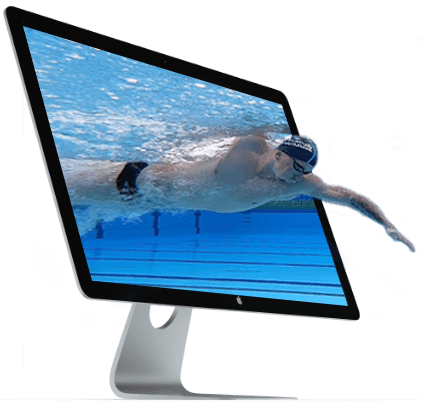









You can watch someone swim in real time and miss it completely. But slow the video down, frame by frame, and suddenly it’s obvious. Every fast swimmer has this. A lot of slower swimmers don’t.
And when you fix this one timing detail, it doesn’t just make you smoother—it feels like someone just switched the engine on in your stroke.
In today’s episode, I’m going to break down exactly what that timing pattern is, why it matters so much, and most importantly, how you can actually feel it in the water so it shows up in your own swimming.
00:52 Waiting Too Long To Begin The Catch
02:29 Begin Catch Earlier
03:22 Back Off The Power
04:10 Early Connection
05:31 How Do We Fix It?
08:09 What To Do?
Transform your freestyle to be effortless and smooth with online video analysis:
https://effortlessswimming.com/courses-membership/
Try the new Nanoclear Anti-fog Goggles: https://bit.ly/nanocleargoggles
Transcript
Read the full transcript
That could be costing you five seconds per 100 out possibly more. So for the same fitness, the same effort, with just better timing, you could be swimming five seconds possibly more, even quicker. Welcome to the Effortless Swimming Podcast to show that help swimmers and triathletes love the water, become a better swimmer and live a better life. Here’s your host, Brenton Ford.
There’s a timing pattern that separates fast swimmers from slow swimmers. And you cannot always see it easily when you watch someone swim in real time. But when you slow the video down frame by frame, it’s right there. Every fast swimmer does this, a lot of slow swimmers will miss it. But when you fix this one timing detail, you’ll feel like someone’s turned the engine on in your stroke. So today, I’m going to share with you what it is and how to feel it in the water. So it was about three years ago, I was coaching a clinic in Brisbane. And there was a swimmer there who was a master swimmer. He was 48, was swimming his whole life, very fit. And it was training about five times a week. And he was stuck around the one minute 25 per 100. So fairly quick swimmer, but he couldn’t figure out how to get faster. He’d worked on his body position, he’d worked on his catch, he’d worked on his kick, everything looked fine. But when I
filmed him underwater, we could see it immediately. His catch timing was off by about half a second. And that doesn’t sound like much. But that half a second was costing him around three to four seconds per 100. And so here’s what most swimmers do, they reach forwards, they glide, and then they start the catch. But the problem is, if they wait too long to begin the catch, they end up decelerating and slowing themselves down. And so if you are beginning your catch, once the other hand has already entered, that’s too late. That’s too much of a catch up freestyle. And so you end up losing a lot of the momentum and the speed that you’ve generated from your catch and pull on the previous stroke. And so you speed up and slow down and speed up and slow down. And that just uses a lot more energy. The other problem with that is it makes it harder to get a really good catch if you glide for too long. Because not only have
you lost some of your speed, but you will also find it harder to get into a comfortable position. Because it’s likely that your hand is beginning to catch too high near the surface of the water. So what I said to this from a was, all right, we’re going to focus on this one thing. We want to work on getting the catch to begin a little bit earlier. So you’re not doing too much of a catch up in your freestyle. And he said, okay, I don’t know what that feels like. And I don’t know how to change it. So I showed him that once his hand enters the water, the other arm should have about finished its catch, or it could even be roughly under the shoulder. And so that’s the timing that we say with most middle to long distance swimmers is that as one hand enters, the opposite arm will have finished the catch or even be under the shoulder at that point. That’s where you see most of the top swimmers. And there is a difference there, depending on the style
and the person and all that sort of stuff. But roughly in that range is what we are going for. The other thing I had him do was back off the power. The catch is not the power phase of the stroke. It is the setup phase of the stroke. So when you’re swimming fast, you might go for a five or a six out of 10 in terms of effort through your catch. So we’re not going really light, but we’re definitely not going really hard with it either. So somewhere in that mid range where we’re building up the pressure on the hand and the forearm through there, that is then going to help you get more propulsion through the power phase of the stroke, which is essentially once you finish the catch and your body starts to move past the arm, that is where you generate most of your propulsion and have most of your power. So use the catch as the setup phase and don’t feel like you should be muscling that part of the stroke. So when you watch an Olympic
swimmer in slow motion, you’ll see this timing pattern really clearly there. One hand enters and as it’s extending forwards, the other arm is going underneath their shoulder through that part of the stroke. So by the time the opposite hand has entered, the pulling hand is already anchored in the water and their body is beginning to move past their hand and they’re already generating forward propulsion and this is why they look so smooth and they’re not rushing, they’re not thrashing, they’re connected early and that early connection gives them time to apply pressure through the entire stroke. But a lot of adults will miss this by about half a second to a full second when they’re doing too much of a catch up and that delay cost them the front third of their stroke where they’re having to work on getting going again and getting that speed going again when they could just keep that momentum. So freestyle is very much about rhythm,
rhythm in the stroke, rhythm in the catch and so we want to make sure that we’re timing that correctly. So if you’re swimming around two minutes per hundred and you’re doing too much of a catch up, that could be costing you five seconds per hundred out possibly more. So for the same fitness, the same effort with just better timing, you could be swimming five seconds possibly more even quicker. So how do we fix it? One of my favourite cues is keep the lead hand in motion, meaning that we never want to stop completely with the hand in front because if we stop, we slow down. Now don’t get me wrong, you will take a little bit longer through the reach phase of your stroke. You’re not going to rush into the catch but take a little bit of time as you’re extending forwards but then when you finish the reach and you’re fully extended, then tip the fingers down, bend the elbow out to the side and roll into that catch to keep that momentum and that
way you’ll maintain your speed and you will not find that you’re having to start stop all the time with this full catch up in the stroke. So keep the lead hand in motion even though you’re going to slow it down a little bit through the reach phase and a little bit through the first part of the catch, we never want to stop and glide and be doing nothing there because then you’re playing catch up. And there’s a number of drills that can help with this, some drills like Longdog is one of my favourites, 616 and there’s a few others but it’s very specific about how you do it. You’ve got to do the drill correctly with the timing to make sure that it’s actually going to make the difference in terms of changing that timing from too much catch up to finding the sweet spot. So Tom spent a couple of weeks working on this and every session he focused on getting his hand connected early and rolling into that catch and he filmed himself
every couple of days just to check his timing and after two weeks he tested his pace and he was able to drop from a 125 per hundred down to a 121 per hundred. So four seconds especially at that pace is fairly significant. So the same fitness, same training load, just better timing. When I asked him how it felt, he said it feels like he’s finally got something to press against and that’s exactly what it should feel like. This is what the catch should feel like. Like you have the hand, the forearm pressing against the water, like it feels somewhat thicker or heavier because you have got something to press against. So it’s not pulling through, it’s not pushing, there’s just pressure there and that pressure means connection and that connection means propulsion. So if you feel like you’re working hard but not getting anywhere, the problem could be your catch timing. So maybe you’re pulling but you’re pulling too late and by the time your hand engages
with the water you’ve already lost your momentum and that’s why you might be losing speed. So if you can fix the timing you’ll feel the difference immediately and you’ll feel like you’ve got something to hold on to and you’ll feel like the stroke has traction and your times will drop without trying harder. So here’s what I want you to do, film yourself from the side, above or below water, is fine, see when your hand enters the water and check it compared to your other hand that’s in the water. So let’s say your left hand is just about to enter, where is your right arm and if your right arm is anywhere from the end of your catch to about underneath your shoulders, your timing is probably good but if it’s not in that range and one hand is meeting the other hand out in front that is probably too much catch up and if you’re not sure whether you’re early or late, send me a video and I’ll tell you. So that’s what we do inside
the Effortless Swimming Coaching membership, film yourself, send it in, I’ll watch it and tell you exactly where your timing is off and how to fix it. So there’s no guessing, just clear feedback on what to change. So if you want to help dialing in your catch timing you can join the Coaching Membership at EffortlessSwimming.com and you’ll also get a waterproof camera included with your first month so you can easily see yourself and film yourself and that way you can upload the video, I’ll check it out and tell you exactly when your catch should engage and how to feel it and then when you work on that timing you’ll be able to work on it until it’s automatic and a lot of members start to feel the difference in a couple of weeks time and they start to see the time drop within sometimes four weeks sometimes a bit more a bit less. Thanks for listening to the Effortless Swimming podcast. If you’d like us to help you become a faster more efficient swimmer
go to www.effortlessswimming.com