







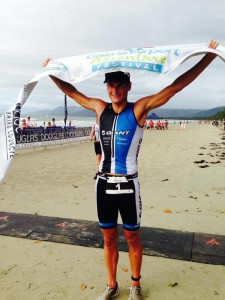
 Clayton Fettell has one of the best techniques in all of triathlon swimming. He finished in the front group at the last Ironman World Championships in the 70.3 distance. He has won multiple 70.3 races and he is a professional triathlete.
In this podcast, we talk about technique, strength training, some of his favorite workouts and how he sees swimmers being able to break through their plateau or speed barrier and really take that next step with their swimming.
02:26 – Have you always been a good swimmer?
03:19 – The Best Looking Stroke in Triathlon
03:38 – I Remember watching Uncle Toby’s
03:50 – Why Swimming Like The Cool Kids Made Him Slower
04:22 – Learn from the Sprinters
04:50 – It’s a lot of hard work…
05:37 – Know thyself.
05:46 – Why You Should Use Your Strengths
06:04 – Is perfection achievable?
07:24 – Head Position Makes a Big Difference
07:57 – Remind yourself to put your head back down
08:10 – The Art of Low Breathing
09:17 – “The Sneaky Breathe”
09:46 – How Strength Training Helps Your Swimming
10:37 – Activation = Great Session
11:30 – Stability is key
12:25 – Clayton’s Gym Activities
13:34 – How to Work on Your Flexibility
14:27- Not Sexy But Important!
14:29 – Clayton’s Go-to Sets
15:49 – What to do when boredom strikes
16:11 – Why he trains with mates
17:07 – Does wearing a wetsuit affect your performance?
18:05 – How To Transition from Pool Swimming to Open Water Swimming
19:00 – Relax. Don’t worry about sharks.
19:43 – How The Pro’s Break Down Their Swim Leg
Visit Clayton’s website – www.cfracing.com.au or www.claytonfettell.com
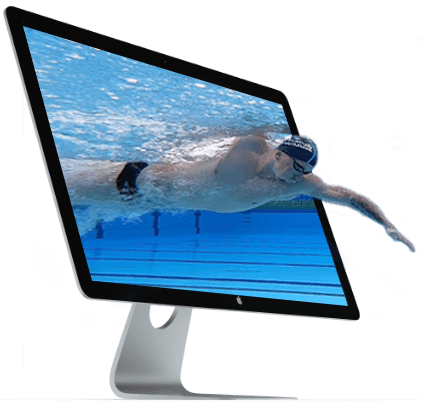
Watch out for The Art of Triathlon DVD coming this month! It includes a footage of Clayton in action under the water. You’ll see a good look of where he gets his propulsion from and how he swims so efficiently!
Be the first to hear about the launch of The Art of Triathlon – sign up here: effortlessswimming.com/artoftriswimwaitlist
Transcript
Read the full transcript
Welcome to Effortless Swimming, the podcast for swimmers, triathletes and coaches. Join Australian swim coach Brenton Ford as he reveals the latest techniques and information to improve your swimming. Let’s dive right in. Every now and then you come across a swimming style that really stands out from the crowd. And my guest today is Clayton Fertile, who’s got one of the best techniques in all of triathlon swimming. And if he’s not first out of the water, he’s always in the front group. He finished in the front group, the front couple in the latest world championships for the 70.3 championships. And he’s won multiple 70.3 races and is a professional triathlete. And Clayton features in our upcoming Art of Triathlon Swimming DVD, which is looking to be completed by the end of March. And in that DVD, we take a close look at what it takes to swim fast, to swim efficiently. And we really get a lot of good footage of Clayton from multiple angles under the water, above the water.
And we really break it down Clayton style. And it was fantastic to get such good footage of Clayton and to really see what he’s doing under the water, especially with his pool. Especially looking from the front, you get such a good look at really where he gets his propulsion from and how he’s able to swim so efficiently. So that’s coming at the end of March. And if you want to sign up to our email list to be the first to hear about that, then you can go to effortlessswimming.com. So let’s get into the podcast. We’re on a Skype call. So every now and then it drops out for a little bit, but it’ll only drop out for a couple of seconds and it comes back in. So here we go. I talked to Clayton about technique, strength training, some of his favorite workouts. And where he sees swimmers, how he sees them being able to break through their plateau or their speed barrier and really take that next step with their swimming.
So let’s get into the podcast. Originally I was a water polo player and did surf last night and it’s gone quite well at both and started doing a bit more pool swimming from my water polo and my surf club stuff. And so I’ve gone pretty well in swimming and then my swim coach told me about Lenoxid triathlon and the weekend coming up when I was about nine and I went along and pretty much been hooked since. So that was close to 20 years now. And have you always been a good swimmer? Or has it, you know, did that take time to develop? Yeah, I was always one of the smaller kids growing up. I didn’t grow till I was quite late and swimming tends to favor the taller kids, obviously. So I always had to work quite hard to get success in the pool and in the open water stuff, which I did a little bit of as well. So I wasn’t till I was about 17 when I actually grew that I started to realize I could swim and get some better results in the pool.
So I wasn’t always a good swimmer. It took a lot of work and swimming next to guys that have a really nice technique is something I’ve picked up along the way. And I pride myself on my technique now. Well, you’ve definitely got one of the, if not the best looking strikes in triathlon. So what changes have you had to make to your technique to be able to come out front pack or right off the front for each swim? So has it, you know, have you always had such good technique or what kind of changes you have to go through? Funnily enough, when I was younger, I always used to watch the Uncle Toby’s and guys like Dean Mercer. And I thought that was how you swam. And I used to think those guys are pretty cool. So I used to try and be a surf swimmer. And I even, I even went to the extent of roughing up my stroke when I was in the pool to be cool. So I think naturally I always have had quite a good body position in the water.
So and then swimming, swimming with all sorts of swimmers like swimming with with sprinters who tend to have flawless technique. And then being an endurance swimmer, you know, like, you know, you can kind of get away with a bit of a not inefficient stroke, but a bit of a rough, stronger stroke. So I kind of put myself next to the sprinters and watch, watch their technique and their length of stroke. And I picked up a lot from sprinters. So I have a pretty long, slow turnover, which a lot of triathlon coaches are against. But I think if you’re strong enough and you’re efficient enough in the water, the long and strong works quite well. So yeah, I mean, I guess, I guess naturally, yeah, I have always had quite a good, quite a good stroke. But through, through, through a lot of work to get to around now. And that’s one of the mistakes that a lot of people make when they’re, I say, growing up or just coming into swimming.
Is they’ll look at, they’ll look at one style of swimming and say, that’s the one that I’ve got to do because that person is the fastest. So let’s say it’s a surf swimmer who tend to have a sort of rougher, choppier stroke, whereas that might not necessarily suit them. So someone like yourself who’s tall, got long limbs and, you know, you’re suited to a more effortless type of freestyle. Whereas someone like Annabelle, who we show in the art of triathlon swimming DVD, she’s suited to a more sort of tempo type of stroke. So it’s, it’s good to take away some things from, you know, different people’s style, but ultimately comes down to what you naturally gravitate to and what you’re suited to with your height, your body type and all that sort of stuff. Yeah, absolutely. I think, I think if you’re a bigger guy, a bigger girl, like, and you are a little bit stronger than, than you use, use that and use your strengths.
Yeah, definitely. So what do you tend to focus on with, with your stroke being a smoother type of swimmer? What, what are you always thinking about? Yeah, it wasn’t until I went and did a little bit of swimming with Dennis Cottrell up on the Gold Coast that I realized that my stroke wasn’t perfect and you always can progress and be a better swimmer or better at anything, really. You’re always learning. You know, I got in there in the first couple of hundred, he picked me to absolute pieces and I was, I was ready to go home. He told me my left hand wasn’t entering straight. My head was looking too far forward. My kick was, I was kicking too hard for a, for a distance swimmer. So for me, left hand is actually a little, a little cute, but I always remind myself where this fixer left hand and that kind of sets off all the other reminders. So head, head positions are the big one. I think through, through the headband, so heavy that if you had positions in a good spot, your body’s naturally going to sit in a great position in the water.
So I always try and look not directly down, but you know, probably, probably a meter or two meters in front max. And that tends to bring the hips up and the feet up and put you in a good position. Yeah, absolutely. And you notice that with swimmers who look too far forward where their, their forehead is actually right at the surface of the water as opposed to almost the temple of the head. And you can just see that, just see how much it slows them down and drops their hips and drops their, their legs as well. So just like those minor changes in head position and they make such a big difference. And I was reading Dara Torres’s book and she, you know, even after she’s made three Olympics, she’s still focusing on small adjustments with her head position. So it doesn’t matter if you’re starting out or at the very top end of the field, those things make such a big difference. Yeah, especially if you’re an open water or a triathlon swimmer.
If you’re going to be looking up for the boy is it’s, it’s easy to just forget and leave your head in that forward position. So it’s good to remind yourself, all right, there’s the boy back to a nice head position. So I got to, oh, let’s just remind yourself every time you look, put your head back down. Yeah, definitely. And the same thing goes with, with breathing too. I mean, like we kind of go through in the art of triathlon swimming is that when you’re breathing, that’s the thing that stuffs most people up with their stroke because they tend to throw their head to the side and they look further around than they need to. And then they drop their shoulder in the water and the stroke falls apart. Whereas if it can be, you know, it’s a really minor movement of the head, you get that low breath, then the rest of your stroke just stays as it normally would as if you weren’t breathing. And when you look at your stroke as well, you’ve got such a low, low breath that your mouth is almost underwater
because of that little bow wave coming underneath your mouth. Yeah. There’s no impact to your stroke whatsoever. Yeah, I mean, it’s, it’s a lot easier to, you know, luckily enough, we can move our mouth. So if you can get a minimal head turn and move your mouth to take in the air, you know, it’s a lot easier than turning your head the whole way to just having your mouth completely open. I was taught a long time ago by a lady called Cheryl and she told me to put my mouth on the side and I refused to do it because I thought it looked like an idiot. Now I swear by it. Yeah, and if you know Ian Pope, who’s one of the swim coaches here in Melbourne, he always tells his swimmers to get a sneaky breath. And I think that’s a good way to think about it is you want to have minimal movement of your head to get that sneaky breathing. And I’d like to think of the siting as the same way is you want to, you know, when you sit and then breathe, you just get in your eyes above the surface,
just quite sneakily so it’s not really impacting your stroke and then you turn your head to the side. Yeah, no, that’s a good one. And then with strength training, do you do any sort of, any sort of weights or gym work to help with your swimming? Yeah, I do, I do gym twice a week. I’m not in the gym a lot too much because with a pretty heavy training load, I try to kind of minimalize it so it’s not going to impact on my other training. So I’m only in the gym anywhere from 30, 40, 50 minutes max twice per week. And then I’ll do a little bit of activation stuff before every swim. So it only needs to be 10 minutes where, you know, I might just get on a stretch band for five minutes and give the arms a shake and just activate some weaker muscles. So for me, my right shoulder, through a bike crash, it’s not quite as strong as my left side. So I have to work quite hard on having that muscle activated and good to go when I get in the water.
I think that’s one of the small things that makes such a huge difference is that little bit of strength training works so well for swimming and as well as just activating before you actually get in the pool because if you’re tight from riding or running and your shoulders aren’t warmed up, you feel it when you’re pulling through. You might get a niggling in the back of your shoulder. You’re not feeling the water quite as well as you used to. But if you do the activation beforehand, that’s when you can really start to have a good session because you’re warmed up early on. Yeah, yeah. And I mean, like, you know, we’re not bodybuilders. We’re not going to the gym to focus on single areas. You know, we’re going to the gym or before a swim workout just to activate muscles. You know, like even little things, if I go into the gym, I won’t go on a Smith machine to do my squats. I go on an Olympic bar because it’s more activation and more stabilizing muscles.
I think as an athlete that works outside of a gym in the open environment, you need to, you know, be quite strong with your stability and your activation. Yeah, definitely the more free weights or, as you said, the Olympic bar. Also doing chin-ups, if you progress to the stage where you can do them on the rings, if you’ve got them at your gym, you know, that’s the next stage of strength. And I know Kai Hirst sort of swears by that is, you know, he’s looking to be as… or use the most sort of unstable equipment as possible so that your body learns to become stable. And the rings are really hard to touch into. Yeah, I mean, I probably wouldn’t… I’ll probably save the embarrassment. I wouldn’t put myself on the rings. I’m pretty average on the old chin-up bar. I think my record’s 17. Oh, it’s not too bad, though. Yeah, so it’s pretty hard activity that one. Definitely. So what other sort of stuff are you doing in the gym?
So obviously with triathlon, I’ve got to work on my lower body quite a bit. My swimming specific stuff is just that right shoulder. So working on the shoulder rotation. It’s just a simple activity, like planting my elbow in my hip and just activating that through a band. Just pulling the band in, out, in, out, in, out. And just really working the little areas that have grown quite weak through the bike crash I had. And yeah, obviously having a strong core. So when people say core, it’s not, you know, it’s just stomach. It’s not just your stomach. People go on and think it don’t work. Of course, I’m going to do sit-ups. It is doing, I think being flexible from your hips all the way down to your toes is going to be quite beneficial for your kick. So when you go to the gym, it doesn’t have to be just picking up a dumbbell and doing bicep curls. It can, you know, 10 minutes each gym session just working on your flexibility.
Yeah, it’s a really good point because I mean most people, and I had a guy Mark Evans on the podcast who, his whole thing is just movement and flexibility and that sort of stuff. And most people can’t squat with no weights. They can’t squat properly without trying to cheat as they’re doing it just because they’re so tight through the lower back and hamstrings and all that sort of stuff. Flexibility and strength go hand in hand. And it’s the first thing to go, you know, flexibility, stretching, that’s not sexy and it’s not, you know, you don’t quite get the endorphin rush that you do from doing a hard workout, but it’s so important for swimming. What are your one or two go-to sets that you’ll get to the pool and just get stuck into? Yeah, so I used to, my staple pool set used to be, you know, 10 to 15, 400s, but I was actually speaking to my mate just recently about the change. It’s not, you know, those sort of sessions are gone now.
I try and focus now on a bit more intensity and keep them a bit shorter and sweeter. So, you know, I did quite a good session this morning where we did five twos, five ones. The five twos, we went 50 hard, 150 easy, 100 hard, 100 easy, 150 hard, 50 easy, 200 easy, 200 hard, and then we basically did the same with the ones. So, you know, 25 hard, 125 easy, 50 hard, 50 easy, 175 hard, 25 easy, 100 easy, then finish off with a max 100. Depending on the time of the year, I might repeat that whole cycle two to three times max. But yeah, I just find it, just keeping the effort a little bit shorter, I find to get more out of the session and, you know, I don’t feel like, you know, punching myself in the face. Sometimes those sessions, those longer sessions are really draining and, you know, I don’t think over sort of four or five, 600 meters can get quite boring. And personally, if I get bored in the pool, I don’t seem to get as much out of the session.
So, you know, I try and do these key sessions lined up against one of my training partners and make a bit of a race. I love racing, but, you know, it’s, and I know you can’t do it every session, but I do have a lot of fun with the training partners and a bit of banter. Yeah, I think when you train with mates, it makes the hard work a lot easier. And, you know, you finish that session and you’ve gone through that hard training, that experience together. And, you know, it doesn’t really feel like training, so to speak. And, you know, it’s, and you also work a lot harder because your competitive spirit comes out and you want to one-up your mate and, you know, and kind of have bragging rights. So, I mean, I did the same thing this morning. I went training with a couple of mates this morning, including the Kibbster. And here, and, you know, I normally train on my own just because I’m coaching when most people are training.
And, you know, I would never work that hard on my own, just knocking out, you know, like a 10-2 set or something like that. So, the people you train with make a big difference. What’s about your… Yeah, Kibbster and yourself. Yeah, definitely. And what about your open water stream with a web suit? Do you change your stroke at all when you’ve got a wet suit on or do you pretty much keep with your normal technique? Yeah, if anything, I tend to shorten my stroke slightly in the open water, especially with the wet suit on. I swim in a hood wet suit. So, they are quite flexible. They’re probably one of the most flexible wet suits on the market. You want to try and get a really flexible wet suit. Otherwise, you’re going to be really restricted when you’re trying to shoot for that long stroke and obtain a really nice catch. Even saying small, like a hip rotation, if your wet suit’s too small, you’re not going to get a nice hip rotation,
which is going to affect the length of the stroke. So, if I do some open water stuff, I will kind of… I won’t, you know, probably… So, unconsciously, I will change my stroke to be a little bit shorter, but it’s, you know, nothing too sufficient. Try and keep it quite simple and do what I know. And what about transitioning from pool swimming to open water swimming? So, obviously, you’re not… The water’s not flat and you haven’t got the same conditions as you do in the pool to the open water. If someone asks you, how do I transition my speed that I have in the pool if they’re hitting some good times, but they can’t quite take that into a race, what do you see that being the cause of? Yeah, I mean, it’s just practice. So, the more time you can spend in the open water, and that goes just swimming at the beach, surfing. It’s been relaxed in the waters. You know, swimming isn’t necessarily… It is a strength sport,
but it’s not quite as strength oriented as riding a bike or something. It’s having a good body position and being relaxed in the water. And if you’re tensing the water, you know, your air intake, your outtake’s going to be, you know, out of whack and you’re not going to be comfortable. So, I think being relaxed in the open water, you know, not worrying about sharks or not worrying about breathing enough or having foggy goggles, which we all go through that as a professional. You know, I go through that as well and I get it. But it is focusing on what you can focus on, what you can control in the open water. And going for it. You know, like if you’ve got a 600 meter swim, don’t worry about the 600 meters. Worry about the first can and worry about the next can and the next can. And then, you know, you might only have 200 to go. So, focus on getting to the beach as fast as you can. So, you’ve got to break it up like in the pool.
You know, you’ve obviously got laps so you can work the 50. You can work the next 150, whatever. So, you’ve got to break it down. You don’t want to go into an Ironman with 3.8Ks and you know, that’s your sole focus. Yeah, just breaking it down to those little chunks that you can get through. Like last week I ran the marathon and just break it down to 5K chunks. And it went so quickly, breaking it down to those little 5K stints. And you know, it’s just, it makes something that’s quite big, so much more manageable. And with most triathlon swims, you’ve got at least two boy turns in there, if not more. So, you can just, yeah, just line up the can, work to that and then you make the turn and then work to the next one. Especially about being relaxed. I mean, that’s as soon as you start to panic or you get anxious, your whole swim is going to be so much harder and it just comes down to experience in open water and being comfortable with being pushed around
a little bit and being around others. So, you know, if you can practice that in training and get used to swimming close to others, it makes all the difference. Yeah. And how can people get in touch with you and keep track of what you’re doing? Where do you normally post to for social media and what’s your website? Yeah, I mean, obviously, if people do follow me, I have launched CF Racing now with my mate Ryan. You can find us on social media, our personal website, and then we’ve got my own personal website, just claim to tel.com and I’ve got all my media, social media channels or whatnot. But yeah, I mean, as far as swim tips, I would suggest following CF Racing and to be honest, I follow your channel because I think it is good social media and it is good feedback. I mean, I saw that Natalie Coglin video you posted the other day and I’ve gone and tagged some of my own kids that I coach in there to watch it. It’s just, it’s a good resource.
And like I said, you can always learn no matter what level you’re at. Yeah, definitely. Yeah, thank you. I appreciate that. And just going through the footage from the art of triathlons swimming now and that’s almost ready to be launched. And it was great to have you featuring that and get some really good footage of your stroke from a lot of different angles and to hear your perspective on what you’d like to focus on with your swimming. So that’s, yeah, I’m really pumped for that to come out and hopefully the end of March. And yeah, it’s been great to feature in that. So thanks for joining the podcast and I’ve got to get to coaching. And yeah, we’ll talk soon. Sweet night. Thank you for having me. Thanks for joining us on the Effortless Swimming Podcast. To get transcriptions, bonus videos and to be the first to hear about new episodes, go to SwimmingPodcast.com.