







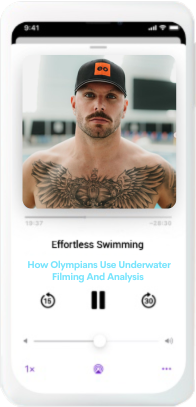
My guest today is Kyle Chalmers, an Olympic gold medalist and one of the world’s top swimmers. I’ve featured him in some of my YouTube videos, highlighting his excellent freestyle technique. I’m excited to discuss his training and technique in depth. Tune in now!
Head to EO’s website and use the code Effortless at checkout, to receive your first 12 months free on an annual gold membership.
In this episode
- 01:47 After clinching the gold medal at the Tokyo Olympics, how did you experience changes in both your personal and professional life?
- 5:25 Do you have any rules for yourself regarding social media, particularly during competition time?
- 08:49 How has feedback shaped your career and consistently contributed to your improvement?
- 11:45 Have you applied the knowledge gained from skill acquisition coaches to work with younger kids and pass on those teachings?
- 15:25 What contributed to your maturity? Did you develop it early due to the level of competition in swimming, where you joined a team without knowing any of the swimmers?
- 17:42 Coming towards the end of your career, do you feel like that’s given you more freedom to choose the path you want to take?
- 21:35 Can you share any unexpected benefits or silver linings that emerged from the challenges you faced during your recovery from injuries and surgeries?
- 23:32 Can you provide insights into your training approach?
- 25:09 Could you share your experience with aerobic training and explain why you enjoy it?
- 29:00 Do you hold any unconventional beliefs or practices that might seem counterintuitive to others in the swimming community?
- 34:56 What are the key factors you consider during your training?
- 38:39 Are you changing your stroke from 50 to a 100 and then from 100 to 200?
- 41:04 What motivated you to join Skillest?
Links from this episode
- For those interested in receiving coaching from Kyle
- Change your technique and swim smoother, easier freestyle in the Effortless Swimming membership
- Want to work with me personally to improve your technique? Join my swim technique coaching here
This podcast is brought to you by NanoClear — our own range of anti-fog swim goggles, designed by Effortless Swimming with the anti-fog treatment bonded into the lens itself (not sprayed on, so it doesn’t wear off after a few swims). Check out the NanoClear anti-fog swimming goggles here and use code PODCAST15 for 15% off.
Transcript
Read the full transcript
Welcome to the Effortless Swimming Podcast to show that help swimmers and triathletes love the water, become a better swimmer and live a better life. Here’s your host, Brenton Ford. Do you want to swim smarter and swim faster? Then you need EO Swim Better, the only swimming device that lets you see the previously unseen. Because the first time, you can understand exactly what your hand is doing on every stroke, analyze and adapt your technique, see the effect of every single adjustment and all with a device that you won’t even know that you’re wearing. Swim faster, fast with EO Swim Better, a stroke of genius. Dive into the Swimming Evolution at eolab.com forward slash swim better. Use the code Effortless a checkout to receive your first 12 months free on an annual gold membership. Welcome to the Effortless Swimming Podcast. I’m excited today to have very special guests on. It’s Carl Charmers. Welcome to the podcast.
Thanks for having me on, mate. I appreciate your time. Well, you’ve been someone who I’ve featured in some of our YouTube videos over the years, just looking at your technique and showing what a great example of good freestyle technique looks like. And as an Australian, I’ve really enjoyed watching you compete. And especially your last 25, 50 meters in some of your races, it’s just spectacular to watch and exciting because you’ve got probably one of the best backends in the 100 freestyle that I’ve seen. And I just love watching you come home, especially in those relays. So it’s an honor to have you on the podcast. And I want to dig into some things around technique in your and your training and a number of other things. So the first thing I’d like to start with is that race in 2016, your first gold medal at the Olympic Games. I can’t believe you’re only 18 at the time. But how did your life change after that gold medal?
Yeah, 18. So I think I was I was only just turned 18 as well. I was looking the other day swim, swim, did a stats. And it was kind of the youngest, you know, male athletes to win an individual Olympic gold medal in the past however many years. And I think over the last nine Olympics has only been Thorpey and I that have managed to do it as teenagers. So it was a very kind of special thing for me. I I probably didn’t know how special it was until I got home to Australia. For me, I went away to the Olympic Games as a I think I probably just turned 18, like I said, didn’t know a whole lot about swimming. I wanted to be an Aussie rules footballer and kind of sacrificed that to be a swimmer in that lead up to the Olympic Games. Went over there as the, you know, kind of the shadow of Ken McAvoy. He was the he was the man that everyone was expecting to win. And he was my teammate and training partner at the time. I was training with his coach, Richard Scarce at the Olympics
because my my coach wasn’t there. He was my roommate. So for me, I didn’t have really any pressure or expectation on myself. So I was able to kind of just go there, fly under the radar, have a bit of fun. You know, there was no sort of media attention on me. I didn’t know any of the guys in the marching room, probably other than Nathan Adrian, because I’d seen him win in 2012, but other than that, they were, they were just other guys. So for me, it was just like doing another competition and, you know, probably that transition that I’d been, you know, on from a very young age, from, you know, that state level to national age, to national open, to Australian junior teams, to the World Championships long course in 2015 as a relay swimmer to then in Rio being individual. So I’d never raced individually. And yeah, that 47.5 seconds definitely changed my life very drastically. I kind of went away and nobody and kind of came body,
came back a national hero that, you know, everyone was kind of stopping me for photos and signatures and I was going to restaurants and getting free food or, you know, flying overseas for photo shoots, being in the back of a car on AFL Grand Final Day. Like it was just a very overwhelming, probably experience. Like you probably can’t really teach anyone how or how to you can’t prepare someone for that really. Something you kind of have to go through yourself and it was, yeah, definitely a challenge at different parts, but an experience that I absolutely loved and probably an experience that I desperately want to do again and that’s probably what keeps me motivated and keeping me in the sport. Did you speak to anyone after that someone like Ian Thorpe who had been through a similar sort of situation for looking for advice or for tips on how to handle that kind of attention? Definitely, yeah. Thorpe was one that I had a little bit
to do with, he gave me a bit of advice here and there, but again, you know, like it’s just such a different world to when Thorpe won his gold medals back in 2000, 2004 because of probably social media, like anyone can contact you, anyone can have their say and so it’s definitely different generations, but I definitely appreciated having someone like Thorpe on my side that kind of gave me that feedback and Haki was one, like Grant Hackett, I went to 2015 World Champs with, he was another one that I was able to kind of speak to and you know, most of the older guys that have kind of been through it, I’ve had a fair bit to do with now and you know, Chris Feidler, Michael Klim,
and guys that I’ve relied on quite a lot through the period of swimming. I know that I’m definitely gonna be missing names out, but yeah, those guys were crucial for me, you know, like Adelaide, there’s probably, there hasn’t been too many Olympic gold medalists come out of Adelaide, especially in swimming and there’s only been three 100 freestyle Olympic champions from Australia. So there’s very few people that you can kind of rely on to, I guess, but insights on how that experience is. So it was definitely challenging as an 18 year old, that’s for sure. Yeah, I can imagine. And in terms of the social media, have you got any rules that you set yourself to, like especially coming around competition time, are there rules that you set yourself to not look at it for certain times or in competition? Because I can imagine that would be very hard to do, but an important thing to consider, especially around those key races that you’re trying for.
I think previously, like when I was younger, I definitely used to kind of delete the apps or log myself out of the apps and not access them during competitions. But for me now, I enjoy being able to stay connected with my friends and family. I use social media to be able to do that. So I find that hugely important that no matter where I am in the world, I’m able to kind of connect with the people I love most and probably just talk about normal things. I think, you know, a lot of my mates know me as just Carl Chalmers, the dude they grew up with and they don’t talk about swimming or necessarily care about results either. So I can kind of continue that while I’m away, which is always nice. And I also, as I’ve got older, have appreciated reading comments, whether it’s good or bad. I think it kind of motivates me at times. You know, like I love reading through the swim, swim, comments on how I’m swimming or whatnot
because I draw motivation from what these kind of people that have no idea think so. For me, yeah, my strategy hasn’t changed all that much. I kind of use it and access it and it doesn’t cause me too much stress anymore. As a kid, definitely it used to, I kind of used to read into those articles of where they were predicting I’d go or what time I was predicted to go or just anyone and everyone kind of reaching out, wishing me luck and stuff. But now I enjoy it. I think I’m a lot more relaxed. I’m a bit older. I’m a bit more kind of content and know my strategies of how I need a race and it’s a beneficial thing probably. I think if some of the YouTube comments that I’ve got over the years, just from putting out content for the last 10 years and I was similar at the start, like used to affect me and then I have to kind of go through, well, do they have a point here? Is there something that I could learn from it? And now I just kind of look at them and go,
yeah, like, all right, that’s completely fine. You say what you want to say. Like an example is I put a video up of Dan Smith, like just doing an easy like 100 free style and there’s people saying he’s breathing every two, like this guy’s no good. Like what are you talking about? The elites of his breathe every two, like they’ve got something in their mind, like you must breathe every three. Yeah, it’s weird. It’s really weird. So you just, I think you get that maturity and you just sort of, you know what’s right. You know what you’re capable of and what you’re doing and it’s just eventually becomes water for ducks back for the most part. But it’s, yeah, it comes back maturity I think. I think you just got to be confident in what you’re doing and trust what you’re doing. You know, like I spent 50 hours a week probably hanging around the pool, training, working on my stroke, kind of doing what I need to do to be the best.
So I’ve kind of refined and know exactly what works for me and what’s going to help me get to the end of the wall as fast as I can. And you know, these people that think they’re there, some people that think they’re experts and want to bring you down or comment. I’d love to probably see them swim at times. It would be quite funny to see that. But you know, like with the breathing twos, like I breathe twos my whole entire hundred or even if I do a 50 freestyle, like I broke the Australian record. And the 50 freestyle breathing twos. So yeah, definitely just is dependent on who the person is I think in your stroke. Yeah, exactly right. And you’re up in Darwin at the moment on a training camp and just before the call, you’re saying you’ve got two coaches up there for skill acquisition that are doing underwater filming and just analyzing your starts, your turns, your finishes, your stroke and really just giving all the swimmers up there
a lot of feedback. Can you talk a bit about how much of that you’ve done over your career and how you like to use it and how you have improved with that kind of feedback on a consistent basis? Yeah, feedback for me has been probably the biggest aspect of my swimming career, I think. I think I’m naturally pretty strong and fast through the water and powerful, but being able to actually use that to my advantage by putting, I don’t know what the feedback that they’re giving me into place to swim faster and be more efficient is what’s been the driving force to me actually improving over the years. So I think I started working with skill acquisition probably early as 2015 with underwater cameras and GoPro’s and as we’ve kind of progressed and I’ve had a bit of success, I think the funding into swimming in South Australia has probably gone a little bit more so we’ve been able to acquire probably better equipment and gain that little bit more knowledge
from me racing against other guys around the world or things that I’ve done to be able to improve myself. But just that constant feedback of when I’m in the water, just videoing every single turn, we have the big screen in the pool is kind of a live stream of that turns. It’s on a 50 second delay, so we’re able to look straight up on the screen and see the turn that we just did or occasionally we’ll swap it to the other end to see the finishes that we’re doing. And then I have a skills coach there that’s able to give me feedback straight away with how my feet are hitting the wall, how I’m pushing off the wall, my fly kicks, my break out, whatever it might be that I’m working on in that period of time, which I find super beneficial when I’m a visual learner. So I have to actually be able to see what they’re talking about and then try to put that into practice. So I know that if it’s something on my turn, I kind of have to do it.
They have to show me what I’m doing wrong and then I have to get straight back in the pool to do it to be able to learn that skill and acquire it. But I know that I definitely wouldn’t be where I am today without my skills. You know, I used to think back in 2016 or early days, I probably used to win races by being one of the fitter swimmers in terms of my back end. But if you watch my skills from probably Rio, it’s probably some of the worst skills you’d kind of see. You know, like my turns, probably two to three fly kicks and then it’s my head comes straight out of the water on my break out and my finish was terrible. I remember in that race thinking I’d lost the race just on my finish. So over the years, I’ve got better and better at my skills and I have to do that if I’m gonna match the likes of Caleb Dressel. In the 100 freestyle, his skills are amazing, his dive’s incredible and I’ve learned a lot from watching his dive
or his turns and his underwater fly kicks and breakouts and then trying to put that into practice on myself and I think that’s what’s allowed me to get better. And have you found that what you’ve learned from those skill acquisition coaches with how they analyze it, how they go about teaching you, have you done much work with younger kids in sort of clinics or just in squads where you’ve been able to take that stuff on board and then pass it on to those younger kids who are up and coming. This episode of the podcast is proudly brought to you by our sponsor, Form Smart Swim Goggles. They’re more than a pair of goggles. Meet the world’s most powerful swim platform. See yourself improved with Form Smart Swim Goggles, including a free one year membership when you purchase your goggles for only $249 US dollars. They’ve currently changed up their offer where you can now get the goggles and you have one year membership included for free.
And if you’d like to continue with the membership going forwards, it’s only $15 a month where you get access to their workouts, training plans and custom workout builder. But you’ll always have access to the real time data in the goggles, so you never lose access to that. My favorite thing about the Form Goggles is having the instant feedback of what times you’re doing, what stroke rate you’re doing and also the ability to see what your heart rate is. Because never before have we been able to have these immediate feedback heads up display where it’s actually telling you what your intervals are. So when I wear the goggles in training, I like that I know my split for the first 50 and the 100 and the 150. So every single lap I’m getting that feedback on what my pace is. And I find it’s such an important tool for being able to not only have different gears where you can switch between the different speeds that you wanna swim,
but it helps you develop those gears and it helps you intuitively know how fast you need to go to before you’re going to blow up or before you’re going to go a little bit too hard. So it helps you just get really good at judging your pace for when you do go to a race. And even if you’re not wearing the goggles in a race, it’s that intuition and that ability to develop your pacing that these goggles can really help with. To get your pair of Form Goggles and save 15% off, use our link formswim.com forward slash effortless or use the coupon effortless at checkout. And that will get you 15% off your pair of goggles using our special link formswim.com forward slash effortless or the code effortless at checkout. Yeah, definitely like an example of that this year probably being on the national event camp on the Gold Coast, we split up into Ash strokes. So I was with a hundred freestyle guys and we’ve got a couple of young guys coming up through there
like Flynn South and Dylan Andreia that are both really keen to learn and both looking to me for advice. And I think, you know, we did a morning where it was just kind of based around turns and I’m kind of almost giving more advice to them what the actual skill act that we had there was giving to them because I think I’ve been learning, you know freestyle turns for such a long period of time I do them however many hundreds of times a day probably that I’m able to kind of look at their turns see exactly what they’re doing wrong and then give them the advice which I found really cool. And they’ll both super eager to learn and both super keen to be able to then put that in the place so quickly and they’re going to be important parts of my relay the next year. So the faster that they can turn and the faster they can swim the better. But yeah, definitely the kind of skills that I’ve learned from being coached by skill acts
for such a long period of time has allowed me to probably retain that information to then coach the next generation. And I’ve done a few swim clinics where I’ve been able to do that and that it’s something an area that I definitely love doing is helping the younger kids that are coming through because my time in swimming is probably coming to an end a little bit, you know like I’m at the pointy end of my career whereas these guys are start just starting up and if I can help them kind of take over from where I’m at, you know, it’s just gonna be more beneficial for Australia really moving forward. Yeah, I mean, when I was just doing some research for the podcast, I looked at how old I, how old’s Kyle, no, like 20, 25. And I was like, man, you come across as so much more mature than that. And I think you have for a very long time. What do you put that maturity down to? Is this something that you feel like you developed early with maybe the level of sport
that you were competing in with footy and then swimming? I kind of got thrown onto a team which I didn’t know anyone at all, any of the swimmers, I didn’t know any of the staff or coaches and I had to go away for three to four weeks with these guys that are, you know, mid-20s to close to 30 year old, hacky was probably 35 or 36 of that age and I kind of had to, I had to fit in, I had to talk to people, I had to kind of put myself out there and mature very quickly. Like I had to grow up very, very quickly to be able to have those kind of adult type relationships or swim at a extremely high level internationally and I couldn’t probably be a kid as much as my mates were or even having successes at a quite a young age, winning an Olympic gold medal at 18 and then kind of having to deal with all the media and pressures and expectation that comes with that but just everyone knowing who you are not being able to kind of go out
and make a fool of yourself and not have to worry about that. You know, I’m always in the public eye so I’ve got to kind of be as mature as I possibly can. You know, it’s pretty much every time I step out of the door almost. So yeah, I think it’s, I had to grow up very quickly just from probably the, yeah, the experiences I had and just wanting to be a professional and wanting to be the best I possibly can and learning from the older guys. You know, I was kind of that generation where I loved the feedback from the older guys that they were kind of, I had a training partner, Sally Hunter who was a two-time Olympian and you know, probably close to 30 by the time I started training with her and you know, I was a 16, 17 year old kid so I’d be probably lazy on turns or push-offs or you know, joked around and take this a little bit of training whereas she’d get into me about all that sort of stuff and I loved that feedback a lot.
So yeah, I think those just experiences has probably matured me quite quickly. And coming towards the end of your career, do you feel like that’s given you a bit more freedom to choose the path that you wanna take? Like I’ve seen you up on the sunny coast training with a friend of mine, Ash Delaney up with his squad there and just sort of, you know, mixing things up a bit. Has it given you that freedom now that you asked one of the older ones and you’ve got the success that you’ve got? Like has that opened up options for you and have more choice with what you can do? Yeah, definitely. Obviously over the last couple of years I’ve been spending a little bit of time up on the coast with Delaney’s one of my best mates and like a brother to me really, you know, like him and his wife, Taryn and the two kids have been a very important part of my swimming career. I think that, you know, this time last year or sorry, a little bit earlier,
maybe like February last year through to April I was semi-retired from swimming because I’d come back from my second shoulder operation and I was kind of just in constant pain like with driving, sleeping, you know, drinking, eating whatever it was, whatever involved my shoulders. It was causing me quite a lot of pain. So for me, I kind of went, well, is this really worth it? You know, seeing physios every single day when I’m at the pool, just doing, you know, snorkel face down, kick with my hands by my side for kilometers on end, doing a lot of running, you know, just being in pain that kind of made me question whether swimming was what I wanted to continue to do. Is it worth the pain? And I kind of took quite a lot of time away. I went back home to the country, did some work with my cousin. He’s a boat mechanic, so kind of just stuffed around with the workshop with him, kind of went fishing, lived a pretty normal lifestyle
and then went to Josh Beaver’s Bucks Party in Melbourne and he and Ash Delaney was there and Ash is one of my best mates at that stage and kind of went, you know, come up to sunny coast, see the kids, see Taryn, you haven’t seen where I’m living and obviously I was pretty well unemployed at that stage, so I could kind of do whatever I wanted to do. So I rolled up there and he didn’t put any pressure on me to kind of get in the pool, but, you know, just being in that environment made me want to get back in the pool and just training with different people, like the kids are probably more so high school kids or semi-professional swimmers, so they had a lot more fun and you’re kind of joking around mid-session or mid-made set, which I really appreciated and I kind of had to, you know, I had to work a lot harder than to make sure I was beating all these kids all the time because I’m a very competitive person and pride myself on winning.
So I loved that and now it’s become an important part of my lifestyle, I think, going up there for a couple of weeks when I feel like I need to decompress and probably de-stress a little bit. I go up there, spend a few weeks with the kids, you know, it’s just a different lifestyle, dropping the kids off to school in the morning, having your best mate around you all day, every day, kind of going to the pool with him, training, kind of coming back, watching South Park or whatever on TV, and then going back for the afternoon, it’s just a good lifestyle, but I do think that, you know, I know exactly what I need to do to be the best now I’ve been around for a long time. I’ve been at the top of the world in the 100 freestyle on a couple of occasions, so I know exactly what I need to do in terms of diet, rest, recovery, what I need to do in and out of the pool, you know, gym-wise to be the best. So I’m able to do things like go up to the sunny coast
and spend a few weeks there and I know that my coach trusts me to do that, but you know, Bish, my coach in Adelaide is one of my very best mates, you know, like a father figure, you know, such an important role model for me and someone that I’ve swam with since, you know, about 2011, 2012. So I’ll never leave him. He, I trust exactly what he says to me day in, day out. I know there’s occasionally times where I might be like, oh, is this actually gonna make me a hundred, bet a hundred freestyler, but I have so much trust, so much respect for him and I love working under him. And, you know, I feel like when I race, I represent, you know, him and the whole Sassy team, it’s a very special crew that we’ve created in Adelaide. And yeah, I’m very lucky to have them on my side and kind of being able to have these amazing experiences like come to Darwin on training camps and whatnot. And you mentioned injuries before. Has there been any silver linings
from the surgeries and injuries that you’ve had? Yeah, well, both of my shoulders are back up and firing pretty good at the moment, which is really nice. It’s kind of my first time in three years where I’ve able to be injury-free for an extended period, do the work that everyone else is doing in my squad, race and all the competitions and to lead up to trials. Last year, I gave myself seven weeks’ preparation for trials, whereas this year, I’ve been able to train from January through to trials, which is really exciting to me. And my bursas have come out on my side. They shaved my AC joints down, fixed up my labrums, which has both been pretty good. I think at the end of my career, I’ll have to have both of them reconstructed because I’ve got a bit of extra bone in both my AC joints. It’s called the Osmo Chromiali. So it’s kind of a bit of bone that never fused when I was a kid. So that’s the thing that still causes me a bit of pain
because it’s just bone grinding on bone. When I’m swimming, but it’s definitely a whole lot more manageable than having, you know, bursatus or a little bit of tears in sub-scap or labrums like I have previously. So, you know, I think that’s, you know, making me very, very happy in and out of the pool. I’ve probably had the best season I’ve had just in terms of how much fun I’m having with it and enjoyment and I’m back loving swimming. So who knows, my swimming career might be prolonged to Brisbane if I’m able to stay this happy and be injury-free and you definitely take it for granted. I think being injury-free, you know, like I think as a kid, you don’t really understand how gruelling injuries are both physically but mentally and emotionally as well. It caused me so much, yeah, just hurt for a long time. Yeah, it’s one of those things where when you’re in it, it’s all you can think about and it’s just constantly nagging at you.
And then as soon as it’s good, it’s like, you forget about it. You’re just like, back to normal life. But if you can have that, yeah, you can be grateful for it and just recognize what it is like to actually be injury-free. It just makes a world of difference. And your training, so do you have to ease into the training in terms of the distance that you’re doing? How do you have to change your training when you are leading into trials, for example, where you don’t wanna overdo it? So you’re having to reduce your distance each week. What’s it look like for you? Yes, this year it’s kind of been easing back into it slightly, but the last two years I’ve had shoulder surgery in December. So I haven’t been able to start back training for quite long periods of time. Whereas this year I was able to get back in January the second with the rest of the guys, build right back into it. And I’ve even managed to get some weeks out
where I’ve done 50 kilometers in the pool in a week, which is a massive amount for $100 freestyle, but a massive amount for me when I haven’t been able to do that sort of work in such a long period of time. But at the moment, I’m in my last hard block of training. So probably hitting close to 40, 45 Ks a week. And then we get back to Adelaide on the 25th of May and we’ll start a two and a half week taper down into trials. So it’ll be definitely getting a bit lighter, freshening up and dropping the Ks down. I won’t go down probably fully because I’ll try and do that for world championships. But yeah, I’ll taper down to swim faster trials, make the team that’s the first box to tick every year and then probably go back into a harder block again leading into world champs. So for us here, two and a half weeks seems to be the kind of the key amount of time for me to get tapered and it’s just gradually dropping down.
You know, the first couple of days of taper might be four, four and a half Ks and then it will drop right down to three, probably the week leading into it and then probably two, one and a half. It’s the days before when we’re in Melbourne ready to race. I’ve heard you say you really enjoy the aerobic training. Can you talk a bit about what that looks like for you and why you do enjoy that? Because from my experience, there’s not many sprinters that enjoy the aerobic based training. I’m a person that I have wired my brain to enjoy the stuff that I know that people shouldn’t like, I think. You know, like I think aerobic swimming for me is so important and that’s why I’ve had such a good back end over my career. I probably train more so for the 200 freestyle and come down to the 100 freestyle than training for the 150. For me, you know, like the other night we did eight 300s on 330, one at lactate and a half, one where we’re descending the hundreds
and then descending that 300 while the eighth one’s gonna be pretty well a 300 max but you gotta make sure you’re descending the hundreds through that. So those sort of sessions, you know, that’s my bread and butter and something I do probably, you know, some form of that at least once a week, if not twice a week and it’s all just developing that back end and kind of dampening my anaerobic system because I know that if my anaerobic system’s too fast then I swim slower so I’ve got to be smart with how I train and I’ve got to do the aerobic stuff and I’ve got to do, you know, I am stuff in training. I’ve got to do the short rest stuff, the stuff that people don’t enjoy doing but I know that it’s just gonna make me better in the pool. So yeah, I definitely have loved that stuff over the years and this year I’ve started doing it. I did a couple of 800 freestyles just to kind of put myself in uncomfortable positions,
events that sprinters historically probably wouldn’t do, but you know, I like I said earlier, I’m getting older and I’ve raced for a very long time and I just kind of go through the motions when I’m rocking up it, you know, New South Wales State Championships or Nationals these days, kind of like I had just another race, I don’t get as motivated as I used to for those sort of competitions. So putting myself in an uncomfortable position like the 800, I get anxious and stressed and it feels like an Olympic final really for me. So I definitely love doing that sort of stuff and it’s something that, you know, I’ll continue to do over these next few years because I know that it’s gonna make my back end and my 100 freestyle better and make my total time better in it.
So the 8300 you’re leaving on 330 and this is, is that leaving on 330? Yeah, yeah, yeah. Yeah, and this is in a 50 meter pool or so long course. What’s, what times are you hitting in those eight threes and obviously they’re different pace, but what are you averaging there? When I’m assuming like day one and a half, I was about 315 and then to stand down, I got down to about 303 or 304, I think with about a 57 for my last 100. So I think that’s pretty solid for a 100 freestyle. Obviously some of the guys would go a whole lot faster. You watch, you know, the guys like Sam Short and the 1500 guys that we have trained, they’re incredible. The times they’re able to hold such long periods of time, but you know, I’m lucky to have a great training partner in Matt Temple that’s kind of swimming alongside of me going very similar times where we kind of race each other. That whole two and a half case of swimming, we’re kind of just pacing off each other,
pacing off each other. And then as always, it’s sprint for that last, that last bit for your last 100 in that case to see and get their hand a little first and then something that I’ve tried myself on. Yeah, that’s, that’s cool. And I mean, that aerobic work, when you get into the zone of it and you’re actually just not thinking about anything else, it’s just looking to hold your pace and just make sure you’re hitting your times. For me, that is, it’s just one of the best feelings coming out of a session where you’re working at those sort of intensities and you’ve got to hold your pace for such a long period of time. It’s, I’m similar. I just love that aerobic training. It’s, yeah, coming out of it just feeling so much better than like a sprint session where I’m just wiped and, you know, it’s like I need it. I need to refuel straight away, but those more aerobic ones, it’s a little bit different. Definitely, I’m glad we’re wired to save, mate.
Good man. And for you, so is there any, say, unconventional beliefs or something that you believe that is maybe different to your other competitors? Any sort of, yeah, unconventional beliefs that you’ve got that you think, oh, maybe not everyone thinks this.
I probably just think with my work ethic and whatnot, you know, like, I just, I believe that I have to be the best person at training, whether it’s a recovery session or a key main session. I love to pride myself on being the hardest worker in the pool just because I, you know, my goal is to be the best in the world. So I know my competitors are working pretty hard. So I think I’m wired probably different in that sense than some people. Probably some people take recovery a bit more seriously or whatnot, whereas I’m kind of go, go, go, go, go. Even throughout the days, you know, like I’m not a person that’s able to sit still. So now on a Tuesday and Thursday afternoons on my recovery afternoons, I’m laboring on a building site, just as a bit of work experience really, but just something to do and something that I know is that little bit extra that’s going to hopefully benefit me in the pool because I’m kind of physically, you know, working
but having fun while I’m doing it. So I think, I think, yeah, just probably wired to work as hard as I possibly can every time I enter the pool and I pride myself on that. I can’t really think of anything off the top of my head, but yeah, that’s probably probably where I’m at. It’s, when I saw you make a few posts about being on the building site and a couple of months ago, you’re sort of playing footy as well. Doing those things outside of swimming, obviously you feel like that benefits you because the other way to approach it is train and then just rest and sit on the couch and do nothing. But I think that can really get in your head if you’re just sitting around and doing nothing. Whereas if you’re just keeping active, keeping busy, even though it might kind of go against what you think could be best and just resting so you can train back up that afternoon for another session, just keeping busy, I think is actually a better approach for most people.
What are your sort of feelings around that? Yeah, massively. I think life balances the key to success. There’s been periods of my life that I’ve focused completely solely on swimming and probably burned myself out because my major focus has been swimming. And it’s like you’re always constantly living in your head. You kind of go home from swimming, you’re thinking about training, you’re thinking about the session you’ve just done or the session you have tonight or kind of what you’re fueling yourself with to get ready for the next session. And that’s pretty unsustainable. You’re not able to do that for long periods of time. So there is points of the year where I have to do that. At the moment is a period where I probably have to do that more so leading into trials and world championships. So I’m not burning myself out because I’m a person, like I said, that will go all day every day and then just absolutely exhaust myself by the night time.
But over this past period, especially this year, I’ve found having that life balance, doing things that I enjoy, even reconnecting with a lot of my mates that I’ve probably not necessarily pushed aside but haven’t probably given the attention to them that they deserve over this last period while I’ve been focusing on swimming. I mean, I’ve reconnected with a lot of them and that’s just making me a lot happier in the pool and making me more cold charm as the person again rather than cold charm as the swimmer. Yeah, I’m having a lot of fun with it. And I think that’s what the key is to why I’m swimming so fast this year and having so much fun in the pool is just that, you know, I’m going fishing. I bought a fishing boat. I’m going fishing a couple of days a week probably. I’m out there working a couple of days a week. I’m hanging out with my mates and kind of having all my mates over to have a fire at my house. I love having the fire pit going with the footy on
and cooking up some big steaks for everyone and just being a lot more social and doing the things that I love doing and that, yeah, that life balance is definitely the key to success, I think. Yeah, I think surrounding yourself with, especially old friends who like, if you might not seem for two or three years, it’s like you only saw each other yesterday where you can just reconnect and get straight back into it and that surrounding yourself with people who are like that and you know each other’s life story and then just having those activities like watching the footy, just those basic things that accounts for a lot, especially when swimming, certainly physical, but it’s very much a mental sport with the amount of training that you’ve got to go through how much time you can spend in your own head. So being able to just step out of that with the social side of things is really important and like I remember when I finished high school
in between school and uni, there was probably two or three months there where I was pretty much just training, I knew I was gonna go to uni but I started to get sort of in my head a bit like there’s nothing outside of just training and I thought there needs to be more than this. I need something more than just swimming and obviously uni came along and then I wasn’t sort of competing or training as much as I was, but yeah, when there was just swimming, life was sort of, it was a lot harder mentally just to keep on top of things. Definitely, definitely. And I see a whole heap of swimmers kind of go through that and I think it’s a big learning step that everyone finder has to go through at some point themselves and find themselves and find that balance and what they’re gonna do away from the pool to keep themselves in a good mental spot and there’s only so much advice you can give everyone that you kind of see these young kids come through,
they have their success, they go, yeah, this is me, I’m focused in on swimming, I’m gonna give everything to swimming and you see them burn out pretty quick and struggle for a little bit and then find themselves again and it’s definitely something that I went through and something that I still see a lot of people go through. And now with what we do, we have heavily technique focus with our podcast and content and we run clinics around Australia where we do a lot of underwater filming and analysis and so I’m sort of heavily technique driven and majority of the listeners of the podcast are adults who are doing triathlon, swimming or open water swimming and they just love to improve their technique. So for you, what are some of those key things that you’re thinking about when you’re training and what does it feel like for you when you’re swimming? Wow. Yeah, I think the key things for me at the moment is making sure that I’m rotating on both sides.
Obviously I breathe to my right side so occasionally I won’t then rotate back onto my left side as much as I need to. So while I’m training at the moment and the key area is just kind of making sure I get that rotation, which is helping my shoulders as well because otherwise I’m loading up probably the left shoulder a whole lot more than the right shoulder at times. So that’s a key area for me. The other one’s obviously my hip positioning, just keeping your hips quite still, which to do that you’re strengthening your core and strengthening your back out of the pool so that when you’re in the pool you’re able to kind of keep that nice rigid, yeah, hips in that good position. And then the other one, my kick may look like it’s quite good when I’m swimming. I have quite a lot of splash going behind me. My kick is probably my weakest area of my swimming. So working on my kick and that’s probably not having too much knee bend
that’s trying to keep my legs a lot straighter and just those three areas is something that I’m working hard on at the moment to have good freestyle. And I know that when I am doing those to the best of my ability I’m able to swim a whole lot faster like I’m rotating evenly across my shoulders which is probably lengthening out a little bit so I’m holding a bit better water. My kicks probably not as taxing and hard if I’m just, if I’m keeping my legs straight I’m kind of moving and my hips are sitting a little bit higher. So those are definitely things that I feel. And in your say 100 freestyle, let’s say for the four by one at the Melbourne short course champs a couple of months ago I came home so strong in that last 25. What’s your thoughts on pacing? How do you try to pace like 100 freestyle? For me, I just try to be consistent throughout the whole race. So obviously you can jump in and burn all your energy quite quickly.
But so for me, I’ve got to make sure that I’m telling myself to ease into the race a little bit. Like I’ve got to hold myself back on that first 25 a little bit. And then it’s kind of building into that second 25 getting a nice turn, working that underwater. But again, not maxing straight off the turn again because you don’t want to burn that energy. It’s all about being as consistent as you can. So you’ve got that energy to be able to burn in the last 15. And yeah, it’s something that, the way that I’ve always swung my 100 freestyle is kind of that way. And when I started probably doing that it was almost a new way of swimming the 100 freestyle in a way. Like there wasn’t too many people that were solely working on their back end. Whereas now, like that seems to be the way that people are swimming the 100 freestyle a whole lot more. Like you look at some of the guys’ back ends from around the world nowadays, they’re very, very impressive.
And I like to think that I’m kind of the guy that’s changed the way that people look at the 100 freestyle and how they swim it. So yeah, that’s probably my thoughts behind it. Especially coming out of that super-suit era where it was just like guns blazing from the start and it was like just all sort of upper body. It’s really evolved over the last sort of 15, 14 years now but very different approach to the 100 freestyle compared to back then. Definitely. And you still see a few guys, you know, like Santa Condarelli or Vlad Morizov or these guys that are 50 meter-based that try to come up and do the 100 and they’re always out pretty hard and kind of die off in that last 50. But yeah, it seems to be the guys that are able to do the better 100s nowadays are guys that are also able to do a pretty solid 200 and swim, yeah, you know, the person that’s kind of finishing the fastest is almost the winner of the race in most cases.
Are you changing your stroke from 50 to 100 and then from 100 to 200? Probably 100 to 200, yes, but 50 to 100, no. So I mean, I don’t do very many 50s long course at all. Like I did one this year, which is probably the first one I’ve done over the last few years. But for me, if I’m gonna swim my best 50, I’ve got to make sure that I’m trying to think like I’m swimming 100. You know, like my best 50 freestyle, I think is 22.07. My best first 50 for my 100 freestyle is 22.7. So you kind of take that feed into all into account and that’s about 0.6, 0.7 of a second. So I’m actually going out as fast as I possibly can swim at this point in my career. So my stroke tries to stay the same in terms of I’m breathing every two strokes. I’m trying to lengthen out as much as I can. Whereas the 200, obviously you drop your stroke rate a little bit to that extra bit, that little bit further. But I think as I get a little bit older,
I’m not doing as many 200s as I had done previously. And it’s probably not as much of a focus that has been either. Yeah. Well, Kyle, I really appreciate you being on there on the podcast. And also want to make note of you know, Baden from Skillist who set this up. So you’re on the Skillist platform to, so anyone who’s got some video of their swimming, you can send it through to Kyle on Skillist and he’ll analyze your stroke. And I didn’t know how much analysis work you’d done with professionals over the years. But I think that’s really exciting because there’s so much that you can get from it. And having that experience now, being able to do it yourself and give that feedback through Skillist is fantastic. And what we’ve done for the last, probably seven, eight years at Clinics is a lot of that underwater filming and analysis with swimmers who are more around like the one 30 to two minute mark per 100. So those people who’ve learned to swim as an adult
and just that experience of working with those people and doing it day in, day out, get a really good idea of what people are doing, what they need to do to change and hopefully see five, 10, 15 seconds improvement per 100 just by getting that experience and being able to do that yourself and then put that into practice and training is such a good way to learn what’s required for other people. So yeah, that’s really great that you’re on the Skillist platform. We also had Ryan Murphy, who’s a good friend of yours on, he was on two weeks ago and he’s also on Skillist too. So what made you sort of jump on board with Skillist? What did you like about that kind of platform and opportunity? Yeah, I think for me, I do love my sport. I love kind of seeing people get better, especially kind of the younger generation that are coming through if I can have a positive impact on them and kind of give them a little bit of advice and tips
that’s always beneficial. But yeah, so I think that’s just, it’s a great opportunity for me to better my sport, help people reach their goals, help people with their freestyle technique or, you know, butterfly technique. I probably don’t know a whole lot about breaststroke or backstroke, but those two are that I think that I’ve spent a very major part of my life and major part of my days every day is kind of perfecting my skills if I’m able to pass that advice on to the other swimmers who are eager to learn and keen to learn from me. I think it’s a great opportunity so I’m really excited for people to interact with people on skill list, have people send their videos through and ask for advice and ask for technique. I really love people when people are able to, you know, ask for that. I think it’s something that doesn’t happen too much with the new generation that’s coming through, you know, like they don’t want to ask for advice or help
as much as what, you know, I know that I did when I was definitely growing up. Now it’s kind of seen as a bit of a, you know, if you want to give advice, people get offended sometimes by that. So, you know, people that are actually actively reaching out to get better at swimming and whatnot, I appreciate. And I, yeah, like I said, really look forward to being able to interact with that. And obviously, Prime Minister is a great mate of mine and he’s on there and he kind of talked me into it. So I’m definitely looking forward to having the opportunity to meet some new people in swimming, some like-minded people that just want to be better at the sport and hopefully I’m able to offer some great advice and help people shoot faster and reach their goal in the pool. Yeah, the thing I like about it is like you’ve got, there’s that cameo app where it’s like, you can get something to say like, yeah, happy birthday to your mate or something.
So that’s, it’s great, but it’s not helpful for swimmers. It’s like, if you can send you a video and actually get feedback from someone like yourself, you can get so much more, you know, it’s just, it’s so much more valuable than someone just saying good day. So yeah, I think it’s, I think it’s gonna be a really big thing over the next couple of years. Kyle, thank you so much for being on the podcast. All the best for World Champs trials in about a month’s time. And look forward to watching your journey over the next couple of years. And yeah, seeing if you stick around with swimming for longer, how the shoulders hold up and all of that. So it’s been great having you on the podcast. Thanks very much. No worries. Thanks so much for having me. I really appreciate it. Thanks for listening to the Effortless Swimming Podcast. If you’d like us to help you become a faster, more efficient swimmer, go to www.effortlesswimming.com.