







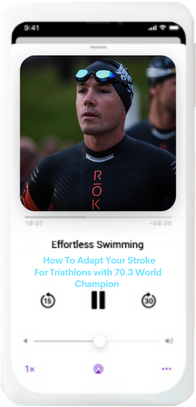
My guest today is Tim Reed, an Australian coach, and triathlete, who has had multiple Ironman and IM70.3 wins. I wanted to get Tim’s perspective regarding swimming and coaching and discuss the struggles of transitioning from a professional athlete to a full-time coach.
01:15 Biggest Success In Racing
03:30 There Was No Overnight Success
04:51 Connecting With Athletes
06:38 A Powerful Combination
11:02 Pulling Back From Squad
14:13 Having The Evidence/Data
16:50 You Don’t Need To Look Pretty
20:14 Stop Swimming Like Ian Thorpe
27:07 Correct One Thing At A Time
28:00 Swim Like No One Is Watching
29:17 Differences In Technique For People Getting Into A Wetsuit
32:02 Open Water Skills
35:13 Surrounded By Other Swimmers
37:27 Transitioning To A Full-time Coach
43:48 Training Sessions
47:55 What’s Next?
50:02 Get In Touch With Tim Reed!
Contact Tim here:
Instagram
Website
Change your technique and swim smoother, easier freestyle in the Effortless Swimming membership:
https://effortlessswimming.com/stroke-analysis-membership/
View our freestyle clinic schedule around Australia:
https://effortlessswimming.com/freestyle-stroke-correction-clinics/
Form Goggles:
http://formswim.com/effortless
Watch the video on YouTube:
Transcript
Read the full transcript
Welcome to the Effortless Swimming podcast to show that help swimmers and triathletes love the water, become a better swimmer and live a better life. Here’s your host, Brenton Ford.
Welcome to the Effortless Swimming podcast. My guest today is Tim Reid. Tim, you’re very experienced, very successful triathlete and also very experienced and successful coach as well. So welcome to the podcast. Thanks, Brenton. Yeah, it’s cool to be on. I owe you first of all a big thanks for making my coaching life easier because whenever I’m trying to explain something to someone, you know, an aspect of their swim stroke or anything, I just go, Brenton, I’ll have a video on this quickly, find it, show them that and then save myself a lot of time. So now it’s cool to finally connect. Yeah, it’s been great to connect. We’ve got a mutual friend in Dudley who introduced us. And I mean, I’ve seen your name around for years just in the in the results of a lot of that half Iron Man, full distance as well. Yeah, I wasn’t as successful over the full distance, but and rates did a lot more sporadically. But yeah, had a few results over
the Iron Man distance and a lot of bad results as well. And I mean, I guess the biggest success for you was probably 2016. I mean, Iron Man, like 70.3 world champs, which is, which is unreal. Would you classify that as your biggest success in racing? I’ve always, I’m pretty objective about things. So like I look at the numbers more than the results. And I actually had better in my mind, I had better results in 2015 and in 2019, actually, when I look objectively at the data, in terms of yeah, winning races, 2016 was, was definitely the best year, but I take more pride in the years where I was like, the numbers were better than any other year sort of thing. So by numbers, you’re talking times or you’re talking, yeah, so looking at looking at in the swim, it’s a bit more subjective, but looking how I was able to stay with the main group. Or if I wasn’t having to stay with the group main group, how I was able to get back into the race, I’m looking at power
numbers and then run, run time is pretty, you know, pretty objective because there’s not a lot changes there. Although now with the new fancy shoes, things are changing pretty quick. But yeah, so just, just looking at times and my power output and things like that. And also even my head space a little bit, how, how I raced and, and was able to keep a cool head was definitely, it’s definitely part of what I consider, you know, contributes into the success of how I value a race. Is that something you feel has improved over time or you’ve had years where it’s been good years where it hasn’t been so good in terms of keeping a cool head and the mental aspect of it? Yeah, so I, I reckon 2015 I was physically probably at my best, but my head was on and off. And, and I think, you know, I went into 70.3 world champs that year, ranked number one, and I just was hopeless because I hadn’t slept for three nights and I was
I put all this pressure on myself and couldn’t get my head under control. I got better at it. And I think it really helped up until about in 2016, when I won world champs over that distance. And then I think my head went again, because suddenly I felt all this pressure being the world champ, you know, so it wasn’t a linear, like it was definitely not linear in terms of gaining control of my mental aspects of racing. It comes and goes. And when I put the work in, I think like most people, and it’s really cliche, but when you do the mindfulness work, when you do the meditation, when you do the visualizations, yeah, it pays off and you can, your head’s in the right space during races, but I was also really good at skipping all that stuff and then wondering why I couldn’t get my head under control. Yeah. But you’ve been up in the top ranks for a very long, long time. What do you attribute that? I think largely, I think
time in the sport and also just time doing lots of different sports. I mean, everyone, you know, sometimes views an athlete that’s suddenly getting results and they’re like, wow, he’s sort of come from nowhere and he’s just kicking ass off seemingly no history in the sport. But I just have never found an athlete in endurance sports who comes from nowhere. Like they’ve either got a, like I had a history in playing team sports, but I was playing four or five hours a day, you know, growing up, even though I didn’t have a history in swimming, biking or running. And then even then it’s still, I spent a lot of the time racing as an amateur before I even turned pro. There was no overnight success, even those people outside looking in my thought, oh, that’s a really fast rise to the top. And you see the same with everyone else. I think it just takes decades really to build up the aerobic pathways to be good at endurance sports. And
a lot of that, I think, comes down to an addictive personality and that’s an inability to sit still and, you know, a lot of mental aspects that drive you out the door to train a lot. And of course, this genetic aspects, too, would be hard, even if you did all the right things, if you don’t have a certain level of talent, I think it’s going to be tough to make it to the top. Because you coach a lot of other pros. What do you think attracts other pros to you as a coach? And where have you learnt some of the lessons that maybe these other pros are just starting to take on board or, you know, just starting to uncover for themselves? That’s a good question. I think there’s a lot to be said for having been through all the experiences or similar experiences to what they’re going through, understanding if that athlete is particularly anxious about racing, saying the right things, leading into a race. The psychology of working
with an athlete is super important that I think a lot of brilliant sports scientists might not understand if they haven’t been through the stress of racing or if, you know, vice versa with an athlete who’s super cruisy, you know, you’ve got to tell them a completely different thing to the really anxious athlete. So I think that potentially my ability to understand people and connect with athletes probably, I think that’s probably a strength of my coaching. You know, I think the science behind endurance sports coaching is not overly complicated, but knowing, working out the psychology of what will really motivate an athlete, what will, what they need to be told or what they need to not be told sometimes is really important. And that’s, I think that’s the really hard part of coaching is understanding that it’s human to human. It’s understanding personalities. It’s saying the right thing at the right time or shutting up when you need to.
That’s because what sort of fascinates me there is you seem very driven by, by the science and you are adept in what you need to be doing to have success in the sport. But it’s only if the person is able to take that on board and have that belief that it’s going to work for them and actually do it that will make the difference whether or not they have success with it. So like you sort of mentioned, it’s great to have the sport science there, but if they can’t relate to the athlete in a way that they’re either going to take it on board or that they can actually have an outcome from it or they have, right, well, this is the next step for me, then it’s useless. And someone who I’ve learned a lot from in terms of coaching is a guy, Wayne Goldsmith, who I’ve had on the podcast a couple of times and what he talks about is the art of coaching. It’s not the workouts. Like anyone can write the same workout, but it’s how you apply it. It’s
how you get your athlete to, to do it. Make sure they stick to the right training zones or, you know, you’re able to, to explain it to them. So there’s so much outside of the scientific aspect of coaching that is often not talked about, but that’s really where I think the, the magic is and someone who I haven’t seen really in person, but from what I can tell someone like Dean Boxle, who coaches Ariane Titmus, see like the having a coach who can build a culture or who can, you know, relate to his athletes, that’s where I think the magic really is. And if you can tie those two together with the sports science and then the art of coaching, that’s a powerful combination. Yeah, I totally agree. I’ve, you know, some of the coaches I had through my career, you know, were some of the best sports scientists. I still think that just impressed me with their level of knowledge and their expertise. And in many ways, I didn’t always do what
they said or I didn’t do enough testing when they wanted it to. I was sort of the problem in the relationship. But because they hadn’t got me on board completely, there was not the trust built up, you know, and then I had other coaches where the sports science knowledge was definitely not as not as at the same level as those coaches. But I was fully on board because they, they I guess connected with me as a person. They explained the importance of what they’re doing. There was good reasoning behind it. In some ways, I had, you know, some of my best racing with, I think, one of the best sports psychologists in the sport, but not necessarily the best sports scientists. So yeah, there’s the strengths and weaknesses to every coach. But I think if you can start to get that balance right between knowing as much as you can in terms of the science, but being able to really get the athlete on board, that’s that’s where the magic
really does happen. And I think a big part of that is also either telling stories or using examples and showing people why and how it can work. And an example of that is, I think of the Norwegians at the moment, right? So everyone sort of, you know, sees those guys having good success and come out of nowhere, so to speak, but they’ve been building for a very long, long time. But it’s really, I think, brought a lot more attention to and awareness around the sport science, but in a way where it’s a bit easier to understand, because you’ve got that example there of like your sort of zone two training and what’s the high volume at the right intensity. And to me as well, like that sort of helped me understand the importance of the right training zones. Whereas before I’ve just looked at it and gone, it’s all too hard. Or yeah, I haven’t quite got that example or way to be able to relate the data. So I think that’s a really helpful way for showing
people what they need to be doing as well, having those examples or stories. And yeah, to me, that’s been quite useful. Yeah, absolutely. I think it’s funny because what the Norwegians are doing is is not revolutionary stuff. It’s just that I think we sort of, in many ways, we moved away from it. The general move was just trying to find quicker, easier, faster solutions. But you know, the reality is the long term approach of the basics that have been around for a long time really pays off. And they, even though they use a lot of tricky devices and things to measure everything, the actual principles behind what they’re doing is very basic and it works. Yeah, yeah, that’s exactly right. But it’s really opened my eyes to, yeah, it’s made me interested in learning more about it as well because I had stuff on the podcast just after his Kona win. And so I sort of, I wanted to research well for the podcast and make sure I had
questions asked and all that sort of stuff. And then I sort of went down the rabbit hole on all that and yeah, and found it quite interesting. For the pros that you’re working with or have worked with. I read that in terms of the swimming, you’ve had them either pull back from squad and do their own training or move down a lane. Do you want to talk a bit about that? Yeah, so it does depend on the athlete to some degree. I think there’s some that, some of my pros who really just, not even at that point where they can throw big volume at their swimming x, their techniques just not good enough. Like they’ve got too much to work on. Sometimes I’m like, if you can get someone to look at you while you’re swimming and just for giving feedback, then that’s what we’re really focusing on now before we even think about really getting a lot fitter. But the more advanced pros who are just, some of them, for triathlon too, it’s really hard if
you jump in with a swim squad and they don’t have any idea around what your other hard sessions are in the week and they’re not working in with that. Like it’s, it becomes, you just can end up spending way too much time at or above anaerobic threshold and the stress, like it can become very stressful on the athlete. And realistically for Ironman, for example, the goal is to get through that swim, not necessarily winning the swim, it’s just to be in the mix and get through it with as lower lactate level as possible. And so, you know, for example, Steve McKenna who just had gotten second at Busselton, Ironman Western Australia, had great anaerobic capacity. Like he could swim so much faster than me over 100 meters, 200 meters. But once he started getting to 400 to 600, our time started to even out and I was after years and years of not liking swimming that hard, I’d actually developed a really good aerobic capacity and could just
hold my 100 meter pace really well without generating tons of lactate, whereas he was very much the opposite in that he could put 10 seconds into me over 200 meters, but it would start to come back. And so, yeah, guys like Steve, I had to really work on pulling back from squad because he would just jump in there and just rip, you know, 105, 100, it’s when really what he needed to be doing was learning to swim 115s at, you know, ideally like well under two millimolar lactate. So we just did, yeah, almost to the real old school methods of just bulk miles, but at quite aerobic intensities. And we still worked quite at range within that zone too. Like it’s very easy for people to just throw out that zone to terminology, but it’s a huge range, especially if it’s really fit. It’s quite a range of pace in the pool for some guys, whether they’re going really easy zone two or almost zone one. And then, you know, going up to that
to that point where they’re starting to generate lactate, but it’s been cleared pretty well as well. So for most age group and elite triathletes, I sort of recommend potentially one to two hard swim squads a week if it’s available to them, especially if they’re at that point with their technique where they can really just push their fitness. And then the rest of you can’t get in, you know, two hard bike sessions or in a hard run session as well as four hard swim sessions. It’s just too much stress on a triathlete. So it’s about matching what you do on the bike and on the run. You do one or two hard sessions and the rest you keep really quite aerobic and easy. And when you were explaining to Steve about this is what we, I think we need to do, was that by and pretty immediate? How did you go about showing him where the gap was? I think by having the data for him to see and having his own lactate monitor and things like
that, I know everyone thinks it’s a bit, you’re Mickey and everyone’s jumping on the bandwagon, but I’ve always found if athletes can actually see themselves that it’s not something I’m just, it’s not a hypothesis of mine. It’s there, the numbers are there. You know the same way I’ll say to someone I don’t think you’re an efficient fat burner. I think we need to do a little block working on becoming more metabolically efficient. They don’t really get on board with that unless they go and do a metabolic test and then they’re showing off shivers. I can’t ride 70% of FTP without burning tons of glycogen. You know like when they see the data I find they jump on board a lot quicker. So and Steve’s a bit like me like as an athlete which is why I think I’ve been quite patient with him is he loves to smash himself in training and doesn’t want to necessarily, it’s hard to get him to get on board with some of these ideas but he’s also
pretty intelligent. So when he sees that the sees the data or the numbers on the test he’s like yeah okay I’ve got to listen now and give it a try. So yeah yeah that’s interesting. I find it similar in a way is having the evidence there having the data is when someone gets films they might have had a coach telling them crossing over and they’re like yeah okay okay then you show them and they’re like far out that’s like this is this doesn’t look good. Having that evidence there that you can’t refute actually helps with the with the buying and then and then taking things on board and for a lot of people they haven’t been filmed before and it’s just such an eye-opener for them and it’s I think it’s really the first step for many people to actually start making a change to their technique because you just don’t know what you’re doing otherwise. Like it’s even today when I look at my stroke I’ve been filmed for a little while but
yeah that first time I got filmed I was thinking Jesus Christ I alright I’ve been in work on my own straight before I start telling people how to swim. No I think especially with swimming I literally had this conversation with an athlete this morning who’d sent me a video and he was I thought I was a good swimmer then I saw the video he was all depressed. Your level of proprio perception and awareness of where you are in water is so different to land like I think most people if I give them a technique correction on the run or even on the bike and be like hey I need you to relax and do this they just do it but in the swim they can’t fix it until they can see that they haven’t actually fixed it. Yeah yeah something so weird like that it’s almost like hearing your own voice on the podcast you’re like oh do I really sound like that? You look at your own stroke and you’re like oh that’s not pretty. Yeah so true but the thing about
swimming too is that even some very good swimmers particularly triathletes who are some fast swimmers they don’t look that good necessarily either so it’s not like we need to look good for the sake of you know looking pretty there’s no points to that it’s it’s really about about the speed but obviously there’s so much that we can see in video that yeah we know it’s going to help make someone fast either by reducing drag or or increase in propulsion but it doesn’t need to look pretty so I’m always trying to make that clear for people especially triathletes there’s no points for looking pretty the things that we’re looking at are just to help you get faster and not just look better because sometimes people try they fall into that trap of trying to have this smooth pretty stroke and you know have it look like a stroke that they’ve seen on instagram and go okay that’s how I I need to swim and actually an example of that is
like Dan Smith who I don’t know if you’ve seen that video on our youtube of Dan Smith from the 2016 Olympics week recorded some footage of him and he does a 110 and it looks like he’s swimming two minute pace but a beautiful swimmer but for most people they shouldn’t try and swim like him because he’s just got this incredible innate feel for the water he’s swum since he was a kid done thousands of thousands of hours and he’s got incredible mobility as well so for most people to swim like him it’s just not the stroke that they should be going for and there’s been some swimmers who have tried to adapt their stroke to look like him I’ll just have to go hang on a second no we’ve got to change it you should try and aim to swim like this person instead this episode of the podcast is proudly brought to you by our sponsor form goggles they’re more than a pair of goggles meet the world’s most powerful swim platform see yourself improve with form smart
swim goggles including a free one year membership when you purchase your goggles for only 228 US dollars now they’ve currently changed up the offer where you can now get the goggles and you have that one year membership included for free and then if you’d like to continue with the membership going forwards it’s only 15 US dollars a month where you get access to their workouts training plans and their custom workout builder but you’ll always have access to the real-time data of the goggles so you’ll never lose access to that so if you’d like to swim without stopping to look at a pace clock or your watch and get live metrics right inside your goggles including your time distance pace they are right there in your goggles with form goggles I’ve used these for over 12 months now and I’m a huge fan of these goggles and use them for a majority of my sessions and find them very helpful especially for gauging my time my effort and my pace
and I think it’s a very helpful tool for the majority of swimmers that I would normally work with to get your pair of form goggles and save 15% off use our link formswim.com forward slash effortless or use the coupon effortless at checkout and that will get you 15% off your pair of form goggles using our special link formswim.com forward slash effortless or use the coupon code effortless at checkout yeah I wasn’t sure how much you touched on this before but it was something I thought I should bring up but when I first year or two I was racing pro I was swimming faster in the pool than I ever did later in my career and I could not make the front pack and I was trying to swim like a swimmer and I actually got so frustrated with it I went to LA and started training did a block of training with Jerry Rodriguez over there and the first thing he did when he saw me swimming he’s like you’ve got to stop trying to swim like Ian Thorpe
you’re not flexible enough you don’t have the feel for the water what you have is a high vo2 max so you just need to get your stroke rate from 65 to 75 and I think you start making the pack and that’s literally what we worked on I just rated up it looked a lot more messy but especially when you’re in the bubbles of the people’s feet in front of you I didn’t have that range of motion anyway to get a really nice catch at the front so by getting that faster turnover I was getting an extra 10 strokes per minute and I wasn’t falling off the back of the pack anymore and I left that six week block in LA and every race for the rest of the year instead of getting out two minutes behind the pack I was riding the race from the start and I think yeah it’s you might be able to speak more on this than me but I feel like the open water swimming especially on feet the how pretty it needs to look is secondary to the just the basic
physics of pushing water behind you so yeah so so true and actually I sort of went through a similar thing where my background was was competitive swimming in the pool and then I started when did I start tries I think I started tries in 2015 but I sort of started doing open water swimming from about 2008 and the evolution from say 2008 where I was a pool swimmer over the next eight years or so my strokes started to get scrappier and scrappier and but I was swimming really well in the open water and I had some really good swims in the few triathlons that I did and open water races I was going well but then I’d also do this one pool race every year touring country champs and I had a friend who’s a very good pool swimmer he was on the Olympic team and he coaches a lot of good swimmers and he saw me swim the 400 freestyle and he goes that looks hideous that looks your stroke looks so bad and I’m like I’m thinking like all right that’s a kick in the guts
but you’re right it looks like an open water stroke and it just it wasn’t pretty in it it wasn’t that quick either in the pool but it was so good for open water and I found it hard to sort of have those have those two because I’ve just gotten so used to swimming for the the open water but yeah it did not look good it wasn’t that quick in the pool even if people aren’t on feet I’m interested in your opinion why is it that that scrappier stroke seems to work pretty well like is it because of the chop and the currents or is it the higher buoyancy of salt water or well I think all my races I’d say were with a wetsuit on so yeah you’ve got that buoyancy and then obviously the salt water as well where you just better off having that faster stroke rate because you’re just sitting so high in the water but you can sort of get the stroke rate up and you need to get to come over quickly you can’t do it with this Ian Thorpe like recovery
you just better swing that hand over the top getting it in so I think that’s partly where that scrappiness comes from and it’s intriguing to just even in a wetsuit to to have that neoprene around your elbow to then do that high elbow catch I find it a lot of our athletes we really go go for almost a straight hand recovery or just to relax whatever feels natural recovery in your wetsuit and if you want to go high elbow and pretty in the pool that’s fine without one but it’s just too hard in a wetsuit yeah yeah that’s right and I mean yeah pretty much with the wetsuit on as long as you’re not swinging really low and flat over the water where it’s causing this sort of side to side movement it doesn’t matter too much how you’re coming over as long as yeah as long as you’re not too low low and flat there so it’s now something I either learn as a as a coach originally coaching pool swimmers to then coaching triathletes and open water swimmers
and I think and I see a lot of coaches going through the same thing that I went through coming from a pool background where there’s a lot more emphasis on looking good being smooth all that sort of stuff but yeah you’ve just got to have some other allowances there for the triathletes and that’s such an interesting story about you’re going to see see Jerry there and actually had Dan Atkins on the podcast who coached a lot of the ITU guys guys and girls in Australia and he had Michael Bowle next to him who’s probably the best Australian swim coach at the moment and Bowley said to him that with these athletes like they haven’t got the range of motion the technique is okay but they’re not going to be swimming like swimmers so just get them is get them as fit as you can to swim you know as they need to swim don’t yeah don’t worry about trying to perfect everything with their stroke just get them as fit in the pool as they can and that’s what’s going to help them
be really good ITU swimmers I often wondered too like whether the cycling and the maybe the running to a degree but especially the cycling you start to get really flexible from the swimming but then there’s a limit to how flexible you get and your range of motion because of all that cycling that will limit a triathlete from ever getting that same range as a swimmer because I could you know you’re just locked into this position potentially for 12-15 hours a week on a bike or that position I wonder if that I don’t know but I wonder how much that affects the ability to develop the sort of range of of a swimmer or is it just the fact that a swimmer you know triathletes are never going to be doing you know 40k a week of swimming you know like a swimmer to get that range so that’s good I noticed that when I did so I did one season of I built up and did an Ironman and I found that in that year I my swimming really changed and I just noticed my overhead range
was a fair bit less I can’t remember the exact numbers but you’ve got the combined elevation test where you can lie face down chin on the floor link your thumbs together and you have your arms above your head and you see how how high you can get it I think I went from being at 20 degrees off the ground to like seven or eight degrees like it did change reduced yeah reduced a lot and it was really just from the cycling primarily but also the running like just this movement you know I tend to be a little bit more more hunched there but yeah my range of motion reduced a lot and I also found that my legs were a bit no I don’t know maybe not necessarily heavier but just but use your legs a lot more you got
when you consider the muscle density to cycle and run through like it would have to change the whole body you know the whole weight of you where your body weights distributed so yeah so I noticed that because I went from never doing bitter running but definitely no cycling yeah that was that was one of the biggest changes so I think that yeah it just lends itself to those changes that you that you need to make for the open water swimming rather than the pool swimming and so for you when you’re working with your your athletes are you are they sending you videos regularly giving them one or two things how does that actually work online guys you know we have a local squad too but the online guys I encourage basically whenever they’re with someone just grab a quick video underwater obviously ideal overhead if if not and you can and I always try and work on just one thing at a time maybe because I’m a bit simple but I found it really hard to
correct more than one thing at a time in the in the water and I sort of stuck with that with my athletes so we’ll work on one thing until I see the next video then we’ll work on one other thing if that’s corrected
yeah so that’s that’s basically how we do it and we obviously try and run camps pretty regularly because sometimes nothing replaces face to face coaching in my opinion I mean online’s the reality for most people but when you can spend time with an athlete it’s so useful to pick up I can just make a note within about 10 minutes of watching them okay and these are 10 things we’ll work on in the next three months you know so
yeah so that’s typically how we do it with the the video work there’s sort of no limit to how many our clients can send through if they’re sort of on board with a coach it’s they’re fully on board and we’re fully invested in them yeah I find there’s a difference to when some talk about being at a camp and seeing someone and maybe swim a session someone might can look good for 100 meters but maybe they can’t look good for for a full session and you really get to see what they’re what they’re actually swimming like so what I try and make sure that they do is just unless they’re trying to make a change and we want to see all right how how’s it look when you’re doing that just swim like no one is watching you because that’s the technique that you’ve got in grain so we just want to see what’s actually there not when you’re trying to to look pretty for the camera as well that’s a good point on our last camp in Bright we got everyone to do a
600 meter maybe it was 400 meter just 600 meters at eye man pace and we didn’t necessarily tell them but we filmed everyone’s last 100 meters just so that we could really find what was because you’re right as soon as people know there’s a camera there then suddenly in thought magically appears
or sometimes it’s the opposite too because they’re nervous about getting filmed so they’re like a robot when they swim they lose that rhythm and and fluency to their stroke but yeah it’s good to film them when they’re when they’re not looking is there being like for the say age group athletes that you’re coaching in terms of their swimming is there a couple of things that have come up on on quite a regular basis where you’ve got say three or four main problems they might be having or technique issues and then you’ve got like a prescription for them is there anything that comes to mind when you think of that it’s yeah I guess I find the biggest thing we tend to work on is the difference in technique for people getting into a wetsuit most of our amateur athletes tend to be in wetsuit legal swim especially if they’re a bit nervous about the swim and we find you know like a lot of the things they’ve learned in the pool like for example even the head position
is slightly different so they can keep some of those wetsuits just almost lift their legs out of the water and so like what we talked about with the the different recovery slightly different head position to for some people who like to kick a bit or get some generate still generate some speed out of their kick I think also people can end up really arching their back in open water with the buoyancy the wetsuit and salt water so we try and you know remind people that if you want to get out of the if you don’t want to be like have lower back issues the first 30k of the ride it’s really important to still keep your core slightly activated and or just a more neutral alignment to the spine which you don’t have to think about the same way when you’re in a when you’re in a pool in fresh water maybe it should be but people tend to be not not in such a position and then we work my group work a lot on open water skills so we spend half you know a lot of half of our main set
actually sitting on feet in the pool because the reality is most of us are going to be sucking feet and so it’s important to just learn how to do that I was always a pretty terrible swimmer relative to how I got out in races but I think I developed I was lucky to have lots and lots of group swims open water and in the pool where I could just practice being in the draft of other swimmers and it became so instinctive to me I was never I never had to really look up because if I did I’d normally get dropped but I would just be I could feel when I was in the bubbles of someone I could feel when it if when it’s suddenly they were half a meter in front of me and I just quickly lifted up for four six strokes to get back into the draft so a lot of my our athletes particularly amateurs it’s just learning how to be comfortable in the draft learning the differences in open water technique and learning yeah because you could you know as we know if you can get really good
at just sitting on sitting on people it’s a much easier way to get through the swim unfortunately for the good swimmers
the thing about that too is it’s counter and surety of in a way because when you’re sitting on feet you don’t get much of a catch you feel like you’re swimming worse in a way aside from being pulled along but you feel like you’re swimming worse because there’s just there’s very little pressure on the hands through that first part of the the catch and so I like in training I hate being second I always want to lead the lane because I just like the feel of the water and to me that’s that’s comfortable but I know when it comes to racing obviously I’ve got to got to sit on on feet but it doesn’t it just doesn’t feel good so just knowing that that’s the right thing to be doing first of all and you can save up to about 30% of your energy if you’re drafting well it’s just so worth worth doing and then we had a Peter pub which is probably the biggest race here in Victoria there’s about four or five thousand competitors and I just did the age group swim
and another guy Sam Shepard who is really good swimmers he’s won that event overall seven times but he had a baby six weeks prior to the event so he’s lacking sleep lacking fitness and I’m thinking this is the my one chance to beat him because he hasn’t hasn’t been able to train but long story short he got me by about two seconds but his open water skills are just so good from being competing at at a very high level for a long time and I was sitting on his feet for 300 meters and he’s like I hang in a second I haven’t got the fitness here I’m just so he just quickly darted off to the side about five meters so I went with him for a bit and I’m like I don’t like this line he’s taking so I just sort of went on my own but he knew that that was a bad move for him to make if he was if I was on his feet because I just I was wasn’t working very hard and then he just got me with the open water skills at the end caught away before me and so on so those open water skills
just makes such a difference and it takes I think a couple of years to really get good at them but or you can make your swimming easier if you if you learn them and you can do them well yeah it’s really it’s for athletes who are a bit isolated for group sessions in that regard like it’s very like I think I got good at it because I had the I had Grant Giles running AeroMax up here and we would every week would be bashing each other as we went swimming around and some boys you know so that was just part of the weekly process and not only do you get that instinct for knowing when you’re on feet when to rate up without having to constantly be looking up to find find where everyone is you just get really comfortable with that claustrophobia of
of the chaos of a swim you know I mean now they do wave starts but back in the olden days we was it was always mass starts and and pretty pretty daunting if you’re not really good at it but even with the wave starts now that the amateur athletes do I think there’s so much value in them having continuously being made slightly uncomfortable in the open water and not not wasting energy with stress and anxiety and you know just just over like you know what it’s like in at the start of the swim so many people are just if they’re swimming tense and just really stressed out that first two or 300 meters they’re completely completely full of lactic acid without you know without really getting any benefit out of that much stress and effort so I find that the big part of continually getting people to be surrounded by other swimmers and even in the pool we finish most sessions with that basic you know four across the lane straight arm recovery just 25 meter sprints
just to get used to just people being in in your grill in your space so yeah there’s a lot to be said just for being being comfortable with that that close yeah that feeling of people being really all over you yeah and I think you can get to that point too where that actually becomes fun and enjoyable being in a in a tight group and you know making sure you’re aware of wherever everyone is and thinking about strategy like if you’re in the very very middle that might be okay but you don’t want to be able you don’t want to sort of get get caught behind or not able to sort of make a break if you’re stuck in the very middle like that that strategy being in the thick of things can become quite enjoyable so for anyone who’s a who’s a beginner or learning these skills I think like changing the mindset around it too yeah okay it’s going to be uncomfortable in the beginning there’s it’s going to be challenging but you can actually turn it around where it becomes the
the fun part in a way and and same with you know I guess some of the other aspects of triathlon too where it’s it’s hard work it’s a lot of a lot of training but I think the people who do it more and get really good get really fit that’s the thing that they seek out the most is that that intensity and is that is that hard training and then when you go away from it you you miss it whereas someone who’s a couch potato and is looking at that going off that’s that’s not fine that’s not something I want to want to be doing so I think it can be can be reversed in a way yeah for sure it’s even you know for me now who hated that experience of you know of being the that feeling of you know getting drowned by everyone all I want to do now if it comes to swimming is jump in an open water race because for me that’s love the tactics it’s like a bike racing that you’re in draft you’re in groups you’re getting boxed in you know it’s about surges it’s about hitting a
hitting a boy turn that’s the most fun part of swimming for me now and I you know I even jumped into some open water races recently with very little fitness but it was it was fun I love it and you’re right like that it can turn from being the most scary part of a triathlon to actually being the most fun part yeah and you mentioned so you’re you’re now going through that transition of being a full-time athlete you’ve always always sort of coach but now it’s it’s transitioning to more of a full-time coach but still doing some races here and there whether they’re triathlon or or some other other sports you mentioned that prior to the call that you asked a lot of people you did some research around that transition because like any professional athlete it can be a really big one and a very challenging one so what were some of the concerns that you had making that transition and what was some advice or who were some people who helped you with it
yeah it’s funny it was something I was really interested in for quite a while and I was asking a lot of the recently or long time retired pros about how did they go with the transition and without like nearly everyone struggled with it and I thought oh I’m pretty pretty prepared for this because I never really stopped you know dipping my hand into coaching or you know and even before being a professional triathlete I didn’t come from a high performance program so I was always working and when I was racing prior I was balancing my wife’s work as well and kids and but yet I still really struggled with the the transition from I’m a full-time coach now you know and I guess you get really good as a pro athlete at always putting yourself first and it’s hard to suddenly step back and actually become a bit more selfless learning to I’ll fit my training in if I get all my other work done oh I didn’t get everything done for anything else therefore
I’ll shorten my session by two-thirds or whatever it is so it was that transition was hard and I think the other thing I found hard was I thought when I I was really burnt out at the end of 2021 racing like really racing poorly and just hooked from travel training all the stress of losing sponsors through COVID and and I thought I’m never doing anything with triathlon again and I took like six weeks off thinking I’d be so productive in the rest of my life and what actually found was the opposite you know I found how much my brain and my body just needed to move every day to feel good and then everything else seemed to flow well from that and certainly for me there’s there’s a tipping point you know beyond about you know I find half of what I used to do as a full-time pro athlete a really nice level for me to stay balanced in my life and still enjoy training and also keep like keep relating to athletes remembering what the sessions feel like continually learning
because I still do lots of little experiments with myself now with training and trying to maximize what time I have with training I found that yeah compared to when I thought that I would be able to fully focus on other things and I didn’t do any training it was probably the least productive time of my life because you just yeah it just the ball wasn’t rolling I wasn’t feeling good about things you’re sort of getting unhealthy that I think as pro athletes we have conditioned our brain to just have a certain level of endorphins and you know it’s just part of what our brains are conditioned to now and so I I sort of have realized now it’s going to be a very slow weenoff of training you know cold turkey was definitely not the way to go and and I would say love just lining up still just love standing on a start line ready to just go to war with other people you know in my own mind and so you know I’m realistic now that you know I’m not going to be
chasing world tide was anything like that but if I can jump on a start you know if I can put certain periods of time when my other athletes don’t have aren’t racing or this time opens up I want to stay at a basic level of you know a decent base level of fitness that I could do I’m going to do six weeks solid hopefully get in shape for a top 10 in a race or and then use that fitness to then go oh I might try and do a half marathon well or I might do a bike race well and then just you know be able to jump off that sort of steady base training phase and jump into one individual sport specific event yeah I think you know the other side of it laughs pretty short I don’t want to just keep doing triathlons the rest of my life I think there’s lots of other cool events out there that I want to try and do and the nice part about jumping in to say you know bike racing or a swim race or is I’m never really going to be that competitive in a single sport event
you know potentially ultra running or something like that if I really dedicated to it but even then you know you can’t jump into a swim race and be anywhere near people who’ve just been swimming their whole life and you can’t jump into a bike race and expect to have the skills on descents that you know that cyclists have had you know their whole career from just or being able to ride an appellate on so I like the idea of jumping into those races purely because I can’t get that competitive
yeah that’s sort of where I’m at and definitely yeah the transition was hard but I feel like I’m in a good place now but it took a good year of sort of working out that you know you realise racing was largely your identity and working out who you are and what else you can do and not you know not getting not chasing it like it’s hard to not go oh I can still win that race and you know maybe you could but it comes at a big cost every time you fully focus on something at a pro level it’s a big cost for the family and it’s time for you know it’s time to sort of pull back for sure yeah that’s it sounds like you’ve got it got it worked out pretty well there and I think it’s good to go through that you know go cold turkey and realise oh I feel like crap no I’m not getting anything anything done and that’s saying of if you want something done give it to a a busy person I find that that’s so true if I have no structure to my days and I think about school holidays
right now where one of my kids is in school the other one’s not but without that structure of right but to pick him up drop him off at these times without these activities I’m not getting that much done I’m better if I’ve got this this structure and they say discipline is is freedom where you know if you’ve got these these things in the calendar and you stick to them then you can you’ve got more control over those those times outside of it and yeah that’s the something that I’ve come to realise over the last couple of years as well as I hate being really busy where I’ve just got no no free time in my calendar but I also don’t like the opposite because I just don’t get being done and then I look back at a few weeks and go what was I doing like I was just just wasting so much much time and for me and I wonder when you feel the same you talked about like you’ve got that you feel like you need to get these in Dorf and you’ve got this desire to
you know seek this feeling I find each day I want to be doing at least kind of 30 minutes of aerobic work preferably more if it’s like 60 minutes 90 minutes and I’m I’m pretty happy and I just feel like every day I want to get that and I want to try and get it in the morning it’s it’s just something that each day I’m addicted to in a way and if I don’t get it then I’m just I’m not that happy
yeah I’m a bit the same I’ve sort of found my sweet spot to be around 90 minutes in the morning I’m sure over the years hopefully that’ll get less a little bit less but 90 minutes seems to be the amount that you know I’m just ready to go and cope with the day and feel happy so which sounds like a lot but when you consider what you know you do as a pro triathlete where you it’s literally a small day is three hours though it’s still a big step down and I’m also pretty I’ve been really surprised how well I can maintain fitness off 90 minutes a day you know for you know if you’re eating well not drinking too many beers and getting good sleep it’s actually the decline has not been as fast as I would expect and sort of excites me because I feel like I could still jump into four to six weeks of solid training and you know still have fun in a race not be totally embarrassing yeah
that’s the thing that cites me to it it’s like I and races on these guys even just on the on the weekend where it appeared a pub I didn’t do the the super fish which is like the top 20 or 30 guys there I’ve got no chance against these guys who are training eight times a week doing minimum 40k sometimes probably more up to like 80k a week it’s like I’ve got no chance against that if I’m doing three to four sessions a week of like 3k each yeah but
can I do off three or four sessions a week and and how can I adapt my training so I can get the most out of that time that I’ve got got available and that’s what I’ve found quite enjoyable about diving into this sort of zone zone two stuff and and trying to sit sort of just below that that tipping point I’ve started to do some solo sessions where so like three by one k is the main set or 15 twos and just on short rest but just trying to find that that sweet spot and to me at like the I love sitting in that in that zone in that range for a good period of time and it’s and just the aerobic benefits are huge I’m really enjoying sort of getting getting stuck into into that
yeah it’s funny I think
for you know it’s pretty well known that if that that aerobic training is just so it’s like an NGO and like it’s an anti-anxiety medication in many ways it just lowers your stress and like you know I find it’s just an important part for me to be able to function well in life and certainly I found when I’m doing lots of high intensity as much as I love it I find I’m not you can tell when you’re doing too much of it because it affects everything else you or said you’re grumpy and I just find when you’re getting that zone to work right you can just back it up day in day out and you start to get really fit because you’re not you’re not having those days off you don’t have you don’t have to have those days off sorry you’re not sort of you know once you’re above that range the you know obviously your cortisol production your stress hormones are being produced and then so then let’s say you’re not actually you might feel good for an hour or two after the session
when you’ve done like a real anaerobic set but then three four hours after the session all those nice feelings disappear and you’ve actually got more stress and when you combine it with your life family work so you know if someone’s out there and just wanting to stay fit and healthy I’m not saying don’t do the high intensity work but if the key if the if you’re using exercise primarily primarily is a stress release it’s really good to know where your zones are and make sure that you’re staying below a certain point so that you can actually actually get some stress relief instead of actually contributing to it
and going forward so what have you got coming up that that excites you whether that’s with the coaching racing personal what are you what are you looking forwards to over the next couple of years now that you’ve transitioned to this phase yeah I think I mean for me it’s nice to just be able to look at things with the family and you know in school holidays it’s planning certain things you can do so
just just being like we haven’t been able to go to the snow because I’ve always been overseas racing in June July you know or just I just think my boys are really excited to just have a not have that a dad that’s constantly traveling not constantly tired so the family side of it it’s definitely been really beneficial that I look forward to just doing different things from a big perspective I just look forward to experiencing different races and jumping into different events regardless of how competitive I am so just experiencing more of life I guess is the is from the racing side and family side and then yeah from from a coaching perspective I think you know I was talking to you earlier about like I we obviously do one-on-one coaching but creating some other way people you know it’s quite expensive to be coached by one of our coaches because we keep small numbers it’s very personalized but I want to try and find a way we can open up the coaching to a bigger group
even if it’s not at a person like a fully personalized level just something to make people part of that community we’re at a lot of races you know it just makes it more fun if you can do it as a bit of a team so that’s where my head’s at sort of for the for the business side of things is looking for the next step for RPG
you know most of the coaches there we’re all pretty much at capacity everyone’s doing a great job obviously because we don’t have a high turnover of athletes we focus on you know we really do focus on the quality of coaching so yeah that’s that’s the summary of I guess the goals across most of my life yeah fantastic and and how are your boys so four seven and ten four seven ten yeah right yeah awesome busy awesome yeah
yeah it’s good holidays it’s been it’s been busy yeah I bet and in terms of getting in touch with you where’s the best place to do that so they can go to our website rpgcoaching.com we’re on instagram too rpgcoaching I’m pretty sure and just yeah there’s contact details through there yeah hit me up love to have your chat let have a chat and let you know what options there and also we can keep you in the loop if when other hopefully if we get another program going where it’s more
available to more people at a cheaper cost so yeah reach out sounds good Tim I’ve really enjoyed this and it’s been great to chat with you about a lot of different things and yeah love getting your perspective on swimming because I like to get it from you know I learn a lot from the guests that I have on and someone who coaches ad group triathletes and pros and with the experience that you’ve had competing at the the top level as well great to get your insights on it so thanks so much for being a guest and yeah really appreciate it it’s been a pleasure no good to chat and yeah always I learn a lot from you so thanks again for doing all your work it’s very helpful for us who don’t have the energy to create such good to be yeah and look if there’s any topics that keep coming up and I don’t have a video let me know because I try and do one a week so there’s no shortage of capacity to do it as well yeah thanks Tim thank you thanks for listening to the Effortless Swimming Podcast
if you’d like us to help you become a faster more efficient swimmer go to www.effortlesswimming.com