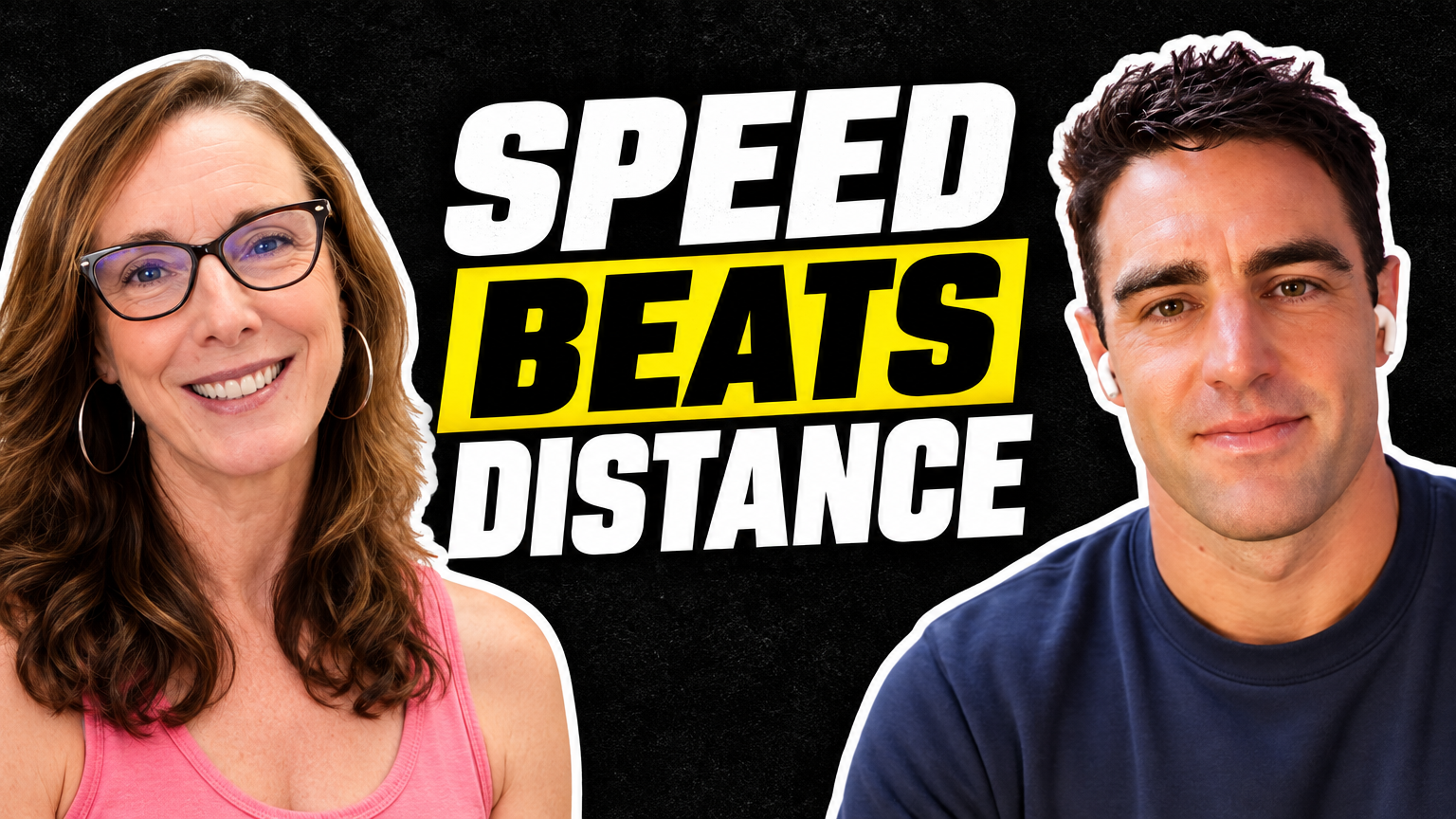








My guest today is Chris Natterer from Ultraworking. He is a Lead Product Manager at Ultraworking.com. In this episode, Chris will talk about what we can do to be more productive to make sure we stick to habits and also to talk about nutrition as well. All of these things tie in really well in what we do. my job is to help people be consistent with their swimming but also change their motor patterns and develop different muscle memories which really comes down to sticking to habits. So I thought this would be a good topic to talk about and why not get someone who is experienced in that area to chat about it.
01:05 Ultraworking Background
02:27 Implementing Best Practices (Work Cycle)
10:12 Debriefing
11:28 Reason Behind 30 minute Time Cycle
14:12 “Very Easy Not To Do Planning”
17:16 Consistency
23:15 Baseline and Stretch Goal
32:00 Joint Health
36:28 Nutrition
https://www.ultraworking.com/swimming
https://clockworknutrition.com/
Form Goggles
https://www.formswim.com/?sscid=b1k5_hkrgn&
Check out the Effortless Swimming membership for online coaching options:
https://effortlessswimming.com/member/membership/
View our freestyle clinic schedule around Australia:
https://effortlessswimming.com/freestyle-clinics
Click here to subscribe:
https://www.youtube.com/user/EffortlessSwimming
Follow us on Social media:
https://www.facebook.com/effortlessswimming/
Instagram:
https://www.instagram.com/effortlessswimming/
Transcript
Read the full transcript
Welcome to the Effortless Swimming podcast to show that help swimmers and triathletes love the water, become a better swimmer and live a better life. Here’s your host, Brenton Ford. Welcome to the Effortless Swimming podcast. My guest today is Chris Nattera from Ultra Working. And Chris here is here to talk about what we can do to be more productive, to make sure we stick to habits, and also to talk a bit about nutrition as well. And I think all of these things tie in really well with what we do, which I see myself as a coach, as a swim coach. My job is to help people be consistent with their swimming, but also change their motor patterns and develop this different muscle memory, which really comes down to sticking to habits. That’s the way they’re going to do it. So I thought this would be a really good topic to talk about and why not get someone who’s experienced in that area to chat about it.
So Chris, welcome to the podcast. Hey Brenton, nice to have you. Thank you. So Chris, those that are listening, give me a bit of a background on what you’ve done in the past. And I guess a bit about Ultra Working as well, because I was listening to the Ultra Working podcast and these are some really interesting topics, not only in terms of being productive and increasing that, but also just in the area of I guess psychology and how that works into sticking to habits or changing habits and those sorts of things. Right. So I’m an engineer. I used to work for many years as a health coach, looking at the whole spectrum from nutrition to fitness and general health, getting a lot of blood work done with my clients. And now I work at Ultra Working. We are a company that focuses a lot on making people perform better in their jobs. Making them more productive, giving them the right tools to excel and perform better and produce better work.
And we’re also now starting to look at health as it is a absolutely fundamental piece of the puzzle for long term peak performance. Yeah, absolutely. It’s like, if you haven’t got your health, you’ve got, you haven’t really, nothing else really matters. You know, you need to make sure that you’re healthy in order to then be able to do your work, then to be able to swim. So I think it’s obviously a pretty key component to it. And with since you’ve joined Ultra Working and this has become a real focus, is there anything that you’ve personally changed in how you work, how you train from what you’ve learned over the last couple of years? Yeah, so it’s interesting because I was a Ultra Working customer for many years before I joined up and it is exactly the things that I saw and that I was able to implement in my own life that convinced me of the ability of all of the things that we’re doing. So yes, there’s a lot to uncover. So there are definitely some, there are some best practices when it comes to doing work, or really when it comes to participating in almost any kind of activity.
And these best practices are sort of well known. We, you know, we can measure them, but it’s actually surprising that even very, very accomplished people do not use them or do not use all of them consistently. And so we’re helping our, our customers to implement some of those habits or some of those practices more consistently. So for example, one of the main things that we do is a is a tool that will help you to perform a single work session better. It’s called work cycles. It’s very popular. And it helps you to run a work session in a more strategic systematic way. So very often people will sit down to do work, and they will sort of just jump in. They don’t really have a clear outcome in mind, what they’re actually trying to accomplish and how they will get there is sort of just like go with the flow. And, well, you can get things done this way, but they usually tend to a take a lot longer than you might have otherwise taken. And you’re often not really.
There are many questions you can ask yourself before jumping into the work that will inform a lot of the outcomes that you’re trying to go for. So let’s say you’re writing a paper, you could ask yourself, you could just like start writing the paper, but questions that you could ask yourselves are who’s going to read this. Who am I writing this for? What do I want them to take away when they have read this paper? What, what do I want them to, to learn from this and depending on how you answer those questions, the way you approach the paper or the actual outcome of the paper could look very differently. So, some of the things that we do in a work cycle is we have a planning session upfront takes around five minutes if you’re if you’re a veteran takes maybe 10 to 15 minutes if you’re just getting started. And during those planning session you will ask yourself, what am I trying to accomplish for the next four hours for example for this next work session.
The second question is, how is this important and valuable. We find that motivation is one of the things that can really make a huge difference and just field you’re basically really trying to see how even the, it could even be a very mundane exercise or very mundane work that you’re doing, but in this field you have the chance to reframe it in a way that makes it highly, you know, exciting. So, let’s say you’re just doing your taxes. You could, you know, reframe this in. Okay, if I get this done and I will, you know, I will feel liberated I will feel this off my chest, or I might actually establish a process to make it easier next year, and to think about my systems going forward. There are many possible answers. Then you are in the next piece, you’re trying to do some, you’re preparing for things that might go wrong. So, for example, if you’re, you know, working on something that might be requires a lot of, of concentration, you might ask yourself hey what could, are there any interruptions that are coming up.
I’m expecting someone to knock on the door. And if that happens, how will I address it. How will I deal with the situation, and you write into this field for example if the, you know, the delivery guy shows up, I will, you know, prevent the door I will take this stuff bring into the kitchen and I will go right back to work. And those are kind of similar to maybe you’re familiar with the term, or the concept of implementation intentions. If, if I do this, I will do this when X happens, you sort of pre planning your response. And then you’re, you’re, you know, roughly gauging, is this an objective or is objective work, is this something that you can actually measure, and you’re defining in great detail, how will you know when this is complete. And this is the concept that Stephen Covey wrote, writes about in seven habits of highly effective people, one of the most, you know, well known books. He has the concept of starting with the end in mind, like knowing the end result that you’re trying to achieve.
And I think this is maybe the most important field, knowing actually what the end result of your work is supposed to look like. There’s a lot of good things there. And the first one that you mentioned about, it’s almost like sharpening the axe before you’re going to chop down a tree. It’s like, that’s that planning about what, what I actually want to get out of this work that I’m about to do. Who’s going to be reading or who’s going to be watching it. And what do I want to get across or what am I trying to teach us like that? Yes, it’s the sharpening of the axe there. Because without that, then you might waste an extra hour or an extra two hours and how you might translate that to swimming. It’s like, I’m going to the pool. I’ve got this session. What’s, what am I trying to get out of it? Is there a particular aspect of my technique that I’m trying to change? And then how will I go about changing it?
Will I use some different drills? What will be my focus in the main set? So that sort of pre, like even five or 10 minutes of just sitting down thinking about what, what you would like to get out of it can make a big difference. And I know, I think to the days where I’m most productive, it’s when I’ve sat down, I’ve written down what are the top three things that I want to have done by the end of today. And, and then it’s like that small act of just sitting down and writing that and then thinking about how I’m going to approach. And it’s like, I can be, I can more than two to three times more productive when I, when I actually just take that five or 10 minutes. Absolutely. I totally agree. That’s, that’s how it translates because yeah, this is for sure true for any type of physical practice as well. This sort of deliberate practice knowing exactly what I’m trying to accomplish, not just that you can get better if you just jump in the pool and swim a lot.
But you will get much, much better, much faster if you also really engage your, your mental state at the same time. And one component that then comes to it. So we have just planned for hours of work. That’s like a rough cycle. And then we’re going to start work and we’re working in 30 minute blocks. And we repeat this planning process in a little bit of a smaller version for each block, we are planning mapping out what you’re trying to accomplish in the next 30 minutes. And this does two things that will keep us on target. Once again, we have to come or establish what finish will look like. But it will also teach us the skill of estimating how long things take. And now we’re working for 30 minutes. And at the end of the 30 minutes comes the next, now it’s a really critical part, which is to debrief. I think this is something that people too often do not do because it can really easily reveal some things.
So after a good training session, you could ask yourself, what really went well today? What did I learn today that I could repeat the next time? Things like that. And all of a sudden you have really sped up the cycle of getting more data, making a change to your next training session, getting more data, analyzing the data and changing the next training session again. And basically in work cycles, you have that chance every 30 minutes. Every 30 minutes you debrief, you ask yourself, did I hit my target? If not, why not? And what can I do better next time and what went well this time? And so the goal is not to just get a lot of more work done, but to increasingly become better at working. And why the 30 minute time cycle? Is there a particular reason around that? So some people like 50 minutes, 40 minutes, 30 minutes is a good compromise between different type of attention spans. Depending on the type of work, you would maybe increase this, but our standard protocol is 30 minutes of work followed by 10 minutes of a break.
That’s what I’ve tried to usually stick to when I’m running clinics. Especially with when there’s a lot of information that I might be trying to get across. Any more than 30 minutes where you’re just sitting there, maybe hearing someone talk for 30 minutes, after that 30 minute mark, I find the attention seems to wane and your mind will start to drift off a bit. So at a bare minimum, we’ll want to get up, walk around, move around, reset, and then we can go on to the next portion of it. So I think it’s a really good time frame because you can work longer obviously. But I know personally too, when you’re sitting at a computer, I would highly doubt that most people are fully productive for a 60 minute block. It’s that 30 minutes where you can attack it, you can do it, and then it’s probably going to start to drop off after that. So if you were to take a break in between, then you’re just ready to go.
If you had even just four 30 minute blocks, I reckon in your day, I’m thinking of myself actually like, boy, I could get a lot done if they were fully productive, no distractions. And I think when I when I’ve sort of debriefed about whether it’s about what worked well in our clinics, what has worked well in a work day, often it’s like, I’ll reflect and be like, all right, phone was in the other room. That’s the stuff in the first thing. And then, you know, I’ve set a time limit for how long I need to be there. That way I’ve got this imaginary deadline and that’s helped a lot too. So there’s a few things that often come out of that debrief. Yeah, it’s, it’s pretty impressive what you can achieve in a few hours of like really highly concentrated work versus, you know, work where you’re just at 60%. Regarding the time spans, there are certain activities, for example, certain programmers depending on what they’re working on, they will need a little bit longer to get into that zone and for them it might make sense to,
you know, increase the time, but for most of the tasks that we work on with 30 minutes is a really good timeframe. And in terms of the psychology of this sort of stuff is there, things that you’ve learned along the way that you’ve found to be useful or maybe mistakes that you’ve seen people slipping into, and they’ve been able to change the way they go about something. Yes, so, so I mean, there are certain things that you see over and over again that people really quickly address. And I had the same things when I went in I, I was actually sort of shocked how sloppy I often was in the definition, or my clarity of the work, I would, you know, like, as I said, you will work a long time, but you’re not really getting to the core of the issue very quickly. And just general the realization how valuable this type of deep work is, and then putting a lot of different protections around deep work. I know that some of your guests in the past have mentioned things like, you know, blocking social media.
This is something that you will find a lot of people do in this type of community. I usually have some form of app running at all time that will prevent me from accessing websites that I find distracting during work hours or even for longer periods of time. That has helped a lot, putting the phone in. I actually have a little box here that you can put your phone in and it locks and your phone is trapped in there for a certain amount of time. It’s one of those things where it’s surprisingly effective and you feel a little bit silly, but it is so effective. But other things is, yeah, I mean, planning is planning is one of those things that when we do it is extremely effective and extremely helpful, but it’s very easy not to do it. And I think there’s a surprising finding maybe from for me or for us that like really, really, you know, high level performers, researchers finishing their PhD, even, you know, people on that level often will not do continuous or like regular simple planning.
Before we’re talking about high level people in say business, CEOs or in academics with PhDs and then with high level sportsmen, there’s often some very similar traits that will be common and seen amongst those different groups. And you said that a lot of people that you have gotten to know through ultra work, like they are quite into sports and those sorts of things. And I say it with like how you do one thing is typically how you do everything else. And, you know, if you’re high up, if you’re a really good operator in one area, you’re good in others. So I think that sort of crosses over to all aspects of your of your life. And you’re talking earlier to about you call it the pentathlon that you’re running at the moment with with some people from ultra work. And what you’re looking to do is to get into operate at a really good level in lots of different aspects of their of their life. Can you talk a bit about that?
Because I think it’s interesting that obviously nutrition plays a part with helping people work better and then making sure you get enough sleep helps people. You know, that all works together. So can you talk a bit about that that challenge that you’re doing with everybody? So we call it the pentathlon. It’s an event. It’s it’s styled as a competition. And it goes for around two weeks. And people join up and they’re being put into teams. And for the next two weeks, they are being rated, they’re being scored on five different categories. They’re being scored on nutrition, on fitness, on sleep, on planning and ultimately on doing their most important work. And what this competition really focuses on. Some people, you know, put up really, really impressive hours and some people go on like really amazing fitness regimes for those two weeks and and really push themselves. I generally advise and this is what most people do to not necessarily go for like the most crazy, you know, levels in each of these categories, but the goal is consistency.
We’re trying to put two weeks get people to be very consistent across those five categories. So nutrition, you will pick something that is, you know, maybe a diet that you’ve done before that you feel comfortable with, you know will not be extremely taxing on your on your willpower. But if you go to it for two weeks, fitness, you will not necessarily try and you exercise regime but you do something that you’ve done before. That is, you know, somewhat challenging for you, but not overly and you stick to it for two weeks. And people can we give them full flexibility in what good fitness will meet mean for them for those two weeks. And it’s, it’s, it’s up to them it’s not up to us. If you’re planning, we want you to do some form of planning every day. Then sleep. We find actually that much more important than your wake up time is your bedtime. So we really try to get people for those two weeks to hit very consistent bad times.
For me personally, once I started doing that, that was the most surprising finding after doing the better on myself, how important a consistent bedtime was for my performance the next day and for the way I felt. And then lastly is your most important work. So often people will bring a project that they, you know, can roughly complete in two weeks. And we want them to define upfront what their most important work is. And here is an interesting, interesting concept. The way we score it is each of these categories gets 100 points. The work part is scored twice one for consistency one for them for amounts. So basically with the first 10 minutes of your most important work, you will get 100 points. And with an additional 90 minutes, you will get another 100 points. And basically what we’re trying to do here is we find that projects do not die because you didn’t work on them for like four hours every day.
Projects or any type of endeavor really dies because it didn’t get done at all for two weeks. And this is true. I would say for, you know, becoming a great swimmer becoming like, you know, getting in shape in general sticking to a diet. And it’s not necessarily being like super intense for a week that will get you the result it’s putting in consistent work, you know, day over day week over week. And this is what the pentathlon is styled upon people really like it. It’s cool it has this team dynamic that makes a huge component. People don’t want to let down their teammates, because at the end the teams are like ranked and scored against each other. It’s a fun thing that we do multiple times a year. That’s like that. It’s the thing that really appeals to me there is that ability to be consistent with those things. So don’t go out and try and run 20 Ks every day and succeed there because you’re probably not going to sustain that across or when the two weeks is over.
And it’s what I see with swimming is in order to improve your technique. If you do a little bit every single day or every single time you’re swimming, like a little bit of the drills that we might prescribe people and then keep your attention on it through the set. That’s what’s going to change a stroke because if you do two hours of a technique session once every three weeks, you’re not going to have that consistency to actually make any change to your stroke. It’s just a little bit over time is what will help you get there. And it’s very easy to overdo it, especially this time of year. At the start of a new year, people might have their fitness goals and they might go out and swim a 10 K swim and overdo it and then maybe get injured or maybe just go home exhausted and they’ll need to rest up. So you often better off to just do something that you could do every day and that’s going to carry forwards a lot better.
And I get the appeal of wanting to go all out. I do it all the time. I still make that mistake. But yeah, if you can have that consistency, it makes such a difference. There is another concept that is interesting that also I think transfers pretty well to training. We often work with baseline and stretch goals. We often encourage people to have a sort of minimum goal that they’re trying to achieve. And if it goes well, then they can aim for their stretch goal. And I’ve applied this to my training on days where I don’t really, really feel, feel fully on. I have a baseline training that I can default to that I’m comfortable with that I think will get me the results, but that is very hard for me to miss. And so even on, you know, even a day that might not be optimal, I can still get that minimum amount of training. And it’s just a huge difference. Like it’s a zero to one. Like did you train or did you not train in the end that applies to many things.
Yeah, that’s good. I like that. That’s something I should have done. At the start of the year, for the first seven days of this year, I ran 10K every day. And then on the sixth day, I was surfing and I sort of went for a turn and I hurt my knee when I was surfing. And then I was like, no, I’m going to run the next day. And so I ran 10K still and I knew I shouldn’t have because I was like, this isn’t going to be good. And then I hadn’t been able to run since. Whereas if I’d perhaps just said, all right, one K, you know, that’s my like minimum goal. Then I could have gone, I’ll do okay. I still feel like I’m ticking the box. And then I’d probably still be running. So it’s a really good. Yeah. It’s a good idea to have that minimum goal. And I mean, same thing could go for swimming. Whereas if you set yourself, I’m going to go three times a week. You might normally do about 2K. But if you set the minimum as all right, the minimum I’m going to do is 500.
Then you’re still going to the pool. You’re still getting, getting wet and feel like you’ve had some sort of. Win and you’re still stuck to those, those three sessions because in the past, I know there’s been sessions where I’ve just might be fatigued. And I’m like, I don’t feel like going, but usually when I go or if I don’t want to go, I say, all you got to do is 500 meters. And then you can get out if you want. Typically I’ll stick around longer because I’m like, well, I’m here now and actually feel pretty good. So yeah, even just having on the back in mind, I think can help. Right. But I think this is also what you just mentioned is basically, I think a pretty common finding and psychology. I think maybe BJ Falk was the person who coined the concept of tiny habits. And I think there are things like, you know, if you just, if you stick to doing one push up every day, it’s the getting started part.
So once you’re in the pool, we went through all of the hard part, you’re in the pool already now doing 200 kilometers versus 500 meters is basically the same thing. It’s like minimally much harder than the first part. It’s getting you into the pool. And so having something where, you know, people, if they can develop a running habit, they can start with every day I want to put on my shoes and step in front of the house. And if I don’t feel like doing it, I can just step right back in. But eventually that brings the, there’s a concept that behavior actually precedes motivation. So you can establish the behavior first, you can sort of, you know, maneuver yourself into the behavior. And then the, the feeling, the psychology will actually follow as a result of that. So you will like, you will start liking the behavior that you have, that you started doing mechanically upfront. A quick note from our sponsor.
This episode of the podcast is sponsored by form swim goggles. With these goggles, you don’t have to look at the pace clock anymore or be one of those swimmers in the pool always grabbing for their watch. With form smart swim goggles, you can see all of your key metrics while you’re swimming distance, pace, stroke rate, they’ve got it all. And the swim data is displayed on the Google lens and you can customize the display to see the metrics that you want to. And I was worried that it was going to be distracting, but you can literally see through the display, the metrics are always there, but you have to choose to focus on them. It’s really impressive. And it makes hitting intervals or any kind of specific training much more manageable and achievable. And the goggles track it all. It’s automated. So from the time you start your session to the end of the swim, you don’t have to press any buttons in between.
It automatically tracks everything. Form also works with a bunch of the best pro athletes out there, including Lionel Sanders, Sarah Crowley, Hannah Wells and Olympic champion Usama Malouli to name a few. These form goggles are for all types of swimming too. One pair of goggles and you can use them in the pool, the open water, you can use them in swim spars and endless pools too. So the same pair of goggles can be used in all of these different environments. The battery life is incredible too. One hour charge is 16 hours of swimming time battery life. And you can have the display on either your right or your left eye. The goggles themselves come with anti fog solution that’s used in dive masks. So it’s great in terms of quality and there’s a protective case with a nifty drainage solution. So after you swim, you can store them safely. And while the goggles connect to the form swim app on your smartphone too, they will sync with the form app.
And then you can review all of the details of your swim. And you can see what other swimmers are up to in the form swim community as well. I’m a big fan of these goggles. I was really impressed when I use them and I use them for a vast majority of the sessions that I’m currently doing. To find out more about the form swim goggles, go to formswim.com. And you can use our coupon code effortless at checkout and save $15 off your order. Back to the podcast. Yeah, it’s like it’s funny when you think about it. Like even like the smallest amount of resistance to or even the smallest activity can feel like something hard to do. But if it’s like, all you got to do is put your runners on and step out the door. And then if you want to turn around, you can. So most of us can can put our runners on and walk out the door and then you’ve got decision to make whether you keep going. So little ways to almost trick the mind into doing the thing that we want to do because so much of it is just psychological.
And if we can have these little ways to get us to get into the habit, then it’s going to help. And I think once that habit is established, it’s hard to stop doing it. And I think of as a teenager when we odd swim eight, nine sessions a week and with like it’s just it was granted every Monday, Tuesday, Thursday and Saturday mornings. It’s like that’s the days we train. And so there’s just no question about it. So you get up, go to the pool and you do it. There’s no like, but you know, I don’t feel well. It’s just you get up and do it because you’re in that habit and do it for years. And then it’s almost hard to break that habit. You want to because you feel like, well, I’m doing it now. And the not normal thing to do is to not go to the pool. Right. How’s your knee doing by the way now? And is your are you healing up? It’s, it’s almost there. Almost there. I went for one and a half days the other day and it was a bit sore.
So I’m just, I’m just rowing instead, but it feels okay then. But yeah, it’s I deserve it. Basically, I should like, I knew I should have done that 10 Ks at the time. I was like, Oh, this, this isn’t good, but I just wanted to keep it going. But yeah, that’s a, that’s all right. It’ll, it’ll get there. And the main thing is I can still swim. Okay. That’s so if we want to touch on something related to, to actually, you know, exercise physiology, I think joint health is one of the things that I’m 36 now, you know, I remember exactly what it was like to be 20. And I just had to, I paid zero attention to anything like joints or connective tissue. I would just put the heaviest weights on and I would always recover. I would never get injured. Everything would be fine. As you get a little bit older, this starts to change. And I think the area where I would say have the made the most. My, my, my information level has changed the most.
I’m the most surprised actually everything to do with how to maintain your joints as you, as you age and also just as you are, you know, training, pencil goes up. I think, you know, most professional athletes will have some form of joint pain once they’re done with the career because that’s where, where it’s the most taxing. And you mentioned that you had some, some new issues and I’ve had some new issues in the past. So maybe we can go into that a little bit. Yeah. Well, you, you were saying that you’re like your background’s in, well, like you’ve got a health background and heavily focused on nutrition at the moment. So what, and you also mentioned before the call that you’ve been doing similar form of training as the keys of training that we had on with it with a guest recently. So what a, let’s talk about some of those things for joint health because I think for some is really important, particularly shoulder, I’d say a good probably 10 to 20% of the students that I
see clinics have had or got some sort of shoulder or joint pain when they swim. And often it is related to technique or overuse or just not doing the strength exercises to be able to keep their shoulder in the right position when they swim. So there’s a couple of things there. So this being probably closer to your background and then what are, what are some things that people can do around joint health? Yes. So one thing that I find highly surprising is when I grew up and we got into, I got introduced to strength training. There was a lot of movements were taught in a way where you would stay clear from certain positions of the joints. So that the knee, for example, you would get told to not put your knees over your toes when you squatted. And you basically, you know, didn’t go below 90 degrees many times. You saw many people doing it. And then for shoulder, for example, you would be very careful when doing bench press, not to go too deep or when
doing a dip, you would stop and maybe also perform this exercise just to 90 degrees. And then for certain, you know, pushing movements, you would maybe not push with your shoulders behind your head. And all this in a hope to put less strain on the knee and or less strain on the particular joint and therefore like prevented from damaging. And what I think has come out over the last few years is that this is actually completely the opposite way we should think about. We tend to often train these joints just in these very static positions, the safe positions. We don’t train them in the extreme positions. And there are a lot of, this is I think more and more people are switching and or moving in the direction a little bit really understanding that to maintain healthy joints, we need to use them and move them over their complete range of motion. This is true for shoulders. This is particularly true in my and my experience for the
knees. And I make it a substantial part of my training now as I get older, you will always like when we look at general fitness, you know, you ask yourself, what will give me the most the most incremental benefits is it going to be to become stronger. And I would say for most particularly men that carry a lot of muscle mass actually mobility is the one thing that gets them much more quality of life than becoming stronger or faster. Yeah, that’s what I and it needs almost like a car needs some, you know, like you need to play the mechanic and put some actual maintenance time into those parts. Yeah, yeah. So I’ve started to really notice that and feel that over the last few years and looking ahead for the next 10, 20, 30 years, I look at the things that I enjoy, which is swimming, surfing, love running, love all those sorts of things. If I can’t do those, then it’s I’m going to be pretty disappointed. So if if I can keep healthy enough to be able to
continue doing those, then that’s got to be the highest priority because to me that’s a huge, huge part of my life. So it’s a good thing about swimming too is it’s it’s usually pretty low impact and people can continue to do it. I’ve seen people in their hundreds still swimming. Nancy in her nineties and she still swims three times a week. So yeah, that’s that’s a really good goal. And I’m glad it’s it’s a sport that I that I enjoy and I can see myself doing it doing it forever. Let’s talk a bit about nutrition. So for me, I think nutrition is one of those things that yes, we absolutely want to get it right. But the hardest thing to do is if we haven’t got a plan in place or we haven’t perhaps had our shopping for the week when we’re hungry and there’s no good options available, that’s when we will resort to the easy option, which is sometimes not the healthiest option and and not the best option for us. So I think just having making that stuff easy
is really crucial. And yeah, and so and so that to me, that’s always the hardest thing is making sure that you’ve you’ve sort of planned your week or your day out in advance. So you you mentioned before you got on the call a bit about what you’re doing there with with ultra work. And do you want to talk a little bit about about that and I guess why that’s why that’s a reason as a as a thing to get on top of and something you guys are working on now. Right. Yeah, so we were mentioning the pentathlon and one of the parts of the pentathlon was nutrition. And we found that that is nutrition is intrinsically hard to get done it. It deals with physical stuff in the real world that needs to be prepared. And, you know, it takes a certain time. First off, like with nutrition in general, once again, it’s my my I always try to think about how to make it easier because in the end it’s it’s mostly not the the actual information that’s keeping
people from making a change. It’s the it’s that it’s hard to implement them. So it’s not necessary that people don’t know what they should be eating. It’s that they as you said default options because they don’t have the right systems in place. So, you know, general advice for someone who was thinking about how to get this in check is, you know, make one thing that I find extremely well is make a list of default options where we have there’s this this concept of paradigm of choice where if we have too many options presented to us, we cannot decide on any one of them. And then often we will default to making a decision without making a decision. And so coming up with like a short list maybe, you know, three to five meals that you enjoy that you can easily prepare and that you will always have the ingredients for in the house. And then whenever you feel hungry, you just like pick one of those three and do it. And that works surprisingly well.
We tried for we tried to come up with something that it makes it even easier. And, you know, we’re very data maybe six months ago launched a service called Clockwork Nutrition currently only in the US. This is how it works. We get your we get like some basic data like your age, your height, your gender, your weight, how much you’re moving. And you tell us a little bit about your goals, what you’re trying to accomplish some of the, you know, you might be wanting to lose some some fat or gain some weight. We we calculate roughly your total caloric needs. And then on Monday, we start sending you two meals per day that are pretty much perfectly tailored towards your macro nutrient and caloric needs. Every, you know, every evening or on a regular basis, you report back how you like those meals. You tell us how much you’re weighing so we can adjust and basically over time, based on your hunger levels, based on your subjective rating of your performance,
we will we will improve the meals that we’re sending you to get to close as possible to your ideal, you know, nutrition profile. It’s that’s good. I I like that idea of having you three go to meals and just make sure you got those ingredients in the house because that’s yeah, I look at our fridge now so it’s pretty empty at the moment. But yeah, if I just had those those three go to meals which could be which can be pretty easy to cook up. It’s like, wow, then that can I can spend five or 10 minutes getting that ready. And then I’m good to go and I’m not going to go down to the cafe and get something that’s maybe not the best, best option there. So it’s great. And I think some of the things we’ve covered here I know they’re not entirely related to swimming, but I know the people who listen to this podcast and the people that I work with daily it’s it’s all related, you know, you’re and you can apply a lot of this I guess productivity or habit
forming to swimming. So it’s been been a really interesting discussion so Chris appreciate you being on the podcast and for those listening, what’s the best way to find out more about you and what you do and ultra work and that’s what today’s house. Yeah, so you can go to ultra working calm and you can find out about everything we do and you can go to clockwork nutrition and you can find out about the nutrition part and you will also find me there and yeah, we’re have a lot of free tools. So the the work cycles we mentioned at the beginning, we have a free Google sheets that you can download and you can run for yourself. We have some other tools like like lights that are really popular to keep people consistent on their on their goals and yeah, we run the pentathlon multiple times a year and we’ll continue to come up with cool stuff that helps people in these fields and yeah, thank you for having me. Yeah, I appreciate you because I
get people reaching out for you know to be on the podcast and then I saw you reach out. So I had to look at ultra working listen to the podcast and it’s like this stuff is really good and I’m glad you’re able to come on as a guest because yeah, I’ve really enjoyed today and this stuff is it’s so interesting but so much you can learn about it too and I think over the years it’s something I’ve become a lot more aware of working with swimmers that it doesn’t matter how how well someone can do something on on one day if they don’t have that consistency to be able to do it over a long time so it is just about forming forming habits and sometimes it comes down to removing barriers or distractions making sure you do it in a way where they don’t necessarily need to do something completely different. So what we recommend is doing like two or 400 meters of some drills in their warm-up whenever they’re training so they don’t need to
spend another hour at the pool every every week or anything so all these sorts of things I think is super important so I appreciate this Chris and thanks for being a guest. Thank you.