








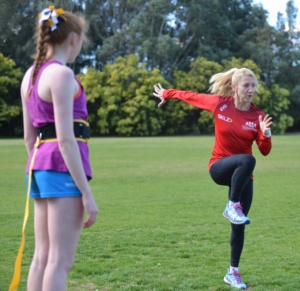
Ranell Hobson is the Coaching Director at The Academy of Sports Speed. She will share her experience in working with athletes at The Academy of Sports Speed and how their teachings cross over to swimmers and triathletes.
01:00 – Skills, Functional Movement, Elasticity, Power and Mechanics of The Sports
02:15 – Athletes’ Underdeveloped Skills
03:19 – The Bad Effects of a Sedentary Lifestyle
11:50 – Explosiveness off the blocks
17:01 – The Shift to Being Leaner
18:50 – The Forward Propulsion in Running
19:53 – Restriction in The Hips = Decrease in Running Performance
27:20 – Survey Says…
33:00 – Drills? Some more drills?
36:01 – The Importance of Individual Training
To learn more about Ranell and her work at The Academy of Sports Speed, visit academyofsportspeed.com
Transcript
Read the full transcript
Welcome to the Effortless Swimming Podcast to show that help swimmers and triathletes love the water, become a better swimmer and live a better life. Here’s your host, Brenton Ford. Now, Hobbs, welcome to the podcast. Thank you for joining me. Thanks for having me. And so you’re from the Academy of Sports Speed. It’s something that you’ve run for a while now. Can you let the audience know what it is that you teach there? Because I think it’s, while you don’t necessarily work with a lot of swimmers, I think there’s going to be a lot of crossover with what you teach at the Academy of Sports Speed. Yeah, absolutely. So one of the big things that we need to do, and it doesn’t matter what kind of athlete you are, is that we really look at developing the whole athlete. So we look at the skills that the coaches need the young athletes to be able to do. And then we look at their physical capabilities to be able to do that.
So we look at things like functional movement, their ability to be mobile through the joints that are required to be mobile. We look at elasticity. We look at the integrity of connective tissue structures, which will most definitely impede performance if they’re not healthy and well. We look at the mechanics of the sport. So I think the first thing is to really analyse what an athlete needs for superior performance in their specific sport and then have a look at their physical capabilities and their capacities to do that, whether it be range of motion, elasticity, strength, power, explosiveness, but really looking at the health and the integrity of the body to be able to do what their coach wants them to do. When I first saw what you guys do or heard about what you teach, I thought it was just such an interesting concept, just going really deep on one certain subject and that is primarily speed and I think there’s agility in there too.
But it’s sort of what we do at effortless swimming is it’s primarily about technique, but then around that there’s a lot of other things from mobility mechanics and that sort of thing. So with the athletes that you work with and there’s a lot of younger ones as well, what are some of the main things that you find that people probably haven’t developed as much as you would like to see based on their lifestyle habits? Yeah, absolutely. I mean, as you said, the technical aspects of the sport are crucial and technical aspects of running. You know, a lot of people think that we run naturally, but you know running and sprinting especially to remain is a specific skill that needs to be taught to young athletes. But I think that what we find is that because we’re living in an age where people are very sedentary through the day, so especially students that are either at school or at university or even people in the workplace, we find that they’re lying down in bed all night
and they’re sitting down on some sort of form of travel and they’re sitting down throughout the day. And then they get to training in the afternoon and we expect their body to be able to do all these fabulous movements, whether it be explosive or strength or whatever the capability is that the coach needs to them to do. But the body’s not ready to do that anymore because of the sedentary nature of the day, the working day. So what we find is that we get a lot of pelvic girdle restrictions that need to be looked at. We get a lot of calf complex and ankle restrictions. I mean if you think of the capacity for all athletes to be able to go through plantar and dorsiflexion, so just moving the foot up and down, that’s usually limited because of tight calf complex that we get in practically everyone that I see. But the biggest issue is most definitely pelvic girdle restrictions that we get and that’s from sitting down all day.
And any athlete, doesn’t matter what sport they do, swimming included, any athlete that’s got pelvic girdle restrictions is going to be limited in the performance that they can give. And assessing that, what do you do to have a look at that in someone? So I mean there’s a lot of basic functional movements that we should be able to go through. So most strength conditioning coaches will assess the squat, the capacity to lunge, the capacity to hinge. So if we’re looking at those three movements, we’re looking at whether or not an athlete can squat to the point where the hips can move straight through the range of motion and actually glutes to calf action that we’re looking at, a full squat, what we like to call a full squat. And if an athlete can’t do that, then we already know that they’re going to be inhibited in their sporting actions through hip and ankle restrictions. In the lunge, for example, if a young athlete can’t control the knee as they lunge forward,
so if we’re getting instability in the knee structure, if it’s dropping inwards or outwards, then that’s going to impact their capacity to be safe in their sport, especially any sport that requires explosiveness out of that hinge joint and also in agility. Change of direction, if someone can’t lunge correctly, then we’re not going to put them through any change of direction drills until they can do that. And then the hinge is the capacity to stabilise the pelvis so that it’s in a straight line fashion towards the ground, if you like, while being on one leg. So those things, primarily the squat and the lunge and the hinge, would most definitely cross over to the physical capabilities required in swimming, especially when we talk about that explosiveness coming off the starting blocks. Yeah, it’s something that we see a lot of is really tight hip flexors. And also around the, I guess, the whole pelvic girdle.
I mean, it’s not particularly my background, you know, a lot more than I do about this stuff, but we see it pop up all the time, particularly with triathletes from the running and the riding, just so tight through the hips that it can be very hard to get the body position parallel to the surface where they’ve got this nice straight line all the way through the torso, through their hips and then to their legs. They’re just always in this, not sitting position, but they’re sort of bent through the hips there. Yeah, flex through the hips. And they’re creating that drag that slows them down. Absolutely, yeah. And the hip flexors is the biggest thing that’s impeded upon because we’re sitting all day, so they get into that shortened position and then they just stay there. And if we think of the opposing muscle structure being the glutes and the glutes being the powerhouse, then if your glutes are always in an elongated position
because the hip flexors are always shortened and pulling you into that, even if it’s a small hip flexed position, then the glutes aren’t going to get that strong contractile activity that they need to either drive an athlete for horizontal propulsion or vertical propulsion or whatever it might be. And I can see in my mind, I can see how that would dramatically impact the swimmers and cause that drag that you’re referring to. So having just a basic recovery strategy program for them to make sure that they can stretch through all angles of the pelvis, the hip flexors, the glute medius, which controls stability of the pelvis, stretching all through those areas, which as you said, in a shortened position all day just from sitting. So if you were to work with a swimmer or a triathlete who was really tight in all of those areas, what would be one thing that you’d have them include every time that they go for a run or go for a swim?
What would you make them do to improve it? Yeah, I’m a big fan of yoga and there’s one move in yoga, which is a hip opening stance. It’s called a modified lotus position and it’s pretty much a shin on shin position. So we’re an athlete sitting down on the ground with their legs crossed. We then lift one foot up and make sure that the shin of the top leg is sitting directly on top of the shin of the bottom leg. And if an athlete can get into that position without any pain or restrictions through the pelvis, then we pretty much know that they’re not going to be impeded in any of their movements in a sporting context. But the thing that I find is pretty much 99% of athletes that I see are unable to get into that position. And that’s because of those restrictions through the pelvis and as you said, that tightness through the hip flexor. So there’s probably that one action as well as a full hip mobility program
that I give to all athletes that we see to make sure that they’re maintaining the integrity of the connective tissue structures, which stabilise but also allow for those movements that we need in the pelvis for good athletic performance. Yeah, there’s so much cross over there when it comes to swimming as well. With a lot of the athletes we work with at clinics, they can’t really get into the ideal body position because they are so tight through the hips and they’re not able to use their glutes and their hammies to bring the leg up and keep it fairly straight as they’re bringing that leg up. So it’s always like they’re kicking more from the knee than from the hip. And so just learning how to move properly, again, is a really big one. And we’re starting to see that a lot, especially with age group swimmers and age group clubs, they’re just going through a 20, 30 minute routine before each swim session. That’s just slow controlled movements
and just opening up through the shoulders, through the hips, through the pelvis and just going through all these different motions that they’re probably not doing in their daily life because they’re just sitting so often, whether it’s at school or at work. Yeah, I think for any athlete, I think it’s important to have a pre-training routine where we do get them, you know, on their foam rollers, going through their range of motion requirements for the specific joints in the sport. We have them on the acubals. Do you know what I mean? Trying to, you know, piriformis for us is a big one in terms of running piriformis gets really tight and then it impacts the way in which the glutes act. So if your athletes can get a pre-training routine happening which really works on their own weaknesses and making sure that their weaknesses are prepared for the training and the conditioning that the coach is going to put them through,
they’ll almost definitely allow them to get a higher level of performance from the effort that they put into the training. We were in Thailand last year. Every year, we run a how-weak camp at Tanipura there which is a sports resort and the coach there, Miguel Lopez, he has a group of swimmers and they often have national swimming teams come in with their athletes for a week or two weeks and they’ve personally had the Dutch national team in and I think it was the physio there. He had put together this 30-minute routine that all of the Dutch swimmers were doing beforehand and it was just some very basic movements but they’re doing that now instead of bringing the arm across the chest and stretching it away rather than just the static stretching. That’s what they’re moving to now because it’s showing to be a lot more effective and it sounds like it’s very similar to what you’re doing. Yeah, absolutely. I mean, even if you think what that does for the body
in terms of preparing a young athlete for training, when we go through those mobility actions, if you think of a swimmer going through mobility actions for their shoulders and their hips and their knees and their ankles, that’s going to encourage sign-ovule lubrication so we’ve got sign-ovule fluid in all of our joint structures and it’s like the oil of the human body. And so by doing those mobility-based activities before training, we’re really nourishing the joint structures before they go into training. So those sorts of things are really important for athletes to learn at a very young age. Now, when it comes to explosiveness of the blocks, I mean, your background is running, is track running and I’ve seen some videos of it in 0 to 60 meter races and you are explosive off the blocks. That’s the only word for it. So how could someone who is a pool swimmer, what are some things that you would look at or you look to include to develop that explosiveness
off the blocks and off the turns? Yeah, look, the super cool thing is that explosiveness really comes from elastic strength and the stiffness of the tendons. So again, we’re going back to that importance of the recovery strategies and we’re going back to the importance of maintaining integrity of connective tissue structures and we’re going back to the ankle again and how important the ankle is for plantar flexion in athletic performance. And coming off the starting blocks in swimming is exactly that action. So if you think about the foot and how important that is, over 50% of our horizontal propulsion capacity comes from the Achilles and the foot tendons. So we want to maximize the explosive drive off the blocks. They need to make sure that those tendons are intact. We want to make sure that the calf complex has that elastic quality that’s desired for strong contractions. And then I would most definitely in some of their land-based training
be putting in some plyometric training. So basic ankle jumps and things like that to build that capacity of the tendons to be able to give them that explosiveness off the blocks that they need. Strengths obviously an important factor. So I know that swimmers do a lot of dry land, you know, dry base training now. It’s not just all in the water the way it was a few decades ago. And the other thing obviously, you know, to engage the nervous system and the coordination to react to the starting stimulus is important as well. But I think if swimmers can really look after their feet, make sure that they’re engaging in some sort of plyometric activity through the feet, that will definitely enhance their reaction and their starting capacity. That’s really interesting. A friend of mine whose thesis which he has, I think he’s almost completed, was looking at foot strength in relation to someone’s underwater kick or their dolphin kick
because it’s always been the thing that they’ve looked at is ankle mobility and it’s never really been looked at with ankle strength. And so what he’s finding is that ankle strength is really, really important to how fast someone’s going to be able to do the underwater dolphin kick. And again, it’s just, by the sounds of it, it’s about having those tendons around the ankles, around the foot, just really secure and strong and developing that part of the body. And it’s, you know, when you go so deep in something like swimming or running, there’s all these little things that you start to learn and start to find out. So where would you feel it’s important for swimmers without having, I guess, that much experience working directly with swimmers? But what do you think is probably most important for swimmers to work on when it comes to this stuff? I think just listening to what you were saying as well about the dolphin kick,
I think that if you, I’m just visualizing that action in my mind and I think you have to come back again into that gym environment, into the classic athletic movement. So being able to squat, being able to lunge, being able to hinge and getting that nice calf raise action as well, getting the strength through those muscles. If we think of tendon integrity and strength, I mean, obviously the tendons connect the muscles to the bones and the connective tissue of the tendons actually run all the way through the muscular structure. So as we’re increasing the strength of those muscles, we’re increasing the tensile strength of the tendons as well. So I think that if we’ve got some for, if we look at the weekly schedule of our swimmers and we identify when they’re going to be doing their conditioning sessions and their swim sessions and when we find appropriate times in the week to be able to put some gym-based sessions as well
to increase the strength of the athlete, that doesn’t mean that they’re going to be heavy. I mean, female sprinters need to be extremely strong but they also need to be very light on their feet. It’s the same as footballers. Footballers need to be strong but light. And I think that swimmers probably fall under that same category. So getting the strength, increasing the molecular structure of the muscles to give them the strength underwater and also off the blocks, but without causing any heaviness in the water. Yeah, absolutely. You see, I mean, back when they had the Super Search, which was, I think, 2009 was the last year when things got pretty ridiculous in the water. It was, especially the 50, 100 metre guys, they were really quite bulky because they could get away with it with the extra buoyancy from the suits. But now you’ve seen quite a shift to being a lot leaner, especially for the sprint distance events.
And I mean, yeah, there’s different exceptions to that but you do need to be lean and strong because you’re not going to have a really big and bulky swimmer who can go that fast. Of course there are people, but for the most part, yeah, lean is what they’re going to. Yeah. And it doesn’t really matter what sport you play. A stronger athlete is going to be a faster athlete. It doesn’t matter what ranges of motion the limbs need to go through for their specific sport, the stronger athletes will always come out on top in terms of speed. So for us as speed specialists, we’re looking for developing the physical capacities for speed but also then looking at the mechanics for speed efficiency, put those two things together and then you’ve got an athlete that’s really unbeatable. Yeah, that makes sense. And you’ve worked with a lot of runners and I know triathletes as well on their running technique. What are some things that you look for
when it comes to running technique and some common mistakes that you often see? Running technique is really, really different depending on the speed in which you’re going. So the work that I would do with marathon runners or triathletes would be very, very different to the work that I would do for a 100 meter sprinter. But what I find is that the mistakes are usually the same in terms of whether it’s a submaximal runner or a sprinter. So the mistakes usually come in terms of again those issues with the hips and the ankles. So what we find is that we’ll get athletes that have too much torso rotation and that have athletes that have too much slack, which means that when they’re running, if I use triathlete as an example, if a triathlete’s running and they’ve got too much slack, it means that they’re bouncing up and down on the spot rather than getting that horizontal or forward propulsion that we need for efficiency when we run.
It means that they don’t have the stiffness for co-contraction upon landing. So every time their foot strikes the ground, their body collapses rather than being prepared to make a pole vault germane into the next step. So identifying why that is and whether or not it is a lack of strength, whether or not it’s a pelvic girdle restriction that needs to be moulded and overcome so the pelvis can move through the correct range of motion, whether or not it’s something that’s happening in the pelvis that’s causing the hips, sorry, their legs to sway out. So if we look at the lower leg, for example, we get a lot of triathletes that have what we call circling, which is where you look at the athlete from behind and you see the lower leg crossing over the midline of the body in each foot strike. Now if you’ve got a triathlete that’s doing that, then they’re losing 10, 15 centimetres off each stride. So if you put into account how many steps
they’re taking through the triathlon, that’s a significant decrease in performance just because we’ve got a restriction in the hip which is causing the lower leg to act inappropriately for running and therefore shortening the stride out. So there’s a lot of ways in which we can assess runners and we’re talking about triathletes at the moment and then give them guidance as to how to improve their performance either by increasing stride length, by giving them the strength that they need so they don’t have too much slack upon contact, ground contact. There’s so many different things you can look at and I usually look at each athlete and find that everyone has their little nuances that they need to work on to improve their performance. Rotational stability is a huge one too in athletes that work over a long distance. So if their hips are rotating too much through the action, they don’t have that rotational stability
and sometimes that can come from the core as well and doing inappropriate core training. And what sort of things would be inappropriate core training for runners? If you look at a lot of people, especially young athletes, they tend to look at torso flexion as being the most important thing for the young. They all want to have this six pack and those sorts of things which we tell them just comes from having good nutritional intake but they’re working on torso flexion rather than looking at the torso or the core, looking at the whole torso. So looking at what’s happening in the posterior aspect. So how strong are the spinal stabilizers and the pelvic stabilizers through the back? How strong am I through the rhomboids to pull the shoulder blades down and back when I’m running and maintain good athletic posture? How strong am I oblique so that I don’t have too much inefficiencies in terms of rotation of the torso but just enough?
So yeah, getting away from… And even the hovers and planks I think are pretty much overdone. I mean, obviously we need torso stabilisation training and we get that through planks and hovers and things like that but I think that we neglect the back of the torso. I think that we neglect those muscles that are important for athletic posture, that are important for rotational stability and really just lock the athlete into place to allow the levers, the limbs to do what they need to do. So don’t worry too much about the vanity aspect of having a six-pack it will come with good diet and working the whole torso. The whole torso. Yeah, I think about neck to hips. I think about the shoulder girdle, the pelvic girdle and everything in between because all of those muscles will… As we increase those strength as well during the active shock absorbers, they act as transfers from force from the upper body to the lower body.
So even again, if we think of submaximal running in a triathlon or even if we think about that triathlete having to sprint to the finish to take the place that they want, then we’re looking at strength again and the capacity for the arm drive to add to the force that’s going through the feet into the ground is going to be related to the strength of the torso and its ability to transfer force from the upper body to the lower body and swimming as well in the water. I mean, one of the really interesting things to think about for triathletes is that all of the strength and all of the gym work that they do, the only way that that gets into the ground is through the feet. So if we don’t have correct foot strike, then we’re not actually going to get the force into the ground that we want to drive us in forward propulsion or horizontal propulsion. So again, that comes back to foot strike. It comes back to how we efficiently use our strength
into the ground. There’s so many things. It’s like cracking a puzzle and I’ve worked with hundreds and hundreds of swimmers. It could be close to a thousand where I’ve done video analysis and we look at in slow motion from all these different angles and at least for me, it only came with experience and working with so many different types of swimmers that you really get to understand the nuances of technique and looking for these little things that can be hard to pick up with the naked eye or can be hard to pick up without the experience of working with so many different types of athletes. Absolutely. I think getting someone that’s got a trained eye is crucial. I mean, we often see coaches, do you know what I mean, that will break down running technique and they’ll break it down frame by frame by frame. And that’s good to do, but I think if you have someone like yourself, a few decades, do you know what I mean? And has the capacity to see things
immediately that need to be rectified for an increase in performance, I think having a trained eye is key. Yeah, absolutely. And that’s what I find myself doing now. Like if I go to the pool and I’m going for a swim myself, if I’m warming up outside the pool, I’ll just scan and see who’s swimming and just out of habit, I’m just sort of looking for what’s this person doing, what can they change and just constantly looking for it. And I imagine you’re probably very similar when it comes to if you’re watching sport on TV or you’ve got a group of athletes with you, you can see these little things straight away. Absolutely. As much as you want to like, you’re doing this, this is how you fix it. Sometimes, well obviously people don’t always appreciate that if they’re not asking for the advice. But you also know that there’s a process of things that they have to understand in order to change it. Like it’s not a quick fix. It can be months and years of development
that you’re sort of seeing ahead. Absolutely, absolutely. And it’s so funny that you mentioned that. I can’t watch sport at all anymore for pleasure because I just start analyzing all the athletes. It drives my husband insane. And also if you start analyzing other coaches athletes, do you know what I mean? That’s when you have to keep your mouth closed. When you’re like that and you’ve got that trained eye, you are constantly analyzing performance. You’re constantly analyzing movements and inefficiencies. So one of the big things for me is looking at energy leaks and inefficiencies in movement and how are we actually deraining the athlete’s fuel tank before we get to the finish line and how can we change that? And it’s usually because of mobilities and lack of strength in specific joint structures and all those things that we’ve previously discussed but having the eye to pick that up almost immediately and be able to provide
the athlete with that information is really important. I mean this morning I was doing an analysis for someone who wants to get into the army and so they have to do I think it’s like a 3.2K run with all of their pack and the weight of all of their pack on their back. So being able to provide those people and any athlete with advice to improve their performance that’s where the joy comes for us as coaches. Yeah, absolutely. It’s hard to beat the feeling of someone doing what you teach and working with them and then having them come back a week, a few months later and having got the results that they are wanting. For example, we have a feedback survey set up once someone comes to a clinic set up 2 or 3 days after attending a clinic and we had a lady last week who was in a clinic in Brisbane and already she had taken 32 seconds off her 400 freestyle time and so with some people there are some really really easy things to change
and it’s a matter of pointing them out and giving them a bit of a strategy to fix it and some people it’s going to take much longer than that but even just getting those sorts of results is a really good feeling and I think as a coach you are really wanting to get that feedback because it gives you that kick you go, okay, I know what I’m talking about, this stuff works and let’s see who else I can help. Yeah, that’s so brilliant. I’ve got to tell you, I was just thinking while you were saying that about how where the biggest bang for your buck usually is in those sub-maximal triathletes and one of the pieces of feedback that I usually, well I always get actually is that if you see triathletes and they’re landing with their toe in front of their hips so you know they come down and their ankles a little bit lax and then what happens is that they find that they’re striking there with their toe first then coming down onto their heel
and they’re actually landing in front of the hip and that’s causing a breaking force on every single step that that athlete takes. Well there’s one or two little drills that you can do to fix that movement so the hip so that the foot’s now landing underneath the hip and driving the body forward and just like you said where you get those amazing results in a short period of time that’s one of the big ones for us. So in terms of running if the athletes strike causing those breaking forces because the foot’s landing too far in front of the hips fixing that with a few little angling drills and getting them to understand what it feels like to pull the foot under the hip and drive the body forward they’re taking minutes and minutes to learn. Well to me it sounds like the thing that’s probably similar in swimming for us is just teaching people how to get the catch and the pull right so what their arms are doing in the water
at the beginning of the pull. So for most people for a lot of people that we work with they’re often not really getting the forearm and the hand to press back against the water that well because they’re not able to internally rotate or the arms to internally rotate at the beginning of the catch so we go through a couple of sculling drills which a lot of people have done but we sort of do them a little bit differently and we just get them to make that elbow rotation in that drill, in that skull and just that change alone for a lot of people can just get them to hold so much more water and be a lot more effective with their catch and pull and if someone is just hasn’t got much of a catch that’s where that big improvement can come from, that’s where 32 seconds in 400 meters can come from so it sounds like that’s probably the most similar thing to that running change. Yeah and it all comes down to the physics so you’re talking about
basic physics and the movement of forces in the pull and that’s what we’re talking about on the track or on the road or on the field or the court or whatever athlete it is that we’re working with how do we actually get the forces moving in the correct direction to drive the body of the athlete in the direction that we want with minimal effort. Yeah exactly right and one thing that people often say to us when they come to clinics is they’ll be told these phrases or these terms or things to do in swimming by coaches and probably the most commonly used one is high elbow and so the coach might be saying higher elbow, higher elbow but a lot of times the swimming doesn’t understand what they actually mean because they’ve been taught and so some swimmers will think okay I need a high elbow in my recovery as I bring my arm over the top and some will think okay it’s in the water and they just don’t have the background to know what they actually need to do
to be able to change it and it’s hard to just sort of think about that term and then change it. You sort of need to go through a bit of a process to help someone first of all understand what that term actually means and why we want to do it and then how you go about it. So all these sort of phrases get thrown about and I’d be interested to see if there’s a few of those in running as well it’s high knees. High knees or even worse run faster so you know every like a swimming coach saying swim faster it’s like okay can you teach me how so most definitely we get that high knees is the big one and it’s very similar to the high elbow that you were talking about and I think that’s where we really need to think of our roles as coaches as educators and that’s what we should be doing for our athletes you know we want to educate them as to the understanding of what we want them to do and why we want them to do it and how doing
what we want them to do will actually improve their performance so not only are we educating them but we’re getting the buy-in from the athletes as well to go through sometimes silly drills do you know what we want them to do but that we know will improve their performance once they get that technique down pat where it becomes you know a natural movement for them so training the nervous system you need to actually follow a specific pattern and line of movement that we know will be of benefit to them but yeah coaches as educators I think that’s the key not coaches who bark orders there’s so much cross over there with swimming and running I mean we when we run clinics we only go through I think it’s five drills and whenever you say the word drills you’ll get a quarter of people who roll their eyes and go here we go again some more drills because they’ve just been hammered with them at training and then you’ll get some people who’ve never
done them before and then probably half the people have done them before and they think they’re great but they don’t quite understand the reason behind them and so the reason we do them is because often the mistakes that we see in the video analysis they’ll come out in the drills so for example if someone is there entering and extending forward in freestyle if their fingertips are coming up to the surface and sort of putting the brakes on it that’s going to slow them down and when we do some of the basic kicking drills on their front with the hands out in front of them that floor or that area will come into that drill so those fit the fingertips will come back up so if we can get them to make that change within the drill and get the feel for the the right thing to be doing then it becomes a whole lot easier to change it in their swim stroke whereas if they try and just do that without going through the drill it can be a lot harder to actually
know what you want to achieve in the stroke so that’s why we do the drills and it’s a lot of times coaches just aren’t explaining the why behind them that that’s why we get some who roll their eyes at the word drills. Yeah and as you said there like the drills drills are a perfect way to actually identify weaknesses in movements and in performances of athletes I mean we use the angling drill for foot strikes so we want to look at how an athlete is striking the ground with their foot we look at foot recovery drills we look at full stride cycled drills as well and then once we’ve looked at everything from the belly button down then we’ll start looking belly button up and have a look at what’s happening through the torso and through the movements of the arms and just being able to break that down as you said and break it down in specific drills you can identify what needs to be corrected and I think one of the really
cool things that we can bring into athletic training as well and you can do this in any sport and swimming’s key as well is once a coach has been able to identify where the weaknesses are in a specific athlete and they can give them the drills to rectify that then allowing each athlete to have their own warm up period rather than having a whole squad of people doing the same warm up you know the same mobility exercises and you know getting them ready to then come into the conditioning phase for the coach but if we can find a way to do individual warm up and individual athletic prep work for each young athlete so that we can work on their weaknesses and make their weaknesses then a strength and then pull them into conditioning phase together as a squad but allow them to work on those little things that they need to work on in their warm up before they come together as a team. Yeah that’s so important and I think you know if everyone
is doing exactly the same thing and there’s no individual no individual program or there’s nothing specific for that athlete to focus on because they don’t know what it is that they’re doing it can be very hard to relate a lot of the stuff that you’re doing in a workout and when we were running clinics probably three years ago we had big groups of 24 swimmers and now we cap it at 12 swimmers, two coaches so everyone gets individual feedback and they come away from the clinics knowing okay these are the two or three drills that I need to focus on and this is what I need to be thinking about in my warm up and then when I go about my normal swim set and my session I’ve got these couple of points in mind otherwise if the coach is just giving very general technique advice at a session it may not be relevant for that person and I understand there’s limitations when you are running a squad that you’ve got a lot of swimmers or you’ve got a lot of runners
but the more specific an individual you can be the much better the athlete is going to be with their progression. Yeah absolutely I mean I like to work one on one and with our other coaches we’re the same, we work probably five or less athletes so that we can give that specialised attention and specific feedback and have the eyes running over all the joint structures of the athletes through the specific drills I think that what you gain from that is that you gain a faster response to training rather than being in a big squad and whether you can do that just in the warm up or if you can do that as one specialised technical session that you do with a coach one on one through the weekly schedule of a young athlete I think that that’s really the key to getting increases in performance over a much shorter period of time. And Rene, can you let the the listeners know what sort of things that you offer at the Academy of Sports
Speed? I know you’ve got quite a few different sort of services that you offer but I’m sure that’d be quite a bit of relevancy particularly for the triathletes listening. Yeah well for the triathletes we do video assessment so I have athletes from all over the world send me videos of their running and we actually have on our website we have a video assessment guideline sheet so any athlete that’s interested in that can see what we need them to video and how we want them to video it you know from a lateral perspective or from front on and then what happens is that I’ll sit down and I’ll actually analyse those athletes they’re running and provide recommendations and a full report for them on what they need to do moving forward to enhance their performance so that’s probably something that’s key for your listeners absolutely that we provide we also I also do that face to face you know I have speed assessments that I run
practically every week here in Sydney and then also strength and conditioning so if you’ve got athletes who are thinking I probably do need to do a little bit more strength work then based on functional assessments so their capacities as I said before to squat, lunge, hinge you know push, press all those sorts of movements then we can look at where we need to improve strength for their specific performance that they need to get rid of some of that running slack or you know for your swimmers to be able to get rid of that drag as you are mentioning in the water and get that explosiveness off the blocks as well so I do a lot of strength and conditioning programming by distance and a lot of video assessments in terms of mechanics of running by distance as well awesome and where’s the best place to find all of that if you go to our website which is theacademyofsportsspeed.com then you’ll find links to absolutely everything
there’s a whole there’s a whole lot of training videos on there which athletes can access there’s a whole lot of mobility sheets and things like that that they can access as well if they’ve identified that they do have you know hip restrictions and they want to work on that there’s a lot of free information that they can get off the website it also has links to our facebook page and our twitter accounts if they want to get in contact with this via social media but definitely and the other thing it has to is a contact us form so and that’s on the home page of the website as well so if they have a specific need that they think we can help them with most definitely use that contact us form awesome now thanks for being on the podcast I really enjoy talking with someone like yourself and you know a lot more than I do when it comes to biomechanics and that sort of thing but it’s all it’s really good to see the crossover between the
two sports there and you obviously know your stuff and you’re based up in Sydney and when I’m up there next I’m hoping to catch up with yourself and your partner Kip because I think we have a lot to talk about as we just saw yeah that would be absolutely brilliant look thank you for having me it has been a real pleasure speaking to you and I really hope your listeners get one or two little tidbits out of the information that we’ve been talking about to help them I’m sure they will thanks for now thank you thanks for listening to the effortless swimming podcast if you’d like us to help you become a faster more efficient swimmer go to www.effortlesswimming.com