








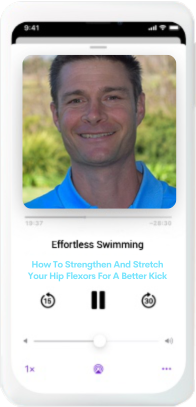
In this episode, Carl Reader, an expert in exercise physiology and Pilates, discusses exercises that can improve movement patterns for swimmers. He focuses on the modified squat, which enhances mobility and activates the hip flexors, and the sumo squat, which targets inner thigh muscles and aids in knee stabilization. Carl emphasizes the importance of addressing imbalances and discusses the electrical system of the body. Tune in to learn how to enhance your swimming performance through improved movement patterns.
More About Carl Reader:
website: https://carlreadercoaching.com/
email: [email protected]
In this episode
- 00:00 Introduction and Background
- 2:11 Modified Squat
- 4:53 Using Slant Boards and Rolled Mats for Better Squatting and Hip Flexor Activation
- 6:29 Sumo Squat
- 8:15 Understanding the Depth of Squats: Finding Comfort and Avoiding Back Strain
- 12:55 Common Movement Patterns in Swimmers
- 16:29 The Importance of Addressing Shoulder Imbalances in Swimming
- 19:49 Barefoot: Exploring the Connection Between Movement and Grounding
- 23:03 Muscle Warm-Up and Understanding the Body’s Electrical System
- 24:48 Why patience and dedication are important for building strength and mobility
- 26:01 Get in touch with Carl!
Today’s podcast episode is also sponsored by Skillest. Exclusively for our Effortless Swimming podcast listeners, you can receive a free course, ‘The Art of Triathlon Swimming,’ and an online analysis through the Skillest app.
https://effortlessswimming.com/skillestoffer
Links from this episode
- Change your technique and swim a smoother, easier freestyle with the Effortless Swimming membership
- Do you want to work with me personally to improve your technique? Join my swim technique coaching here
This podcast is brought to you by NanoClear — our own range of anti-fog swim goggles, designed by Effortless Swimming with the anti-fog treatment bonded into the lens itself (not sprayed on, so it doesn’t wear off after a few swims). Check out the NanoClear anti-fog swimming goggles here and use code PODCAST15 for 15% off.
Transcript
Read the full transcript
As I say to clients, we don’t want to like target one muscle because muscles, they all work together. There’s a relation. So the answer is not just releasing the hip flexors. So I do a lot of exercises where I have clients rotating onto left side, pushing from the right buttocks or glutes onto left side. And especially for swimmers with right shoulder pain. This is one of my go-to for programs. Welcome to the Effortless Swimming Podcast to show that help swimmers and triathletes love the water, become a better swimmer and live a better life. Here’s your host, Brenton Ford. Welcome to the Effortless Swimming Podcast. I have Carl Vrida back on the podcast. You’ve been on multiple times, Carl. Kind of our squat guru, movement guru. Today, I’d love to get stuck into a couple of exercises that you’ve been doing with clients that you’ve found to just help them much, much better with their movement patterns and just some things that you’re seeing
and some patterns that you’re seeing amongst swimmers and how we can essentially move better because that is a big factor with improving your swimming. So firstly, welcome back and what have you been working on? Yeah, Brent, thanks for having me back. It’s always good and as always, it’s great working with the swimmers and your members. And you know, you learn a lot as you work with the swimmers. You just start to see new nuances and exercises and what’s working and what’s not working and just tracking those results. It’s been really, really exciting and especially seeing the guys making significant improvements with shoulders and backs and even just getting their glutes or products activated. It’s all good. Yeah, so for those who don’t know me, I’m one of my things that I really focus on a lot was helping clients with doing the squats and we’ve got a course that we worked on together and that’s also the basics
of the introduction to how to squat correctly. But today, I’ve got two new exercises I wanted to take people through. And just to give a bit of history or just a bit of background is we talked about the last podcast that you remember this thing of like connection, electrical connection. And so basically the body, when you use your muscles, you’re generating electricity. And so just the same way is if you have wiring in your body that there’s a resistance or there’s a problem or break in the circuit then you don’t get that transfer of electricity and power. And so what we wanna do is use these exercises, especially the squats to try and get this, improve the connections with the body and we’ll touch on the different patterns later but that’s the basic behind what we wanna do today. And I met one of your clients, she came to our Thailand camp and she said she’d been working with you for quite a while and some of the, what you were doing
was watching her through Zoom, basically do some exercises and you’re able to just see where she was falling short in how she was doing the exercises and making some changes and now she’s really been able to get her, get her glutes working through a lot of her training. So with her running, cycling and swimming as well. And I mean, you hear it and you think well, you can just work your glutes, like just get it happening, but there’s often things that people are doing that’s not allowing them to fully use them. And then when they can, they can start to use them, it makes a huge, huge difference. One of the things you mentioned before the call was modified squat. So do you wanna take us through the modified squat, how you use it, who it’s good for and what is a modified squat for those that don’t know? Yeah, exactly. So for those of you that, the average swimmer is actually generally quite stiff in their lower back and in their upper thoracic spine
and we also find they’re very tight on the inner thigh and groin and hamstrings as well. So just the average guy or lady who’s working and so to perform a like a pretty functional squat requires a lot of mobility and that’s quite challenging for the average person. And so I found that when I was coaching the swimmers and you’re not always working with elite swimmers. And so this is why I developed this modified squat and it’s simply just raising the heels up about half an inch or one and a half centimeters depending on the clients and what we need. But by raising the heels, you take out the posterior, well the tension in the back of the body, the lower back, the calf and the hamstrings which are generally quite tight on the average person. And that allows them to really squat down deeper and put a lot less strain on the knees and they’re able to get into their hip flexes. And this is a key point here with this exercise brains
is that so many swimmers are trying to stretch out their hip flexes, it’s quite a common thing on Google, how do I stretch my hip flexes? And this exercise allows you to get down deep enough into the squat that it actually activates and strengthens the hip flexes. And then we see that actually has a huge powerful way to release the hip flexes. So one of the things that I’ve, it’s sort of like a mind shift is instead of trying to stretch the hip flexes, I’ve actually been trying to get my guys to really strengthen them. And this really helps them to get into it. So you basically just raising the heels. Now people often ask me, oh, but I’m going to be shorting my kiddies tendon by doing that. And I’ve always just said, so you’re doing this as a tool in the squatting, you’re not walking around with like a wedge in your shoes, you know, like keeping that would cause trouble. Yeah. And what are you getting them to use to raise it?
So you’ve got, you’ve got a few things. You can roll up a towel, right up your gym hats. You can actually buy these slant boards. You know, I don’t have people who’ve seen them in a gym that like slant boards you can stand on and you can vary the angle of the slant. The only problem I find with the slant boards is they often make them too narrow. So when it comes to squatting deep, but sometimes for the especially clients like over 50, 60, you need to have a little wider base. But just simply rolling up a mat and you can get that thickness to about an inch. Again, depending on what, what, what we desire result. I’ve done this myself as well. And it’s just much easier to get into, to some of those, those positions. And I’m probably not super tight through the hammies, but I’m certainly not really mobile with them either. And it just makes everything a whole lot, a whole lot easier. So you find that by doing that,
it just allows people to get to, to fire the hip flexors better, to use them better compared to when they’re not, not doing it. And it’s a great way to, as you get done deeper, you know, you can, you can maintain a better position in the lower back. So people often overcompensate and doing squats in the lower back. It’s, it’s the first thing that they, they seal. And the other thing they feel is their knees. So depending on their foot structure, so they got flat feet, that’s a problem because the knees kind of roll in too much. And if they’ve got these high arches, they, they don’t have enough internal rotation or all the, all the knees to move where they’re going deep. And then they get knee problems. So this is quite a simple tool just to use to get people to kind of navigate around all those, you know, those restrictions. Mm, yeah, I like it. And another one that you mentioned was the sumo squat. So from my understanding, that’s where their feet are
sort of wide outside the knees, wider than the knees. What’s the difference between this, the benefit, I guess, of doing the sumo squat compared to a normal squat? Or what’s the difference really? That’s a great question. So the, you know, we often think about what we want to do leg muscles, like the quadriceps of the thigh muscles, the hamstrings, the glutes, and those are like the main kind of guys that you want to work on. But the inner thigh muscles, which are known in medicine as adductive muscles, and they’re actually a huge, large group of like muscles on the inner thigh. And we often think of them just as being tight, you know, we want to stretch them out, but they, they’re pretty bulky muscles. And they are used to stabilize the knee in swimming or squatting or climbing stairs. In gym, if you remember those machines where you sit on your legs wide apart and you kind of pulled your legs together, they’d be called that adduction.
That’s the way to strengthen them in the gym, but you don’t really do that in real life. And they should kick in a soccer ball, but you’re not really kind of walking with your legs closing and opening like this. But they used to stabilize the knee. So with sumo squats with the wider stance, you’re getting into those muscles. You get, you’re activating those inner thigh muscles. And they’re very, very powerful again because when they’re activated, they help release the hip flexor muscles as well because they conjure, they work opposed to each other. And really, really brilliant to release the hips. And if clients have got tight hips, especially if you’re for swimming rest stroke or any swimming edge, if you want to improve that mobility, those squats are really, really, really good. And often is having them holding a catabal or a weight and just go down gently and just getting into those muscles. How deep should you be going on those squats?
That’s a great question. You need to go where you’re comfortable. And you also need to just be aware of any sort of tension in the back because sometimes, and this is where we get into those patterns, sometimes one side is tighter than the other side, often it’s tighter. So you’ve got to be careful where you’re going down too deep that you tend to gravitate into like the one side and strain your back. And that’s where the coaching comes in where we just kind of guide the people through the exercises, but you can go quite deep if you feel comfortable. Yeah. I’ve done the exercise where you’ll have a workout bench and it’s like a side plank and you’ve got your top leg resting on the bench and then you bring your bottom leg up off the ground, working the same muscles or similar muscles, is it? Before we dive into the rest of today’s podcast episode, this episode is proudly brought to you by Form Smart Swim Goggles.
They’ve been a long time sponsor of the podcast and they are my go-to goggles when it comes to tracking my training sessions and being able to see what’s happening in real time through the goggles. And we know swimming is a highly technical sport, but without the guidance of a coach on deck, identifying and addressing technique flaws can be a challenge. They’ve recently added a new feature to the goggles, Head Coach. And this addresses that problem head on. It gives them as improved access to their technique awareness, focus skill development and in-app education and analysis. Head Coach provides real-time visual coaching via the Form Smart Swim Goggles augmented reality display. During and after a swim, Head Coach provides swimmers with technique feedback using two types of metrics, Form Score and Head Coach Skills. Form Score is a measurement of overall swim efficiency ranging from zero to 100, defined by your pace and your stroke length.
Head Coach Skills encompasses five key areas that will help you identify where to focus on improving with your efficiency. Head roll, head pitch, set pacing, interval pacing and breathing time to neutral. And after completing a session, you can check back in on the Form App to track your progress. And Head Coach provides swimmers from beginner to expert with an unprecedented level of data-driven guidance and understanding, enabling you to boost your performance and your speed. Get your pair of Form Smart Swim Goggles today. Click the link in our podcast description or use the code Effortless on Checkout to get 15% off your Form Smart Swim Goggles. This podcast is also brought to you by Skillist, the ultimate digital coaching platform that’s making waves in the swimming world. Imagine having the opportunity to train with Olympic and World Champions like Kyle Chalmers, Ryan Murphy and Brent Hayden. Well, with Skillist, that dream is now a reality.
Swimmers, you now have the chance to work with the absolute best in the sport, gaining insights and guidance from these elite athletes like never before. And Skillist isn’t just your run-of-the-mill coaching platform, it’s a game changer. Here is what sets it apart. You can discuss training programs, receive detailed stroke analysis and even develop race strategies with these incredible athletes and coaches. It’s like having a personal coaching session with an Olympic champion right in your pocket. And excitingly, coaches from around the world can also tap into the power of Skillist. Coaches can use Skillist’s amazing tools to train their students, analyze videos and incredibly connective swimmers from across the world as well. So whether you are a swimmer or a coach, go to the App Store, download the Skillist app today. That’s S-K-I-L-L-E-S-T. Download the Skillist app today and get started. And only for our effortless swimming podcast listeners,
we’re giving away our Art of Triathlon course free as well as a technique analysis online through the Skillist app from me for free as well. Go to effortlesswimming.com forward slash Skillist offer or click the link in this podcast description. And you will get the Art of Triathlon swimming course for free as well as a technique analysis from me through the Skillist app. And now back to the podcast. First of all, thinking about from a functional point of view that we want to try to get as functional as we can. But that’s using the muscle as an adductor which is bringing the legs together. If you can imagine like you’re bringing that leg up to the bench together. But this we want to work like in an isometric or in a functional manner where the leg is actually grounded which is what you’re doing most throughout the life. And swimming is also stability but it’s also provides a lot of electrical energy in the system.
So when those muscles are not working or not effective it’s a huge drag or strain on the body again.
And is there, at clients that you’re not doing this with or is it something that you build up to? How would you normally integrate this into their program? Yeah, we first start with building up the quad strength and the glute strength through those modified squats or just general squatting and then we start to take them into the sumo squats so they can go wider apart and improve that mobility. Yeah, it’s a little bit more, it depends on what they’re looking for and what we’re looking, you know, on these pats which I’ll talk about now as well like if you want to target those muscles you need to have a pretty good or fairly good range of motion in the hips before you start doing sumo squats because it can cause compression and especially if you’re really tight there.
Yeah, makes sense. And now with the work that you’re doing with clients are there any patterns that are standing out to you when it comes to swimmers? So like movement patterns that they could improve on. Yeah, what are those common threads that you’re seeing amongst the swimmers where you look at and go, yeah, we need to work on this and this is going to help you in your swimming. Yeah, that’s a good question. So, you know, the average person again is like more right-handed than left-handed, you know, and so you see what I see is what we thought we sort of get stuck on the right side. It’s a pattern where people are over onto the right side so they were to stand and you asked them where did your weight feel? They tend to be more on the right side and the right hand’s more dominant in the things that we do. It’s also linked to the interesting brains in that your thought processes, so if you, someone who’s very analytical,
someone that worries a lot, thinks about things, strives hard, pushes, ambitious, over-ambitious, there’s nothing wrong with being ambitious but so that pushing too hard, which we find a lot of sportsmen and ninjas in general, that tends to get people onto the right side. Another interesting thing is the right diaphragm is bigger than the left diaphragm and it’s not that sort of design fault, it’s just that when people are over, even if they’re over-ambitious or just whatever it is, they tend to be pulling more on the right side so we see the left hip kind of pushing forward, which is then overactive left hip flexor and then they tend to get stuck, compressed ribs on the right. You can see as I’m even, if those are watching on YouTube, it kind of falls into the right shoulder, gets out of alignment, right jaw, it’s all the sort of ripple effects up the chain so the one of the ways to improve that is to get onto your left side
and so I do a lot of exercises where I have clients rotating onto left side, pushing from the right buttocks or glutes onto left side and especially for swimmers with right shoulder pain, this is one of my go-to for programs is like getting them back onto left side and it’s very, very effective. You will see that a lot of shoulder issues and especially when you sort out the rib cage, we talked about that, the thoracic spine, it really just, it’s such a simple way to just, it’s a simple way for swimmers to understand, you know, like too much on the one side. And is that conversely with someone who’s more left side dominant? It’s the same thing, right? You can see the same thing again, there’s a lot of factors that push you on so it could be an old injury so you might have hurt your knee and now you’re sitting onto one side so it’s not always the case that you are on the one side because it’s that big so it could be a compensation for injury
or problems that can be even just like bowel disturbances, you know, like problems in the stomach or like we talked about, the ways of thinking is a big thing or like I’m a golfer and so you know, you’re on the surface as well like yourself, you know, you’re always on the one pattern or I like to ride, you know, natural, like the front side way so I don’t like to go on the left. There’s just many things that can contribute to those things but often we find this right side of pattern is quite common, you know, compared to left side, yeah. I was at, I think it was in Thailand, I was looking at one of our swimmers and just from behind and his right shoulder was sitting barric and inch or two lower than his left one and just, I didn’t sort of dive into it but I do see that among a lot of people that it can be old injuries coming off a mountain bike, it could just be a dominance to one side but with a really big imbalance between
like just the height of the shoulders, it’s to me just really stood out. Then after, yeah. Yeah, what, I mean, there can be, as you said, a range of factors there but is that something that you see much of? Well, it’s this right side as you see this pattern that we pick up on and in fact, I’ve got quite a few clients and the membership, your swimming membership that are struggling with right shoulders, you know, so we’ve actually been kind of just like working on getting left, rotation left, pushing to the left, left on exercises and then then we go, once they feel their shoulder just really loosing up in the mobility, then we start to see streams on the right side but you’ve got to get your body in the right position before you do shoulder strengthening and then another key point for shoulders because that’s very common in swimmers as you know, the injury is that when you do shoulder rehab is to start with working your lower body first
and using squats because the squats actually are really powerful at generating electricity so they’re kind of like a reserve of electrons and then when you start to do shoulder exercises you feel super connected and you feel like the power’s coming from somewhere that you never had and so I give an example like if you start doing push-ups and you get to like 10, 11, you start feeling tired if you stop, then go do two sets of 10 squats suddenly you’re bashing out 30 or 20 and you feel really comfortable you might fatigue from lack of fitness but you don’t feel it’s coming because it’s heavy does that make sense? Hmm, is that a little bit like the Wim Hof breathing thing where have you seen that way kind of do this not hyperventilating but it’s like this intense breathing and then you do push-ups and you can do like double what you’re normally about to do in terms of the push-ups and it’s just, is it the same concept?
It’s probably working with the oxygen there’s an oxygen component there as well the release of oxygen into the body and then you’ve got like availability power like you said, yeah, right It’s really, I find it, you know it’s even my own personal training like for myself, like if I ever wanted the upper body I straight away go to my squats I really make sure I get that connection and then I go and do my shoulders so yeah, so that is that right shoulder I’ve got, there are obviously some of them their shoulder problems as well but we do see that as a big issue that right side of it it’s just also when you’re doing the programs and coaching, it’s just looking because a lot of people have got this idea of like they’ve got to do what they do on the left and it’s just to the right so they, you know, they want to balance their bodies but sometimes and often it’s actually working you know, reversing those as symmetries
and trying to get out of those patterns and you know, as I say to the clients we don’t want to like target one muscle because muscles they all work together there’s a relation so the answer is not just releasing the hip flexors now I use the strength in the hip flexors but in that I’m also working glutes I’m working hamstrings we, you know, we’ve got rotation so we’re trying to get this whole reverse the pattern is what I’m trying to say, yeah hmm, yeah and it’s the more you look into it the more you see it I think with people as well and especially for you with a trained eye it’s something that you can probably pick up pretty quickly when you’re watching people as well and I mean, I imagine you probably walk down to the supermarket and you’re watching people walk and seeing how they move as well you know, like when I go to the swimming pool as your right shoulder hurts yeah, it’s hard to know, you know yeah one of the key things we do is just have them standing barefoot
and that’s usually a dead giveaway you can see where the pressure on the feet that tells you where the weight is I’m not sure if you, do you walk barefoot or are you familiar with this whole grounding everything affects as well because I’m a big into that electrical being so like actually training doing a lot of the squats and everything bare feet and not doing it in trainers makes a big difference as well so like if you wear like whatever shoe you’re training you wear you’ve got these big thick soles and you just, you can kind of get the muscles to activate but if you take your shoes off and do the same exercise it’s amazing how much more activation you get through the body I had, you have heard that I, I’d say when I go to the gym I’ve got just sort of runners on but outside of that, I mean I’m generally just barefoot at home but I’d say not doing a lot of yeah strength stuff in bare feet at the moment I’d say
Okay, it seems to be to go out on the side on the grass so and do like a single leg lunge or you know like a squat and then put your trainers back on or go and gym and you’ll feel the difference it’s actually quite, quite substantial, significant Yeah right Just when you’re going to gym barefoot but there’s something in like especially because I’m on that whole electrical I’m really passionate about this whole electrical beings that we are like electrical, you know we literally like the muscles like that you packs and like I do quite a lot of trail running and when I run with my trail running shoes I never feel comfortable but it’s never should get any pair of shoes but the thing is it’s when I run barefoot it’s I just, it’s just I mean they’ve got these minimalistic shoes as well which is quite popular but there’s something to be said about being barefoot on the ground, yeah Hmm, yeah, what got you interested in that
that side of things?
I think for me was this whole idea of like how come when I do my squats I feel so much stronger in the upper body like what has just changed like how do I go from doing six push-ups or seven push-ups and feeling tired and then I go and do 20 squats which are nothing related to the upper body and then I can just go and do like I have to feel so light to talk about the last podcast about movements that feel light like I feel like, I feel like really 60, 70% lighter I feel like I’m just like bench pressing like five kgs Now, what changed? I mean, like how did it go from feeling like I’m bench pressing 100 kgs to bench pressing five it might be exaggerating, bench pressing 20 kgs it’s just something’s changed and that was where the electricity came and I’m getting power from somewhere like something has changed or resistance hasn’t proved there’s no ways I’ve warmed up my own muscles so that started me and then I did a lot of research on muscles
and the electricity of the heart, the brain and the back like ADP, are you familiar with ADP, ATP? Sorry, ATP like the in mitochondria now mitochondria, that’s the actual energy so when you use that ATP, you’re releasing electrons then through the crevicycle, through the fatty acids then you recharge ADP back up into ATP so you’re recharging as mitochondrial and that’s actually the electrical system and so that’s why you have fatigue or drop we talk about a drop in voltage so yeah, it’s this whole connection that’s been very, very fascinating Yeah, interesting, there you go I’ll have to look into that more because I don’t really know anything much about apart from when you mentioned it on the last podcast and to finish up here, is there anything anything we haven’t covered that you think we should have or any last pieces of wisdom for people listening to the episode? No, that’s pretty much it, I think the last thing
just always weaving, progressing slowly not trying to like, it progressed too quickly I guess it’s the same as swimming or anything, any sport running just with the exercises, just really make sure you’re dialed in, you feel the muscles you wanna work, you’re not trying to just go through a program and get on with it and then go back to work or you just be intentional and have a good body awareness of what’s working and also that’s what the coaching helps you mean like this is a thing on Zoom we can see a lot when I work with the clients even if it’s just a one-stop session or if it’s personal training for a couple of weeks just to get the muscles, having someone that you can talk back to and say this is what you’re feeling or not feeling makes a big difference. Yeah, definitely, I mean that steady build up and that patience, people who are willing to commit to either better mobility or increasing their strength over a minimum
six months, 12 months, this stuff will take time and for me it’s really taken, I’d say 12 months of consistent strength training to really feel like I’m a lot more solid, a lot more unbreakable and that first 12 months after that first 12 months, the next six months after that I feel like I can really make some good gains and I’ve got that a strong foundation so it really just takes time and consistency and every expert that I talked to on the podcast they always talk about consistency. It’s like that’s number one. That is the secret to success, it’s just showing up and doing it consistently at a couple of times a week. And that’s one of those products that they could know when you book sessions, you commit it to doing it. I mean it’s so hard, it’s so easy to drop your exercises like sometimes you wake up in the morning and you just don’t feel like doing anything or you. So having a coach helps that consistency.
If it’s once a month or whatever, just check in. It helps with consistency. Where can people get in touch with you to either book a session or see how they can work with you? Yes, so my online is called readercoaching.com and it’s called in a C and I can reach out to my email address is called wellness at gmail.com. Terrific, we’ll put those in the show notes as well. Kyle, thanks for jumping back on the podcast. I think it’s episode number four or five we’ve had to get, if not more. So I appreciate you being on the podcast and working with the athletes in the membership and people who listen to this podcast. As I said, got to meet Claire in Thailand who I think you’ve got another session with today which is terrific. So yeah, I appreciate all of that. So thanks for being on the podcast. Thanks, Brian, always a pleasure, keep well. Thanks for listening to the Effortless Swimming podcast. If you’d like us to help you become a faster,
more efficient swimmer, go to www.effortlesswimming.com.