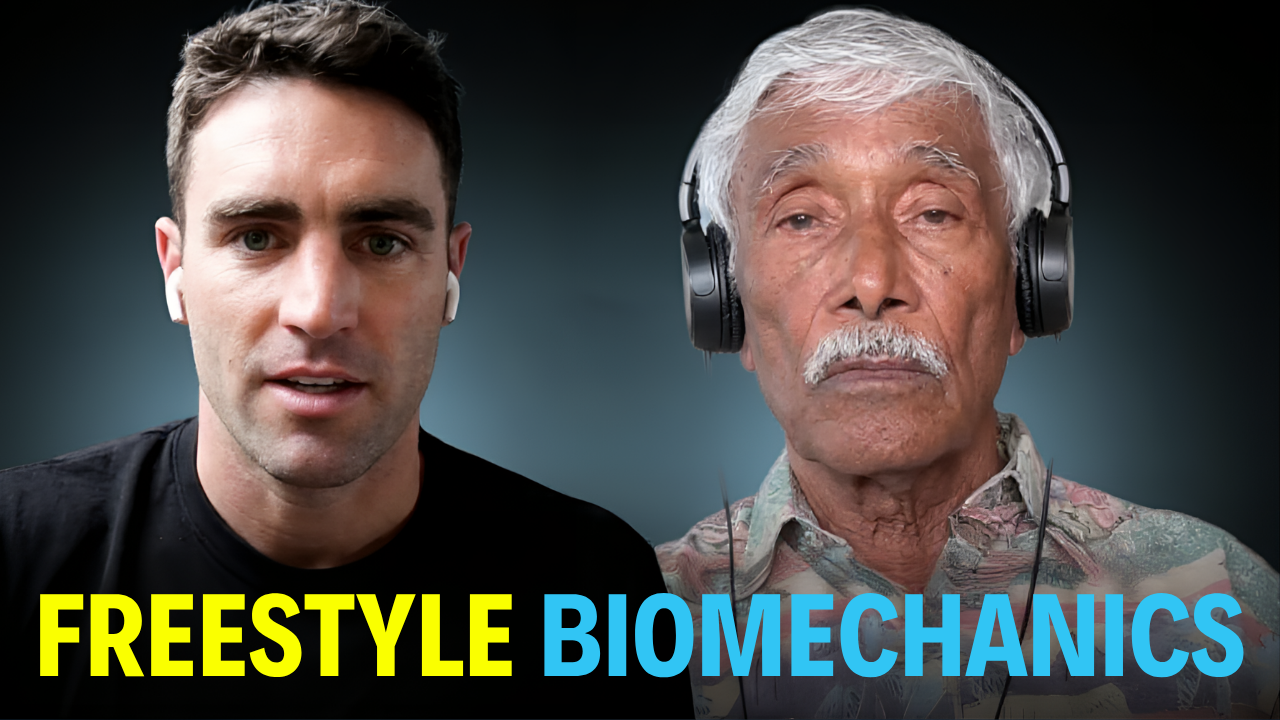








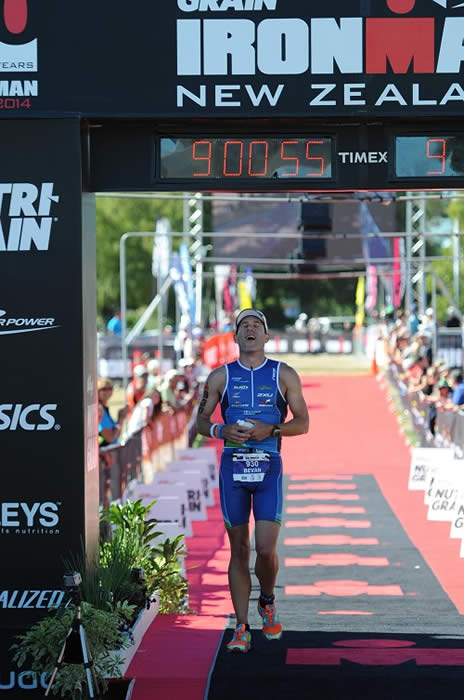
 Bevan McKinnon is an elite level triathlete, a triathlon coach and co-host at Fitter Radio – a podcast that features professional triathletes and triathlon coaches.
I had a chance to be featured on his July 13 podcast episode alongside Mirinda Carfrae’s coach Siri Lindley.
03:16 – Why coaches are always ‘switched on’
05:07 – About being self-taught and being in the minority…
05:36 – Is it the most technical sport of the three?
06:25 – There is no one-size fits all stroke
08:14 – The characteristics of a competent freestyler
09:18 – Unlearn what you’ve learned.
09:50 – It’s like building a house…
11:23 – The Fight or Flight Response
14:30 – The Importance of Empty Lungs
16:00 – How To Deal With Nerves Before a race
16:32 – Tumble-Turn, Disorientation and Resurrection
18:45 – Mindfulness, Meditation and Tapping
30:04 – The clueless Youtube critic
30:45 – Bevan’s Games, Exercises and Challenges for His Swim Squad
34:12 – The Importance of Knowing Your Swimmers
To follow Bevan and his work, visit www.fitter.co.nz
Effortless Swimming Hell Week applications are still open!
Transcript
Read the full transcript
Welcome to Effortless Swimming, the podcast for swimmers, triathletes and coaches. Join Australian swim coach, Brenton Ford, as he reveals the latest techniques and information to improve your swimming. Let’s dive right in. Welcome to the Effortless Swimming podcast. Today’s guest is Bevan McKinnon, who is an elite level triathlete. He’s also a triathlon coach who is the co-host at FIDA Radio, which is a podcast that features professional triathletes and triathlon coaches. I first got introduced to Bevan a couple of weeks ago because I was featured on his podcast last week and had a really good time talking to him. He’s a genuine guy, he’s a Kiwi and had a really good time just chatting with him on the podcast. I like the way he thinks about approaching the swim leg and that’s what we talk about today. A couple of ways that you can improve your swimming and a few different ways to think about how you go about improving.
Also, just overcoming any fears or anxiety that you might have with the water. If you’re a triathlete and you’re wanting to improve your swim leg, this is a really good podcast to listen to. Before we get into the conversation, applications are still open to the Effortless Swimming Hell Week, which is a week-long camp that we hold in October. It’s at the Tanyapura Sports Resort in Phuket, Thailand. This is the second time we’re running the camp. Basically, if you love to train hard and you want to improve your swimming, this is where you need to be. We train twice a day in the water and you have everything taken care of. You’ve got your accommodation sorted, you’ve got your food sorted, you’ve got your rest and recovery time there. You also have the coaching and the training sessions there where we work one-on-one with you very closely to improve your stroke. We look at where you can find some opportunities for more speed.
We also go into your open water skills and we also go into fitness because the training sessions are very challenging. But if you’re a triathlete or if you’re a swimmer or an open water swimmer who is looking for a challenging week where you want to get fit and ramp up your fitness for the Australian or New Zealand summer or if you’re just looking to train hard into the American winter, then this is a good camp to attend. So you can find out more details at effortlesswimming.com forward slash howl week. And I’d love to see you in Tanya Pura in October where we can improve your swimming and have a really good time as well. So here we go. This is a conversation that Beb and I had about getting the most out of your swimming. I’ve been doing this about 10 plus years seriously but as I say, I’ve had a few different jobs but this is by far the most satisfying. I think that’s what keeps coaching interesting is just a real curiosity as to how you can help someone improve
and looking at certain problems that someone might have or something that they’re doing with their stroke and just wanting to figure out the best way to help them solve it. And that’s what keeps me coming back is I just love not only helping people but just figuring those things out. It’s a real type of problem solving and I kind of think that in a way coaching is almost harder than being an athlete. Obviously not in a physical sense but just in terms of you’ve always got to be switched on to think about what your athletes are doing and how you can change or how you can structure their training to help them get the most out of themselves. Yeah definitely and look I mean I’ll put my hand up straight away and go the only thing I can coach is freestyle technique for open water triathlon swimming. What I took was my intuitive nature and taught myself everything I could about freestyle swimming. Don’t ask me to teach you breaststroke, butterfly, backstroke or anything like that
but I looked at the freestyle stroke and I think I looked at what constitutes open water swimming and I started to realise very early on when I was working as a swim coach that there was a difference and we spoke about this when we interviewed you for our podcast and I realised that I actually probably had a greater understanding of the open water swim mechanics and what the requirements was because I’d done it. And then I looked at what was being taught in swimming lessons and one-on-ones by people that had learnt freestyle in a pool-based setting and realised that there was a gap and so I started to try and find out how to fill that gap and what kind of technical changes you needed to do to make yourself into a better open water swimmer. So that was a real challenge and it still is a challenge to this day because you look at swimmers I’m lucky I mean I would be on a very small, I think twice I’ve broken 50 minutes for an Ironman swim
I think the first time it was 49 minutes and 59 seconds and I could have kissed every single supporter when I got to the beach that day but there’s not many people who come from no formal swimming background I am completely and utterly self-taught but I am in the very, very small minority and I realise that if you’re an adult swimmer who doesn’t have a formal swimming background then not one size fits all, you’ve got to really, really think as a coach as to what their faults are, how to address them, how to build that stroke what are the major areas and the bigger picture sort of changes you have to make and so of the skill set of triathlon swimming is the most technical by far and so it’s a really, really challenging area being a triathlon coach and I feel I had to as a triathlon coach be able to coach that discipline I don’t feel you’re a triathlon coach if you can’t technically coach the swim as much as you can the bike and run
I think you’re just a programme writer if you can’t technically coach all disciplines in terms of the movement and everything that goes on with it so it was a challenge for me and it was sort of a challenge I set but one that I really enjoyed understanding the more that I watched and the more that I experimented and the more that I professionally developed myself Yeah, and there’s no one size fits all stroke for every person and even let’s say an athlete’s got, there’s two athletes who swim very similar the same approach to helping them progress may not work with both athletes so it really comes down to the individual athlete and sometimes just with the technical side of things especially someone who doesn’t come from that swimming background they need to constantly think about just the basics whether it’s making sure they’re not holding their breath or making sure their posture or their body position is correct
because I mean I’ve entered Ironman next year and coming from basically no bike riding background I just find myself slipping into my default position on the bike where the shoulders or the arms are sort of rigid they’re not relaxed and I’m not sure not knowing what I had to focus on with that and then get a couple of tips and just a couple of things to think about in terms of posture there on the bike and it’s made such a difference already so as the coach you just really need to keep reminding people about what, you know, one of the two or three things that is going to help that person, you know, progress to that next level and it can just be very basic things because they don’t know them or they just, you know, can forget them pretty easily. Yeah, the conversation, if I had a dollar for every time I’d actually said this to an adult swimmer is we need to probably break your stroke back down to basics and actually change everything that you do
now I don’t mean that that we are going to but I’m trying to explain to them that what they’ve actually done is that they’ve sat on the side of the pool and they’ve watched freestyle swimming now a competent freestyler has learnt nearly every aspect of that particular stroke in isolation and then the sequence that it fits together in over thousands and thousands of hours and millions and millions of lengths no competent adult swimmer who’s been through the youth development of swimming just jumped in the pool and had that magic technique straight away it’s a taught sport, it’s a technical sport it’s learnt in a series of patterns and movements that all build on each development phase but adult swimmers sit on the side of the pool and say well how hard can this be? You know, you swing the arms around you turn your head to breathe you kick like a maniac and you just throw it all into the pot at the same time and we have that happening
and so body alignment is poor body position is poor rotation is poor over rotation is emphasized the catch is wrong, the recovery is wrong and you’re like well actually you’ve got to sort of unlearn what you’ve learnt and we’ll start from the very basics again and you can only focus on one or two things at a time everyone wants to come from a swimming lesson and go well you only worked on body position today and I said well if I gave you something to think about on your catch, the other catch happens maybe 60 times a length you have to think of that and remind yourself and be in control of it 60 times a length if you’re worrying about your body position you’re never going to remind yourself about your catch so it’s a building block and you really have to really educate swimmers and adult swimmers about that I see it as kind of like building a house you need to have the foundation or the base down first and you can start putting up the structure
and the walls and then the roof and then you can start to furnish the house and it’s got to go step by step especially in our Art of Triathlon swimming program or the clinics that we run we always just start with breathing and being relaxed and even though it’s a very basic concept you’ll see kids who have learned to swim lessons singing songs and blowing bubbles on the water and we don’t quite go that far but it’s very similar to how you teach someone to swim as a child starting with that sort of thing and then we look at body position and just making sure that they’re horizontal in the water and then you can start to progress to the breathing and recovery and eventually get to the pool and those things take months to develop but yeah you’re right it’s just about those building blocks you can’t just go into someone who doesn’t have much background in swimming and just say you need to fix this part with your pool
if their body position is crap in the water Yeah and also I think what you’ll find is especially because with the popularity of Triathlon and open water swimming now here in New Zealand we have a huge open water swimming series that goes around the country you know there are people out there that are you know when you ask them what their sport is it’s actually open water swimming that’s what they’re training for but the thing about an adult learning to swim is that we very rarely get ourselves outside the comfort zone where the fight or flight response is real you know we are very cautious as adults however we are acutely aware as adults that if we’re a non-swimmer that we could die and that comes into the mindset of most adult swimmers without them even knowing it and so you’re right breathing or the inability to breathe or actually the inability to exhale comfortably into the water they can do the breathing in
but they can’t do the breathing out and then all of a sudden after about a length they’re hyperventilating because there’s been no exhalation they’re just trying to put more fresh air in on top of a lung exhaled any air and then body position changes and a lot of other things are happening and they actually think that it’s a technical issue from the stroke mechanic side of things when quite frankly it’s the fact that they’ll never be able to swim no matter how good their technique is because they can’t get petrol into the engine and it’s exactly the same if you run for 100 metres and you hold your breath for 5 or 6 seconds the exact same thing is going to happen you’re going to be gasping for air because you’re so out of breath and you’re not even in the water times out by 10 when you’re in the water and you’re not comfortable there so just the breathing is such a huge thing and also the tension that comes with it
I mean I always look at a swimmer’s upper shoulder and the musculature and around the neck and so forth and you can see it’s bunched up you can see that the tight and the chest is tight and the other thing about that affecting the body position is that it becomes a chest breath rather than a diaphragmatic breath and so the area where buoyancy would be best served which is to get it into the lower lung and put some buoyancy in and around the torso or the lower torso to help the hips come up a little bit that’s another factor I know a lot of athletes really struggle with the ability to take a diaphragmatic breath over just a sort of a short sharp tense chest breath so that when that happens I do a lot of snorkel work with some of our swimmers because a lot of them actually also struggle to use a swim snorkel because they’re still really hyper aware of getting comfortable enough to actually breathe out when their face is in the water
they have that fight or flight response so one of the areas I get them to do is just some gentle kicking drills working on body position and relaxing the neck and shoulders but using a swim snorkel they can actually become more comfortable with having their face in the water knowing that there’s no problems with breathing they just have to focus on the fact that they want to let the neck relax the shoulders relax and that they can just breathe easily in and out of the snorkel so that’s one of the ways that I start to address that that’s good and something similar that we do at the start of our clinics is just having the swimmers gradually exhale completely and let the lungs be empty for five to ten seconds and just let them sink down to the bottom of the pool if they’re a sinker or they might end up floating but just getting comfortable having empty lungs and not panicking so when they go to take a breath like you were saying before
if they’ve still got a lung half full of air and they go to take another breath that’s when you start to get fatigued and you start to panic so just getting used to exhaling fully and being relaxed that way just like that normal breathing with a snorkel is just a really good way for beginner swimmers to to cope with that sort of thing in the water yeah absolutely because it’s also an adult swimmer trying to transition from pool swimming to sea swimming is another dynamic all together and if they’re struggling to exhale in a pool in a nice gentle environment they’ll have even greater difficulty once they go out into the big wide open water with other swimmers and the extra tension that comes with that so if the pool is the place they need to master it first and foremost and sink down drills like the one you mentioned and like I say snorkel drills as well they’re all ways of just saying there’s nothing technical we’re doing here
other than just teaching you a sense of calmness and your ability to exhale into the water and what other sorts of strategies you use with your athletes to help them to deal with nerves before they’re racing or even just before they go for an open water swim one of the things I do for a lot of our swimmers and it’s one of the things that I would love to say that this has been something that I’ve done over the years but I think also that from a pool based swimming position I noticed that a lot of our swimmers will really struggle with just even performing or attempting a tumble turn so one of the first things that I’ve sort of been saying at the beginning of our winter period over here in New Zealand is that I want everyone in my squad to be able to perform a tumble turn now initially they were saying well you know is that just to make us faster you know what’s your rationale behind that and I said no it’s actually to
for those people who don’t do it at the moment I want you on every single length to experience that sense of disorientation under the water and pushing off the wall and resurrecting your swimming stroke from that position I know it sounds you know a bit traumatic when I refer to it like that but for those people that are really disoriented when they perform a tumble turn that’s similar to being out in the open water and if they get dunked or they get you know swam over the top of that can be the end of someone’s race and I’m sort of saying okay well we actually get an opportunity in a very safe environment to perform a tumble turn now I’m not looking for the best tumble turn in terms of streamline off the wall in the fastest you know sort of exit from each end I’m actually just looking for you to get more and more use to being disoriented tumbling over, exhaling and getting back into swimming again so for the really novice swimmer
that’s one of the first places that I start there because I feel it is a place that we can at least simulate something that happens in the open water it’s really difficult it’s you know if you go to any Iron Man or half Iron Man swim start you will see a look of terror on the faces of a lot of the unsure swimmers and you can have done as much open water swim training as you’d like you can have tried to do things in the pool by getting multiple people in the same lane and having them jump off each other as they go up and down the length but in reality on race day you’ve got not only race nerves and anxiety and the pressure you’ve also got a very unsure swimmer who knows that it’s the area of weakness and so I actually step away from that and one of the practices that I try to get some of my athletes who are receptive to this to actually undertake is that we use some either some breathing strategies some mindfulness some meditation practices
but probably one of the things that I’ve used myself over the years just from calming it’s not that I have open water swim nerves because it’s probably one of the things that I have the least but just from an area presenting yourself on race day in the calmest state possible is I use a technique called tapping which is a manual tapping on the meridian lines that we have as acupuncture so I gently tap with my thumb on the inside of the trigger points from the acupuncture sites on the inside of my fingers and that’s another sort of an eastern practice but it’s a very good stress reliever and it’s a way of trying to just bring some calm to the body before they actually get into that situation that’s going to be anything less than calm so it is hard because you’re dealing with the fight or flight mechanism and as much as we can try to simulate that in training you’re also always going to have the fact that on race day exponentially there’s
hundreds of more people and there’s also the pressure of race expectations going into the mix as well so it’s as much as you could try to simulate that in a workout it’s sometimes very difficult to do and I use some other strategies just to try to bring the athlete back down to ground calm them detoxify the situation and so sometimes we use some mindfulness or breathing practices or maybe something like this tapping method that I use as well Yeah and as airy-fairy as that stuff sounds it works really well just the breathing calming yourself down I mean I have my guys do something very similar and it’s just getting the heart rate down and getting them to nerves are good to a certain extent you don’t want someone to go over the top and forget what they’re there for but just the long slow breaths and breathing in through the nose out through the mouth just a really good way to get someone to calm down and just kind of be present instead
of worrying about what’s to come so it can’t be underestimated how important just the breathing is No absolutely and I mean I’m talking primarily from the people I deal with who are always entering majority of them are doing long distance triathlon and if you think of the pressure of even trying to finish an Iron Man with a race cut off that adds an extra anxiety to the situation and then most of the races that are Iron Man are going to be the biggest fields of athletes that people have ever raced in so that again that’s very difficult to simulate and that in its own ride has its own anxieties so there are a few things that are outside the pure technical element of swimming that you just can’t teach for so you have to think of probably some other strategies that help just bring just lower the quarters old levels and bring the body back to a state of relaxation or as close to it as you can get What are some good swims that you’ve had in your events
and comparing them to some bad swims? What’s been the difference between having a good and a bad swim for you? I think if you’re really ambitious and you really want to do well there’s one part of a long distance triathlon that nobody paces and that’s probably the first 400 meters of a swim as much as every physiologist out there will say you want to start at the pace that you intend to go for the rest of the day. There’s a lot of getting the nerves out of the system that occur in that first 400 meters of a swim and I also believe that depending on your aspirations it’s potentially the most vital part of the swim. Your ability to get from a let’s say you’re in a deep water start get off the line. The first sort of 50 to 100 strokes is pretty important but at the same time you really have to be very aware at that particular period because what you’ll find is with the really elite swimmers there might be let’s say half a dozen
of them in the race that are really going to lead off the front and then there will be a stream of athletes following in behind those feet and at that particular time being able to sight left and right to make some decisive decisions as to which group you’re going to go with that’s pretty important and also in training if you are have some aspirations of being able to swim with some real effort during whatever race that you’re in that first 4 to 600 meters is important but you need to be able to deal with the lactate that builds up in that particular period and then also clear it whilst you’re settling back into what is your predicted race intensity so your training has to prepare you for that as well so in some of the sessions that I do, I’ve stolen from a Chris McCormick workout before you know where you might do 4 to 6 50’s on maximum effort and go straight into 2 to 200’s at predicted race pace so you really sort of get that
high arm turnover to start with deal with the lactate that builds up quite quickly if you have short rests between the 50’s but then also be able to go straight into those 2 by 200’s or whatever you’re going to swim and maintain sort of race intensity because I think that’s pretty important as well so there’s a technical element to it, there’s a mental element to it in terms of being able to be aware of where you’re in the group and what feet you’re following and are they the right feet and that comes from being able to sight and then there’s also a physical conditioning component to it as well you know have you prepared yourself for that kind of start to a race so when I’ve got that right I’ve tended to have great swims and the thing about triathlon is that that first 4 to 600 meters is crazy and then it seems that for me the rest of the 3200 meters in the race is relatively easy because if I’ve got into the right group
I’ll never be leading that group but after that the toe is you know the draft is awesome and at times I’ve thought you know maybe I made the wrong decision because it seems that the group’s going so badly but I’ve actually made the right decision it’s just that I’m in the right group and whilst I’m drafting really effectively off them and that’s another key element to it is being able to hold the draft. I’ve had great swim times. And that’s the thing sometimes you can be swimming with a faster group than what you’d be able to swim with if you were just pacing next to them but you know and it might end up feeling slow when you’re actually with them just because of that draft it can be an extra 30% easier or more efficient. Easily I’ve had what I thought at the last two New Zealand Ironmans you know I have really commit to the first 4 to 600 meters it’s served me well not last Ironman the Ironman before I was sat at the back of the group and thinking well it’s
not a particularly big group and I sort of had a couple of looks further forward to see what I could see and I thought well there’s not many people in front of us so it should be the right group but this is just way too easy and at times I was like I could swim in a water polo fashion you know the draft was just so significant you know I had my head up I’m looking around thinking this is ridiculous this is just it’s way too easy and then I thought well okay I’ll pull out and I’ll see if I can go to the front of the group well the moment I pulled out I nearly fell out of the draft so I went no that’s good I’ll just stick back here yeah when you get the draft right it just feels so good it feels like you’re right in a wave in Peter Pub which is the biggest swim in Victoria here for the summer there’s I think there’s 4 or 5,000 competitors in a couple of different waves but they’ve got the should be fish category so it’s normally the top 20 or 30 guys
and the top 20 girls so they all go off together and I knew there was a guy who is a little bit faster than me and definitely I couldn’t pace next swim but I knew that I’d be able to sit in his draft and hopefully he’d take me all the way home and he’d gotten on the podium the year before so I found him in the lineup going to start and I sat right next swim and the gun went off and for the first probably 300 meters I was right on his hip and my stroke rate was like a 70 it was pretty slow and I was just feeling really good just riding right next to him I wasn’t concentrating and he went for it and I missed his break and that was it then I just had to wait for the pack to catch up then I just kind of jumped on the side of that because once you lose it it’s pretty hard to get it back and look I mean the Ironman this year in Taupo a different story same sort of start for me and point of fact I probably got an even better start
and then on the back of the group and the group I was just sort of yo-yoing off because it wasn’t down to intensity it was lack of concentration I would get in right behind the feet and I’d think this is good and then I’d be thinking about something else and what was going to happen later in the day and then they would move just to the left a little bit and I’d be just off the the wake and then you know I sort of was giving myself a hard time thinking just concentrate concentrate because I probably had to put in four to six really decent surges over the back half of the race because I’d lost the feet and I’d lost the feet because of concentration rather than you know my ability to swim at that intensity in the draft and so that’s something that you need to be really aware of because like you say if that had become maybe three or four meters and I’d actually dropped out of the draft I mean the reason I was in the draft is those guys were better swimmers in me
and but not when I was right on their feet you know if they take off then I’m gone and I’m on my own having to do all the work yeah and it just takes a moment of lapse of concentration and that is that’s it you know you’ve really just got to stay on the ball the whole time if you can and that can be hard over a 50-60 minute swim. Yeah that’s the thing it’s the duration of the Ironman Swimmers you’re trying to distract yourself you shouldn’t be but lucky for Lake Talbot such a beautiful swim they’ve got a par three mini-putt thing where there’s golf balls on the bottom of the lake and you’re looking around for those because that sort of signifies how far into the swim you are
and you’re looking for them on the way back as well so I mean other than that you just need to be on the ball a bit more Yeah exactly actually when I first started Effortless Swimming I was making videos and putting them out on YouTube so people could watch them I made one on drafting and how to do it and why to do it and why it’s important and I had someone email me and say that’s ridiculous drafting is cheating and you’re not allowed to do it and if you do it’s unsportsmanlike and you’re cheating and so you’ve just got to you know I don’t know what sort of comments you get sometimes with your podcast or whatever but you just cannot listen to everyone you think oh my god where’s this person coming from Yeah I mean the other thing you have to ask that person is they’re probably the 47 minute swimmer at Ironman Yeah the one who was dragging the other 10 swimmers along Exactly Oh that’s funny what sort of games or exercises
or challenges do you do with your swim squad I mean I’m just thinking with the our swim squad you want to mix things up sometimes and it’s good to throw something a bit different in the mix just to get them thinking about what they’re doing but also just to keep them engaged and another way to teach them a certain aspect of the stroke so is there any sort of exercises or things that you’ll do with your guys to mix things up a bit Absolutely the relays, single length relays in the team It’s a way to get them working hard isn’t it That would be the hardest they’ve ever swum in their lives because over 25 meters some people can potentially paper over their technical deficiencies by just ballistic energy sort of evens the pack out of fraction and so we do find that if we put the squads into two lanes and it’s a single length and it’s the furthest that the two teams can actually make in say a 10 minute period which may mean that
if I’ve selected the teams closely enough which I tend to be quite good at doing it’s pretty much neck and neck the entire way so they might end up doing 10 or 15 maximal 25 meter sprints and they basically have only just recovered before they get to go again but in saying that it’s incredible once competition comes into it how hard someone’s prepared to work and we get a really beneficial session from it in a fun way and I sort of do a similar thing with a continuous swim where it’s taking a bit from the principles of running with the fart leg training where on the whistle they have to change pace and so we have sort of medium, moderately hard and mad and every time they hear the whistle for the period that they hear the whistle until they hear it again they have to swim in that order either medium, moderately hard or mad and so that’s another way of distracting them from what they’re actually doing yeah that’s good I like that
and you know people just work so much harder when they’re up against someone who they know they’ve got a beat and I do something similar when we do our sprint sessions we normally do a lot of timed 50s and sometimes 25s and I’ll make sure I pair up the lanes so that each person is going to get someone about their speed and on the last one or the last couple I’ll get them to give me their goal time so they’ve got to tell me what time they’re going to go for and then I think something just happens where they think about what they have to do in order to hit that time and I even just give them give them a bit of shit halfway through the session where there might be a swimmer who’s going 30s like last night for example there’s a swimmer who is going 31 for his 50 fly and he hadn’t gone 29 for 50 fly for say probably a year or two but he was looking really good swimming really well so I thought all right the best way to get him
to do that is to just to stir him up a bit halfway through the session and say I can feel a 29 coming on you know I know what you’ve got and then he talks himself down and he’s not today I’m not feeling well so I haven’t got to be me and then what do you know the last one is 29 oh so almost 28 and I just I enjoy those sorts of ways that you can get more out of your swimmers just by knowing who they are and knowing what drives them either telling someone that they can’t do something which can fire them up or if you’ve got a different kind of swimmer sometimes it can be telling them that they can do it yeah absolutely now it’s a good team dynamic that swimming doesn’t always have absolutely and that’s what really builds you know swim squads is just having a few people who know each other and know the kinds of things that they’re training for and just getting that group interaction because a lot of times they’re just swimming and they can’t chat
whereas on the bike and the run they’ve got that interaction but as best as you can build that into the session people enjoy it more and you know they’re not going to lose out if they’re swimming 200 or 300 meters less for a session just because you’re talking to them more or you’re creating this team dynamic so Ben thanks so much for being on the podcast I’ve really enjoyed a lot of the things you’ve shared especially when it comes to open water swimming and some of the things that you have your guys go through just to help them relax and calm the nerves as well as just getting people to work harder and push themselves in training and it’s been great to have you on where can people find out more about the sessions you run and also if you want to talk about your podcast yeah well I mean we were lucky enough to have you on last week which was really well received and you gave some great insights from your perspective about swimming
on our Fitter Radio podcast so anyone can go to iTunes or Stitcher and look up Fitter Radio or they can go to Fitter the website www.fitter.co.nz and you’ll see our coaching services and also the swim squads that we run off the back of those so yeah Brendan always good to have a chat to you mate