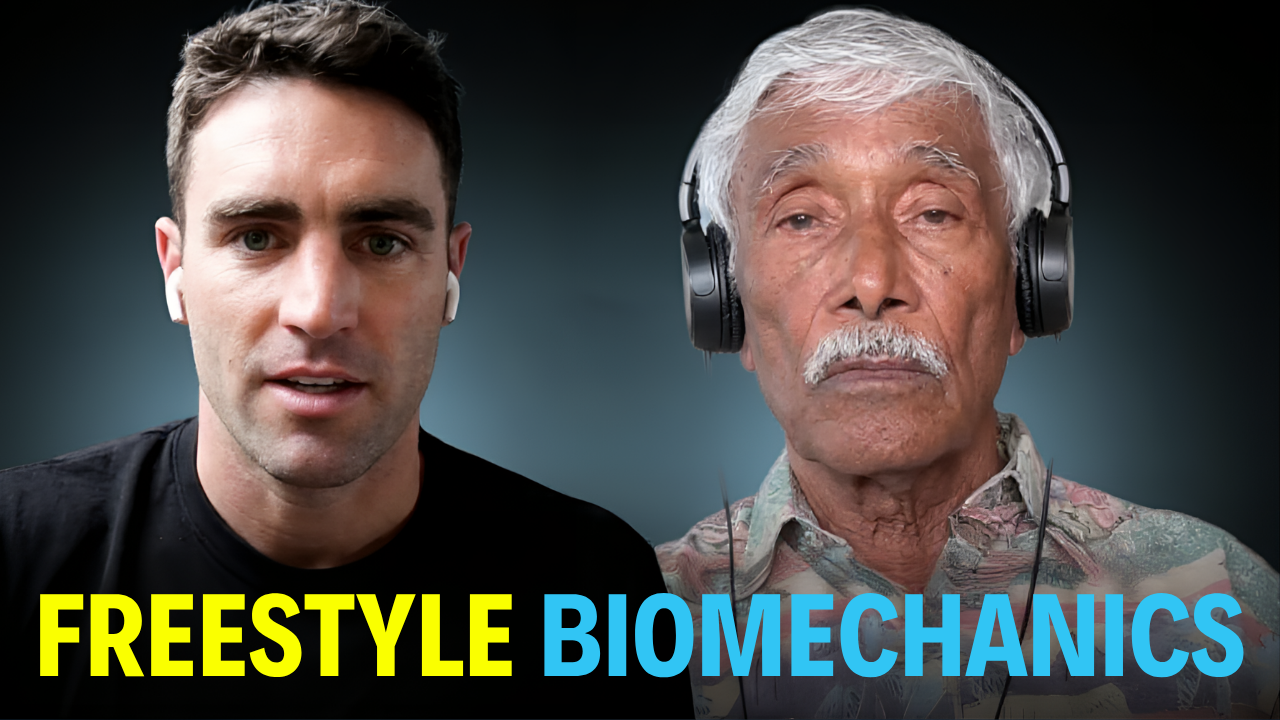








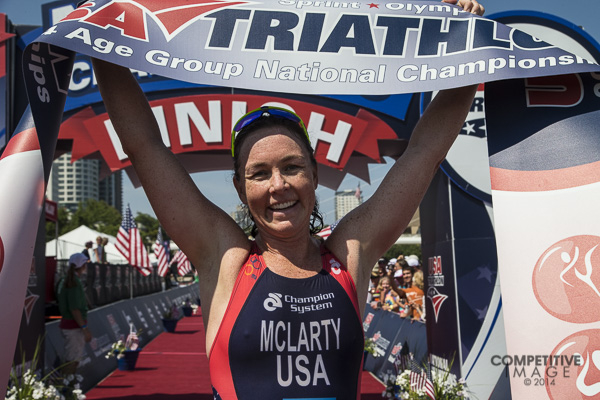
 In this episode of the Effortless Swimming Podcast, we have Sara McLarty. She is a professional triathlete and a swimming coach based in Clermont, Florida.
We’ll talk about how to become a better swimmer by making adjustments to your strokes and technique coming from the pool into the open water.
In December, I’ll be with Sara running the swim section at the Triathlon Research Camp in Florida with Gwen Jorgensen (one of the most successful WTS triathletes of all time) and her coach Jamie Turner.
To know more about this camp, go to TriathlonResearch.org
01:30 – The Problem with Stroke Rate
03:07 – From Perfection in the Pool to Open water
05:30 – Preparing for that intial adrenaline…
11:51 – Developing A Sense of Pacing & Effort
16:12 – “Every single workout given by a coach has a goal.”
20:36 – The Importance of Swimming Straight
24:40 – Mimicking Open Water Conditions
29:42 – The Fun of Not Knowing What You’re Going To Do
31:00 – The Most Common Newbie Swimmer Mistakes and How To Correct Them
39:15 – Start with the basics…
Visit Sara’s website at www.swim-like-a-pro.com
Transcript
Read the full transcript
Welcome to Effortless Swimming, the podcast for swimmers, triathletes and coaches. Join Australian swim coach Brenton Ford as he reveals the latest techniques and information to improve your swimming. Let’s dive right in. Welcome to the Effortless Swimming Podcast. My name is Brenton Ford. I’m a swimming coach in Melbourne, Australia. And if this is your first time listening, this podcast is all about helping you become a faster, more efficient swimmer. We have a lot of guests on, including professional triathletes, swimmers, coaches and experts as well from nutritionists and physios and experts in that sort of area. So whatever you need to do to improve your swimming, you can find it here on the Effortless Swimming Podcast. My guest today is Sarah McClarty and she is a professional triathlete and a swimming coach. She is in Claremont, Florida. And I’ll be heading to Florida at the end of this year in December for the Triathlon Research Camp, which will have Gwen Jorgensen,
one of the most successful ITU triathletes ever, and her coach Jamie Turner. And Sarah and I will be at this camp running the swim section. So if you’d like to find out more about that camp, you can go to triathloresearch.org. And let’s get into the conversation that Sarah and I have about becoming a better swimmer. We cut into the conversation where we’re talking about adjustments to your stroke and technique coming from the pool into the open water. So here we go. Enjoy the podcast. And here’s Sarah. Definitely the biggest thing is stroke rate. Most of the people that I work with don’t have a pool swimming background. So we can just start them from scratch and kind of just teach more of an open water swimming method. There’s been a few times where you have the graceful pool swimmer come in to the pool, be able to dominate swim practice, and then wonder why they’re getting trounce in the open water.
And that’s, you know, just a bit of educating and reworking into the kind of a higher tempo. And that’s coming from the difference between the pool water that you’re swimming through in your lane with nobody in it blocked by the beautiful lane ropes with the huge gutters and the walls and everything that take all the water movement out. And there’s no bubbles. There’s no currents. There’s no waves. And then they’ve developed a stroke that works fantastic in that. And now we’re going out into choppy, chaotic, windy, wavy and, you know, bubbly water from the other swimmers. So kind of just an education and just the biggest thing is just focusing on stroke rate and becoming efficient at having that high tempo to adjust to any water situation that’s thrown at you. Yeah. And that’s, that’s what I’ve had to sort of reeducate a lot of my swimmers because they come from the pool swimming background and they’re used to that perfect smooth stroke in the pool.
And then, you know, now they do open waters and the first year or two, they’re okay at it, but they’re not great. And then it just takes a while to be able to adapt their stroke and to sort of free themselves up a lot in their recovery and tempo as well, because if you try and take that perfect smooth stroke into the open water, then you just, you can get knocked around by the waves and the chop and you’re just not able to really cut through the chop like you can if you just, you know, have that wider recovery higher up the top. Absolutely. And that’s it. And especially, sorry, especially from down under, it’s not looking like in Thorpe and Grand Hackett. Like that doesn’t work. And that’s such a hard thing for the same for us to grasp up here. It’s like, well, I’ve seen Michael Phelps and I’ve seen Ryan Locke. I’m like, no, you know, it’s, that’s fantastic. If you would like to sign up for a swimming pool, swim meet, that’s great.
Let’s talk about that. But it’s, yeah, it’s a whole different thing. Yeah, absolutely. And it took me a while to adjust as well. I mean, I first did my first open water swim and I was, I think, 15 or 16. And I was, I was really good in the pool. And then I had guys who were quite a way off me in the pool and now beat me in the open water. And I got, I was getting really frustrated with it because I didn’t know, I had no idea what I needed to do. I didn’t know about drafting. And, you know, I was fitted in these guys, but they were flying past me. So it sort of takes that, takes getting beaten, takes that sort of failure to open up your eyes and realize what you need to do to make that adjustment for the open water. Or you just have a coach that prepares you ahead of time so that you don’t have to, you don’t have to go through the depression stage. Yeah, that’s the better way to go about it. Yes. So triathlon swimming specifically.
What, how do you tell your athletes to, to pace the swim or go out? So I mean, obviously depends on the different event that they’re doing, but what are your sort of general, what’s the general advice for most athletes? Yeah, that, that varies from event to event. And of course it varies with the athlete’s level as well too. But we prepare for that initial high adrenaline, high heart rate craziness off the start. We don’t ignore and shy away from it in practice. And, you know, people are coming to me as I’m training for an Iron Man. I do half Iron Man’s. I do these long swims and then they definitely raise eyebrows when I asked them to do 50s all out, you know, with my stopwatch in hand on the pool deck. You know, it’s, it’s like, you know, why, why, huh? You know, like I need to get in 4k of swimming. I’m like, no, today is fast 50s. And so approaching every different aspect of the race and training for it is the first thing that I focus on and being prepared for it.
So we discuss how to swim the race by training every different, different aspect of it from the initial sprint to the active recovery. And the same thing goes for the days where we do 150s. It’s a 50 all out sprint immediately into 100. You have to keep moving. I, you know, they come into the wall and they start hanging on it after the 50 sprint. I start throwing things at them, you know, you got to get off the wall. You’ve got to learn that active recovery, which is super hard for a land based athlete to grasp in the water because you go from a hard bike effort or a hard run effort to going easy. It’s, you know, no problem. You’re breathing, breathing, breathing, breathing, breathing. But then we try and do that in the water. And that is a huge thing for people to try and understand. And I say, listen, if you have to roll over on your back, because that is what I want your first reaction to be rather than panic mode.
I need a lifeguard. I’m going under. So yeah, just just some ways that we prepare for the craziness that goes through the race. But the pacing of a race again, embrace what it is you can’t train for a single paced long distance swim because that’s not what it’s going to be. That’s what you might want it to be, but the race won’t and your adrenaline will not let that be what it is on race day. Yeah, definitely. And that’s, that’s something we do as well as prepare for that, that fast start and then to be able to lower your heart rate and settle your heart rate and get comfortable. Like a set that we did on Monday was five, four hundreds. And the first shift he was close to all out. And then the next hundred was was around 90%. And then the last two 50 was just just a ruby pace, very comfortable. But just being prepared for that, that initial rush, because even if you want to go easy to start, there’s going to be swimmers coming over the top of you coming from the side and that heart rate is going to be up.
The adrenaline is going to be up and you’ve just got to be, you know, you want to be able to do that in training. So when it comes to race day, it’s easy. You’re used to it and you’re prepared for it. Exactly. Even if some people go, oh, you know, I’m going to start to the back of my wave and I’m going to let all the racers go and I’m going to, you know, stay in my nice easy pace. Those are the people that then get trounced by the next wave that started two minutes back. And again, they weren’t prepared for the inevitable. So it’s, it’s preparing for what you, what we as the coaches know is going to happen out there, no matter what. And then sending our athletes out ready to go. And you mentioned doing fast fifties, getting timed with the watch. So what, what are a couple of sets that you do with, even if they’re half Ironman or Ironman athletes, what are some main sets where you would have those fast fifties where you’re getting times for them?
Like I, like I said, the, our, our favorite one is 150s. So we’ll do, you know, six or eight, 150s fast 50 where I’m getting the time on them, yelling it out while they do an open turn. And then they immediately have to go into a smooth 100 active recovery. Other stuff that we have the watch on anytime I feel like my swimmers are sleeping at some practice, I’ll probably pull it out and just remind them that. It’s, it doesn’t work to just swim slow every, you know, every lap, every day in the pool and we’ll do something fun just to mix it up and wake them up, shake them out and then put them back into some kind of yardage set to get their distance in. Yeah. And I remember, I mean, as an athlete, when you’re in a squad situation, when the coach pulls out the stop watching and gives you time, it gives you that feedback about how it’s bloody hard work. And, you know, it’s not, and it kind of makes you have to have to work and you can’t slack off.
But it’s, you know, it’s good to be able to see what times you’re going for what effort you’re putting in. And especially if you’re doing repeat 50s, like we might do a set of eight 50s on one minute 30 where we’re looking to hold the same time for every 50. But that way you can sort of play around with your stroke. You can, you know, see what gets different times and, you know, you can adjust your, your catch or your stroke rate and see how that affects your speed. And when you have that in a squad situation, it’s just so beneficial, especially compared to if you’re just swimming on your own and just floating through the whole session. Right. Right. Best average stuff. And that again comes back to the learning how to pace yourself. And when your coach asks for eight 50s best average, you want to do your first one fast, but it’s learning how to read your body and not do the first one so fast that the next seven just get progressively worse.
And I think that’s like coming from, I mean, coming from a swimming background as a young stuff, you know, you get really good idea of how to how to pace yourself. But for someone who might be relatively new to swimming, they’ve been in it one or two years that can take quite a while to develop that sense of pacing and effort. And I mean, we had a, so we did that sort of eight fifties set, eight fifties best average shot yesterday. And there’s a guy who is a good swimmer, but he’s just got terrible pacing. He’ll always go out too fast and then he’ll die. Always that guy. Always that guy. And so I kind of gave him a little bit of, I gave him a bit of crap before the session saying, you know, these best average fifties, they should be all the same speed. You don’t want to start at 27 and finish at 37. And I kind of made a point to point him out and make a bit of fun of him. And this was the first time that he was actually able to hold the same pace for the whole set.
So it was, it was good to get that breakthrough with him. And it’s, you know, and now he can, he has an idea of, okay, I don’t need to go all out at the very start. I can actually take it easy, but my time will still be, you know, where it needs to be for the rest of the eight. So it’s, yeah, it can be hard to do, but when you get a feeling for it, it makes a huge difference for when you actually get in there and start racing so you know how hard you’re going and if you can maintain it. How to listen to your body. And that leads into the other point I wanted to make was that it’s things like this that make group swimming or master swimming practices or squads or whatever your country calls it a reason to go to them. And here in the US, I don’t know how it is for you guys, but it, it’s hard to encourage someone newer athletes to embrace the group training atmosphere, especially in a pool, especially because that is nine times out of 10, the weakest sport of the people.
And they don’t want to be around people that are faster than them than, and they just want to be, you know, go to the pool on their own, get it, you know, get their workout done and go home. But having the stopwatch, having the group, having the coach that knows you’re going to go from 27 to 37 in your fifties is going to make you a better athlete faster than doing it on your own. So, you know, all these things that that both you’re talking about and I’m talking about are things that I try to spread the word on like this is a reason why you should come to groups from in practice with a knowledgeable coach on the pool deck. And even if you don’t want to listen to the coach, it’s just the fact that you have the other people to push you and motivate you and keep you going and everything. Yeah, absolutely. And it’s, you know, if you’re not, you know, if that’s your weakest leg, the swim leg, then it can be tempting to sort of hide and go and do your own session and just, you know, and just and plot along.
But, you know, I think it was, I think it’s a Tony Robbins quote. He said something like the level of your success is going to be directly proportionate to how uncomfortable you’re willing to get or something along those lines. And, you know, you get pushed in a squad and you, you know, and you may get overtaken at the start, but, you know, after a couple of weeks, your confidence will be up, your speed will be up in your fitness as well. And you’ll have all of these new skills and things to focus on that you wouldn’t have had had you have just gone and done your own thing for the whole time. So many people, so many people, they just go to the pool and swim back and forth by themselves. Oh, it’s so much benefit from training with other people. Yeah, definitely. And I did a, just a podcast last week on mistakes that people do in workouts. And one of the things I see quite regularly with swimmers who haven’t been to a squad is sometimes their sessions might just be two kilometers straight.
There’s no non-stop swimming off. That’s the best. That is the best. Because you can, you know, you can just totally change your fitness by having some workouts to follow or joining the squad. And, you know, by being able to change that pace like we were talking about, Jesus can make such a difference to your pace when you’re racing. Pace, technique, form, you name it. There, when a person does a 2K plot along swim, there is no thought put into a single one of those laps. But if you get, you know, a workout given to you by a coach, every single lap has a goal, has a purpose, has something that you’re trying to get out of it. And, you know, a one K swim with a group is better than a 2K swim on your own. I would, I would be so bold as to say that. And I think as well, it doesn’t matter who you are. So let’s say, you know, let’s say it’s Michael Phelps jumping in. And if he does a 2K straight swim session with no break, chances are he’ll feel like crap for the first 500 meters.
And then even as he goes on to the 1K 1500, his technique won’t be as good as it would have been if he’d done some interval training, taking some rest at the end because, you know, everyone feels pretty crappy when they first get in. And then you’ve got to have that rest and you’ve got to be able to break it up and take that 20 seconds rest of the wall to sort of refocus, reset and go about your stroke. So even the top guys in the world aren’t going to feel good, so in 2K straight. Nobody does it. No. No, that’s, that’s right with them. And I mean, you come up, come from a professional triathlon background. So what’s your mindset when you are going into the swim? So before a race, what sort of things are you thinking and what sort of things are you thinking about when it comes to the swim leg of your, your races? Probably a pretty unique answer to that because I pretty much go into every swim knowing that I’m going to be leading it.
So I have a different prep mindset. It’s what, what do I need to do to get to the front because there have been times off the start, things have gone wrong. I’ve gotten caught up in the chaos. I am in the chaos going, what are these people doing back here? No wonder I’m winning all the swims. They’re sitting back here having like fights. So figuring out my best method to get out of the chaos as quick as possible because while the swim is my strength, I don’t want to waste any excess energy during the swim. I want to get to the front. I want to do my swim. I want to get out of the water and start racing after that. So it’s studying the course and there have been instances where I’ve been leading a swim, gone the correct course, come out of the water and suddenly I’m coming out of the water with a group of 10 women because they misread the course. We’re instructed to go the wrong way. I don’t know what happened.
They, they ended up cutting the course. So, you know, no matter who you are, no matter where you are in the pack, it’s always important to know the course. But for me, not ever having anyone to follow, it’s making sure I know what buoys I’m going around, what I’m looking for, what the correct path is. I’m the one running the course through with the officials on the starting line going, okay, it’s that buoy, that buoy. We have to keep that buoy on our right, you know, and verifying all that. And then positioning myself to get out of that chaos. If, if an edge is available on the starting line, right or left, doesn’t matter to me. I’m going to take it because it’s going to give me cleaner water and a free sigh to kind of swim away from people and have that successful swim. Then during the race, it’s just kind of settling into my pace, checking in to see how I’m feeling and kind of running through what T1 is going to be and preparing myself for that.
Yeah, nice. And I think that the course awareness or familiarizing yourself with the course is a really big one. And if you know what the course is and if there’s any big landmarks behind the buoys, if they’re hard to see, can make a huge difference. And I mean, when it comes to swimming straight as well, like those open water skills of siding and looking for the buoys, it’s, you know, if you can actually swim straight, then you’re probably going to save yourself 10 up to 20% of your distance. Because if you look at some swimmers, they can just go in such as zigzag that it’s like, you know, you put all this working and training and you get up early and you’re training three or four times a week. But when it comes down to the race, if you’re swimming extra 10 or 20% of the distance because you’re not swimming straight, it’s just such a missed opportunity there. Definitely. Yeah. Nine times out of 10 and if the opportunity is available, I am at the swim exit before, you know, before the race starts and everything and I swim out a little bit from the swim exit, turn around 100 meters out and make sure that I know what I’m heading for.
You know, there’s something tall to look for. Is there a banner? Is there a balloon arch? Is there a building? And know what I’m heading for at that swim exit because, you know, whether you’ve been in the water for 10 minutes or an hour in 10 minutes, your goggles will be foggy by the time you get to swim exit. So you want to make sure that you know what you’re looking for those last couple hundred meters when you’re heading into shore. And the same goes for swimming straight and I find that the straighter athletes, the straighter swimmers are the ones who don’t shy away from open water swim training. And those are the ones that are going to the lake once a week on the weekend, you know, and doing an open water swim and getting away from the black line and the lane ropes. And if they’re not straight swimmers, they’re making themselves straighter or they’re aware that, you know, what my stroke does drift to the right all the time.
So if I just think about going to the left when I’m swimming, you know, suddenly I’m going in a straight line. So, you know, it’s not so much the more swimming that you do it, it’s the more open water swimming that you do to get that straighter line. Yeah, absolutely. And for a lot of people it’s just sliding more often as well. I mean, you know, you need to be sliding every six or seven or eight strokes. If, you know, if you have a tendency to drift off course or, you know, if it is hard to see the buoys. So I mean, sometimes you can put your head down, take 20 strokes and go for it. But a lot of the time you need to slide really regularly and you’re going to be better off doing that than then going off course. Yeah. And developing an efficient siting method too. And training it. I can tell a funny story from the longest open water swim World Cup I ever did. It was 18 kilometers in Mexico. And the final 5K I couldn’t lift my head. There was, it wasn’t even possible to slightly lift my head out of the water by that point.
So I had my person that was in the boat giving me food and water and everything point to the finish line. And I could breathe to the side and see where they were pointing and I could go that way. So developing an efficient siting method and not just employing it on race day or you’re going to be suffering for it. But doing training in the pool, doing Tarzan drill where you swim with your head out of the water or water polo drill, whatever you call it. And I actually do a fun thing with my summers. If we have an opportunity to have the lane ropes out of the pool, I’ll stand on the opposite end of the pool and move back and forth as they swim across. So they have to change their direction based on where I am standing on the pool deck. So I’m the moving buoy. I’m the moving target that they’re heading for. That’s good. I like that one. We’ve never done that with our squad. I love to get 10, 12 people in the lane and have them sort of just get used to the pack swimming.
And quite often we’ll get the slowest swimmers to start at the front, have the fastest swimmers at the back and have them gradually move through everyone. And that gets people comfortable of getting swum over or bumped into the side. And we’ve had a few black eyes from it. So we’ve got to be careful with it. But overall, it’s a good exercise to get used to those open water conditions if you’re not out there in the sea or in the lake. The last time my club team played sharks and minnows was when one girl got her nose broken. No more sharks and minnows when I was in club swimming. Oh, Jesus. I’m surprised a couple of my swimmers haven’t broken their hands when you’re swimming in the opposite lane and wax the hand. As a coach, it might happen once or four at night, you hear someone whack hands with the person in the other lane and you just cringe. And you go, oh, Jesus, or if someone’s swimming in the middle of the lane or they’re starting to drift over or someone’s overtaking and you can just see them.
You start yelling. Yeah. You just hear why it’s a train wreck. You can’t stop. You just yell, oh, stop, stop. And you can see it happening. And then sometimes they’ll move out of the way just in time. And other times it won’t be so pretty. But it’s a funny thing as a coach, just watching that happen because you cannot stop it. You can’t do anything about it, but prepare yourself for the worst outcome. It’s like having one of those dash cams in a car. It’s like, you know, if you know this accident is going to happen, you’re just waiting for it. And it’s exactly the same thing. Yeah. What are some of your favorite workouts for either to do yourself or to give your swimmers? Oh, you know, I’m not say I don’t have any of those. I actually strive to make every single workout that I give or that I do completely different from any other one. Some will have the same kind of themes and then the same kind of goals and everything, but nothing the same.
We do a lot of no walls swimming. And that’s some of the things that I get the groans from from my swimmers when I say no walls. Because, you know, I’m coaching in the pool. I’ve got a majority of triathletes and some of them I know are never getting in the open water until race day. So, you know, I send them off on 500 no walls and they’ve got to either flip or turn at the T and start going again. Just to kind of mix it up, take the rest out. And, but we have a cool training facility here in Claremont where the public beach on the lake has about 200 meters in length. And there’s a line of poles out in the water about six foot depth of water. And the first pole to the last pole is like 190 meters. Well, we call that 200 meters because you only swim about 190 meters in the pool when you do a 200 meters. You push off the wall, you get that streamline and everything. So, we do swim sets during the winter when all the pro athletes are in town, myself, Sarah Haskins, Alicia K, Jared Shoemaker.
Gwen did some training here in the winter when she was here. And we get a group out there at least once a week and we’ll do swim sets, but in the open water and we’ll swim around the poles. So, we’ll do maybe our main set. What’s Jared’s favorite main set is like 900, 200. Descend one to three, four to six, seven to nine. And it’s back and forth along the poles. You got to do your siting. You’ve got the pack, the group thing. So, we’ll start every 200 together in a line. And every time after about 50 meters, it merges into the little flying V and everyone works on their drafting or they’re leading and everything. So, it mixes it up. It takes the workout atmosphere, puts it in the open water and I think it makes it a real unique training environment. Yeah, that’s, I mean, it’s such a good spot to do it there too. I mean, I was there in December and using that little area. And to do a 9, 200 set in the open water with a bunch of swimmers around you and you can actually use your open water skills and tactics to try and go that little bit quicker or get ahead of someone.
I like that sort of set and what you were saying about mixing up the workout. So, not having the swimmers come to the session and maybe not know what they’re coming from. Not knowing what they’re going to do. Not at one bit. Because I think it can go both ways sometimes as well. I think it’s great to be able to surprise them and have them have to get ready for a session which they may not be mentally prepared for when they get there. So, to surprise them that way. But I think as well sometimes like occasionally we’ll do a set which might repeat over four weeks and we might decrease the cycle or something along those lines. And that as well can work to their advantage. So, having a combination of the two can also be quite beneficial. Definitely. Yeah, it’s a marker for seeing improvement or not improvement. And that’s a big asterisk. Well, it’s two months later. You just did another 500 for time and we’re at the same time.
What’s going on? So, yeah, definitely marker sets or just single swims. Yeah, that’s exactly it. And with swimmers who are relatively new, so someone who might have been swimming for only a couple of years, what are some of the most common mistakes that you see being made? And how do you go about correcting them or what do you have them focus on to correct those areas in their stroke? Everything. What haven’t I seen? But if we want to go way, way back to the super, super newbie, it’s the breathing and the whole concept of exhaling underwater is just not even something they can understand. And something that, you know, we got to pull them out and stop them and say, listen, today your swim practice is blowing bubbles period end of story. That’s huge with me. Then beyond that, once people are swimming, it’s body awareness. There’s so much going on swim technique wise that you can’t see your body doing it and people that don’t have a lot of body awareness have absolutely no idea what they’re doing.
So a lot of times it’s, if I’m struggling to explain to them and they’re struggling to do what I’m explaining to do, I just throw a quick video, you know, grab a video of them swimming on the iPad, turn it around, show it to them at the end of the pool and you literally see the light bulb go off. They’re like, I had no idea that’s what I was looking like. And that tends to fix a lot of things because they most novice and new swimmers in that are adults and I’m sure you’ve experienced are coming to you after having watched YouTube videos or somebody’s DVD or read a book or, you know, looked at images, etc. So they have the visual. It’s just making the visual match what they’re actually doing. And that tends to right away just just fix a lot of things. But the biggest thing that we work with is that swimming is not supposed to be splashless. And so many people come to us and there’s there’s like no there’s nothing there is just not one bubble being made not one splash of water being made.
And I’m like, have you watched people racing? It is a big mass of white water. So just educating them on the where you can get away with just kind of being a little more aggressive in the stroke and kicking and recovering and all that kind of thing. Yeah. And we have a sort of rule of thumb when it comes to technique and it’s what you think you’re doing. It’s probably the complete opposite of what you’re doing. Like one of the biggest things that the way say and I’m sure you say it to is as soon as crossing over the head when they’re bringing their hand in for the entry. So they’re entering right across the head. So you say, OK, you need to enter a bit wider and extend straightforward instead of across the head and do that next 50 and they’re doing exactly the same thing. Exactly. I want to do it. I want you to exaggerate it. Feel like you’re swimming with your hugging a bear or something. You know, keep it really wide and then normally it’ll be it’ll be in there in the right sort of range there once they exaggerate in it.
And I’ll say it will feel super, super wide. So awkward. Yeah. So and it’s then it’s just about making that then you normal. But yeah, that’s one of the things with swimming. When you can’t see your form, you might feel like you’re doing things right. But there’s a really big chance that it’s completely different to what you think you might be doing. And that crossover is is a best example of what you can’t see. You are never looking forward and watching where your hands are entering. And I do like to have some athletes that have the ability to swim with a swimming snorkel. Again, just swimming with a swimming snorkel takes a bit of an advanced swimmer. But I tell those people, listen, you’re going to swim the snorkel. I want you to move your head like swim this lap where you’re literally looking forward and watch your hands like actually watch what you’re doing. Or if it’s something where the person’s crossing under their center line and doing a big S sweep at the back of their stroke, fingers turning sideways and they’re either not listening to me or not believing me or something.
I’m like, tilt your head down, watch your hands when they go under your body and do your pull. So I find that having a snorkel allows them to ignore the breathing and become a little more aware of what they’re doing. Yeah. That’s a really good tool to use to that. And just to allow someone to, as you said, forget the breathing and just concentrate on what’s happening with their entry or the catch and pull. And just think about that. And that’s what some drills are good for as well as isolating a certain part of the stroke just so you’re focusing on that one thing instead of trying to put everything together. When we run clinics and stuff, we’ve really simplified how we teach the stroke. At the start, we used to give them 20 drills to do and talk about all these different things, but it’s too much for someone to focus on at the one time. So we just break it down into the simplest aspects of the stroke, what really makes a difference and just give them at most two or three things for that athlete to go away and work on.
Because when you’re in that body of water, you’re very unstable and you’re trying to think about kicking and rotating and breathing and all that stuff at once. But keep it really simple and everything is connected. So if you’re breathing late or if you’re breathing up to the sky, then obviously that’s going to impact your rotation and what your pull’s doing. So fixing one thing can have a whole chain reaction down your stroke and fix up a whole lot of stuff with your stroke. Definitely. The first thing that we do with every clinic is have all the swimmers get out in the pool, spread out and we tell them float. We ask them to float because we don’t tell people. We politely ask them float. And that’s one of our, we explain to them, listen, we are going to break swimming down to 101 and just go out there and show me you can float, float on your stomach. And then go into the whole explanation. Water is 800 times thicker than air.
The biggest thing you’re overcoming is the resistance of the water. So before, you know, you think we’re going to stay in here and tell you how to catch and pull better, but we can tell you that. But if you’re not going through the smallest hole possible, there’s no, you know, there’s no point in us telling you how to catch your pulse stronger. So we, yeah, again, same thing. We take it back to first things first. Let’s learn how to float on the surface of the water and go from there. Yeah. And if you don’t, if you don’t believe that that creating less drag is important, then try and kick 25 meters with a kickboard against the water. Tombstone kicking, we call that tombstone kicking. Yeah. Yeah. And that, you know, that is such hard work. I had my swimmers doing that in this morning session. And yeah, everyone’s trying to cheat a little bit. I’ll let the board sort of angle a bit so the water’s going underneath it instead of, you know, pushing right against it.
But it’s, you know, and something that’s fairly small like a kickboard, you know, you realize just how much drag that that creates. So any, any little improvement that you can have with your, your body position in the water, then it’s, it’s just going to make things so much easier. Definitely. And we’ll first thing. Yeah, that’s right. Now, I think we’re on exactly the same page when it comes to, to teaching swimming is, you know, you’ve got to start with those very basic concepts. And, and even for, for good swimmers, you know, sometimes it just takes reminding about, about the basics of, of breathing or body position, whatever it is. And, and then you want to build it up from there. So we’ll be catching up in December at the triathlon research camp down your neck of the woods in Claremont, which should be a lot of fun. So there’s Gwen Jorgensen and Jamie Turner, who’ll be there. Bobby McGee and, and you and I, they’ll be, be running the swimming stuff.
So it’s going to be a really good fun camp just before Christmas. It is. It’s going to be a lot of fun. I’m excited to be a part of it. Yeah, definitely. And, and you’ve got some squads that you run there in Florida, as well as some other websites. So what are those, if someone wants to get in contact with you, or if they would like some workouts or have a look at what you’re doing, where can they find that? Our business and our website is swimlikeapro.com. So it’s swim that with a dash like dash a dash pro.com. That’s, that’s my little swim coaching business. And there’s a link to my workout blog that has like a thousand workouts from when I had all the time in the world. And I wrote them all down. I don’t have that time anymore. So it is not updated, but there’s five years of three weekly workouts on my blog. They’re a lot of fun to go back and look through. Yeah. But I’m in Claremont, Central Florida.
So the next time anyone comes to Disney World with the family, leave the kids with Mickey and come over and do a swim session with me. Yeah, I think you’re the, you know, you’re, when I was there last year, I told a couple of friends who were triathletes and they said, oh, you got to go and join them. I got some sort of squad and although I didn’t get any free time to be able to do that, it seems like everyone who’s in the swimming or triathlon world over there knows you and knows your squad. So it’s, yeah, it’s going to be, yeah, to good, it’s going to be good in December once, once I can get over there. Very cool. Safe travels.
Go to mycast.com.