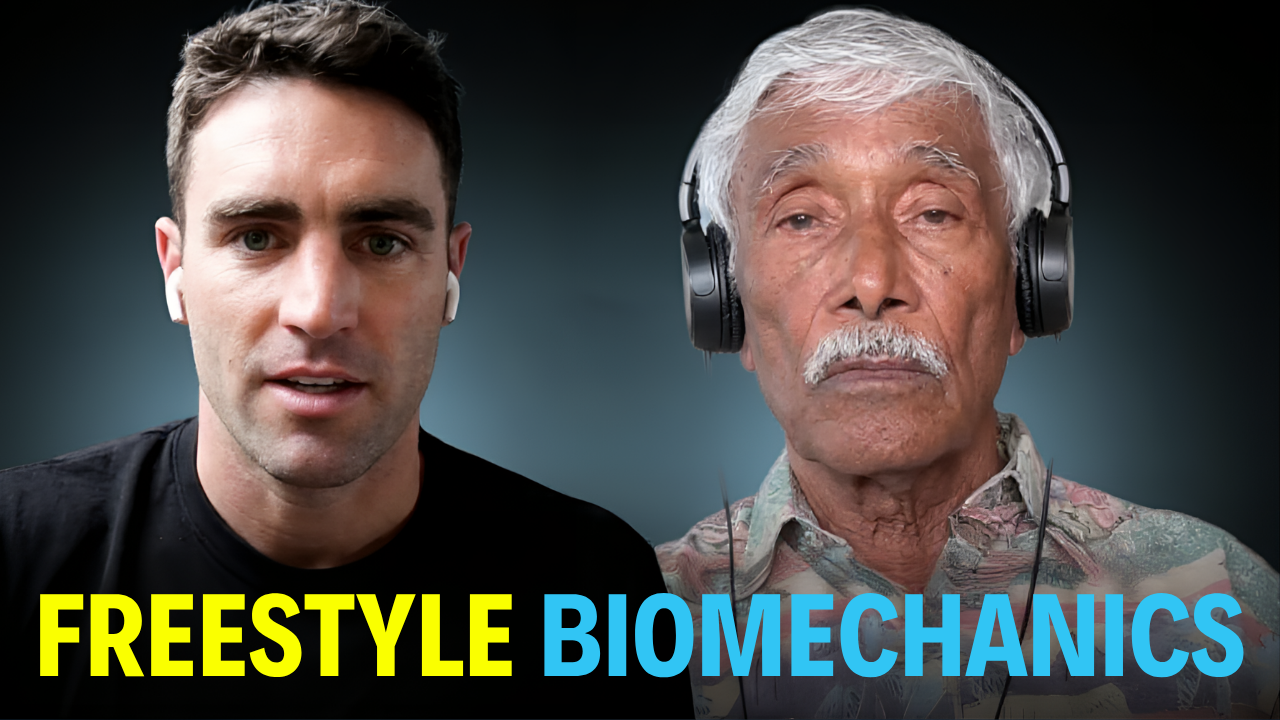








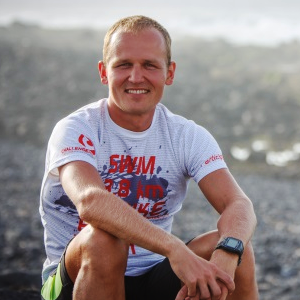
 Today’s guest is Rait Ratasepp. Rait is a member of Effortless Swimming Membership Program – our online swim coaching community.
He just completed the Double Ultra World Cup in Hungary and won in convincing style. It’s a double ironman distance triathlon.
In this podcast, we cover his training, the things he focused on for his swim and some of the workouts that he did.
01:30 – What inspired you to enter a double ironman event?
02:12 – 10 Years of Long Distance Running
02:23 – My swimming was the worst part…
02:58 – How did Effortless Swimming Membership Program video analysis help you improve your swimming?
03:27 – “ I found out my stroke is completely wrong…”
04:43 – Focus on catch up drill.
05:23 – What kind of training program did you have for swimming for the double ironman?
06:08 – About 100 workout programs in Effortless Swimming Membership Program
07:23 – Did you pull up fine for the race?
08:03 – Long swimmings are key.
09:25 – Swim 5 times or more…
11:00 – Living the life of a full time athlete…
11:50 – It’s a tough lifestyle to live.
12:46 – Triple ironman then 5 times ironman
14:05 – Diet & food talk
17:20 – My advice to fellow athletes…
18:00 – “I’m doing it because I love it.”
18:57 – The more you swim, the better you feel.
20:10 – Consistency is what keeps you going.
21:11 – Focus versus hit & miss
Transcript
Read the full transcript
Welcome to Effortless Swimming, the podcast for swimmers, triathletes and coaches. Join Australian swim coach, Brenton Ford, as he reveals the latest techniques and information to improve your swimming. Let’s dive right in. Welcome to another episode of the Effortless Swimming podcast. Today’s guest is someone who’s been a swim-proof member, so a member in our swim coaching community, Ray Trattacep. He just completed the Double Ultra World Cup in Hungary, and basically what that is is it’s a double Ironman. So basically think of an Ironman event and double the distance. So Ray did that about a month ago and did extremely well. He ended up winning it by about three hours, which you’ll talk about on this podcast. So we’re going to cover some things from his training lead and up to it. What are some of the things he focused on for his swim and with his technique and what are some of the workouts that he did.
So Ray, welcome to the podcast. Welcome. It was nice to come and speak. You’re in Estonia at the moment. I’m here in Australia. So the time difference is about eight hours, I think. So thanks for getting up early and jumping on the podcast with me. Yeah, that’s no problem. So can you talk a little bit about the Double Ultra World Cup in Hungary that you did a couple of weeks ago. And first of all, what inspired you to enter a Double Ironman event because most people think of an Ironman. They think that’s a crazy distance to do, but then think of doubling that. That’s a massive accomplishment just to make it to the end, let alone win it. So what inspired you to enter this Double Ironman event? I just want to wind out, can I finish this? And actually I like this long distance. I have done many, many Ultra runs. So I decided that my running is quite good and I want to try it. So your background is in long distance running?
Yeah, I have done it more than 10 years. And then what sort of background did you have in swimming? Did you grow up as a swimmer or is it something that you learnt later on in life? Actually, no. My swimming was the worst part. Maybe two years ago I swam one kilometer, 25 minutes. I’m just learning now. So you joined Swimproof, which is our online coaching membership where you can get video analysis and workouts and things like that. We sort of communicated via email a couple of months ago. You sent in a video for analysis and I made a couple of recommendations. So by having someone look at your stroke, because something that we’ve been doing a lot is running freestyle clinics and doing video analysis for a lot of swimmers. And the feedback I always get is that video analysis, so some specific feedback about what to focus on for that individual is by far the biggest help for people. So what did you find from your video analysis
and what were some of the changes that you started to make because of it? I think it was really, really useful because I found out that my stroke timing was completely wrong. So I was focusing on improving this and I have made so many this catch-up drill. And now it’s getting really, really good because I have done some small distance in Estonia and the gap between the first one is getting smaller every race. That’s good and I mean experience in open water. So the more racing that you do, the more training that you do in races, whether that’s the pool or open water, the better you get because a lot of it comes down to your skill in learning how to draft and how to cite properly, but also just improving your swimming speed in general. So I think from memory with your video analysis, so you were pulling through a little bit earlier than you needed to so you weren’t keeping your hand out the front long enough.
Is that right? Yeah, that was correct. So one of the things I got you to focus on was just catch-up drills. So pull through with one hand and when that enters you start pulling through with your other hand and just to fix up that timing because if you’re pulling through too early and you’re not holding your hand out in the extension phase long enough, then quite often you’re not getting the best catch that you can. So catch-up drills are great drill for improving out the front so you’re catching your pull through. And then one of the other things that we sort of focused on was the bigger workouts. So the bigger swim sessions in the lead-up to your 7.6K swim. So can you talk a little bit about what kind of training program you had for swimming leading up to this double Ironman?
I was using this training program what is in your home page there.
There were any kind of drills, speed drills and shorter ones but basically I did this, there was three groups, beginner, mediate and advanced and I did this advanced schedule. So you followed the advanced workouts in the program. So I mean we’ve got over 100 workouts in Swim Prove and they come in three levels and the beginner one’s about a K per workout. Intermediate’s about 2-2.5K and then advanced is anywhere from 3-5K or a little bit more. So you were following the advanced workouts there and they’re a mixture of, they’re not just 5K straight it’s a mixture of some drills, some skills like kicking and pull and then also some aerobic sets and some speed even though you’re doing a long distance I think speed is important as well. So what was your longest swim that you did before the race or your longest training session? My longest one was one week before the race and it was 7.6Km in the pool. So you tested yourself,
you wanted to make sure you could do the distance comfortably and did you feel right after having a week’s break and then going into the race? Did you feel like a week was a good time to do that distance beforehand or would you feel like you should have done that a little bit earlier? Did you pull up fine for the race? Yes, this one week was exactly what I needed because when I got out of the water in the race I felt so good that I wanted to do the pike but when I did my first long swimming I think it was two and a half months before the race then after two days I couldn’t basically move my hands because my shoulders were so painful. So I think that these long swimming are key to do it well. Yeah, absolutely. Anyone that’s training for an event over two or three Ks in distance getting some longer swims in and they don’t necessarily need to be fast it’s just about getting the distance in and building up your engine
and getting your arms and your shoulders and your back used to doing that kind of distance because it’s very hard to get away with doing two swim sessions a week. You’ve really got to be doing three sessions or more each week in order to feel comfortable in the race and to have that kind of swim fitness there. In terms of consistency, Michael Phelps trained every single day for five years so he was in the water for nearly 1,500 days in a row and you don’t need to be that consistent with your training but it’s really important to keep that feel of the water by being consistent with your swimming and is that what you found? What are you doing in the lead-up to the race? I always do before the race maybe five or more because last week is the most important to get the feeling of the water but usually my swimming sessions are four or five times a week. And I think that’s a really good amount for… I mean you’re training for three sports
and doing four or five a week is a really good number to be able to fit in those other sports but also to make sure that your swim leg is going to be strong because I mean I work with a lot of triathletes and trying to just get away with two sessions a week unless you’ve got a big background in swimming it’s really hard to make sure you do really well in the swim with two sessions a week and there is a point of diminishing returns I mean if you’re training seven sessions a week in the pool but you’ve still got two other sports to train for there might be too many sessions it’s about the ideal sort of number for you to get the biggest bang for your buck in your training and I think four to five is a really good number so do you work full-time? I mean how do you fit in that kind of training around work or family and that sort of thing? Actually at the moment I am self-employed but last September I was working as a regular worker
so then I decided to quit my job and prepare for this double I went to live in Las Rota for seven months there were perfect conditions for training and now I’m back in the stone and thinking what I’m going to do next so you lived the life of a full-time athlete for a couple of months there? Yeah, basically still living but at the moment I’m not planning to go back to work as an employee but I’m doing my own stuff I’m a lawyer at the moment Very cool Yeah I mean if you can just train full-time like that it’s… and I think I’ve sort of lived that lifestyle for a little while when I was in school without a job or anything like that and it’s not as easy as it sounds because the training can take a real toll on your body and your mind but it’s still a very tough lifestyle to live I mean working full-time and training is hard but just training full-time as well is really taxing on your body and your mind Yeah I agree because I tried this only training time
and it won’t shoot me because I need something for my brain also Yeah so you felt like you had to keep mentally stimulated as well along the way Yeah exactly So you’ve got another event coming up in the next couple of months where you’ve got an 11k swim What’s that event? Actually it is in the next year but the event is triple Ultra So it’s a triple Ironman Yeah triple Ironman and another one is what I want to do next year which is a five-time Ironman but the difference is that the triple is done by that first you swim all distance then you go biking and then run but the five-time is every day one full distance Wow Oh my god That’s just you’ll be super fit when you get to that if you’re not super fit already after doing the double Ironman So the triple, so the double took you 22 hours is that right? Yeah And then how long are you expecting for the triple? It depends, what is the course there is some hard courses, bike courses and easy one
the easy one should take about 35 hours but if it’s hard yeah but if I decide to go to England then there is quite hard bike course and run course it usually takes 10 hours more Wow that is awesome So I mean in the, what sort of preparation do you do in the lead up to it with your diet I mean it can take a bit of time to find out what works for you in terms of what you can keep down and what you can digest easily So have you got that pretty well sorted in terms of what you’re eating while you’re racing? I think so because actually I’m eating basically like a vegan but at the moment I have made some tests and it shows that I have some minerals missing with this diet but at the moment everything feels good and I now try to find out how I should eat to get these missing minerals So how long have you been vegan for? From the beginning of this year Beginning of the year Any of your fan that’s helped with your endurance?
Yeah because he helps me recover very quickly from my training so I think this is the key and in this ultra event I think I beat others with my diet because my food choice was totally different than they were Well it seems to be a lot of athletes going vegan or vegetarian particularly endurance athletes and I’ve never tried it myself and I’m more of a shorter distance racer but have you found it hard to make that transition? Actually no I’m doing it because I like it Did you find that you lost weight with it? Did it take any adjusting when you came to training? Did you find that you had to get used to the I don’t know the different kind of I guess energy that you’d have there with a high sugar diet and things like that where it’s more burst of energy Did you find it was more sustained in that sort of thing? Yeah it was more sustained but I think this… I have only seen the good part of this at the moment I hope I can manage this shortcoming from mineral
because I really believe this kind of diet is the key for long distances Yeah that’s awesome You athletes and podcasters like Rich Roll I know he’s on a plant-based diet and he’s an excellent athlete and one of my swimmers who has won the Manhattan Island Swim Ollie Wilkinson who’s trained in Melbourne for a couple of years with me he’s vegetarian and he swears by it that’s really good and I think experimenting with that kind of thing and finding what works best for you you can really find a huge gain in your performance so that’s fantastic Now just one last question Do you train by yourself and if you do what sort of advice would you give to other athletes when it comes to sticking to your training regime and getting yourself to the pool or getting yourself out there on the road to do the train if you haven’t got a squad around you? Actually I’m doing this by myself only you are helping me with swimming but everything else, bike training and run training
I’m thinking up myself so actually I haven’t had any problems to go and train because I really love it and everything what I do I do because I want it but of course when I started swimming last year and a year before I swam only maybe 100 kg per year but this year I have done already 350 kg so the main key what I have discovered is that in swimming you just have to swim a lot and you start feeling so good that you are actually going to like it because if you do once or twice per week then you can’t get this feeling and then maybe it is like oh I have to go swim and I don’t like it but if you do it more then you will love it and there is speed and the times go down very quickly That’s an excellent point the more you swim the better you feel and the more improvements you make which really encourages you and drives you to get back to the pool and I was chatting with a friend on Facebook today and they were saying that
their scene is incremental gains in their swimming because they are going consistently they know what to focus on and just getting these little tiny gains it has only got to be maybe you are making a little bit further distance maybe you are hitting faster times but just any kind of incremental gain is what keeps you motivated and also that feeling I think is I have found the same thing as it has been winter here I took a couple of weeks off swimming and now I am just starting to get back into it and I had one good session there really good, my stroke was great feeling the water really well and that’s got me in the water five, six times a week and doubling up some days as well so it’s just that feeling is addictive and once you start to get a good feel for your stroke you just want to keep getting back in the water and working on it so I completely agree with what you are saying that consistency is what keeps you going
and the other point is that before I found out the effort of swimming then my swimming training was basically I went to water and I just swam but now I have discovered these drills and now I know that this is the key to improve because otherwise you just stick on your speed and nothing will change yeah and over the last couple of weeks I have done close to a hundred videos for analysis with the clinics that we have had and so I give people two or three main things to focus on and a couple of drills to help them improve different parts of their stroke whether that is their entry or their catch or their body position and just having two or three things that you know if you focus on them and improve them that that is actually going to give you an improvement there that is really motivating and I know for myself when I have a look at my stroke and I see things that need improvement if you know that making those changes
will have that improvement then it is motivating whereas if you don’t know specifically what you need to focus on and it might be hit and miss whether you do improve if you make these changes that can be a little frustrating but that is where swimmers can plateau with their speed and their fitness so knowing what will work for you and comparing your stroke to someone who is a little bit faster can be really positive for not only your training but also your results that is a great point so Ray thank you so much for joining me on the podcast and all the best for your training over the next couple of months and a year leading up to this triple Iron Man and no doubt I will see you in Swim Prove in the forum there and I will be sending out some videos and more workouts and things like that to focus on so Ray thank you again and I hope to have you on the podcast down the track after this triple Iron Man yeah I hope so awesome thanks again Ray
talk to you soon yeah thank you bye thanks for joining us on the effortless swimming podcast to get transcriptions, bonus videos and to be the first to hear about new episodes go to swimmingpodcast.com