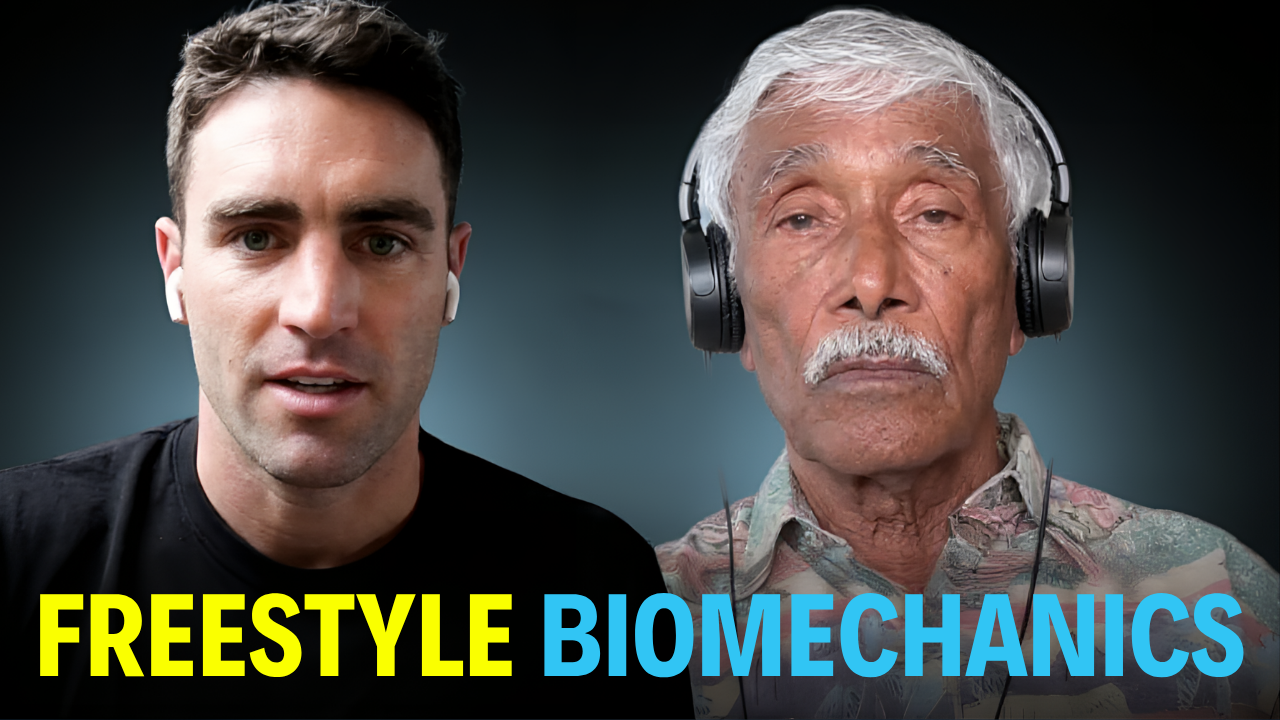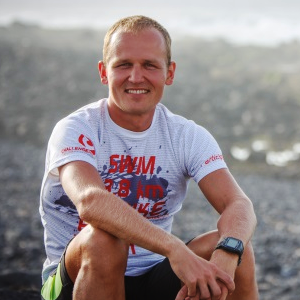








In this episode of The Effortless Swimming Podcast, I interview a friend of mine, Jon Muller. Jon is an author from Wellington, New Zealand and been following some of our swimming workouts and technique programs.
In the last couple of weeks, he finished writing a book about swimming which describes swimming in a way that really hits the nail on the head. Jon manages to describe how most swimmers and triathletes feel when they get into ‘flow’.
 01:45 – Swimming is a family thing.
02:28 – I love the sea.
03:30 – Effortless Swimming – Aha moment!
04:03 – Doing something you enjoy.
04:40 – It’s hard to explain what that feeling is like…
05:10 – Being in the zone.
06:50 – Swimming is more focused.
07:35 – Just YOU and your THOUGHTS
10:00 – Swimming is a competition on who can stay more relax.
11:50 – Body = Relax ; Mind = Alert
12:30 – Focus on your own self.
14:20 – Swimming and UFC – Is it the same?
15:40 – Swimming out of the pool
16:40 – Solid friendships are built in hell week.
17:00 – Swimming Nutrition
18:00 – Grandma/ Brent told me that…
19:54 – Crap in, crap out.
20:07 – It’s not rocket science.
21:25 – It’s a mental game.
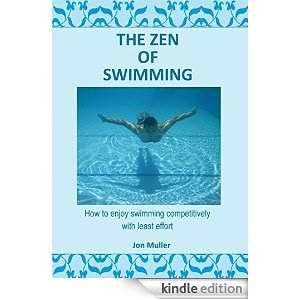
22:02 – The Zen of Swimming
To download, Jon Muller’s e-book – The Zen of Swimming, you can go to:
Kobo Books or Amazon Books
Transcript
Read the full transcript
Welcome to Effortless Swimming, the podcast for swimmers, triathletes and coaches. Join Australian swim coach Brenton Ford as he reveals the latest techniques and information to improve your swimming. Let’s dive right in. Welcome to the Effortless Swimming podcast. My name is Brenton Ford and today’s guest is a friend of mine, John Muller. And John is from Wellington, New Zealand. And it’s a little bit of a different podcast today because the reason why I’ve got John in the podcast is because John and I have been communicating over the last probably a year or two I think it is. And John’s been following some of our programs and workouts and things like that. But John is actually a writer and in the last couple of weeks he’s finished a book on swimming. And he sent me a copy of the book and has been sending me drafts along the way. And what I really liked about it is that he explains swimming in such a way that just hits the nail on the head in terms of describing how it feels to race well
and how it feels to jump in the pool after a long day of work. And just John really describes the thing that I think a lot of swimmers and triathletes feel when they get in the water. So I just wanted to get John on the podcast today to talk about that and just explain how it came to be that he wrote a book about swimming. So John, welcome to the podcast. Thanks, Brent. Good to talk. Yeah, well we met in person a couple of weeks ago when you came to Melbourne for a couple of days there. And you’ve sort of grew up around water sports, didn’t you? Yeah, well a family have always been water rats. So we used to always go to the beach and jump in pools wherever we could. And my brother was a competitive swimmer. But no, we’ve always liked that, an exercise of one sort or another, but particularly the sea. Yeah, well you did quite a bit of ocean swimming as well as training in the pool. And you’ve been swimming in competitions for the last 15 years or so.
That’s right. I mean, as I say, I much prefer the ocean. Of course we do a lot of pool training at this time of year. More so, it’s getting a little bit cold at 30 degrees to go out in the sea, but there’s still a few hardy souls that do it. So yeah, I love getting in the sea and it’s a great form of exercise. And I really enjoy doing a race. And that’s something I’ve just continued to do because of the enjoyment side of it. So yeah, I’ll keep doing it. I mean, your background is in writing gardening books. Yeah. And then you’ve sort of transferred that skill of writing and being able to describe things very vividly with the use of words. So how to come about to going from writing gardening books to swimming? Well, as I say, my business is basically landscape gardening. And I’ve written books because I actually enjoy it. And generally I’ll get an idea in my head and then I thought, yeah, I’ll just go and do it.
And it was actually, funnily enough, when I first saw your website, Effortless Swimming, I thought, yes, that’s a great idea. I love that. So that’s when I started using your programs. It got to a point where I thought, hey, all these thoughts are going through my head about why people are successful at this sport, why they’re successful at swimming, why I enjoy it. So I thought, hey, I’ll write something up about it. So I just started writing and I do enjoy it, writing and I do enjoy swimming. So as I do with gardening, so they just sort of came together and I did it. So it’s all about doing something you enjoy. Yeah. And the thing that, I mean, you’ve sort of been sending me the drafts along the way of your book. And what struck me was just how are you describe the feeling of being in the water? Because I think that’s something that’s really hard to get across to people who aren’t swimmers and who have never experienced what it’s like to be in the water, be completely relaxed
and gracefully travelling through the water with each stroke. And it’s something that I think you’ve done really well to put into words because I kind of find it very similar to trying to describe surfing. It’s like my wife, for example, she’ll complain that I go out in the water for three or four hours surfing and it’s hard to get across to her what that feeling is like and why it’s more than just sitting out there waiting for waves to come. I’m right on your page here, Brent. I’ve surfed for 25 years or so. I love it. I just love the feeling of getting out in the water. And it’s funny enough there’s a close parallel between swimming and surfing because I’ll just talk about this thing of being in the zone, being in that effortless state. And you’ll probably know when you’re surfing sometimes you’re just getting that spot that’s completely relaxed but the waves just come in. And because you’re relaxed and you’re tuned in that it just goes so smoothly
and it’s the same with a swimming race if you can keep that kind of relaxed feel to you and just be focused on what you’re doing right now, being in that zone. Things go really well, you know. As soon as you start tensing up, as soon as you start panicking, as soon as you start forcing things, it all turns to custard, you know. And so there’s quite a bit of overlap. I can understand three or four hours in the surf you get pretty cold. I don’t know what it’s like over there. Yeah, it depends what time of year. But even if it’s howling wind and it’s cold, it’s still worth an hour and a half drive down there and back. Oh, totally. I totally agree. But there is a close overlap, obviously, again, being in the water, the feel of it. Yeah, and that’s what’s kind of different about Surina is that when you’re in the zone, you haven’t really got outside noises to distract you. You’ve got the sound of the water and you can sort of tell when you’re swimming well
by the sound that you’re making as you’re swimming. You know, you can sort of tell if you’re off just by the senses of where your body’s sitting in the water and you can sort of hear the water rushing past your head. And it just shuts out all of those distractions that can sometimes come in, let’s say if you’re running or cycling. Sorry, the phone just went there. No, it is actually, that is something about swimming. You can be more focused and I think it’s also, it’s an individual sport in a sense, but with that competitive element, you know, you’re always working against others. But essentially, you can be much more attuned to what, how you are, you know, as you say, because you’re quite encapsulated in the water. So, you know, I would agree with that. Yeah, and something kind of gets you to look inside yourself, this sort of thing. So, I mean, like, because you spend so much time in the water, you’ve got your head down following the black line or if you’re in the ocean,
it really just, it’s just you and your thoughts and just concentrating on how you’re feeling and your sort of spatial awareness, I guess. And it’s a really good thing, especially if you have had a big day at work, you’ve been in front of the computer and you just need a break from that sort of stuff. It’s such a good way to switch off and really just bring your mind back. And, you know, and just sort of tune yourself back into, you know, what you really, what, you know, what sort of feels good rather than having all the stresses of work and things like that. Again, you know, I think a lot of swimmers will relate to that. You see, I mean, that’s why we do these things, I think, you know, it’s because of the buzz fact, the fun fact. You know, like, if you go for a sea swim early in the morning, the sun’s coming up or surf or whatever out in that water, you feel so good afterwards and so smooth, so that’s why you keep doing it.
I think the trick is, when you’re just going for a training swim, say, with the mates, you know, Saturday morning or something, is to carry that same feeling into a race. That’s the big trick, because what people tend to do in a race is, it’s only natural, you get a bit, you can actually get a bit tense, you know what I mean, because you do it normally just to relax or to feel that good feeling. But often for a race, you know, you can get a bit, no, but that’s natural. But if you can be in that more relaxed state before a race, then that, you know, it’s going to work better. It’s kind of counterinsuant, but it’s still going to work better, you know, if you can. And that’s what I talk about a lot in the book, is just how to get that. What’s worked for me and also, especially what’s useful in a race. Yeah, just that, I think everyone can relate to that, starting in a race. Yeah, and I mean, anyone who’s compared before and had a really good race, they know the feeling.
And it’s, as you said, it’s counterintuitive because it’s kind of like having a competition to who can stay the most relaxed as they’re racing. It’s a funny sort of thing to think about when it’s, you know, when you think of competition, you just think, work hard, you know, just fight, you know, aggressive. But really with swimming, it’s, you’ve just got to stay relaxed as you do it. And yeah, and like if you think back to your best race, I mean, if I think back to my, the best race I’ve ever had, I just felt, just felt so good throughout the race where you’re swimming fast, but you feel in control and you just sort of fine tune in the pace that you’re going at. And everything just seems to jowl together with your technique and your connection with the water. And yeah, it’s just, and that feeling, I mean, to me, it feels like yesterday because I can, you know, I can just bring back that memory so clearly.
And that’s something that I think swimming is really good for. It’s just you can, you can, you kind of, you remember just how good it feels. And that’s why I kind of think it’s, it can be quite addictive. And there’s a lot of open water swimming groups and especially cold water swimming groups, which I’m not a part of because I think I’m too, too soft when it comes to cold water. But you get guys like the, the iceberg is down here in Melbourne. And they’re just, they’re there every day that they’re swimming. And the water is absolutely freezing, but it’s just, it’s just the sensation that you get afterwards. Yeah, we’ve got a few here that go out and tog, you know, just right through the winter even. So I’m not going for that. But yeah, it’s, it’s, it’s one thing is that it’s, yeah, just so keeping there relaxing or something, you know, we try in the pool to do, you know, you’ve got more occasion to do it.
When you’re out in the, in the sea or when you’re in a race, there’s a very easy to start just losing that relaxed rhythm as you were saying. And just, yeah, I think the other thing is too, and a good, when I think of a really good race, I started relaxed, relaxed in the body, but mind alert, you know, feeling I’m sharp, but my body’s relaxed, well rested. And, and I’d often be cracking a few jokes beforehand and just, you know, being easy, just in a way to help make, make it more fun to myself and others. And then, and I’m not thinking about, I’m going to beat this guy. I’m going to beat this. I’m going to come this whatever, just, just going to go out there and just have a good, good swim and enjoy it. And focusing more on your own self rather than, or trying to stay with someone that, if that works, you can stay with someone who’s around your pace, but not, not, not forcing it too hard because then you’ll, then things will go to pieces, as I said, you know, and you’ll start probably thrashing it or, or losing that rhythm.
So yeah, it’s, that’s my best races anyway have been like that. So I thought, well, you know, maybe that’s what, that’s what’s going to work. And it doesn’t always, sometimes you might have some, you might, your body might be a bit tired or things aren’t going right or there’s some other personal thing. And, and you just got to accept that you’re not going to race or swim as well. So you kind of just got to accept that too. So you can’t always be at your peak. I mean, it’s just one of those things. Yeah, that’s right. You’ve got to be able to, you’ve got to allay yourself to, to fail or to have those poor swims to, to teach you where you need to pick up your training or your strength program. I mean, there’s a guy, there’s a guy who swims in, he swims in my squad and he’s nine times out of 10 he’ll back off. Let’s say I’ve got a set of 1050s all out on three minutes or something. Nine times out of 10 he’ll back off on the ninth one so he can have a fast 10th one so he can finish on a, on a good note.
But it’s just kind of, it’s not the purpose of it. The purpose is 1050s all out, not nine backing off that, that ninth one. And I think, and it’s because he’s afraid to, to sort of fail and, and maybe, you know, put himself out there and not have a good swim. So it’s, that swimming can teach you how to be, I think to be humble as well. And you sort of see that in, sort of in UFC fighters as well. I quite, quite enjoy watching the, the mixed martial art fighting. And I mean, those guys, they beat the crap out of each other for 15 minutes, yet they, they hug at the end and shake hands. And it’s, it’s because it’s, you know, you’ve really given it your all. You’ve, everyone’s put in their training and, and worked hard. And it’s just to see who comes out on top at the end of it. And that’s, and that’s why, you know, I like sports where you really, it’s physically demanding like, like swimming, like fighting, for example.
Where, you know, you put yourself on the line and if it comes off, it’s an amazing feeling. If it doesn’t come off, well, you’ve learned something from it. That’s a very good point actually, you know, you learn something from it. You’ve got to learn to lose in a sense because it’s not a, it’s not a loss if you, if you learn, you know, say, oh, okay, I could do that a bit differently. Or I’m going to change it. So in other words, you’re always, well, whilst you’re in there to have fun and relax, you’re always, always trying to up your game. And I think that applies to anything you think, okay, what did I do then that was more successful? What did I not do? You know, may have just been that, that person, if they’re, you know, similar to you, you know, you’re not swimming against Olympics, well, you’re not going to beat them. But, you know, if you’re comfortable, what was different, you know, and then maybe adjust it.
So yeah, that’s exactly right. And I want to talk about some of the effects that swimming has outside of the pool, like, you know, from making you take more care of your nutrition to the social side of things. I mean, I’ve got the, we’ve got a how week training camp coming up in Thailand in November. And yeah, and the reason I wanted to organize that was because some of the best training blocks I’ve had and some of the best friends I’ve got have come from training camps or how weeks. And that’s where you’re working your butt off with people in the pool. You go through the same experiences and the same feelings. And then you come at the back end of that and you’ve got that shared experience and you can relate. You can talk about, you know, how do you feel in this part of the set? You know, how are your times compared to your PBs? And you’ve got that shared experience where you can, you know, you really build good friendships around that.
And you go and have a meal or go and have a coffee afterwards. And those sorts of friends are ones where I think you have a can have a much better connection than just the people you meet day to day. And you don’t really get to go through those sorts of things with people. Sure. That’s right. And in terms of nutrition, I mean, if you have had a crappy session, sometimes it can come down to what you’ve eaten. And it can take you and it can make you more aware of what you’re actually putting into your body and how you’re recovering and things like that. And that’s something that you also talk about in the book. Yeah, well, actually, I must compliment you. You had a nutritionist. I’m just sorry, I’ve just forgotten her name. She did a podcast and I really liked what she was talking about and that. And I think it’s really important. And often it just can be a simple matter of eating whole foods, you know, like I drink coconut water.
It’s a real great rehydrator and chia seeds like Kelly Slater’s favourite one. I have that. They’re brilliant and a smoothie. So it can be just some really simple whole foods that can make a huge difference. And they’re not going to give you a big huge kick like capping, but it’s going to sustain you and you’re going to have more resilience. You also had another guy on again. I’ve gotten his name. He teaches yoga and meditation to top surfers and athletes. And I think that’s also really important for a mental and physical well-being. And I remember rightly you talked about the importance of getting a good night’s sleep. Well, you can’t beat that. My grandmother told me that. It’s really basic things like that. You know, if you turn up to a race and you’re tired, you haven’t slept enough, you’re loaded with caffeine. You know, you’ve been drinking too much and you’re not eating the right food. You’re not going to be up for the game as well.
So, I mean, it’s just common sense, but I can’t stress for me anyway how important that is. Yeah, and I think that there’s a lot of good advice that you could get from your grandparents, basically. From what you eat, from how much sleep you should get, from when you should go to bed. There’s a lot of really good things to learn from that, I think. Yeah, it’s interesting in that respect. And in terms of, I mean, how you feel during the day based on what you eat, I think a lot of people, particularly, I mean, most people who aren’t exercising each day and putting their body through the stress of a workout, their autopilot mode is feeling like crap, but they don’t know any different because they’ve been feeding themselves crap and drinking crap for that long that they don’t know what it feels like to feel fresh and awake and alert by eating and drinking the right things. I mean, I know people who will go through a two litre bottle of Coke a day
and that cannot be good if you’re sustaining that for, even if you’re sustaining that for a week, but these people have been doing that for years on end and I don’t think it can be good for your insides and your future. What’s that expression, crap in, crap out? I mean, you know, it’s common sense. So I think just, as I say, a lot of the things I said in there, my grandma would have said, and it’s no great. It’s not rocket science, but it’s good to see that there’s more of that. People are starting to cotton on that importance of that. And sometimes it’s not like an immediate thing. It’s like over time, you’ll have more resilience, you’ll have more stamina, you’ll have a clearer, because it’s certainly in a race. There’s this mental thing as you get more and more, the competition gets stronger and you go up to higher levels, it often gets down to a mental game. So you’re feeling relaxed in your body, but you’re mentally really sharp
and you’re taking everything in, then you’re more likely to be successful than if you’re feeling tense in the body and your minds, but you’re half there. I was reading, listening to Chris McCormack’s book, The Triathlete, and he, in his book, he pretty much says that he says that at the top level, there’s a couple guys there who are basically all as fit as each other and all it comes down to is your mental game. And so he’d do a lot of things to kind of throw them off and not trash talk them, but put the doubt in their head that they can, put the doubt in their head that they can’t finish off the run leg in a certain pace, and he kind of plants that seed of doubt and they’re fit, if not fitter than him, but he just used that mental game. So that’s just as important as your physical game when you start to get to that top level of sport. So I don’t think we’ve actually mentioned the name of the book. It’s the Zen of Swimming, and where can people find your book
and go and download it and read it? Okay, well, because it’s an e-book, you’ve got two options. You can go to Kobo Books, K-O-B-O, Kobo Books, and just go on to their website and you can then, you can download it onto your iPhone, e-reader, and just have an app to do that. If you just search for the Zen of Swimming, ZDN, and with my name, and then the other option is to go to Amazon, Amazon Books that they have the Kindles. So with all these things, you can put them, I mean, I’ve got something, a book on my iPhone, you can have it on my e-reader, and we’ve got the Kindle as well, so you can have it on your computer. So they’re quite adaptable and it’s really easy. So those are the two options, Kobo Books or Amazon. Yeah, and I highly recommend people go and download it. It’s only a couple of bucks. And there’s some really good tips and information there for not only sort of stroke mechanics and advice on how to sort of, you know,
feel when you swim in, but also recovery and racing and things like that. So I highly recommend people go and check that out if you’re interested in sort of, yeah, just reading a really enjoyable book if you enjoy swimming. It’s a great way to sort of, I guess, it’s just so relatable for a swimmer. So I really, really enjoyed reading it and helping you with the draft along the way. I mean, yeah, you’ve just done such a good job of describing the feeling of swimming. So John, I’ll put a link on our website as well so that people can go and download it. And thanks again for joining me on the podcast and no doubt we’ll catch up again soon.