








Six months of consistent training.
You’re showing up to the pool. You’re doing the sets. You’re putting in the work.
But your times… haven’t moved.
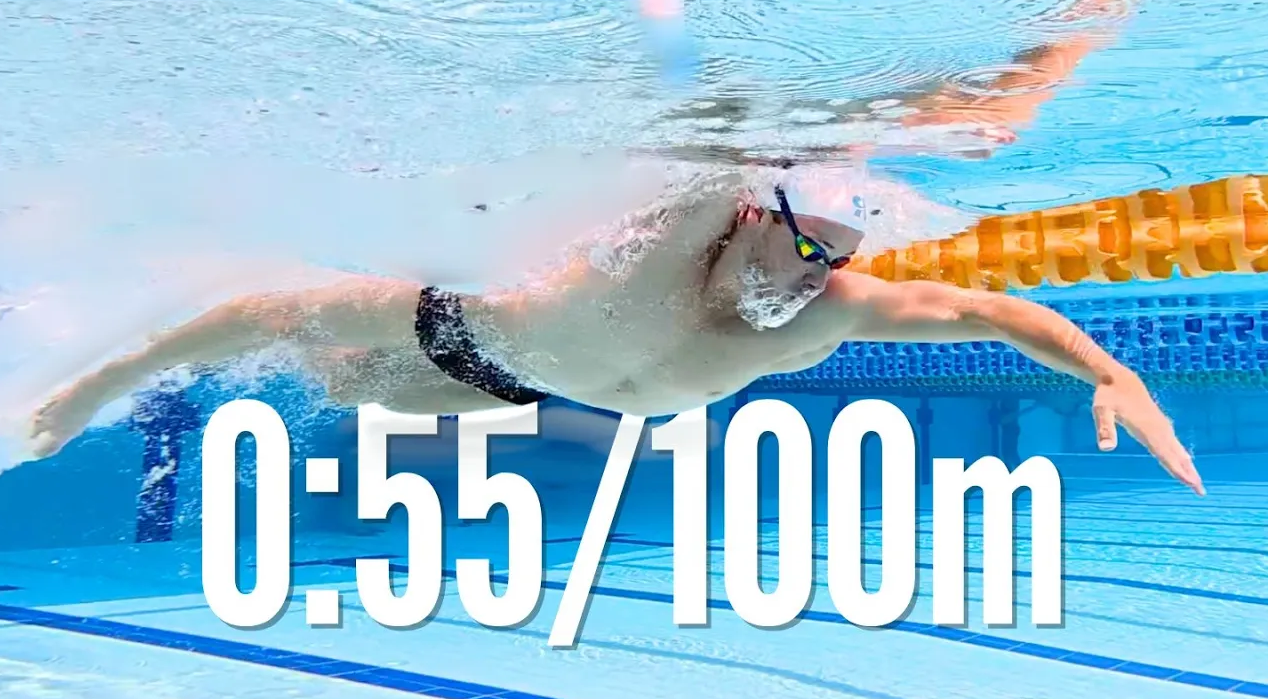
You’re still sitting at 1:50, maybe two minutes per hundred, and no matter how hard you train, it just doesn’t seem to change. And that can be one of the most frustrating places to be as a swimmer or triathlete.
Because it feels like you’re doing everything right.
You’re consistent. You’re committed. You’re following the program.
But you’re not getting faster.
So what’s actually going on?
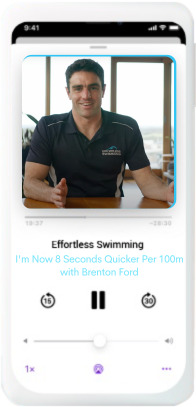
In this episode, I’m going to show you why swimmers get stuck at the same pace for months, even when they’re training consistently—and more importantly, what you can do to finally break through that plateau and start dropping your times again.
00:56 Plateau of Okay
01:33 Fixing Everything At Once
01:57 Stroke Raste Too Slow
04:04 Fixing The Foundation Of The Stroke
06:13 What To Do?
Transform your freestyle to be effortless and smooth with online video analysis:
https://effortlessswimming.com/courses-membership/
Try the new Nanoclear Anti-fog Goggles: https://bit.ly/nanocleargoggles
Transcript
Read the full transcript
Welcome to the Effortless Swimming podcast to show that help swimmers and triathletes love the water, become a better swimmer and live a better life. Here’s your host, Brenton Ford.
You consistently for six months, you’re showing up, you’re doing the sets, you’re putting in the work, but your times have not moved. You’re still sitting at 150 or two minutes per hundred, and you cannot figure out why. This is one of the most frustrating places to be as a swimmer or triathlete because you’re doing everything right, except you’re not getting faster. Today, I’m going to show you why this happens and what to do about it. So a few months ago, I got on a call with a guy named Michael. Michael’s 42, he joined our Effortless Swimming coaching membership, and he’d been swimming for about eight months. And he was swimming four times a week. And his coach was giving him workouts so he was fit, and he could hold a decent pace in the pool. But his times had not improved in six months. So when he joined so when he joined the Effortless Swimming coaching membership, he sent me a video and I asked me to tell him what
was wrong. So I watched the video a couple of times and his stroke looked overall pretty good. His body position was decent. His catch was okay. And his kick timing was fine. Nothing was terrible. And that was the problem. When nothing is terrible, but nothing is great, you end up with a stroke that looks fine, but doesn’t really go anywhere. And this is what I call the plateau of okay. You pass the beginner stage, you know how to swim, you can finish your workouts without stopping, but you are stuck. And here’s why. Most of us at this level are trying to fix everything at once. They watch a video about body rotation. So they work on that for a week. Then they see something about the catch. So they focus on that for a week. Then someone tells them their kick is wrong. So they start doing kick sets. Every week they’re chasing a different fix. And nothing sticks because they never spend enough time on the one thing that would
actually make them faster. So when I told Michael this, he said, yeah, it sounds like me. So I asked him one question. I said, if you could only work on one thing for the next four weeks, what would you what would give you the biggest improvement? And he said, I don’t know. That’s why I’m here. So I thought, fair enough. So I told him, your stroke rate is too slow. You’re gliding for too long at the front of your stroke, because someone told you to lengthen out. But you’re not actually moving forwards during that glide. You’re just waiting and sinking and slowing down. And when you finally begin your catch, your hand’s not really connecting with the water the water early enough. So you’re losing the first third of your stroke. And this means you’re working twice as hard to cover the same distance. So I told him, we’re going to fix that one thing just one. What I want you to do is with your hand when you finish reaching forwards, I
want you to begin the catch a bit sooner. So your hand connects with the water earlier in the pool. So you can actually use that front part of your stroke. And that was it. No work on body position, no kick drills, no breathing changes, just one thing for four weeks. And here’s what most people don’t understand about improving in swimming. You don’t get faster by fixing 10 things a little bit. You get faster by fixing one thing completely. So when you try and change everything at once, your brain just cannot process it. You end up swimming worse because you’re thinking about 12 different cues and your stroke falls apart. But when you focus on one change, your brain can actually integrate it. You can feel it, you can repeat it, and you can begin to make that automatic. And once it’s automatic, you can move to the next thing. That is how you build a fast stroke, one piece at a time in the right order. And most of us don’t realize that
the order of the corrections matter. If you fix your catch before you fix your kick, well, you might just be kicking harder to compensate for a week pool. If you’re hand, if you try to fix your hand entry before you fix your rotation, or you might just struggle to get that hand entry correct. The fastest way to improve is to fix the foundations of the fastest way to improve is to fix the foundations of the stroke first. And that often the foundations for most people will be head, body and legs. But then we work on the propulsive part of the stroke. But for most adults, as they think it means fixing the catch. Now your catch is responsible for a large part of your propulsion. And if your catch is weak, everything else you do ends up just moving the water around without going anywhere. But for a lot of people, they’ve got to work on body position, head position and rotation first. But that is why I wanted to start with this summer on his
propulsive phase, because he ticked those boxes. He was swimming, he was quite streamlined in his stroke. It was just that he was lacking propulsion because the timing of his catch was off. So this summer spent four weeks working on his catch timing. And every couple of sessions he would film himself, where he focused on getting that hand connecting a little earlier in the pool, rolling into the catch and not stopping and gliding and pausing for too long. He didn’t worry about anything else. And after two weeks, he sent me a video and he said, I think I’m getting it. And he was right. He was starting to grab the water a bit earlier and his stroke looked more connected and his effort looked a lot lower. And after four weeks, he tested his pace and he dropped eight seconds per hundred. Eight seconds from 152 to 144 per hundred, with the same fitness and training volume and same pool, but just that one change. So if you’ve been
training for months and your times haven’t moved, you probably don’t need to train harder. You might need to stop trying to fix everything and just focus on the one thing that will actually make you faster, the one thing that is the bottleneck in your stroke. For a lot of people, it can be the catch. For some people, it’s body position. For others, it’s kicking or breathing. But there’s always one thing, not 10 things. And once this is done completely, then you’ll find that your stroke will improve. So here’s what I want you to do. Film yourself. So here’s what I want you to do. Film yourself, watch it back and be honest about what you see. And then pick one thing that’s costing you the most speed. Not the thing that looks the worst, but the thing that is costing you the most speed. Now, if you’re not sure what that is, send me a video and I’ll tell you. And that’s exactly what we do inside the Effort the Swimming
Coaching Membership is you film yourself, send it in, and myself and Tasman will watch it and tell you exactly what to work on and in what order. So there’s no guessing. There’s no trying to fix 12 things at once. Just one clear instruction that you can actually execute. And we’ll give you some structure around how to work on it and the drills that may help with it. And once we get that piece told in, we move on to the next one. And that’s how this from a drop date seconds in four weeks. And that’s how most of our members drop a large amount of time in the first couple of months of being a member, not necessarily by training harder, even though obviously that can make a difference for many people, but it’s by training smarter. So one fix at a time in the right order. And if you want to help figuring out what that one thing is, you can join the Coaching Membership at effortless swimming.com. You actually get a waterproof camera included with
your first month. So you can film yourself easily from multiple angles and you can upload it. We’ll analyze it and tell you exactly what to work on. Then you work on that one thing until it’s automatic. Then we move on to the next thing. The link’s in the description. Look forward to joining you in the Coaching Membership. And thanks for listening. See you next week. And thanks for listening. See you next week. Thanks for listening to the Effortless Swimming Podcast. If you’d like us to help you become a faster, more efficient swimmer, go to www.effortlesswimming.com.