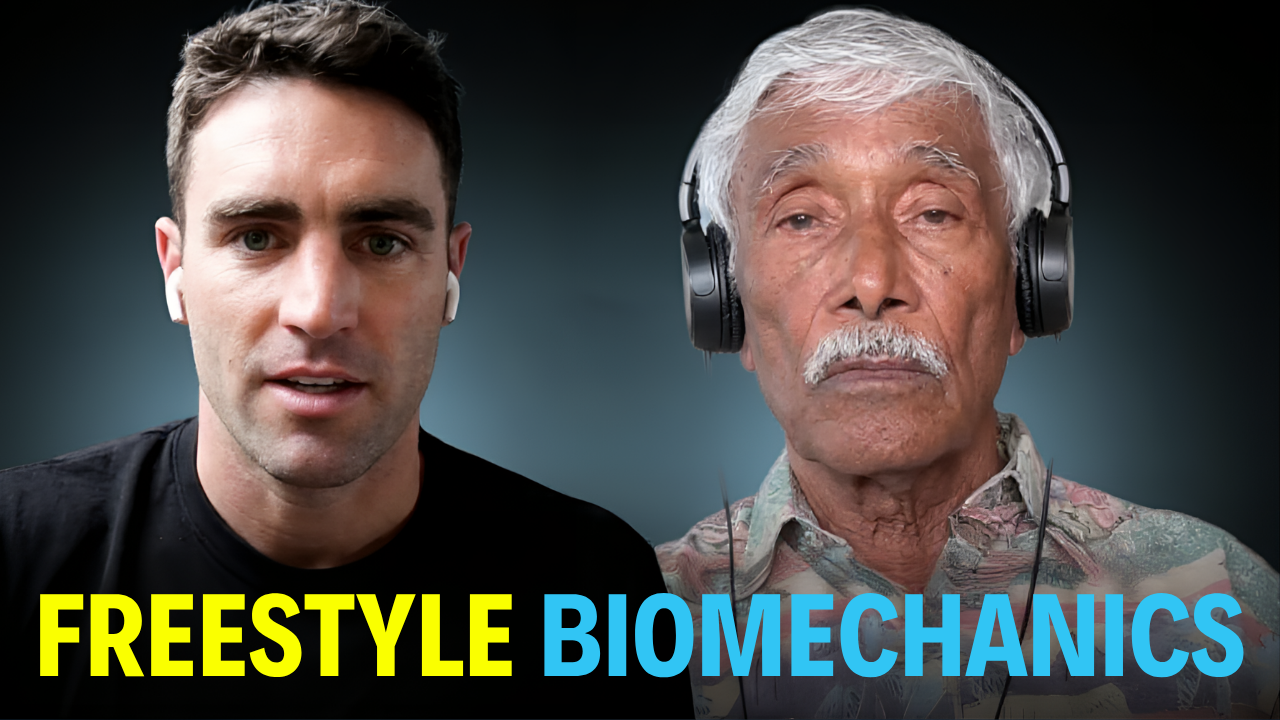








Carl Reader is coming back as our guest in today’s podcast episode. We will talk about case studies of swimmers dealing with body pain and the best way to help them.
01:30 Neck and Shoulder Pain
04:56 Building That Core Strength
06:54 Body Awareness
09:27 Hamstring Injury
12:47 Rock And Roll Movement
14:33 Knee Injury
16:26 The Body Is Designed To Move
17:31 Lunge Exercises
20:16 The Beauty Of Functional Movements
22:41 Does Deep Tissue Massage Work?
Carl Reader Coaching
FUNCTIONAL MOVEMENT COURSE
Watch the episode on YouTube:
Transcript
Read the full transcript
Welcome to the Effortless Swimming Podcast to show that help swimmers and triathletes love the water, become a better swimmer, and live a better life. Here’s your host, Brenton Ford.
Hello and welcome to the Effortless Swimming podcast. My guest today is a return guest who’s been on a multiple times. Carl Rita, welcome back to the podcast. Hi Brenton, good to be back. So we’ve done quite a few podcasts together and we’ve talked a lot over the last couple of years. Your background’s in, well, sort of functional movement, and you’ve got a functional movement course, which a lot of our swimmers have gone through. And you’ve also worked personally with a lot of the athletes that I coach as well. And you’ve helped them basically become pain free in swimming, in running, and just feel better and move better as well. And it’s a huge component to swimming well is being able to move well. So on today’s podcast, I want to go through, we’re going to go through a couple of case studies of swimmers that you’ve worked with. What were the issues that they’re having? And how did you help them overcome
those issues? Because I mean, the people I talk to at clinics, the people I meet, they’re normally dealing with something, whether it’s shoulders, whether it’s knees or hips or neck, there’s so many things that that can go wrong there, or they can have niggles. So we’ll go into detail with some of those. So Carl, what’s, do you want to start off with maybe the first one that you’ve got there? Yeah, I’ve got, you know, just in general, we see a lot of that shoulder complaints, shoulder and hamstrings and lower back with the with the clients that I’ve been working with. But this is a particular lady she’s 45. She’s been really struggling with the neck and shoulder pain and restrictions. She’s also worked from home behind the computer a lot of the time. And just was just complaining to me how, you know, just doing backstroke and crawls was hurting her shoulders. So we just we basically looked at the first thing we looked
at was just looking at her program that she was doing. And I found this across the board with a lot of the swimmers that a lot of the stretches that they’re doing to try to warm up or even improve mobility, even though they were getting that they were stretching the right muscles, it was compromising other areas of their bodies, particularly their upper back. So like the latch stretches and the common shoulder stretch that you see a lot of swimmers doing when I had to make the modifications that actually made a huge difference. So that was quite interesting working with one and one with the clients, but particularly this plant had a whole stretch regime that she was doing. And I must have cancelled about four or five of them, her stretches and had to replace it with other things. But immediately the next day, she phoned me and we talked and she said, I feel so much better in the pool already, just from leaving out those
stretches. So was she doing them prior to swimming? She was doing them as part of her warm up? Part of the warm up, but also at home, she was doing a lot of stretching at home in the door, trying to stretch out the pecs and the lats and the tightness. So she was trying to like really try to improve her shoulder and neck mobility by doing stretching. And what I said to her was that when we start to move the body correctly and get those core muscles engaged and then you start to move functionally, you’ll see that the neck and the shoulder will start to loosen up as opposed to try to stretch it out. And so that’s obviously she had to first experience that. But after two or three sessions, she said already how she couldn’t believe how her neck and her shoulder was just loosening up from doing squatting exercises or so I have to explain the link between how the hips and the shoulders are linked through the fascial systems and the
muscle systems.
And so she moved from doing a couple of different static stretches to more movement based warm ups and stretching? Correct. She’s a member of your group, your members for swimming and so she’s got access to the videos that we did the course and she was doing them but it was more the stretching that was getting her. So there’s some of the stretches that weren’t in the course that I had to have a look and see just check her technique with.
It’s funny how it’s changed so much. Like I remember as a kid, you know, that’s pull your arm across the body. It’s like that’s the kind of like lazy teenager stretch I think is like when you can’t be bothered doing anything, got to look like you’re doing something so you’ll pull the arm across the chest there. Correct. Look her movements, the stretches she was doing, she was doing the stretches a hundred percent. But what I said to her was when we when this is a big part of another thing across the board with the swimmers that I’ve been working with, is this body awareness like she didn’t actually know what like where she should feel it really or which muscle she should be using and she said, well, I feel my lats stretching and I’ll say to her, how does your neck feel? And she said, actually really sore and she hadn’t she didn’t actually pick up on that that her neck was being compressed while she was stretching the lats.
She just would be focusing on getting the pull and the lats muscles. And I think that was common across so many of the swimmers.
So what was the what was the process that you went through with her to discover what was causing those issues? Well, when you start to do the functional movements, they kind of highlight the problem here is very quickly. So when we were doing sort of like squats and rotational exercises, step ups, functional lunges, I could very quickly see when she was moving where the weaknesses were and the muscle and balances and the symmetries were. Some of the exercises and drills she was doing in the pool as well. I could when she mentioned like she was doing two arms at the same time, like backstroke and also just to do one arm at a time. And that really also made a difference to her. So there was and now she can do it because she’s got the mobility back in a thoracic spine in the Senate, you know, I’ve covered quite a few times. But and then really building that core strength in a functional way
through the squats is one of my favorite ways of doing that. And that that really the squatting just has a huge effect on postural overall postural fixes. It kind of like hits many of the postural weaknesses. And so just by starting the first few days, they’re getting the squat technique right. And then I went into more advanced stuff after that. But I really after two, three sessions, you can in the testimonial that she wrote how she really felt way better after two sessions. And that’s coming from the squats again. And that’s all just working online with people, right? Like you assessing how they’re doing those exercises through like a zoom call or something similar and seeing how they’re moving. Even FaceTime just put an iPhone or whatever on a desk and she just would just go from there. I imagine how you’re sort of looking at how people are moving is how I’m looking at people when they’re swimming. So like you’ve got a finely attuned eye
to, you know, to that particular particular thing. And you can probably see things that most people can’t, which is what I think you have developed over the years of just doing so much analysis in that time is it’s like these, yeah, you can sort of see patterns and things that, yeah, that aren’t moving how they should and compared to how they should be moving. So. Yeah. And just as you say, like you, you, you pick it up pretty quickly. And I think the other thing is just now with the body awareness is such a big thing. Like when I asked my clients or the other guys, you know, what muscles do you feel working when they sort of look at you with a blank stare? Like, what do you mean? And it’s sort of, OK, well, it’s important that you know which muscles you’re trying to try to hit here. And, and, you know, are you aware of the core engaging and are you can you see this and then say no. And I said, well, you know, so it’s that I think that’s been a
big part from the testimonials how helping them improve their body awareness has really helped them in the pool as well.
It’s just a massive one, isn’t it? Like, like proprioception out of the pool, if that’s if it’s poor or body awareness out of the pool is is poor, it’s only going to get worse once you’re in the water when you haven’t got that grounding. So, yeah, so it makes it makes a huge difference. And like I said, with like my kids, they’re fairly young, they’re three and five. I see it when they’re doing like they do Taekwondo and jujitsu and swimming. And it’s like at the start of doing these things that like these arms and legs moving everywhere. And then they start to dial into to where they are in space. And it’s it’s just awesome to sort of to watch that. And I think it’s something that we, you know, we get older, that we got so much stuff in our mind that we just tend to forget about or we sometimes just don’t tune into what we’re doing and and that body awareness. Sometimes we do certainly just, I guess, forget about or not
think about or not even know what we should be doing in in many cases or what we should be feeling. I think that’s the big thing. You know, we’ve never been taught at school like how to move. I’ve spoken about this before, but like we know in old and there’s like you said, you run around the field, touch a toes, do some push ups and a quad stretch and dance advanced to like a hip flexor seems to be the big name today. Everyone’s doing hip flexor stretches and but it’s not really teaching people like, you know, this is how you’re supposed to squat, how you bend, how you rotate, you know, the technique that’s involved in this and it’s highly technical. I mean, you’ve got multiple joints working, especially when it comes to back pain and so and the muscles have highly coordinated functions and not just, you know, they like to do a bicep call or whatever. So it’s it’s it’s when you understand that and you help people actually
grasp it and teach them and take them through that, that the the body just realigns itself. It’s that’s the beauty of the work that I do is it’s not so much relying on call reader. It’s like, and I’m giving them the the movement and the body just sort of does the corrections. It’s it’s fantastic. It’s wonderful to watch. Let’s go into the second one you’ve got there. Sure. I had a guy with really, really chronic hamstring injury and tendinopathy and pain and he just faked his swimming and affected his running. And he was younger, like also like 40 years old and triathletes and he really just reached out to me saying that my hamstrings are killing me and he’s been doing stretches and doing a lot of hamstring workouts, YouTube stuff. And so I was again, once again, he couldn’t even do a squat. He couldn’t squat down even like 10 degrees. He could even do like half a squat problem of pain. And so that was interesting because we had to then look
at what we talk about neural release, neural tension. So we would release the neural tension through very simple movements. And I’m not sure if you’ve seen some Olympic athletes do like vibration exercise or they shake their limbs or they they’re moving fast or they’re doing something to like get the nerves reset. So it’s kind of what I do with the guys as well, like shaking the legs, rolling the ankles, just like kind of like sending pulses through the nervous system to retrain that and reset that and then help to help them even in a chair. And I was quite insane because he’s very strong and fit guy, but I put him in a chair and I taught him I like to get out of a chair property to teach the right mechanics of the pelvis. And he kind of was laughing about this thing, you know, this is an athlete getting out of a chair for like an old guy. But once he got that mechanics at rock and roll, he was he was he just couldn’t believe how that would release
his hamstrings and he could feel his glutes and he’d wrote to me like a day later saying I can’t believe I had to do no hamstring stretches today. After about two weeks, he was squatting down, so when they say 90 degrees, but like at least 45 50 degrees, which is a huge improvement. And I don’t know those who are listening have had hamstring injuries. They know that it’s that it’s a it’s a it’s painful, but it also takes a long time to come right if you don’t address the underlying issues as well. And so we see he was having that initial pain through running was when he was experiencing running and swimming and swimming as well. Yeah, right. Must be on time kicking the kicking feeling on the freestyle and.
Yeah, yeah, interesting. And so.
So instead of hamstring stretches, you did you start him off with squats or did you have him do some other things to, you know, to to then build up to doing squats if it was quite painful for him? Yeah, good. I just just that does it a neural releasing neural tension because of the hamstrings and the retention of the sciatic nerve and the lower back and then just getting in to to learn how to do the squat movement but getting out of a chair. You see when you when you get that rock and roll movement right with the pelvis that releases a lot of the lower back neural tensions in the lower back. That’s we call it a neural plexus is where all the nerves exit the spine. And then that has a huge effect on the on the hamstring flexibility and mobility. So I actually stopped him doing quite a lot of the hamstring stretches in the initial phase was just to re retrain the muscle. So get the glutes firing, get him a better position, release the tension, the
chronic tension in his body. And then he’s swimming as well that just to you know, just to take like not got full pace explosive, just really slowly and feel the body, get connected to your body, that game body, body awareness.
Can you explain that the rock and roll through the hips that you mentioned there? I don’t quite fully understand. Yeah, yeah. So when you when you get out of the chair, you want to you want to like it’s kind of like I’m going to send the video, but you you want to tip you want to lean forward from your hips. You want to feel the pelvis is rocking forward. Like in physiotherapy, we talk about an anterior tilt. So your hands, if you put your hands on your hip bones, you almost you’re leaning forward and rocking forward from the hips, you’re not you’re not doing what many people do sort of bend forward from their back, from their midback, they leave there. So if I do that, I’m leaving my pelvis behind. You got it. You want to lean forward. And that’s the that that action of rocking the pelvis is what what helps runners and the squat technique. It’s that leaning forward movement that we talk about in the course as well. And throughout the centuries,
but definitely decades, there’s been this idea that we’re supposed to whenever we pick up something where we’re not to lean forward, we’re to use our knees and keep our back straight. And then if you’re familiar with that, when you pick up a box, I always told us, use your knees, keep your back straight. And that that’s through the whole of functional movement up the window, because what happens is now, whenever you go to gyms or anywhere in the world, people said, oh, don’t let your knees go too far. Don’t bend your knees too far forward. Don’t go and that’s we trying to come back to what the functional positions are. So that rock and roll actually teaches you it’s it’s it’s the key to unlocking a lot of luck, core strength and mobility in the body.
Yeah, interesting. OK, it’s good. Yeah, good explanation of it and makes a lot of sense, especially when you see it there. And those that are listening on the podcast, this is on YouTube as well. If you’re looking for the video version of it. So if we do one more, so one more athlete that you’ve worked with, what’s another case study that you’ve got? There was a lady in her sixties. She was from the U.S. And she a horse rider and fallen and broken like knees and shoulders. It was like a like a like a really challenging case. But just love swimming. It was her life and she just doing it could help. And she was going through a warm up program before the course that we did. And she just was amazed that said that she never ever moved her body. She just moved the joint. So she was just taxing and grinding her shoulders. And after watching the course and learning how to use the whole body, how that made a big difference. But with her again, I didn’t do
any mobility work with her. I just did core strength, got her strong again. The squatting technique had to be very careful because she had like we talk about calcification and the tendons of in the knee and stuff. So she was a very limited movement, but it was amazing how much strength we could still get. And she swam her fastest time and she was in a competition and she was she just really benefited from just overall strength training. And that was done in a chair, you know, again, just help because she couldn’t do much with weights and heavy weights because of the condition.
That’s what I like a lot about the about the stuff you teach in the course and the way that you teach things is you don’t need a lot of equipment. People don’t need to necessarily change what they’re doing a whole lot as in like they don’t need to go to the gym four times a week. They can probably do this stuff at home. They can work into their current routine. And I think that stuff is why is how people can make changes a lot a lot better. It’s like if I’m prescribing
something for someone to do, it’s like I’m just going to get them to maybe include a couple drills in their warm up. Keep it simple. You’re already probably warming up in the pool anyway. And if we just add a little bit here or replace something a little bit here, do that every session. That’s going to get that result and it means you’re going to stick to it and you’re going to start to change that that habit or change that movement in your case. Yeah. And I say like, you know, the body is designed to move. So it’s just when like anything that’s been designed, if you if you use it correctly, it’s going to work, you know. And so I think that’s at the core of this. They’re one of the members of your members said to me, just it’s just been so good to learn how to move properly. It’s something that, you know, how is moving probably going to help my exercising? But when you realize that exercises are movements and they’re not done correctly, it
just strains the body completely. So especially have injuries. There’s a lot of the members as well, like just helping them with the too much overload, like doing too much. I mean, that’s something you’ve probably seen swimming as well. The guys are doing to maybe overtraining the typical overtraining scenario. So but yeah, it’s just across the board, really, that the three things just to summarize for the listeners was, you know, watching out for existing stretches that you’re doing that may be compromising other parts of the body and then improving your body awareness through understanding and doing things slowly and actually connecting with the body and then the part the powerful effects of of moving properly and a good, good functional techniques. And I want to say this is that there are a lot of functional exercises that you go and download on Google, YouTube that are dysfunctional. And one of those examples is the
lunge. The lunge is a very popular exercise for strengthening glutes and hamstring muscles. But in my opinion, the way it’s taught is very dysfunctional. And you see a lot of people complaining of knee problems and ankle problems and back doing that. But it’s a very common exercise you find in many of the trustees sort of exercise program. So that’s kind of first question asked my my guys and I meet them is, are you doing a lunge? And they say, yes. And then I’m like, OK, before we go any further, let’s like, let’s go and have a look at that. Yeah, interesting. Yeah. And what’s what’s one of those like main things that will be causing issues with the with the lunge like knee issues? The thing is they they the lunge, their body is behind their knees. So when you see someone lunch, they step forward and they think down. So if here’s that if you’re looking here’s the knee and here’s the body, you want the body to be leaning forward.
So you want your head almost in line with your knee when you watch most people lunge their head and body is way behind the knee. That makes sense if you watch it and you see what I’ve just described it. But it’s all about the center of gravity is way too far behind. And that’s and that makes the knee the pivot point and the loading point and overactivates the pod vessels.
Yeah, interesting. It’s it’s it’s funny. Like it seems so to you, it probably seems like it’s it’s really simple. Yes. And it’s really like obvious because you’ve done it for so long. But for you know, but for most of us, it’s like, it’s like, wow, that’s a massive, massive difference. And the story that like that I use here is and I know people are probably sick of me talking about surfing on this podcast. But to me that’s like that’s the thing that I’m trying to master and learn alongside swimming as well. But surf coach that I listen to he’s talking about how like how you can basically turn better. So most people, he said, well, they’ll have their basically bum out. They’ll have their knees forward in there like their arms are sort of moving all over the place and you can’t really twist if you if your bum sticking out. So it’s like, yeah, you got one foot forwards, one foot back, it’s almost like a sprinters pose like you’re
going to start like a hundred meter running sprint. So you sort of bend your crotch down and that way you can really turn your upper body a lot more almost all the way around when you’ve got the right position. And it’s just like and for me that just opened up like opened up surfing for me in a massive way because I could then just like no, I could then just turn so much easier because I learned how to move properly. It’s like that one thing. Wow, makes a massive difference. And so as a surfer as well, that exact position when you talked about the bum out or the sticking out what you do is you you actually lock the rotational centers of your spine because that creates an extension in there and what we call the T12 L1 junction and that’s your that’s where the spine changes its orientation of the joints. So your rotation sits a little bit higher than that like just above that joint. And when you surf and stick out and wave your hands like you
described, you’re actually locking the most rotational part of your body. So now you just have no way to move and do anything. And when you come more upright and relaxed there and you just everything unlocks, I think that’s important. It’s a great point. It’s a system. So like, you know, if someone’s got a really sore shoulder, actually go to the opposite hip and do work. And I just can’t understand like why is this guy giving me a hip exercise in my shoulder? So, you know, like, did he not get the email or like, you know, but it’s it’s a system. It’s a domino effect. It’s a sequencing. So when we’re looking at even a neck neck problems and stuff or wrist problems, we don’t be very often as you talk to physio, it’s the same sort of philosophy. Sort of we’re looking at this chain. But that’s the beauty of functional movements. If I don’t really, if I’m not there in person, or I even I don’t many times, I don’t really fully understand
what’s going on in the body of often I don’t fully understand it. The body’s complicated. And then I don’t think anybody has a true sense. We saw, you know, just the tip of the iceberg. But the beauty of functional movements is that like once you put functional movements back into someone’s life, like the body just does the rest. It’s just sort of it just organises it. And especially fascia is another thing. A lot of people doing fascia stretches with these foam rollers and they’re trying to run their ITB bands or they’re trying to fascia their glutes. If you if you understand that that the fascia is adopts to the messaging from the muscles, then you’ll understand that if you just if you do the other way around. So if you stretch a fascia, you’re sending a signal from an exterior force to the muscle and the muscle gets confused where if you if you train the muscles function then the fascia gets a signal like, okay, now we need to make changes.
So it’s much easier than to learn how to move functioning than to do fascia stretches. It’s also painful. Now they do work fascia stretches, but often they are temporary and it’s very important for listeners that you do there are benefits to doing fascia stretches. But for some people struggling with chronic conditions, they can often it can actually make it worse sometimes. Interesting. And just somewhat related. What’s where does where does sort of like deep tissue massage play a part there? How does that? Because I find like if I get I’d call it like if I get beat up on the massage table, like a really hard massage, yeah, I’ll be sore the next day, but I’m usually like feeling like I move a whole lot better. How does that sort of play into things? Well, remember this, if you talk about asymmetries, you know, like some muscles are chronically tight and others are weak and loose. So it’s just that that’s just releasing that tension
that you that you’re holding in your body. So you are going to feel better just by releasing that. But if it’s if it’s if you’ve got that that muscles tight because it’s trying to stabilize a unstable joints in the back core and your hips, then often that releasing can can cause more pain because, you know, taken away the stability. If it’s just a chronic tightness from a imbalance or bad posture for a while, it actually does. It feels great. You know, and as you say, you still feel really good, but it’s not, you’re not that often doesn’t solve the problem because it’s it’s going to get to why it’s tight in the first place. Yeah, yeah, absolutely. I mean something that if I’ve sat down a lot, if I’ve been like in the car or on a plane, or like coaching clinics and sort of on the iPad might not have the best sort of seat seat there to be doing that for a whole day. That’s normally when I’m like, wow, I just need to I need to go get a massage and just
like it just get loosened up and it’s yeah. And every time that I’ve thought I should get one because I’m really tight and then I haven’t got it. The next like that week of like, I’ve done something where it’s just like a pull to muscle or something is like just listen to that listen to your gut, listen to her intuition. Yeah, and it’s it’s a different integral part of me, like, especially if athletes they know that that that’s a post massage is great. You know, toxins like just getting the blood flow and all that stuff. It’s so yeah, it’s definitely a place for that. And so those are the listening if you do perhaps have some some issues that you want to get taken care of. Kyle, what’s the best place to get in touch with you because you’re in South Africa but you work with obviously athletes from all over the place and what’s the best way for those people to get in touch with you? I think the email address is the best, which is
call wellness at gmail.com and call with a C call wellness at gmail.com and then my website is call reader coaching.com and you can just reach out to me there and I have a discovery call, which is free so people can we can organize a zoom or FaceTime chat just to see if what I’m what I offer is going to work or it’s going to be a good fit. And then we go from there. Yeah, fantastic. We’ll we’ll keep all of that. We’ll put all that in the show notes for those that are that are listening and and that course that we talked about as well, the functional movement for swimming will put in the show notes as well. So, Kyle, I appreciate you jumping on. I love hearing stories and case studies like you’ve you’ve shared today. It’s it’s great to hear that like it when you can when you feel better, when you move better, you haven’t got that pain like life is just so much better for people and that’s that’s something you can really help people with.
So I appreciate you jumping on the podcast and and sharing those stories. No, thanks for having me, Bryn. Always good to check. Thanks for listening to the Effortless Swimming podcast. If you’d like us to help you become a faster, more efficient swimmer, go to www.effortlesswimming.com.