







“He runs like a swimmer”.
Yep, we swimmers have a look about us when we’re running that makes us look like ‘fish out of water’. This podcast is all about how a legendary run coach is changing that.
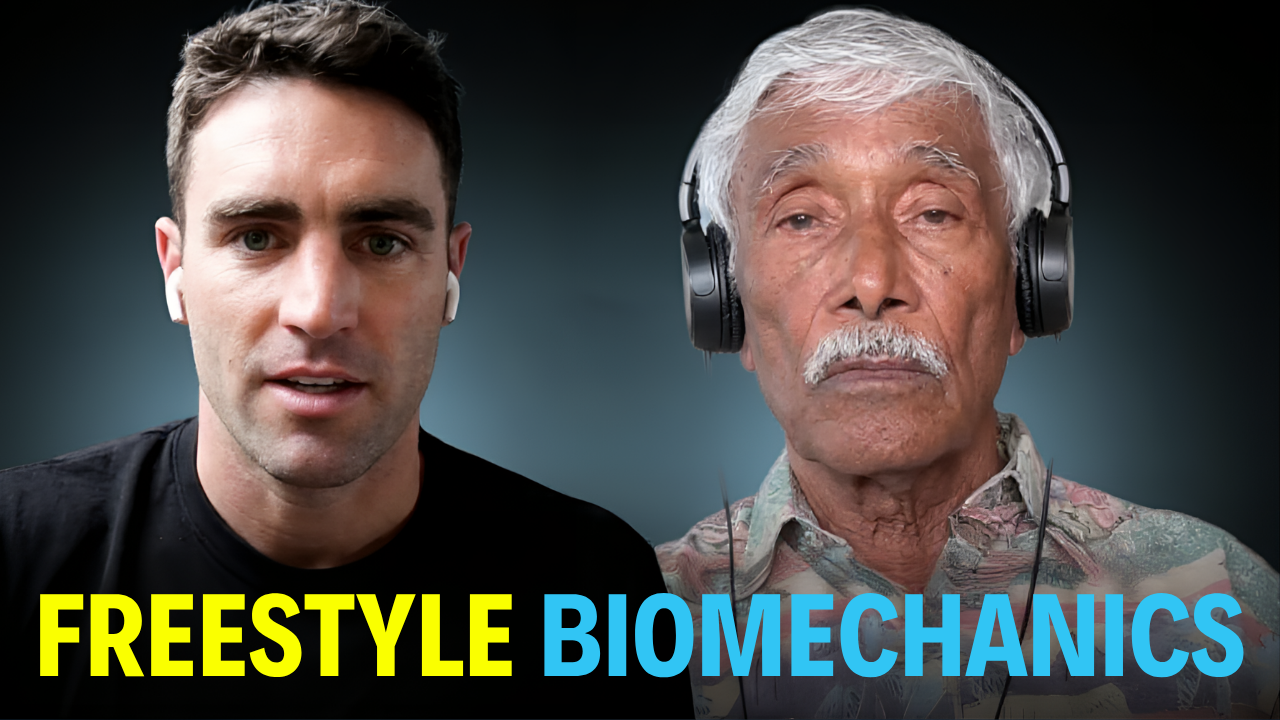
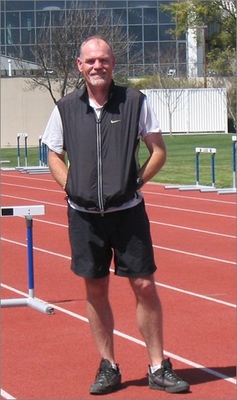
Bobby McGee, 5x Olympic run coach joins me on this episode of the Effortless Swimming podcast. This is the second time I’ve had Bobby on because not only does he know so much about running, but it’s really interesting to hear his perspective on training, technique and the different elements that go into running because it translates into swimming.
I’m a strong believer in running as cross training for swimming. It makes the body leaner, more athletic and helps with coordination. In this episode we chat about run mechanics and how to change the some of the common flaws swimmers have when running. You can start to look like a runner!
Watch Bobby’s FREE run training videos
Bobby’s Run Transformation course
2:00 – Bobby McGee: 31 years of coaching and counting…
2:30 – It’s never going to be final or you can just “push it”!
4:45 – Run Transformation: 10 hours of jam-packed information
6:40 – Take your training to heart.
6:55 – You are the coach of your own technique and fitness.
7:50 – Find out what’s custom-fit for you.
8:30 – Do I re-invent the wheel or be consistent?
8:50 – The Pareto Principle: 80/20 Rule to Training
10:10 – Tempted to things that are “sexy”…
10:50 – Running is a primal sport.
11:10 – Swimming is spiritual.
11: 30 – It’s not about teaching you how to run but…
12:17 – Good coaches simplify.
13: 50 – Volume will make fitness but frequency make skill.
14:25 – It’s about success after success after success…
14: 35 – The Russian Female Tennis Program
15:00 – You have to wait.
16:13 – Switch off the conscious brain.
17:40 – The more you are trained in your run form the quicker your run returns to you.
18:30 – What are the common flaws that swimmers have when they move into running?
19:15 – Swimmers have wonderful discipline.
20:00 – Ways to increase bone density of swimmers
20:55 – Swimmers think more with their upper body more than runners do.
21:55 – Movement in running is extremely different when it comes to muscle function compared to swimming
23:55 – Swimmers can’t run but they can last forever.
24:55 – Are there any similarities between swimming and running?
31:45 – The Holographic Approach to Sports
33:00 – The Effortless Freestyle DVD
34:00 – Coaches are not superheroes nor magicians.
35:50 – It is about mastering the movement.
36:09 – If you run 100% of your capacity, you will fall apart.
36:30 – How to Beat Hawaii Ironman champion Mirinda Carfrae
41:30 – The Brain and The Body
43:30 – Pacing is the key.
44:25 – “Go out at what you think is the right pace and then back off.”
47:50 – Being smart is much more enjoyable.
48:20 – Don’t be an investment banker. Putting time in endurance events does not work.
51:00 – Trivia: Which Olympic swimmer doesn’t touch the water for 4 months of the year?
52:35 – Wayne Goldsmith’s stuff is amazing!
54:00 – Why are drills important?
59:40 – Taking it from a coach’s point of view…
Bobby’s knowledge about running is incredible. His Run Transformation course is like downloading his brain and having access to his years of experience. Watch this intriguing 10-minute video on the page of Bobby’s Run Transformation course.
Transcript
Read the full transcript
Welcome to Effortless Swimming, the podcast for swimmers, tri-athletes and coaches. Join Australian swim coach, Brenton Ford, as he reveals the latest techniques and information to improve your swimming. Let’s dive right in. Hi and welcome to another episode of the Effortless Swimming podcast. This time I’ve got Bobby McGee, five-time Olympic run coach with me here. This is the second time I’ve had Bobby on because not only does he know so much about running, that it’s really interesting to hear his perspective on training and technique and all the different elements that go into running, but a lot of that transfers to swimming. And this episode I want to talk about some of the things that Bobby sees when he gets swimmers who have people who have started out as swimmers and they’ve gone to running, some of the common traits or common flaws that he sees in swimmers going into running and how as a swimmer going into running, how you can change them and start to look like a runner
and improve your times and improve your results. So Bobby, thanks again for joining me on another episode of the podcast. Brenton, it’s great to be here. I had so much fun last time. I sincerely hope there’s something else I can add to the athletes out there. It was a great time. Thanks. Well, looking at your latest course that you’ve just released, which is your run transformation course, it’s basically a huge brain download that you’ve done of your experience over the last however many years it’s been that you’ve been coaching. And I’m sure that there’s no shortage of information that you can help share with us because you’ve got such a huge history in the sport of running that it’s always good to talk with someone like yourself because I think we’ve got very similar philosophies when it comes to helping athletes improve in their sport.
Absolutely. It’s so funny. I have, as you said, I’ve been coaching long time. This is my 31st year of coaching. And in that amount of time, you realize that there’s certain approaches to endurance sports that are somebody comes up with a system and a whole new set of words and a whole new approach. And then they refine that and they refine that and it helps a large amount of people, but it’s still a system and then you have to go into one of two directions. One is you can accept that it’s never going to be the final product because you’re always going to be learning and you’re always going to be finding out different ways to help people get better. Or you get into the marketing side of it and you just push and push and push and you sell this product that over time, as we learn more, becomes less and less effective. And I’ve never been able to do that, that latter approach. So three months after I completed my DVD, I said, oh, no, I wish I had another crack at it.
But then I realized if I had another crack at it, three months afterwards I’d want to do it again. So the beauty of run transformation was that I had unlimited time. I didn’t have like 90 minutes for a DVD or 60,000 words for a book. And so I ended up what was supposed to be three hours of work. I ended up doing about 10 hours of work. And I spoke a lot about how people should approach finding out what works for them as opposed to being dogmatic and telling them exactly what to do. And so it was kind of fun, especially the run training part of it, where I spoke to people just like an elite has taken five or six years to discover what works for them. All I was offering was a pathway to find out, given your life circumstances, how many times can you run a week? What kind of body do you have? What kind of area do you live in? How would you set about designing for yourself an ideal training plan? So I had a lot of fun with it.
I drove all the people that were helping me in the same because it took me so long. But in the end, I was quite happy with how it turned out. Yeah, that’s awesome. And I know you started creating it quite a while ago. I don’t know whether you’re a perfectionist or not, but just wanting to make sure that you include everything that you know is going to help that person improve their running. It can be hard to know when to sort of stop and say, OK, I’m done. This is going to get that person results. I’ve just got to put it out there in front of people now. So yeah, it can be hard to know when to stop. And it’s kind of similar with my swim-proof online swim coaching communities. It’s something that the latest information that I get might learn something new that week. I’ll release it and tell people what it is so that they can use it. And how many hours of content have you got in your run transformation course?
That’s about 10 hours, yeah. Yeah, so it’s not just the 90-minute DVD that people can access. So that’s fantastic. I think it’s broken up into little 12 to 15-minute sections so that people don’t lose their string. And it’s got a lot of good little place markers where things are very well supported by a PowerPoint where people can get into something for just 15 minutes and then they can go back tomorrow and carry on from that point on. Yeah, that’s good. And the way I quite like to learn is to think about where I need to improve and then get the information that I need to go and improve it and then go and use it. So rather than going from start to finish, you can sort of pick and choose where you think you might need to get better. Yeah, I just had a few people won prizes in the first rendition of the course when I did the beta test. And those people that got the most people to sign up to my website, they got prizes and the first prize was to spend a day with me.
And about two weekends ago, I had the last person who won that first prize. And she came along and she said she tried to instead of saying, like, I want to go out for my regular 35-minute run and, you know, I’m trying to progress that. She said, okay, I’m not going to worry about my 35 minutes. I’m just going to go every day and just work on the three or four things that he said were the key things I needed to work on. And by the end of the first week, she said she was just completely hitting the ground differently. Her legs were feeling much better afterwards. She was feeling lighter. She’d taken, you know, about I think eight or nine seconds a day of her running pace just by focusing on those things. So those things are extremely gratifying when people take them to heart and apply them, you know, in tiny little bits and just watch specific to them. Absolutely. And I think with running and swimming and a lot of these individual sports,
even if you do have a coach, it still comes down to becoming a coach yourself, becoming a coach of your own technique and your own fitness and your own schedule because I think it comes down to education and getting the information from someone and then being able to apply it to your own stroke or your own running technique. Absolutely. You know, I think one of the advantages of being, you know, an older coach now that I’ve been doing it for so long is that, A, I’m not attached to dogma and I’m not attached to doing something the same way. But also on top of that, I’m not attached to ego either. And I think a lot of individuals who come from a team sport background or, you know, are past that, you know, 25 to 35 or even 25 to 40-year-old window where they just think, if I just push hard enough, if I’m just dedicated enough, if I’m just disciplined enough, I’ll make it. But it’s not really the cases. They have to find out what’s custom fit for them.
And to me, that’s the trick of coaching the way that we coaches is that we’re trying to make available to people who have anything but perfect bodies, perfect circumstances, you know, an ideal work environment and family environment, trying to have them realize that sometimes doing 65% of what you know what to do, which you could do 100% of, but this 65% is the crucial one, will bring you much more long-term results and help you a lot more down the line. And I see so many pros that really have the talent, but every year they try and reinvent the wheel versus pros that are so solid have such a simple approach, but their stick is for them to stay consistent and stick to their plan. And they ultimately are the ones that end up being successful. And I think the 80-20 rule really applies to sport and to training because if you know the essentials of what you need to do to get to where you want to go, that means just you can cut out a lot of the crap,
which it might give you half a percent improvement, but it might take up an extra three hours a week, whereas if you can focus on just that 20% of the actual work, which is going to get you the 80% of the result, you can be much more efficient with your time, especially for amateur athletes, so people who aren’t full-time, if they might have kids, they might have a job. You just need to get that 20% done, and you’ll be much further ahead of the rest of the field. Oh, it’s astounding. It’s funny, we’ve never spoken about this off-recording, but I think it’s called Perietto’s Principle. I think it’s a 15th or 16th century Italian that figured this out, but you’re absolutely right. It’s that 20% of the work that you could be doing. It’s so ironic, in triathlon, for example, somebody will go and break the bank to get a bike. That’s a couple of grams lighter than the one they’ve got, but just four weeks of a different nutrition plan,
and they lose a half a kilo of weight, and that’s so much more valuable to their bike riding. So it’s an interesting, you’re very right. We like to spend time on things that are sexy instead of spending our time on the things that are absolutely essential. Yeah, absolutely. That’s one of my attractions to swimming and to running is that it doesn’t come down to spending 10 grand on a bike. You might get a $200 pair of running shoes, which might be good, but a lot of it just comes down to refining your technique and your training so that all of the stuff that might cost a lot of money, it doesn’t come down to that. Running is such a primal sport that you’ve sort of spoken about in your run transformation course that it’s just such a natural thing. Swimming isn’t the same in that it’s not a primal movement, but there’s something about just your connection with the water and the feeling of the water flowing past you.
It seems kind of spiritual and it’s a little bit airy-fairy, but just that feeling of cruising through the water and just having that connection with it. It’s one of the reasons why I love swimming and I love running for that fact. Oh, you know, I couldn’t agree more. You speak about running being primal, and one of my jobs is to get people that haven’t been lifetime runners to a point where they realize it’s not a question of me teaching them how to run. It’s a question of me getting rid of everything about what they are doing so that only the running that they should be capable of is left behind. And in many ways, although swimming is a second language for human beings, in other words, it’s something that they acquire after they learn how to walk and after they learn how to run, it is still primal in the sense that somebody that’s 32, 33 years old and has never swum at all in their lives, and they watch somebody swimming who’s proficient and who has great feel for the water,
they cannot even make that brain connection. And the good coaches get to a point where they can simplify, like yourself, they can simplify the swim stroke, that when people become detached from an outcome or from a speed in the water and from a lap time and from a heart rate, there will be moments and these moments will increase if they dwell upon that. And you said it sounds airy-fairy, but you know what? Even at the highest level, that’s what it is. You’re teaching people how to be so comfortable in their environment that their effort is only a percentage of what they could have put out maximally. Yeah, that’s completely true. And if you head down to the pool and there might be an elite squad training there, I could watch them for hours just swimming up and down and the same goes for when you say it’s a beautiful day outside, the water is crystal clear, it’s calm. You jump in the water and you just forget everything else,
it’s just you and the water and just trying to make every stroke as good as it can be. And the same goes for running when you’re in the zone and you’re just gliding effortlessly along the road. There’s something that’s really special about that and I think that people who might not be fortunate enough to be able to do that on a regular basis or they’re working up towards it, it’s something that I think all people should really experience. Totally, and a large part of what I teach is that volume will make fitness, but frequency makes skill. And in our modern paradigm, it’s very difficult for people to go and run for 12, 13 times a week, even though their volume is the same if they’re only running four or five times a week. And with the pool, it’s even more difficult if you don’t live with a great tidal pool and you don’t live on the Gold Coast or you don’t live on the Sunshine Coast or something where you walk out the door for five minutes
and you’ve got a tidal pool that’s swimmable all year round. But for people to realize, if you want to be a good swimmer, you’ve got to spend a lot of time in the water and you’re spending a lot of time in the water fatiguing. You’ve got to have success after success after success and that means I’ve got to swim very often and I’ve got to swim 100% correctly until I take ownership of that. And you know that the most successful sports program in the world in terms of the amount of people they have in it and the amount of champions they produce is the Russian Female Tennis Program. And this is just a simple program run by an older gal and all she does all day is micro-correct strokes. She just has these 12 and these eight and these nine-year-olds just hitting perfect slow motion shots and then when she’s got them perfect she has them picking it up and picking it up and that’s the same thing. You know people want to get their heart rates up,
they want to look at their stopwatches, they want to go after an outcome and you know running, swimming, cycling, it’s the same thing as you have to wait for it to show up. You can’t force it to show up. Yeah that’s completely true and to improve technique, a really good way to do it is to do it, get it filmed, look over it with the coach and get feedback and then make a correction and just keep doing that until you refine it, refine it, refine it until you get it as good as you can and a good example of this is with one of my swimmers who he broke the 50 breaststroke world record a couple of weeks ago for his age group in Masters and every session we’ve been working on his dive and his breakout and just making small corrections to his entry in terms of his angle, what his feeder doing when he enters, his pull through in the water and just making sure he’s at the right depth and just making changes to all those little things
to the point where after doing that for a couple of weeks he’s now able to do it without thinking and where in his race he’s just able to sort of switch off that conscious brain and just allow himself to race and he just concentrates on his speed and the technique comes naturally and making those small refinements it might only take off 0.3 or 0.4 of a second but that’s what it takes to get down to the world record time for him and the same goes even if you’re not at that kind of level getting that kind of feedback and making those small refinements can give you a much bigger improvement than if you’re just trying to push harder in training and just trying to drop off half a second in your set. You know, it is so very true and I remember when I used to I still get quite a lot of them but in the past you used to get a lot more of them when we used to believe that we could take these pure swimmers and teach them to run well enough
so that they could be world champion triathletes and I remember them saying to me I’ve spent three months working on this stuff I was able to run in a 10K I get to about 3K and then I fall apart and then as the season goes on they say I’m getting to 5K and then my form falls apart falls apart and then getting to 7K and eventually like I nailed one I held it together the whole way and when it comes to that part of teaching the research backs us up as well we know in triathlon when you get off the bike and you start to run most people have lost quite a lot of them they must get the capacity to run effectively but the more you are trained and the more you’ve done your drills and the more disciplined you’ve been on working on your run form the quicker your run returns to you and the more dramatically it returns to you and you’re able to run faster towards the end and so absolutely working on those little micro adjustments
where initially you will be less economical you’ll use more oxygen to run at the same pace but then when it starts to click then ultimately you end up using less oxygen than when you started off with and feeling a lot more comfortable and getting less injured and in the end your overall pace is so much better So when it comes to swimmers who you transition into runners and you try and get them to look like runners what are some of these common flaws that swimmers have when they move into running? Well I think one needs to take an overall look at what happens to athletes when they come from a different background and then they start running they need to realize that there’s been an intervention from the swimming the swimming has provided them with an incredible ability to suffuse oxygen into their body they have a wonderful engine they have a wonderful heart they have great lungs they have incredible oxygen delivery capabilities
but there’s other things that are very very challenging for them and part of those things are movement patterns but before you even get to movement patterns swimmers have that wonderful discipline where they get into an environment that is for most people is alien and very often for those that grew up swimming it involved a lot of getting up early in the morning and being incredibly disciplined so that you could get pool time so a lot of great swimmers will tell you getting up in the dark and going to swim and coming outside and then there’s sunlight and that sometimes is counterproductive for them in running because as soon as you have a decent swim stroke you can just pile on the work and you just get better and better but you’re running you just so much more fragile and so swimmers tend to have that lower bone density because they spend a lot of time in a low gravity environment they don’t encourage their leg bones
and their foot bones and their pelvis and their hips to lay down very dense calcium so that they don’t have very dense bone structures they want to be lighter and the environment doesn’t allow that to happen so if you look at the skeletons of lifetime runners that have passed away you will notice that the surface is incredibly dense and it’s crisscrossed with these micro stress fractures in other words they have these very very springy dense bone structures that can handle that level of pounding and so when a swimmer starts to run they really need to take time to do a lot of hiking and to very very gradually build up with a skipping rope in the gym lifting some weights doing little hops and bounds and gradually building up to these intensities so that their bone density can increase and so that they can manage that they also tend to have bigger upper bodies and they tend to think with the upper bodies more than runners do
so in other words they’re carrying more mass generally runners are drawn from the lighter part of the community whereas swimmers their weight is not that relevant they just need good angles they need a big wingspan and they need to be strong but with an endurance capacity so the swimmers learn how to deal with that and very often you’ll get weight lifters and swimmers that come to the sport body type that is larger they have the big chest muscles the big lats and the bigger upper bodies the deltoids and so on and as they start to run even though they remain proficient swimmers their upper body mass starts to decrease because Mother Nature is just telling them this is hurting your VO2 max this is hurting your aerobic capacity outside in a weight bearing sport and so they start losing that musculature and what you want to do is try and control that so that they don’t go too hard another thing that is so important is the realization that how we move in running
is extremely different in terms of muscle function than how we move when we swim when we swim our muscles get shorter our bicep muscle contracts it pulls into itself our chest muscle, our pec muscle pulls into itself our lat muscle the one down the back on the side of our armpit that pulls down so those muscles are all shortening but when we run as we hit the ground our quad muscles lengthen our calf muscles lengthen and then there’s a little bit of contraction after that but it’s an eccentric motion that is much more demanding of the body and then the next thing is that swimmers when they put their arm in the water when they’re swimming freestyle their right arm goes in the water and then their right hip drops and they sort of roll onto their side partially if they are good swimmers whereas with running it’s completely the opposite way around when your right elbow goes forward your left knee goes forward so that’s called a contralateral motion
and so if you do a lot of swimming you tend to not be able to move contralaterally you want to move your right hip and your right shoulder and so the swimmers tend to lock down their upper body and it creates the upper body to disconnect and then they tend to run with their elbows a bit more extended with these longer arms when they look ungainly they have kind of a flailing way of running until they do the contralateral drills and they learn to move the lower left side together with the upper right side as opposed to swimming with the upper and the lower on the same side move together so you bring that all together and they have these giant engines so it’s like a V8 engine on a toilet door so they have the ability to completely destroy their musculature and their bone structure because they have these great engines and there’s always when I was growing up there’s always the joke that swimmers can’t run they can last forever but
in terms of their technique and I guess their running muscles haven’t developed to the stage where they’ll be feeling good towards the end of a race you’ve got these swimmers who are incredibly fit they’re training 8-9 times a week especially some of these younger kids who are cross country at school and they just don’t even bother because they haven’t learned to run but I think there’s a big change that’s sort of happened in the last couple of years particularly with younger athletes who are doing more strength work in the gym and more exercises outside of the pool on the basketball court learning to run and move their bodies outside of the water which is hopefully helping them learning to run but I think it’s really interesting the actual movement themselves are quite different do you find that there’s any similarities between the two sports? Obviously we’re using the same cardiovascular system and I think if athletes are swimming
freestyle and backstroke those two activities are extremely complementary to each other and I think that swimming is also from a rehabilitative concept where the muscle is floated around the bone and swimmers are more languid and they have more supple musculature I think that definitely benefits swimmers very much so and then also swimmers who learn to run with lower body fat swimmers who learn to improve their swim stroke because as their subcutaneous fat layer decreases because they are runners actually become more proficient swimmers because they can get away with it a little bit when they’re pure swimmers with a bit of strength but they don’t have that advantage when they run so I think a lot of triathletes ultimately become better swimmers because they have less time they really have to focus on that and they have a few less advantages they can’t quite swim as often they can’t quite swim as hard so I think that that helps
and I also find that very proficient swimmers learn from running that they can suffer way more than they were suffering in the pool and they learn to raise their game in the water they’re saying wow I thought that was hard until I did 800 meter repeats and that was really hard so the next time in their water they’ve reset their ability to push themselves much much harder in the water because they’ve seen a new window you know yeah I really like that and yeah there’s something about running where you get to the point where you feel like you’re about to break say if you’ve done a 5k race and you get in towards the end and everything is just really hurting you might get the same feeling from a 400 or a 1500 freestyle but it is a bit different because you are on land and your muscles are just saying oh I just want to stop and just stop moving you might become very heavy but you can still keep going and not have your muscles
feel like they’re about to give out on you you might just get that piano feeling whereas running it feels like your muscles can’t support you anymore and I think that’s something that you can sort of learn from running and I find the other thing that’s common among the two sort of techniques is insuming you want to make sure that you are straight through your body bending at your hips or at your waist and the same thing goes for running is you want to make sure you are running straight and not sort of almost as if you’re sitting down slightly and activating your core and being straight through your body allows you to relax through your arms and through your legs and the same thing goes for swimming is you want to have that core activated so that you can stay relaxed in your recovery apply pressure when you’re pulling through and run or swim will be relaxed but going fast at the same time I agree I’m not usually skilled on the swim coaching side
but I learned a lot from a gentleman who was a former world record holder for the 100 meters by the name of John T. Skinner South African guy who works at a very high level with US swimming at the moment and he showed me this interesting exercise where he had you get into the streamline position standing on land and he’d push against your hand and if you were peripherally engaged you would easily be pushed over if you were trying to resist him with your arm and your pec but as soon as you engaged your core and you started resisting him from the opposite hip then you were able to do that and that carried over so much for me in the pool and I see runners who do that when they realize when they enter in the water that they realize that that whole arm that forearm and that hand is anchored way down on the opposite hip and if they feel that sensation of getting as you guys call it in Australia getting over the barrel it just makes for
so much more of a powerful stroke and so that whole concept of being connected when you run being connected when you swim is absolutely a gift from one sport to the other Yeah completely and you look at a swimmer in the water who let’s say their fastest 100 metre time is a minute and compare that to someone whose fastest 100 metre time might be a 130 probably the main difference that you’ll see is that connection through the core and through the hips and being able to use to anchor themselves with the hand out the front and then being able to drive that opposite hip forward and through the water and that control of the hips and the core and the stability that an elite swimmer has got there is one of the main differences that I see between the top end of the field and sort of the middle end of the field Exactly so often you’ll get somebody who’s not a skilled movement specialist and they will look at a swim stroke and not notice
anything wrong whereas somebody who’s skilled at moving themselves will see something wrong with a swim stroke or with a running gate they might not know where it is so you know if I look at that concept you’re talking about a runner puts his foot down on an unforgiving surface and he anchors on that surface and how his body is related to how he anchors is very much makes up whether he’s a good runner or not whereas in swimming I had a much harder time envisioning that a better swimmer puts his hand in and then moves his body past his hand as opposed to pulling his hand past his body Yeah and that’s a funny concept to get around especially if you haven’t spent years in the water the water it just feels like you’re slipping through it no matter what but with that as you talk about consistency of training getting a better feel of the water it’s something that when you look at a swimmer in slow motion you can see them anchor themselves
almost move right past their hand so their hand’s not moving at all now it’s not going to happen exactly like it the hand will move back a bit but yeah but it’s not going to move back that much and you can really notice a good looking stroke is when they’re moving right past that hand with their body and it’s not just because they’ve got a good feel of the water with that hand it comes down to activating that core and driving that hip and it’s everything coming together Exactly so a lot of people that work with the holographic approach to to sport whether that’s golf or whether that’s swimming or whether that’s running they work on that concept where we can’t really do much while the movement is going on especially with a closed loop movement like a swim or a run where you know once you started off it pretty much is going to go on its own and if you’ve got the range of motion and if you’ve got the strength and you’ve got the fitness
and you’ve got the muscle endurance it will go as well as it can possibly go but what we as mechanical coaches can do is we can establish those set points so I know in running we’re always looking for where does the running gate start it’s a cyclic thing but at some point in time you have to establish it and it’s the same thing as swimming is it when the water when the fingers first hit the water in running that’s what we work on is as the foot just contacts the ground what happens from that point until that same foot contacts the ground and if people can start realizing that they have a level of fitness they have a level of strength they have a level of muscle endurance if they can spend a lot of time getting themselves into the right position at the right time everything flows from there yeah it’s completely true and with this new effortless freestyle DVD that I’m about to release the first things that that I look at
is usually body position, head position and posture in the water because if that’s wrong there’s no point changing what your pool’s doing no point changing what your kick’s doing it’s all about getting that posture and position right first and then everything else starts to fall into place
I love the name of your course I love that whole concept of effortless freestyle because that is really in alignment with what we all do is a really good coach knows that they have nothing to offer and that their sole purpose of their job is to uncover what the athlete already has so if you add range of motion you add fitness, you add technique you add habituation then it becomes effortless then acceleration is what requires effort but it doesn’t require effort to swim correctly if you train correctly it doesn’t require effort to remain in certain posture when you run it only requires effort to pick up the pace when you start challenging your central systems and I think that’s what we all strive for and so often the athletes that we work with are not on the same page as us you know they either hero worship us too much and think that we have some magic something that we’re going to give them that they don’t already have
you know or on the flip side of that they just think you know what it’s like hard work and hard work with the communities that we work with mostly which are people that are you know coming to the sport a little bit later often leads to injury because they haven’t had the advantage of running or swimming since they were 6 or 7 or 8 years old so they actually have to pay attention because if they learn the hard way they’ll never get anywhere close to where they could be they actually have to learn the clever way which is try to make as little of the mistakes as possible on the way up the ladder and my effort of swimming tagline is swimming fast is easy and that’s not to say that if you want to swim fast that’s easy just go and do it it’s a bit of a play on words it’s that swimming fast is done while you’re relaxed you’re feeling comfortable it’s not about grinding it out and just pushing as hard as you can because it’s about mastery of
the movement it doesn’t matter if it’s in sport whether it’s in public speaking or anything like that it’s all about mastering the principles and the fundamentals behind it and then it becomes easy and it looks like you’re not even trying from an outsider’s perspective if you look at the turn of freestyle in the Olympics or even the running 100 meters running 200 meters running it doesn’t look like they’re trying but it’s because they’ve mastered that movement for years and years and it looks like it’s coming very comfortably to them while they are putting in the effort inside the actual movement looks very comfortable all the great sprinters the running sprinters in the world will speak about that is if you try and run at 100% of your capacity you’re going to fall apart it’s a very controlled sub-maximal effort for the duration of that sport so a great 1500 meter swimmer or a great 800 meter swimmer or a great 10k runner
will tell you the same thing is that you know they can go faster for shorter distances that’s why with the Ironman this weekend I just felt so sorry for a large amount of the pros because when you look at a Marinda car-fray running and you go okay there’s a lot of those girls in that field a lot of them that are contending that wouldn’t be able to keep up with Marinda for 10k and she’s running 42.2k they’re just not mechanically capable of keeping up with her so they could have the engine to do so but unless they learn how to run that way they stuck you know and it’s so important to realize that the people that perform so well at these great speeds are actually swimming at some percentage of their maximum effort and that the faster people can get over the shorter distances the more comfortable they feel at these longer distances that they’re trying to compete over because you attended Kona in the lead up up to the event
so you watched the event online what did you see among the top say four or five contenders in the male and the females what did you see in their run that was common among all of them that led them to have such a good run mechanically yeah they’re natural movers they’re athletic movers you know they are not robotic they’re not perfect runners by any means but it is clear that they are relaxed at that pace and if they’re fueling and they’re doing whatever they need to do to stay cool and get in up to a half of the calories that they need you know that they are putting out at that point in time that they can continue like that for a long time but you can see a lot of them that come out they’re doing really well in the beginning out of transition that they will not be able to sustain that just because of the level of mechanical discomfort that they’re showing and you know very often it’s those individuals that are very proficient swimmers
and then have trained themselves to be incredibly strong and fit on the bikes but they haven’t had the ability or the time to go and teach themselves to be those natural runners now the beauty of a race like that Iron Man is is that very few people are running much faster than four minutes okay so it’s definitely a cardiovascularly doable pace but if you are the more efficient you are the less moving parts you have that are moving outside of this linear pattern that you’re trying to do the greater the chances are that you’ll be able to keep that going you know for eight to nine hours which is what those top ones are doing is you can just see where the rubber meets the road from the time they foot hits the ground until the time it leaves the ground it’s in the right place relative to their center of mass it’s the shortest possible possible coming back and there’s no extraneous left or right motion so they’re not dropping down
on the hip on the opposite side or any of that and so those girls that run so well but don’t have that massive extension that that Miranda Coffray has they make up for that with these amazing stride rates of 100 104 steps a minute so they got these short strides but they’re really moving along and they well trained in that and then that you know that kind of movement is also very smooth for them so they competitive looking at the the men’s winner the Belgian Frederick Van Leader I think he had a very consistent race top 10 in the swim in the bike and in the run and just and I think it really comes down to just having that technique there and being able to gauge where your effort level is at and just being able to keep it at that point where you’re not going over to where you’re going to break down from there so he was just able to remain consistent throughout the entire racing just chipped away chipped away and didn’t move over to the point where
he’s going to break down with his form and his mechanics and I think in a long race like that that’s incredibly important but in the pool it might if you’re safely doing a 200 freestyle you can get to the point where you’re starting to break down with maybe 15 meters to go but any more than that and you’re probably just going to die too much in that last 50 so it doesn’t matter what the race is you’ve really just got to know how hard you can push yourself to the point before you’re going to lose that technique and have that drop away exactly and it’s you know both from a psychological standpoint and from a physiological standpoint the research is phenomenal you know how the central governor theory put forward by Tim Noakes is starting to postulate quite effectively that when our brain senses that the type of motion that we are executing at that point in time is not matching up with the amount of time that we still want to produce that level of effort at
the brain will start removing capacity to be able to do that it’ll make us weaker, it’ll take away muscle power and from a physiological standpoint that also makes sense is that if you through sheer willpower in the early stages of the race coming off the bike for example start pushing yourself beyond what your physiological capabilities are early on then you know when you finally run out of gas you’re going to run out of gas very very badly and so there’s so much research now on pacing and you know you still look at the top 10 women and the top 10 men in Ironman you still see them running 20, 30 seconds a mile too fast out of transition you know which is costing them 4 and 5 minutes at the end of the day just because they don’t have a handle on that ability to say I can’t possibly run that slowly I feel too good you know and that shows up all the time that interplay if you look at ultra marathon races you never get 20 something setting
records because they just especially in the men they just don’t have the capacity to run that slowly that early on it just they can’t conceive of them having to need to run that slowly they can conceive of themselves walking for miles and miles and miles at the end of the race but they don’t realize that for every 5 or 10 seconds a K they’re running too fast you know in the first part of the race they’re costing themselves upwards of a minute per K towards the end and I see that even in 100 freestyle events some yeah if someone’s asking how do I get faster in my 100 freestyle my you know questions of what their trainings like what type of work they’re doing in training but also how you’re pacing that 100 because if you’re going out as fast as you can for that first 50 it might only take you 25-30 seconds but that’s enough to tire out and so you don’t have that second 50 you don’t have the energy to bring it home that second 50 so you do
you can’t just go at 100% the first 50 you might need to bring it back to 95% so you come off that turn and you can build it up that last 50 so at the very end you’re absolutely spent but if you’re going pedal to the metal off the start there’s a good chance that you’ll have nothing left towards the end and that’s one of the things that I say you missed a lot is just pacing for races and it’s such an important part of it but I think it’s overlooked all too often the great Kiwi marathon runner Lorraine Moller who won the bronze medal in the Olympics in the marathon her coach used to say to her go out at what you think is the right pace and then back off and so with this business that they’ve just remember they were trying to put together Usain Bolt racing against Mo Farah over 600 meters I haven’t seen that but they try to get them to do that they try to get them to do that at the end of last season and it would have been a really interesting race
because you know they postulate that Mo wouldn’t have to train for that race specifically because his training is specific enough for that but Usain would have to train specifically for that a little bit more like a 400 meter athlete and his biggest problem would be pacing himself in the first 200 meters whereas Mo would be able to run pretty close to his maximum effort the first 200 meters you know much closer than Usain Bolt would have to swim so in the same vein I’ve often thought if you took the best 50 meter swimmers in the world and the best 100 meter swimmers in the world which aren’t the same guys and you drew a line across the pool halfway back at 75 meters it would be a real interesting thing to see you know who got there first because it would be a different kind of animal sometimes it would be the 100 guys sometimes it would be the 50 guys but it just points to that that there’s this huge difference between a 50 and 100
even in swimming which is you know 50s 25 seconds and 160 seconds for example you know that kind of thing yeah that’s funny you know one of the guys I coach British guy we always have this joke that he’s a great 50 swimmer and he just doesn’t have that second 50 so there’s this kind of ongoing recurring joke about him not being able to finish off 100 and it’s just because they are completely different races you can have guys who let’s say James Magnussen the 100 freestyle world champion at the moment I’m not sure if he won the 50 or not but he he trains for the 100 and if he wins the 50 or he does well on the 50 that’s just because he’s done the training for the 100 he hasn’t focused on the 50 but you’re right they’re completely different races because you’re starting to use different energy systems in the 100 and it’s I think being specific with your training and just picking the race or that distance or that event that you that really matters to
you and if you do race in something else whether that’s something twice as long or half as long whatever result you get that’s just cream on top but you gotta be specific with the events that you’re targeting absolutely it’s a fascinating conversation because you know we always say to people if you’re a 400 meter runner and you have the athleticism the power and the speed to the finishing line in around about 44 seconds it is pretty much an extended sprint but it’s gonna take you 45 seconds or longer which is you know almost everybody other than the top 500 meter runners in the world it’s a tactical race you have to view it as a tactical race but how many athletes get down on that start line to sprint to 400 meters and they just have not got the the ability to hold themselves back and they shoot themselves in the foot and then they look like so much wet washing trying to run that last 75 yeah and it’s not much fun running that last 100 meters
either because it’s much more fun when you’ve got the energy to bring it home faster that last 100 look like a bit of a hero and feel good while you’re doing it so yeah being smart about your pacing and your tactics is much more enjoyable every single world record including this world record that they just said for the marathon in Berlin has you know since the year 2000 has been set by having really good rabbits and really good pacing all the way from 1500 up to the marathon and you know we just have to realize that it’s just gonna be an exercise in discipline for us to get our everyday athletes to realize that the path to success is you cannot be an investment banker you cannot put time in the bank in endurance events it does not work yeah that’s a really good analogy I’ve never heard that one before but I’m gonna have to use it well you will thanks Bobby just one last point on running is for swimmers so if you’re a swimmer and you
don’t necessarily do any running just because you’re primarily a swimmer even if you can do a bit of cross training with running it can make a big difference I had a friend who made the Australian team in 2011 and I think that was the year that the Americans just just dominated us in the pool at the world championships and my friend who was over there on the team he said that the Americans were doing quite a bit of running as part of their training so they were leaner they were fitter and for whatever reason the running seemed to make the entire team that little bit more fitter than the rest of the Australian team now it’s obviously not the whole reason that the Americans smashed us at that meet but it does play a bit of a part of it and you’ve got to look at what are some of the things that they’re doing to do that so I think that as a swimmer being able to do a little bit of running as cross training will make you leaner
and it will develop your muscles and your physiology in a way that’s going to help you swimming I agree with that there’s a couple of little things especially for swimmers that have never run before it’s for them to realize that you know running on very uneven surfaces very gnarly surfaces with lots of up and down running on the dirt running on the grass running in a situation where you actually have to pay attention to your footfall and you know I’ve worked with so many people that have been great breaststrokers and they hate trail running because they’ve got great motors but they’ve got no balance and they hate running on uneven surfaces they run great on tar road on asphalt and so firstly just teaching them to do that and then the flip side of that you know when I was in Beijing I actually got to meet all the top US swimmers you know I got to meet Natalie Poglian and Michael Phelps and those guys and I was sitting around
talking to them and I remember Natalie saying to me probably for about four months of the year she doesn’t touch the water it’s all athletic moves that she does and you know I know she’s a faster swimmer so she’s in this faster event but she was telling me they do so much dry land work that is you know sprinting and stairs and bounding and you know dry land work of that nature so just generally making them more athletic allows the swimmer in them to come to the fore even more yep completely and even in my own swimming I’ve just started doing just started getting back into gym and not just gym where it’s lifting heavy weights it’s not really my thing but the athletic movements of you know running the hops using the the battle ropes and all that sort of stuff it’s you once you get to the pool you’re standing behind the blocks and you’ve done that sort of training you there’s a feeling that comes with it that’s that where you feel like
you’ve got more power you’ve got more control of yourself in the water so there’s a huge benefit to doing exercises outside of the water and you know about a year or two ago I was just doing swimming like I was doing maybe seven or eight sessions a week but I just didn’t have the power to go that fast I had the engine but the power in the water was much less than even three or four weeks of gym work I know it’s amazing how that works I’ve got a lot of respect for Wayne Goldsmith the Australian performance specialist his stuff is amazing and you know that whole concept that we we have to practice under pressure that’s way beyond what we can expect in races because it makes it possible for those kind of things to happen and just thinking within the very uniform environment of the pool how hard it is to create swimming sessions that are going to be a little bit beyond what that athlete is going to expect in a swimming race it’s so much better to take him
out of the pool put him in an environment that is not as used to and challenge him there and then when he or she gets back in the water they just so much more well rounded swimmer you know they haven’t been just confined to that environment under pressure yeah that’s a good point because let’s say you’ve got a set it might be twelve one hundred on say one thirty and you do that for a couple weeks in a row your body gets used to that set or that movement so you need to look at doing something slightly different to maybe change the muscles that you’re using or change the way you’re doing that set in order to continue to grow and get better at your chosen sport so yeah just looking outside of what you’re currently doing to change your different muscles or the way you’re doing a set it can make a big difference to the improvement that you’re getting from what you’re actually doing and I think that’s exactly why we do drills we do drills
because they isolate areas and they take us beyond the ranges of motion beyond the power requirements beyond the fitness requirements of just doing the event that we’re so used to humans are like cockroaches they’re phenomenally adaptable and so I know in myling for example if you can do ten by four hundred with a minute recovery in under sixty seconds you are physiologically capable of running a sub-formant mile but I know a bunch of guys that can run fifty-nines for ten four hundred but they can’t break a sub-formant mile and the reason is because they’re not doing five hundreds and six hundreds three hundreds and two hundreds commensurate with that they just become specialists at ten by four hundred so you’re absolutely right you’ve got to keep changing the stimulus even though you’re stimulating the same physiological body you’ve got to change the perceptional motor stimulus you’ve got to change the neuromuscular
stimulus so that that adaptability is there because they get up on the blocks they’ve done those key sessions I remember those years I drove fifteen minutes for fifteen hundred meters I watched those sessions developing you know in those days you’d watch it in the news and stuff and those guys are doing those fifteen by one hundred meters on sixty seconds and the guys were getting three and four seconds recovery and it’s that it’s inventing that continual change of stimulus so that when the internal dialogue changes when they get up on the blocks they are able to deal with how it’s changed their thinking and then quickly get back into where they need to be to be able to achieve that matches up with their physical capability yeah completely on our Thursday night sessions we on Wednesday nights normally our speed sessions and a hard set can be ten fifties all out on three minutes so you’re getting a lot of rest but you’re just going as fast as you can
for those ten fifties and on Thursday nights we started to do a little bit of gym work within our set so it might be 20 push ups and then we’ll jump on the blocks and sprint to 25 and it’s different to what the athletes are used to so the next day they’re pulling up really sore because their muscles aren’t those muscles aren’t used to being used but they could go to ten fifties all out and you know feel okay the next day so it’s yeah changing that stimuli and changing changing the muscles that are getting used
it’s a fascinating field and I think we’re just scratching the surface in terms of doing those kind of things I remember after the World Track Championships that they just had in Moscow this Shirley Ann Fraser Price the Jamaican girl that won the 100 and the 200 and I think she won the 100 at the Olympics as well in London I watched a session of hers on YouTube and you know she’s a girl that the longest time she spends out there is 23 seconds and I was watching her doing 15 minutes of plyometric power type work which was clearly endurance based and I was going you know what she and her coach know things that you know that endurance athletes know and she’s applying that to sprinting you know so the same kind of thing is you put you put your distance swimmers in sprinting environments even though they are pulling at it they gain so much more from that than they would gain from a rote workout that they would normally do
in endurance. I was watching a DVD with Brant Best and James Magnuson and Brant Best is James’s coach he was saying that in there at the start of the season in their training James did a 1500 meter time trial along with the rest of the squad as part of his training now he’s a 50 and 100 meters swimmer so yeah it’s and that’s just to get into to experience that the 1500 learn from it and take whatever he’s learned there and apply that to his racing so you know you’ve got the best 100 meter in the world doing a 1500 meter time trial in training at the start of the season so that’s yeah and and you sometimes come across athletes who don’t want to change what they’re doing or they don’t want to especially sprinters you know they might be might be 50 meter specialists or 100 meter specialists and they don’t want to venture out into the longer stuff we’ll learn something from doing something a bit different oh you know you’re seeing this in the running world
now there’s two truisms now in track if you were a 100 meter runner 5 years ago you are not 100 meter runner you’re a 200 meter runner if you were a 200 meter runner 5 years ago you’re not a 200 meter runner you’re a 400 meter runner now that’s how the game is picked up and then the other thing is just looking at Mo Faro going you know setting the European record and running the fifth I think or the sixth fastest time ever for 1500 meters and he’s the he’s the Olympic 10,000 meter champion you know so just the versatility of people that are training like that you know starting to make us all realize that you know what if you’re a 50 or 100 meter swimmer you better know how to swim a 400 or an 800 otherwise you’re going to get your ass handed to you over the shorter distances pretty soon yeah absolutely and yeah and that’s I think that’ll wrap up our chat Bobby so thank you so much for joining me again on another podcast
I’ve learned a lot again and it’s always good to chat to you because I’d love to hear your philosophy on training and coaching because it applies 100% to swimming as well and you know even just for athletes who may not be coaches I think that if you can volunteer your time as a coach I know my dad gets his athletes to coach a session here and there with him just to look at look at the others from his techniques and you know to look behind the scenes at an actual session you can learn so much as a coach have you did you find that when you moved into coaching that that you learned more about the actual sport than when you’re doing it yourself oh completely completely because you’re an unattached observer and you know in 1986 when I made a huge leap forward in my coaching capabilities so I think it was still embroiled in apartheid and so this I was this is young upstart coach I had no athletes on the international scene
and even if I did nobody would know because they weren’t allowed to compete and I toured all over Europe and I spoke to coaches like Frank Horwell and Walter Gladrow and you know Harry Wilson who coached Steve Overt and they were all very open and sharing with me and I could go with their sessions and watch them coaching and I learned so much there because you know I you know I hadn’t any athletes in that same kind of league so totally you know as a coach you have a different eye a different approach and I think an athlete that can share with the coach and that can view themselves through the coach’s eye as well are athletes that are on an accelerated learning curve and they take an interest you know in there I think that’s what sometimes wrong with junior sport at the moment is the athletes expect the coach to do all the thinking and just press a button whereas the athlete has to be deeply involved with the process
for them to become as good as swimmers or runners that they can be yeah completely some of these younger kids so my dad’s a swimming coach as well and he’s the athletes he coaches are anywhere from I might say seven up to about 18 and he gets some of the younger guys who are sort of 12, 13, 14 they come along and coach with him and there’s one girl who I think she’s 14 at the moment or 15 she she was injured for a period of a couple of months and she would get up every I think Wednesday and Thursday morning and just go and help him coach because she enjoyed it so much and you know when she gets back in the pool she’s got this huge base of knowledge that she’s learned from teaching the other swimmers how to how to improve their technique that she herself can improve her own stroke because she knows what to look for and that’s sort of part of your run transformation course it’s part of my effortless freestyle courses that coming from
that coaching perspective as an athlete you can look at that coaching perspective and you can evaluate your own stroke or your mechanics or your technique and you can identify where you need to improve upon and then you’ve got the tools there to be able to do that because you know okay my say kick for example is doing this I need to do this drill or I need to change my body position in this way so being able to self evaluate and look at your own swimming or running from a coach’s perspective is how you’re going to improve much faster than if you are just waiting for your run coach or your swim coach to tell you what to do oh yeah you know with your effortless freestyle or with my run transformation course it’s absolutely clear that athletes that find their way to their best performances the hard way in other words they know every detail they’ve ground the way they know the science they know the mechanics they know how they put themselves
together and how the coaches put themselves together stay at the top a lot longer and also if they lose their way if they go through a bad patch or they get injured when they come back they just get back into the game so much quicker because you know all of us yourself myself you know I’ve got I’ve got degrees and qualifications in exercise science which meant nothing at the time but when I added practical experience to that then all of that information became available for me so an athlete who thinks because they talented and they work hard are going to get there and they don’t understand the game and they don’t understand just for why they do things are never going to be as successful as they could be so you know it doesn’t you know I sound like a shameless self promoter but this kind of background that you can get that’s available nowadays online is you know worth untold value in terms of people’s individual performances
if they understand what they try to achieve. Yeah completely true I mean 20 or 10 years back or 15 years back when the internet wasn’t as prevalent or around and the information wasn’t out there as much you might pick up one or two things from a book or you might have to go and see someone at their training facilities and hopefully pick up some stuff there but the amount of content information that’s available these days is you can learn to become you know you can learn to master or become proficient in something with the information that’s available these days and 10 hours of content in your run transformation course I’m sure people will pick up more than one or two things going through that course so if you’re a swimmer wanting to get into running a bit more you’re a triathlete and you want to be able to bring home your triathlon that much quicker and with that much better mechanics and form then I highly recommend to check out Bobby’s run
transformation course and watch the video on the page as well I sat down and I don’t know how long the video goes for maybe it’s 15 10 minutes is it and I played it and then I just didn’t move for that 10 minutes that the video was on it’s just an awesome video on the page there so go and check that out on Bobby’s website at bobbymagee.com so Bobby thank you again and I’m sure we’ll get you back on the podcast if you’re happy to be a guest again absolutely Brenton it’s only a pleasure an hour with you and good luck to your swimmers they are in very very good hands thanks Bobby and we’ll talk to you soon thanks again take care guys