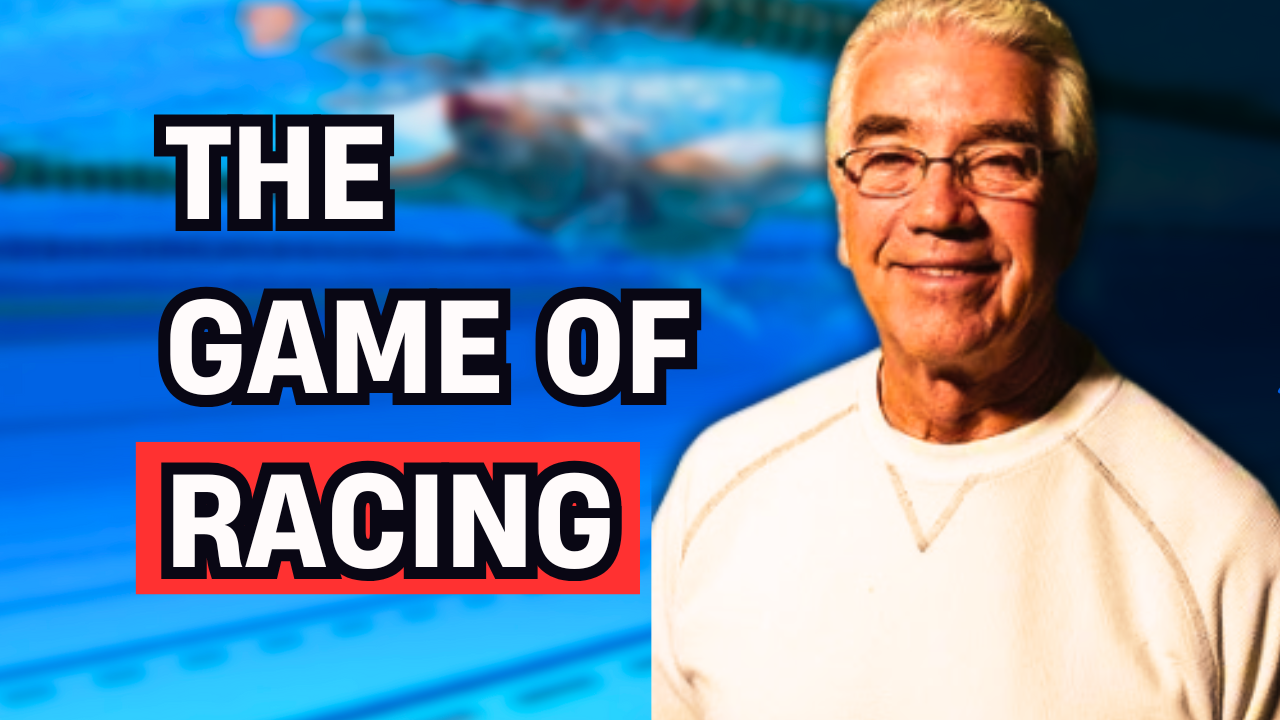








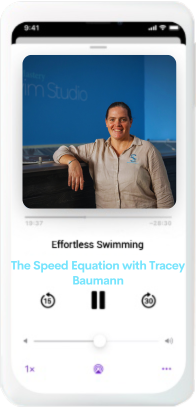
Welcome to this week’s episode of the Effortless Swimming podcast. My guest today is four time guest, Tracey Baumann. On this episode, we’re talking about the speed equation, your combination of stroke length and stroke rate, and how to find that sweet spot for whatever distance or whatever effort you’re doing.
This is really the art of it. This is the art of swimming where we want to develop good technique, but then in order to swim faster, we need to make sure that we maintain that technique. but we consider the stroke rate side of the equation. So on this episode, Tracy and I talk about how to find that sweet spot, some sets and some ways that you can practice this and find this in training and some ways that you can develop gears in your swimming.
If you find that you’re stuck and you can’t get faster and you’ve only got this one speed that you’re always stuck in, how can you actually go about developing those different gears? So let’s jump into the episode with Tracey Baumann.
02:58 Everybody Can Learn Something
04:48 Direction of Energy
06:44 Purposeful Exaggeration
08:42 Remembering Knowing Where To Look
09:50 Fingernails Forward
12:21 Flattening Out A Tablecloth (Breast Stroke)
13:31 Speed Equation
17:18 What is the Magic Number?
19:53 Sets
21:25 Fast and Slow Tempos
26:42 Having Different Gears
34:54 For Intermediate Swimmers
36:18 What People Should Know
38:31 Intention Setting
SwimMastery Set books:
Code: EFFORTLESS10
https://swimmasteryinternational.com/order-intro
SwimMastery:
www.swimmastery.online
Instagram: https://www.instagram.com/swimmastery/?hl=en
Facebook: https://www.facebook.com/officialswimmastery
Want to really transform your swimming? Join us on a swim camp in 2025 in the Maldives, Galapagos Islands, Whitsundays or Thailand: https://effortlessswimming.com/camps/
Change your technique and swim a smoother, easier freestyle with the Effortless Swimming membership:
https://effortlessswimming.com/training-and-membership-plans/?el=blog
Need a premium wetsuit without the price tag?
Use code ‘EFFORT20’ for 20% off Great Ocean Wetsuits. FREE Shipping Worldwide:
https://greatoceanwetsuits.com/
Watch on Youtube:
Transcript
Read the full transcript
I think what is fascinating and I think the more people that see what happened, we posted on Instagram a little interview and some shots of you swimming and stuff, is that there’s everybody can always learn something and I think having you in the pool was so great to see that there’s always something to find and you could get in the pool with me for the next 30 years and we’d always at least find something to work on to improve on and I think that’s it’s such a great way to feel because there’s never any end to this journey you know I get it sometimes and I have the coaches look at me and you know I’m like you know I’ll play and yes I need to do that welcome to the effortless swimming podcast to show that helps swimmers and triathletes love the water become a better swimmer and live a better life here’s your host Brenton Ford welcome to this week’s episode of the effortless swimming podcast my guest today is four-time guest Tracy Bowman on this episode we’re talking
about the speed equation your combination of stroke length and stroke rate and how to find that sweet spot for whatever distance or whatever effort you’re doing this is really the art of it this is the art of swimming where we want to develop good technique but then in order to swim faster we need to make sure that we maintain that technique but we consider the stroke rate side of the equation so on this episode Tracy and I talk about how to find that sweet spot some sets and some ways that you can practice this and find this in training and some ways that you can develop gears in your swimming if you find that you’re stuck and you can’t get faster and you’ve only got this one speed that you’re always stuck in how can you actually go about developing those different gears so let’s jump into the episode with Tracy Bowman welcome to the effortless swimming podcast my guest today is someone who’s been in
the podcast three times before this is the fourth time Tracy welcome back to the effortless swimming podcast lovely to be here again thank you for inviting me back we’ve just got back from me visiting you up in Brisbane at your studio there we did a bit of what you did a bit of coaching in the endless pool there which was which was terrific be good to talk a little bit about that session the setup that you’ve got and then what I want to get into after that is something that we didn’t get to cover in the third episode of our series which is the speed equation stroke length stroke rate how do we find that sweet spot in between and how do we start to move the needle on either of those so that we can ultimately get faster so let’s just talk about that well that session there so I came up that’s great swimming the pool for about an hour and just had you doing some filming and coaching on on my stroke which was really bizarre because I do it
all the time for other people and then to be on the other end of it it was just weird and I found myself smiling and laughing underwater because I’m just like this is just this is such a bizarre thing to be getting at myself so and maybe what did you what did you first notice when you’re watching me swim just about aside from how good I looked when I was swimming you know just aside from all of that not yeah of course I think I think what is fascinating and I think the more people that see what happened we posted on Instagram a little interview and some some shots of you swimming and stuff that there’s everybody can always learn something and I think having you in the pool was so great to see that there’s there’s there’s always something to find and you could get in the pool with me for the next 30 years and we’d always at least find something to work on to improve on and I think that’s it’s such a great way to feel because there’s never any end to this journey
you know I get it sometimes and I have the coaches look at me and you know and I’m like you know halfway and yes I need to do that I didn’t notice that so I think it was just another reminder of this whole journey to mastery which is why I named my company it is that by definition you never reach it and that just really stuck out when you you got in the pool swim absolutely beautifully and yet when we dialed it down and looked at the timing and stuff we could find things that could make you feel even better in the water yeah it’s uh what I what I really liked about it was obviously just having someone give me feedback because I’ve seen myself swim a bit here and there I noticed a few things but it’s so good to get someone else to to look at it and the first thing that you notice was my well my breath timing was a little bit late and so I was lifting my head a bit and it was just throwing the stroke out in particular my catch on my right side
which I I sort of had a feeling about like I sort of felt like and I’ve seen it before that my catch when I breathe is often just not very good and uh but I yeah it’s something that I just hadn’t really been told or sort of noticed myself when I’d seen it um do you want to talk about maybe the what we went through there just to help yeah work on that and what was what is really fascinating is that you know when you when you watch somebody swim you know you first of all kind of go big picture and then you you’re able to zone in and what I kind of do is I do a kind of big picture scan zone into where the what’s happening and then scan out again and kind of see the direction of energy so the movement that the swimmer is is making and that was really um with your um breath it was really obvious how it was diverting your direction of the energy that was kind of the first thing that um I really noticed and in the endless pool it just accentuates
eights it because obviously you’ve got the currents like having your own little studio and inbuilt you know scientific experiments so you know when when we notice that and then we make the changes not only did I see more fluidity in your stroke but you felt less bumpiness in your stroke so both from what I was seeing and what you were feeling as we changed the timing of that breath because yeah it was almost like you would you were performing the stroke and it was I mean I’m exaggerating a lot because you’re an excellent swimmer but just as as a way of thinking about it you were performing the stroke and then going oh yeah I know what it is I forgot to turn my head to the breath kind of thing and as soon as we pointed that out and got you to go earlier earlier earlier still you could feel the fluidity in your stroke within the current and so it kind of gave you I I think the confidence to know that that was
improving your your your technique and therefore direction of it yeah what I noticed there was when I did get it I could really tell it just felt in sync felt very in tune and very smooth and I also felt like my catch was just a lot but was a lot better that just happened naturally when I got it right and the other thing I noticed too is I did have to exaggerate it a lot and I talk about that with a lot of the swimmers when we run clinics is is a great chance you’re gonna have to dial it up two three five times how much you think you need to to make the change and that was certainly the case with just turning my head before and I don’t know if I got this exactly right but this is kind of what stuck with me is the the head leads the hand or the head leads the arm there’s something along those lines that you use so so what you want to what you want to try and do and it’s it’s always interesting when coaching people is making sure that the words
the words that I say are not going to cause any long-term problems so I have to be really mindful of what I’m saying because as you rightly pointed out it often has to be a purposeful exaggeration to begin with because it’s so different I mean how many hundreds and thousands of strokes have you taken in the past doing that breath timing and so we have to go wacky to to break the kind of interrupt the pattern if you like however a pattern interrupt has to be something that’s going to interrupt a pattern but not cause a problem so you know what what I always do is because what we want to make sure is that the the turn of that head is going with the whole body rotation so we want to try not necessarily connected up to arms because that goes outside in and we want to make sure we stay coaching from the inside out so what we want to do is time it with the rotation but I give so so what like I did with you is I get you to exaggerate exaggerate
more exaggerate more and tell me how it feels and then you’ll tell me which one felt the best and I think with you um the earlier still was the one that was better so you didn’t you had to go quite far and then eventually you you’ll be able to back off to just early and eventually it’ll just be what what your stroke is but timing it to the rotation is going to keep you connected as you go through this kind of almost recalibration of your spirit level is kind of how I just and the other thing that I was doing was looking a little bit far behind me instead of going to the side and when you have me work on it the first breath that I took you stood where you wanted me to look and yeah and I remember you waved and I was like that made me laugh but I’m like damn it like I remember that I like you got me that that that really made it stick so like so that’s it just that in itself I thought was a really yeah it’s just such a useful way of having me remember it and actually
no I know where to look as well yeah it’s a really great thing you can do in like if you’re doing workshops as partner people up and have them just do sort of six strokes three breaths to one side and have them walk next to each other and show a number with their fingers so it could be two four five whatever and then they have to stand up and it just just keeps the focus but it also gives them a way to observe the other person as well so if they’re doing the fingers they’re observing what the other person is and then they have a go and look at the fingers it’s just some lovely fun ways you can help people to know where they’re going and where they should be going and then the other one was or the other sort of cue or phrase you used was fingernails forward from from memory yeah so do you want to talk a bit about that that and what the the purpose behind that was yeah so the reason why I was getting you particularly and you know each
each one to one lesson is going to be personalized and so for you I could see that your right catch wasn’t as effective as your left catch so your left catch is amazing as this most incredible pathway and the right catch you were slightly collapsing at the elbow going wide and you know long-term that’s not going to be great for your shoulder but it’s also not as effective so as I was sorting out the breathing timing I was just wanting to take the streamline if you like along for the ride so that we could maintain the joint mechanics as you recalibrated your your breath timing because obviously you know the brain is always connecting what’s happening all the time and if we move one thing then the other one that’s kind of like going well what does that mean for me and so giving it a job means that you keep everything going together so I had you doing that so essentially you know from if you’ve read the book it’s
essentially maintaining the middle and in your case middle and right trident prongs so that we maintain the whole unit going forwards during that breath so that it can tap into the perfect um catch mechanics once you’ve done the breath yeah that’s it yeah yeah it was and it was it was really good and when I got it all sinking together like there was some some strokes that just felt really really good and you just flew through the machine right like I was on the button going whoa I can’t keep up with you yeah being able to just make sure you’re going to actually see that you’re going faster because you can set the speed was a was a big one and I mentioned this before our call but um there’s been moments in some sessions since that where the stroke has felt really really good and yeah so I’m excited to just keep working you know working with those couple of things and then just seeing that seeing where that takes me so it’s
and it’s just so funny being on the other side of it because like it’s been a couple weeks since our session I’ve had some swims or parts of sessions where I like well okay this is feeling great other ones where I’m just it’s not quite clicking because I’m maybe fatigued there’s a lot of people in the lane or it’s just it’s one of those sessions but it’s getting more consistent and like it’s just it’s not it’s not going to happen all the time so of course yeah and how’s the breath stroke going because we popped a little brushstroke in there because you mentioned that you were having a little bit of pain have you managed to do any of that just that pain gone hopefully yeah yeah no so with the breath stroke occasionally I would get some pain in my most of my left shoulder in the out sweep and what you noticed was I was turning my hands out too much and putting too much pressure on in the out sweep so the the phrase you used was like like flattening out a
tablecloth yeah tablecloth which was which was a really good visual cue for me and it’s been been really good since so it’s like I’m starting to get used to that I don’t really do much time stuff with breath stroke but in terms of like pain no there’s nothing there and I’m actually applying that to my butterfly because typically my fly yeah typically my fly I think I just put too much pressure on when my hands are overhead or above my head so I’ve just been yeah just reducing that and trying to only really put the pressure on once my hands are a bit below my shoulders yeah fantastic so um yeah that was yeah very very helpful so I appreciate that it was really no worries anytime let’s get into the the speed equation so when you when you think about something when you talk about something it can be very simple if we go it’s just a combination of stroke length and stroke rate so let’s just improve each of those and we’ll be going faster which is true
but there’s a lot more that that goes into it what’s how do you sort of typically look at the speed equation and what’s your approach to it so the first thing that I do is I add one more metric to the speed equation so I have stroke rate stroke count SPL and so let’s I we tend to talk in words tempo and SPL strokes per length and then something we call RPE rate of perceived effort and it’s the the combination of those three the best possible combination of those three for any given distance that everybody’s looking for and once they’ve got those then the byproduct of that will always be sweet speed because it’s a maths equation but we have to bring in RPE to that because otherwise it might not be sustainable depending on what what the distance is that you that you want to swim yeah so that uh rate of perceived exertion very important fact of it and how what are some common mistakes or pitfalls that you
see when people are considering each of these different parts of it well I find it fascinating is and you you know I think just in life in general we often feel this you can I can say to you you know and ring a ring of rosies or something to you and whatever I say to you is going to go through your filters or your patterns your this and you might hear something like come to you don’t just have to know I don’t know and and and I find it really fascinating when we start talking about metrics in in the pool that that really happens a lot so I can say so what I want you to do is I want you to find your best possible stroke um SPL for for the length and at your fastest possible tempo with your best RPE and we’re going to find that magic number and we’re going to work on it and all they hear best possible SPL and they go to the pool and they do everything to try and get down to zero guys no we don’t want to get down to
zero we’re finding it’s it’s got to be a combination of all of them and equally so you know if they hear the word stroke rate and then they’re in in the pool just trying to up their stroke rate and but nothing else is involved in that equally one will cause over gliders and the other one’s going to cause cause spinners and we don’t want either we want that beautiful happy medium in the middle where we have people with who are swimming with perpetual motion at their they’re at their most efficient and therefore hopefully they’re fastest once they get their math so I think that’s the biggest common error I see when people start working with this stuff yeah I think I think it tends to always skew to people trying to increase their stroke length like if they just always like tend to go too far with that how to swim at a clinic on the weekend and he he was an over glider he was he was rotating way too far he was losing his balance each side because he was
of the opinion okay I need to get my stroke count down as low as I as low as I can and when we just sort of got rid of that misconception then he start like he’s like okay this is how much we generally want to be rotating side to side we don’t want to go so far where you’re losing your balance and your legs are playing and such a better stroke like just and it floats so much so much better and he actually ended up traveling further with each stroke because he wasn’t losing his balance right yeah yeah so um that’s yeah that’s usually where it’s uh where it tends to to go first and in terms of like a minimum stroke rate or tempo is there sort of a magic number where like okay this is this is just too low and we always just want to look at bringing it up because I have seen people who might have a stroke rate of like 40 two individual strokes 43 individual strokes per minute but they just lose so much speed and momentum that they’re like we kind of
have to work on that first yeah do you sort of have a magic number there or anything that you think of again the magic number is individual and because everything and and you can’t even go by height or wingspan because you know every single person’s body makeup is completely different they have a longer torso shorter legs longer feet shorter feet shorter arms you know whatever it is that they have that they bring to the table is is just personal to them and so so it’s very difficult to put out some kind of generic charts and say oh you should fit within this because often people don’t necessarily fit within it and then we’re sort of almost putting them into a container that doesn’t allow them to actually be the best swimmer and the fastest swimmer that they can be so the way we always practice it is if you’re always working on stroke count and tempo with a tempo trainer then you can’t ever go too slow or with a too low stroke count because
the beat of the tempo trainer will work we always work on mode one so that we can that in order to minimize these risks and if you’re always doing that you can’t go wrong you can only get better so if you just do one of them in isolation then you then you can create errors but together it’s really difficult to create errors because you’ve got accountability with one or the other keeping you on track so to speak this podcast has brought you by great ocean wetsuits an up and coming Australian performance wetsuit brand for triathletes and open water swimmers the wetsuits are designed and tested in Melbourne Australia for fast easy and enjoyable swimming for athletes of all levels they’re worn in and raced by Olympians triathletes and open water swimmers from all over the world and you can currently get 20% off either the gold or silver wetsuit models using our own code f at 20 at checkout at greatoceanwetsuits.com
and no matter where you are in the world if you’re in Australia, the US, Europe there’s free shipping worldwide so get yourself a great ocean wetsuit I personally use the gold model of the wetsuit it just depends on what your goals are I know you’ll like them in terms of sets and things like that is there a certain is there a particular set or style of set that you would use with people to help them work out where that sweet spot is depending on the effort and distance yeah so there’s not a particular one so I have here I was talking to you earlier this this book that I created with a colleague of mine and Pam and we created this set book this is a book of 12 sets with all different things and you can just see baby as I’m showing here the different color coding are pointing to different parts of the metrics different types of metrics so what we’re doing the whole time is we’re working through we’re working people through all of the metrics and we we work on
six we’ve got six metrics that we that we work on all together and we want to make very well-rounded swimmers and the only way to do that is to obviously work on the technique as a whole and then work on all the metrics as as a whole so we have we have baseline test swims we have higher low tempo threshold kind of things to find out where their their tempo ranges for now find out where their stroke count ranges are for them and then the idea is is that whatever sets they do from there on in is about learning how to push those ranges because obviously the bigger the range that they can use on both the stroke count and the tempo with rpe always as a measure the faster that they are going to be able to swim because it is just a math equation and so when you’re talking about having them swim with a bigger range talking in terms of like both right like 60 strokes a minute up to 70 strokes a minute but also like being able to not spin the wheels but just be able to sort of
shorten your stroke a little bit and just maybe put a little bit less pressure on the water and then taking longer longer bigger strokes with a bit more power that sort of thing is that what you’re referring to yes so so absolutely and like I say we always use the tempo trainer on mode one so we always talk about seconds per stroke so we’ll take you know for some of my clients you know and it’s very dependent on the person i have them swimming anywhere from 0.85 stroke every 0.85 seconds to anything to 1.7 and everything in between and counting their strokes and some can’t do that range some some have a very small range to begin with and and the whole thing is is how low can you go how high can you go and how can you push those barriers with with the RPE because there’s so much to learn at both ends of the spectrum you know I had a lesson with well not a lesson we just went for a swim with a colleague the other day and they were like oh I don’t want to do these
really slow tempos like I can do fast tempos why would I do slow tempos so I went that’s always a challenge for me if someone questions them like well let’s have a go have a go and then let’s have a have a conversation so we went through the low tempos I got it going down to to 1.6 165 17 and it was fascinating all the the the parts of her stroke that suddenly be she became much more aware of them because she had more time but also it’s harder to maintain your body position at the lower tempo so it highlights where the errors are that this the faster tempos mask so so at the lower tempos we can learn lots about our whether we are actually connected inside or not because if we’re not we’re not going to be able to do them and the RPE is going to shoot through the roof to be able to maintain the correct stroke length and equally so at the faster tempos it also teaches me stuff because if I suddenly put the tempo trainer on it I don’t know
let’s just say for argument sake one so that’d be 60 strokes per minute and my stroke count goes through the roof then I know it’s somewhere at that tempo I’m spinning wheels and I need to go back to my synchronization points and figure out what that is so that I can learn how to do a better stroke count at 60 strokes per minute and watch the RPE come down as a result yeah we we have a set that’s that’s 700s and basically going through I think off the top of my head I think we start at maybe 56 strokes per minute and then we ramp it up or maybe we start at 52 but then we ramp it up by four and so you end up being around like quite high like 84 88 strokes a minute towards the end which is very high for most people but like and just sort of charting it charting the the effort charting the times and the stroke counts and like you can you can see it when people when people hit there hit the top of it the efforts way up there but the strokes are way up
there and the times are either the same or they might actually be getting slower because they’ve really started to often they’re slower yeah yeah and so it’s quite interesting just to track that and to see where that point is that they do that they do drop off in terms of the the tempo trainer what are you using on mode one instead of mode three the reason is is because then my clients or the people who are working in this way can make changes on every single stroke they take because they know what is happening so what I so a couple of things I challenge my students and my swimmers to do is never they’re never allowed to use the watch so they’re not allowed to use stroke counting on the watch they have to count in their head and they have to get so great at counting in their head that they can push off and they can recognize tiles on the floor and know where they should be at that time and know whether they have to make adjustments in their stroke
in the moment and the only way that you can do that is if you have the tempo trainer on mode one and telling you exactly at what point you should beep and you’ve got you’ve learned your stroke count then you’re much more able to change things while you’re going so for example we we do some sets where we say to the swimmers okay I want you to do the same stroke count for the next 10 50s whatever you have to do and you’ve got five seconds rest so I’m putting a rest period in there for example you have to maintain the same stroke count and so what do you have to do in your body and in your stroke to be able to maintain 10 50s on this tempo with five seconds rest on for 10 v’s and they get so good at being able to do that because they’re in the moment often I find when when we’re setting the tempo at something like 50 you know 56 or something they get that it’s they’re getting the data afterwards that they’re not getting the data in the
moment because it’s because the equation is the other way around so that’s the reason so we can make changes during the lap and not just afterwards yeah gotcha and then in terms of say stroke rate changes for open water swimming changes in conditions do you teach your swimmers anything in relation to that or is it more just about like finding finding what fits in the moment like because like I personally find in the open water if I’ve got a wet suit on and I’m in the ocean I’ve got that extra buoyancy I tend to have my stroke rate come up more more more than it does in the pool for say a one kilometer two kilometer race um are you sort of training anything with that or are you just sort of letting it happen once you you start to master that in the pool yeah so I think what we try and what we try and teach the swimmers is to learn how to have different gear gears we call it gears and we give them the different gears
so that when they go into open water situations or race situations they know exactly what to do to tap into those different gears that they may or may not need for example if the water is a bit more choppy they definitely might want to up the stroke rate a little bit and back off on on the pressure on the pressure that they’re applying and they know how to do that um so for sure we want to give them lots of different strategies to be able to deal with different situations I also do a lot of coaching in the open water where I’m coaching the student so obviously they they’ve done all the technique work and they have an idea of tempo and stroke count and and stuff and then we teach them how to work with the water you know if the waves are coming this way we do we swim into them along them around them back from you know with them behind us and stuff and really have them learn how to go with the water rather than try and climb over it so and then we can bring the tempo
into that as well because if you know if the waves are sort of more loping then the tempo will slow down if they’re a little faster you need to speed it up so you can fit into the rhythm of the water so you’re kind of being with the water so that’s a lot of fun in the water camps yeah and it can feel like a fifth stroke in a way the open water swimming and just getting used to getting used to that so it’s you just I find you just can’t be the experience in open water swimming like you just need you need to get out there and do it and get used to that because very there’s not you just can’t do it in the pool it’s just so so different now in terms of developing gears I think that’s one of the like once someone’s got the fundamentals down I think that the ability to be able to change speeds and have more than one speed is just so critical to any sort of progression with your fish swimming yeah so are there types of
like a particular set that comes to mind or a way of approaching that for people yeah um so so we have a couple of sets that that we um tend to build on for for swimmers around gearing one is and this is another reason why we use the tempo trainer on mode one is because if I can if I can start say for I’m going to say come in a 50 meter pool and I’m going to push off and I know that my usual stroke count in it in a 50 is 37 strokes just picking numbers out of a hat and I’ve got the tempo trainer on let’s say keep it some keep the math simple is on one one second per stroke I know that if I can then swim that next lap because I’ve made some changes in my technique um you know any of the changes that I know is going to give me a little bit more stroke length than I can then hit the wall in 36 strokes then I already know I don’t ever have to look at the pace clock I already know I’ve swung that length one second faster because the
tempo trainer’s on mode one it’s telling me I know because I know because of my stroke count and then if I was to push off from all and typically this is the case when you push off and you come back typically we tend to add a stroke and if I’ve lost focus or something and I suddenly do 38 strokes I know that I’ve swung the lap now two seconds slower than the one before and one second slower than the one previous but teaching teaching your student how to really recognize the power of being able to find your stroke count maintain your stroke count and play around with your stroke count at different tempos really get allows them the opportunity to tap in into the gears and then teaching them the sensations of what that feels like when they’re doing it with the tempo trainer take the tempo trainer away and make them repeat it without the tempo trainer and then they use the tempo as the trading chip on how on how to achieve the different gears
because obviously in a race or something they can’t have a tempo trainer and all the while we’re doing this you’re ignoring the pace clock like we never look at the pace clock because it’s just a maths equation I take one stroke less the same tempo I know I’m going faster I take more I know I’m going slower so we kind of we kind of work at it from the other way around so rather than making it all about the pace clock we make it nothing about the pace clock and work towards that being a by-product of getting better at doing these tasks if you like and you know this this is so much of this I was so lucky to learn from from Terry Lachlan for sure you know he was he was the most genius swimmer he could get in a pool and he could say what he was going to do for an hour session and he would just nail it the control and power he had over his mind and his stroke was second to none and my whole life is to try and impart that knowledge and
help other people to achieve what I used to observe Terry achieving it was it was hmm wow I love I do I love the simplicity of of that and having used like use the tempo trainer and then just just stroke count to to get them to almost switch off from thinking about the the speed part of it because one of the things you mentioned on an earlier podcast is we don’t want to chase speed and that’s when people really start to shorten up and they get tense and they rush and they just don’t swim as well and so you know that just really puts them in their mind and in their body about what they need to do to get faster so that’s yeah that’s a really good good approach to it how often would you recommend someone do a set like that is it weekly is it every other week is there so again you know everything is is always I seem to say the same same answer it’s dependent on their journey so somebody who is just starting out learning the technique and there’s
you know if everyone watching this goes back to podcast number one then kind of spend some time working on that stuff and then podcast number two spend some time working on that stuff and then podcast number three I would kind of have them probably start doing some a few sets towards the back end of podcast number two and then once they’ve sort of started working on podcast number three that you and I have done that’s when I would get them to do regular sets so you know the clients that have done that been through that process they’ve really imprinted the new techniques I have them doing two to three sets a week with check-ins you know I do virtual coaching and we do check-ins once a month and I send them sets that I want them to swim over and over again to see where they’re at and push the boundaries you know and and and it’s so fun because never once do I talk about time and you know after a period of time and it’s
different for everyone I start getting messages going oh my gosh it doesn’t matter what I do I can’t swim a hundred slower than one you know than one piece and before they were kind of in the ways and it’s just like oh my gosh I can’t believe it so that’s that’s that’s the idea so you want to build up to be able to do this two to three times a week but starting slowly learning how to do it first like it’s all about learning how to focus the mind and then you can add in the difficulty as you become more attuned to it yeah my my next question was going to be on uh you know if that you get an intermediate swimmer they’re frustrated that they’re not getting quicker what yeah what can they do from there but by the sounds of it it’s well kind of if you go through each the technical things that we spoke about on these on these four episodes and towards the end of that you’re starting to to build in some of these swim sets
sets and sessions and work on those different gears but you really need that the foundation in place before that uh before we start to to look at doing those things. You can add in you can certainly start with stroke counting like having students start learning how to stroke counting in itself because I don’t let people use the watch because it’s meaningless until they can download it so having people learn how to stroke count in the moment is a skill in itself so I like to introduce that metric first because it also gives us a measure kind of gives us a measure of their starting point albeit without the other metrics to start off with and then you know once I can see that they they’re able to stroke count and maintain focus on a cue hard like not easy to begin with that’s that would be for me the measure where I can start work you know giving giving them the set so it will be different for for everybody because it will depend on their mindset largely
rather than their skill. Yeah and in terms of what you’ve learned over the years with this this aspect of it what’s what’s something that you wish everyone would know something that you think like people come into it I’ve got a little bit of an idea okay stroke length stroke rate what’s what’s something that you think most people don’t know but they should. I think that how important working on stroke length and stroke count is over looking at the pace clock I think if swimmers can could wrap when swimmers my experience shows that when swimmers can wrap themselves around that notion to let go of the pace clock then they start going faster and for some people that takes forever some people they can’t stop looking at the pace clock and some people can do it straight away if we could bottle that up and sell it I think people would go faster much much more quickly because we’re terrestrial mammals as soon as we try and go faster as
as you said people just go slower because they disconnect and they start pulling and kicking as fast as they can and just turning up the water and they just see the you know they just see bigger numbers on on the pace clock all the time so I think that would probably be the one thing that’s great one thing that kind of marries up with that too is something you mentioned on the last podcast that was like thinking about what moves me forwards like what like even with the kick and I’ve been doing a little bit of this in in our clinics is if we get someone who we go from a float into just a forward kick or a front kick and I might get one or two swimmers who are kicking and they’re not going anywhere perhaps they’re moving backwards yeah and then just having them think think about and explain well okay the thing that moves you forwards think of your the top of your foot when it kicks down and back that’s that sort of movement that flick is is actually sending you forwards and so
having them think about that and then the thought of okay I want to go forwards here it does something quite magical for a lot of people just like it’s pretty cool yeah that way yeah and you’re not chasing the speed that way but you’re just thinking about the the thing we actually want to do but we don’t actually think about it is going forwards it’s just yeah that to me was a big a big eye opener and a good way to get people to think differently about how they’re approaching this I mean and setting that intention it’s it’s the intention setting it sounds it sounds a little crazy but the intention setting of everything I do in the pool is because I want to go that way faster faster and more efficiently and safely like if we just remember that then everything we do becomes purposeful and not just something we’re trying to execute because we’ve read it in a book or listen to it on a podcast or something but all of these movements will move you forward if you intend them to and allow
them to yeah that was a really a really good one anything we haven’t covered so far that you think could be important to to cover on this topic there’s probably it’s probably done so I think I think we’ve done a really good overview I think what will be really interesting is to hear what questions this brings up with people it’s been so great over the last three podcasts to read the questions that people have been posting and I think it’ll be really interesting to hear the questions that come up from this podcast because that might spark more more opportunities for more discussions going going forwards but I think that’s a really nice sort of introduction I could speak for hours on on this topic and you know we could we could go into the nuts and bolts of of each of those and maybe there’s opportunity to do that in the future but I think for now that’s a really good overview of of some possibilities I’d like to say I
put a link to a book with a discount for you guys and for anybody I think at the moment in Australia located in Australia or UK we will post you one it’s not currently on ebook form but it will be at some point but for now if you’re in Australia or UK we can get those out to you so we can put a link maybe at the end great you’ll put that in the in the show notes if you’re listening and if you are watching this on YouTube or from Spotify or elsewhere jump on to the YouTube if you have any questions put that in the comments below and we can do another episode early next year and we’ll we’ll answer some of those questions whether it’s about this part or anything else from the other other episodes I think that’s a good way to cover off number five yeah there’s so many great questions in in those those last podcasts I keep meaning to find time to go actually and pull out some of the really like and that’s how I learn I learn from people asking
questions because it makes you think and there’s some really great ones in the the last podcast so yeah excited to see these ones Tracy thanks again for for being on love chatting with you and appreciate the the time a few weeks back in in Brisbane so we will put we can put that in the show notes as well just how fantastic to see you there so uh Tracy thanks again my pleasure thank you and have a lovely Christmas with your family thank you you too and thank you for all the opportunities that you’ve given me to be on your podcast this year it’s been so much fun really loved it I’m really glad we got got introduced because all these like opportunities all these like things are just like where my sort of coaching brain tends to go so I got just some of it’s intentional but some of it’s just luck and being introduced to different people and I’m really really glad that we did get introduced because I’ve learnt so
much from uh and ditto right back at you yeah me too awesome thanks Tracy thank you all right thanks for listening to the effortless swimming podcast if you’d like us to help you become a faster more efficient swimmer go to www.effortlesswimming.com