








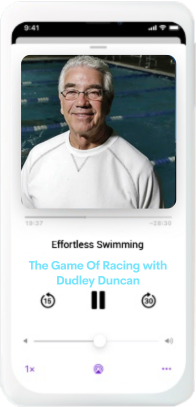
In today’s episode, I’m speaking with Dudley Duncan, a seasoned coach and author of The Art of Swimming and The Game of Racing. Dudley has spent years refining his approach to swimming and he’s sharing some incredible insights that will help you improve both your mindset and your technique in the water.
We cover stroke mechanics, the power of visualization to boost your performance, and strategies to build confidence so that you feel stronger and more capable every time you swim. Dudley also talks about how to balance hard work with mental toughness, giving you practical tips to stay motivated and achieve your goals.
Whether you’re training for a big race, or just looking to swim smoother and faster, this episode is packed with ideas to help you take your swimming to the next level. Let’s dive in.
02:22 How Did You Get Into the World Of Swimming
05:40 Philosophy in Developing Personal Growth of Swimmers
08:02 Setting Standards
09:00 Pulling People Back In The Line
11:28 Pushing Athletes To Their Limit
14:20 Philosophy in Developing Good Technique
19:59 Kayak Analogy
21:43 Drills
26:42 Visualization
35:22 Developing Confidence
38:13 Dealing with Failure
40:48 Advise to New Coaches
Purchase the book: https://www.dudleyduncan.com/
Want to really transform your swimming? Join us on a swim camp in 2025 in the Maldives, Galapagos Islands, Whitsundays or Thailand: https://effortlessswimming.com/camps/
Change your technique and swim a smoother, easier freestyle with the Effortless Swimming membership:
https://effortlessswimming.com/training-and-membership-plans/?el=blog
Try PILLAR today, head to pillarperformance.shop and enter code EFFORTLESS for 15% off, or for any North American listeners, enter the same code at TheFeed.com.
Watch the episode on YouTube:
Transcript
Read the full transcript
I’m related to kayaking a little bit because I’ve kayaked a fair amount and you can gain much more power in the kayak if you concentrate on the side that you’re pushing on. So if you just gain purchase with the paddle, the paddle holds the water and you push on the other side, that movement will give you much more power than just to pull on the paddle. Welcome to the Effortless Swimming Podcast to show that help swimmers and triathletes love the water, become a better swimmer and live a better life. Here’s your host, Brenton Ford. Welcome to the Effortless Swimming Podcast. I’m your host, Brenton Ford, and in today’s episode, I’m speaking with Dudley Duncan, a seasoned coach and author of the art of swimming and the game of racing. Dudley has spent years refining his approach to swimming and he’s sharing some incredible insights that will help you improve both your mindset and your technique in the water.
We cover stroke mechanics, the power of visualization to boost your performance and strategies to build confidence so that you feel stronger and more capable every time you swim. Dudley also talks about how to balance hard work with mental toughness, giving you practical tips to stay motivated and achieve your goals. Whether you’re training for a big race or just looking to swim smoother and faster, this episode is packed with ideas to help you take your swimming to the next level. Let’s dive in. Welcome to the Effortless Swimming Podcast. My guest today is Dudley Duncan, the author of the Art of Swimming and the Game of Racing, Reflections of a USA Swimming Club Coach. On today’s podcast, I want to chat about several topics that I think will be useful for adult swimmers and triathletes to improve the performance of their swimming and get your take, Dudley, on things that you believe would help this type of swimmer because you’ve been around the pool
for many, many years and I think having to condense your thoughts in a book and spend the time sitting down, writing and editing and refining your thoughts gives you a lot of knowledge and wisdom to work from aside from all of the years that you spent on pool deck. So welcome to the podcast. Thanks a lot. It’s great to be with you. How amazing we can talk this way across continents. Well, you’re over there in Florida. I’m here in near Melbourne and I appreciate you jumping on the podcast and just to sort of kick things off. Where does swimming start for you in your life? How did you originally get into the world of swimming?
Well, I guess my first thing to say is I failed beginner swim lessons. So once I failed, I was committed to doing better from then on. But also my father died actually when I was 11. And my mother moved us to a community that had a swimming pool. And the idea of that was so that we would have somebody taking care of us in the summers while she was working. So got started swimming there, went to military school and swam there, you know, during this during this swimming season, finished high school, coached a little bit before I got drafted into the service, which was late 60s. So rather than go in the draft, I joined the Air Force and I fell into a situation where I was stationed in Fayetteville, North Carolina at an Air Force base there. And I was my career field was changed from radio operations to security police.
I was investigating vandalism at a Colonel’s house on the base. He had five kids and most of them swam. So they needed an assistant coach at that time for the club team on the base. And so I raised my hand and said, I can do that. And by the time I was through doing that, I was committed to life of coaching. And I went to college, majored in fiscal education, was coaching the club team while I was in college and one of the families paid for a graduate assistantship so I could stay on another year and just kept coaching from there.
I did apply for two jobs, which I failed to get. One was at the university where I was going. And the other one was at this place about a couple of hours up the road. And I didn’t get them. So I went down to a junior nationals and was handing out resumes on the deck. And I happened to get a job with a coach named Jim Montrella, who was a 1972 Olympic coach and worked with him for 10 months before I went back to Virginia. Actually, so that job was here in Viral Beach. So that’s the connection that brought me back here eventually. But it was 10 months and he really changed my consciousness, I think, elevated it. And one of the jobs that I did not get fired the guy that they hired instead of me. And they called me and asked me if I come back. So I came back, went back to Virginia and coached there from then on. And in terms of that, I would have coached a lot of swimmers over your over your time. I know one of the things that you focus a lot on is their personal growth
and development of your of your swimmers outside of the physical development and strength development, which I think is a huge, a huge part of developing any athlete, especially one that’s going to be able to stick around long term. And it’s going to be able to have the mental, the mental toughness to be able to race well and train well. What were some philosophies or strategies that you developed over time to help with that personal growth side of things and develop that in your swimmers?
Well, I think one really important thing, it’s a chapter on it early in my book. It’s on developing team consciousness. And I think it’s very important to educate people all along the way to develop that team consciousness. And hopefully that team consciousness will be an elevated team consciousness as well, where you’re really trying to improve yourself to whatever level you can reach. And that starts with imposed discipline. Of course, when you’re kind of letting everybody know what you want and how you want them to do things, but if you present it well and you educate well, then I think there’s self-discipline that comes out of that eventually. And that’s what you want is ideally is a team where the discipline and the approach to swimming is building on itself. And the swimmers, the parents, the community are all committed to what you’re doing with that team consciousness. And from then on, it can grow.
It’s slow growth. Generally, I think it takes about three years to actually change a consciousness of a team. And so it’s probably a decade of time before you get them to where you want them to be on the basis of self-discipline rather than imposed. How did you set the standards with your team early on? Do you get everyone together? The parents, the swimmers, sit them down and talk about these are the standards. This is what we require or is there a different strategy that you would use?
Yeah, there’s a fair amount of talk that starts out with the swimmers, of course, dependent on their ages and with the families as well because the families are a very important part of it and the coaching staff as well. So when you’re all kind of coming together and everybody understands what you’re intending for
the team itself and for the groups within the team and for the individuals within the groups, then you have a pretty strong basis to work with.
And then how do you go about pulling people back into line? There’s always swimmers who like to push the boundaries of beard or maybe aren’t fitting in with the team consciousness. What were any sort of strategies or maybe examples of times where someone wasn’t quite playing ball? Yeah, a good example, I guess, is the beginning of practice, to start practice.
I always wanted to start the practice with the group all there and to start the groups with take your mark, go a really great start to start the practice. So there would be swimmers that would not do a great start or lag a little bit, not be on time, those kinds of things, think it was okay, be average or whatever. And I tended not to accept that. So the least you could do is start practice on time and have a good start to my command. And if you did that, the practice was great. And if you didn’t do that, you weren’t in the practice. That was the day you would miss.
I wasn’t loud about it or anything. I just called it out that if somebody was late, I said, come back tomorrow. Somebody did a poor start or wasn’t paying attention.
Either have them do it over, have the group do it over or talk to them about it. Inevitably, I wanted to win that exercise. Is that something that you had to develop over time? Not assertiveness, but that willingness to commit to standards? Or is that something that you found you had straight away when you started coaching?
Probably took about a month to get everybody to where they were
doing what I wanted them to do in the beginning. You know, once everybody understood that it was necessary to be on time and to do that technique well, make it a difference maker in a race potentially, then yeah, it wasn’t too hard to do after that.
And in terms of pushing athletes, I think Swimmers have got to be one of the hardest working athletes on the planet with the amount of training they do, some of the sessions that are involved with it in the early mornings, those sorts of things.
How did you find that balance between pushing athletes to their limit, but not going over the top where they suffered mentally as a result of it? Yeah, it’s really an important element with club kids, especially and I guess with adults too, especially at a master’s level, a lot of them are coming back to swimming and they’ve had a wide variety of experiences with different coaches and that, you know, so yeah, it’s something that you just
have to attend to sort of the way that you do yourself as a coach. So I mean, you’re there the same hours, if not more, probably more. When I owned a business, it was a lot more.
But yeah, so the important thing I think is to keep it in perspective, to understand that it’s not always. I mean, you hear Swimmers describe what they do, they’ll go like, you know, we practice every morning and every afternoon and we do dry land and, you know, we practice and go to meets on the weekends and, you know, we don’t have time for anything else. And that’s really not the case. It’s not quite true. So you have to keep it in perspective. There are periods of time where you’re doing that kind of training possibly.
The one thing that makes you appreciate it is if you don’t have the pool time and you don’t have the opportunity to do it, you start worrying about whether you’re going to perform or not. And I’ve had that situation too. So yeah, but you keep it in perspective. You don’t feel sorry for yourself. Talk to them about that. There’s no need for it. If you want to be competitive, that’s the nature of the competitive development as you come along. So yeah, I think it’s just a matter of, you know, you’ll have an individual or maybe even a few that are feeling sorry for themselves, you know, and not responding the way you want them to, and you pull them out and you go, you know, you’re feeling kind of sorry for yourself. You need to cut it out. You know, if you don’t want to do this, you can go home. You don’t have to. Nobody’s forcing you, you know, but if you want to do it, then do it well. You know, so that’s kind of the approach that I use.
And going on to stroke mechanics and developing that in athletes, what was your philosophy in developing good technique and efficiency with swimmers and marrying that up with the hard work as well? Because they’re both really important. You can’t have one without the other. But sometimes I find that can be a bit of a challenge because you want to get the work done. You want to train them hard. But we also need to make sure that the technique is up to scratch as well. So what was your approach there and philosophy in developing that?
Yeah, so the first thing that we would do is to create a system of nomenclature or terms that we used, you know, to be able to swim well. So the first one is balance. And we define balance as a leveraging process rather than, you know, the head altogether doing it. So we want the head in line with the spine, but the balance points surround the lungs. So you can press in at the balance points that surround the lungs that, you know, depending on where you are in the stroke, and it sort of leverages the lower body up. So you don’t have to, you know, like lift the head for breath or pull yourself up for breath or over kick, you know, to keep the body up. You can leverage yourself in the water. It’s kind of counterintuitive. Most people do have the instinct to lift the head or press downward on the water to be able to
get themselves to breath. But if you learn to balance well, then you can do it without that. We generally start balance on the back for new swimmers. And new swimmers would be people I haven’t coached before as well, even if they’ve been swimmers for a long time. But we can find that balance pretty easily pressing the back of the head and the back into the water and feeling the hips and the legs come to the surface. Likewise, if you’re in balance and then you lift the head or lift your body up, you’ll feel your body go down. So, you know, balance is a very important element. We have a statement that we make all the time, which is a longer vessel is faster than a shorter vessel. And we show them how if they’re balancing on kicking on their backs, and they rotate to the side, keeping their arms at the side, and then lengthen the arm, then right away, they can feel the difference in speed. So a longer vessel faster than a shorter vessel to the extent that you
to the extent that you can make it as long as can be dependent on the stroke.
And then it’s the third thing is to coordinate the hips to that recovering arm and that lengthening arm so that it’s driving that part of the body forward. Swimmers tend to instinctively pull on the water, you know, think I’ve got to pull hard or pull fast. But we take the other side to try to create efficiency and speed as well as we can without the pull being the primary factor. We do talk about feel for the water, you want to hold the water again, purchase on it, and then let it move at the speed of your hand or your hips and your body to create that that efficiency and timing. As long as you’ve got the hips in the right place at the right time and you initiate the movement at the right place at the right time for freestyle, we do that in what we call the front quadrant. And that’s as you know, you’ve got the
the arm that’s lengthened out in front of you and you wait until the recovery comes to the entry point and then you’re in the front quadrant and you put it all together right there.
I’m related to kayaking a little bit because I’ve kayaked a fair amount and you can gain much more power in the kayak if you concentrate on the side that you’re pushing on. So if you just gain purchase with the paddle, paddle holds the water and you push on the other side, that movement will give you much more power than just to pull on the paddle. So I liken it to that and they seem to understand that. And then the last thing, and once you’ve got yourself balanced and timing, then you can start working on the combination of stroke length and stroke rate to find the optimal balance between the two for speed. And that takes a while for some swimmers, not so much for the really great swimmers naturally, which is probably about 2% of people. But the 98% of us, you know, take time and if we forget about it and go back to our instincts, we’ll lose it as well. So it needs to be reinforced. I just want to go back to the
kayak section that you’re talking about there. So for those that are that are listening to the podcast, you’re saying if you’re kayaking, you’ve got your paddle, let’s say on your right side, it’s in the to the right of you. And then you’re talking about on, so you’ll let the left side of your body trying to drive that forwards or you’re talking about the right side. So yeah, so most people will just pull on the paddle, you know, right and left or right and left. But if you rather think about putting the paddle into the water at the place where you put it, and rather than thinking about pulling on the paddle, you use your hip that’s on the other side and that arm to push the paddle forward, then you create and generate a lot more power. Likewise, too, you can feel the length of vessel, too. If you have a longer kayak, it moves faster than a shorter kayak. I have a 19 foot and a 13 and a half foot. And I had I lived on a reservoir in Virginia, and it would take me two hours to
kayak from one end of the reservoir to the other and the 13 and a half foot, it would take me an hour and 40 minutes and an 18. Yeah, interesting. That’s a great analogy with the kayak, because obviously, I say that a lot when I’m coaching with swimmers who have very little connection in their stroke where the arms are moving through, but it’s not connected to the body. And trying to train that and develop that in people who don’t have a swimming background as a kid is one of the challenges that we work on people with and hopefully help them with. Are there any particular drills or strategies you had there to help them with that side of things?
Yeah, like with freestyle, we’re starting on the back and then rotating to the side and kicking, and then we’ll do what we call a triple switch where without a breath, we’ll go three strokes and try to feel that movement in the three strokes and then go to breath because breath usually interrupts things. So it’s a little bit easier if you can take a few strokes and then get your breath. And then once you get your breath started again, regain your balance, then three strokes. If it’s backstroke, we like to watch the recovery too. I believe in visual awareness. And if you can see what you’re doing and you have a purpose, then you can develop timing a lot more easily than just trying to feel it. So for backstroke, we’ll focus on the recovery arm as it’s coming over and try to time the hips so it’s moving with the recovery arm as we see it come through our field of vision. And that really creates a timing and we’ll do
a similar thing, a three kick switch, or we’ll do single arm where we’re turning the hip and rotating and seeing the recovery arm, that kind of thing. Yeah, with breaststroke and butterfly, we want the hips high as the arms are extended, you know, so that’s kind of our starting point. And then a lot of it has to do with first getting the hips in the right place at the right time, but the second thing is breath. So with butterfly, you don’t want to interrupt the flow of the stroke by having a high breath or lifting the chest up to breathe, just extend the chin to the water surface, you know, and try to keep your line going with the rhythm of the stroke. And for breaststroke, it’s most important that you breathe as the arms are coming on the end sweep so that it naturally the end sweep brings you to the breath, you’re not lifting the head to get to the breath, you’re taking the breath as your arms bring you to it. And then the other part of timing
in breaststroke is to try to get the feet to recover as the hips are moving downward. So it’s not you pulling your feet up, it’s letting them come to you as a result of the hips
depressing in the water. So once you’ve got the timing on it, it’s really,
it feels miraculous really, you know, because breaststroke I think is the hardest stroke to time. Well, we do drill in the deep end, we call seahorse, where we’ll just lay flat, you know, with the upper body flat on the surface of the water and the head down and the high knee sort of the butt at the surface. And then we’ll let the arms sweep out slowly and then take a fast end sweep, drive the hips and just feel the feet come to you, you know, the recovery of the feet. So you’re not, you know, having to work to get them up, they’re coming up on their own. This episode is brought to you by Pillar Performance. Our new sponsors Pillar are a sports micronutrition company. And the easiest way to describe it is that while hydration and carbohydrates products will take you through to touch the wall as fast as possible, Pillar’s mission is to get swimmers to the starting blocks in the best condition over and over again. I recently started taking Pillar triple magnesium after a
friend had recommended it, and it’s been a game changer for my sleep and recovery. I take one scoop 30 minutes before bed each night in the same way that you might start your day with a coffee, I finish it up with the magnesium and recover better for tomorrow’s session in the pool. Pillar Performance is used by some of the biggest names in swimming and triathlon, including Zach Stubble to cook, Jan Frodeno, Ben Canute, Ash Gentle, Taylor Nib amongst the host of other well known swimmers and triathletes. Where Pillar differs from other micronutrition you may have taken before is both the quality of the types of magnesium and the tangible results that I see on my garment each morning. If you’d like to try Pillar today, head to pillarperformance.shop and enter code effortless for 15% off. That’s effortless for 15% off all first time purchases or for anyone in North America, enter the same code at thefeed.com. And you mentioned you sort of like to train things visually. In terms of
visualization, was that something that you used with your swimmers in their race preparation, in their stroke development? Yeah, it is a lot, quite a bit really. We used to, I’ve done a lot with it, had some interesting stories that go with that too. It’s really a powerful element. I had, we did, going into a YMCA Nationals, I was coaching a team that was YMCA at the time, and we did visualization for five minutes before every practice for a season, you know, the short course season going into YMCA Nationals. And I did it five minutes and I would call out every 30 seconds and I would have them, you know, ask them to visualize.
We of course get into a relaxed state first and, you know, have it very quiet and everything. So, it was all set up to visualize. And we had some interesting things happen. I had a boy that wanted to go under two minutes for 200 a.m. And he visualized 158 all the time. And he was like a 205, 200 a.m. or, you know, so big drop. He didn’t actually break two minutes. He went two minutes plus. But he got under the flags right at the end of the race and his freestyle stroke just stopped for a, you know, just a blink of an eye. Yeah, you could see him, his stroke interrupted because that’s where he had visualized that to happen. That was pretty cool. And yeah, another swimmer had actually made the Olympic team and swam in Australia. And when she made the team Olympic trials, she said, you know, she swam for Auburn. She was swimming for Auburn at the time. But she had been with me from eight to 18 years old. And she had done a lot of visualization
stuff. And after she made the team, she called me and she said, I just got to tell you something. And she goes, I really, I swim every single race, the preland, the semifinal and the final exactly like I wanted to swim it. And I made the team and I didn’t know if I would make the team. And it didn’t matter really, as long as I swam, my race is the way that I had visualized it and thought about it. She goes, I thought about that race every day for a year, just in my mind. And so I made the team. I was happy. So then I got into the Olympic procedures and also we went, you know, from Indianapolis to California to Hawaii to Australia. And I was with all these heroes of mine that I had known growing up and stuff. And we were getting all this uniform and everything. She goes, it happened so fast. The next thing I knew, I’m walking out for the semifinals. And I realized I had not thought about this race even one time, that whole time. And she said, I would then
announce me, I was put taking off my uniform. And I was more tired at that moment than I was all the way through Olympic trials. I never felt that. And she didn’t swim well. She went out, she said, I was dead tired at 75 meters. She says, just because I didn’t pay attention to what I was supposed to do, you know, and they did a visualization at Auburn. So, you know, she was used to it, but the Olympic staff or whoever she had coaching her, I don’t remember who it was, during the preparation for the Olympics, didn’t do it. You know, and she didn’t think about it. It’s pretty fun. I remember when I was 15, we were doing a lot of visualization, usually once a week. And I would visualize swimming the 400 medley at Nationals. And I wanted to go, I think I wanted to go a 441. That was my goal. And I ended up swimming a 443 in the finals at Nationals. But that was a big stretch from what I thought up was possible. And I think the visualization for me, just when I was in the race, I’ve
been here before. I know what to expect. I know how it should feel, how it should look. And I found it’s such a useful process in my training and in my development. I would go to bed as well a lot of nights and just kind of picture or visualize parts of the race as well. And in a session, if it’s like a breaststroke set, I’d be picturing myself in that race again, just trying to put myself there as much as possible. And I credit the visualization to having my best result ever in the in a competition. Like it was just it helped help that much. And it’s something that as an adult, you know, we have other responsibilities and things where I don’t don’t really visualize much these days. But it’s something that I should, I think, you know, it’s just sometimes we just get distracted by by other things. But it’s just so so powerful when I think back to when I have used it previously in life. It’s been very beneficial.
Yeah, I think I think it needs to be combined also with your goal setting. So when your goal setting that needs to be very detailed, I think. And you need to know, have a good idea at least for how you want to swim the event, you know, ultimately, whether you want to build the event and split it or whether you want to, you know, take it out fast and hold on, or whether you’re going to just flow with the race or whatever. But you need to practice that way every day, I think. And that sort of strengthens the visualization as well. You know, as if you’ve got that firmly in your head from your practice, from your deliberate practice, it’s things to like, you know, you’re going to really try to win the turn, you’re going to be great underwater, you want to take, you know, eight kicks underwater, whatever, you know, you need to be doing that, you know, in your practice. And when you’re doing it in your practice, and then you visualize on top
of that, and you see it in your mind, the two go together, you know, so they come out a really dynamic duo. So it’s been, I think, you know, really gives you a good effort, you know, when it comes to race time. And even things like knowing, thinking about how you’ll maybe feel in the moment, what you’ll be wearing, what you’ll be smelling, what you’ll be seeing, just trying to make it as visual as tangible as possible. And adding those other elements in too can really help as well. And I did a, I did a couple of talks recently to some schools. And I, like just on sort of just I’m talking about effortless swimming and things like that, like different career paths for people. And this is, this is out of my comfort zone. I can talk freestyle, I can talk swimming all day, but talking about something that’s kind of a bit different, I was quite nervous about it. So I made sure to write everything down, rehearse it several times and just picture myself giving this
talk and just just rehearsing and practicing. And so by the time I got there, it pretty much went to went to plan, because I’d rehearsed it and, and it kind of visualized what it, what I hope it would, how I hope it would go. And, and then like it, and it was quite fun. It was quite enjoyable. But anytime where I have not prepared, it’s just like, it just, it doesn’t go well. It’s just, it’s not a fun experience. So yeah, it’s stuff that can be used in, in other elements of, of life as well. And I think I just have to remind myself, you know, whatever, whatever those goals are that I’ve got one year, three years out, just remember to like visualize them too. Because yeah, it’s easy. I think it’s easy when you’re in the system, you know, you’ve got a coach there who’s helping you guide you through this. But then when we, we don’t have for someone else to kind of answer to or giving us direction, that’s when it can,
can fall the way a little bit. Yeah. Yeah, you’re right. It’s a very powerful tool when used along with everything else you’re doing. And in terms of developing confidence in, in swimmers and, and in athletes, how, what are some strategies that you’ve used for to help develop that in, in swimmers? Because you can see when someone’s on fire, like an athlete who’s on fire, let’s like Leon March on, for example, like he just, he was on fire at the Olympics. When someone’s got that confidence in themselves, they, they can really perform well. But then, you know, people can go through the opposite of that where they’re just really struggling to get up and race and hit their times. Was there any sort of strategies that you would use to help develop that confidence in your swimmers? Well, yeah, I think the first one is to learn to think about what you want, not what you don’t want. So a lot of swimmers, I mean, it’s probably
human nature. Some people will tend to, you know, think about what they want to happen and focus on the positive. And others will be afraid of what they don’t want to happen. You know, unusually, if they’re concentrating on the wrong thing, then that’ll affect their performance, you know, they’ll be, you know, sort of holding back, so to speak, because they’re thinking about the wrong things. And did you ever see the movie Point Break? Yeah, the, the, yeah, the original one? Yeah, yeah. Yeah. So there’s a point in the movie where, you know, Counter Reeves is, he’s going to jump out of the airplane, they’re flying an airplane, and he’s going to jump out, he has to jump out. And he’s standing at the opening and Patrick Swayze says to them, don’t think about what you’re afraid of. Your worst fears will come to, you know, come true if you do. Think about what you want, you know, and I thought, golly, well, that’s profound, you know. And so he goes ahead and he jumps out of the plane,
everything happens, you know, as it happens. But that’s really, I mean, that’s really what it’s all about, you know, you can’t be afraid of what you don’t want to happen. You just have to keep your focus on what you want. Everybody can do a start, everybody can swim, everybody can do a turn, everybody can finish, you know. Usually people don’t have any fears when they’re swimming against people they know are slower than them. And they don’t really have much fear when they’re swimming with their equals and they know it, you know, but when you’re swimming with people you don’t know or you think might be faster than you, that’s when it comes in, you know. So you got to, you know, keep your mind on what you want. And the other thing I think is important is how you deal with failure. And it’s necessary to fail.
Everybody’s going to fail at one time or another either in practice or in, you know, a meet or whatever. But I think of failure as a positive attempt. You know, if you’re trying to do what you want to do and you can’t quite do it, you know, for one reason or another on a given day or, you know, you’ve tried a number of days and it’s not happening. All of those are really positive attempts that allow your body and your nervous system to release itself to a higher level of performance. And you have to kind of go through that. And we call it overcoming neurological inhibition. It’s just your body kind of having a governor on it, like for a car or something, you know, and you have to overcome that. And it’s going to probably require some failure for that to happen. It’s not a negative thing. It’s a very positive thing. It’s just depending on how you perceive it. A coach that he does a little bit of coaching it out at our camp.
So Gary Hurring, he would talk about the pit of discomfort that you go through. Whenever you make any changes to your stroke, you’re going to be in this zone and this place that it’s uncomfortable. It’s awkward. It doesn’t feel good. But if you persist long enough, you will come out the other side of it having changed those habits and improved your stroke. But just knowing what to expect when you’re looking to make those changes can help you stick with it and push through because we just it’s like a rubber band. We just want to kind of go back wants to go back to its original shape. But if you just continue to stretch it and be comfortable doing that, then it’s going to stay stay stretched out for afterwards, right? So it’s, yeah, it’s something that I think is good to let people know about as they’re going to go through any any stroke changes or they’re looking to develop themselves as a swimmer.
But it’s kind of like climbing a mountain with a yo-yo. They’ll be ups, they’ll be downs. But if you just continue on, that trajectory is going to be in an upwards direction. Yeah, that’s right. Yeah. I really believe in that and try to help my swimmers believe in same thing. And in terms of advice you would give to say new new coaches or so even if it’s not coaching, but just some a couple of lessons that you look back on your your career with that you’d want someone to know if they were starting out in that in coaching. Well, I think to research and to study and learn as much as you can is the most important thing. And it’s been my observation, not only of a lot of coaches on the deck, but myself as well, that when I was not very knowledgeable, I tended to be a lot more emotional in how I was acting on the deck and that. And I recently was described as being a man who seemed to be stoic when the
swimmers were swimming. And I didn’t really think about myself that way. But I think that the more you know, the more you’re watching, the more you’re studying the performance as it happens. So, you know, when you’re trying to cheer them on when you’re younger and you don’t know very much. And by the time you’ve got some years of experience and some knowledge behind you, then you’re watching the performance to see how those things are playing out. And it’s a busy time because you might have, you know, three people in the water and you’re watching their mechanics, you’re watching the flow of the race, you’re watching the time on the splits, you know, you’re watching turns and what happens in and out of those and the finish. And there’s a lot to pay attention to in a given race. And oftentimes you’re watching more than one person. So there’s really not a lot of time to run up and down the deck and cheer for
people. You know, they know, they don’t hear it anyway, you know, they know you’re doing it maybe, but, you know, if they’ve seen you do it with other swimmers or whatever. But for the most part, it’s a waste of time, I think it’s better to study and then to have something to give them, you know, some important feedback afterward. Yeah, yeah, absolutely, absolutely agree. Well, Dudley, thank you so much for being on the podcast. For those that are listening, we’ll link to your book in the show notes, The Art of Swimming and the Game of Racing and it’s available through Amazon and we’ll link to your website there. So Dudley, thank you very much for being a guest. Anything we haven’t covered so far that you’d like to add?
No, I think the questions were really excellent. And, you know, we talked about things that matter. The book is obviously a lot more detailed. The information is, I think, of a broader nature than just competitive swimming, things like team consciousness and deliberate practice and the mental game. We have a saying, no brain, no game, you know, that we use all the time. So I’ve written all over the place, you know, so, I mean, it’s things that really apply in other fields other than swimming as well. So yeah, I hope everybody will enjoy reading it. Awesome. Thank you very much, Dudley. Talk to you soon. Appreciate the time. Thank you.