








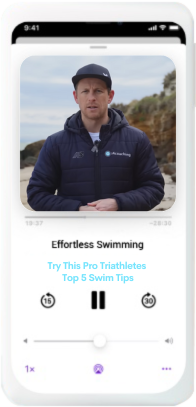
Mitch Kibby is a professional triathlete who’s placed 16th in the 70.3 World Championship. He began his triathlon career without a swimming background, and has gone on to compete with some of the strongest swimmers in the pro field. This is how he did it.
00:22 Introduction
00:57 Favourite cue
01:56 Kick
03:03 Breathing both sides
05:11 Catch and pull
08:38 Developing speed
09:57 Long-term approach to improvement
10:33 Finding the right company and support
Improve your technique with the 8 Week Faster Freestyle Course: https://effortlessswimming.com/8wffc/
Join a freestyle clinic in Australia: https://effortlessswimming.com/freestyle-stroke-correction-clinics/
Get your stroke analysed and join our online swim squad for workouts: https://effortlessswimming.com/training-and-membership-plans/
Try PILLAR today, head to pillarperformance.shop and enter code EFFORTLESS for 15% off, or for any North American listeners, enter the same code at TheFeed.com.
Transcript
Read the full transcript
I’d much prefer just to connect with the water early and then focus on that channel that I’m pulling through and making sure that my hand is pulling inside the line of the elbow. Welcome to the Effortless Swimming Podcast to show that help swimmers and triathletes love the water, become a better swimmer and live a better life. Here’s your host, Brenton Ford.
Have you ever wondered how someone can go from very little swimming experience to becoming competitive in the pro triathlon field and consistently swimming under 115 per 100 in the Half Iron Man event? Welcome to our channel. Today we are diving into the inspiring journey of Mitch Kibbey, a professional triathlete and coach. Mitch will share how he was able to go from being a non-simmer to top 16 in the world at the Half Iron Man distance, focusing on the technique and the strategies that got him there. Whether you’re just starting out or looking to up your game, Mitch’s story and tips will show you how he was able to transform from being a novice swimmer to a pro level swimmer and competitor. Yeah, so anyone who’s spent time in the water with me coaching probably knows I’ve got a phrase for everything or plenty of cues, so there’s probably too many to reel off, but some of my favourite ones are balance before power,
and I think what I see quite commonly is we want to go in there and give really strong effort to our swimming, but we’re applying force before our body’s ready to control it, and that’s where we see energy wastage and inefficient technique, so balance before power is one of those ones that just allows us to control where we’re applying our force, and it’s a powerful thing for the swimmer to have in their mind because that balance component gives you the composure and the power gives you the control to know that you’re swimming on your terms rather than being dictated to. So the kick’s really important. I think for me it’s probably been one of the last pieces of the puzzle that I’ve pulled into my freestyle stroke. One of the important things that I consider is just the tension that you’re holding around your knees. I often find that if you can keep the knees tight together, that helps to connect through the core
and just bring the upper body and the lower body together, so holding a level of tension between the knees helps keep the kick tight, which also assists your stroke rate. I find that if you can keep the kick nice and narrow, the arms will turn over a little bit freer, and you won’t notice that same dead spot in your stroke as the kick splays and comes back together. So I think one of the really valuable things to work on is just your kick with a kickboard. While it can be quite different to swimming and kicking during the freestyle stroke, but I think just learning how to kick and basically how not to exhaust yourself with the kick is really valuable. So I think it’s really important to be able to breathe to both sides when you’re swimming. Not necessarily just for the mechanics of the right side versus left side swimming, but I think more so just for your composure. So I’d prefer to look at it breathing as managing the air in
versus air out balance. So that way it doesn’t matter what your stroke cycle is, whether it’s two strokes, three strokes or more. It’s much more about just being able to manage the pressure in your chest basically and being able to reset any time you need. So I think one of the problems is if you get stuck in a breathing pattern, quite often that means we’re going to hold our breath and that’ll end up exhausting us in the water. So having access to release that air either on the right side or the left side I think is really important. And for me, when I’m swimming it’s very much I’m just aware of what that balance is and I want to make sure that I can release and reset any side, any time. But typically in the pool I’d much rather breathe to the left-hand side and in the open water I’d prefer to breathe to the right-hand side where I find it a little bit easier to sight off that left lead arm. But I haven’t met too many other people
that have that same preference so if you are let us know in the comments. So I think it’s quite typical to rotate a little more to the side that you’re breathing on. So that’s something that I’m quite aware of. And if I’m breathing right side quite often I’ll try and drive that right side back through the stroke. So as I’m moving forward I’ll drive to reset rather than just trying to always lock out that rotation which again you will try and do. So long as you’re driving back through the stroke I think you’re going to find that you’re getting that sort of equal counter rotation on each side. So catch and pull are probably the two marquee terms used in swimming and it’s what we all want to focus on and I think for me the way that I would define it is certainly with the catch the starting catch position is really important so there’s many things that come into that which is your mobility and your posture in the water
but I think having a starting catch as high as comfortably possible or sustainably possible for you is really important so you can access that first part of the water and then it just gives you that little bit more to connect with at the top of the stroke. This episode is brought to you by Pillar Performance Our new sponsors Pillar are a sports micronutrition company and the easiest way to describe it is that while hydration and carbohydrates products will take you through to touch the wall as fast as possible Pillar’s mission is to get swimmers to the starting blocks in the best condition over and over again I recently started taking Pillar triple magnesium after a friend had recommended it and it’s been a game changer for my sleep and recovery I take one scoop 30 minutes before bed each night in the same way that you might start your day with a coffee I finish it up with a magnesium and recover better for tomorrow’s session in the pool
Pillar Performance is used by some of the biggest names in swimming and triathlon including Zack Stubble to cook, Jan Frodeno, Ben Canute, Ash Gentle, Taylor Nib amongst a host of other well-known swimmers and triathletes Where Pillar differs from other micronutrition you may have taken before is both the quality of the types of magnesium and the tangible results that I see on my garment each morning. If you’d like to try Pillar today head to pillarperformance.shop and enter code effortless for 15% off that’s effortless for 15% off all first-time purchases or for anyone in North America enter the same code at thefeed.com and then I think what I’m really looking to do is have the fingertips trigger the movement so first part of the movement comes pressing the fingers down and then as I move into the catch I’m really mostly trying to get the channel that I’m pulling through to be as effective as possible so I think typically if you haven’t
given yourself time to set up through the catch you’ll end up pressing down and wide and then being left in a position that’s not as powerful through the pull phase so setting up through the catch is really important to stabilize this is where it’s balanced before power and then I think for me over the years I’ve spent so much time working both with TheraBands and SwimCords to try and get that movement of the elbow to get that fold through the elbow and so that’s something that I don’t spend a lot of time thinking about now because it should just be happening automatically I think you could probably always do it better but I’d much prefer just to connect with the water early and then focus on that channel that I’m pulling through and making sure that my hand is pulling inside the line of the elbow so if we’re pulling outside the line I’d say you’re moving someone else’s water so you’re going to be in a much more powerful position
if you’re catching inside the line of the elbows so I think swimming fast is something that hasn’t always been particularly natural for me and the way I’ve developed as a swimmer has been really developing that sort of aerobic style of swimming which is that more distance based sort of sustainable, continuous style of swimming so when I’m moving towards speed I’ve always had the tendency to muscle up a little bit and get quite tense in the water but one of the most important things is just staying free through the shoulders being able to relax and trying to keep that catch nice and narrow and a little bit shallower than what I feel like I need to so just making sure I’m folding and then I’m really just trying to trust that technically I’ll hold up and then really just work on the rating, the breathing your breathing rate needs to match your intensity so you can’t just be locked in a distance breathing pattern
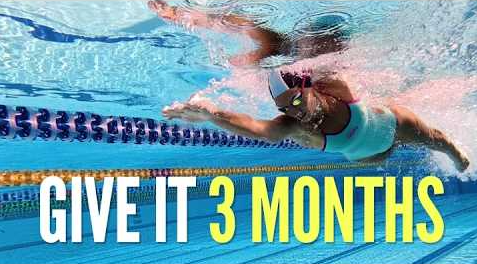
when you’re trying to swim fast so really trying to make sure I’m releasing air fast enough and then keeping the chin tucked in and basically just going for it I’ve been really lucky to work with some great triathlon and swim coaches and I think one of the most important things they’ve taught me is just to understand the time that it takes to get what you want out of swimming for someone who would always really judge the day swim or sort of be a little bit too emotional about how I was in the water and I think they’ve taught me just to sort of take a longer term approach and just accept the bad days in the water just get through the set smile about at the end and just make sure you’re able to turn up the next day and go again the biggest lesson that I could share with any swimmer who’s starting out their journey is just to accept the amount of time that it will take and there’s no one swim set that’s going to give you a breakthrough
it’s really the sum of many that adds up and I think the company you keep in the water is so important so you need to find yourself a good coach find yourself some mates to swim with and it needs to be part of your lifestyle it’s not something that you’re just going to be able to do for a few weeks and breakthrough because the better you get the better you’re going to want to get so you’re always going to want more so it’s about making swimming sustainable and enjoying the journey