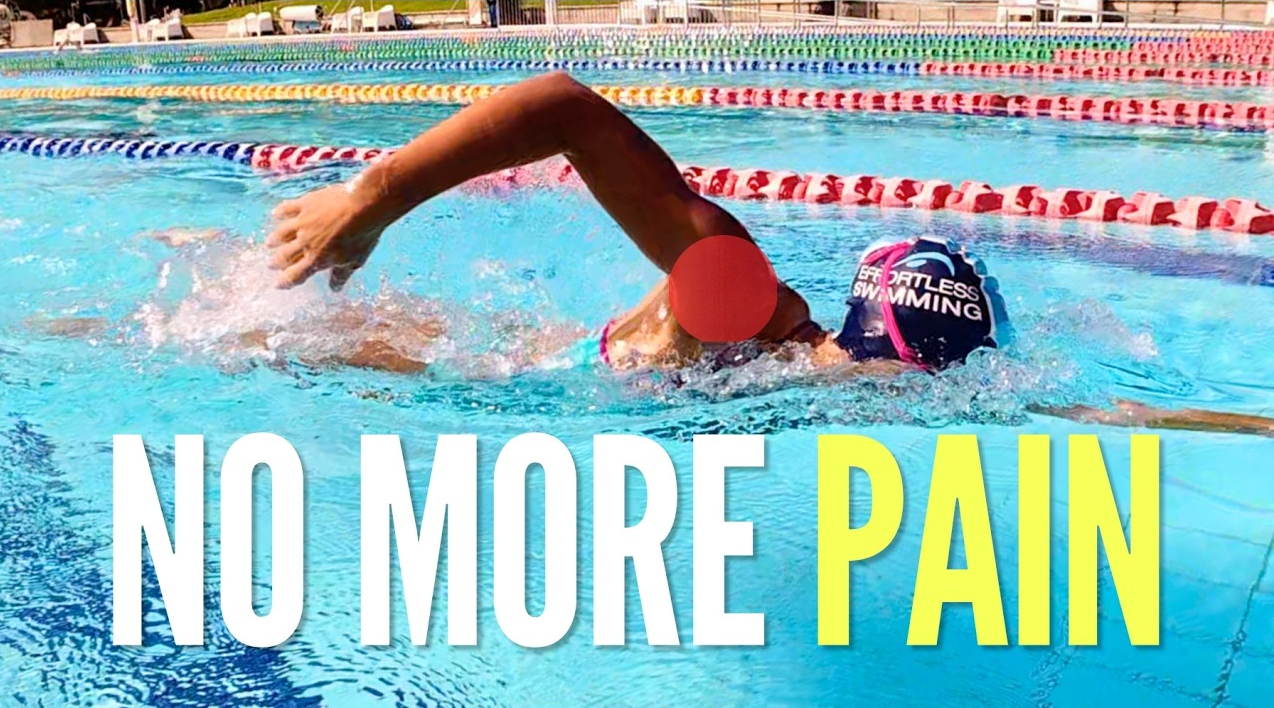








Shoulder pain after swimming? Your technique could be the reason.
In this episode, we look at three common freestyle mistakes that can place unnecessary stress on the shoulder: an overly high elbow, crossing over the centre line, and overdoing the catch. Through clear demonstrations and underwater footage, you’ll learn how to make your stroke more natural, efficient, and shoulder-friendly.
A great episode for swimmers looking to improve their freestyle technique while reducing unnecessary strain.
00:10 – Why Your Shoulder Hurts After Swimming
00:30 – The main freestyle technique flaws that can cause shoulder problems
01:40 – Flaw #1: Elbow too high
02:35 – Shoulder position and rotation
03:10 – Flaw #2: Crossing over the centre line
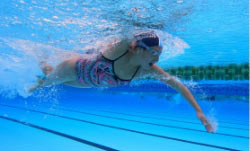
03:30 – Underwater look at the freestyle stroke
04:10 – Flaw #3: Overdoing the catch
05:05 – What happens when you overdo the catch
05:40 – Finding a more natural catch position
07:00 – Underwater examples and final technique reminders
Transform your freestyle to be effortless and smooth with online video analysis:
https://effortlessswimming.com/courses-membership/
Try the new Nanoclear Anti-fog Goggles: https://bit.ly/nanocleargoggles
Transcript
Read the full transcript
Welcome to the Effortless Swimming podcast to show that help swimmers and triathletes love the water, become a better swimmer and live a better life. Here’s your host, Brenton Ford. After working with thousands of swimmers at our clinics, one pattern has emerged and that is that injury to your shoulder often stems from something you’re doing in your technique because quite often we’ll have swimmers come in with a sore shoulder at the front or at the back and they think it’s from something internally. But the cause of that injury has actually come from something they’re doing in their technique. So in today’s video I’m going to share with you the main technique flaws that can lead to shoulder injury and what you can do to fix it so that not only is it not painful anymore but you can swim thousands and thousands of more laps without any pain in your shoulder. The first cause of shoulder pain can be how
you’re rotating your shoulders in the water. Now if you are too flat let’s say you’re not rotating much at all. It makes it really difficult to get the arm over the top of the water and our shoulders do not move very well this way. So we need to make sure we rotate enough to get this shoulder out that we can comfortably get the arm over the top. But if you are flat here and your arm is recovering like this you imagine doing that 2,000 times in a session. That can really overload here through the rotator cuff and that can lead to quite a bit of pain. Now on the other side of that though we’ve got over rotation where I’ll usually see some is over rotating in one direction and they’re thinking of this term high elbow recovery. Now if high elbow recovery gets interpreted as your elbow should be physically very high in the water and your hand should be close to the body that is not a great position for the shoulder to be in. And even now just holding this up I can feel it
through the front. So we don’t want to bring the arm up have the hand close to the body because that is going to cause a lot of pain and probably lead to injury pretty quickly. So we just need to let the hand be away from the body a little bit because we can do this movement all day but this movement where we’re really close you’re not going to be able to do that hundreds of times in a row without causing too much shoulder pain. So we need to make sure we rotate the right amount and recover in an easy way and the easy way is elbow points to the sky hand is relaxed it’s out to the side and have this nice open relaxed recovery over the top. Now the second thing that we’re going to get into here can really lead to jamming up through the rotator cuff so if you’ve got any issues through here and through the front this can be one of the main causes. When we look at someone entering the water and extending out
in front it’s quite common to see them crossing over the centerline. Now that in itself won’t necessarily lead to shoulder pain and injury except what happens as a result of it can. So what we see is that when someone does cross over it’s more comfortable for the shoulder to go fingers up elbow down in this position if they’ve crossed over because if they have the hand down that can jam them up through here. So we often see them go to this position but the downside to that position is if you are doing that and then you begin your catch that can really start to create a lot of pain and I guess strain through that top part of the shoulder. So we never want to start our catch with our hand higher than our shoulder because our shoulder does not love that movement but it’s often that crossover that can lead to that position. So we want to make sure instead that we enter in line with the shoulder or the ear and we extend out in front and when we finish extending out in front
we need to get fingers below wrist below elbows. It’s very slight downwards angle instead of crossed over out a hand up because that’s what’s going to jam up. Jam us up through the shoulder there. Now the third thing is probably the most common cause of shoulder pain and injuries that I see in swimmers really because I think one aspect of the stroke gets taken the wrong way and they try and do too much of it. So let’s take a look at that. The catch in freestyle is probably the most common cause of shoulder pain and injury. If you do it incorrectly it can really lead to sometimes long-term damage but certainly it can lead to a lot of discomfort when you swim. Now the catch is this movement from when we’re out in front to when we’re down here. Now the two things that I see that cause a lot of shoulder pain. One is if you keep your arm completely straight and you try and push with a lot of force with this
movement that can really go all the way through the arm into the shoulder particularly into the rotator cuff there and that can be quite uncomfortable and so we don’t want to be loading up with a lot of force firstly and we don’t want to be pushing straight down because that’s where we get that shoulder pain. So what we want to do instead is keep it light as you enter and you extend forwards keep that movement relatively light so that we can bend our elbow and have the fingers point down so we can press back instead of pressing down. Now the biggest cause I think the one that I’ve seen the most injuries with is from trying to overdo the high elbow catch and what I mean by overdo is people are thinking I need to get my elbow up really high and I need to get my arms almost 90 degrees but that is not a comfortable position for 99% of people out there. It’s not comfortable it’s not sustainable. Particularly if you
have your shoulder internally rotate too much that is where we can get a lot of pain through the front of the shoulder there and so in this position if you’re applying a lot of force that is not the right position to be in particularly with your shoulder through the catch. So one of the things that we focus a lot on when we’re teaching the catch and the pull through is go relatively light like a four or a five out of ten with your catch. Yes this shoulder will move up here but we don’t want to internally rotate it too much which is what we see with a lot of people when they do it. So just let that shoulder move up but keep it in a comfortable and natural position and then as you go through here let that shoulder blades start to move down and start to move back instead of keeping it up here because if you’re going all the way through your catch and pull like that then you’re not going to use your lats your terrace major through here it’s going to be more through the
front and so we don’t want to force any positions that we do when we swim we don’t want to feel like we’re having a muscle our way through the water and so just by keeping that sense of suppleness or relaxation through our catch in our pull it allows the shoulders to move more freely and allows us to use the stronger muscles through the right parts of the stroke here so we don’t want to internally rotate too much through the shoulder there so if you are getting any sort of shoulder pain you might go through and see am I crossing over am I recovering in a in a weird way or uncomfortable way or is my catch am I doing something there that might be very extreme with my high elbow maybe I’m pushing down and I’ve seen so many different swimmers who have come to our clinics where we have identified that they’re doing one of these couple of things and they change it and straight away they’re like all right I’m actually not getting pain anymore and I haven’t felt it for two hours while
I’ve been swimming and that is really common so check that before you think it’s something that might be a long-term injury or something internal it could be something to do with your technique and if you want to get a full breakdown of freestyle technique and how we like to teach a stroke so you can swim faster and swim more efficiently click this video here thanks for listening to the effortless swimming podcast if you’d like us to help you become a faster more efficient swimmer go to www.effortlesswimming.com