








When it comes down it, sport is more than just a physical battle. Five minutes of speaking with performance consultant Wayne Goldsmith and you get a sense of just how important the mental side of it is. Wayne’s worked with dozen sports bodies and clubs from all over world. In this interview you’ll discover:
- The relationship between staying relaxed and getting faster in the pool
- How to pace your races so you finish strong
- Why athletes occasionally ‘choke’ on the big stage and how to avoid it
- How to develop a pre-race routine that gives you the best chance of success
Transcript
Read the full transcript
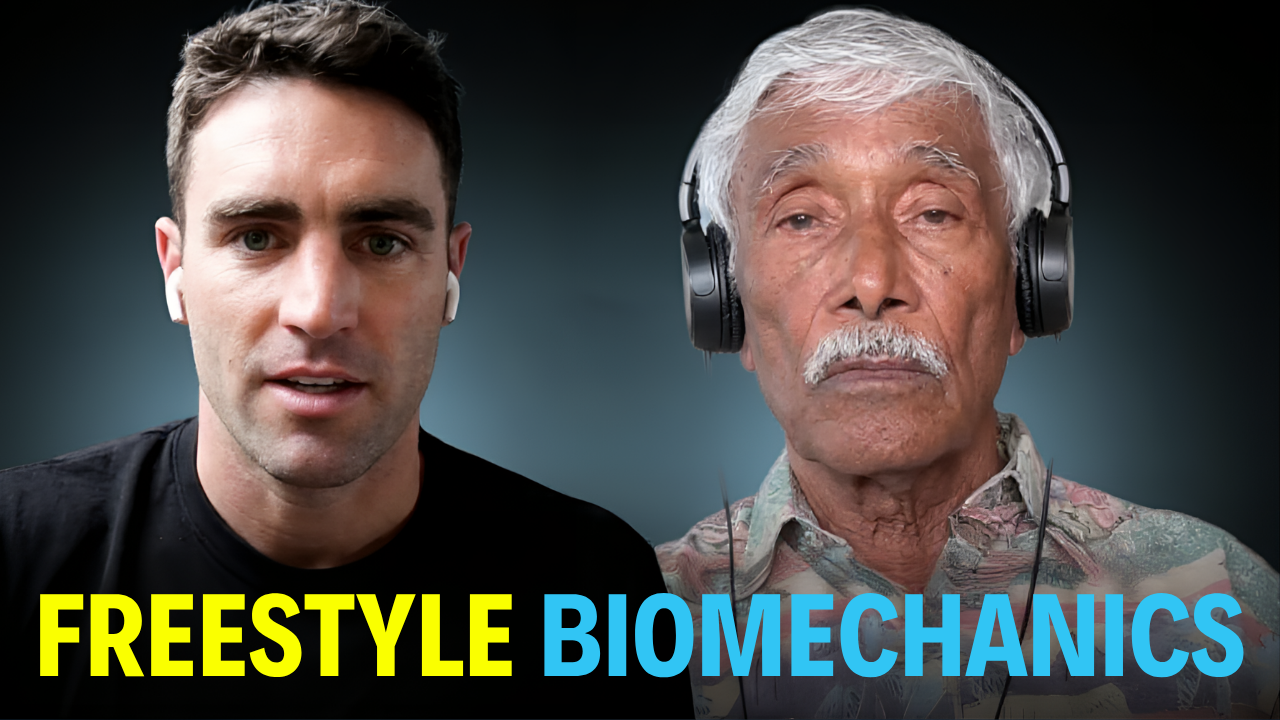
Welcome to Effortless Swimming, the podcast for swimmers, triathletes and coaches. Joy Australian swim coach Bretton Ford as he reveals the latest techniques and information to improve your swimming. Let’s dive right in. Welcome to the Effortless Swimming podcast. Today I’ve got Wayne Goldsmith on the line. Wayne’s from Moorgold Performance Consulting and he’s a performance consultant, speaker and presenter. He’s worked with Swimming Australia, British Swimming, United States Olympic Committee, South African Sports Commission, a number of AFL teams here in Australia. The Australian Rugby Union and the Australian Rugby League teams. The RIS and the list just goes on. You can see all the teams and committees and commissions that he’s worked with on his website at Moorgold.com.au. But Wayne, welcome to the call. Thanks very much for having me. Looking forward to it. What I want to cover today is talking about pacing your races better for swimming, the role of relaxation in swimming, some exercises to get your mindset and your head right for competition and training.
And also just touch on why athletes choke, so why something has failed to perform on the big stage. And we first met three years ago when you came to do a session with the Squad that I coach, PowerPoints. And you took some mistakes through some skills and exercises just to get them to improve their swimming. And the first one, the main one we did was relaxation. Can you talk a little bit about the role of relaxation in swimming? Well, I think relaxation is to me the most under-practiced and under-valued skill in swimming. But in terms of sprinting and the capacity to go fast in the water, relaxation is absolutely critical. When you think about it, when you’re a little kid, your idea about going fast is usually associated with words like hard or try more. Or mum or dad will say, clench your fist, grit your teeth, push harder. It’s always to do with effort. Because when you watch really great athletes, it’s all about fun enough, effortless speed.
It’s all about being relaxed and moving faster. It’s all about doing what you need to do without tension. I often say to swimmers, attention is the enemy of performance. That the faster you want to go, the more relaxed you have to be. And that’s a really simple statement to make. But when you think about it, it’s almost the opposite of the way we work with swimmers. We say, okay guys, come on, we slap our hands together and say, come on, it’s time to go fast. Let’s go. We even talk faster when we want athletes to sprint. We don’t want them to go harder. What we want them to do is relax more and move their limbs faster. We don’t want them to think about effort or trying. We want them to relax and then move their limbs faster. And that’s a real skill, not just for athletes, but for coaches. Is that when you’re designing sprint training programs or designing programs to enhance the speed of athletes,
is to when you want more speed, talk more about relaxation. It’s a critical concept and one of the key say for butterfly, butterfly is always the classic. I talk about butterfly in terms of it being a power circle. One of the reasons people struggle with butterfly is that when they pull underwater, they apply force, their hands go from slow to fast, like all swimming propulsive movements. They start slow, they accelerate from slow to fast, then they exit the water. And during their recovery, so the time when their hands are moving forward to go back into the water, they’re still under tension and they’re still tight and they’re throwing their hands to the end of the pool. So they’re never really relaxing. Whereas a good butterfly swimmer will apply force under the water during their pull, exit the water and then turn off and relax. And so when we talk about butterfly, applying this relaxation concept,
we talk about power on, power off, power on, power off. To get swimmers used to the idea that recovery, when your hands going forward in butterfly, recovery is very much about relaxation. And the more effective they are at relaxation during recovery, the more they’re able to then apply force during their pull phase. So this marriage between force production, speed and relaxation is critical. If swimmers get it, they improve significantly. If they try and improve purely by trying harder or pushing harder or using more effort to dead end, they’re not going to get the results that they want. It’s a bit like in the end thought documentary that was on about two weeks ago. He mentioned in one of his races back, he had the 100 freestyle and he said it was the first time he felt that easy speed, which is swimming fast, but it’s relaxed and it doesn’t feel difficult. And that’s what you’re talking about, isn’t it?
Well, you can’t fight the water. We know the density of water means that the more you fight and the more you thrash against it, the more it’s going to resist you and the more it will fatigue you. And it makes sense then to look at the water as something that you’re going to move easily through, that you’ll flow through. But it goes back to when you’re working with little kids. If you remember learn to swim, have you ever seen a learn to swim class? I actually call them learn to sing classes. Because what we do with the little kids, we’re in the water for the first time. We play a Humpty Dumpty set on the wall. We play Pop Goes the Weasel. We play Ring Round the Rosie. We play games where they’ve got to sing Wiggle songs and all those things. Not just because we’re enjoying working with kids. The reason we do it is we want them to have an association. That water means fun. Water means relaxing. Water means smile.
Water means enjoyment. So that if we want them to have a lifelong love of water and moving through it, we need to teach them right from the start that water is a fun place to be. It’s about relaxation and so on as we teach them water safety. I think one of the issues with master swimmers and triathletes particularly, if they haven’t come from a swimming background, they haven’t gone through that fun, easy movement, relaxation, smile on the water face. And particularly the triathletes come into it often with a huge aerobic base. They’ve done a lot of running, a lot of cycling maybe. And they’re used to improving by doing hard work. They’re used to improving just by pushing harder or bigger gears or running up hills. They try to apply the same philosophy to water and all of a sudden realize they just can’t do it. And so they try and do more volume and they don’t improve and they do more volume and they don’t improve.
Critical, critical thing for them is to learn to relax before they really start to do much hard work. Yeah, that’s exactly right. And when I’m working with triathletes who are new to the sport, they’ve only got six months a year of swimming under their belts. You see that they’re trying to really pull themselves through the water and just forcing their way through. And so I take them through some kicking drills and drills just to get them to stretch out and relax and just work with the water rather than fighting against it. And yeah, you’re spot on there with people who haven’t got that swimming as a younger kid, a sort of background. Well, a lot of people talk about feel, I think. One of the common things that triathletes will say or say they struggle with is feel. So feeling the water to learn where to apply pressure. That again comes down to relaxation. I often say to triathletes, sort of swimmers who are struggling with that.
Two very simple words, but man, a hell of a lot. Soft hands. The thing back in the hands, very soft and loose and relaxed so they can actually feel the water comes back again to this relaxation thing that a lot of swimmers, again, the triathletes are the biggest culprits. I think who’ve come from non-swimming backgrounds is that when you ask them to move faster, you can see the tension start to form in their fingertips, their hands. They cut their hands really tightly. They get tension in their forearms right up, even past their elbow sometimes. As they go, well, I’ve got to go faster. Let’s really grind out and apply more force to it and they can’t figure out why they’re not going faster. Whereas if we talk to them about moving their arms faster and increasing speed, keeping their hands soft so that they’re thinking about relaxation with speed or relaxation with power, they get those two things together.
They get great benefit from it. Very, very tough thing to teach because, again, they’re used to getting performance improvement through tension, through applying tension. We want them to do exactly the opposite of what they’ve done maybe since they’ve been little kids playing football and trying to improve their performance in other areas. Can be learned. It’s a very, very simple skill. It doesn’t take very long, but just those little cue words like soft hands, the faster you want to go, the more relaxed you want to be. All those power on, power off, all those little cues to keep reminding them about the marriage between relaxation and speed. I’m working with a lot of swimmers and triathletes. You can notice the kind of light bulb moment where they realise they get it. They start to switch off the tension and they just relax and stretch out and just work with the water. Once you get it, you can really improve from there on.
I think one of the drills I’ve been doing a lot lately with swimmers and triathletes has been to get them to swim very slow freestyle with their fins on and their paddles on at the same time and really relax and feel with soft hands on the paddles, feel the pressure of the water on their paddles and just feel that sensation of having pressure on the paddles. So having the fins on just takes, gives them a bit of momentum. Most drills are performed at kicking speed. So caught off when you put fins on just so they’ve got the momentum to perform the drills the way that you need them to be performed. And I found that doing some repeats early season nice and long, very, very slow with paddles on and fins on at the same time, thinking about and feeling about pressure on their paddles. I call the session pressure and power, power and pressure. So what we’re trying to do is teach people how to first feel the water
and that teaches them the concept of pressure. Once they understand the concept of pressure, then they can apply force and power to the water in the right place. If they’re not relaxed, they can’t feel. If they can’t feel, they don’t really know where to apply force effectively. So the session or the routine I do is called power and pressure, pressure and power. Another extension on that is we do that drill but we ask them to close their eyes for five, six strokes while they do it to try and get them again to not worry about what they’re seeing or looking at the line on the bottom or what’s happening on the side of the pool but to really relax, close their eyes for four or five strokes and really feel that pressure on their fingertips, the pressure on the paddle which then helps them to learn where they can apply effective force during their stroke. Yeah, and that’s one of the things that you do with my PowerPoint.
Scott, we did four 100s, building one to four. So the last 100 was the fastest one but the whole time just thinking about staying relaxed as you get faster and the feedback I got after that was that it was just so useful and to think about going faster without working harder. Yeah, that was a light bulb moment for a lot of the guys I coach. Now, look, I think if you had the capacity to do this one-on-one with swimmers you could make significant improvements very quickly where you’d walk with a swimmer, I’ve done this with a few senior guys where you start off swimming very slowly, walking alongside them as a coach and looking at them, getting some sort of feedback from them about how it feels or watching their distance per stroke, looking at how long they’re having pressure on the paddle throughout their stroke and once you see that they’re losing it, you’re back off the speed a little bit. So you might start off, for example, you might start off this progressive
power and pressure drill, you might start off at 1500m pace or even slower, let’s say 6 out of 10 speed, very, very easy and then progressively give them some hand signals, build the speed up a little bit lap by lap until you see they’re losing that sensation for feel and until you see them start to lose that pressure moment on the water. And one of the things that I’ve learned over the last few years watching some very good athletes is that I think we teach distance per stroke the wrong way. I think we’ve got athletes with a belief. I think that if you ask the average triathlete, for example, what distance per stroke is they’d say it’s from where your hand enters the water to where it comes out and everyone’s big on these long reach drills or these flick yourself on the thigh drills or the bounce the basketball drills past your knee type of things. And I think that’s right. I think we’ve got to start thinking differently about distance per stroke
because distance per stroke is not where your hand goes into where it comes out. Distance per stroke is how long during that path are you keeping effective pressure on the water so that if you’re not catching the water, not feeling it effectively and you’re only applying force to the water say from just above your head to just around about your belly button well that’s about how long your stroke is going to be allowing a little bit extra for momentum because of the speed you’re travelling at. And to me you then go from doing drills to improve distance per stroke as I said those old ones of reaching out to a stick or reaching out to a kickboard or pushing the water past your knees, those sort of things that we’ve said I think you go back to field drills and teaching athletes how to apply pressure more effectively throughout that distance, throughout the entry to exit points I think you get a far better result doing it that way.
And in terms of pacing what are your recommendations for say swimmers who are doing 100, 200 to 400 metre races, what are your suggestions with pacing? Well pacing is a matter of what you’re doing in training and staying relaxed and maintaining a pace that you’ve been trained and prepared to do and understanding it The great Russian freestyle Alex Popov had a great phrase and I’ve never forgotten I think it’s a fantastic way of looking at swimming he said there’s two sorts of athletes that you come up against in competition one group is what he calls the paces, P-A-E-C-E-R-S the ones who are trained to do a very specific job so though the athletes are training to break a minute for 100 freestyle for example they may be trained to split 28, 32, 29, 31, 30, 30 unlikely but let’s use it hypothetically and they can execute that pacing strategy effectively because of the repetition that they’ve executed in training
whereas the other type of athlete is a racer, R-A-C-E-R-S, so paces and races and Alex said that they’ve not only got a good understanding of pace but they’re able to change it and vary it and use it as a tactical and a strategic weapon depending on what needs to happen in the race so that whatever the race throws at them they’ve got the strategic and tactical tools to do with it so I think in pacing in two ways learning to pace is critical because if you can’t pace there’s a whole range of things you can’t do for example a lot of the test sets that we do with athletes depend on your capacity to maintain a very exact pace swimming Australia’s endurance test set, the 7×200 test set where you descend from around 60 boots off if you make some heart rate down to an all-out effort on the last of the 7x200s depends on your capacity to pace very, very accurately there’s another great test set I like which is 7x50s
where you start off around 12 seconds off your best time and the second 50 is 10 off your best time and then it’s 8 off your best 6 off, 4 off, 2 seconds off and the last one is a maximum speed effort again can’t do the set and the set’s a great one and you can track stroke count, stroke rate and stroke efficiency over it gives you a lot of good information but if you can’t pace accurately you can’t do the test set so pacing is really critical for that reason pacing is really important obviously to be able to hit a specific target certainly using stroke count, stroke rate and rhythm for triathletes helps them to stay on track with what they’re trying to do but then to me it’s also a very important strategic weapon to know how to take it up and drop it back when you need to and change pace then one of the issues I find with triathletes drives me mad is they do their fast work too slow and their slow work too fast
they’re always sitting around about threshold and they lack the capacity to change up or change down when they need to, they’re very, very good at maintaining the speed around about threshold but that’s the way they train all the time, they’re very, very good at pacing race distance pace but have not really got a top end or a bottom end and they can’t change up or down when they really need to and really encourage triathletes to do some of their work around 60-65% do some of their work up around threshold and then include some sprint work and sprint work being 100% maximum speed. Yeah and that’s doing those sets you need to, if you’re not doing the descent or also known as build sets where you’re trying to hit whether it’s PB plus 4 plus 2 or threshold work plus X amount of seconds then it’s very hard to know how hard you can go before blowing up and to be able to judge that pace while you’re racing and while you’re training it’s definitely
doing longer races too, it is a very good strategy to know how hard you can go before you’re going to blow up. Yeah absolutely and look there’s a lot of different ways of teaching, there’s some technology available on the market that can help teach you, there’s some technology that will beep in your ear and tell you where you are relative to the war, you can beat out a tempo. Well I found a really simple one with triathletes, it doesn’t cost a lot of money, a lot of them have got those iron man brand, I think they’re Timex watches, I’m not plugging Timex I’ve even got to watch on myself so I’m not plugging it but there’s some brands of watches, waterproof watches that triathletes will use for the rest of their training just to do split times and measure how long they’re riding and running and so on that have got a countdown timer on it and the way you can use that in swimming is just to fold it up and stick it in the side of your swim cap above your ear so you can hear it really
clearly. So let’s say I’m trying to learn how to swim 45 seconds per lap is my pace, so 130 I set the countdown timer to 45 seconds and it’s going to go off every 45 seconds of my cap and if obviously if I’m not on the wall I’m a little slow, if my feet are on the wall and I’m back off I’m a little too quick, you can do that at the beginning of training and you very very quickly learn how to hold pace and so I’ve already got one of those watches, just learn how to use the countdown timer, stick it in your cap you can learn pacing very quickly. And I heard you on one of the radio stations here in Australia the other day talking about choking so when athletes fail to perform on the big stage so the example was with Magnuson in the 4×100 he went a bit slower than what he was expecting and some people refer to it as choking but you had a really good analogy for that called plank theory, could you explain a bit more about that?
Choking is an interesting concept because to some athletes who go to the Olympic Games, the ones that are really well prepared physically, mentally, technically, tactically, the ones that have got a great preparation and got all the bases covered, they go to the Olympics looking forward to it, they think it’s a really exciting opportunity to challenge themselves against the rest of the world and they really thrive in it. A lot of athletes even if it’s not, Olympics can be national championships can be your first triathlon, can be your first junior age group, doesn’t matter what it is, the athletes don’t fully understand the nature of the environment and it’s lots more than physical and anyone can be trained to swim a fast time, it’s doing it when it’s really tough and there’s a lot of people watching and you’re on the other side of the world and so on, that’s the real issue. So some athletes go underprepared in terms
of understanding the mental stress and emotional requirements of the race even though they’re well prepared physically. Having said that some athletes will go to them and say look this is great, I’ve trained for this, I’ve lived for this moment I can’t wait to get started and they really thrive in it. Others build it up to be more than it is, others go look this is not another swimming race, this is the Olympic Games and I win this, I’m a national celebrity, I make money, I’m famous and they start to overthink it a little bit too much so it’s one of the great things in swimming compared to triathlon, football and other sports is that wherever you go in the world, FINA have regulated that the pools are a standard width, they’re a standard depth the temperature of the water is controlled so that’s standardised around the world the lane ropes, the starting blocks, the timing mechanisms everything about the environment is standardised. So ostensibly being
in Sydney, Melbourne, Brisbane and doing 15 metres freestyle in front of four or five of your friends is no different to doing it in front of the Olympic Games but the perception is so the example and this plank theory is quite a good one is that if you imagine that I had a plank of wood around 15-20 centimetres wide and two or three metres long and I had it on the ground on a grass track, dead flat on the ground and I said I want you to walk up and down the plank and walk quite easily, most people can do it blindfolded, I’ve got a two year old he would more than likely do it without a lot of support that’s not a challenge and people can do that quite comfortably. Now imagine and visualise that we now shift that plank 3-400 metres into the air and again ask you to go backwards and forwards along the plank now the plank hasn’t changed, it’s not any shorter, it’s not any narrower, it’s not any slipperier, it’s just in an environment
where your mind says this is hard, this is tough, this task that I’ve been asked to do is really challenging and demanding. The ones who see it for what it is, hey look I’m in London but it’s still the same plank, still the same lane, it doesn’t matter where this is, I’m trying to do this job, they do very well the ones who go there and see the plank as the ones suspended 3-400 metres in the air, they’re the ones who struggle, they’re the ones who really battle for seeing it being more than what it really is. I think we saw that with Lisa Jones’ 100 metre breaststroke it was her 3rd olympics, I think or possibly 4th but after her race, she raced really well, her final was a good time and she just came out of it happy with the swim just had fun and just really enjoyed it and I mean she’s got the experience there but she didn’t elevate the olympics as the be-all and end-all and something that it’s out there sort of thing
just almost another meet for her, she was relaxed and it wasn’t nervous about it. I think you can only do that and she’s very experienced in near retirement and a great athlete I think you can only relax and enjoy it if you will prepare and I often, we’re talking about an AFL friend of mine the other day and we’re talking about the impact that AFL coaches have on match play while the match is actually going on so the decisions that the AFL coaches from the coaching box, how much influence does that actually have on the game on match day and my friend a colleague and I were talking and he said look the match is won from Monday to Friday in training, recovery, analysing your opposition, nutrition slow, it’s the ball on match day and it’s absolutely a great game, we stay swimming champions, tryathons because of what you’ve done leading into it and a great example I can give is that if you were planning for a competition in 8 to 10 weeks
for example, that what a lot of athletes will do tryathletes and swimmers and even coaches, what a lot of them will do is they’ll take it easy the first two or three weeks that’s a long way off, don’t have to worry about it and they’ll get to the fourth week, fifth week and I say well, better start training hard now, meets getting a bit closer and they start to build up and then all of a sudden it’s three weeks to go and they go oh my god I haven’t done starts, I haven’t done turns, I haven’t done race practice I haven’t done tempo training, I haven’t done this, I haven’t done that, I’m overweight I’m not doing gym work and they throw everything at it at the last minute and they stress themselves out and there’s a great phrase I love which says a lot of stress comes from not doing things when you should have done them and it’s a great phrase because the athletes who do it the other way the athletes who go right 10, 12, 14 weeks before competition
and start to prepare with that type of attitude then when they get to the actual meet they can relax and be comfortable and confident because they know with certainty that they’re prepared to do the job and one of the things I get asked a lot about in my business is can I help an athlete with their confidence problems? Confidence comes from knowing, knowing that my preparation has been uncompromised in every detail that I’ve out-prepared my opposition in every detail. I know for certain that I’ve made my training more challenging and more demanding than anybody else was prepared to. If you go to a meet with that sort of confidence and that’s certainty and knowing those things you can relax and enjoy it the ones that have got doubts and uncertainty over their preparation they’re the ones that struggle with confidence. It was either Alicia Kutz or Bronte Barrett that after one of their swims she said that I think it must have been Alicia Kutz, she got second
and she said look for the last three months I’ve trained so hard I’ve put in as much work as I could possibly do so if anyone was to beat me then I know that I couldn’t have done a single thing more and so best of well done to them and you could see it from the way she was talking that the confidence that she had and the she just knew going into that race that she’d done all the hard work so whatever happened now was going to happen anyway and that’s a good example of it. There’s a great phrase that I like Brendan which goes you may get beaten on talent but you can’t get beaten on intent and what that means very simply is that if you come up against Ryan Lochte and you get beaten well hey that’s the the role of the dice the guy genetically training background all those things he’s a superior athlete at this moment in time but intent means I can try and eat better than he does I can try and sleep more than he does I can make my gym work more intense than his
I can be more consistent at training than he is I can work on my starts more than he does I can do everything possible with real intent and purpose to out prepare him in every detail and if he still beats me well he’s a superior athlete good on him he deserves it but I can never be beaten on the fact that my intent was less than his and it’s a great lesson for Swimmer Zoo particularly young Swimmer Zoo go to their first age group meet and they see someone who’s a lot taller or maybe a lot more experienced than them and they freak out and worry about it can’t worry about it you’ve got no control over them or what they’ve done but if you can go there knowing that your intent that your preparation was better in every detail than theirs you can be confident you’re going to do a great job and that’s a critical lesson for young Swimmers to learn Yeah and that’s all about just doing the best that you can with the things that you’ve got control over so you can’t control how much
Lochte is trained you can’t control his height his weight or anything you can control what you eat and how much you train for you so it’s all about taking responsibility for what you have control over Absolutely look no one controls if you’re anyone from your mid-teens onwards no one really tells you when to go to bed you make the decision when how much sleep and what sort of quality of sleep you’re going to make you make the decision about every mouthful of food that goes in your mouth you make the decision about when you rehydrate you make the decision about how fast you go during your kicksets or how much effort you put into the work in your pool you’ve got no matter what age you are as a swimmer you’ve got a lot of control over some of the key issues I often say to Swimmers you know I use the example of let’s say Ryan Lochte at the moment but so you know if we were watching Lochte get out of bed in the morning what do you think he’d do oh he’d get up and put a track suit on shoes and socks
and he’d probably have a light breakfast before training oh that’s good that’s good look if we watched Ryan Lochte arrive at the pool what do you think we’d see and the Swimmers will respond well look he’d probably stretch without being told he’d do some warm-up exercises might do some skipping oh really so what you’re saying what you’re saying is you know what it takes to be the best that you’ve made a choice not to do it oh yeah well that’s right we’ll say well you know and look by the time you’ve got a swimmer in their mid-teens they know what they should be doing but for whatever it is and their motivation their personal drive their ambition that they’ve made a choice not to do it and so much of building their confidence and giving them the tools to compute effectively say guys success is our choice you choose to do the right things well consistently do them well consistently every day success is the choice then that you’ve made if you choose not to do those things
well you know you’ve got no control what’s over about not only what your position does you got no control or influence over your own outcome and that’s not a position you want to be in and there’s just one more thing I want to cover before I know you’ve got to go and that’s just in terms of a pre-race routine what’s what are your suggestions for Swimmers or triathletes to get a good pre-race routine that allows them to be confident and relaxed for a race yeah really important a couple of points I’d throw in there is understand what ready feels like for you so understand what you feel like and and how you feel in your body and your mind when you’re ready is very very important for Swimmers to write down have a have not a I think getting Swimmers to keep a training diary never been able to do it in 25 years in this business I think I’m going to try and keep what little hair I’ve got on my head left and stop doing it but I do encourage
them to keep a race diary and the race diary says look this is how I felt today this is what I did in my warm-up this is what I ate this is what I had for breakfast this is how much sleep I had last night this is what I did and here’s my results 9 swims 8 pb’s probably tells me I’m on the right track for understanding what ready feels like for me and to write down you know before my 50 breast stroke where I did a pb time today I felt really alert I talked to my friends I felt really bubbly and bouncy and that gave me this great time to take note of those things and understand from that what does ready feel like I mean a great story and I’ve told this over the years and I love to tell it was before the 2000 Olympic trials there were three Swimmers trying to get into the Australian Olympic team for 1500 freestyle one of them very very sensible very direct very relaxed wanted to do a great job Kieran Perkins sat in the marshalling area with a towel over
his head and went through the race wanted to be alone a lot of pressure on third Olympic gold medal potentially and wanted to be relaxed second swimmer there likes to be around people and I remember as I walked past he flipped me on the backside with a towel and had a joke with me about the state of origin rugby Lee another one of the guys that was going to be one of Kieran’s serious competitors like music he had headphones on he was dancing around singing and that was his way of bopping one of the others was talking to his coach so here we’ve got super talented athletes all males all Australians all at the one place at the one time in the same event completely different ways of getting ready and that’s a critical message for Swimmers try athletes for anyone understand what ready feels like and what you need to do physically mentally nutritionally to get yourself in that ready state so keep a racing diary don’t worry about the training diary so much you can
a whole bunch of other ways you can do that but keep a racing diary and then secondly practice it just practice it so every meat that you got if you’re going to go to say to state championships all the meats that you go into leading into state champs practice your pre-race routine eating sleeping resting stretching warm up swim down listening to music reading a book phone whatever you do to get yourself in that ready state practice that for two or three meats before you get to your main target so it’s a very individual thing and about refining the little things within that pre-race routine yeah absolutely and we know for example I was at an international meet with a senior swimmer once who had a two and a half K warm up routine she got out of the water and she said I feel terrible I just don’t feel right she went into the change rooms had something to eat drink change the swimming costumes put on a different cap came out again and did her entire warm up again
and that’s a bit extreme but the whole point was that she knew what really felt like and she knew what she needed to feel like to perform at a best and it didn’t work so she took herself out of the environment started again new gear started dry the whole bit went through it and had a great result so but it all came from understanding and knowing what it meant to be ready for her so how can people get in touch with you if they want to work with you for the services that you offer or how can people get in touch with you the best way is through my website which is www.sportscoachingbrain.com or www.swimcoachingbrain.com and can follow the contacts in from there but yeah look it’s been really enjoyable had a great time yeah thanks Wayne I’ll put links in the show notes for this so people can just go straight through to those websites but thanks so much for your insight I’ve learned a lot once again three years later after meeting you
back at MSAC that day but yeah thanks again so much for insight and I’m sure we’ll get a lot of really good feedback from the interview so thanks again Wayne yeah no worries about it anytime