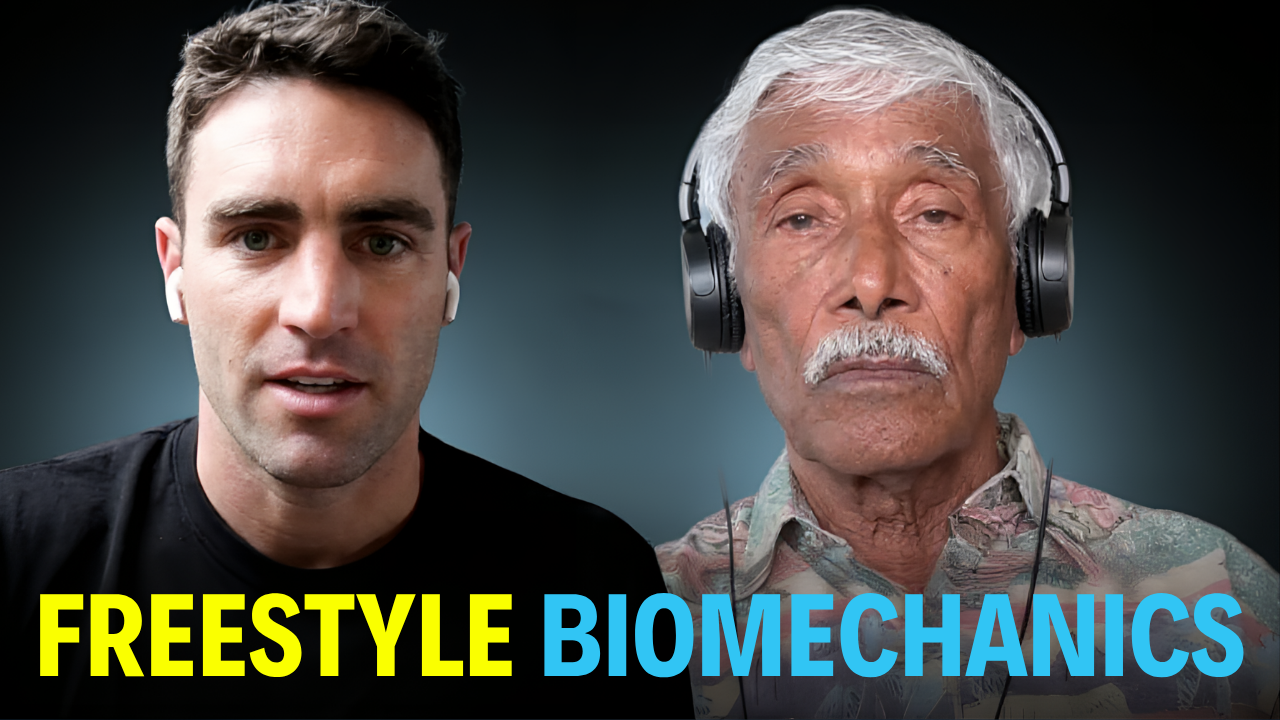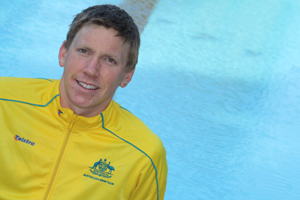








Swimmers clock up 1,000’s of laps in the pool every year. Our shoulders cop a lot of the brunt of this. Luke Van Every is known as ‘The Shoulder Guy’. He’s a physio from Queensland, Australia.
In this podcast I ask Luke about:
- Common swimming shoulder injuries
- How to avoid and treat shoulder injuries
- Do’s and dont’s of stretching
- What to be aware of if you’re hitting the gym
If you’d like to find out more about treating shoulder injuries you can visit Luke at his website at http://www.theshoulderguy.com/
Transcript
Read the full transcript
Welcome to Effortless Swimming, the podcast for swimmers, triathletes and coaches. Join Australian swim coach Brenton Ford as he reveals the latest techniques and information to improve your swimming. Let’s dive right in. Luke’s become known as the shoulder guy because that’s what he’s chosen to specialise in. And as a swimmer, we all know that shoulders are probably one of the biggest places where we get injuries because we’re doing hundreds of laps in the pool and your shoulders cop a lot of the brunt of that. So that’s why I wanted to get Luke on the call today because he’s going to talk us through some of the common injuries that swimmers get, how to avoid them, how to treat them and some stretching do’s and don’ts and some things that you should be aware of in the gym as well. So welcome to the call Luke. Yeah thanks Brenton, thanks mate, glad to be here. I don’t normally do video podcasts but because it’s going to be a little bit more visual than most of the calls
I wanted to make this a video one so thanks for doing that also. No problem at all, my pleasure. So let’s just start off a little bit about your background and why you chose to specialise in shoulders. So I’ve been doing it for about eight years now, focusing purely on the shoulder but probably through sport I guess this is how most people probably get into some of these health professions but through my own experience with sport, I was a very incriputer and also rugby player and I had a knee reconstruction so that sort of started my interest in things related to the body and how I could fix myself. So after that injury I ended up going back to university to study physiotherapy and I think it was one night while playing indoor cricket a ball was coming out to me pretty fast, put up the hand and hit me in the hand and dislocated my little finger. And so then I went to a hand therapist to get them to splint it
so hopefully it would end up straight and I thought hey this is pretty interesting. They’re dealing with something that is related to something specifically related to sport it seemed like something that I would definitely be interested in and so I contacted them, I said hey listen I’ve just finished my physio degree how about I come along and start to work with you guys. So they were purely focused on the upper limbs so shoulder elbow and hand injuries and from there I think I just started to focus back on the shoulder because I actually had a shoulder injury when I was overseas at a summer camp playing tennis and came back and started to do things all wrong couldn’t get rid of my shoulder pain it kept going on and on and I think from that experience I just started to focus more on what I could do to help myself and then that flowed in through my physio practice and back in 2008 I just started to specifically work with people with shoulder injuries.
It’s funny how personal experience is usually one of the motivators to do what you do I know with a lot of the stuff that I teach with swimming it’s all based on what I feel in the water and training and things like that so it’s good that you come from that background of having a shoulder injury yourself. Absolutely and a lot of the things I’m telling people is from personal experience listen don’t do this because this was a waste of time I couldn’t get it right doing this particular way this worked for me so I sort of relate it to my own experience and a lot of the time it seems to work for other people too. Yeah that’s great well let’s start off with what are some of the common swimming injuries that you come across? I think well the most common one would be what we call impingement so this is where the rotator cuff tendons through repetition potentially through overuse of the shoulder because of the
I guess the force that goes through the shoulder certainly with swimming and then the repetition of how many strokes that your swimmers are doing they tend to get this condition called impingement it would be the most common one that we would see where the rotator cuff and this little structure called the bursa gets irritated from overuse and then impinges hard up against the little bony roof that sits on top this little bone called the acromion and so we get some wearing of the tendons some irritation of the bursa and this impinging of structures up against that acromion arch so that would be one of the most common ones other things that we certainly find out there rotator cuff tears partial thickness tears of this tendon group called the rotator cuff which is so important for shoulder stability and shoulder strength and the other one would be what they call labral injuries so around the socket you can see my hand here
there’s a lining that surrounds the socket to deepen the socket so the ball can say better centered in the socket and quite often that gets sheared off so that the labrum can be torn off the edge of the socket and sits out here and doesn’t centralise the head of the humerus bone and so we get a thing called shoulder instability so probably the one that everyone knows about he’s had multiple reconstructions was Pretria Thomas she had multiple labral injuries from being a butterfly swimmer and would have to go back and get that labrum reattached to keep that ball centered and so they’re probably the top three the impingement, the labral tears and also rotator cuff tears and I noticed in a lot of the articles that you write and the videos that you put out there you focus a lot on rather than going to the gym and lifting heavy weights to start with it’s all about getting that shoulder stability is the very first thing that you do
absolutely, I think especially for swimmers and the majority of people too it’s all about the activation of these muscles the muscles that are around the shoulder blade and around the rotator cuff we’ve got to get them active because pain inhibits them so once you get shoulder pain no matter what the cause is and we’re not really sure still exactly what the causes are but we have some idea but once you get pain it inhibits muscle and it also inhibits your ability to feel what’s happening with your hand in the water your whole body you won’t get that feedback that you normally get so you’ve got to get back the activation first and then eventually once you get that and I guess what I tell my clients is you’ve got to earn the right to be able to then to go to the gym you’ve got to be able to do the basics first earn the right and then you can go to the gym because I find in my experience the gym is where people tend to fall down
yeah and that’s why most of the top swimmers that you see these days they do a lot of stuff with the TheraBands before training, before gym just activating those small shoulder muscles and just getting them working before they work on the bigger ones yeah absolutely and I guess in key parts of the swimming stroke that they’re needed especially at the end of Rome so when they’re particularly out in the reach and they catch those positions what’s happening right there is they’re starting to initiate that movement stability at that point and then powering through the stroke and maintaining that whole activation that line of pull I guess that whole force is so important because if you lose energy anywhere along that line well then you’re not going to get the propulsion that you need so and that energy transfer is so important from lower body through you know through trunk through the shoulder blade up and through to the arm and out through the hand I guess
so that’s something that we really pay attention to if the swimmers can work those that shoulder activation the smaller stuff first and they reduce their risk of injury then they’re not because you see a lot of swimmers who do injure their shoulders and then they adjust their technique to cope with it so they’re not putting pressure where it hurts and now you can tend to throw them out of line a bit so if you can do the things to prevent it or the things to treat it properly then you’ll find that your technique will also be a lot better and I think for I sort of the concept I use is what they call minimum perceptible loading right so if you load someone up dramatically and very heavily they lose the touch, they lose the sensitivity so we start out very light and it’s quite often it’s harder to do so when things are light but like Theravans like drills that are out of the water that are focusing with the arm and body
in certain positions that require stability if they can master those lighter drills those ones that require a more of a feel as opposed to the strength side of things I think that then flies on to and helps those strengthening activities but it also helps the feel in the water too yeah that’s right and sometimes if you want to go to the gym and you want to lift heavy weights and you want to try and get strong straight away but if you can just have a little bit of patience and just build up those smaller ones over the first few weeks you’ll be a whole lot better off and I like your idea because the pre-activation I call it so before you get in and do the work prove to yourself that these muscles are working how do you know? how do you know they are? just because you can raise your hand up in the air doesn’t mean they’re actually activating maximally or working to some degree so if you get a very light Theraband and pre-activate before you go ahead and do some training
not to fatigue but just gently get some general activation then potentially that’s going to have a flow on effect yeah and I mean with a lot of the positions that you’re in with I mean your shoulders and your arms aren’t really in positions that they’re used to and positions that they’re ideally designed for so if you can strengthen those muscles then it’s a really good idea yeah yeah absolutely couldn’t agree more now what are some of the things you’ve spoken about a few of them what are some of the other things that you recommend to avoid avoid these types of injuries yeah I think the big one that’s sort of coming from you know I guess some of the more recent studies so we’re starting to look at you know what are the things that potentially cause the breakdown within the tendon structure which then potentially causes shoulder pain so they call that tendonopathy so some of the big things that we’re sort of starting to look at
are obviously related to training volume you know so the hours of swimming that people do per week and the actual weekly kilometers that the swimmer does that has a fairly significant relationship between you know the amount of hours that people are doing and then the breakdown within the tendon structure what was interesting this is a recent study from about 2010 and they looked at about 80 elite young swimmers aged between 13 and 25 I think and they sort of the interesting thing they found was laxity so inherent shoulder laxity where there’s you know because you’ve got to be very mobile to be a swimmer but laxity wasn’t correlated to getting tendonopathy in the rotative cuff tendon so that’s really interesting what do you mean by laxity? so naturally some people are more mobile than others okay so you’ve got to be very mobile to swim but there would also be a group of people say okay because you’re a swimmer and potentially you’re naturally
more lax than others then you shouldn’t stretch okay so don’t stretch because we potentially are going to make you more lax and more susceptible to shoulder problems but this study actually went the other way and sort of said hey listen laxity is not really related to shoulder problems in this study it was more related to the volume and the hours that swimmers were in the pool it’s interesting because naturally you would think the more lax a shoulder is the more potential there is for shoulder pain that’s the old model which we would look at I think it’s still relevant to some degree because the more lax the shoulder is potentially the more risk for instability there is so I think in terms of things to avoid overtraining is certainly something to avoid I think being careful when you are stressing your shoulder when it’s loaded especially in the gym the stretching component can be something that could over stretch an already
fairly mobile shoulder and also I think potentially the other things would be just not I guess focusing in on those smaller muscles making sure that you’re checking that some of the key things that you need to be a swimmer that you’re checking in on those regularly and doing something a bit different you need to take some time out from your potential swimming program to do something land based that might gently challenge you in other ways but there’s potentially a flowing effect to the activity in the water on the overtraining side of things I’ve got a couple of guys who are doing the channel next year and then some bigger races at the start of next year and they’ve asked some of the guys who have done the channel before and who have got a lot of experience in the distance in distance swimming and it’s all about building up your kilometers so if you start out and you’re going to do 30k a week previously you’ve done 15 or 20
then you’re going to get a shoulder injury basically so it’s all about building up that base and again a bit of patience and not going too hard too early I think you’re right the other big problem I think which you’re mentioning here now is the big jumps 15 to 30, that’s a significant jump for some people and I think the adaptation we know that the adaptation within the tendon structures is quite slow poor blood supply tendency to get overused so the adaptation to the new load the new training load takes some time it will be a lot longer potentially than the muscular tissue which is more vascular, more responsive so it’s interesting that we’ve got a both a muscle and a tendon involved in this whole process which we’re trying to get up to speed so allowing the time as you I think you correctly stated it’s really important to give yourself that time to get to that next level and I guess prove that you can stay at that level
and not get a negative response once you’re sort of there and so let’s say someone comes into you with a common swimming injury you know whether it’s got sort of tendonitis or they’ve got the impingement or what do you usually do to treat them how would someone go about treating those injuries well the big sort of information we’re starting to sort of think is going to help now is what they call not complete rest but what they call relative rest so your tendons to maintain their health even with an acute tendonitis they still need some load but there will be a window in which you can load that tendon if you can see my hands, bottom part of the window top part of the window in here is where we want to load the tendon if we keep taking that tendon outside of its window for loading then we’re going to continue to have a problem but if we can gently relatively rest that tendon to some degree so that might mean a drop off in some training
or a different style of training but the tendon still gets some load within that comfortable window for it then we should be able to see some settling down of that tendon and that inflammation within that tendon so relative rest is important sometimes people will start to look at an anti-inflammatory to help with that settling down of that inflammation in the acute phase and then eventually moving back on to a gentle graduated loading program so that’s where we gently take things nice and slow once the pain has certainly settled down from that to gently start to build that shoulder back up but it’s multifactorial we’ve got to go back and look at how is energy being transferred through the body up into the shoulder so I would go down and look at the lower half as well so what are the glutes doing what’s the lower body doing are we getting good energy transfer from the lower body to the upper body look at the shoulder blade
especially it’s ability to upwardly rotate so when you put your arm up above you you’ve got to have this shoulder blade rotating up nicely so the socket and the ball stay together alright so if I’ve got my arm up here in the couch position but my ball is relatively sorry the socket is relatively downwardly rotated I’m asking for trouble so I really want that socket and the ball to be together at all times so upward rotation of the shoulder blade is really important so we’ll certainly look at that and then look back at the muscles too certainly some general massage can help some trigger point therapy through the rotator cuff and other muscles and then potentially some gentle stretching not to sort of you know potentially double the length of tissue but just to help it to help inhibit it and increase its compliance especially I guess when you’re when you’re bringing the arms through into some internal rotation in this position
that whole back half of the shoulder is really being stretched out and put under load so you’ve got to maintain muscle lengths the timing of when the muscles start to act and then also strength too so at the end the strength components would come more into it but I say when I’m treating a swimmer I’m going very gently and looking at some of the contributing factors which might lie outside the shoulder to give the shoulder some rest we’re not going to go ahead and blow them out of the water giving them full on rotator cuff exercises straight away we’ll look elsewhere and gradually build that back in over time so as a physio you recommend with most injuries you don’t want to just completely stop it helps to keep that muscle going and keep the blood moving through it keep exercising but just not at the rake that you probably were before yeah and I think that’s certainly some people are listening to this saying well how do I know
what’s rest and what’s relative rest or how am I going to tell whether I’m doing the right thing the way that I would code someone to say listen do something today take some relative rest from your program today but check your response tomorrow so check your 24 hour response so we’re back off the program somewhat not completely but see if we get a better response tomorrow and then can we get that consistently following that so we’re looking for I guess the easiest way to measure it is just a reduction in your pain so get your pain from say if we had to measure it someone might mention that their pain is 7 out of 10 so 10 is the maximum pain that’s way too high I would want to get them down to 2 or 3 out of 10 something that’s more manageable they can do their program which might be slightly restricted but they can manage that program and the next day they’re pulling up or the next session they come back into that session
feeling comfortable enough to repeat that session it’s a great way to double check that someone’s sort of within that window of loading and what are some of the best stretches that you’d recommend for swimmers so what things should people be doing after they work out what kind of muscles should they be stretching in their shoulders I think stretches throughout the whole body is probably a great idea especially trunk rotation, thoracic this sort of thoracic extension thoracic rotation is really important those type of stretches are really good for that whole rib cage that’s nice and mobile I think shoulder specific stretches the two best ones that I tend to use is this cross body sort of stretch the big trouble with that is most people tend to pull their shoulder blade around with them so then we lose the effect of stretching in this area it’s more likely to stretch the muscles that attach from the shoulder blade out to the spine so we’ve got to be careful
to keep your shoulder back with you as you gently pull the arm across now what most people do is they try to pull the pull the arm into their chest and they end up squashing their shoulder a hard up against their chest where we just want to gently see if we can stretch in this direction and gently stretch these structures here at the back part of the shoulder so this posterior tightness is something that’s common and it’s common amongst athletes that use their arm overhead and it’s common amongst people that athletes are getting impingement to so there’s the cross body stretch and there’s also the sleeper stretch so some studies have said that listen the cross body stretch is the best one to do but the sleeper stretch you’ve got to pretty much lie down on your side and you’re pulling your hand so you’re lying on the side of the pool on your affected side and you’re gently pushing your hand this one here down towards the
side of the pool and again you’re looking for a stretch in the back half of that shoulder and it’s posterior part and you can do a little technique called contract and relax to see if you can get a little bit of compliance within the tissues so we’re not really trying to double the length of tissue we’re just trying to get things to gently let go so we can maintain the muscle lengths that we already have and that we should have when we’re going into the pool to swim so we’ve got to be careful about I guess the loading you can still overload your already inflamed tissues by over stretching so you do it in a nice comfortable way stretching doesn’t have to necessarily feel painful but I think the mobility of the shoulder is certainly important so that’s the posterior shoulder base that’s certainly getting up into these positions and you can see all the other techniques that swimmers tend to use to maintain the overall mobility of this
ball and socket joint that’s so important I really like the sleeper stretch that’s one of my favourite ones is because when you’re doing a lot of freestyle you tend to use your arms out out here if you can see it and it tends to make these kind of bands around your shoulder very tight and that’s a really good way to access a stretch to stretch those out some say it’s a posterior capsule stretch and this is the exact thing you target I don’t know if you can be that clear about it I think do what works if it’s tight stretch it, if it’s not tight leave it alone focus on muscle activation and stability so I think if you can maintain your natural ability to keep the shoulders mobile and that’s fine but if you detect a little bit of stiffness which then affects the stroke, affects the shoulder mobility then that’s something that we need to gently build in on to make sure that we’re keeping that shoulders as you say nice and mobile
but those parts of the back half of the shoulder are notorious for getting very tight they’re certainly put under a lot of pressure when they’re in this position as they’re coming through because they’re on, the muscle length is now long and it’s having to work quite hard and the muscles don’t really like working at a length in position they prefer to work in this nice mid-zone where they can, their output’s much better and now let’s say you’re going to the gym what are some of the things that people should avoid when they’re going to the gym or watch out for yeah well I’ve got this concept it’s called the safe zone ok it’s very simple very very simple so what I think it might be a bit controversial but I’ll get to it but if you can put your hand up to wave goodbye right so if you do it right now Britain put your hand up to wave goodbye naturally you’ll notice that your elbow is in front of your shoulder have a look at it
is it pretty much so once you, that’s the safe zone so you naturally will want to put your arm in a safe zone because it allows the the arm bone and the muscles around your shoulder to work nice and effectively ok so if that elbow starts to drop back so I’m waving goodbye right roughly this is the safe zone here forward but if I start to drop my elbow back into these positions I’m now going to have to require more shoulder stability ok so now if I’m loading myself up doing behind head presses yeah behind squats deep bench presses digs chins those type of movements require a maximum amount of stability ok and most people are doing them and they’re not really paying attention to you know certainly to their rotator cuff but also most of these exercises we do in the gym we’re only using this part let’s just say I’m doing a press I’m only using this part of my body that’s not the way you naturally move you use the lower body
to generate energy to come out through your hand to do tasks ok so I like to incorporate things that involve the whole body so we can still do something that might be a press or a pull or a push but we’re using our whole body to make that movement more energy efficient therefore we don’t get the stress potentially that’s isolated and loading up the shoulders in a very leveraged position we’ve got to be very careful of that ok so and if you look at some of the top swimmers a lot of the stuff they do in the gym is now very explosive type of work and they’re using medicine balls and they’re squatting down and then jumping forward and throwing and things like that more power movements but the whole body so like you’re talking about yeah I love that just because you’re depending on your environment you’re in if you’re land based then you’re using a ground reaction force a lot of the energy comes from the floor you’re pushing down on the floor
as you’re pushing up to throw the medicine ball against the wall so it’s a ground reaction force that you’re now using to generate energy potential energy to get then through your body to perform the same drill it’s the sum of all the parts make that whole movement more energy efficient and that’s what the whole body’s about so if you’re using then the water it’s a different environment so we’ve got to think about well and try how do we get energy transferring through our body from our lower body up into the upper body I think it’s still important swimming is quite a unique sport where that flow of energy is very interesting because you’ve got the lower half doing one thing and potentially the upper half doing something completely different I went to a coaching conference on the weekend and one of the things I spoke about was the swimmers that have got a background in other sports like ball sports or running the people that
used to dry land exercise they’ve got a better ability to be able to adapt to different things in the water so with their starts and their turns because they know what their body’s doing so dry land work is important as a swimmer even though you’re not on dry land it still transfers across those kinds of motor skills I think things that use your whole body things that involve play where we’re developing a skill with the upper limb it could be just purely bouncing a nice soft ball a rubbery ball that’s very light and mobile up against the wall but up in this catch position in a nice position that gets us rotated but things involving a bit of fun feel a bit of whole body movements and I think the body awareness is so important because you’ve got to be able to transfer that into every sport and hopefully everyday life but some people just have a better body awareness than others I find that people that are in pain lose that awareness
but others they just can’t detect when things are getting close to being unstable either at the knees, the hips the shoulders, the elbows they just don’t have that awareness but I think you can improve that with the drills that you’re mentioning there the dry land stuff as well as the water as well so I think the dry land is a very important component and especially for swimming is involving both head rotation and arm use a lot of people just focus purely on the shoulder but what is the rest of the body got to be doing when I’m using my arms so you want to involve something that’s involving the neck muscles and the shoulders intimately related so even drills where you’re doing something here and there’s a head turn that’s involved as well so you’re looking at the ball so if you’re doing the wall tap and then you’re looking away from it looking at it, looking away from it in a nice rhythmical motion that might mimic
something that you do in the water so these are the little things that we try to incorporate yeah and with a lot of the stuff that we offer it’s all drill based in the water so you’re not just swimming freestyle you start off with kick on your back then you move to kick on your side and then taking one arm stroke and so on and it’s all about developing those motor skills so you’re getting your whole body to move in time and get a feel for what it’s like to have your whole body move together rather than just individually pulling through and then rotating sort of thing so it’s all connected yeah absolutely I think this is another problem with gym based activity especially when instructed to firstly stabilise the shoulder blade and then move you might see people doing a pull or a push where they’re locking the shoulder blade in and then moving the arm so this is not a natural way to move you naturally flow with movement
so we’re trying to get as you’re suggesting just energy flow moving better and promoting natural movement and natural energy transfer as opposed to stopping a movement and then starting a movement that’s where energy gets lost and then you get to swimming now you’re located in Newmarket Queensland Newmarket in Brisbane so if people want to come and see you for a physio session or a check up or anything related to swimming that way they can head there what’s the website for your physio business so the website for the physio practice is sheldeguyphysiotherapy.com.au but for more of the insightful information like we’ve discussed on this podcast they just want to go to thesheldeguy.com yeah and you’ve got to you’ve basically put your knowledge the things that you teach or that you I guess teach clients that would come in you’ve put that all together in a package so that people who aren’t in Brisbane they can people from all over the world can access that information
so they can fix their shoulders and make them stronger and not get those recurring injuries that can happen again and again so thesheldeguy.com go to thesheldeguy.com and the product you’re referring to they made is called super fast shoulders so this really is designed to give people some fast information it’s a fast start guide to helping people solve their shoulder pain problem because so many people roughly half of the people that are going to get shoulder pain will have it potentially for 12 months and even longer so I guess what we’re trying to do here is to you know make an effect on that around the world get people accessing the right information at the right times so that they can start to solve their own shoulder pain problem so it’s a great resource super fast shoulders thank you great and I know there’s some training videos some free training videos on there as well to get people started so head over to thesheldeguy.com
if you’ve got problems with your shoulders or if you need to improve your strength and you feel like that’s something that your swimming might be lacking so thanks so much for that Luke it’s good to speak to someone who’s specific about shoulders because as a swimmer I know I occasionally get shoulder injuries and they’re not much fun because they keep you out of hard training for a while which can be frustrating so once again thanks very much for being on the podcast yep my pleasure mate good luck take care thanks for joining us on the effortless swimming podcast to get transcriptions, bonus videos and to be the first to hear about new episodes go to swimmingpodcast.com