








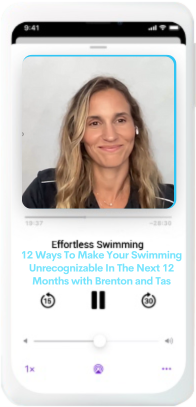
In this episode, Brenton and Tas discuss the key takeaways from their recent training camp in the Maldives. They cover essential themes such as identifying bottlenecks in swimming technique, the importance of community support, overcoming self-doubt, and the significance of consistency in training. The conversation emphasizes practical strategies for improvement, including the use of simple cues, the power of reframing concepts, and the benefits of practicing techniques on land. The hosts also highlight the value of rhythm in swimming and the effectiveness of contrast drills to enhance performance.
00:57 Identifying and Focusing on Bottlenecks
04:13 Simplifying Drills and Progression Sets
07:26 The Importance of Community in Swimming
11:23 Believing in Yourself and Overcoming Doubts
15:37 Consistency Over Perfection
19:54 Process and Feel Over Data
23:54 Simple Cues Unlock Big Changes
26:11 Breaststroke Technique Insights
28:08 The Importance of Reframing Concepts
29:56 Rhythm in Swimming: The Waltz Analogy
33:13 Practicing Technique on Land
36:18 Using Contrast Drills for Technique Improvement
40:04 Sighting and Pack Swimming Strategies
Join a camp:
https://effortlessswimming.com/camps/
FREE Freestyle Technique Checklist ➡ https://effortlessswimming.com/freestyle-checklist/
A simple 1-page guide to help you spot what’s holding you back in the water.
7-Day Freestyle Fix ➡ https://members.effortlessswimming.com/7-day-beginner
One tip a day for a week to help you swim further without getting tired.
Courses Membership ➡ https://effortlessswimming.com/courses-membership/
Get access to all of our online courses, drills, and training plans.
Transcript
Read the full transcript
But what I found quite beneficial with the swimmers is when they actually stopped looking at all of that and they started to focus on feel and being able to recognize what feels right, being able to recognize if perhaps they are doing the incorrect technique that they’re wanting and how that’s able to feel. How that feels, they’re all then able to course correct and as a result, they’re gonna be ending up swimming much quicker. But if you’re just constantly focusing on the splits or the times or how fast you can go, as you’ve said earlier, you wanna swim from the inside out, you’re missing that inside part. Welcome to the Effortless Swimming Podcast to show that help swimmers and triathletes love the water, become a better swimmer and live a better life. Here’s your host, Brenton Ford. The Effortless Swimming Podcast, Brenton here with Tasman, who recently returned from the Maldives camp a couple of weeks ago.
And on this episode, I want to cover the 12 takeaways that we got from the camp as coaches and 12 takeaways that you as an athlete or a swimmer can use in your own training and swimming to not only get better, but see progress, hopefully a lot faster. So Tas, welcome to the podcast. Thanks for having me. So first, anyone who’s part of our membership will have seen you in there. You sort of run out our online membership and do a lot of our stroke analysis in there with me. So this is the first time on a podcast. So it’s nice to have you joining me here. But you’ve also come on a couple of camps as well. So I thought it’d be great to chat and just cover some of the things that we saw coaching and some of the things that really work for people to help them have those breakthroughs in their stroke and really make some big changes. Yeah, that sounds good. Well, the first one that we’ve got here is focus on the bottlenecks.
Yes, I mean, I think what’s, you know, when you do an analysis, it can feel quite overwhelming to see, for example, if there are a lot of issues that are identified. We never want that to deter people because what tends to happen is that it’s more, you know, we’re identifying all of the different areas. But ultimately, there’s one particular main area or the bottleneck. And if we can just focus on that one area, all of the other areas tend to get fixed. So for example, we had one summer. During the analysis, his legs were sprained. He was rolling completely over. As he was breathing, his lead arm was dropping. And as a result of that, he wasn’t getting in a high catch. So that can be quite overwhelming, right, for all four of those areas to be identified and to think that you need to focus on all four of those areas. But what helped there is we actually just focused on his over rotation and we identified over rotation
as that bottleneck. So by only focusing on him getting a reach, getting the rotation from the reach as opposed to forcing that rotation, his rotation was reduced. So that allowed him to rock into a breath, keep the lead arm extended as he was taking a breath, keeping his legs together, getting in a high elbow catch. So yeah, ultimately, he just focused on one area and the cause and it just kind of fixed all of the other symptoms. So that would just be my takeaway and my advice for people, you know, if you do feel like there are a couple of areas that you’re struggling with, pick the one thing to focus on for the whole swim, let the rest go. And how you can do that is you just really want to be able to find that bottleneck and we do have a checklist, right, that you can really just find the order that you can work from. Yeah, that’s right. So it can be very overwhelming when someone sees themselves swimming, especially if there’s a whole bunch of things
that are going wrong. And so quite often what we see is there’s that one thing that if we just make that change, we release that bottleneck, everything else just starts to fall into place. And so it can feel like a challenge to identify that bottleneck. But as you said, on our freestyle checklist, which we’ll put in the show notes, it goes through the order that we like to analyze the stroke in. And so for the most like the simplest way to put it is, head and body position, rotation, and then we look at what the arms are doing in the catch and the pull and the recovery. And then there’s also some timing things in there. Breathing is one as well. It depends on what they’re doing with their breath, but that’s usually one of the first things that we look at too. But that sort of sequence is how we like to teach the stroke and how in the back of my mind, I’ve always got it there just as sort of the template of how I would analyze someone’s stroke.
And that bottleneck is often just the earlier thing in the line of things that they have to work on. And I think a good way to think of that too is swimming from the inside out, is making sure that we think about our core, our torso. We need to get this stuff right first, then we can go out to the extremities from there. So always thinking inside out with our swimming.
So focus on the bottlenecks. Number two, keep drills simple and focus on progression sets.
Yeah, so my experience with the swimmers is you really don’t want to over complicate things with too many drills. You want to stick to a couple of handful of drills. And what’s more important here is as you are doing those drills is to really have a progression plan in mind so that you can go from drill to free, because a lot of feedback we get from some of the swimmers is I’m able to hold my stroke during the drill as soon as I do it in freestyle, I just lose my stroke. So if you can just create a small progression milestones where you’re constantly challenging yourself, you’re bridging the gap from drill to free and then you’re making improvement steps by steps. That’s the best way that you can slowly start. You can just think of it as building blocks, right? You’re just slowly starting to add that. So a way that I like to do it, and it obviously depends on the area that you’re doing, right? But go from drill and then go to catch up
because catch ups are a really nice way to be able to control the stroke. And then from catch up, you can move on to free. And that’s the same thing with aids. You can use fins or use a snorkel initially, to challenge yourself a little bit more thereafter. Do the drill without those aids, then progress to catch up, for example, you could do it with fins, without fins, and then progress to normal free. That just makes it far more manageable as opposed to taking a massive leap from going from drill and now trying to replicate the technique that we’re learning into normal free while doing quite an intense set over longer distance. Yeah, it’s such a nice approach because it can feel quite… Like if you go from just, say, kicking on the side, for example, if you’re working on rotation and then into a swim, it might work. But if you were to do something like side kick into 616, into 636, and then to full stroke swimming,
it’s a really nice way to build it up. And one of the swimmers that we worked with on camp, one of the swimmers I worked with, one of the issues she was having was her… She just wasn’t comfortable with her breathing. She would sort of hold her breath, wasn’t exhaling through the nose, and so was just never really calm in the water. So we did like a three-step progression. We went to just sink downs where I’d get a take a breath in, exhale through the nose, come straight back up, and repeat that five times. So starting with sink downs, then we went into just floating on our front arms and legs extended. Then we went into kick on the front with the arms extended, and then we went into to swim. And she was able to build up through that sequence to then be able to just get that level of comfort where she could feel like her breathing was fine. The water was supporting her because she learned how to hold her body properly.
And then she was able to do some 25s where she’s like, this is actually… I can stay calm, but I don’t need to feel that anxiousness or overwhelm in the water. For sure. It’s making it bite-size. I think swimming can be quite overwhelming to a lot of people. And so if you can just break it down into bite-size chunks, just mentally even, it’s far more manageable. It’s easier to grasp your head around what you’re needing to do. And then it just makes training far more enjoyable because you’re not putting all that pressure on yourself in terms of getting it from the issue all the way to free. Now, number three, the value of community. And I think this is one that we especially see on camps. It’s like a five-day or a seven-day intensive where you’re living with 15, 20 other swimmers and you really get to know everyone very quickly just because you’re seeing them for hours. Hours on end, you’re having meals with them.
But I think this is one that sometimes gets overlooked. I would say this would be one of the most important takeaways for myself because the swimmers really enjoyed the training. Just the feedback that you got from them, they loved the analysis, they loved the technique improvements that they were making. But equally, they’re just really in love connecting with like-minded people. And I think it can be a little bit of an isolating sport as opposed to some of the others. You are quite dependent on yourself to show up to when you’re putting in the work itself, you’re either looking at the floor or you just head down and swimming open water. So if you can find some sort of a squad, if that’s not possible, find an online community. So similar to the community that we really encourage on the effort of swimming membership, really as a place just to support you so that you can be held accountable or you can connect with people.
You can just share a laugh. I think if you can just encourage that engagement and that enjoyment of swimming, you will want to go to training the next day. It really just encourages swimming at the same time. Yeah, absolutely. The reason that I don’t think I’ve ever missed a session, except if I’ve gotten like two hours sleep or something, I don’t think I’ve missed a session in the last couple of years because I’m swimming with a squad and people expect me to be there because I’ve written a set. And it’s just that. It’s just that that gets me out of bed even if I’m tired or not feeling good. It doesn’t take much. It really just takes some other people who are expecting me to be there. But that’s just a way of getting to the pool. But I think the community aspect of it and having someone or having other people there just to kind of share the ups and the downs or having someone helping guide you. I mean, in terms of running effortless swimming,
I’ve had the same business coach for 15, maybe 16 years now. And so in that community, that’s the thing that’s kind of helped me along because otherwise running something like this can be a bit of a lonely journey. You just kind of have to figure it out. But having someone there and other people there to kind of talk about stuff and what’s working has helped me immensely. And so I think the value of our effortless swimming, coaching members there, that’s a big one where you’re writing the squad workouts every month. You’re answering questions. We’re doing our video analysis as well. So that’s a really good way, especially if you’re swimming solo to be able to keep tapped in to that kind of thing where you’re not doing it alone because it does get kind of boring and lonely if you’re just doing it by yourself all the time. Yeah, no, 100%. And I was just thinking, on the membership, just to actually try and get that engagement even more,
there are the different features that I found are quite popular. So the progress journals, Summers are using that to really hold themselves accountable, but at the same time check in on each other too, which is such a cool thing to see as well. Or you’re able to, even if you are doing it as a lonely swimmer by yourself, so you’re not necessarily training in a squad, but you’re doing our workouts. On the membership, I’ve seen Summers connect over some events that they will be entering. So they might be on separate sides of the world, but they see that they’re both training for the same event. Then you’ve already got that connection and you’ve got an online training buddy, which I think is very helpful too. Absolutely. Yeah, number four is believing yourself. So where does this one come from? So I would say this would probably be the second most important one or maybe it’s on par with the connection. And this was a massive takeaway,
especially I would say in the second week. So I think a lot of the times, especially if you don’t come from a swimming background or if swimming is not very much within the community, it can be daunting. And I think some Summers can sometimes naturally maybe limit themselves mentally, as opposed to actually knowing what the capability is. And so sometimes a breakthrough usually comes when you just stop doubting yourself and you test what you’re able to do. And that’s so much easier said than done, but if you do have a community behind you or just one person there that is able to cheer you on, it makes it far easier. So if I can just give an example. In the second week, we had a swimmer who didn’t come from a swimming background. Swimming wasn’t something that they actively did as part of growing up or even as an adult. And she was quite reliant on a tow float. So the first session in, I think we were swimming maybe 30 meters
and she really wanted to use this tow float. But what ended up happening, like her confidence just boosted, I think with the encouragement of the coaches and the encouragement of the other Summers, she was able to see her ability in the water as well. And as a result, she, at the end of the camp, we saw a lapper on the island, right? So she swam the whole lap and very comfortably and she only used the tow float for the first half and the second half she went without. And the swell can be quite gnarly as well and it was quite hectic on that day. So, you know, if we just compare the progress of how she first started and her maybe self-doubt that she had as opposed to at the end, where she just absolutely smashed the island some it was just so amazing to see. Yeah, it’s a huge change from in five days where, and I remember we do a group welcome, everyone sort of tells a bit of their story and where they’re from and their level of experience as well.
And we’ve never had anyone that we haven’t gotten around the island even if they’re not a strong swimmer. I remember last year we had someone who was getting gassed out within about 30 meters and just like had to stand up, get the breath and go again. But I was like, it’s all good. We’ll get around the island. And we did. You can make some big changes in the course of five days. And I think for a lot of people it’s just very difficult especially as not out to get any coaching, like the intensive coaching like this to help them get the confidence especially in open water. And so that’s particularly the Maldives camp. I think that’s probably the best one for this kind of thing just because of where we are and how we were able to run it, where we’re doing a lot of our technique coaching in the lagoon. You can sort of stand up and we’ve got three coaches there. We’ve got 15 swimmers. So there’s a lot of like a one-on-one coaching
and a lot of support there to help people get the tools that they need and the confidence that they need to be able to get around the island on the last day. So I thought when she was introducing herself I thought, yeah, for sure we’re going to get you around the island. And I was for me next to her for the first half well the whole way around actually but the first half we’re going against the current into the wind and we it took us about it was a while it was like maybe 30 minutes to go about 500 meters because of this current. And so I was for me next to her and I’m like she must be absolutely buggered because like we’ve been going non-stop and we’re not moving anywhere and you can hardly see the floor going you’re not hardly moving past it. But then when we sort of stopped after five or six hundred I’m like, hey, how are you going? So good. I wasn’t even out of breath and I think if we’d done that at the start of the camp
it would have been a very different story but just giving them some of the tools like all right, this is how we need to be breathing this is how we need to be exhaling don’t worry you will make progress even though you don’t see yourself making much progress into the current like just some of those strategies that can really help you get through those tough conditions and it was great to see and she wasn’t the only one either who had those sorts of results which was nice to see. Now, number five, consistency over perfection.
Of course, I mean, I think a lot of swimmers and I’m sure this is the most sport right but they can perhaps overanalyze their stroke and I think they need to know the technique instantly but a good lesson here is just knowing that the breakthrough or the progress instead of wanting to see progress by tomorrow it’s actually just more about constant steady practice and small changes that will lead to lasting improvement so that’s what we tend to do at the start of the analysis is just prep everyone with that as in you’re here for a week we’re going to try and get you we’re going to part as much knowledge onto you as we can you will see progress but the main thing here is what you’ll do after the camp with all of the tools that you’ve given and so that’s where the consistency comes from what’s very important here is after the clinics or the camps or any coaching that you do or just a general analysis right it’s really just to maintain what you’ve learned
and if you ask the main for example by yourself that can be a little bit more challenging because you aren’t going to have that coach to constantly be there to remind you but that’s really where the biggest improvements happen and where the difference can really count so my recommendations would be there just to continuously remind yourself just to stay consistent go into every training with a plan and specific goals set yourself small, medium, long-term goals just really so that you’ve got small little stepping stones that you can work towards and if you just constantly putting in the small progress over time you will start to see a long-lasting improvement as opposed to just putting in the work for a week and then you know the following week you are maybe feeling a little bit more bushed or tired because you just weren’t able to continuously keep it up and one of the things we’re seeing in there what’s that growth afterwards is
there’s quite a few of the swimmers who like I’m back in the pool and I’m actually getting pretty fatigued I’m quite tired more so than I normally would be and the thing with that is that’s very normal I would expect a lot of the swimmers will be going through it because they’re changing their stroke and they’re thinking about it a lot they just don’t have that well they don’t have the muscle memory they’re going to be using different muscles as well and it’s just not natural right now so that’s really normal and I’ve seen it for years and years that this is something that tends to happen after camps for a lot of the swimmers some certainly make nice progress immediately but it’s just because we’re seeing changes and if you’re not feeling any difference if you’re not experiencing something that’s noticeably different than what you used to then you’re probably just going back to old habits so it’s not always this upward trajectory straight away
quite often it might be a solid six to eight weeks of feeling like oh is this actually doing anything positive for me but then often they had that breakthrough like alright pay it off and I just need to be consistent with it and then I can see that perfection in the stroke a bit more so yeah it’s all really normal stuff and I think us as coaches we need to just prepare them for that know what to expect and I think we do a good job of that just reminding people you might not be 15 seconds faster per 100 when you go back next week you might actually be a little bit slower that’s completely normal I’m sure consistency is key I think that’s the main thing there just keep at it and you will see that progress and I think even on a personal note there what we did as coaches every morning was get up, go for a swim around the island which took about 30 minutes and it wasn’t really hard at any point it was all just putting
for the most part of aerobic swimming but just swimming every day for two weeks I’ve come home and I’m feeling really good after that I normally swim three times a week do four to five k but this was nearly probably 13-14 days of two kilometers or maybe more if we did an extra lap but I’ve noticed a big improvement in my own swimming just from that consistency 100% I came back almost it felt like flying in the water right and it’s exactly what you’ve said it’s just like slowly getting the you’d be just boarding it up slowly but surely without even thinking about it and then as you said a couple weeks later you’re like oh wow you’ll start to feel the difference even if you don’t feel it initially number six is process and feel over data yeah so I think in this day and age it’s so normal to be checking the watches be checking the data but I think that can be a little bit counterproductive it’s obviously a big value for that
but what I found quite beneficial with the swim is when they actually stopped looking at all of that and they started to focus on feel and being able to recognize what feels right being able to recognize if perhaps they are doing the incorrect technique they’d be wanting and how that’s able to feel how that feels they were then able to course correct and as a result they’re going to be ending up swimming much quicker but if you’re just constantly focusing on the splits or the times or how fast you can go you as you’ve said earlier you want to swim from the inside out you’re missing that inside part and so a great example here is the week we do the coaching and the analysis and on the final day we do another another analysis during that analysis you see the guys start overthinking they’re like they’re told to work on these five things and then they’re on swimming as fluidly as what we’d want them to do so my recommendation
there would be is obviously keep an eye on the data it’s good but don’t let that drive your stroke focus on feel if you can and if you are feeling like you are overthinking something take a step back just go for it and focus on the feel of the water I think with one of the swimmers with analysis she was overthinking it so much we even got her to pause we did the other swimmers and then we redid her stroke and we said just get out of your head and she ended up swimming so beautifully so yeah just ultimately always just go for feel yeah that’s and there was a couple in that first week as well it was like I was thinking I was thinking of three or four things and then it kind of fell apart free film let’s just pick one thing to focus on this is not the make or break of your swimming career how are you looking at the video here especially when the camera is on there’s a lot of pressure for the people they want to look better than they did at the start
so I get that I get that want to like really nail the last video but yeah if you can have the feeling of knowing what it’s like when you’re doing things correct and knowing what it’s like when you’re not doing things correctly that in itself is a big takeaway because sometimes people don’t have that understanding of like how it should feel when you’re actually doing it correctly because they just don’t know what they’re doing because they’ve never seen themselves swim and so that’s one of the things that we I think would hopefully do quite well is building up that awareness of what’s right what’s wrong and then what does that actually feel like so you can take away that feeling and become your own coach where you know whether you’re getting it right or not and that way you can make a change because if you don’t have that it’s unlikely long-term you’ll make any long-term changes yeah for sure and I think especially
if you are really focusing on an area then focus on feel and use the data to as a way to like inform whether you’re on the right track right in terms of stroke counting and time but try avoid using that data as the leading motivator behind the swimming at least as I said like while you are refining your technique do it by feel use it to kind of aid and give you additional support but if you can really get that good feeling for the water yeah you’ll be good to go and you’ll always be able to course correct you’ll always be able to adapt you’ll start to feel how certain paces feel as opposed to needing to rely on your watch I mean I think that’s how we grab swimming right so that would just be my take weight if you can kind of get to the point where you don’t need to use the data as much and you can really base the technique the pacing the time based on feel yeah you just become a far more knowledgeable swimmer but yeah like back in our day
pre-text suits pre-watches can I only have the 60 second clock to go by yep alright number seven simple cues unlock big changes so I think this was one of like the key success in a take where I think for us coaches and the swimmers as well you would think that you would think that a simple cue could make such a big difference but it really can in terms of connecting how you know the swimmer connects to the technique so throughout the camps there were ample cues that were used but even more than others even two three weeks later the swimmers are still using them and that’s just such a great way I guess for them to you know lock in on they just associate the technique with the cue it gives them less things actually to focus on because they’re not not needing to think about like for example one of the cues that I use with my swimmers is when they would breathe their lead on would drop and so it would be like a simple thing of like up up up
and instead of them now having to think every time I breathe I need to try to push my lead on up all of that was explained beforehand now we’ve got the cue they know what they need to do and it’s stuck with them they’re still using it now and I think that’s what’s going you know on going on in their head so I think you know these kind of quick reminders they can really just cause like just it to click a little bit better or the way to drop technically and that also just really helps reinforce conditioning so just trying to think a couple other ones that come to mind that were quite successful and popular were the performance platform so just that’s a great way to great way to just think about the positioning of your your body positioning opening up the chest really be able to use your chest as an anchor to support your stroke up up up as I said just to keep the lead on up and then a third one that comes to mind that
really stuck with a lot of the summers was just using your the pocket of power right so that’s just a great way to have an understanding of if you can get a solid press back past the hip it’s going to help you get that reach and rotation forward and that just it as I said it just really clicked with a lot of the summers so yeah use the simple cue cues as much as you can they can really make big changes in terms of how you connect the technique and and all of the information they’ve been giving you and then how you can then apply it in the water you gave me some breaststroke coaching on one of the days towards the end there which it which it was really needed because I just I don’t do much breaststroke and you’re you’ve been primarily a breast striker so but it was really good so one of the things you noticed with my breaststroke was as I was coming in to the recovery here my elbows I just I wasn’t sort of keeping a good catch my elbows coming
through narrow and so one of the things I was thinking yesterday at training was just elbows wide keep the elbows wide as I’m going through my my catch here and that helps a lot and then another one was actually dropping the hips at a certain phase of the stroke and then another one was actually kicking down more than sort of backwards now some of those things might sound a little bit maybe opposite of what you would think you need right like we don’t want to drop our hips and go low we want to be kicking back in a way to go forwards but just for what I needed in the stroke those couple of cues in the breaststroke had me feeling really really good yesterday so yeah it doesn’t take much but just like a phrase a word goes a very long way and especially in the heat of the moment when you’re racing or when you’re going fast you can’t be thinking about a whole lot it’s just got to be simple and so I found that when we’re doing
these sprints yesterday in breaststroke elbows wide drop hips it’s like I can do this not every strike but I can do it and it’s sad to feel really good yeah for sure it just makes it more manageable I think that’s if I’m just like listening to the themes of what we’re saying we just really want to be able to make it manageable it really doesn’t have to be this overwhelming thing in terms of thinking about the in-depth technique I think if you can get a solid understanding of what you need to do why you need to do it pair that with the cue then as you said you know when you are swimming and perhaps you’re pushing yourself or perhaps you’re doing an open water race and there’s so many other variables you need to think of if you can just have that one cue that sticks in your mind it’s far more manageable for you to just be able to implement the technique that you really wanting to do
number eight the power of reframing
so I think what I found quite interesting with the camp is if something you know I think some swimmers they might not perhaps grasp the concept or perhaps just explain one where every coach has got a different way of explaining things I should say and so I think what’s important just as a swimmer to be mindful of and perhaps a coach as well that if you know if you feel like a concept hasn’t clicked it just needs to be reframed in a certain way so that you can really identify it so you know I might teach something a certain way in comparison to you or in comparison to one of the other coaches Gary but I think what was very successful on the camp is because that there were so many different coaching voices everyone was able to find someone that they were able to identify with so that would just be my just a tip there I should say that you know if you if there is a concept and you are feeling perhaps a bit lost on it it’s not you it just might be the
way in which the concept is being explained and so just keep digging do research chat to other people they might just be able to explain it in a way that really just clicks for you you’re one of the ones that comes to mind there is when we’re working on their timing and rhythm of the stroke we had him try a few different ways of thinking of it one of them was with that Waltz tempo it was like a one two three one two three and for some people that that worked really well and then Gary said you know you might even prefer like a kind of an uneven tempo where it’s like one two one two in terms of like one stroke is a bit quicker second stroke is a little bit slower and particularly if you’re brave to one side that kind of timing can be quite useful so yeah different way and a lot of people said actually that worked really well for me felt that before so yeah just hearing things explained slightly differently can help it
can help it click let’s go on to number nine here so rhythm is this topical rhythm is everything rhythm is everything I would say you know in terms of the feedback from what we from what the swimmers gave us in terms of the different areas of the technique that we worked on the main thing that stuck out to them was the fact of that swimming should be some like a waltz which is very much what you said earlier I think some swimmers they tend to swim maybe a little bit more staccato or they’re lacking that flow so it’s more like stroke stroke stroke stroke but if you can just be mindful of the fact that ultimately you really want to be able to waltz through the water or ice skates I think that’s a reference that you used it will really it will really help you find a natural rhythm which is ultimately what we want to do we really want to be able to flow in the water as opposed to fighting the water so the queue like swimming
like a waltz is a really great way to think about swimming or another queue of just being able to do one two three one two three one two three just to really help find your rhythm that’s the way to go so I had a swimmer so he was swimming a little bit more staccato so he was swimming very much like it was one stroke then the second stroke then the next stroke and he explained that he had an aerobic base so he felt quite comfortable being able to maintain distance but he was more so struggling to maintain the pace over long distance so I think it was on day one I just explained instead of swimming very much stop start aim to swim like a waltz aim to find that rhythm that flow that one two three and it just clicked for him and he said it just made sense and so I think he ended up being one of the swimmers who swam around the island the most just because he was so keen on the fact that he was just saving so much more energy
now he wasn’t exerting as much energy with each stroke so yeah I think it’s so amazing that just you know that simple queue is just able to help swimmers see how to apply themselves in the water find that efficiency that we ultimately want to be aiming for and not fight the water as much yeah so that seemed like an important one for quite a few of the swimmers at camp yeah my feeling is they focus so much on the stroke and the technical details of it the catch making sure I’m getting nice and long that they were just missing that rhythm element to it and so when we really got them just keeping things I think moving in front we never want to stop and pause we’ve always got to keep that lead hand in motion but it can be it can take its time going through that front of the stroke then it’s almost like a little ice skating almost not like kind of falling or rolling into the next stroke rather than that stop start that you talked about
and it’s just so much easier and the way I like to kind of demonstrate this if we’re doing analysis is like if you stand up and you walk and you pause and then you take another step and you pause it’s like no one’s walking that way and we don’t want to swim that way either because it’s just it’ll take a long time to get from one end to the next so always making sure that we’re keeping things in in flow so that the one that I like is just keeping that lead hand in motion just making sure you’re always always keep that rolling through so rhythms everything now the 10th one here is practice technique on land first yeah so I think I mean I think we’re all a big advocate for this but this would be again at the top then terms of one of the most important things so technique it just can become so much easier to know what to do in the water if you can do it outside of the water first if you can get the feel that understanding
of you know where your arm should be if you are extending forward the depth that the arm should be in if you are doing for example recovery and you know we talk about this Albert lead recovery what does it actually feel like if you can do that on land and replicated there it’s going to be 10 times easier to be able to do it in the water and so I think a couple of examples that we gave to the swimmers was if you if you’re really battling you can even do the technique in front of a mirror just so that you can see what you are doing what you should be aiming for if you can do Thera bands especially for that high Albert catch position again just so that you can see what does Albert forward look like what does it feel like that’s slow to fast movement that we wanting to engage in with the catch through to the to the follow through the same thing there if it can just be replicated from the outside to inside the water it’s going to be
so much easier for you to to be able to do it will be easier for you to be able to adapt as you go at the same time then one of the ones where I saw a nice change from doing it out of the water to in the water was when we were going through we’re starting with the reach and the rotation so what I had swimmers do was standing up one arm up in front one arm by the side I wanted them to get used to their shoulder coming up to their cheekbone and then just that little bit of rotation as well and we’re really opening up through the underarm there and just getting them used to that movement because that’s where we want to get the start of every stroke and some of the feedback from some of the swimmers there after doing that and then going into some swimmers just the stroke felt longer so I think a lot of people are just they’re either too flat or this shoulder will just drop quite low and then the elbow is going to drop with it
so if they set themselves up in that like streamline or that base position there that’s it’s one of the main positions you want to get used to being in and so I saw a nice sort of correlation there from just practicing that while we’re standing first in the water and also the ferro band stuff too a lot of swimmers got it pretty quickly which was nice and I think a lot of swimmers have started to do this stuff already but there’s a few swimmers who it’s like you’re just pulling straight away with that elbow so let’s just slow it down, let’s get that movement now we’re starting to build that muscle memory and if you’re not doing it right out of the water there’s almost no chance it’s going to happen in the water so yeah I think it’s a really important one especially doing some stuff in the mirror because I mean I’ve looked at myself in the mirror doing swimming we’re talking swimming here I’ve looked at myself in the mirror with practicing some swimming stuff
and I’m like alright this isn’t actually what it feels like is happening here so it’s a yeah good one to do sorry I was just going to say on that note just push the ferro band I just want to advocate for it I know it can’t I was advocating for it I think I sold it so much that the swimmers were so keen on doing it and even now I’m doing like weekly check-ins just to make sure that they are doing it just because as you said like especially the high elbow catch one so there is that ferro band routine I think it’s on the membership but if you can just strengthen it outside of the water you’ll have a strong catch and pull inside of the water so just my PSA do that the ferro band high elbow catch love it number 11 use contrast drills
hey real quick in case you didn’t know we run swimming camps around the world from the Maldives, Thailand Japan with Sundays, Galapagos Islands plus a bunch of new locations for next year so if you’d like to join us at a future camp and improve your swimming and explore and experience some of the best locations to swim in the world then go to effortlesswimming.com forward slash camps we’ve got all the dates and locations listed there a question I get all the time is I’m not that quick will this camp be suitable for me we have a wide range of speeds and abilities come to the camps so as long as you can swim a kilometer there’s a very good chance that these camps will be suitable for you and if you’re not sure just get in touch with us and we’ll make sure that we do find you a suitable camp thanks for listening let’s get back to the podcast yeah so this is just a really really great way for so much to feel the difference with what
to avoid and what to aim for so I think we did it almost with every session especially when we’re focusing on body position and the kick and you can do it really with a lot of the areas of the technique that we’re focusing on but I would just encourage I guess some of us to do this because a lot of some of us found like a breakthrough moment in the sense of how challenging it can be if you are doing the incorrect technique and how much energy that’s required as opposed to when you are doing the technique that you know we should strive for how much less energy that’s required how much more effortless they felt in the water so one that comes to mind is with the kick right so we get them to do 25 meter kicking super wide super deep really big kicks from the knee and I think the guys found one length and they were like panting they were so out of breath and then on the way back we said okay change it we want to streamline
kicks kicking from the hips feet nice and loose and there were they the difference then in terms of as I said the effort and the energy level required it was so great for them to be able to see that because that allows them to recognize right what they should be aiming for and when they’re just something normal now they can then they’ll feel the difference that feeling that we’ve been talking about there will be able to feel now if you know that kick is now actually creating a lot of energy wastage that we don’t need and they can just kind of course correct it and you know kick streamline as we’d want them to do and I’d say aside from the kick exercise when we do the contrast drills the what because we wanted to go like from one extreme to the to the other like really really make it different on both things I really go to the extremes but more times than not what they feel like is extreme is not extreme yes however and a couple of years ago today
there’s like communications course run by a guy Vin Jang and we had to do a similar thing in terms of speaking so it’s like you have to speak really slowly and then really quickly and then you’ve also got to do the same thing with like pitch and tone and volume and when I was watching others do it and when I saw myself do it I’m like there is just such a little range that I’m operating within there yeah but it feels really big even though it’s like it’s not much so yeah what I’d like to try and do when we do those contrast drills is like just give them permission to like really go to the extreme because it’s probably much less than what you think for sure I think another great one was a body position like that’s another great one where or just you know head position while doing that too I was just thinking I think some swimmers when we asked them to swim quite forward with their head it wasn’t as forward as it could have been
right in terms of the range but then when we got them to really go for it their hips were like all the way down there and that’s ultimately what we want right with the contrast drills is as you said getting extreme version and then really trying to refine it on the way back now number 12, siding and pack swimming
so this is a great one to do I think a lot of the swimmers
would have saved everyone a lot of extra meters sorry go on next year we’ll just reorder the the way in which we do the camp but I think siding and pack swimming I think most of the swimmers were I would say like 80% did more open water and probably about 20% were more pool swimmers so it was a very important topic to do and the main takeaways there and it actually came from one of our swimmers so she was a type window champ and but she just gave such a great analogy with it in the sense that when she was fighting you really just have to be mindful of the fact that you are going to get knocked you are going to get hit and that doesn’t take you off guard, it doesn’t make you anxious it’s part of the process and so if you can expect it, brace for it you’ll then be able to adapt faster and feel more in control and as soon as she said that I think a lot of us are like that’s such a great way to think of it so with siding and pack swimming
that’s just a really nice breakthrough that I think you’ve mentioned before you know you don’t want to be a victim in this situation but in addition to that it’s inevitable that especially at the start when you’re going around the boys that they are going to be swimmers on top of you it is going to be uncomfortable it’s just is what it is and so if you cannot get shaken if anything like that does happen to you and instead if you can just expect for something like that to happen stay calm be prepared, allow yourself to be able to adapt stay confident and find your line you will be just fine in terms of navigating through that yeah it’s interesting listening to shout out to Fi she talking about that like when someone first gets into Taekwondo is when they get hit there’s that anxiety and it’s like all there’s that sort of shock but the more you do it and the more you expect it it’s just like you get hit and you just keep
rolling with it and it’s it’s no different in open water because you are going to get a few knocks you might get a might be like Abby and hurt your finger trying to try to make a break between two people like it’s just it’s just part and parcel with open water swimming but the more you do it and the more you just accept that that’s going to to happen the more you can just like just keep swimming and like one of the main things with pack swimming is just don’t stop just just keep going even if you get cut off or even if yeah yeah maybe gonna get a little bit a little bit hurt perhaps but just just keep swimming and that way you’re not going to get swum into the back of and you’ll you’ll keep with the pack and I think sighting too was a was a big one we would send people off we’d send three groups of five so we’d have five summers go and another five and another five and I mean in each script there’s usually at least one person who just
has a tendency to veer left or right so if they’re not sighting they’re just going across everyone and it happened every time and so there is a tendency for a lot of some is to just go in one direction and the reason that happens a lot of the time can be if someone’s crossing over and if they’re crossing over then they have to push out and when they push out they start to veer that’s one one of the reasons for it but whatever the reason is it’s just something that we need to be aware of and I think a good exercise is like what we did at the camp is swim for 20 or 30 strokes eyes closed try and go straight and just see where you end up and that can give you an idea of roughly where you would normally veer but the main thing is just sight regularly enough so that you do keep on track even if your stroke has a tendency to go off in one direction for sure and on that note as well so I think even with sighting some guys with some skew
and what what it came down to is the fact that and this sounds so simple and every time I say people laugh but it’s really what’s happening is you need to sight with purpose so some swimmers just lift their head because you’re saying sight but they’re actually not right they’re not actually locking in on their objects so just another tip that I would give all swimmers and I think with 10 you know it ended up working well with the swimmers was you go if you’re struggling to really find one particular object at least be mindful of the area that you’re wanting to sight and every time you lift your head just really try and clock in and then continue to swim you just because sighting is going to it is going to take a little bit more energy it is going to break your rhythm a little bit so if you are going to do it you need to do it with purpose otherwise there’s no reason to do it. Yeah it’s a great point it’s so how can you still be sighting in like
and going off in that direction because you’re looking forwards but not actually looking that’s just all part and parcel with learning these skills and becoming a confident open water swimmer Taz thank you so much for jumping on the podcast our next all these camp is going to be in August 2026 we’ve got one date added there’s only I think four spots left for that but I’m going to add another week before that so if that’s something that you’re interested in I’ll include the link in the show notes but we’ve got a whole bunch of other camps coming up next year as well and we are about to head off to Thailand for our whole week camp which is slightly more pool based with a little bit of open water but just a lot of fun and for anyone who loves swimming and loves pushing themselves how weak is a good chance to do it so we’ll see you there in a couple weeks time and thanks again for joining me on the podcast thanks Brent thanks for listening to the effortless swimming podcast
if you’d like us to help you become a faster more efficient swimmer go to www.effortlesswimming.com