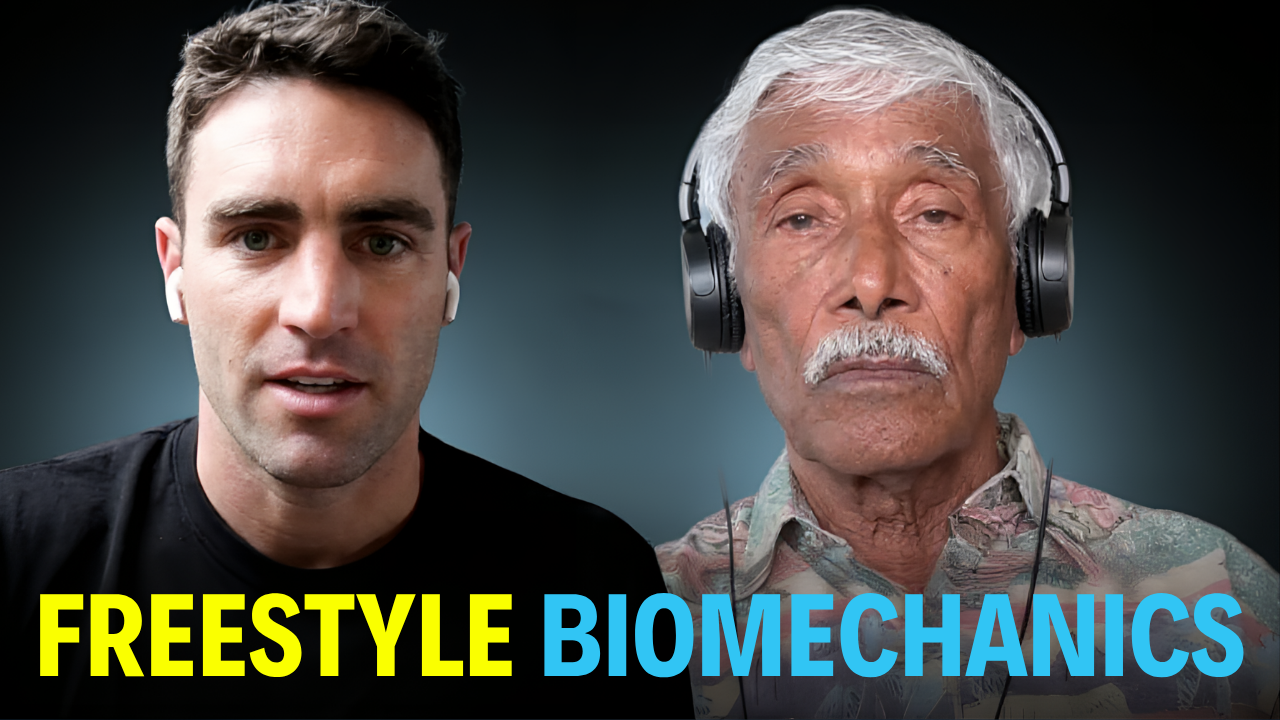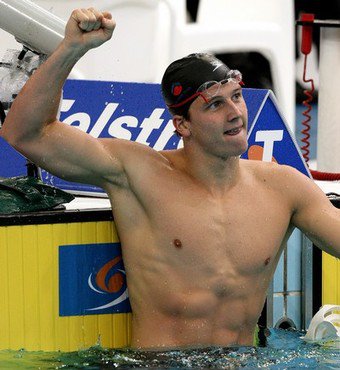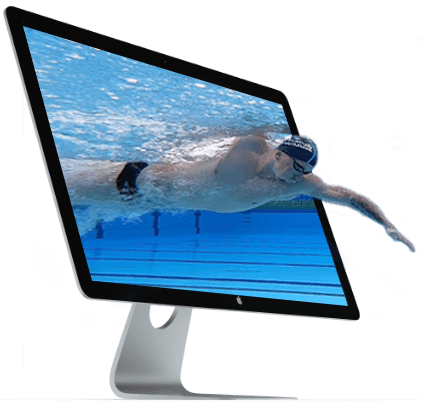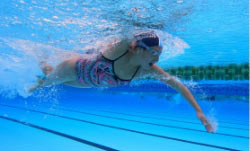








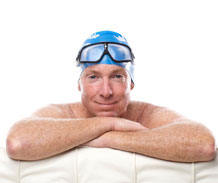
We chat with Terry Laughlin from Total Immersion. Terry has developed a method of improving your swimming that has helped hundreds of thousands of swimmers and triathletes worldwide to swim smoother. He’s an expert at helping people fix the weaknesses in their stroke so they can move naturally through the water with grace and ease. In our chat with Terry he talks about:
- How he improved the speed of swimmers in the ‘slow lane’ to being much closer to that of the ‘fast lane’ swimmers
- Using the feel of the water to increase your speed rather than thinking technically about the stroke
- The one thing you should focus on with your head position for more relaxed swimming
You can find out more about Terry’s Total Immersion workshops, DVD’s and books at www.TotalImmersion.net and they’re also available on Amazon.
Transcript
Read the full transcript
Welcome to Effortless Swimming, the podcast for swimmers, triathletes and coaches. Join Australian swim coach, Brenton Ford, as he reveals the latest techniques and information to improve your swimming. Let’s dive right in. Hi and welcome to the second Effortless Swimming podcast. My name is Brenton Ford and this is a podcast where you’re going to learn about different things you can do in training, in racing and outside the pool to improve your swimming. Last episode we spoke with Ash Delaney who’s an Olympic backstroker and Ash talked about how to have more energy at the end of your race by not kicking hard until the last 25-30% of your race. He also talked about losing weight by cutting out sweets from your diet. And he also mentioned some things that you can do in training to improve your underwater and to improve different things about your stroke just by working on them every single lap and focusing on them.
This episode we talked with Terry Lachlan from Total Immersion. Terry is well known for his method of swimming instruction which teaches you to be more efficient and more natural in the water. He’s helped hundreds of thousands of people worldwide with his DVDs, his workshops and his books. He has helped a lot of adults and triathletes in particular. And we chat with Terry about his story of how he came from being a swimmer to a coach and then to developing his own method of swimming and learning to swim and how he’s used that to help so many people worldwide. And some of the things he talks about in this chat with him is he talks about moving from being a slower swimmer in your squad to becoming a faster member of your squad. And some of the things that you can do to do that. He also talks about the one thing you can change in your workouts to help you push yourself harder and stay motivated during a set.
And the other thing he mentions is the aspects of your stroke, of your technique which make the biggest difference between swimming slow and swimming fast. So let’s go to the interview with Terry Lachlan from Total Immersion.
I tried out for a swim team when I was in eighth grade and was cut. And then I tried out again in tenth grade and this time I made the team I’d had a little summer swimming experience. I was basically a pretty clueless and frustrated swimmer. I never got out of the slow lane so to speak. Throughout high school I swam tenth, eleventh and twelfth grade. And then when I was in twelfth grade I was swimming in the New York City Catholic High School League which is not a hotbed of future Olympians. Pretty undistinguishable. And despite the fact that the league wasn’t very good, even as a senior I still didn’t qualify for the league championship. So I swam in the novice championship mostly against ninth graders when I was in twelfth grade. And then I went on to swim at St. John’s University and I worked really hard. It was really my whole purpose was to work as hard as humanly possible. And the first two years I improved a whole lot and then the last two years I just kept getting sick and I slowed down again.
So I realized in retrospect that overwork was probably what caused me to have the health problems the last two years. So when I had completed my seven years of high school and college swimming, I guess I had some skepticism about the pure hard work approach. I’ve never had any doubts about the value of diligent effort. But sheer hard work certainly failed me. And so I was pretty skeptical about the value of that when I finished college. And there was also a sense of unfairness because there were other people that I felt were lazy and they swam much faster than I did. And I just felt an inherent unfairness in that that I could never reconcile with. So I was against all odds. I was offered a college coaching position right after graduation. And I mean I was probably about as unqualified for that job as anybody could be. In fact, I was only 21 the first year I was coaching out. So I was coaching people who were older than me.
I was coaching people who had beaten me soundly the year before. And I had never taken any sort of coaching course. I was a political science major and the college I went to didn’t offer anything in the physical education field. But I don’t know why still. I don’t understand why but really from the first day, the first week that I was on the pool deck, I just felt pretty confident that I could observe what was going on in the pool and come to some reasonable conclusions about how to make people swim faster. And it really proved to be the case that right from the first year that I was coaching that I had a much better neck for helping other people swim fast than I ever had for swimming fast myself. And that first team that I coached just had a phenomenal season. We broke every school record. We broke all the conference records. There were probably about 16 or 20 colleges in our local New York City metropolitan collegiate conference.
And we broke every conference record in every freestyle event and all of them by really massive margins. And I was elected coach of the year by my peers. And that was the first thing I’d ever done in my life that you could say I’d done with distinction. And so I felt I’d really found my calling at the age of 21. And here I am almost 40 years later and I’m still doing it. So obviously I felt like I found what I was meant to do in life. Oh that’s a great story. It’s amazing that you went into coaching when you wouldn’t I guess you wouldn’t guess that that’s where you’d be heading. But I think for the tens of thousands of people that you have taught to swim I bet they’re eternally grateful for that happening. I think that the fact that I was so frustrated and coolest as a swimmer it helped give me understanding and empathy for a lot of the people I’ve coached since. It gave me the patience to be able to work with people who don’t get it easily.
So for that I’m grateful. And what was it that with your coaching where do you think you went right with it to have such a good result with your college team? What sort of things have you done? Yeah I found that right from the first week of practice I found that I was really interested in the aesthetics more than what the pace clock was saying and so on. I just was really intrigued by the look of people’s strokes and looking for patterns that I could recognize. So I kind of just really studied the swimmers who were fastest on the team that I was coaching. I had not made them fast at that point I was just starting. But I studied the people who were fastest and I studied the people who were slowest and I tried to look for common patterns that I could see that there were characteristics and the people who were swimming faster and a different set of characteristics and the people who were swimming slowest.
And I did notice some things. I think one of the first things that I noticed was that the people who were swimming faster looked taller in the water. They weren’t necessarily taller when they stood on deck but when they were swimming they just had a sort of looked taller. And their movements were generally more smooth and things like that. So I went over to the slow lane I would give the faster swimmers a set and then I would go over to the slowest lane and just work with them for 15 or 20 minutes on just trying to tweak their strokes until they started to look a little bit more like the people in the faster lane. And I just continued with that working on tweaking. As I said I hadn’t studied any of the things related to coaching or performance or biomechanics or kinesthetics or any of that stuff. I had no knowledge of the technical side of things but I got to feeling a pretty good degree of trust in my eye
that I could recognize better swimming and I could recognize poorer swimming and use my eye and be willing to, as I said, just tweak people until they started to look more like the blueprint I kind of had formed in my mind for a better stroke.
All the swimmers on the team had really fantastic improvements that year but the people who were slow as to who I recognized as being a lot like the way I had been I was just stunning to see how much they improved that year in comparison to how static my own performances had been and so after that I was pretty sold on the value of working on technique as a priority. It’s interesting as a coach when you see other swimmers you can pick out the different things in their technique which they need to work on so it’s always good to have that pair of eyes watching your stroke because that’s where the improvements are found, it’s in technique. You can train your heart out but if you haven’t got the right technique it’s not to improve as much as you will if you work on your technique. I think actually one of the things that was really beneficial I later recognized that starting with a blank slate so to speak allowed me to not be intimidated by technique
because I think if I had studied in the way it’s normally taught it can be so technical I might have been intimidated but I got to trust, developed a strong degree of trust in the value of observation and having a really basic aesthetic sense in following that and it gave me I think a lot more freedom to work on technique than I would have had if I had studied it formally and the way it’s normally taught in academic courses. There’s so many different parts of swimming to look at just for freestyle for example you can work on the catch, your rotation your pool, your recovery there’s a lot of things to think about but if you can just simplify it and talk about how it should feel or as you said the aesthetics then it’s a lot easier for people to focus on that and work on improving it rather than thinking about catching with about 45 degrees or making it complicated so that’s a really good way to go about it.
I can remember one example of a real eye opening moment I had which was after I’d been coaching six years I got a job where I was coaching at a pool that had an underwater window and I’d never had access to that before you know for six years I’d been coaching from the pool deck and was used to swimming looking a certain way and so the first week that I was coaching at this pool I gave the swimmers a set I went down, climbed down the ladder and just sat there watching them do the set and I don’t think I’d been down at the window for more than a minute before I saw something that I just had never noticed from the deck before and it was just mind blowing for me to see that and that was watching people push off the people who were well streamlined went very far very fast and the people who were only a little bit less streamlined they didn’t have to be like incredibly bad streamlined all they had to be was a little bit less streamlined
and they slowed down so dramatically it was like they were running into a wall and then the other thing was the people who were moving really fast in their streamlines as soon as they started pulling and kicking I could see them measurably slowed down it was so obvious that as soon as they started pulling and kicking they were swimming slower than when they were just streamlined and gliding underwater and it struck me that all the time I spent planning workouts and all the time all the attention I might give to the propulsive parts of swimming probably wouldn’t have as much impact as if I could figure out figure out some way to have people maintain streamlining characteristics after they came to the surface and started swimming and it took me a long time to figure that out that happened in 1978 and it wasn’t until the mid to late 90’s that I really felt that I had a step by step method to teach active streamlining
but it was something that really stuck with me there were a lot of moments like that where I got a really powerful impression from observation and then brought it into my coaching as I say it was a lot of experimentation and trial and error and so on because I never had formal training and when you go about tweaking someone’s stroke it might be the streamline like you were talking about what sort of steps you go through do you get them to focus on a few things at once or just focus on the one thing how do you go about adjusting someone’s technique well most of the work we do in total immersion is we don’t really do tweaking pretty much everyone who comes to us for instruction is we take them to we start them with balance even if they look like a pretty decent swimmer I’ve certainly had other instances where I’ve worked with swimmers in a less formal environment but most of the people that come to us for instruction
are coming to learn our method which means always starting with balance skills and certain drills and stroke thoughts that we teach balance and so the very first thing we teach everyone is to release the head’s weight just to have the head feel weightless to feel like it’s hanging to become aware of whether you’re activating any of the usual muscle in the back of the neck that you activate to hold your head up even a little bit as opposed to completely release its weight so that would be a starting point that we do with everybody I’ve also been in situations where I’ve done work with some of the top college teams in the U.S. not very recently but I’d say probably the most recent time was I think 2004 or 2005 was the last time I did that so I wasn’t doing a workshop or anything like that I was looking for things that I could help them with and I did that and I would just mostly I would look at the fluency of their movements
I would look at how much they were disturbing the water I would listen to how much noise they were making when they were swimming things like that and look for ways to increase the grace and fluency and any ragged edges at all I could find so if I’m working with someone who’s already a pretty good swimmer they’ve not asked me to teach them the TI method the focus will mainly be on how graceful and fluent their movements are I like your approach you always start from the same spot which is get the balance right and then you work on the other things I went through your freestyle program I bought the DVD and I had a look at the drills and went through them and I went to the pool and went through all the lessons and my stroke count dropped I think it was at the start of the session it was 31 and I got it down to 26 or 27 just from going through a couple of these drills and you can really feel the difference once you
go through the drills and you become more aware of your balance and your body position and your rotation so I highly recommend checking out the total immersion DVDs and programs because I think for anyone who’s interested in swimming and they want to improve then it’s a great way to go about it I appreciate that Brent and I’m glad you had a good experience and a good outcome with it and that considering how accomplished you are as a swimmer that you were open to the idea that you could improve over whatever level of efficiency you had at that moment yeah and I think drills most of your program is it’s all drills because that’s the way to improve swimming is to use the drills to focus on the different parts of the stroke and there’s some swimmers which don’t like drills at all maybe they had a bad experience when they were younger coach might have flogged them with a lot of drills or whatever it is but to improve you’ve got to be going through some of these drills
yeah the last couple of years we’ve actually evolved a way to a bit less reliance on drills and to using them differently so if you were working with a DVD a couple of years ago you probably were following a program where you might have been doing 25 meter drill repeats maybe even more 50 meter drill repeats and these days we’re using the drills more as to tune up a particular aspect of the stroke or bring a particular aspect of the stroke to a higher level of awareness but once we do that we encourage the swimmer to try to swim whole stroke with that new piece of awareness pretty right at the start so for instance when we’re teaching freestyle the first drill we teach is called Superman glide and there’s three or four different focal points that we might draw the swimmer’s attention to in Superman glide but usually what we’ll do is have them do maybe four repetitions of a Superman glide and each repetition is only going to be 8 to 10
meters and the first four repetitions we’ll ask them to just focus on the feeling of the head being weightless and hanging between the shoulders and then after they’ve done that for you know maybe two minutes we’ll ask them to swim to 2 to 425 and just see how to what extent they feel the same sensation of a weightless head in whole stroke and to try to feel as well whether that’s affecting other parts of the stroke so that would be a more typical so it’s a lot more integration of a new position, a new awareness, a new sensation that you heighten in the drill or highlight in the drill and then to bring it into whole stroke pretty quickly. You mentioned that you prefer to start with a blank slate and by that do you mean working with someone who’s pretty much brand new to swimming? No, not necessarily I mean we sometimes do, we don’t really have the luxury of doing that most of the time. It’s not that we prefer to start with a
blank slate but to some extent to try to create one so everybody has some muscle memory, everybody has some habit patterns coming in for the most part and by one of the virtues of the drills is that they generally don’t have a habit pattern that resides in the drill itself. The drill is different enough, new enough, that they don’t have any preconceptions or muscle memory about how to do the drill so it allows us to interrupt a habit and implant a new awareness and then let that new awareness imprint a little bit through some drill repetitions and then see whether they can bring it into the whole stroke. So we are trying to create a bit of a blank slate whereas most of the time we’re really not encountering one. Yeah, that’s a good point. A lot of the swimmers that I work with too, they’ve got at least some experience, they might have swum for 20 years, it’s been in the last two years but creating a blank slate and trying to get them to
almost forget what they’ve learned up to that point so you can implant those new things into their techniques. It’s a good way to go about it and so besides doing that what we’re really trying to do with a lot of these students is simply plant the idea that they should be thinking in very specific and targeted ways that when they leave the wall they should be thinking about one thing they want to try to do well on the way to the next on the way to the next wall. So just to start getting them in the habit of having a specific clear targeted thought on every lap, every stroke and so on. So that’s one of the things we’re trying to accomplish in the way, you know, the step by step drill progressions. And that works all the way up to the top swimmers too. I was talking to Ash Delaney who’s an Australian Olympic track striker and he was talking about every lap or every set he knows what he’s going to work on whether it’s he wants to go 12 kicks underwater
or he wants to use some of his arms for that lap and not work his kick too much but yeah it’s it. If you focus on more than one thing it’s very hard to, I guess to get improvement and to be clear on what you’re trying to do with that lap or that set. I don’t think that inclination that he has, I don’t think it’s very common and I think because the way a lot of swim training is designed at least here in the U.S. there’s a lot of just generic repetition where the coach just gives a numbers, you know, we’re going to do 2100’s on this interval and then they say ready go and there’s not often a lot more information so the swimmers don’t really know where to put their focus and sometimes the set itself is so tedious that they almost have to distract themselves and turn off mentally to bear the tedium so there’s a lot of things that happen in swim training that to some extent are encouraging people to disassociate to go on sort of a mental walkabout
and so anything that will encourage a swimmer to be mindful in some way while their training is good. Yeah, I totally agree. There’s a lot of sets which I know I’ve done in the past that there hasn’t really been a goal for and you’re just there to fill time or clock up the case but everything you said or everything you’re doing in the session it should have some kind of goal whether it’s you’re working on your stroke count, you’re working on your aerobic fitness or your speed but you need to link it into what your overall goal is and know what you need to do in order to achieve that goal and have the right things in your program to do it. Yeah, the human brain itself really wants to have clear tasks. I mean the brain evolved as having to solve really critical and basic problems of survival you know. Is that thing, is that item something that’s safe to eat? Will it sustain me or will it poison it? Things like that and so
a million years of that sort of evolution where the brain likes to tackle pretty basic and concrete problems and so it responds really positively when it’s given concrete problems and not a lot of sets. It’s kind of an abstraction. 2100 is ready to go. What do I do besides count hundreds? That’s right. You need to know what you’re doing it and then you’ve got a lot more reason to do it too. You’re putting more efforts and you feel like you’re actually getting some benefit from it. So all the coaches out there if you’re listening give you some reason why they’re doing that particular set. How about yourself Terry? Do you still swim every day? Not every day. There are times in the year when I’m more focused and more intense so I do compete. I do a lot of open water racing and a little bit of pool racing and then there are times of year when I take a little bit of breaks so I might swim 2-3 times a week which is I’m in that phase right now
where I’m doing yoga and doing strength training and stuff like that a little bit more than I’m doing swimming right now but probably after the holidays I’ll start to ramp up. I plan to go to the Masters World Championships in June in Italy so I’ll have 6 months and I’ll start preparing in a more intensive way for that. The main thing is whenever I swim I just really want to feel like what I’m doing is so enjoyable that when I leave the pool I can’t wait to come back again. I’ve been thinking that was no fun. I don’t want to go back next time. I never look at my watch. I did 3,000 yards at lunchtime today and the whole thing was absolutely thoroughly enjoyable. I had clear tasks on every set. I had a clear task. I was trying to execute well on every lap and so on and that’s the thing that puts me into a flow state. It makes it sort of timeless ego less and just really enjoy it. I like that a lot. I think it’s good for swimmers
who swim in the squad sometimes to go out on their own and just do their own session and take it easy and just enjoy the feeling of swimming because that can be lost when you’re doing squad sessions because you’re working hard a lot of the time and you forget what it feels like, how enjoyable it is to be able to glide through the water and just the feeling of it is quite euphoric, I guess you’d call it. I swam with masters groups until 2007, the last four years I’ve swam almost exclusively on my own just because I tend to practice very differently than what they do in the masters workout and so it was getting harder and harder to fit in what I wanted to do and not feel like I was in conflict with what the coaches were giving at masters. I still race in masters meets but I train solo now. We’ve got some swimmers going to the World Champs next year as well so look out for the Power Points guys there and I’ll tell them to look out
for you because we’ve got quite a few swimmers training for it so it should be a pretty popular competition there. Will you have any 60 to 64 men? I think we might, I’ll have to see who’s going. My main event there will be the 3K open water. I’ll do some pool racing but the 3K open water is the thing I’m looking forward to the most. Great, where’s that fame swam? In the lake or out in the ocean? That’s a good question, I don’t know yet. We’re ready for whatever is coming. What sort of stuff do you have available if swimmers want to learn the total immersion method? You’ve got the DVDs, you also do workshops. We’re kind of renewing our presence in Australia. We have new leadership there and the coaches. We formally had one person leading the whole operation and planning all the workshops and so on and we decided that we were going to give all the coaches autonomy to whether they were in Sydney or Melbourne or wherever that they could plan their own workshops
and their lessons and so on so we set them free to operate how they feel its best in their area. I’m seeing a lot of new energy from the coaches having gained that freedom and opportunity to do that in Melbourne. We have Peter Hendrick and Pat Baker and I will be there next November. I’m coming to Melbourne next November and looking forward to swimming hopefully in a sea swim, maybe a race in the sea and maybe a pool event too if I can. I’m looking forward to that. I haven’t been to Australia in about probably five years. That would be good, we look forward to having you and there’s a lot of open water races in Melbourne. There’s usually one every weekend so no doubt you’ll be able to swim in one and in a year’s time once you’re here we’ll hopefully catch up and meet face to face. Yeah, look forward to it. Thank you very much for being on the call and I’ve certainly got a lot out of it and I’ve got no doubt that the people listening will have at least learned
something new that they can take back and implement into their own program. Thank you Terry, it’s been a pleasure chatting with you and we’ll hopefully catch up soon. Thank you for inviting me Brenton and congratulations on launching the podcast. Good luck with it. Great, thank you very much. You’re welcome, bye bye. If you’d like to find out more about Terry or his DVDs, books or workshops you can go to totalimmersion.net. To get bonus videos updates and transcriptions from the podcast simply go to swimmingpodcast.com. You can also find out more about effortless swimming and get free videos, audios and articles at effortlesswimming.com Don’t forget to write us in the iTunes store. I’m Brenton Ford I’ll be back next week with an interview with the world record holder for the Manhattan Island Swim. So I’ll be talking to one of the top marathon swimmers in the world where he reveals some of his top tips for
swimming long distances and swimming in open water races. So see you next week. Thanks for joining me. Catch you later. Thanks for joining us on the effortless swimming podcast. To get transcriptions, bonus videos and to be the first to hear about new episodes, go to swimmingpodcast.com