







Download the transcript of this podcast
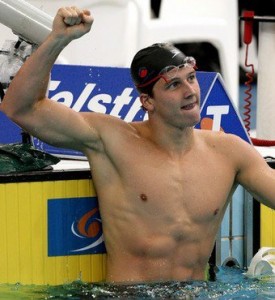
Welcome to the Effortless Swimming podcast! In the first episode we chat with Olympic backstroker Ashley Delaney. He reveals:
- How he got started in swimming by accident
- The one thing he changed in his diet to drop two kilos in weight and start swimming faster times in training
- Small things he focuses on each lap that made him one of the best underwater kickers Australia has ever seen
- One change that you can make in a race to conserve your energy and have more speed and power at the end of every race
Ash and I lived together for a year when he was in his final year at high school. He then moved to the Australian Institute of Sport to train and has now moved back to Melbourne, Victoria. Ash has won medals the the Olympics and World Championships in backstroke.
Leave your comments below and if you enjoyed the podcast please spread the love by clicking the ‘Like’ button below!
Transcript
Read the full transcript
Welcome to Effortless Swimming, the podcast for swimmers, triathletes and coaches. Join Australian swim coach, Brenton Ford, as he reveals the latest techniques and information to improve your swimming. Let’s dive right in. Hello and welcome to the very first Effortless Swimming podcast. My name is Brenton Ford. I’m a national swimmer and coach from Melbourne, Australia. This is the podcast where we talk to the top swimmers, coaches and experts from around the world. And they share useful tips and information that will improve your technique, your speed and your endurance in the pool. If you’re a swimmer, a triathlete or a coach, then this is for you. If you’d like to receive transcriptions, bonus videos or updates of when the latest episodes are out of this podcast, then you can go to SwimmingPodcast.com or you can visit us at EffortlessSwimming.com. In this first episode, we’re lucky enough to be talking with Ash Delaney,
who’s an Olympic medalist and Commonwealth Games medalist. And Ash won a silver medal as a heat swim in the 4×100 medley relay and was fifth in the 100 backstroke in the Beijing Olympics. And Ash also won gold in the 4×100 medley relay and three bronze medals in each of the three backstroke events in the Dali Commonwealth Games. So Ash has been to the top levels of the sport. He’s competed there and he’s still at that level. And we talked to Ash about different things about his technique, his training and in particular his diet and some changes that he made and what those changes did for his swimming. So let’s cut straight to it. This is Ashly Delaney, who’s an Olympic medalist and Commonwealth Games medalist from Australia. I swam when I was younger mostly because my older sister, Leray, was swimming. And this was a glad thing. I think that’s where I learned to swim. And she sort of got into the squad a little bit
and they used to have these races on Wednesday night. I was doing learn to swim and I’d have the learn to swim kids do a couple races. And they put me in, it must have been seven or six or something. I can’t remember how old I was. And they put me in the 15 metre race and they had a rope across the pool and sort of dove in and race for that rope and end up winning these kids by a fair bit. So they were like, okay, we’ll put you in the 25 metre race. And so I got into that and ended up winning that by a lot as well. And they were getting really excited. They were like, oh yeah, we’ll put you in the 50 metre race now. And I couldn’t swim 50 metres without stopping because we used to go to the pool just on the weekend or whatever. And I just absolutely broke down and started balling saying that I didn’t want to do it. And then so they didn’t end up putting me in the race. And I just, yeah, remember, I guess that’s probably why
I’m probably swimming more sprint events now is that I don’t really like doing the long distance ones. You’ve got to be a bit crazy to do the longest stuff. This sprint is so much more fun, aren’t they? Yeah, well, a few people I’ve heard say this quote, people who can’t sprint from long distance. So I think if you could sprint, you’d do it because there’s less training. Yeah, someone’s better. Yeah, it’s so true. And it’s, yeah, when you’ve got to do 200 metres or more, it’s pretty tough. I mean, it’s a tough slog in training, no matter what distance you do. But yeah, I’ve started doing 50s and 100s now and it’s a lot more enjoyable. Makes swimming enjoyable. When did you realise you could go somewhere with your swimming? Oh, yeah, that’s hard. I sort of always had, like as a kid wanting to sort of make the Olympics or get to that sort of level beyond the Australian team. And like you have these goals and you sort of,
well, especially when I was around 15, 16, I had those goals and then got to 17, 18. I was sort of looking at the times that I did and what the top guys were doing and kind of just saw it as being so far away and wasn’t really sure if I could actually get there because like you’re looking at three or four seconds over 100 metres and at that age, I just couldn’t see where it was coming from. And then you just sort of keep at it and I did and sort of you try and learn new things and learn from whoever you can, really coaches, other swimmers. And then it sort of just got a little bit closer. Like I made a couple of improvements and then like you could really see that, like you had that opportunity to sort of get to your goals and I guess it was probably only around 19, 20. I sort of really started to realise like I had a good chance at making it and then yeah, the rest is sort of history and got on that Olympic team at 21
and that was a really dream come true. Yeah, it’s a mate. I mean a lot of people just see the top swimmers and they think that it’s kind of luck or chance that they’ve got there but they don’t see that thousands of hours in the pool and the training and the chipping away and that you would, like no one’s there from the very start. They’ve all got to work towards it and just keep chipping away at their times and learning new things, meeting new people and improving their technique as they go. Like it’s a long process and no one gets there by chance. Yeah, it’s definitely a lot of hard work and you sort of, people sort of see okay, someone so just swim at the state competition and then six months later or the next meet they come out and they go two or three seconds quicker but they don’t see the kind of work that they’ve done or the changes that they’ve made to sort of get there. They just sort of come really easy to them
or they’ve just grown and that’s all that’s happened sort of thing but yeah, like everyone has to work hard. I mean, no matter how talented you are you still have to work pretty hard. So yeah, just there’s so much work that you need to do and yeah, and so many little hidden things that people do to sort of get there. Yeah, that’s right. I mean, what’s your training schedule like now? How many sessions are you doing a week? What kind of work are you doing? Well, we do 10 sessions a week, three gym in there and it’s sort of I would probably say we do anywhere from I’d say 35 to 50k a week which isn’t a whole lot but I just sort of see depending on who you are like you might, I mean some people go 50 to 70k sort of weeks like and then others might even go less like 25 to 40k sort of thing so it all depends on like the individual but I think I’m in a pretty good spot at the moment and Rowan and myself are working well
and I’ve been doing some pretty good times in training and stuff so I think we’ve got a pretty good balance at the moment of working quite hard but then being skillful and stuff at the same time so I think if you get too tired you can lose a bit of sharpness and stuff so I think we’ve found a pretty good spot for me at the moment and still been working hard and I still get tired at the end of the week so you know you’re doing a pretty decent job if that’s sort of happening but then still swimming quick time so I think we’ve found a pretty good balance Yeah, that’s good and I mean back in the old days they used to just be about the Ks much work as you can done and just absolutely fog yourself every session but things have really smartened up now where it’s about skills, it’s about technique it’s about doing the right kind of training like for a sprinter it’s threshold work and sprints and that kind of thing and yeah and it is up to the individual
and you and your coach need to talk about it and see what works best for you because as you said not everyone’s the same Yeah, I sort of see it as just I hate like these just almost make up Ks like I just would say ten to hundreds on three minutes or something and you just sort of swim away and unless there’s a real specific sort of thing that you’re working on then I kind of just see it as being a bit of a waste and waste of your energy and time really so I think you’ve got to be smart with what you do Yeah, absolutely and you’ve got to understand the different like energy systems and different kinds of things that you should be working on it took me a while to figure out why we were doing some kinds of training with the aerobic work and you know you need to get at least 15 minutes of aerobic work done with your heart rates and that aerobic zone for it to actually make a difference so if you’re doing eight minutes of aerobic swimming
you don’t get that benefit so you and your coach need to be switched on to that kind of thing and being at the level you are you know your coach knows all that kind of thing and it makes such a difference when you know it and you do it in training Yeah, absolutely What’s the hardest set you’ve done?
Ooh, the hardest set I’ve done One that’s I’ve got a few There’s one recently we’re doing this this was just absolutely stupid for me but we were doing this beat alanine testing which is just like a different kind of bi-carb and I had to do it was six fifties on two minutes max and then after that straight on you go 200 meters max like for me yeah I sing out at the fifth at the fifth 50 that’s one and then I have to do another 50 and then swim a 200 straight off the back I couldn’t even I was lactating that much I couldn’t even move in that 200 that was just so ridiculous that it was just I dreaded doing this and we had to do it three times in the last preparation and I don’t think it helped me one bit but
just there’s been a couple of sets one that I did with a really good 200 meter set that I did with Vince Rayleigh and it was 100 dive 200 swim off 100 push 200 swim off and so you had to it was basically you did that three or four times depending on where we saw that and you had to descend each set but you wanted it to be the first set you wanted to be around your 200 meter time and then your next one was almost your goal time and then it was pretty much whatever you could do and that set was pretty tough so you pretty much pretty much broken 100s with a little swim off in between but I thought that was a pretty good 200 meter set yeah that sounds pretty tough and the longest sets where you’re getting a lot of lactic acid happening then it’s pretty painful but you can feel the benefit yeah definitely and what you’re probably one of the best underwater kickers that we’ve got here in Australia what type of training do you do
for that I’ll make sure I’ve actually started coaching a little bit and I was talking about this last night just with the age guys at another swimming club and we whenever I push off the wall especially if it’s backstroke I’ll be 12 meters to 15 meters every time I know the amount of kicks that I need to do and especially if it’s fast if it’s 200 pace or back speed or max effort I’ll be 15 meters every time that’s something that I’ve done the last few years where if it was drill I’d still try and count out my kicks and get close to 15 every time but it’s not only
doing the kicks it’s doing them properly when I was a little bit younger I still probably did the kicks but I wasn’t doing as good technique or I’ll do it off the first 50 and not off the second 50 say if you were doing 100 meters so I think it’s pretty important anyone can push off the first wall and do lots of kicks it’s all about the second or the third wall or even the fourth wall sort of thing so just doing it all the time in training and then we sort of would cross over and we’d have specific sort of underwater stuff where we might do 25 max underwater for time and things like that so that way you can sort of gauge on how your underwater is going I’ll give you another set this was another vinset but I got it from Lee Mugent that he used to give it to Adrian Radley when he was swimming and it was 800 on 330 I think we ended up getting them down to 310 I’m not 100% on that but on the first wall go 15 meters underwater second wall go 20 meters underwater
third wall go 25 meters underwater and then the last wall go 30 meters underwater and all this continuous and on 330 that’s probably one of a non lactate sort of set because you’re sort of just making it you get a little bit of lactate because you’ve got to make the time and stuff that was something that we worked on for a little bit and that’s probably one of the best underwater sets you could probably do and then but adding it in there when you’ve got to go 30 underwater it can very easily sort of have bad technique and stuff and that’s the most important time to be really focusing on it then and trying to get it out that’s a very tough set yeah yeah that sounds pretty good we one of the sets that we do fair bit is 8 or 10, 25’s underwater on 40 or 45 and that’s yeah it’s certainly not as hard as the 8200’s but yeah just continuing to practice the underwater work is just the best way to improve it and I like what you said about doing it every single time
how many kicks do you do off each wall to make it to 15
if it’s 100 like 100 pace sort of max sort of back end speed I’ll do 12 and if it’s 200 pace I’ll be 10 to 11 yeah because they’re bigger bigger kicks is it yeah you just sort of slow it down obviously you’re not completely sprinting so knock off one kick in that wall if you did 12 at a slow pace obviously you’d go past the 15 so they’re the numbers that I use every time I’m doing a 50 or 100 whatever pace it is they’re the counts that I use yeah that’s good and it gives you something else to concentrate on when you’re training too something, a goal to hit every lap as well yeah exactly I think if you count your kicks as well that’s when it’s I don’t know I don’t seem to run out of breath or be really struggling for a breath or anything like that when you haven’t counted your kicks and you’re like oh I wonder how far I’ve gone and then you’re like oh I need a breath I need to come up but if you’re counting it almost distracts you
a little bit as well so that’s something especially in that 200 meter set if you count your kicks out that it’s so much easier than if you don’t like it just takes your mind off it a little bit and I think that helps yeah for sure yeah I find the same thing in training yeah distract yourself from the pain by counting yeah pretty much and what about your diet you were talking before and you mentioned some things that you have changed in your diet that have had a big difference what are they yeah when I was with Shannon Rollison at the Australian Institute of Sport I I was living I was living with this house mate and this was before Nationals and I just sort of his mum was catering business she used to cook us these small sticky date puddings and Christmas puddings and when we used to come he was a rower we’d cook dinner we’d have all these things frozen in the freezer we’d cook them up we’d have them most nights like we probably have them
for four or five nights out of the week sort of thing so kind of really putting away these desserts and there was nothing really wrong with my skin folds like it wasn’t that bad but Shannon was always on to the girls about eating chocolate dessert sort of thing and I ended up going to that Nationals and not really going as well as what I would have liked to and and especially not as well as what my training had shown so I just remember he got stuck into the girls today and I sort of thought maybe I’ll try that as well shouldn’t be so bad and trying to fuel your body with the right food sort of thing and I ended up doing I cut out chocolate and dessert pretty much it was probably close to a year and within the first sort of three oh no it was four or five weeks we got our skin folds done and I normally sat around 35-36 which is pretty low skin folds and then after about four or five weeks I got skin folds done again and they were down to 31
and all I’ve done was stop eating chocolate dessert and that was the only thing I cut out and I just saw that and it was like really impressed with how I’d sort of just cut it out and then we sort of looked at a few things and spoke to the dietitian and he was sort of said you’ve got to make sure you’re replacing so you cut out all this other food and you’ve got to make sure you keep keep up your fuel intake sort of thing for your energy levels and so it was all about eating the right foods to fuel your body so you could probably eat a little bit more of the right foods but your body is going to be so much happier and it’s going to work better and all that kind of stuff and I started doing times in training that I never had I was probably two kilos lighter and just doing a really good job so I just sort of took that on board and and tried to just be good all the time and I sort of made that decision just it was like last style choice it wasn’t
sacrificing anything I just made the decision I’m not going to eat that stuff and so once I sort of set my mind to it like that I could just do it as well before I was like oh no I won’t have it because it’s bad for me sort of thing and then I’ll end up having it anyway like I just sort of whatever and but this time I just said well nothing just not going to eat it so now I don’t be like it I barely ever have it and like it’s just it’s just not an option to have it really so you went pretty much cold turkey and just said no that’s not what I’m going to be eating and changed it pretty much so what sort of stuff are you sorry the first probably week it’s pretty strange and I spoke to the dietitian about this that your body like your brain actually craves it like almost like a drug like because I would finish dinner and I would know that I would know that the ice cream in the freezer or whatever it happened to be and would actually be thinking about it
like non-stop wanting to have it and then it was only probably yeah probably five or six days and then you sort of forget about it and then more and then you don’t finish a meal and feel like something sweet so just sort of it was really quite weird but then once you get past that five days to a week then it’s like it’s easy after that
what sort of stuff did you replace that with you mentioned that the dietitian said you need to keep up your energy and take what other foods did you start having yeah so I started eating dried fruit like I love dried fruit I mean I like normal fruit but I started eating a lot of dried mango and if I did want dessert or feel like we had a hard session and I would try and eat a yoghurt dessert sort of thing or have fruit and yoghurt so there’s always a healthy option and it was just about making those decisions and putting less butter on your toast or less sauce or whatever happens to be like just little decisions like that that you can cut calories and watch that kind of stuff and where you probably don’t really need it but you just so used to having it you do it anyway
that’s good and you said your skin folds are pretty low as a result of that and of course the training
you did a clinic down at Terralgan a few weeks ago where you spoke to the younger kids and you got in the water and one of the girls that I coached she came back and she said that Ash Delaney guy, he looks pretty good so that’s just another bonus for meeting while we’re training hard so there you go
what other things do you focus on in your swimming in terms of your technique? What do you think about?
Well everyone sort of has their things that they need to work on during training and for me lately I’ve just been just changing my technique a little bit so I always need little tweaks and that’s where you have a good coach or you talk to your coach about it that will be the little things that they could and say we’ll lift your hips up here or put your head back a little bit and then so that’s the kind of thing you focus on for that session and for me at the moment just work out the physio my left glute isn’t stabilizing really well and so she’s given me exercises to do so I’ll do them before every session and then get in and focus on that and then that sort of connects me right through and I can just feel it it’s all about feeling, getting that right for every session so I normally give myself one or two things to work on each session most swimmers should know what they need to work on and that’s sort of my goal for that session so making sure
I get that right whether I’m swimming slow or fast I’m always swimming with good technique so just always concentrate on little things like that and then obviously there’s other things like your underwater and not breathing off turns or how far you’re going to go underwater all those kind of things so there’s always a technical thing that I’ll be working on whenever I’m swimming backstroke and what about when it comes to a race what do you focus on then
really trying to focus on the process not the outcome I’ve got for say for my hundred I’ve got a few keywords that I use when I race and that always brings me back to the process so it’d be like with the start I know what I need to do how many tips I need to do off the
off the start and once I come up I know to be on my arms and not my legs sort of thing and hold that through and build through the 50 sort of things so that’s my other cue so just keep thinking build build build and then similar things for the second 50 so as long as you’re thinking of the things that you need to do it brings you back and you shouldn’t be making mistakes as well like if you were to say oh I want to win this race so then you go out too hard sort of thing and then you end up burning in the back that’s not going to happen sort of thing so you want to have a couple of things that sort of would relate back to your training what you think about training and then to get a good result and then you just use that in your competition so it’s pretty simple when you think about it but the mind tends to drift and wants to do other things so it doesn’t always happen but the more times you can keep the same process the more times you’re going to get a
better result yeah that’s a good insight into racing yeah thinking about winning is never really that good unless you’re a good 5 metres in front yeah that’s right it’s um one thing that Coach always said is don’t worry about the people next to you because you can’t control what they do you’ve just got to control what you do and that’s focusing on what pace you’ve got to go what you’ve got to do with your technique off the wall and that sort of thing yeah exactly right and what about after swimming what are your plans swimming related or yeah swimming related like I said earlier I have just started coaching I’m only doing it two days two afternoons a week just assisting with the aged national guys but I’ve been loving that I’ve been pretty keen to sort of get into coaching
and then down the track or sometimes soon just been looking at swim schools and like my passion my passion is swimming I love swimming so to get involved with something like that would be pretty good and that’s sort of it’s in motion a little bit but just very very very new just looking into it so that could be a direction that I might end up heading oh that’s great well I think you’d be a really good coach and no doubt the aged national kids at Nana Wadding are enjoying having you there at the moment so yeah I can imagine anything you do after swimming that you’d be successful at it because you’ve you know how to apply yourself you work hard and you’ve become a great swimmer so yeah thanks for thanks very much for being on the call being great chatting to you and catching up and we will talk to you soon cool thanks very much let’s recap what we spoke about with Ash because I think he mentioned three really good points that apply
to all swimmers the first one is to focus on the small things in training and for Ash that is doing 10 to 12 kicks off every single wall so he gets to 15 meters in his underwater to backstroke if you’re a freestyle that might be doing a certain stroke count for each lap or it might be holding a breath control for each lap and if you get if you focus on your skills in training it takes away the focus from how hard the session is to making these little milestones for every lap that you do the second thing you talked about was he cut out all sweets from his diet and that did two things allowed him to drop two kilos in weight and also allowed him to swim faster in training so his times came down and if you’re carrying if you’re carrying two less kilos than normal then that’s quite a lot there’s quite a bit of less weight to be carrying through the water so it makes it a lot easier so if you’re struggling to lose that extra kilo or two then
give that a shot and just cut out all sweets from your diet and the last thing he mentioned was in his 100 backstroke he focuses on swimming with his arms for the first 60 70% of his race and what that does is it allows him to save his legs for the last 20-30 meters so he can bring it home strong and come over the top of everyone else I’ve been testing this in training for the last week and my times have come down 3-4 seconds per 100 just by working my arms for the first 50 to 75 meters and then bringing in the legs in the last 25-50 meters because the legs are the first things to fatigue when you’re swimming because they’re the biggest muscles and you’re working them the hardest so it’s important to swim on your arms as he said and that allows you to save up your legs strength for that last 25-50 meters it also applies if you’re swimming in a 200 or 400 or a 1500 the main thing is don’t let your legs tire too early so you don’t want to bring them in and start kicking hard from the start
you want to swim on your arms because you can use your arms for a lot longer than you can your legs so if you haven’t tried that before where you’re going hard give that a shot swim on your arms for the first 50-75% of the race and then start to bring in your legs and you might find you’ve got a lot more energy to bring it home strong and actually come over the top of people I’d like to thank you for joining me on the very first effortless swimming podcast we’ve got a lot more coming so stay tuned subscribe to us on iTunes and we will see you next episode thanks for joining us on the effortless swimming podcast to get transcriptions bonus videos and to be the first to hear about new episodes go to swimmingpodcast.com