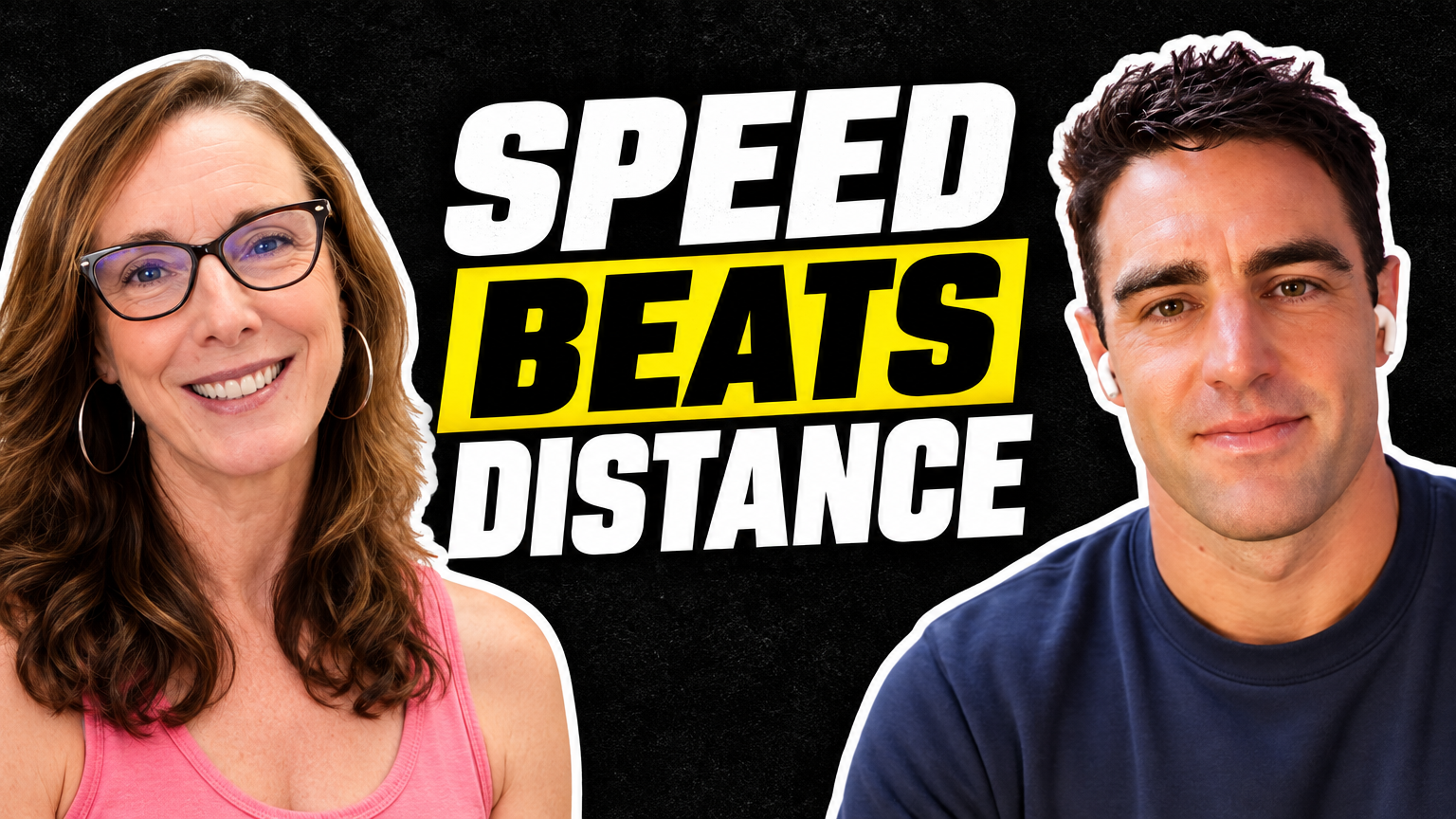








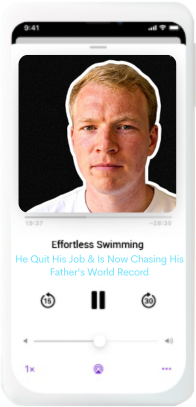
Join Adam Wilkie as he embarks on a year-long challenge to honor his Olympic champion father by attempting to match his legendary 2:15 record in the 200-meter breaststroke. Despite limited swimming experience, Adam has quit his job to train full-time, proving that dedication can make the impossible possible. Discover his intense training regimen, the emotional journey of honoring a legacy, and the mindset driving his pursuit of greatness. Follow Adam’s inspiring story on Instagram at Wilkie Swims and support his fundraising for SportsAid at inmyfatherslane.com. What’s your 215?
00:12 The Challenge Begins: Honoring a Legacy
08:38 Training Regimen: The Path to 2:15
18:55 The Decision to Commit: Quitting the Job
22:24 Lessons from Dad: Life Beyond Swimming
25:24 Inspiration and the Journey Ahead
Transform your freestyle to be effortless and smooth with online video analysis:
https://effortlessswimming.com/courses-membership/
Try the new Nanoclear Anti-fog Goggles: https://bit.ly/nanocleargoggles
Adam Wilkie’s Instagram
https://www.instagram.com/wilkieswims/
InMyFathersLane.com
https://inmyfatherslane.com/
SportsAid UK
https://www.sportsaid.org.uk/
Transcript
Read the full transcript
Welcome to the Effortless Swimming Podcast to show that help swimmers and triathletes love the water, become a better swimmer and live a better life. Here’s your host, Brenton Ford.
Welcome to the Effortless Swimming Podcast. My guest today is Adam Wilkie. Now, Adam, thanks for joining me on the podcast. I’d like I’d love you to share the challenge that you’ve set yourself and how it came about. Because when you sent the email through to get in contact, I was like, that’s, that’s unique. That sounds really cool. And what challenge it is. So yeah, what’s the challenge? Yeah, absolutely. Well, thank you so much for having me on Brenton. Yeah, it’s a real pleasure to be on as we were talking about before I’ve watched a lot of your stuff. So to be talking to you is fantastic. And then in terms of my challenge, so my, I was probably introduced my father first, because it gives a lot of the context to what I’m about to attempt. So I’m Adam Wilkie and my dad was David Wilkie, the great British swimmer who won Olympic gold at the 1976 Montreal Olympics. He won gold at the 200 meter breaststroke in a time of two minutes and 15 seconds. And so
he set that exactly 50 years ago this year. So it’s its 50th anniversary of the record, but also sadly, my father passed away two years ago. So this is very much my way of honoring my father. This is my way of dealing with my grief, and also just showing how damn good my dad was as a swimmer. This record, as I said, two minutes and 15 seconds was set 50 years ago, but by no means is it a slow time. So basically what I’m going to try and do is see how close I can get as a non swimmer. I’m 33. I work in marketing. If I drop everything, how close can I get training for a year to that time of two minutes and 15 seconds in the 200 meter breaststroke. So it’s it’s it’s quite the challenge as anyone who knows swimming will know that that is not a slow time. And it’s gonna take some doing. But as I say, it’s very much about the journey as much as it is the time for me. So it’s gonna be a busy year put it that way.
I think some people listen to that and I wouldn’t mind to do that for 100 freestyle. So two 15 for 200 breaststroke is very solid. And you said you dropped everything. Do you want to talk a bit more about what the what commitment you’ve made to this? So I mean, it’s actually a perfect day to be chatting because today is officially my last day of work. So this is my last formal day of employment. So I literally quit my job to do this full time. So I’ve taken a year off kind of a career break isn’t where I’m 33. I won’t call it a quarter life crisis, but it’s approaching that territory. No, not not really. But you kind of get my point. I’m taking a year out to do this. So this is going to be everything I’m going to eat, train, sleep as a pro athlete. I’m going to go to bed thinking about swimming. I’m going to wake up thinking about swimming. I’m going to be doing everything I possibly can at the age of 33 to optimize my
mind, my body to see how close it is possible as a non swimmer to get to that to 15 and I’ll give some context to the kind of the idea of me being a non swimmer. So I swam a little bit at school when I was a kid. But I never took it further and never kind of pushed myself. My dad never pushed me into it. I think he he obviously knew as a swimmer that it’s something that you’ve got to want to do yourself and any external pressure to push you into it doesn’t necessarily work. And I think a big part of my swimming career was when I was a kid, I’d walk into a pool and there was this pressure, you know, for me to be a great swimmer because of who my dad was. And my dad retired at 22 with five world records, 23 Commonwealth records, 16 European records and 30 British records. So he had quite some career. He topped that off of an Olympic gold. So, you know, people knew him, people knew what he’d achieved. So when I then jumped in a
pool, people were like, was he any good? So I think as a kid, that pressure kind of somewhat took over and therefore I felt like swimming was very much my dad’s story and not necessarily my story. But then when he when he sadly passed away, the pool felt quite a natural place for me to go back and feel quite close to him and kind of it was a very quiet place for me to go and be of my thoughts and kind of think about my dad process my grief and kind of, you know, just have that time out. And then I got the swimming bug. And then and then I kind of thought, well, can I do something with swimming to honor my great father? And yeah, this is where we this is where we’ve ended up. Have you done a turn to breast right time trial yet? Do you know where you’re at? I did one recently, but it was just me in a pool on my own. So by no means an official time, but we’re in the 250. So we’ve got a we’ve got quite some time to take off
at least on below three minutes, which is which is good. That’s a it’s a it’s a good start. But as I say, my base is nothing. So that is me just jumping in a pool and going for it. I’m going to over the year, I’m going to have to obviously overhaul my technique. I’m working with some brilliant British coaches in the UK. I’ve got the help of Aquatics GB. So they’re backing. So that’s British swimming, the British governing body. They’re backing the challenge. So I’ll get a little bit of access to some of their pathways and across the across the year. So I’m going to have some help here. It’s not just going to be me, you know, my local pools kind of charging up and down 25 meters every day. I will be kind of, yeah, doing as much as possible to to to become as professional as I can in this year’s period. Again, at the age of 33, when most athletes are retiring. So I’m starting out while most most are ending. But yeah, it’s it’s it’s
going to be fun put it that way. Do you know what a week will look like once you get going? So I’ve started training a little bit already. And what that currently looks like. So I’m doing five sessions a week at the moment. But that’s obviously I’ve been working full time at the at the same time. So I’ve been doing five sessions set by my coach. So there’s an hour and a half in the pool. And I’ve been doing two two days of dry land. But that will ramp up. So I’ll probably be getting up to kind of, you know, eight sessions a week of swimming plus some dry land. So yeah, I’m going to take it seriously. This is going to be I’m going to treat it as if it is my nine to five. There are other bits to challenge that we can come on to talk talk about like that. There’s a charity angle to it as well. So that will also be keeping me busy. But yeah, the training is going to be the forefront. And I’m going to be training like an elite athlete probably in the
water, you know, for two hour sessions, maybe two days here and there. But also I’ve got to make sure I don’t get injured at 33. You know, our bodies don’t recover quite as quickly as as they used to. So it’s going to be a good balance between getting enough working getting enough technique in but also making sure that I don’t overdo it and don’t get injured because as any kind of, you know, swimmer from 30 and above will probably attest to it’s quite easy to overdo it and get overuse injuries. So I’m sure you have seen a lot of given given kind of the amount of coaching you’ve done, especially of athletes maybe that are slightly older. Well, I did I’m done a double swim day for such a long time and I did one a couple of weeks ago. Hard training on a Monday morning and then a Monday night. And I was like, Oh my God, I think I’m not built for this anymore. Like I used to do that all the time. So good luck.
For sure. Yeah. And that’s the thing. Like it’s getting my body ready for that. So it’s kind of it’s slowly ramping up the mileage in the meters because the thing about the 200 meter breaststroke is I wish I was, you know, a 50 meter front crawler that, you know, then, you know, the modern training methods which are coming out obviously from, you know, the likes of cam but, you know, do do less meters for 200 meter breaststroke you still gonna have that engine. So I’m going to be in the pool a lot and I’ve got to kind of develop that base. And then obviously the technique of the breaststroke is so particular. So I’m going to be in the water a lot, spending a lot of time so the doubles are going to come. I know that for sure. And there will be days where I’m probably sitting on the side of the pool thinking why have I done this? This is quite intense but I think it’s going to be worth it. It’s going to be a real journey and I’m going
to, the big pieces of this actually for me as well is being able to learn about my father. So as I say he retired at 22. He had me when he was 39. So I never really knew him as a swimmer. I never knew him as kind of David Wilkie the champion. He was always just dad to me. No, I had glimmers of that when I’d walk around, people would recognize him, ask for his autograph or a photo. I remember going around to friends’ houses and, you know, friends’ mums would tell me they used to have a poster of my dad on their wall and at 10 years old you don’t really know what to do with that information. But it was kind of, it was there but it wasn’t necessarily the forefront. So I’m really excited to be able to get to go back through my dad’s kind of back catalogue of swimming wins. And, you know, I was saying to some of the other day, I’ve never actually seen the full 200m breaststroke race at the Olympics in 76. Never seen that clip because
it lives behind the table. I’ve seen the last kind of 30 seconds of that race but I’ve never watched the whole thing. So, you know, as part of this I’m going to try and go to the likes of the BBC and, you know, get into their back catalogue and see my dad on the different TV shows and the chat shows and all the races which is going to be just, yeah, fantastic to do as well. Was there a moment where this idea originated from? So, as I say, I kind of got back into the water after my dad passed away. So I was swimming quite a lot and then I just, I kind of thought, I was trying to think of a way to honour him. You know, and he, for those that don’t know him, I mean in the UK he was, he was quite a big name especially in swimming because he, so he won Olympic gold in 1976. Prior to that Britain hadn’t won a men’s swimming gold at the Olympics in 68 years. So he was the first British swimmer to win a gold medal in 68 years in
the pool. British male, I should say, Anita Long’s bottom as she won, she won one prior to him but it was the first male model, male medal. So, you know, he did a lot for swimming, kind of created this kind of, I guess, also in the breaststroke in the UK created a bit of a kind of a heritage for it because then after him became, you know, Duncan Petey, Adrian Morehouse, all the way up to the current day of Adam Petey, you know, he created this kind of, this legacy of breaststroke in the UK. So I was kind of just trying to think about different ways to honour him and what he’d achieved and kind of what he’d done for, for, for British swimming. And I, I came up with lots of different ideas. I spoke to an Aquatics GB about creating, kind of, an award in his name to different charities about creating some funds but they all felt like quite, I don’t know, quite, they felt quite final. They were almost like full stops on his legacy, you know,
David Wilkie, you know, X-Date to X-Date and here’s a fund in his name. So I wanted to come up with something which was more living and more present and that’s kind of where I was like, well, can I do something that has a charitable link, which I’ll come on to and speak in a second. I know I’ve spoken about it twice now. So that also then can help, kind of, the next generation and that mean that his name is attached to that. So the charity angle is basically there’s a, there’s a brilliant charity in the UK called Sports Aid and what they do is, is they give awards to young athletes who maybe don’t have the, the, the financial means to stay in their sport, but have shown great aptitude and what Sports Aid do is give them funding to make sure that they can stay in their sport. So the idea is, is that, you know, sport should be a great leveler and it shouldn’t be dictated by how much money you’ve got to stay in it, it should be
dictated by how good you are. And the brilliant thing is, is that my dad was the first ever award recipient from Sports Aid 50 years ago. So again, in 1976, he got an award from Sports Aid which allowed him to go on a win Olympic gold. So the whole idea was basically, can I do some form of challenge to help raise some money for that next generation? And then what I love about that is, is that my dad’s legacy and his name is attached to this future generation and he, even though he’s no longer here, can help that next generation hopefully go on to, to greatness themselves to win Olympic golds in their own right. And you know, my dad’s legacy and his name will be a part of that story and a part of the next generation. So that’s really how it happened. The other story is, is that I also was at an Iron Man event. So through my work, we started sponsoring Iron Man. And I was seeing these, these guys and girls, you know, putting
everything on the line, you know, you know, and they weren’t, they were semi pros, you know, then this wasn’t a full-time job, but they were really, you know, they put everything and they left everything out there. And I was watching them and I was thinking, I was just, I was inspired and I thought it was remarkable. And I was like, I’ve never pushed myself that far. And I’d love to, I’d love to see what I made of what can I do if I’m, you know, if I really dedicate myself to something. So those two things together kind of took me to this, this idea of how close can I get to my dad’s record. And then the brilliant thing was, it’s the 50th anniversary of his record this year. So it kind of all just came together and felt like, well, I kind of have to do it now. You know, it’s, it’s presented itself as a, as an opportunity. I have to grab it. And here we are.
Well, that’s, I think it’s such a great way to honor him and the amount of work you’re going to be putting in over the next 12 months is going to be huge. And I think the, the physicality of it, the, the time period that you’re going to be applying to it as well, like all of that seems like such a, such rewarding, rewarding way to, to do it, I think, you know, rather than, as you said, something that’s just like a, a final end point where this is, yeah, something you’ve got to work towards. So, and outside of that, for me, like personal interest is also how good can someone, how far can someone go in that 12 month period because I’m obviously a big fan of, I love swimming, I love swimming technique and I love to see that progression and improvement. So that in itself is going to be really interesting to see where you can get down to with a full time commitment of training like a professional swimmer. So we’re definitely going to
have to do a follow up podcast after the 12 months with this one and go through everything that’s where you got to and all of your training and stuff like that. Is there anything that you are most not scared of, but what are you, what keeps you up at night when you look ahead? I think, yeah, it’s a really good question. I think, to be honest, the number one thing and I’m incredibly excited by it at the same time but it does keep me up is this idea of, yeah, as you say, the amount of work and how hard this is going to be at points because if I’ve got any chance of getting close to it and by, by no means is it, you know, you know, that 215 time is still unbelievably quick. I was looking back through some of the 2024 Paris Olympic times. It wouldn’t have come last in the heat. So it’s still incredibly quick. It would have, I think, placed fifth in the 2025 British Championships. So by no means is this a slow time. By no means is this
something that, you know, I have any right to achieve. It’s going to take a ridiculous amount of work and even with that work, I may not make it. But I’m okay with that because for me, this is, if I don’t make that time, even though I’m going to try, I think the brilliant thing is it just demonstrates how good my dad was. Now that record that he set, he broke the current world record by three seconds. Now in a 200 meter event has just unheard of, you know, in the modern era. You don’t take three seconds off a 200 meter world record. So, you know, even if I don’t get the time, it just demonstrates how good my dad was. And I think that’s, that’s wonderful. But it does keep me up at night in the sense that it is going to take some doing. I don’t, I don’t think it’s going to be by any stretch of imagination easy. I know how hard it’s going to be to even approach that time. So that’s probably what will give me some sleep this night.
And then the other piece is I guess also just making sure that I can raise this money for the next generation. Because I think that’s where I’m applying the most pressure to myself of, I want this to, to, to, to really do help, you know, do, do as much as it can to help that next generation. And I’ve set myself quite a big fundraising goal. So I’m going to try and raise two hundred and fifteen thousand pounds, kind of in honor of that time as well across the year. So again, that’s going to, that’s going to take some doing and a lot of my time. So that keeps me up at night a little bit as well. But yeah, it’s, it’s all exciting as well. So it’s not, it’s not too, too kind of, too worrying at the moment, but I’m sure it will get worse. Let’s put it that way. When your dad raised in the Olympics, were the rules then that you can’t have it put your head under the water? Yes. Yeah. Yeah. Yeah. I was going to come on to this cross.
We’re lucky in the sense that the stroke has got quicker. So there’s two pieces of the stroke, which now make it a lot quicker, which is you can now fully submerge your head. So in a 200 meter, that’s, you know, that, that does make you a lot quicker because you’ve got that glide phase, as you well know. And then the other pieces, they weren’t allowed dolphin kicks off, off every turn. So, you know, there are seconds in those two pieces alone. So, you know, if you had those two fifteen,
two fifteen and he couldn’t even put his head fully under the water. So, you know, that, that’s the thing that I want to bring kind of that, that back into the spotlight of just how good my dad was. You know, he was, he was an unbelievable swimmer, not just in breaststroke as well. He held the world record in the 200 meter IM. They took it out of the 1976 program at the Olympics. So there was no 200 IM in the 1976 Montreal Games, which is a shame because I think he probably would have won the gold there as well. No point in crying over spilt milk as he would say. But, you know, he wasn’t just a breaststroker. He was across the board, a remarkable, remarkable swimmer. You know, he could do all the strokes. So, yeah, he was a, he was a real talent.
Have you seen footage of your dad’s swim breaststroke and yourself swim breaststroke? Do you see similarities in the way that you do it?
Not necessarily in the sense that as we’ve just spoken about because of how the stroke was different and they couldn’t submerge, it is slightly different in the sense that he,
yeah, had more of a kind of, well, actually, do you know what? If he was able to submerge, his stroke would have been even longer. My dad had a very long, beautifully efficient stroke. That’s what I’m kind of hoping for. I think I will get closer to that as the year progresses. So, I will, if I can emulate him and get to look like him, that would be fantastic. At the moment, I think I’m more, I’m carrying much more muscle mass than he probably was because I wasn’t a swimmer. So, you know, I stayed fit through the gym and things like that. So, I’ll probably need to drop a bit of, a bit of kind of my body weight to swim like he did. And also, I mean, you know, 200 meters swimmers, breaststroke swimmers, they still are more muscular these days because it is more of a powerful stroke.
But it’s a good question. I should put them side by side, actually, and have a look as the year progresses and see if I do become more like him or if, if I kind of have my own style, as it were. Yeah, I asked that because my, my dad was my coach and my granddad was my coach before that. Wow. I cannot recall seeing what my granddad used to look like. I was too young when he passed away, but my stroke is very similar to my dad’s when I watch him swim. And I just think, and I said, I watch my son swim and I see some similarities there as well. So, I think there’s something genetically where you can, you do tend to move the same, not always, but yeah, be curious to see how that, how that plays out. And in terms of taking that big step in quitting your, quitting your job, was that all, was that always on the line or you thought like, yeah, I’ve got to do this to fully commit? Or yeah, where was it? How did I head out with taking that big step?
It was a really tough decision to make because obviously I’m giving up kind of my current identity, which is, you know, I’ve developed my own career. I work in marketing. You know, I’ve done that for what 12, 13 years now. So, you know, I’ve made my own way in the world and that was my identity. I was, you know, Adam Wilkie who works in marketing. That’s what I did. So, you know, to give that up, it, you know, it was, you know, a little bit challenging, but it, it felt like the right thing. I kind of, I’m an ardent whether I should keep my job and try and do both at the same time. But I thought because of the magnitude of the task and what was kind of in front of me, it didn’t feel like I could then give either the attention they would need. And that’s why I’ve set myself this kind of year time limited kind of time to do it because then, you know, it means that I can focus on it like full bore because I’m not a professional athlete.
So I can’t do it indefinitely. You know, I will need to get an income at the end of the year. So, yeah, it very much just felt like the right thing to do. And I did try and think about keeping the job on. But I just thought, look, if I’m doing doubles a day, two hours at a piece, plus dry land, plus mobility, you know, plus nutrition, if I’m really going to take this seriously, then it needs to be my focus and it needs to become my job as such. You know, it’s, it’s, it’s going to be tough. So, you know, I don’t know if I’d be able to go to the office. I’ll probably fall asleep on my desk maybe. I know people do it as well and my hat off to them because there are, you know, athletes that do train that much and do go to work. Yeah, I think it’s going to be hard enough. I almost didn’t want to set myself up for that because I just think it would be a really tough year. And I want to enjoy it as well because, as I’ve said, this is very much about me,
you know, learning more about my dad, being able to deal with my own grief of losing him. You know, he was such a, such an important figure in my life. He was a brilliant man. Not only was he a swimmer, he went on to become a brilliant businessman. You know, so, so losing him was hard. So, you know, this is, this is my time to reflect on that as well and do something positive and meaningful with it. And the other piece to that as well is that, you know, he had an incredibly interesting life. So he was born in Sri Lanka in Colombo. He then went back to Scotland where he is his kind of his homeland. He was there from 11, 11 until 18. And he then went to Miami University for four years where he trained. And he obviously traveled the world swimming and then won his gold in Montreal. So as part of this journey, I would love to also and I will kind of go back to those places, go back to the pools that he swam in, meet his kind of people that he used to swim
with, his former coaches. So a big part of it will be that as well, of me, you know, going around the world, learning more about my dad. And if I was trying to do a job at the same time, I don’t think that would be feasible either. So, yeah, it just, it made sense to,
to go all in for a year, basically.
Oh, and I think as well, like you, that 12, this 12 month period is going to be quite transformative in a number of ways. And worst case, if you,
you apply for the same job you’re at, I think they’d probably look at the last 12, 12 months and go, good on you, you know, like you’ve probably grown and experienced a lot and you’d be even more valuable to them. So, you know, someone who, who hires, employs a few people, it’s like, you want people who are like out there and living and doing stuff and have that real world experience. So I don’t think it’s going to set you, set you back. And you mentioned your dad was quite a role model for you. Are there any particular lessons that you learnt from him or he taught you or even some, some sayings that always stuck with you? Absolutely. I think that the biggest thing that I learnt from my dad was this idea of, you know, he achieved so much in his life. And, you know, Olympic gold, brilliant businessman, family man, you know, he achieved everything that he set his mind to. But he also never took life too seriously. I think he was always aware
that, you know, the point of life is to, as much as you can, and as much as life lets you, make sure that you have a good time and that you are enjoying what you do and that, you know, that life is fun to some extent. And I remember having a brilliant childhood and he injected it with that fun because, you know, I think he, yeah, he realised that if you don’t do that, almost what’s, you know, what’s the point? And if you’ve got the, you know, I guess if you’re fortunate enough to have a, to have a life set up in a way where you can enjoy it, then enjoy it. Don’t take the little things too seriously, don’t let them crush you. Of course in life, things come along and, and they do, you know, for example, at the end of his life, he died from cancer. So he was fighting cancer for, for close to four years. But even through that period when, you know, he’s, he’s had a terminal diagnosis. He didn’t let that dampen, you know, his experience of life.
I was just so proud of him when he was going through that period where how he just took it on and he fought it like an Olympic champion would, you know, he didn’t let it squish him. He obviously had bad days, but in the, in the grand schemes, you know, he still enjoyed his life as much as he could and to, to the kind of full of stability. So I think that’s the biggest thing I learned from him was whatever comes your way, try and take it in your stride and, and, and as much as is possible, you know, make sure that you’re enjoying your life because you only get one and it, and it will be over at some point. And, you know, the point of being here is as much to, you know, do what you want to do and have a brilliant time. So, yeah, that’s probably the, the biggest lesson I learned from, from him.
I mean, and what better way to kind of honor that lesson that he taught you and doing what you, what you’re doing as well. You know, it’s like, yeah, if not now, yeah, it’s probably never going to happen. So, yeah, good, good on you for making that, that decision because I’m sure it wasn’t made lightly. And I’m sure there was, you know, the easier option is to, is to not do it and just to keep doing what you’re doing.
Absolutely. And I think, I think that’s a huge part of this as well is, and you touched on it. It’s this idea of like, what if someone did try something? And I think a lot of us have this kind of what if in our lives of like, oh, I wish I’d done that, or if only I tried. And I think this for me is that, it’s like, well, if I had gone into swimming, how far could have I gone? Like would I, like, you know, obviously it’s a bit different. I am later in life. So, you know, I’m not going to become a professional, but it was still kind of scratch that itch of like, what if I had taken swimming very seriously and I had knuckled down as a kid and it was my only focus, could have I done something with it? And I don’t, it doesn’t have to necessarily be in sport. I think, you know, we all have this what if in some area or something, and I kind of want this to hopefully be a little bit of an inspiration of almost, you know, to people like,
what is their version of their 215? What’s something that they’ve always wanted to do? But for whatever reason, I’ve found an excuse or it’s not been the right time and actually just give it a go. And I think that,
the lesson also is, is that for me, that if I don’t hit that time, it’s not a failure. You know, this whole process, this whole journey, just me very much, as you’ve said, going on this and taking it on is a win because I’m going to learn so much. I’m going to be showing things that I wouldn’t have been shown if I’d stayed in my nine to five and kind of carried on with my, my current trajectory. So I very much want that to kind of want this challenge to be that for people as well of, you know, Oh, well, if he can do it, I can too. Because also, you know, the challenge of what I’m taking on is absurd in many ways to try and swim a 215 at 33 with very little swimming background. Most people would say that’s impossible. Good luck. But it’s impossible. And I love that. I love that kind of piece around it because it kind of, it fires me up a bit. It’s like, Okay, great. I don’t disagree that it’s probably next to impossible. But let’s see.
Let’s see what we can do because I don’t mind if I, you know, if I, if I fail in, you know, so many words and I don’t make that time, I’m okay with that. But I think there’s, there’s power in the challenge, there’s power in the attempt, which I hope, yeah, other people can kind of see and then also, you know, do something in their own life that maybe they think, yeah, I want to do that. I’m going to do it. Bugger it. Let’s see what happens. And for anyone who’s listening to this, what is the best way to follow your journey over the next 12 months? How are you, how are you tracking it? How are you sharing what you’re going through? What’s, what’s your plan for the next 12 months? So I’m on social media or at Wilkie Swims and so on Instagram, if anyone wants to follow me there. So I’ll be documenting the journey. I’ve, I’ve not been great at documenting it so far just because I’ve obviously been working full-time. But as I go into this kind of next phase,
I’m going to be wanting to kind of try and document it, show kind of, you know, the ups and the downs of this challenge, how hard it is, how I progress, kind of how my, my stroke changes, all of the coaching, all of those bits. So a bit, a bit of a behind the curtain, kind of look at what it will take to get anywhere near this time. And then people can also go onto my website and find the donation link if they want to contribute to, to the sports day charity. So that is in my father’s lane dot com. And you can read more about the challenge there. And then also you can, yeah, as I say, donate if you, if you would like. There’s lots of information on sports side as well on, on, on there. But it is a brilliant charity. So if anyone doesn’t know about it, please do read up on it. And that’s, that’s probably going to be it. I might try and do some YouTube, but I need your, I need your expertise there, Brinton. I’ll, I’ll, I’ll hit you up for some tips.
I was going to say, I think like, yeah, you’d be silly not to and post, post something on YouTube. Every week or something. You know, just, just documenting what you’re going through, what you’re feeling, the training, all that sort of stuff. And because I think like, Instagram is great for that short snapshot, but I, I think to get the proper picture of, of what you’re actually going through, I think like some, some YouTube videos would, would go a long way. So yeah, we can chat about that after, but I think that’d be a great way to, to document it. Yeah. But that’s all the best for the next 12 months. I’ll make sure to share all of those links and socials on our, on our notes. And then I’ll, I’ll put it out there on our Instagram as well. So people can follow along for the journey. Thank you. Incredibly exciting. And as I said, at the start, it’s something very different than what I’ve come across because we get quite a few people contact us to
be on the podcast, but I am quite picky and, and choose you. I want to make sure it’s the right kind of person for, for the people who listen to this. And, and this kind of fits in really well for me too with my, my dad and grad dad, grad being coaches and swimmers and it’s kind of runs in the, in the family. So it’s really cool to say something like that. So yeah, wishing you all the best and I’ll be following along with, with everyone else as well.
Well, thank you so much. Yeah, it’s an absolute pleasure to come on and speak to you. So thank you so much having me on. And, and I love what you’ve just said there in terms of, you know, your connection to your father. Because I think that this is a father and son story. And I think, yeah, it’s brilliant to, it’s brilliant to know that you’ve got that connection through swimming as well. And it’s such an important kind of peace of your relationship. So yeah, it’s, it’s going to be a busy year and it’s going to be a fantastic year. So yeah, thank you. And I’d love to come back on and we can, we can see how quick I can get and we can talk more technique at that point when I’ve, when I’ve got more of an idea of what I’m doing. Yeah, sounds good. I think, yeah, I mean, you’ve probably got some good people you’re working with, but I, I love to talk technique and yeah, see where I can help out. So that’d be, that’d be good. Thanks for being on the podcast.
Adam, great to chat and we’ll get you on maybe six months down the track and see how you’re progressing. If you’ve gotten under that two fifty four or wherever you were, hopefully you’ve come down in six months. Hopefully. That’s a good to keep, keep track of it. So yeah, thanks again, Adam. Great to have you on. Absolutely pleasure. Thanks so much. Thanks for listening to the Effortless Swimming Podcast. If you’d like us to help you become a faster, more efficient swimmer, go to www.effortlesswimming.com.