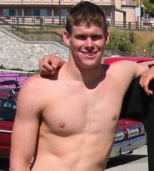








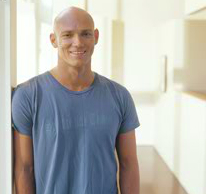
Wowza, what an episode! We managed to pry former world record holder and Olympic champion Michael Klim away from his busy schedule for an insight into his comeback. After a number of years out of the pool Michael decided to pull on the speedo’s for another crack at the Olympics, training for the 2012 London Olympic Games.
Michael talks about:
- What motivated him to make a comeback to the sport after so many years out of the pool
- the changes he’s made to his training now that he’s focusing only on the 100m freestyle
- How to manage a full time training schedule while having a family to look after and a business to run
- How he started an international business by answering a common problem experienced by swimmers
- Weight training and how increase strength for sprinting
You can listen to the podcast by using the player above your subscribing to the podcast in iTunes.
You can keep up to date with Michael at www.milksincare.com or on Twitter.
Transcript
Read the full transcript
Welcome to Effortless Swimming, the podcast for swimmers, triathletes and coaches. Join Australian swim coach, Bretton Ford, as he reveals the latest techniques and information to improve your swimming. Let’s dive right in. Welcome to the Effortless Swimming podcast. Thanks for joining me. Today’s episode features one of Australia’s most well-known and most well-liked swimmers. He’s been around the sport for a number of years and he’s recently made a comeback in an effort to qualify for the London 2012 Olympic Games. He’s won multiple medals at the World Championships and Olympic Games and he’s also a former world record holder of the 100 freestyle. We’re of course talking about Michael Klim. I’ve managed to pry Michael away from his training and his business and his family for an interview where I asked him to share an insight into some of the things that he’s learned with his training and his racing and his preparation
and sharing insight into what motivated him to make a comeback from the sport after he retired four years ago. Michael’s also very successful outside the pool where he started his own business, milk skincare. He gives us an insight into how that started, how it’s going at the moment and how he manages to juggle that with the family and kids and full-time training. He gives us a good insight into time management if you are training at an elite level. So let’s cut straight to the interview with Michael Klim. So how did you get started as a swimmer? You’ve obviously been to multiple Olympics and World Championships and Commonwealth Games. So where did it all start? Well, look, my journey in swimming has actually started at a pretty random, quite unusual place because I actually grew up as a kid in India. I spent about five years in India living with my family there. I was between the age of two and sort of five and a half and six.
So I learned to swim when I lived in India for all places. So my parents used to go to work or my dad used to drop us off at the like a country club where we used to pretty much spend all day swimming until he come and pick us up. So that’s how I learned to swim. Being Eastern European descent, my parents are Polish. I grew up there. I spent the early few years of my career learning to swim or get squad training in Poland. Then we moved to Germany. So I continued it there. And then when I was 11, we came to Australia and pretty much joined the local swimming club at the time. It was Melvik Center swimming club at Batman Avenue, the old swimming pool there that doesn’t exist anymore. It’s Fed Square, but that’s how kind of my transition happened. But yeah, so like I learned to swim in a place that’s probably not renowned for the swimmers. No, not too much. And not so much cricket anymore at the moment either.
Yeah, exactly. And so you had a lot of success in your career and you retired in 2007 and you decided to get back into it in 2011. So what was it that motivated you to get back into the sport? Look, there’s a few motivating factors for me to come back into the sport. The way I sort of finished up, I wasn’t happy with the way things finished up from a number of reasons. One, I had quite a number of injuries that were sort of reoccurring and were sort of holding me back in terms of wanting… I always strive for fairly sort of high results and good times and I wanted to compete against the best. And I was getting to a level where I just wasn’t competitive enough even nationally. So I decided and there was a lot… That was sort of the fact that I was injured. I was missing out on meets and teams. I sort of felt like it was making me a very sort of… I was quite bitter and frustrated with the situation and I wasn’t doing myself any favours.
So I decided just to call it quits at the time. But it’s funny how a few years off from the sport and starting my other career and just sort of my approach to the sport has changed a little bit and probably my expectations are different. I’m really enjoying this whole journey and I guess the challenge is even greater now for me to try and reach that highest level but probably my expectations aren’t. So I don’t… If I kind of feel like even if I go through this journey and maybe don’t make it to the Olympic Games or if I’m already sort of exceeding my expectations to a competitive level nationally. So there’s obviously doing for different reasons, having different expectations. For me, I’ve always been a very active sort of person. So when I didn’t swim, I used to run and cycle a fair bit. And my kids haven’t really seen me swim or train properly so I wanted to sort of lead by example and show them what sort of dedication is required to reach that level of sport.
So that was that and obviously the lure of a London Games. I think it’s going to be a very memorable Olympic Games purely from the tradition of the UK and them having had the Games before but I think this is the new era of the Olympic Games and I think it’s going to be a pretty sensational Olympics. Yeah, I think it’s going to be a pretty special Olympics just talking to people in the swimming community. Everyone’s really excited about it. A lot of people are getting back into the sport and wanting to even just qualify to go to the Olympic trials because there’s a lot of excitement about this year I think so it’s going to be a great Olympic trials and a great Olympic Games. Yeah, definitely. I think obviously the fact that we finally have changed the venue for the Olympic trials obviously the Nationals being in Sydney for so long and I think the fact that they’re now and later add a little bit of I think it’s a good change and a bit of excitement to it as well.
The atmosphere will be I think probably a little bit better just because the pool is a little bit tighter the audience will be right on top of you. Yeah, so I think the Olympic trials always carry some sort of it’s a different level of pressure. It’s not a Pan-Pacific trials, not a Com Games trials there’s a lot more at stake so I think this one people are really starting to get excited. Yeah, it’s going to be really good. When you had your shoulder and your back trouble what kind of rehabilitation have you done now to be able to get yourself to a point where you can train full time again? It’s funny you should ask me that because I haven’t really had to do too much rehab or this time around I don’t know I was speaking to my physio this morning about it and we were trying to work out why this preparation I’ve been fairly injury free. I’ve had maybe one or two flare ups with my shoulder where a little bit of rest and just modifying some of my sessions
and I kind of got back into it and I think there’s a few factors I think obviously gave my body a good rest and my tendon’s good rest over the three or four years that I didn’t swim I think that the training is a lot different now so for me I’m swimming at the most 30 kilometres a week which I actually don’t even count I have the eight sessions that I want to do and each session I have a goal that I want to achieve and what volume I swim in that session is irrelevant so it’s not volume focused my program and instead of rehab we call it prehab so a lot of it is all preventional exercises and strength and making sure I have enough bulk in certain areas of my body that prevents either shoulder instability or whatever so it’s really about training a little bit smarter than harder What kind of weight training are you doing for the 100 freestyle because that’s your main focus at the moment so what sort of stuff are you focusing on in the gym?
Training varies a lot there’s probably three components to it we work on the start and the turn so that’s explosiveness off the blocks and the walls so right now we’re doing some really heavy squats to explosive jumps to deep squats that sort of thing so really trying to get the power and explosiveness so we can get off the wall and the blocks quickly we do a lot of core so not just core stability but core strength and core power because a lot of people tend to make the mistake and just do endurance exercises for your core but just as any other muscle it needs to be powerful and explosive and then we do some other ones that are more maybe stroke specific so for example the catch or the first phase of the pull through where we really load it up with heavy weights and we do two or three reps of that so obviously different periods of the preparation we work on different reps and loads but right now most of it is a combination
of a little bit of strength so six reps down to about two so it’s quite heavy loading and we get enough strength and endurance from what we do in the pull and then we do some also traditional sort of Olympic lifting so we do dead lifts and cleans and those sort of things as well so it’s quite a complex program so when we were really hammering it in the gym we were doing sort of five gym sessions a week where three of them were strength and power and two of them were core but now we’ve pulled it right back to three sorry in the lead up to trials Oh that’s good to know I think with sprinting it’s important to have a solid weight training program to help you with it because with speed you need that kind of power and strength to be able to get through the water so quickly I think this new mentality I think swimmers have become a lot more in tune with what they need and the force application it’s not about how strong you are really
because you need to be able to apply that force really quickly and be efficient at it so I think swimmers are realising there’s no point just going in and doing as many chin ups as you can it’s going to be more specific than that but I think people are a lot more clued on now yeah definitely and you have your own skincare business milk that obviously take a lot of time have you had to take a step back from that to fit in your training? it’s definitely taken a lot of my time in the lead up we’ve had the range for about three years now a bit over three years it’s been going quite well we keep expanding we have a baby range as well we’re expanding the men’s products we’ve just started some baby apparel so it’s been quite exciting too look I’m definitely still involved on a daily basis there’s probably a little bit more top line nowadays so I don’t sort of… not from when I was in swimming or even up to a couple of months ago
I was across everything but now I’m very fortunate that I’ve built a really good team around me everyone knows their roles and I definitely am involved but probably at a more top line level so we’re pretty excited that we’ve got a product that’s in all the majors in Australia with Coles and Woolworths and Meyer and a lot of pharmacies and we’re exporting to places like Sephora and Boots in the UK so we’ve had a really good uptake and we’ve just got to try and make it stick and make sure we keep innovative with new products and understanding our customers and dynamics are always changing and the drivers are changing why people buy products the loyalty factor is always there so you have to produce something that is good and functional so people… they need to almost fall in love with the products right away and purchase it again and did it start out with making skincare products for swimmers for the harsh conditions of chlorine
and being around a pool all day? yeah, pretty much initially that was the inspiration for me but I obviously had to make it more appealing to the broader community but I think Australia’s got a very harsh climate so on the day like today you have 24 degrees and if you go for a swim in your local pool or even at the beach you need a good moisturiser with an SPF you need some sunscreen you need a good body wash to get either the chlorine or the salt off you even with my face wash and scrub we… it’s not too regimented it’s more of a relaxed approach to skincare but I think naturally after their skin they know they have to so it’s just making products functional and affordable as well so now definitely the swimming was an inspiration but I grew up always well as swimmers we’ve always tried different products different washes and oils and what have you to make sure that we can cover that chlorine smell but when I got married I used to steal
the products from my wife but that wasn’t too popular so I had to take my own I can relate to the smell like chlorine I think that was my reputation on the school bus for many years it’s hot and you’ve been for a swim in the morning it starts to permeate through everything so it’s funny when you’re a swimmer you don’t realise you smell like a pool but it becomes a normal doesn’t it everyone else does that’s right and what about racing what are the things that you focus on in a race is it technique or pacing or your competitors what sort of things do you focus on look I think when it comes to racing I think it’s for me the key is always being clean minded so the less I have in my mind or the less things I have to focus on in order to perform so for example I try to be quite juggle and relaxed and really only focus in the last sort of probably only when we march out but even then I try to really enjoy the atmosphere and probably from the point that you
introduced to when you actually get up on the blocks that’s where we switch on it’s all the rehearsal stuff that really has to be done in the training pool so for us when I race I have probably three or four different cues that I try and focus on so for me it’s that breakout stroke that sets up the first 20 meters of my race and trying not to over swim that first 20 to 30 then getting into a good rhythm and sort of building into the wall that’s another cue I use my underwater as a sort of you know almost a breather from that and trying to set up for another breakout and then attacking the wall so it really comes down to effort and control so it’s not I think too many people try to have too many sort of things that they think about because it happens so quickly in 48, 49 seconds you can’t really focus on too many things unless you’ve practiced them in training yeah that’s trainings where you’ve got to get it right and then it
should just sort of come together in the race I think so yeah definitely and with goal setting is that part of your program do you set goals six months out, 12 months out or do you sit down with your coach how do you go about setting your goals look it’s this time around you know I don’t have any goals as such what I’m going to place in the race or what I’m going to achieve when we sit down for this comeback journey so to speak I obviously looked at the time that I would like to achieve and we build a race model or that so from these days through the VIS and some of the support through Australian swimming and all the coaches there are computer programs that can you type in a certain time type in your best dive, your best turn you know your best lead out 50, your best back end or whatever and then they kind of can produce a bit of a goal time for you so yeah so I did that and from there we knew exactly what my best start had to be
what stroke rates, what stroke lengths so those are the type of goals that I work towards not really the type of goals that where I’m going to finish sort of things that are out of my control so yeah it’s a little bit more scientific these days and it’s good to you know we can really work on those small increments that are really measurable rather than just then the outcome and do you think you’ll have your kids, would you like your kids to be swimmers? Do you think it’s a spot that you’d like them to get into or just sort of let it happen? I can already see that you know they’re quite competitive you know as most kids are but and they like the water but I think there’s you know you know my daughter she’s quite she likes dancing and singing and it’s most sort of six year olds do and they both know how to swim and water safety is a big thing in the house but I guess going that next step you know is going to be quite interesting
but I’ll definitely give them the opportunity but I think to be a similar to be a successful one as well I think you need a certain type of temperament and I think you know obviously the dedication and the persistence so I’m not quite sure it’s a bit early to tell if they’ve got that as yet so but as you know probably physical development I think swimming is a great sport because you know obviously from an endurance point of view from muskets they develop really well and they have good underlying fitness as teenagers so yeah I’ll definitely give them the opportunity and if they go on then you know they can but I’m not sure if I’m all that keen on getting up at four o’clock and five o’clock in the morning with them seeing that I’ve done it for so many years yeah that’s right it’s almost more of a commitment for parents sometimes than the swimmers just because you know they’ve got to work they’ve still got to get up early
for driving round yeah definitely and that’s a thing people forget that in sport generally there’s more than just one person that’s involved you know there is for me right now even though this is a people sort of hear about how I’m going and whatever there is a pretty big team that’s involved and a team that I’ve put together from my physiotherapist in Helen Walker to a sports psychologist and Lisa Stevens to my coach Rowan Taylor my trainer Jeremy Oliver my physiologist in Daniel Stefano from the VIS to my masseur in Christine I’ve got people that really support me on a daily basis my wife my family so there is more than people realize so I definitely could not have done that without my family sort of support and especially my wife because it’s probably the most stress that we’ve been under for a while I can imagine you’re very busy with everything that’s going on although swimming is an individual sport it’s a team sport in terms of
putting your team together for as you said your physio and your masseuse and your coach and everything so there’s a lot that goes into it and more than a lot of people see I think and it’s definitely doable and it’s enjoyable but there is a lot of pieces to the puzzle so to speak that’s right thank you so much for being on the call with me today and I wish you all the best for March for the trials thanks mate if people want to get in touch with you we’ll find out more about milk how can they do that they can just jump online www.skincare.com or they can even follow us on Facebook and Twitter yeah we’ll have continual sort of specials and sales and new launches so if they register with us we’ll keep them up to date with new things that are happening but yeah definitely check it out sounds good well thanks again Mike I appreciate it and all the best cheers buddy Mike talked about training smarter where he doesn’t need to do
long kilometers anymore that he’s done those when he was younger and now with his comeback he’s all about training smarter so he doesn’t count the kilometers that he does he goes to the number of sessions that he needs to and it’s all about doing the right things in each session so working on quality work on speed, on technique on stroke count and efficiency and all the things that are specific to what he’s training for which is the 100 freestyle he also mentioned that he does a lot of explosive exercises where he replicates his start, his turn and his kicks off the wall so that each time he needs to go off the wall or off the start he’s got the power and the speed there to be able to do it as quickly as possible and one of the most important things that I think Mike mentioned was building a great team around you because when he’s up on the blocks and he’s racing it’s only him that you see but what you don’t see is
his support from the background from his physio to his masseuse to his coach to his family to his nutritionist he’s got this big team around him who are experts in their field and he’s able to draw on their expertise and that allows him to focus on what he needs to focus on and then he can just take their advice on their specific field so it’s really important to have a great team around you that you trust and that can help you get to where you want to get to so that’s the end of the 6th episode of the Effortless Swimming Podcast thanks very much for joining me for the next episode thanks for joining us on the Effortless Swimming Podcast to get transcriptions, bonus videos and to be the first to hear about new episodes go to swimmingpodcast.com