








As you train more often you realise that injuries are common if you don’t do something to prevent them. Sports physio Justin McEvoy has been away with the Australian swim team treating elite swimmers such as Ian Thorpe, Grant Hackett, Michael Phelps, Roland Schoeman plus dozens of other high profile athletes.
In this episode of Effortless Swimming we cover:
- Why most physio’s have no idea about treating swimming injuries
- How to get treatment that fixes injuries fast
- The one thing you should always avoid if you’re injured
- The ‘weeks off training’ to ‘weeks it takes to get back to fitness’ ratio
- Why high profile athletes get weekly or fortnightly physio check ups
You can book in for treatment with Justin or any of the other specialist physio’s at PhysioHealth by visiting their website at PhysioHealth.com.au
Listen to the episode in the player above or subscribe to the podcast and get new episodes straight to your iTunes!
Transcript
Read the full transcript
Welcome to Effortless Swimming, the podcast for swimmers, triathletes and coaches. Join Australian swim coach Bretton Ford as he reveals the latest techniques and information to improve your swimming. Let’s dive right in. Welcome to the seventh podcast of the Effortless Swimming podcast. I’m here with Justin McAvoy who’s a physiotherapist and he’s been away with the Australian team on world championships, world cups and a lot of other big events around the world. He’s treated swimmers such as Ian Thorpe, Grant Hackett, Liesl Jones, Geoff Hugal and also a number of international swimmers such as Peter van der Hugenband, Michael Phelps, Ed Moses, Roland Schumann and Jenny Thompson. Justin’s been a physio for the last 24 years and he was one of the first to become a qualified sports physio in Australia. Justin joins me on the line today and we’re going to talk about some of the main, the common injuries that we see among swimmers.
What causes them, how they can treat them and reduce the likelihood of getting injured. So welcome to the call Justin. Thanks very much for that, Bretton. I’m looking forward to your quiz. I guess the first thing I want to ask is how did it all start for you? Actually, I became a physiotherapist after having an actual injury. I was a swimmer myself, first of all. I used to train in Melbourne with Bill Atkinson, who was a fantastic swimming coach. He was actually, his squad was the foundation of the Vic Centre, Melbourne Vic Centre Club. And I actually retired from swimming and I had an injury, an accident. I cut my tendons in my wrist and thought I’d become a physiotherapist after that injury. So that’s how it all started. And then when I became a physiotherapist, I started working with Buddy Portia, who was coaching swimming at Melbourne Grammar with his swimmers, and then started working with the VIS and then from VIS I went to the Australian team.
So how did you move from just starting out in physio to becoming one of the main physios to work with the Australian swim team? I think a lot of it had to do with my background. Because I was a swimmer, I actually had a really good understanding of the biomechanics of all the different four strokes, as well as turning and starting. And when I spoke to swimming coaches about their swimmers, they could actually talk on a level of understanding so that they could use their normal jargon, and I understood it, whereas a lot of physios who haven’t had that experience in swimming can’t follow what the swimming coach is getting at or can’t communicate as well. And I think that’s where it sort of helped cross the line into swimming and became quite important that I could communicate with coaches pretty well. Yeah, and what are some of those common injuries that you see amongst swimmers? I think that the most common injury is probably the shoulder injury.
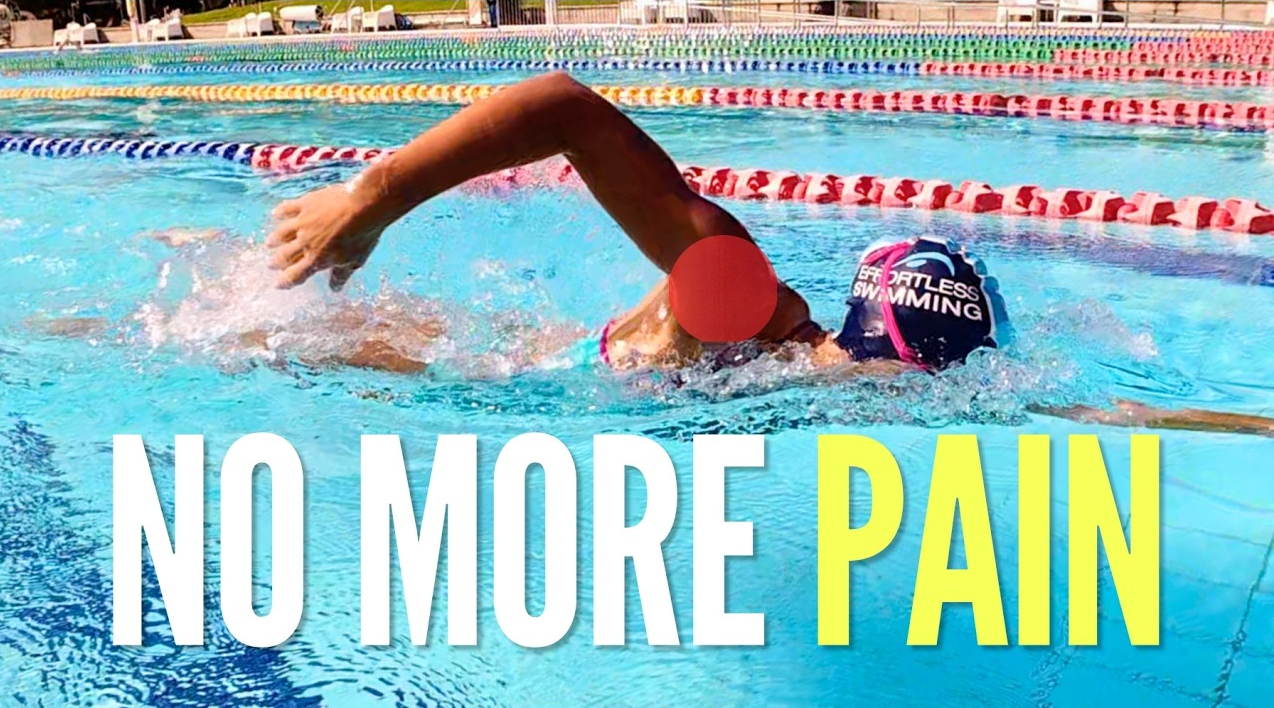
I think the shoulder is the sort of crux of the swimmer’s injury, but it’s often a symptom of other problems. And so the swimmer will come in and say they’ve had a sore shoulder for a period of time, and often the shoulder is what they’re complaining of, but they’ve probably got either a very stiff thoracic spine, a very stiff neck, or they’ve got bad technique, or all those things. So it’s one of those things where they come in with a sore shoulder, which if you treat the sore shoulder and get them back swimming, it’ll probably come back again because they’ve got these other underlying problems. So yeah, often what happens is we’ll see the shoulder injury, but then we’ll say, right, to fix this shoulder, we’re going to treat your upper back and neck and get some more mobility there to take stress off your shoulder and their shoulder gets better long-term that way. Then there’s hip pathology, which is quite surprising, but very common.
We get a lot of swimmers with what we call labelled injuries, labelled tears and labelled tethering, which is the little cup around the hip joint sometimes gets impinged by the hip when you do really fast kicking. Amon Sullivan is one of the Australian swimmers who’s had a lot of problem with his hip, but it’s quite a common problem with swimmers. And probably, I’d say, probably Rhinex and Sornex is probably the next most common after the shoulder and the hip. So what causes most of those injuries? Is it just bad technique, or is it overworking them? What are the main causes? Yeah, both those things. Sometimes people have a predisposition to a shoulder injury or a hip injury because of the way they’re put together. Sometimes people in their shoulder will have what’s called a bigt acromion, which means they’re much more likely to have a shoulder impingement. Then there’s people who have in their hip joint
the way that the cup, the acetabulum is facing is slightly deviated and therefore they’re more likely to impinge the femur, the neck of the femur on the edge of the cup of the acetabulum. So sometimes it’s a structural thing that they’re born with. Then there’s the people who have bad technique and hopefully the coaches can fix that up, but poor technique does cause a lot of injuries. And then there’s the people who get worked too hard too early. They’re just starting out or they’ve had a break and then they get back into training and they go too hard and their structures, their tendons and their muscles just aren’t quite ready for the load they put on it and the load breaks down their tendons. So those three things, you know, anatomical, the way they put together, bad technique and overload can occur and cause these injuries. I’ve been to Physio Health, which is your clinic and your business and you’ve got quite a lot of physios there
around Melbourne and I’ve been there the last six months and the way you’ve treated the injuries that I’ve come in for has been quite different to what has been done when I’ve been to other physios and I’ve found that the treatment that you guys have used has worked much better than what I’ve used in the past because the common advice I’ve got from physios is just rest it, stay out of the water for a week and just do these exercises. Can you talk a little bit about how you treat some injuries differently than most physios? Yes, certainly. Brenton, we at Physio Health we pride ourselves on being very hands-on, number one and therefore if you come to see one of us we’ll be really using our hands to get stuck into any sort of tight structures or fatigue structures that have tightened up and formed bands. So we’ll use our hands to actually release those structures to enable the joint, whether it’s the shoulder joint
or the hip joint or a joint in your neck or upper back to move correctly. So number one, we use lots of hands-on technique. Number two, we have a really good understanding of the biomechanics of the stroke that the person is doing because commonly swimmers come in and they’ll say, you know, my shoulder hurts when I’m doing backstroke only or only hurts when I do freestyle and butterfly. So, you know, often it’s a specific problem that they’ve got in part of that range. So because we have an understanding of that we can actually, you know, be really specific about why that injury is occurring and therefore go to the underlying cause that I was talking about before, the underlying cause and that underlying cause could be a problem with stiffness in the cervical spine or stiffness in the upper back. Yeah, so basically we’re hands-on. We look for the underlying cause and also the other thing we try to do, Brenton,
is become very intense with our treatment because we know that you’ve been, you know, swimming 5Ks a session. If we’re very gentle and very light we’re not going to achieve a great deal to change the tissue that we’re treating like whether it’s a shoulder rotator cuff tendon or a back muscle. If we treat it very lightly it’s not going to achieve a great deal. It’s not going to change anything. Whereas if we can get in and really release like a thickened, tightened up, scarred up muscle we know that we’ll make a change that’s going to be effective over the next few days or a week so that you can get back into your training and actually change what you’re doing wrong, technique-wise or whatever. So they’re the main reasons why if you come to physiotherapy it’s a bit different to go into other physiotherapists. Yeah, every time I come in I expect to be in a lot of pain when I come out to where you get treated but it’s a good kind of pain.
It’s like a massage sort of thing but, you know, quite a bit more intense. Exactly, and it is intense and it’s purely to, you know, with most people coming in and they’ve got, say, pain in their shoulder, for example, Brenton, and they’ll have you’ll have a feel of all the structures around their shoulder blade, their scapula and you’ll feel there’ll be like a band of really tight fibres. Now those fibres have built up that tightness over a period of probably weeks and what those tight fibres do, they stop the scapula moving the way that it should move to enable you to do your stroke correctly and therefore you develop an injury. So if we can find that tight band, release it, meaning get in amongst those fibres and make them soft again, then you’ll be able to go and do your stroke and your scapula will move more freely and you won’t have that impingement occurring. So if that’s really important that we get in there
and really have an effect, release those tight fibres and make those fibres nice and soft so that your scapula moves correctly. Yeah, well the first time I came into you guys is when I had a few torn muscles from lifting something the wrong way and you guys got stuck into it and then treated it and then you said just from at 70% in your sessions and work at yourself before training, give it a quite a hard massage. It’s right, yeah. Then ice it afterwards. That’s exactly right. Yeah, it fixed itself in a week and a half. Yeah. You know, when… We really like… If we can… Exactly. And Brenton, the thing about having a… you mentioned the fact that I’m a sports physiotherapist, that’s a title awarded by the Australian Physiotherapy Association and part of being a sports physiotherapist we try to enable people to continue their sport as much as possible with their injury. So, you know, we’ll talk to you about, you know, only swim up to a maximum of 70%
or 50% or 40%. We’ll say, okay, swim arms only for a period or legs only for a period. We might get you doing sculling rather than swimming for a period, but we will try and keep you in the water swimming rather than get you out of the water because often you get the person out of the water. Their muscles atrophy or their joints stiffen up more and they get back in the water and they’re actually no better than they were before. Yeah. And that’s the difference with going to someone who really knows what they’re talking about specific to sport, you know, because if you’re out of the water for a week in swimming, then it takes two weeks to catch up. So it’s just too long for a swimmer to spend out of the water. So you’ve just got to somehow find a way to keep them going. And that’s what I really liked when I came into physio health. Yeah. That’s exactly right, Brenton. And that’s the other thing I think is really, really important.
And, you know, back in, I think, I think it was about 1997 or 98, I started doing VI, looking after the VIS swimmers. And at that time, you know, you talked to coaches about injuries and it was all about being sort of reactive and gradually over the years, working with Rowan Taylor and other coaches like Ian Pope and trying to think of some of the other big… Wayne Laws, of course, down at Halebury. These guys have all started… They understand that actually… And they understand better than anyone that they don’t want their swimmers out of the water. So what we do now is try and have preventative treatment. And the idea is that we look after the swimmers so that they don’t get an injury, so there is no question that they don’t get an injury and have to spend time out of the water. Because as you said, any time out of the water takes time, heaps of time getting back their fitness. You always lose fitness much quicker than you gain fitness.
So we try and do a lot of preventative treatment. All the elite level swimmers come to us weekly to have their tight structures stretched, you know, get activation of any structures, say, you know, glutes aren’t activating or something like that. We get them activating. We’ll look at their bodies in such a way that we say, right, we’re going to prevent you getting injured. We’re going to prevent you having to stop or reduce or change your program. Just recently, we’ve had a swimmer, a very high-profile swimmer who’s had a bit of a shoulder issue. But because we see her on a weekly basis, as soon as she’d only felt the sawness for like one day or that morning and then saw us the next day, we were able to treat her straight away, settle it down, mobilise the joints so that it was freed up, and she hasn’t missed a bit in her training program and her coach is very pleased because it’s, you know, five weeks out or less to the trials
and you just can’t afford to lose time out of the water. Yeah, and I think that getting checked regularly going in, if you’re swimming three, four, five times a week or more, then you need to go and see a physio once a month just for a checkup to make sure everything’s fine. You’re not becoming tired in a certain area and just have those monthly checkups. That’s exactly what, that is absolutely correct, you know. And, you know, the kids who are doing sort of, say, five sessions a week, if they come in monthly, that’s perfect. The ones who are training, you know, eight to ten sessions, they probably come in fortnightly. And if you’re a person whose, your whole life is swimming and you’re one of the elite level swimmers in Australia, then you get seen weekly. Yeah, I think that’s the best way to avoid getting an injury. And what are some of the other ways you can reduce the likelihood of getting injured? Yeah, the, what we try and do
is get them to have regular massage, just straight out deep tissue massage. Also, and most of the very good coaches in Melbourne especially do this, they keep their swimmers flexible as well as strong. So they’re all doing dry land for strength and flexibility. If they’re flexible and they’re strong and they’re getting a sort of a regular deep tissue massage, then you’re not going to build up a lot of sort of tension and therefore cause problems that will turn into an injury. Yeah, that dry land training, that’s a great way to prevent getting injured because if you haven’t got the initial strength there, then whatever you’re doing in the water, it’s hard to have the right kind of, you know, power to be able to do anything useful in the water. That’s right. And the other thing is Brenton that, you know, swimmers, if you look at a swimmer, they’re really hyper mobile. One of the great things about swimmers is that they’ve got this absolute massive range of movement,
for example, of their shoulders, their ankles, their hips, which is a great thing. And that’s what you need to get good technique. You can’t get that high elbow position in the catch in freestyle or all strokes freestyle, every single stroke, unless you’ve got really good abduction and internal rotation of the shoulder joint. Now it’s all very well being hyper mobile, but if you don’t have the strength to go with that increased range of movement, you’ll also get injury. So it’s a combination of both flexibility. So you need the range of movement, but at the same time, you need the strength throughout that extensive range of movement so that the person can get the position in the water that they need to propel themselves forward as fast as they can, but at the same time stabilize the joint and have strength, as you said, to push them on. Yeah, that’s right. And at major meets, the swimmers that you’ve seen,
do a lot of them come in with niggling pain injuries? Like how common is it for swimmers to race when they’re not completely 100%? It’s very common. You know, most swimmers will have some sort of weakness that they’ve had for a period of time that they are keeping on top of. And especially when you, like coming into this year, for example, Brenton, you know, the swimmers have been doing their, aiming at these trials probably from a year out. So it’s one of those things where if they’ve got a bit of a niggle, they’d rather just get it sort of fixed up, but keep training and push on because as I said before, there’s just no time for being out of the water. So a number of the swimmers race and compete at the highest level and they carry these niggly little injuries. That’s not the best situation, of course, and you try and reduce that as much as possible, but because of the intensity of training, the amount of training,
it’s probably in the real world, it’s probably pretty hard to be absolutely perfect. And I’m sure there are a number of swimmers who don’t have injuries, but a high majority of them actually do have niggly things that we have to look after while we’re on tours to make sure that they can keep swimming at their maximum. Can you tell me a story about Jenny Thompson in The Hundred Fly? That’s right. Jenny Thompson was the famous American female champion swimmer. She was at the last ever international meet, which was the World Short Course in Indianapolis, and she was swimming against Libby Lenton in the 50 butterfly, and it was amazing. She started her career, I think probably 10 or more years before that, winning a 50 butterfly in the short course, and she wanted to finish her career doing the same, but she arrived at the pool for the final with a rye neck, and her head was twisted over to one side and she couldn’t move her neck.
And the American coach and doctor approached the Australian team and asked if we could actually look after Jenny, and they admitted that it was a weird sort of a request, but they were desperate, and Libby, the coach, Lee Nugent at the time said, no, look, Justin, you know, you ask Libby, and you know, if she says it’s okay, you know, you should probably go and help her. So I asked Libby and Libby, said, hey, no worries, don’t worry. That’s fine. So I went and treated her, and it was a funny situation. They had a physical therapist. They had a kinesiologist. They had their exercise physiologist. They had a chiropractor, an osteopath, an athletic trainer. There was six people all around her, and I thought, oh my gosh, what am I going to do? Anyway, she’s actually a medical doctor herself, and she’d already given herself some anti-inflammatory medication, which hadn’t made a big difference. And so anyway, I just did this really quite vigorous
soft tissue manoeuvre of her neck, and it worked. It actually helped. She could straighten her neck, and she actually raced very, very well. In fact, she raced too well, and she beat Libby, and Libby complained to me that I did too good a job on Jenny Thompson, but she finished her career with a gold medal. What a great story. That’s awesome. So what’s on the horizon for you? Are you going away with any more teams in the near future? I’m pretty sure there’s an altitude team that I’m travelling with a group of swimmers from Queensland keen to go over and do some altitude training, dependent on the results of the trials in March. So I’m not sure exactly if that’s going ahead or not until after the trials, but I’m sure that something’s going to happen there and we’ll be travelling to Arizona for some altitude training. And then, and no one knows really who’s in the Olympic team until the national titles at the trials in March as well.
So we’ll see what happens. Sounds good. And if people want to get in touch with you, we’ll go to one of the physio health clinics for a checkup or to have an injury treated. How can they find out where you guys are located? The best thing to do is look us up on the web, physiohealth.com.au and we’re sort of spread around Melbourne. We’re in Essendon, Footscray, Williamstown, Port Melbourne, Mount Waverly and Nunna-Watting. And all our physios are very well trained in looking after swimmers and I’m sure they’ll be very well looked after. Yeah, and I give it my highest recommendation. I’ve seen three different physios in your clinics around Melbourne and each time it’s dealt with the injury that I’ve gone to see them about really well. So Fannie Swimmer’s located in and around Melbourne. I highly recommend physio health. Thank you very much, Brenton. And I appreciate you jumping on the call and giving us an insight into…
That’s been my pleasure. Yeah, physio treatment for swimmers and it’s just such an important part of elite swimming. Absolutely. Yeah, thank you again for being on the call. No worries, Brenton. Nice talking to you, mate. Anytime. You too. Thanks. All the best.