







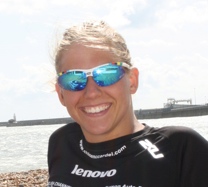
Being the second female and second Australian to complete a double crossing of the English Channel, Chloe McCardel is one of Australia’s best marathon swimmers. She’s won the prestigious 46km Manhattan Island race and is now gearing up for a triple-crossing of the English Channel.
In the podcast Chloe covers:
- How to adjust to cold water for open water swims
- The one change she made to her diet that helped her swim the fastest channel time in 2011
- Why breaking up all tasks into smaller size chunks can improve your mental toughness in races
Keep up to date with Chloe’s training and preparations at ChloeMcCardel.com.
Subscribe to the Effortless Swimming Podcast on iTunes
*Correction: Chloe would actually be the 4th person, 1st Australian and 2nd female to complete a triple crossing if she is successful in her attempt not the 2nd person ever as I mentioned in the introduction.
Transcript
Read the full transcript
Welcome to Effortless Swimming, the podcast for swimmers, triathletes and coaches. Join Australian swim coach Bretton Ford as he reveals the latest techniques and information to improve your swimming. Let’s dive right in. Welcome to the eighth episode of the Effortless Swimming podcast. Today I’ve got a very special guest. I’ve got Chloe McCartle on the line who’s one of Australia’s top marathon swimmers. She’s done the fastest crossing of the English Channel last year in 2011. Faster than any individual or team. And she’s only the second ever Australian to do a double crossing of the channel. And in 2010 she won the prestigious 46 kilometer Manhattan Nylon Race. And she’s now training for the triple crossing of the English Channel which would make her the first ever Australian to do it and only the second person in history to do it. So on the line we’ve got Chloe. Welcome Chloe. Hi Bretton, thanks for having me on.
No worries. Just to get into it, let’s start with how you got started in swimming because you’ve become one of the top marathon swimmers here in Australia. So where did it all start? Well in grade six we started school swimming for the first time. And I had never done swimming outside of school or at school so I didn’t know how to do any of the strokes. And I was a bit embarrassed because one of that three kids in my year level that didn’t know how to swim so I begged my mum to enroll me in private lessons and she did which was great. So I did school swimming and I did private lessons. Just basic learned to swim like you know big straight arms for freestyle and all that and bubbles and then I really enjoyed it. I picked up all the strokes really quickly and within two years I’d started competitive swimming. And did you always know that you were going to become a distance swimmer? Is that what you enjoyed most about it?
The longer stuff or did you think you’d be a competitive pool swimmer? How did you become a marathon swimmer? Well I started getting some good results in butterfly of the 100 and 200. I was definitely a little bit better at the 200 and I enjoyed doing the 400 freestyle because it was much more stronger than my sprint event so I was definitely always stronger as the distance got a little bit longer. But the way that competitive swimming really is set up in Australia kids usually under 15 aren’t really encouraged to do open water swimming. Now that’s changed a little bit in the last few years since the 10 kilometer swim has been introduced to the Olympics because I was in a system that was really encouraged to do events between 100 and 400 I just did the 100 and 200 fly and I didn’t really think much at all about open water swimming. I never did a 5k swim because of the state championships that was running back then or 10k swim.
It was just never really something a part of my program but coming back to sport as an adult is something that I discovered and I fell in love with very quickly. And what’s your training schedule like now? You’re training up for the triple crossing of the channel. So what sort of distances are you doing? How many training sessions are you doing a week? Yeah well I’m with a competitive swimming group, Melbourne Vic Centre. They’re based at Albert Park so I do a lot of my sessions with the national squad that I swim with. They’ve got a middle distance squad within that squad. So I’m doing kind of speed work and distance work. Eight sessions with them. I do usually one or two sessions by myself in the bay depending on if it’s been raining or not. I also do two gym sessions working on strength and endurance and I add some pilates in because my core strength is something that I really need to work on. So it’s a pretty busy schedule but it keeps me honest that’s for sure.
And so what’s one of the hardest sets you’ve ever done? There’s been some really horrible sets that sprinters would probably definitely not enjoy doing. There’s been some really tough ones. I think you interviewed Ollie Wilkinson a few weeks ago and he mentioned some of the big 10-1 kilometre sets that we used to do. The one that sticks into my mind is one that I did where I used to train at Melbourne Grammar. It was a 6K set and that included the warm-up and if you’d like to think of it as a warm-down because there wasn’t really one in it. But it was 1K holding 130 pace and then straight into 1 kilometre holding 125 and then 1 kilometre holding 120. Then one minute’s rest, then 1 kilometre holding 115 pace and then straight into 10-100 on the 115. And I did it by myself because no one else really does distance swimming in that group or even super distance at the group I’m in now. So there was no company for any of this
and I was watching them doing sprints with like 4 minutes’ rest between their sprints so I was very jealous of this as I was in a lot of pain in the 10-100s on the 115 at the end. Oh, I can imagine. That’s hard enough even when you haven’t done 4K or 5K before that. Yes, well short course too which made it a tiny bit easier than a long course session. Yeah, still a difficult set. And you do quite a bit of training in the bay leading up to your marathon swims. So how far do you normally go when you’re doing some bay swims? Yeah, it’s really interesting because when I’m leading up to a big swim like the triple channel or even the rotten ass swim I did recently which is 20 kilometres, I’ll actually adjust my training. So I’m going to do leading into this triple channel long swims in the bay between 2 hours and 6 or 8 hours and that length of time will depend on the water temperature because I’m trying to get cold water climatisation
for the English channel which is between 15 and 17 degrees which is really cold. But once the water temperature in Melbourne drops below 12 degrees there’s no point in me trying to punish myself in the water because that’ll just make me sick. So I’ve got to be really clever about how many hours I’m in the water relative to what the water temperature and the air temperature is because it’s open water and it’s very volatile to weather conditions and rain and all those sorts of things. Yeah, you can’t swim in there every day can you if there’s been a lot of rain because the bay isn’t that clean is it and you want to keep yourself healthy and being able to train at a good level. Yeah, you do get run off after rain, yeah. Yeah, and what other things do you do to prepare yourself for the bigger swims? Well, I’ve kind of touched on some of them. The cold water climatisation is really important for me because my major swims are cold water swims
like the English Channel. And unless your body is used to that really cold water then it’s going to get the fright of its life and it’s not going to be able to perform. I need it, my body needs to understand how to swim fast and strong in cold water for long periods of time and swimming in a swimming pool when most of them between you know 26 to 30 Celsius is very different to trying to perform at 15 to 17. So getting out in the bay like we mentioned those long swims that really helps. I also increase my volume leading into longer swims because if I want to do a triple crossing within this channel which is 112 kilometres as a crow flies that I really over a week in training should be able to get close to that distance if I want to be able to do it continuously on one and a half days. So my body needs to tolerate a high amount of volume but I can’t do that all year round because I’ll just get run down. Yeah, well that’s really smart
to acclimatise into the cold water because I mean this morning at training the pool was probably one or two degrees colder than normal and I noticed that the guys I was coaching their times were a little bit off just because of that slight change in water temperature so if you’re swimming in 17 degree water compared to 27 degree water then your body really has to get used to it and know what it feels like. Yeah, well first of all your body is focused on maintaining its core temperature and it’s not really that concerned about things like swimming so the more cold water accommodation you do the more your body doesn’t need to fight the cold water and it can really focus on the swimming that you want it to focus on. What parts of your technique do you focus on in training? That’s funny because since I’ve moved recently I’ve had 15 things to think about in my freestyle and I try not to think about them all at once because then I don’t go very far at all
but some of the main ones I’m working on are alignment of my body some of the body position work that people listen to this may do themselves in their own squads I often find that when I do an open water race which happened recently after the Rotnest 20 kilometre swim my technique actually alters because in the open water swim I kind of adjust to the conditions of the day the swell, the tide all those sorts of things and it alters my technique I come back into the pool and my technique’s gone out so what I’ve had to do in the last week since I’ve been back from that 20 kilometre swim is get used to having really good technique again I’ve got to keep my head quite low when I breathe rather than lifting it right out of the water which I tend to do sometimes and other things as well I rotate my hips too much so I’m working on that stability there of course you’re going to have a bit of a hip rotation but trying to keep the more stable trunk
which is something I work on in the Pilates as well and look, there’s lots of other technique points but I don’t want to bore your listeners too much No, I think a lot of the guys who listen to this they really love the technique slightly things just finding different ways to get faster and things to focus on so there’s some really good points you’ve touched on the hip rotation when I’ve been coaching people I notice a lot of people either don’t rotate enough or they over rotate in the hips and what a lot of the top squads are coaching now is you rotate a little bit from your hips but most of it comes through in your shoulder rotation Yeah, and the funny thing is we’ve got some really interesting footage towards the end of my really long swims where I’ve been swimming 20 hours plus and you just see my technique just fall apart and one of the first things to go is my hips they start swaying really badly so they’re the things that I know
I’ve got to really concentrate on so maybe some of your swimmers if they are marathon swimmers and they have footage of them swimming towards the end of their swims when they’re tired and exhausted maybe they can have a look at that footage and see what they can take out of that and show their coach and see what aspects are really important for them to work on Yeah, great point because when you’re tired, when you’re fatigued that’s when all the errors in your stroke come out so even at the end of a hard session you’ll notice that your head might come up or your elbow might be dropping in the pool but when you’re tired that’s when you can see where your faults are in the stroke so after 20 hours swim I can imagine everything just comes out There’s nowhere to hide in this channel That’s right, exactly right How do you prepare yourself? Sorry, what goes through your mind in the bigger swims? What do you think about?
What do you concentrate on? Is it focused on swimming or is it off in La La Land? I get this question a lot even swimmers in my own squad who swim between 400 and 1500 metres in their races they can’t even comprehend the swims that I do and they ask me, do you sing songs in your head and what do you think about and I’m like, I don’t have time to sing songs in my head I’ve got so much to think about and I can make it I guess a little bit to describe what I’m thinking it’s quite similar to squad sessions that a lot of your swimmers would do if you said to a squad swimmer jump in the water now swim 8 kilometres and then jump out when you’re done they would go, oh my god that’s huge or even 5 kilometres or 4 kilometres we all need little goals within a big goal to get us to our end destination so if I was thrown in the English Channel in England and someone said to me swim 112 kilometres you’ll swim three laps and you’ll end up back here
I’d be like, oh my god that’s huge so what I do and what you end up doing anyway in squad training is you break up that end goal into small goals and I think about each crossing as a separate entity just like in a swimming session you think about your warm up and when you’ve done your warm up you’ve got your main set and you might repeat the main set or maybe you do a warm down after that so I think about my lung swims for example my channel swim as small building blocks within that overall goal so when I’m swimming the English Channel I’m thinking about my small goals each crossing and I’m thinking about my technique as I’m going through just like in your squad sessions hopefully your swimmers are all thinking about technique as well so there’s always things to think about and there’s a few extra things that I’m particularly concentrate on really quick feeds for those that are listening who are into marathon swimming
if you’re doing races the shorter your feed time the much more quicker you’re going to end up swimming in an overall time so I try and keep mine under 15 seconds but it’s not uncommon for people to do feeds for like two minutes so that’s something that I think about, I think about my stroke rate and anything else that my support crew are communicating with me and just visualising the end goal really yeah that’s a great point but that’s one of the common things that keep popping up when I interview people on the podcast is that I was talking to Ash Delaney and Andrew Lauderstone they all talked about focusing on little things within their main set it might be the kicks off the wall or fast turns or something about your technique it’s always breaking it down into smaller chunks and when you’ve got 112km you’ve got a lot of little small chunks there so that seems like a very common thing for swimmers to do I think that’s a great point
and it also helps to prevent you going mad because it’s a long time to be in the water and anything over five hours is really quite a long time so when you stretch that out 15, 20, 25 hours, 30 hours your mind needs something to focus on otherwise it’s going to be a very painfully long swim absolutely and you’re a vegetarian just like Olly Wilkinson so what do you do to fuel yourself what do you eat for training and for the big races? Yeah Olly’s a vegan so he’s a little bit more stricter than me I will have dairy and animal products just stay away from meat and fish and poultry and all that so fueling is something that’s really important to me and I actually allocate a lot of time to nutrition so I see a biochemist who works for biofectives, it’s a company and they make supplements that I take on a daily basis and I even take during the English channel some of you might who are onto my blog might see that I talk about them a lot
it’s really important for me to make sure I have a really high amount of iron in my system being an athlete, being female and just needing it because I need oxygen delivery it’s really important for my swimming so one of their products Siberian Red has a lot of iron in it also has antioxidants and other nutrients that are really really important for everyday life so I find that’s really good to help power me and for my endurance so I take those supplements but they also help me with my general nutrition as well I mean I have things I take I even bake foods now I imagine 12 months ago things like I make these buckwheat biscuits I have a lot of quinoa and all sorts of other more whole grain and nutritious foods moving away from some of the white parts of the white rice which you might have heard about is good for energy but really if you’re looking at the energy part of your nutrition you’ve got to move more to the whole grain
more the natural foods the essence rather than a lot of this processed food that we keep getting pushed to eat by marketing companies and things like that yeah so you find the more natural products a lot better for you to fuel your body yeah the amount of carbohydrates that is useful for your body and the lung-assing energy I’m getting back to basically back to the basics and looking backwards in time to what we used to eat a while ago a few hundred years ago or a thousand years ago what is more natural and what do I get more energy from rather than a lot of the sports marketed bars or drinks on the market so I’m definitely going to the natural and I’ve got my fastest channel swim ever last year it was my third swim and I know that I’m going down the right path so I’m really happy with my nutrition at the moment fantastic and the last question I’ve got is what I asked Ollie this as well because he’s a marathon swimmer and I guess this is one of the big
questions you get as well is what motivates you to do these big swims
yeah that’s a really good question I’ve got a very high internal drive and I really want to be very successful at marathon swimming and to me that’s not about being the fastest marathon swimmer because speed is I believe belongs in the pool marathon swimming in its pure essence is about going for longer and further than anyone has before and I want to do that in the English channel go further than any Australians done and I want to also take that to a higher level and go further than anyone has done in open water in general so basically beating the 112km longest open water swim at the moment that’s the record with a sharp cage it’s 197km so I’m working at the moment to organise a swim that will beat that as well wow fantastic so where can people follow you follow what you’re doing and track your progress well I have a website www.chloemaccaddle.com
and that follows basically the blog follows my journey all the way around through my training leading up to my races and some of the exciting things the opportunity that I get having a public profile and meeting the people that I get to meet in this journey and I also have a facebook page which I update daily so if you just search my name again it’s an athlete page and I love keeping in touch with people email me on facebook questions about ocean swimming marathon swimming and I’m always happy to answer so if anyone wants to reach out feel free contact with me I’d love to share my knowledge and experience with anyone who’s interested out there yeah great and I’ll make sure to put those links in the show notes as well and if you’re training for an English channel crossing or you’re doing some bigger swims then definitely get in touch with Chloe I’m sure she’ll love to help you out and yeah thank you very much Chloe it’s great getting
your take on things and your experience and best of luck for your triple crossing and later in the year thanks very much Brenton