







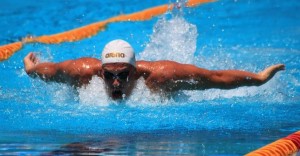
Months of hard work go towards one big race. Long hours in the pool, thousands of kilometers and tens of thousands of arm strokes…all for a few minutes of racing.
In this episode we talk with Sam Ashby (who features in the Mastering Freestyle program) about what do 3 weeks out from a big meet. He talks about the stages of tapering (tapering is where you reduce the intensity of your training leading up to competition). We talk about warming up on the day of your race and what a good routine consists of.
This episode is ideal for competitive swimmers and coaches. Subscribe to the Effortless Swimming podcast.
Transcript
Read the full transcript
Welcome to Effortless Swimming, the podcast for swimmers, triathletes and coaches. Join Australian swim coach Bretton Ford as he reveals the latest techniques and information to improve your swimming. Let’s dive right in. Welcome to episode number nine of the Effortless Swimming podcast. Today I’ve got Sam Ashby on the line and Sam has won Silver in the Hundred Butterfly in the 2011 Australian Swimming Champs and he was selected to go into the World Championships team and he also finished 11th in the Hundred Fly at the 2011 World Championships in Shanghai. And here he is, my good friend Sam Ashby. How are you mate? Yeah, good. Thank you. How are you going? Good. Thanks. So the reason I wanted to get you on the call today is to talk about racing, taper and leading up to competitions because that’s what you’re going through at the moment leading up to Olympic trials. So let’s get started with what you do for taper and maybe explain taper for those that don’t know what it is.
First of all, I don’t really like to call it taper. I kind of like to more think of it as fine tuning. So, but if you want, yeah, taper I suppose it is, but I just like the, I like the thought of just fine tuning myself with like a couple of weeks to go before I race. So normally you’ll start your taper on average about three weeks up from your race and you won’t all of a sudden just go from doing like a hard, hard week to just dropping back and doing nothing. Normally a taper for me will be a gradual thing. So take for instance, just before taper as a main set would be 1050s, sorry, 10100s going 50 back end speed, 50 easy on three minutes. Once we start taper the first week I would drop down to say 850s and then the second week I’d drop down to 650s and then the third week of taper I’d drop down to 450s type of thing. So that’s sort of how I do my taper. There’s obviously different athletes and different things work for them, but I like a gradual taper.
If I just stopped doing all the work all of a sudden for three weeks that I wouldn’t be able to feel confident racing because I’d feel as though I’d lost fitness. And within those three weeks usually what happens is that first week because you’re doing slightly less work you’ll freshen up a bit. The second week your body will go not into shock but it won’t know what’s happening because it’s been used to getting pumped all season and being run down all the time and then now it’s starting to feel a bit fresh. So normally that second week you’ll go through a taper hole as they call it or taper hole even though I don’t like calling it a taper or a bit of a ditch type of thing. A slump in your training, sort of your speed you won’t have it there but then normally by the third week you’ll come out of that and you’ll be feeling on fire sort of thing. That’s how it normally works within taper. Obviously there’s different tapers, there’s the drop taper
which is you pretty much work hard right up until four days before the meet and then you’ll just drop right back and there’s also another way of doing it but that’s different training altogether where during the whole season you only ever push yourself when you’re 100% ready to go like if you’re not on fire you’ll just take it easy type of thing so essentially you’re always rested but that’s a whole different sort of type of training that I don’t do. So three weeks before a main meet you start to reduce the amount of I guess volume that you do and the number of sets that you do in training in order to sharpen up and freshen up for the competition and your races. Yeah definitely but it’s a gradual thing. It’s not like I said just drop right back three weeks out it’s more of a take say you go drop down to 80% of your total work then drop down to 60% of your total work in that second week and then drop down to 40% of your total work in that third week type of thing.
And you mentioned also that the first week or two your body doesn’t really know what it’s doing and you tend to go into a little bit of a whole or you don’t feel like you’re swimming that well and by the third week you come good and you know what it’s like to go fast and race and your body’s ready for it. Yeah that’s definitely how it works. I was talking to Ian Pope yesterday and he was saying that his guys are in their second week of take at the moment so I’ve got one to go but he was saying that they’re swimming pretty crap at the moment because they’re in that hole but he knows that within a week’s time they’ll be ready to go. Yeah exactly. So take for instance this morning we had our main set which was dive 35 front end speed of 100 we swim off through the 100 and then we have that as much rest as we want and then we get up and we do a dive 35 swim through the 100 on two minutes and then we do a push back end 50
when Mal Schlanger, not sure if you guys know her but she went to the 2008 Olympics and she’ll almost definitely be going to the 2012 Olympics she’s the fastest rank 100 freestyle in Australia at the moment normally for her back end speed she’ll be able to push 26s comfortably like without a problem anywhere from 26-2 to 26-8 this morning she was pushing 28s so she was quite a bit off but she’s very experienced and she knows that it’s not the lack of training that’s doing this it’s just her body going through an adaptation and for those guys that don’t know what we mean by back end speed that’s a type of I guess intensity or speed that you go within a set so if you’re going 100 back end speed you want to be going that the same time as you would in the last 50 of your 100 when you get your PB you want to go that time in training so it’s just a good way to practice practice from in a race pace and I know you guys do a lot of that don’t you Sam?
Yeah that’s the whole basis of our program really you’ll be able to hit back end speed as many times as possible within different types of sets sometimes we’ll be doing sets with a lot of rest sometimes we’ll be doing sets with not much rest but the aim is to always simulate that back end 50 if not time wise, effort wise every single time and skill wise as well and when you’re doing that back end speed in training do you find yourself visualising yourself in the race and picturing yourself? Definitely definitely that’s the easiest way I find to motivate yourself to keep going when it’s hurting you just got to think alright I’m going to be racing Jeff Ugel, Andrew Lodestine Chris Wright, all the top dogs in Australia for 100 butterfly and I know that I’ve got to have the strongest back end if I’m going to make it onto the team so I just keep reminding myself that every time I do a back end 50 I’ve got to be the one coming home the fastest
Yeah that’s right it’s a great way to push yourself really hard at the end of a set in our set yesterday where I was coaching I just kept reminding the guys when it came down to our last 50 for the set I’d say this is your last 50 for the 200 or the 100 whatever work we are doing and you know they really push themselves that little bit extra when they think of it that way Well once you remind yourself of why you’re doing it there’s no, you don’t ever question yourself And you were saying last time I spoke to you that your coach Glenn Hill he’ll often remind you of you know of why you’re doing it in a set which will push you he’ll say you know this is what you’re doing to to get to the Olympics or you know you’ve got Hugo next to you this is where you’ve got to come over the top of him or something like that Yeah definitely definitely well as much as you’re hurting you’ll be stinging that lactate will be up but you’ve still got to remember
that the last three strokes you don’t want to be taking a breath into the wall off your turn you want to be doing 11 kicks and those are the types of things that are very important when you start to hurt because those are things you can still control And with your sleep do you end up getting a bit more sleep during your taper or your fine tuning period Up and down some days I’ll find that because I haven’t done as much work that day I won’t be able to sleep at night I’ll struggle to sleep at night but then other days I’ll be getting more sleep than I normally do when I’m in hard training and it’s just your body just going a bit crazy because it’s not used to what’s happening sort of thing And coming down to race day how do you start your race day from the moment that you wake up I’ll wake up and I will go have a Baraka and I’ll have my Weepix with peaches or bananas I’ll probably have a coffee as well and then I’d like to
it’s ideal for your race that especially in the mornings that you’re up three hours before your race time so if I was racing at ten o’clock in the morning I’d be wanting to wake up at seven o’clock or before seven o’clock if I was racing at eight o’clock in the morning I’d want to be getting up probably around five, five, thirty type of thing just because it takes three hours for your core body temperature to heat up so it’s natural levels so I’ll wake up make sure it’s three hours before my race have brekkie probably get to the pool maybe two hours before my race and do my dry land which is just activation with stretch cords doing a bit of core and ab activation I’ll do some I do a lot of stretching just a little bit of power movements like some squat jumps and possibly some chin ups if there’s a chin up bar around if not I’ll jump on the stretch cords and then obviously I’ll go talk to my coach before I hop in the warm up
I’ll do my warm up and get my coach to get some twenty four hundred meters and get my coach to just get my dive twenty five times ideally you’d want to be warming up you would want to be getting out of your warm up twenty to forty minutes before your race any longer than that and you start losing the effects of your warm up what’s your warm up look like for a hundred fly the morning warm up is different to the night warm up purely for the fact that I feel as though in the morning I just need to do a little bit more work just to get the body up and moving and wake it up a bit so in the morning I’ll just a four hundred jump in do a four hundred freestyle just loosen off a bit then I might do two one hundred medley fly back breast free just to change it up a bit get the heart rate going then I’ll jump on to the kick board and I’ll do minimum of two hundred meters kick up to four hundred meters kick jump over to the pull buoy
I’ll put my pull buoy on paddles on and snorkel on and I’ll do some underwater fly pull throughs so that’s just laying out with your arms in front of your body and then just pulling through with two arms like a butterfly stroke but I’m not going to swing my arms over the top so I’ll just bring them back underneath me again so I’ll do probably a hundred meters of that and then I’ll probably do four twenty fives fly pull with the paddles and then I would go into four fifties of drill and then after the four fifties of drill I’d do two twenty fives fifteen meters underwater then explode strokes and then I might do some speed two more twenty fives of speed drill which is freestyle legs and butterfly arms with your head up just to get that explosiveness going and then I’ll do some dive twenty fives with my coach and then I’d swim my fifty meters at night I’d probably normally half all of that but I also do I don’t really, I don’t count
how much I’d ever do underwater it’s mainly just how I feel I go, I always base I base off how I’m feeling and what I think my body needs so in the morning I can do more than that I probably wouldn’t do much less than that and at night sometimes I might even only do four hundred meters which is not very much at all but like I said I know my body and I know what it needs type of thing but I can do more than that as well every time it’s different but I have a sort of skeleton outline of what I’d like to do so in the morning you just do a few hundred meters to warm up, get the body going then you do some skills with your kick and pull and then quite a bit of activation work with the paddles and your speed work and some dives and things like that yeah definitely I think I think it’s very important that you do use all the tool like you can call it your tools and your kit type of thing like we do a lot of that sort of stuff in training
to help us feel our stroke and get our stroke activated I don’t see why you shouldn’t do that in your warm up before your race is there a good way to isolate each area and warm that area area up specifically yep definitely and I think with the kick too that’s really important because if you’re doing sprints 50 100 or even 200 you need to have your legs warmed up so isolating the legs is really important and then also for your arms so with the big paddles on getting them going and filling the water with some power yeah 100% I never used to do kick and my legs would always seem to just blow up during the race and I wouldn’t know why then I forget out that because your legs are the biggest muscles you have in your body you need to warm them up you need to get them going type of thing yeah and I think even to the point where your legs are a little bit stuffed in the warm up you’re working them reasonably hard so they know what to expect
you’re not just going to go in there if they just go into a race not knowing what to expect it’s going to blow up a lot easier yeah that’s right and I think that’s probably one of the most common things that I see when they’re warming up is they don’t put their body in the same state that it’s going to be when you’re racing so the first time it comes to being shocked is in the race and that’s not where you want you want to know what to expect yep definitely what about when you come to the race what is it you focus on I love listening to music music is a great way for me to just act and focus on myself I don’t try to think about too much I’ve already got a race plan down pat that I’ve been using for years and I know that I’m going to take 18 strokes on the way down and 20 strokes on the way back so I don’t really think about that at all I know that my stroke is going to take care of itself I try to think of going down strong
coming home fast that’s all I tell myself before the race type of thing going down strong but not using too much energy and then coming home fast that’s all I need to know for the race yeah that’s something we’ve been practicing in training is we also call it easy speed where you do your dives and you’re going 25 or 35 or 40 meters fast and you’re working on going fast but not using much energy and just staying relaxed and that’s the same as you want for 100 meter race yeah well you see guys like Maggie, James Magnuson they just have that easy speed going out and then they just storm home over the top of everyone and that’s the way I like to race my races yeah you’ve typically got a pretty fast back end speed for your 100 and I think that’s a big advantage you’ve got over some of the other guys coming home really strong maybe that’s due to the fact that you’re going out staying a bit more relaxed and you can come home
you’ve got more energy and finish off strong yeah I think that’s the trade-off from if you’re not going out as fast you need to be coming home stronger than everybody because you’re going to be behind at the 50 but the trade-off is in those last 15 meters where everyone starts to sting and really slow down you’re still maintaining the same speed and I think that’s very important to be maintaining your speed into that last 15 meters absolutely and then once you’ve raced in the morning, you’ve got a final at night, how much recovery would you normally do? I would jump out I’d speak to my coach probably or I’d go get a lactate from one of the sports scientists jump in and I’d do minimum 800 meters and in that 800 meters I’d get in and do 400 meters at a strong pace I wouldn’t just jump in and flop around and go really easy and my muscles to be working to remove that lactate so I’d do a strong 400 obviously not the same strong speed
as I was just doing my 100 meter racing and then I’d have a rest and then I’d probably do 300s going 25 fast 75 easy just to spike spike your muscles and spike that lactate so you’re still removing it and then you do another 100 meters of just easy swimming maybe jump on the kickboard again I’d hop out and then normally the sports scientists guys have an ice bath available to us obviously not everybody has that but I would jump into the 12 degree water for 8 to 12 minutes just to sort of flush flush the excess lactate out of the muscles through using the cold to sort of contract the muscles and the last question I had in was in regards to goal time do you set your goal time that you want to go for the main race of the season you set that at the start of the season and do you really focus on that throughout your training or is it it just sort of comes with the training that you do that’s a tough one I tend to put a big challenge in front of myself
and a lot of the time I always seem to fall short just because I have a lot of expectation on myself and finally if you set your expectations high and you fall just short the results are normally pretty good
so yeah I set a goal time at the start of the season and I’ve worked out in training the splits that I need to the times that I need to hold to achieve my goal time and I believe that you need to be able to hit your goal time 50% of the time you train that set allows you to be able to hit that time obviously there are going to be times where you’re going through adaptations and through holes and you’re not feeling well because you run down but if you can hit your times 50% of the time no matter what condition you’re in I think you’re on the right track to achieving your time type of thing so you break it down into smaller chunks so you know your splits that you need to do yeah definitely so I know when I’m doing dive 25s I know exactly what time I need to do when I do a dive 35 I know what time I have to do when I do push back end 50s and I know I need to take off a second and a bit because of the butterfly turn so for butterfly and breaststroke
whatever your goal back end speed is you need to take off a minimum of 1.2 I like to think of taking off 1.5 just to allow for just having that extra rest on the wall type of thing so yeah we’ve worked out what my rating needs to be for each lap we work out how many kicks I need to do we break it down to every minute thing you can type of thing yeah that’s awesome I think that’s the difference isn’t it between the pros and the people who are just behind that they know everything about what they’ve got to do it’s definitely age group swimming as opposed to open swimming other small differences like as an age group you just swim and it just comes to you as an open swimmer it’s not as easy as that and it took me a long time to work out how to become an open swimmer and how to act like a professional athlete type of thing but once you learn how to do it everything becomes easier because you want to do it what matters is you’re a lot more professional
and a lot more strategic about your racing and your training and things like that it’s stepped up a whole another notch and it’s pretty awesome to watch yeah and it’s exciting to do and you get a bit nervous obviously and it’s fun though you put yourself out there and see what happens best of luck for the next week or two with Olympic trials watch your racing and it’s going to be very exciting trials and then Olympic games coming up in August so yeah hope you swim well and I know you’ve done the work for it so we’re looking forward to it you’re welcome we’ll catch up with you next time thanks for joining us on the effortless swimming podcast to get transcriptions bonus videos and to be the first to hear about new episodes go to swimmingpodcast.com