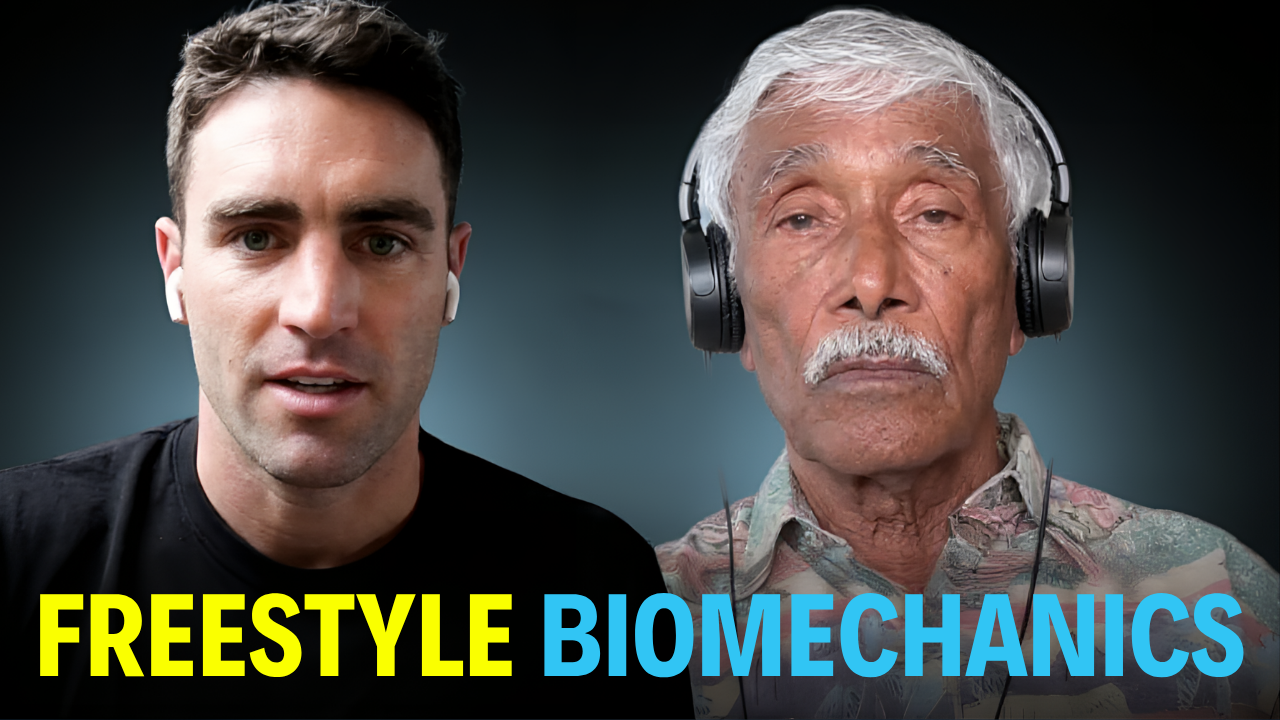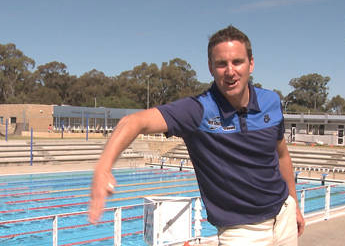








Sam Sheppard is one of Australia’s best open water competitors. Whether it’s 1km or 10km, Sam is a fierce racer and a smart swimmer. In this interview we cover:
- How to draft and when best to do it
- Where to position yourself in the pack
- Sleeves vs sleeveless wetsuits: Who should wear what
- How to breath and not swallow water
- What sets to do in training to get the best results in your races
Sam also features in our open water swimming video program here. Use the coupon code ‘podcast’ to save $100 when joining.
Transcript
Read the full transcript
Welcome to Effortless Swimming, the podcast for swimmers, triathletes and coaches. Join Australian swim coach Bretton Ford as he reveals the latest techniques and information to improve your swimming. Let’s dive right in. Hey guys, welcome to the Effortless Swimming podcast. Today’s episode I’ve got an open water specialist on by the name of Sam Shepard. And Sam’s a friend of mine and I’ve known him for quite a few years. I grew up competing against him in some of the longer distance events. And there’s two reasons why I wanted to get Sam on the show to interview him. And the first one is because he’s such a good open water racer that I wanted to see what’s behind his mindset and his race strategies and some of the techniques and skills that he uses in his races. Because he’s won dozens and dozens of open water races and he’s just a ferocious competitor. So listen out for some tips that he gives about getting out there and working hard in open water swims
if you’re a triathlete or you’re an open water swimmer. And the second reason is because he features in the new open water video program that we’ve got in SwimProve. And SwimProve is our new online coaching community that’s got hours of video of technique programs, open water programs. It’s got workouts in there and it’s basically the hub of what we’re doing now. So SwimProve.com, that’s S-W-I-M-P-R-O-V-E, SwimProve.com. So by the time you listen to this, it should be open. We’ve been putting it together for the last couple of months now. And it’s a good resource for triathletes and swimmers if you want to improve your swimming. So Sam, as I was saying, Sam features in those videos. We’ve got a lot of above water, underwater shots of him with his technique and some of the things he does in open water races from drafting to siding. And we cover pretty much everything you need to know to be a good open water swimmer.
So you can head to SwimProve.com and I’ve got a discount for podcast listeners. So if you’d like to get a discount on SwimProve, simply enter the coupon code podcast, P-O-D-C-A-S-T. So enter podcast into the coupon code and that will give you a discount on SwimProve. So that’s a special offer for podcast listeners. So here we go, let’s get straight into the interview with Sam Shepard.
Sam, thanks for joining me on the call today. The reason I wanted to get you on the call was because you’re probably one of the best open water competitors that I’ve seen race. You’re a two-time winner of the Peer to Pub, which has been the largest open water race in the world. You recently got second by a tiny bit in the latest surf nationals here in Australia and you’re also competed in the Australian National Open Water Championships and just missed out on the medals this time, but your open water swimming is going really well and you’ve also featured in the latest videos that we’ve put together for SwimProve.com. And I just thought I’d get you on the line today just to get your take on some racing strategies, drafting, wetsuits, some training strategies and things like that. So thanks very much for being on the call. Yeah, thanks for all that. Yeah, I’ve had a pretty good first half of the year and it’s all been going to plan.
Obviously, I’m doing those videos for you through SwimProve. I hope that you’ll be able to help show a lot of your athletes and everyone who uses it how to draft and get the most out of swimming in the ocean. Yeah, and you’ve just come back from an Australian open water training camp, haven’t you? Yeah, well, I was up at the GOG last week with a lot of the other top open water swimmers throughout Australia for 5 and 10K and it was just a training week. Did about 70K and just worked on drafting and just all open water tactics and how to make it easiest for you, where to draft on people and also when to try to make it break and when to also feed and take in fluids. But obviously that’s talking about 10K races and 5K, but same principle can also be put into, obviously, 1,500 metre races and even just 1,000 obviously if you’re doing your Ironman sort of stuff. Yeah, 3.8K races. I think most of the people listening to this are probably doing the 1.2K races
up to the 3.8K races for the Ironman Swim. So what are your race strategies for the 1.2Ks and up to 3.8K races? Well, obviously, there’s a big difference because obviously with the shorter races of that 1,500 mark really depends. If you’re a good swimmer, you can often lead from the front, but then if you’ve obviously got a bike leg coming up and run leg, there’s probably not much point. You just want to really try to make it easy. That also goes by the same thing if you’re not quite as good swimmer. You really want to make sure you can draft off somewhere maybe and say if they’re going to say 107 pace in effort, you’re probably going about 110 pace in effort. That’s the kind of difference how much drafting can make and obviously that’s going to even make a bigger difference when you’re doing the 3.8K races for your Ironmans because obviously if you can save much energy throughout that race you’ve got more for your bike and run legs
or obviously you’ve got more for your sprint finisher for just a swim race. So when you’re going about those races, is your plan to just get out in front and try and lead it or you’d like to hang back a bit and just draft off the guys in front? Well it really depends who I’m racing. Obviously in a 5 and 10K race or if it’s a 3.8K race or around there I’ll probably draft off people and try to pick my line and really sprint towards the end, but if it’s a 1,500 metre race I’ll probably just try leading from the front because obviously it’s a bit of a sprint so when I lead from the front you really want to make sure you’ve got your siting worked out and everything so that you don’t swim off course and end out losing all that effort that you’ve put in but yeah, they’re both my race strategies for those races and they’ve seemed to pay off over time for me. And when you’re in a bigger pack, say you’re going towards a turn
where do you like to position yourself in the pack? Well obviously when you’re going up towards a turn I’ll start thinking about it maybe 2 metres prior with my positioning. Obviously if you’re in the middle if you’re towards the closer side of the boy like and there’s no way you just kind of dive underneath the boy and pull yourself around the rope and then pop up the other side or if you’re on the outside obviously you’re not going to get hit you can try to push everyone in and squish them up but you can often end out swimming nicely around the boy without too much difficulty but then obviously if you’re ahead and you’re by yourself you can pretty much do whatever and swim around or you can probably need to show there’s a new video learnt or there’s a new technique I learnt up at the recent nationals on how to turn boys Carrie-Anne Payne actually she’s the world 10k I’m a water champion she does kind of this backstroke turn thing
that then puts her straight in a right angle to keep on swimming but yeah there’s heaps of different strategies but they’re the ones I mainly use. So you like to stick to the inside when you’re going into a turn if you’re with the pack is that where you position yourself? I mainly well position myself and make sure I duck underneath the boy you can often grab the boys ropes going underneath and pull yourself around and make sure you pop up quick and fast and sprint off again and when you’re in a bigger pack and you’re just swimming in a straight line do you like to stay in the middle of the pack or you like to stay somewhere on the outside where you can either make a break or just not get caught behind? I’ll preferably want to stay on the sides and probably draft off someone’s hip about most likely be because it means you’re not going to be stuck in the middle of the pack but also just gives you a little more leeway
and like obviously sometimes when I’m in the middle of the pack I don’t know I get a bit frustrated I don’t know if you put it maybe a bit claustrophobic with people around you but that’s probably one thing I really need to work on is swimming in the middle of the pack and not getting frustrated but I’ll also plan to be in say the top mix of say 10 people throughout the race being no further behind than that and with your sighting what are the main things you focus on when you’re sighting for boys or sighting for the finish? Well with sighting obviously you want to walk over the course and see if there’s any like trees or houses or any like big object say sitting behind the boys or something or if you can see that there’s like a rock wall or some sort of groin that you’re swimming along so you can just keep parallel to that so you know you can swim straight but obviously you don’t want to look up too much but I’m in saying that
you do want to look up enough so you’re confident that you’re swimming straight and not just put your head down and sprint and realise that you’re swimming off in the other direction but probably the main thing just make sure you know if there’s any objects behind where you’re trying to finish or aim towards the finish line or towards boys and before I race do you look for any sweep in the ocean? Do you sort of judge it and change your run in or you sort of what you’re aiming for based on the sweep? Yeah well obviously with currents in oceans obviously if you’re racing in a lake you’re not going to have that problem but if I’m running into the ocean and I know there’s a sweep going from left to right I will change in where I run to and also say if you’re coming in from the ocean I don’t really worry about getting swept way down past the finishing line I’m not really going to try to fight it because I can just get towards the beach
and I can run that extra 50 metres obviously that’s going to be quicker than if you’re trying to fight the current finish exactly on the line And before a race do you tend to judge the depth going to the water and judge the depth and get a feel for it or do you just sort of wait until you get into the race to find that out? Nah I’ll always try to judge the depth before a race like obviously if you’re running out on a beach or running in on a beach like you can either judge it by um like say if you can see some people standing in the water you can go with their knee depth or and obviously you just want to walk out where you’re running out if there’s any potholes the last thing you want to do before like a triathlon or an ocean so as you stumble and roll your ankle in a pothole running out and also coming in a safe option is to make sure you don’t stand up too early is just keep on swimming until your hands touch the sand is nice and good
quick principle to go by So your hands touch the sand that’s when it’s time to stand up? Yeah you can often never get wrong with that and it’s pretty it’s pretty genuine that I would say it’s probably one of the quickest if you get up too early you’re just going to be too deep in the water and someone’s you’ve lost all that speed so always make sure you know if there’s any potholes or anything because yeah you just don’t want to roll your ankle or do something like that and with your training what are sort of the main main types of training that you do for open water races? Well I’ll obviously with open water races regarding on any distance you obviously want to be fit but you want to have that kind of speed throughout it so I’ll obviously be hitting up around 70 k’s in the week and then in saying that I’ll also be doing a lot of sprint training getting high lactates and also like so I’ll be doing a lot of 800’s 400’s but also doing like 100’s
say one easy one hard for say about 30 reps on say 140 art 2 minute cycle Yeah so even though you’re doing a fair bit of distance you’re still doing sprint in training because that’s probably one of the things that I see some triathletes they get it wrong so just putting the distance they might knock out 3k’s straight without any speed there but if you want to if you need to make a break for the pack or for the finish then you still got to have that speed there. Yeah you really want to have that speed there because obviously if your speed is a lot higher than what the pack is going you can just go that much easier throughout the pack so you might only be going say 50% of your max speed which just makes it a lot easier for you so obviously doing those fast high lactate 50’s as just as beneficial as doing say just 3k straight freestyle but obviously for all my training sessions in my warm up I’ll be doing lots of drills
which I show it in to improve just really working on holding my core throughout the water and making sure I got good feel of the water before I’ll start a big say aerobic or lactate or sprint set. Yeah and I got an email from someone the other day who mentioned that they were doing they were doing some drills that I showed to them before each of their sessions and now their times have dropped something like 50 seconds for their 400 freestyle just because they’re doing drills and activating the right technique before their sessions. Yeah well obviously that’s a big like important it’s just as important as say just busting out big K’s or sprinting you want to get those drills right make sure you’ve got those high hips before you start your main set but also like you want to make sure you’re flexible because obviously some of those drills can be quite hard if you’re not flexible and not loosen the shoulders and that’s what I find
if I’ve had a big set or like say a 10k session next morning like when I’m doing the drills I might have tightened up so like you obviously want to make sure that you keep on trying to be loose because if I’m not loose I can’t really get my stroke session isn’t quite going to be as well Do you tend to stretch before or after the session? I’ll just stretch afterwards I’ll just do activation and your thorough band work and I’ll do most of my stretching just after the session half in the showers because I train outdoor pool and it gets a bit cold afterwards so I’ll be just doing your lat stretches afterwards then I’ll also do some stretches later at home when my muscles are still warmed up and just making sure they’re not tightening up for the next session in the morning and we in swim proved we show a couple of balanced drills so where you’re trying not to rotate more to one side and you’re trying to keep your stroke
fairly even what’s the can you explain the reasoning behind that? Yeah well that’s actually a problem with me that I’ve got with my stroke because I breathe to the left when I’m swimming freestyle I drop my left hip which then just creates so much more drag with the water hitting it so that’s one thing that I’ve been trying to work on is just keeping that right hip up when I breathe to the left and been doing that I’ve been doing the kickboard drill with the kickboard between my legs making sure it doesn’t wobble too much and also just working on core strength like Pilates and those sort of exercises outside the pool because that especially affects me when when I’m really fatigued at the end of an open water race my hips might just drop out so much and even though I’m putting in more effort my stroke’s just gone in my hips and I won’t really be going any faster So you find in the longer distance races it’s your hips that go first
like your hip flexors? Yeah I’ll definitely find my hip flexors go first and just all through the bottom half of my stroke like my hips each time I breathe it’ll just sway to the side which doesn’t look that pretty but yeah I just end up spinning the arms and trying to get there as quick as I can and within hindsight I should really just work on holding my core really tight and still and keeping my bum right up high in the water as I sprint towards the finish line. And in say a long distance set or in a race do you with the kick are you continuously kicking or do you back off the kick and just work with your arms for part of the race until you need to sprint home? Well I’ll often save my legs but in saying that I’ll still want say a little two beat kick or something I don’t want really a six beat kick they’ll be towards the end but a two beat kick just to make sure I keep my hips high up in the water and obviously just
works with my timing of my stroke and also just a little propulsion through the water but nothing really that major until towards the end where I might want a bit of speed but in saying that if a break or someone picks up it in the race means that I can just pick up my kick a bit to improve my speed without really speed or anything so that’s a really good handy thing to have throughout races a good strong kick. Do you do much kick in training? Yeah I do a fair bit of kick often about two big kick sets a week varied in some fitness work but also some really fast fifties on like a two minutes just maxing out but also making sure when I do kick also just constantly I’ll either do it with a board or a snorkel in a streamline but just making sure that I hold that core still and kick from the core and not like wobble the shoulders. You can often notice that if you’re holding your kickboard if you see your shoulders or arms moving a bit too much
you need to just tighten up that core while you kick. And that’s that’s something I’ve been working on with my guys a bit is to gotta squeeze your glutes a bit to sort of push those hips to tilt them back and push them forward and keep that core locked on because if you’re bending at the hips and you can’t really get the power driven from your glutes all the way down. Yeah and that’s also a thing that I’ve had in the past you’re not using your glutes enough and you’re just bending your knees too much but you just want to hold that hold that bum tight hold that core tight and make sure that you’re not bending your knees too much and making sure it’s not just making too much of a splash you’re actually kicking under the water as well. Yeah exactly and the same goes with ankle flexibility as well particularly triathletes they can be a bit stiff in the ankles from the running and cycling so even just a few ankle stretches
can say you’re doing once a minute before you get into each session that’s going to help you kick immensely. Yeah well all these ankles that also comes down just a bit of natural flexibility in your ankles but everyone can improve it like everyone’s at different levels but I’ll just sit on with my ankles and make sure I bend them back a bit say a minute or even just watching TV but obviously ankles are pretty hard to stretch but if you can get that one or two mil extra in your ankles that’s going to give you so much more propulsion through the water. Yeah definitely and wetsuits do you wear a wetsuit with sleeves do you have you ever worn sleeveless and what’s your sort of take on sleeveless versus sleeves? Well um yeah well I’ve actually just changed to wearing a sleeveless but I’ve worn this sleeves for like the past three or four years well um now we’re sleeveless and I just find coming from a pool swimming background it’s a lot easier on the shoulders
I can get my right up through the water and obviously if you’re triathlete you can get them off really quickly you don’t have those arms but obviously with a full sleeve wetsuit the advantage is in that obviously if you’re not quite as good summa it’s going to give you a little bit more buoyancy throughout the arms but also just keep you a bit warmer and yeah really just depends with what sort of person you are if you want sleeveless or long sleeve but they’re pretty much the same but it’s just down to preference. Yeah some more personal choice. Yeah and that’s what I’ve got both wetsuits and I might still wear the long sleeve but at the moment I’m wearing the sleeveless and I’m pretty happy with that how it’s going but with a sleeveless you’ve also got to make sure it’s fitting quite perfectly because a lot easier to get water down a sleeveless just going down underneath the armpits compared to a long sleeve which you know is not really going to let
much water in which is I suppose an advantage. And in swim proof we take people through how to put on a wetsuit properly and one of the most important things I think is how if you’re wearing a wetsuit with sleeves is just how how far you pull them up so do you want to just talk them through how you make sure that you’ve got the sleeves in the right position. Yeah well obviously with a long sleeve wetsuit you like to have a lot of that rubber around your shoulders so you want to make sure that you’ve got it pulled up really high tight so you haven’t got excess rubber down your legs and you pull it all the way up through up past your chest and just make sure it’s all bulked up around your shoulders then swing your arms a bit then if you want even a bit more around your shoulders you can pull your sleeves up a little bit and that will also help with having the rubber tight around your wrists and not letting any water up there but
yeah obviously just make sure that it’s pulled up through your legs and up high and you’re growing give you as much rubber up near the shoulders And one final thing is just with your technique what do you do you prefer to have a higher rate but not pulling as strong or do you prefer to keep your stroke count low but have a more powerful pull when you’re doing say 1.5k race? In a 1.5k race I probably want to keep my rate up high and maybe slip a bit through the water but then obviously if I want to get a bit more speed I’ll increase the power of my stroke and make sure I’m getting good distance per stroke but obviously distance per stroke is the main thing but I’ll definitely try to get the rate up and just keep the arms spinning and keep the legs going with say a 2 bit kick just to make sure they’re not just dragging and slowing me down but that’s just my preference some people might prefer having a long and strong stroke
but I just prefer to rate obviously it’s still a good stroke but yeah I’ve still got a lot of things to work on with that so I’m definitely not perfect just goes by preference one of the things we were talking about when we were filming for swim prove was that that balance between distance per stroke and the amount of effort that you’re using to pull through because if you’re doing a longer race if you’re really stretching out and you’ve got to put a lot of pressure on your shoulder to pull through then your shoulders are going to get tied a lot more quicker so it’s just a matter of finding the balance between your stroke rate and your distance per stroke and how much strength you’re pulling through with yeah exactly like if you’re trying to go just putting heaps of power into your stroke it is going to put more pressure on your shoulders but it’s also possibly going to put some lactate into your body compared to if you just get the rate up
it’s like riding a bike like it’s easy to go up a hill in a low gear but once you try to put the gear up into a high gear just yeah you can’t really feel quite as easy it’s the same principle and yeah you just want to get that rate going up high if it’s a long race not too high but yeah just not putting quite as much power in yeah that’s a good tip well thanks very much for giving us those tips and giving us a better idea of some things that can be used to swim fast to open water swims for the open water guys and the triathletes and you’re now training for the your main name is the Panpaks in 2014 or 2015? 2014 well at the moment having a bit of time I’m off not that I’m having a couple of months off travelling around Europe going and watching some friends race at the Olympics but then I’m going to get back into swimming hopefully really work on my stroke and lead towards 10k open water trials in 2015 whether I make it or not
that’s not my name it’s just knowing that I’ve just given it the biggest shot I’ve given it and I’ll be happy with whatever result comes my way awesome well best of luck for it and I don’t know doubt you’ll give it a red hot go and you’ll be right up there yeah thank you and yeah thanks mate thanks for joining us on the effortless swimming podcast to get transcriptions, bonus videos to be the first to hear about new episodes go to swimmingpodcast.com