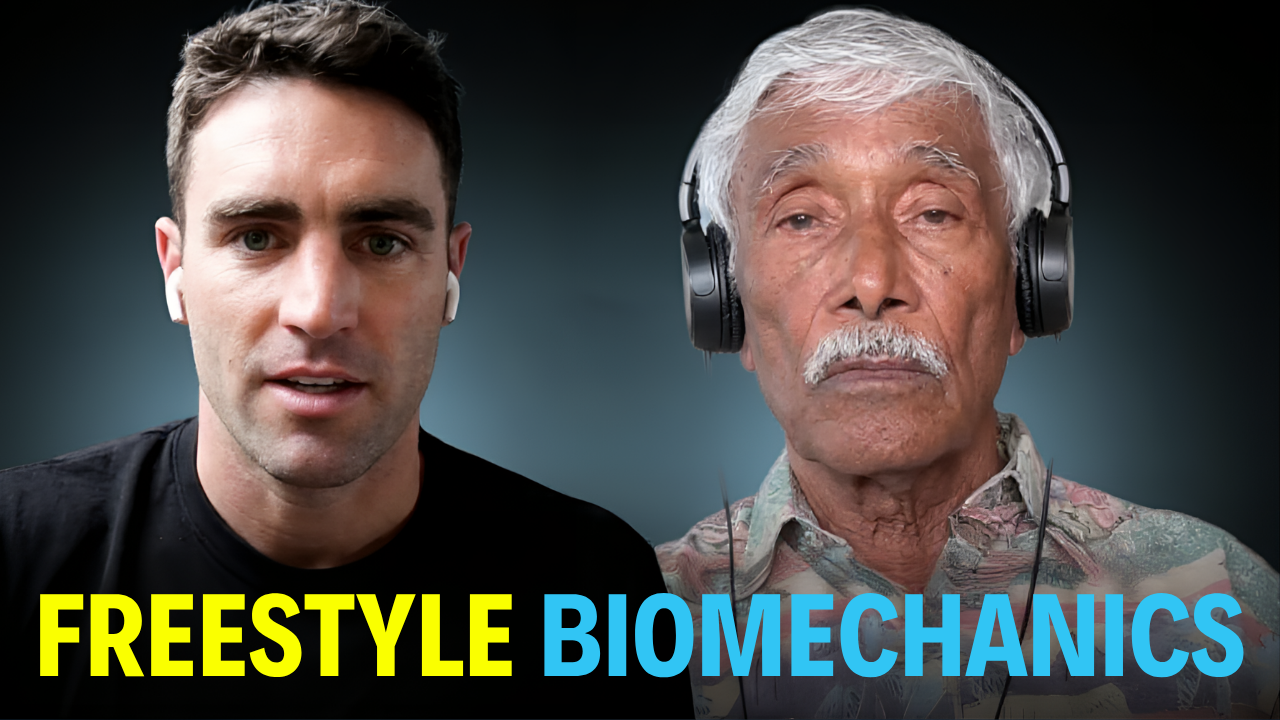








My Guest today is Zac Turner, he is a physio at Kieser Australia. I have met Zac through a clinic that I was running in Melbourne, he invited me to try Kieser Gym that he worked at. I have been going there for a couple of months now, I have really enjoyed it, got a lot out of it, and now that I have come back to swimming, I’ve found that my shoulders have been really good as a result of strength training there. So I thought it would be good to get him into the podcast to talk about Strength Training.
01:34 Physio Background
03:16 Training Approach
06:55 Internal And External Rotation Strength Link To Swimming
10:26 Injury Prevention
14:51 Combined Elevation Test
17:11 How Can People Improve Their Overhead Range
20:36 How Often You Do Strength Training
23:57 Tapering Up
Kieser are happy to offer this deal to listeners who want to try a Kieser strength program.
It includes:
●Initial physio session
●6x supervised strength training sessions
●6 week Kieser membership
●All for $180
Mention they listened to the EffortlessSwimming Podcast when they call up to book to access the offer.
Terms and Conditions: Only available to new Kieser clients. Must
reference the Effortless Swimming podcast when booking to redeem. Offer ends 31st of Jan 2022.
Form Goggles
https://www.formswim.com/?sscid=b1k5_hkrgn&
Check out the Effortless Swimming membership for online coaching options:
https://effortlessswimming.com/member/membership/
View our freestyle clinic schedule around Australia:
https://effortlessswimming.com/freestyle-clinics
Click here to subscribe:
https://www.youtube.com/user/EffortlessSwimming
Follow us on Social media:
https://www.facebook.com/effortlessswimming/
Instagram:
https://www.instagram.com/effortlessswimming/
Transcript
Read the full transcript
Welcome to the Effortless Swimming podcast to show that help swimmers and triathletes love the water, become a better swimmer and live a better life. Here’s your host, Brenton Ford. Welcome to the Effortless Swimming podcast. My guest today is Zach Turner. He’s a physio from Keys at Australia, so Zach, welcome to the podcast. Thanks Brenton, thanks for having me. It’s great to get on here. I’m a long-time listener and follower of your Effortless Swimming platform, so glad to take part. Yeah, I think it’d be good for the people listening to know sort of how this came about. So we met through a clinic that I was running in Melbourne, and then, I mean, we were out at the pool for a while with lockdowns and stuff, but then we caught up a few months later and you said, I want you to come and try out this Keyser gym that you work at. And I’ve been going for the last, I don’t know, maybe two months now, I think it’s
been. Yeah. And I’ve really enjoyed it, got a lot out of it. And now that I’ve come back to swimming, I’ve found that my shoulders have been really good as a result of some of the strength training there. And so I thought it’d be good to get you on the podcast to talk about strength training, talk a bit about what Keyser’s doing. And I don’t want this to sound like an advert for Keyser, but we will sort of, you know, obviously refer to that because that’s what I’ve been doing for the last couple of months. But yeah, full disclosure, I go to Keyser and I use the gym. This isn’t a paid advert by Keyser or anything like that. So I just wanted to put that out there before we start. So just for the listeners, what’s your sort of background as a physio and as an athlete as well? Yeah. So I’ve recently gotten into long distance triathlon over the last four or five years now. Been on hold the last two years for obvious reasons.
But I guess the biggest downfall in my triathlons were always my swim. I’m not a natural swimmer. I’m definitely more of a natural runner. And it’s always been that one leg that’s really been holding me back. So I got on to one of your clinics and really found that I got some great results in my swimming following that. And prior to Can’s Ironman this year was swimming really, really well. We started really excited about what I could put out on the day. And unfortunately, I wasn’t able to get there. So over the last little while, everyone talks about Ironman being pretty hard to finish their up. They’re pretty hard to start at the moment. So, but yeah, and then I work as a physio. Like you mentioned, Brenton, currently I work with Kaiser, standing in the team in Torquay here. And similar to yourself, I utilize the strength equipment that we have here at Kaiser and it just gives me great ability to back up in my sessions
both not only swimming, but running and cycling as well. And I really try and target my strength to work on whatever elements of my stroke, talking about swimming now that I need to focus on. And hoping that I can, yeah, help other people get great results as well. And glad to hear that you’re one that’s starting to notice some benefits, Brenton. Yeah, the thing that stood out to me is it’s quite a different approach to any sort of gym session that I’d done before. So I think it’d be good to maybe talk about what’s the approach and how is that different to your typical sort of strength training or gym program?
Yeah, so like you mentioned, you walk into a Kaiser Centre or a Kaiser gym and it does have a bit of a different look and a different feel to what you may see in some of the gyms. The first thing that strikes is that the equipment’s a little bit different and they were just to really isolate the areas that we want to isolate. And then beyond that, there’s some machines that we can use for some more compound movements as well. Where I really like to start off and where you and I started off was getting as much data and as much information as we can. And we have the ability to do some strength testing. And from those strength testing results, we can really start to map out where any of those strength deficiencies might be and then really correlate that with whatever that person or athlete may be then working on outside or in their chosen sport. And we used an example with yourself, for instance, someone who might
be finding it difficult to really get into a nice high elbow catch position. And if there’s a lot of queuing, they’re still not really getting there. We can really start to then strength test around the rotator cuff and see if there’s any strength that may be limiting them as well. And that’s the starting point so that we can make fully individualised strength program for them. And then the other most noticeable difference would be the time under load principle that we use. So we had to listen, must fatigue within a two minute time frame. And again, that’s different to what we use for reps and sets. For me personally, in endurance sport, I think it makes a lot of sense when you think about the strength endurance principles and then using time under load for a principle of that, I’ve found a great correlation between my strength training and endurance sport as well. Yes, it’s very different to what I’ve done before.
So essentially, for me, at least the program, it’s about 10 exercises, roughly nine or 10, and it’s then just one round of it. And you do sort of your reps and it’s like four seconds, one direction, hold for two, four seconds, the other direction, hold for two. And the aim is to kind of get to fatigue within this 90 to 120 second time frame. And then that’s it for the exercise. So we’re not doing several rounds of it. And for me, I like it for a few reasons. One is I’m sort of out of there within about 40 minutes, roughly. So I know exactly what I’m meant to be doing. I can see that progress over time. And since I started, the weights that I’m moving, it’s improved dramatically. And I think when you go from doing next to no strength training or no structured strength training to actually doing it, obviously that makes a big difference. But it’s yeah, it’s really I’ve noticed a lot in my swim, particularly through the shoulders.
So when I first got back in the pool two months ago now, I think it might have been, I was having some pain through the front of my right shoulder because that’s where I had a mountain bike accident a couple of years ago. And it would sort of flare up every now and then. And I’d say after four or five weeks, about four or five weeks, it started to disappear. And so my shoulders have been feeling really good ever since. And I think that’s a big, a big factor to a couple of the machines that they’ve got there, particularly the internal external rotation machine, which is obviously a really important part for the thing for swimmers. And I think it’d be good to touch on like initially when we were chatting, you had an idea that is is internal external rotation strength linked to your ability to kind of to be a good swimmer or to get a good catch. And when we did my testing, we looked at the numbers and I saw it and went, all right, I’m pretty weak in my internal external rotation.
I haven’t done the retesting yet, but I’ve got no doubt that my numbers would be a lot better than what they were when I first first started. But with that hypothesis, it then just showed that, OK, for me, I’m not really strong there, but I can still get a good catch. But it wasn’t it wasn’t wasn’t painless all the time. And and I probably couldn’t sustain it as long as I can now. So I was probably breaking down a bit quicker. So I want to talk a little bit about maybe that hypothesis that you had when we first started chatting and then maybe talk about even just that that machine and what it strengthens and so on, because I found that to be a really good one for swimmers. Yeah, look, the important thing to note with with strengthening is it does need to be individual and the same program or or each athlete their program is going to look completely different. And what’s important to to remember when we’re designing a program
for someone is that really needs to complement what we’re trying to get them to do in that given sport. And if we’re talking about swimming with yourself, Brenton, that’s we’re having a really, really good relationship between a physio and the coach is so important that you can come to whoever it is that you’re working with and say, well, this is what we’re having trouble working on. And then we can make sure that from a strength standpoint that that might be an element that that we need to focus on. So we, like you said, we had the discussion around if you’re finding it hard with any athletes to either get in or maintain that higher higher work position, would that then correlate potentially with some weakness through the rotator cuff and more specifically through those shoulder internal rotators? And we found that, yeah, that probably wasn’t as well supported in your case in terms of you can you can get into good positions
and and obviously have a really good high elbow catch. But the strength through that area of the rotator cuff probably didn’t quite correlate the same way. But we also then need to keep in mind that there’s other elements throughout swimming where where strength can impact as well. Essentially, when we’re swimming, the main aim of swimming is to increase our horizontal displacement in the water as much as we can with a stroke. So essentially what we mean by that is moving from point A to point B in any given stroke and the further we can move between those two points in each stroke.
Ultimately, the further we go, the faster we can swim, the more effectively we can swim. So what that means as well is if you can get into good position through a high elbow catch and hold a lot of water there, you also need to have a really good level of strength to be able to apply force back against the resistance that the water is going to give off to propel yourself forward. So getting in positions, one thing, but also being able to then push back against that water to drag yourself forward and create that horizontal displacement is another big consideration that we need to remember when we’re strengthening as well. Yeah, that’s that’s exactly right. And it’s I think you can get some sort of obviously you get some sort of strength benefit from from swimming, but it does certainly make a difference. And I’ve for me where I’m at with with my swimming, it might compete twice a year or so, so I’m not competing a lot.
But really, I want to make sure that I’m able to swim for the next 10, 20, 30 years and and do it pain free and not get injured, where I have to sit out of the water for for a while. And so for me, it’s I’d say it’s primarily injury prevention and just making sure that that I feel good and can do it for a long time. But obviously it has those benefits of helping your swimming as well. And with the athletes that you work with, do you see a mix of those two goals? Or is it primarily rehab or prevention? What’s the balance there with the athletes that you see? Yeah, absolutely. Like the injury side of things is hugely important or massive consideration that we need to take with swimmers and a big part of the clientele that we see here. And it’s worth touching on that prevention is always better than the queue up. And we’d rather see our patients before they get injured so that we can put in a step to keep them in the pool.
Because the longer we can keep someone in the pool and the more consistent they can back up their sessions, the more likely they are to get the outcomes that they that they want to get. And yeah, so strengthening, obviously the stronger we are, the more capacity is in those muscles, tissues, bones and the more forces that they can withstand, which means you’re going to have a greater capacity to be able to back up your session and less likely to develop injuries. There’s also other elements that we need to consider and injury prevention tools that we can measure to make sure that we are having that philosophy of prevention first. So I actually worked on a study a few years back now that that we got published about a test for swimmers. And it’s called the Combined Elevation Test, which is a test that looks at the extension range combined through the shoulder, combined with extension through the thoracic spine.
And what we’re able to find from that study was that based on someone’s height and wingspan, we can get an approximate value of where they may or a normative value of where they should reach on this combined elevation test. Now, that’s a pretty simple test to do poolside before a swim where you might go in and do a quick screening test. And if you’re outside of 10 percent variable of your baseline, and that might be an indicator that you’re creeping up to the threshold of maybe getting injured and maybe you need to adapt to something. So some trackable tools like that are fantastic. We’ve got to remember that swimming, there’s high revolutions of the shoulder within every swim. Your each stroke is against resistance. So unlike sports like running, where we tend to say that you’re more likely to get injured because of loading, well, there’s some pretty high loads in swimming as well. Yeah, I see that with video analysis where
if you pause the video in a certain position, you look at the position someone’s in and you go, how are you not injured yet? Or normally they say, yeah, like my neck’s been really sore or my shoulder’s been really sore because particularly some of the overhead stuff where that might be from the like the entry to the reach or the catch, people get to some pretty uncomfortable positions when you actually look at it in slow motion. So that that mobility or range of motion is really important. And we used to do the combined elevation test at clinics. And we don’t anymore because we just don’t quite have the time to fit that in along with all of the other stuff that we we do. But I remember I posted a video about that maybe five, six years ago. And it got really good traction because I think it showed a lot of people what’s an easy test to do, first of all. And if you’re not sure what we’re talking about, you can look up,
just look it up online, combined elevation test. But the way I’d probably explain it would be like lying the ground. The way we were doing it was you’ve got your chin on the ground, hands out in front of you. And you can either do it like thumbs crossed or hand on top of the other. Just depends how how would you test it? I’ll let you explain it before I butcher it too badly. So you did you did a pretty good explanation there. So in the in the study that we did, it was really important that we standardised it as much as we possibly could. So essentially, you’ve got a block platform with a vertical pole that’s got a measuring tape on it. We get the athlete to lay. We got forehead in contact with the ground, arms above head, one hand on top of the other and in a streamline position like you would when you were diving for entry into the water. From there, the aim is to extend or elevate the arms or hands as high up that pole as you can.
And we’re looking at the movement that we get is glenocumeral extension, which is the shoulder joint itself, combined with the extension through the thoracic spine to achieve that that range. And then for the use of what we mentioned a little bit earlier as an injury preventative tool, getting those baselines based on those normative values that we gather from that from that study. We can then use that as a tool to go. If you’re outside of that 10 percent ratio, well, there may need to be some modifications to some training sessions to make sure that we do stand on that side of prevention rather than cure. Yeah, yeah, exactly. And we was working with one of the the physios who was doing some work with the Australian swim team a couple of years ago, and she that’s why I first came across this test. And they were sort of looking at the way that they were. She was referring to it as is pretty much all the Australian swimmers.
They can get their arms above a 20 degree angle. So straight out is if you call that zero degrees, you know, 20 degrees would be above that. She said all the elite swimmers in that range. Now, for most people come to our clinics when we were testing it, I’d say we’d probably get like 20 percent would be above like 5 percent or perhaps 10 percent. And then the rest would either be zero or couldn’t get above zero. And it’s it’s it’s relative because well, it’s important because that sort of overhead range is quite it’s got quite a direct correlation to your ability to get a high elbow position in the catch. So if you can improve that over time, then it’s going to help you something. No doubt. And I think we see a lot of people who do have pretty tight shoulders just from years of sitting down or driving, you know, just all of the life stuff. What are some ways that that you think people can improve for just based on your study?
How can people improve their range overhead? Yeah, so in terms of in the study itself, we didn’t look too much in terms of, I guess, the methodology about getting improvements in it. There was more about finding that normal data that things that people can be doing at home to make sure that they can keep keep good good range through shoulders and even that thoracic spine is just making sure that their recovery routines are great. So you may utilize a phone roller through thoracic spine to make sure that you’re staying nice and mobile through their spiky balls, even through the rotator carp and chest after twin sessions are great as well. And and then like I’ve touched on the importance of being able to make sure that you’re recovering from each and every session that you’re doing by making sure that your physical capacity is above the demand of it by making sure that you’re strong goes a long way as well.
So, yeah, so there’s generally the three things that I would highly encourage, probably in no particular order, but making sure that you’re maintaining and upholding enough strength to be able to perform and back up at the level that you want to back up at and then keeping on top of those recovery recovery tools, phone, roller, spiky ball, et cetera. A quick note from our sponsor. This episode of the podcast is sponsored by form swim goggles. With these goggles, you don’t have to look at the pace clock anymore or be one of those swimmers in the pool always grabbing for their watch. With form smart swim goggles, you can see all of your key metrics while you’re swimming distance, pace, stroke rate, they’ve got it all. And the swim data is displayed on the Google lens and you can customize the display to see the metrics that you want to. And I was worried that it was going to be distracting, but you can literally see through the display, the metrics are always there,
but you have to choose to focus on them. It’s really impressive. And it makes hitting intervals or any kind of specific training much more manageable and achievable. And the goggles track at all. It’s automated. So from the time you start your session to the end of the swim, you don’t have to press any buttons in between. It automatically tracks everything. Form also works with a bunch of the best pro athletes out there, including Lionel Sanders, Sarah Crowley, Hannah Wells and the Olympic champion Usama Malouli to name a few.
These form goggles are for all types of swimming, too. One pair of goggles and you can use them in the pool, the open water. You can use them in swim spars and endless pools, too. So the same pair of goggles can be used in all of these different environments. The battery life is incredible, too. One hour charge is 16 hours of swimming time battery life. And you can have the display on either your right or your left eye. The goggles themselves come with anti fog solution that’s used in dive masks. So it’s great in terms of quality. And there’s a protective case with a nifty drainage solution. So after you swim, you can store them safely. And while the goggles connect to the form swim app on your smartphone, too, they will sync with the form app and they can review all of the details of your swim and you can see what other swimmers are up to in the form swim community as well. I’m a big fan of these goggles.
I was really impressed when I used them and I use them for the vast majority of the sessions that I’m currently doing. To find out more about the form swim goggles, go to formswim.com and you can use our coupon code effortless at checkout and save fifteen dollars off your order back to the podcast. And what about how often should you be doing strength training? Is it like swimming where I’d suggest three a week minimum really what you want to do to to improve or is it is it two a week? Where do you often see works works best for your clients?
We we often encourage anywhere between two to three times a week. It’s generally pretty sufficient. More of the our clients that maybe a little bit more more keen on it might split their program into two and do a few few more days. But we’ve got to also remember that it’s it’s through the process of recovery that we’re actually making strength gain. So if we compromise that recovery, then yeah, we’re actually going to be compromising how much of a strength improvement we can get. It’s also key to keep in mind, like you mentioned earlier before, Brenton, that their elements of swimming or and a lot of elements of swimming that are going to work on strength as well. So we want to also ensure that what we’re doing in the gym isn’t then going to mean that we can’t then go and swim to the extent that we want. So you may need to work around if you’ve got a strength set, which, for example, might be hand paddles, poor boy, even band around
your feet to really work on some of that upper body strength. So yeah, you want to make sure that you’re appropriately then structuring your strength sessions on times where they’re not going to interfere with how you actually they’re going to perform in that session as well. Yeah, I think that’s that’s a really important one. And I’ve not battled with that, but I’ve found when I’ve been able to fit in my strength sessions, sometimes it’s coincided. Like I’ll train Monday, Wednesday, Friday mornings, and often it’s been like a Tuesday afternoon and a Thursday afternoon that I’ve trained. So kind of going into the Wednesday, Thursday sessions a little bit soren, fatigued, and I certainly feel it. And it’s a bit of a battle to get through those sessions and swim them as well as I would if I was fresh. But for me anyway, I’d rather do the strength sessions and maybe suffer a little bit in the swims. But so it is certainly something that you’ve got to take into account
because I some of these swims I’ve felt a little bit heavy, a little bit sore. But I know in the in the long run, look, it’s going to be better. But you certainly do feel, especially when you go from maybe not doing any sort of strength training, don’t be surprised if you might feel a little bit heavy in the water through the arms, maybe through the legs and so on. And yeah, your times might be a little bit slower initially as a result of that. So it’s important to, I think, to be able to understand that that’s that’s probably going to happen at least for the first couple of weeks. Absolutely. And that’s where we really need to fill into how we’re feeling. I’m making sure that we’re adapting our strength sessions and like we’ve touched on our other sessions as we need to. So if you are coming into the gym sore after a big strength session in the pool and another gym session, the day prior to that, well, you may not then decide that you’re going to do that.
That program in its entirety in terms of weight, but dropping those weights back 10 or 20 per cent to make sure that you’re still getting some input in there without compromising that recovery is important and most sensible, sensible steps. And in terms of resting up, so for me, I’ve got an event coming up early Jan, which would be my first race for probably about over a year. And I’m thinking for like leading to that event, I want to I might do an easier session at the start of the week and then the race is going to be on the weekend and just make sure I taper up because as a teenager when we’re racing, I found that typically the guys would need a little bit of a longer taper to rest up, often sometimes between seven to 14 days if we’re under heavy training. Sometimes for the girls, it was like five to 10 days. It obviously depends on the individual. But making sure that you do taper or you ease off your training
and your strength training leading into into an event. So what is there anything there that you would often suggest to people if they are going into a race that they’re targeting? Yeah, yeah, definitely. And I probably can’t share too much of my own experience lately. It’s been over two years since my last race as well. So I unfortunately haven’t got myself to a taper yet. But yeah, definitely we want to make sure that we’re fresh enough before the before the start of that race. But we want to also make sure that we’re keeping those important muscle groups active and still working those areas as much as we can. So in the in the week or even two weeks leading up to a race, it’s still really important that you get into the gym and completing those sessions. But you may even then drop those weights down more than what you what we previously mentioned, you may even drop them back 50 percent in those in those seven or 14 days prior to heading into a race or an event.
Yeah, yeah, gotcha. That’s that sounds good. And it’s, you know, you just that I remember mistiming a taper. And I did it on a few occasions because it’s hard to hit your taper if you are training with an eight or nine sessions a week and maybe three gym sessions back in the day. You know, this is like half a lifetime ago, it feels like now. But it’s it was it was quite hard to get your taper right. But I found quite often I wouldn’t back off early enough. So what I’ve tried to do over the last few years is just make sure that I give myself enough time to rest up, especially when you’re not doing as that much training like compared to what we were doing. I might be doing three to five swims a week that. Yeah, that’s I just gave myself those those two weeks of just starting to dial it down so you’re going feeling feeling fresh. And again, it comes down to the individual and the experience that they’ve had before.
I know I don’t take it very well. I know that when I do go into a taper for the most part, I can bank on pretty much getting sick. So I’ve faced my tapers now around on trying to keep some intensity in there, but dropping that overall volume instead. So that I’m yeah, I found that when I do that, I’m I’m getting to the start line healthy.
But yeah, we’ll see how we go with the next one. What do you what do you think that is? Because I say it happens a lot with the with the elites. Some is when they lead into national trials or or the Olympics. Like it’s just do you think it’s because they go from such a heavy load and the body is just working, working, working and it’s got this built up fatigue. And then when they rest, their body just goes, OK, now I can work and relax. And they get sick like what do you reckon it comes from? Yeah, it probably needs to be a few, few more studies into the area. I don’t think there’s quite enough sort of research going into that.
I guess topic is topic at the moment. But yeah, when we’re when we’re working hard in our training and depleting our energy stores and really working at high heart rate going for a long period of time. Yeah, we’re we’re compromising our body’s immune system. And and then when it leads us more vulnerable, I guess when we when we do start to back off to to get viruses or or illnesses as well. So that’s that’s where I’ve found that keeping some intensity in there, keeping my heart right up can can sort of keep me away from that that susceptible design a little bit, but also making sure that I’m I’m not still going in with a huge amount of underlying fatigue. And any any sort of final thoughts or anything you’d like to the listener to know just in terms of strength training or based on your last couple of years of experience, what’s what are a couple of important things that you think someone should know? Because when I have a guest on I, you know, because people
people, they’re experts in their own area. And I think they’ve got some real gold nuggets that you know, they learn over time as they work with more people. Is there anything there that springs to mind just based on what what you’ve done over the last couple of years? Yeah, look, absolutely, not not even in an athletic population, but the finally, the benefits of strength training are starting to become more well known. And it’s only just been recently that two strength training sessions per week have been added to the National Physical Activity Guidelines. And that speaks in volumes of really how important it is not only for athletes, but for everybody. And particularly for the ageing athlete, on average, as we age, past the age of 60. So in master’s athletes, who is anywhere between one to four percent of strength per year? And that’s a natural part of ageing. But what we often forget is that we can defend against
that that that strength loss. And if we’re actively strength training prior to that, and we get our peak strength at its highest point before that process starts to occur, the longer you’re going to be able to do the things you love. So swimming, cycling, running into those later years and that’s just one aspect of it, which is hugely important in master’s athletes or older populations. But also from from, yeah, more younger athletes, just the the influence and the benefits that strength training has on performance. And it’s a topic that’s pretty widely spoken about in sports, such as such as running and even cycling, probably not so much in the in the field of swimming. But absolutely as equally as important, like we mentioned, if if we can use those compulsory forces of that strength offered to propel ourselves through the water, they can have huge impacts on our performance in swimming as well from a from a younger, younger age.
So yeah, yeah, absolutely. And I know that watching swimmers grow up when they start young and they grow up. You do notice the swimmers, I’m talking like 10, 11, 12, 13, those that have done some form of strength training early on and we’re not talking heavy weights here. We’re just talking about some pretty basic body weight stuff and learning how to hold their body or move their body in a controlled way. Those that have got that sort of background from a young age, you can notice it when they swim. They just move so much better. They’re so much better coordinated. So it does help for them to start early, at least with some some really basic stuff, I think. And yeah, it stands out in the field of swimming, like it at like a state level, state championships, for example, those swimmers that are doing that kind of program, they, yeah, you can see it particularly for like those high strength, high strength requirement, strokes like breaststroke or butterfly,
but obviously the other strokes require it too. So it’s a, yeah, completely agree with you there. Yeah, yeah, absolutely. And even more emerging evidence at the moment supporting the effect of some heavy eccentric strength in program in swimmers is really exciting to feed too. And I think you’ve seen up here with Jonah for a few AC sessions and he tends to love a good 10 second eccentric phase throughout some of those movements. So hopefully you start to notice that a lot of that is pain off in your swimming as well. Yeah, that’s why I’m rolling into a Friday morning training session pretty sore at the moment, which is as good. I just can’t work as hard on my own as I do when I’ve got someone there like Jonah working me. It’s, yeah, I get the shakes up towards the end, which is, you know, where you’re working hard then. I’ve noticed the exact same thing. And we have a lot of people that are off to go on in those 50 training sessions, because you think
you can push yourself pretty hard until, yeah, you get somewhat coaching you through it to the level that they can. And yeah, you do walk out feeling like you’ve done a really, really hard session and it’s great. Yeah, I love it. Yeah, absolutely. It makes a huge difference. And they can also just help tweak a couple of things with your technique on the machines and also just making sure that you are actually pushing yourself because for whatever reason it’s different. It’s like swimming in a squad. I can definitely work myself hard training on my own, but it’s very different environment compared to what I’m seeing with the group. So I think it’s worthwhile. And for those listening, so we’ve teed up an offer for those that are listening. If you’re in Australia, and you’re near a keys of gym, then Zach, do you wanna let them know just what they can do if they’d like to try what we’re talking about here? As I said, I’m a huge fan.
I’ve found it really beneficial. So for any swimmers or triathletes listening, I’d highly recommend it. So what’s the way that people can get started? Yeah, so the first stage of getting started is catching up with the physio and a Kaiser. Like we said, we need to then go through those assessment phases which include the strength testing components so we can really individualize that athletes program. So we’ve got an offer that’s heading into the Kaiser Great Australia Day swim coming up in January that we really tend to get as many people in utilizing strength equipment as we start to head towards that event and more people get out swimming during these warmer months. So you get an initial physio session which includes some strength testing, six supervised sessions in the gym like we were talking about earlier with your sessions with Jonah just to get you working to those levels that we know that people need to work at in the gym
as well as refine as much of the techniques as we need to. And then six weeks of strengthening in the Kaiser gym all for $180. Fantastic. I’ll put that link in our show notes so it’s clear for everyone how they can take that offer. And I think they’ve just got to mention the Effortless Swimming Podcast when they join as well. So I’ll put that in the show notes for anyone who’s just interested. And as we said at the start, it’s not a paid ad during the show and I don’t get any commission from this at all. This is just anything that I come across that I think is worthwhile. I think there can be big benefits for other swimmers listening. So Zach, I appreciate you being on the podcast. It’s always good to talk about all things swimming and it’s been a while since I’ve had someone talk about strength on it. So it’s always a good reminder, especially something important is that. So appreciate the time. Nah, thanks for having me, Brenton.
It’s been great. And I came to see you in here. I expect you know the gym bit later today. You read my mind. I’m actually looking at where I wanna squeeze in a session. So probably be an hour or two until you see me. You might look forward to it. Thanks for listening to the Effortless Swimming podcast. If you’d like us to help you become a faster, more efficient swimmer, go to www.effortlesswimming.com.