







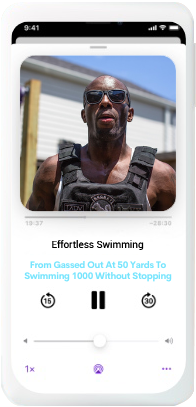
Marquest joins us in this podcast episode to talk about his early struggles when he started swimming. From barely finishing 50 yards to completing 1000 yards without stopping. Marquest shares his experiences, what he’s been through to achieve this. Enjoy
01:02 Swimming Background
9:00 Doing Half Ironman
09:30 I Gotta Start With Something
16:52 But Swimming
25:53 Signing Up For The Stroke Analysis
35:53 Kicking Hard
44:18 Climbing Up A Mountain
47:10 It’s Not Comfortable But I Am Not Dying
Want to improve your swimming like Marquest? The Effortless Swimming membership is now available:
https://effortlessswimming.com/training-and-membership-plans/
View our freestyle clinic schedule around Australia:
https://effortlessswimming.com/freestyle-clinics
Watch the episode on YouTube:
Transcript
Read the full transcript
Welcome to the Effortless Swimming Podcast to show that help swimmers and triathletes love the water, become a better swimmer and live a better life. Here’s your host, Brenton Ford.
Welcome to the Effortless Swimming Podcast. My guest today is Quest Mix. Quest, welcome to the podcast. Thanks, man. It’s a pleasure to be on. I’m excited to even be in the position to talk swimming with someone based on how horrible my swimming was when I started out maybe a few years ago and even as recently as a few months ago when I signed up as a stroke analysis member. So it’s great to be on for many reasons. Well, I’m excited to have you on because when you sent that message, maybe it’s like a week or two ago, you basically said I swam 1150 yards continuous. And so it wasn’t a fluke the first time I did it. I was like, that is that’s awesome because you started like we started working together fairly recently. And your progress over that time has been really, it’s been really impressive. So I thought it would be great to have you on the podcast to share what you’ve changed and what you’ve gone through to, you know, go
from almost the beginner swimmer, you’re making 1,500 meters and kind of struggling to get further than that to then where you’re at today, being able to swim over 1,000 yards continuously and just feeling much more comfortable in the water. So to sort of kick it off, what’s your background with swimming? Did you learn to swim as a kid at all? Or is this just something you started as an adult? Yeah, so originally, like didn’t learn to swim as a kid at all. No swim lessons, anything. And the interesting thing is I recall growing up, I grew up mostly just south of Seattle in Washington state. And I had friends who would go to the lake during the summer and I always wanted to go and I think my parents were always told me no, but were really concerned because they were like, you don’t know how to swim, you might drown in the lake. But at no point did click for them or for me to say like, let’s get swim lessons.
And then you can go to the lake. It was just like, don’t go to the lake. So all throughout my childhood, no swim lessons didn’t do any major swimming. At some point in like my late teenage years to early adulthood, I came to believe I had the ability to like mimic breaststroke so that I could like, if I fell into a pool, I could I could mimic that. And that would get me out of the pool, which maybe happened once or twice in life. And it wasn’t until I took my first job after grad school, which was based in Southwest Georgia. And there just like wasn’t a lot to do wasn’t a lot going on. So I found all sorts of ways to fill my time that I stopped and thought like, it’s a little ridiculous that you don’t know how to swim. And your best case scenario is maybe you fall into a pool and you mimic breaststroke and then you won’t drown that way. So I actually signed up for an adult swim class. This was at the age of 25 in at the YMCA in
Southwest Georgia. And this adult swim class was taught by a teenager and just like a bridge version of this story is, you know, I’m already pretty self conscious as a 25 year old going to this adult swim class. As it turns out, I was the only person who had signed up for that session of the adult swim class. So when I arrived, I check in at the front desk and say I’m there for the adult swim class, which is, you know, I had to get over a bit of my embarrassment to do that. And everybody, the person at the front desk, they called the manager over who was managing the facility was like, what are you talking about? There’s no swim class, because they had internally canceled it because I was the only one to sign up. Nobody had told me or called me or communicated with me about it. So here I am in my swim trunks. I’ve got my flip flops on and I’m just like, it ends with me sitting in the facility manager’s office just like explaining like, you know, everything
I’ve shared with you so far, like, no, I never took lessons as a kid. I don’t know how to swim. I got up the courage to sign up. And so basically after hearing my sob story, I think she’s felt bad enough for me and ended up there was a lifeguard on duty who was a teenager. And she asked her whether she would be willing to just like start teaching the like four week series swim swim class, which would only be me. And, you know, I don’t want to put too much on the young lady, but suffice it to say, she was non plus about the idea of teaching the swim class that day and certainly not teaching me, which she made clear with her facial expressions in the office to her boss with me sitting there just looking up there. And she’s like, you’re going to do it. So we head out and it’s like me and this young lady and she’s going to teach us one class. And I get in the water and she’s asking me about my history of a swimmer so she knows where to
start and I tell her all the things I’ve told you. And she says, all right, well, you say you can mimic breaststroke like show me what you can do. And at the same time, some of her friends from school were at the pool. And so she’s sitting poolside talking to them. I start doing my mock breaststroke and I have pretty decent upper body strength. Don’t know any form other than I’m just doing this. And like, I’ve got my goggles on, I kind of put my head down and I’m going. And I finally just get to the point where I’m like, all right, I’m a bit tired. I feel like I’ve shown her enough what limited skill I have. So I stop only to realize I’ve swam into the deep end. So I push my feet down and I then can’t touch the ground. And I look down and realize it in the deep and I freak out. I start flailing and struggling. I can kind of see out of my blurry goggles with water splashing all over in front of me that I seem to have
caught her attention. And I just start doing I play out, you know, I play out what the fear I’d had my whole life of like, well, you’ll fall into a pool and you’re going to have to use the spot to get back to the shallow end. And I get back over to her and she goes, is everything okay? And I was like, no, swim lessons over for the day. And so that was my first swim lesson. And that just wasn’t a good start for me trying to get comfortable in the water. But with that said, I never had any fear of the water or putting my face in the water or anything. So that was how I started with swim lessons. And I finished that series really didn’t end up with any more skill than I started with, which was, all right, I’m not going out to anybody’s lake or river for recreational swimming. I’m not coming to a pool for recreational swimming. I’m not swimming laps, but I feel a little bit more confident in my foe breaststroke if I fall into a pool
because it’s battle tested, it’s field tested at this point. So I kind of left swimming at that point, felt like I’d check the box and at least taken an adult swim class and I left it alone. So flash forward to, so this was, that was when I was 25. So that was probably 2008. So flash forward about a decade. I’ve had a few jobs in my career. I’ve moved around a good bit and I’m living in New Orleans and I get the bright idea. I have this buddy Trey Monahan and he and I take turns putting the battery in each other’s back to do kind of these crazy things. So we signed up for and ran ultra marathons together. We signed up for and trained to do the Murph, which is this kind of really physically involved what’s become a CrossFit workout, but was started by this Navy SEAL that was killed and action and a workout he used to do on military bases and it basically involves doing all these pull-ups, push-ups and squats with a 20 pound
vest and I’m not a very big dude at all and not super strong. So the idea of being able to pull that off with the vest on seemed impossible. And so Trey and I signed up and did that together and it all the common thread is, you know, I personally and I think Trey shares this vision and thought like to sign up for things that seem physically impossible when we sign up for them. And so we kind of centered around this idea of doing a half Ironman. Mind you, Britain, I have never done a triathlon in my life at the time in 2018 when we decided on this. I did not own a road bike or any bicycle and my swimming skill at that time. I had left off a decade earlier with my four week swim class with the YMCA high school teacher. So as far as I’m concerned, you know, I am a runner and I was a runner and we done ultra marathon at that point. So the running piece of it fine cycling. I can get there and but wanted to sign up for this because
the idea of being able to swim 1.2 miles still to this day seems impossible. It seems more probable now after working with you. But in 2018, I was like, I’ll never be able to do this. So let’s sign up for it and try it and push ourselves. So 2018 that the we’re gonna do a half Ironman and really where I need to put my focus is swimming. So my buddy Trey he can swim has been a good swimmer his whole life grew up and as a his family had lake properties and so they’d spend summers on the lake. So he would would have been one of those friends who was going to the lake that I would have just not been able to join. So I got to get swimming right. And so my next foray into swim training was I thought, man, I got to start with some some basics. I talked to a few folks who are traffic triathletes and triathlon coaches who had done half Ironman’s in New Orleans and gotten pools and they were like, man, your swimming is really bad, you got
to get some basics down. So I found a local swim class by this guy who I don’t know if this is his real name or just a monarchy goes by because it makes sense in his profession. But his name is Mr Fish. And so he was teaching children’s and adult beginner swim classes. So I signed up for the 10 week series with Mr Fish or might it was 10 lessons, it might have been two lessons a week with Mr Fish. And the first day I go, we get in the pool and it’s me and maybe four or five other adults. And you know, the first thing you know, Mr Fish has everybody do is like, let’s spend 20 minutes getting comfortable with the water. And so we’re putting our face in the water and blowing bubbles. And it just was like, that was not my mode. And to be clear, I’m not denigrating anybody who starts at that point, because there are people who you got to start where you got to start. But I’m highlighting that because I think in some of what we’ll
talk about, one of the things that kept me from progressing initially was I had this concept and I would hear over and over that you have to get comfortable in the water to be able to swim well because relaxation makes it easier for you to apply to float those things. And I struggled making that click because I’m not afraid of the water. Like even though I swim like trash, like, I’ll get in the water, I’ll put my face in the water, I’ll try to float in the water. And as long as it’s not in the deep end, and there’s no real risk of drowning, like, I don’t have that in like entry level, level of fear of the water. And so Mr Fish started everybody with kind of blowing bubbles. And I was just like, oh, man, I need, I need the cliff notes of this, I need to flash ahead something because like this is, I know what I need to do. I’m on a mission. I’ve got to be able to swim from 1.2 miles and I’m not going to get there blowing bubbles in the water. So we
largely did that. And like they, you know, Mr Fish was great. I think for the lessons that he provided for really what his target demographic was, you know, I came out of those 10 sessions with probably like a greater confidence where I think I could comfortably start at one end of the pool and swim to the other end and not worry about drowning in the deep end. Like I’d swim past the deep end and to the other side of the pool. So that was progress, but no one near the progress I would need to attain to to be able to swim the half Ironman distance. And so I started talking to more half Ironman coaches, a few folks who get who are kind enough to give me pointers on swimming, but really I kept running into the same problem of folks would say like, look, I can train you in your overall triathlon training, your overall half Ironman training. And I can even give you swim sets as part of that overall training. But there weren’t a
lot of folks who were swim specific coaches geared towards working with people who were generally athletic and had this goal of swimming distance for whatever reason, but starting at the beginning. And so it was kind of this gap of a need. I didn’t need the uber beginning coach like Mr Fish, but I also wasn’t advanced enough to take the swim sets given by the triathlon coaches. And so something significant happened in kind of my my swim journey. I ended up taking a new job and moving to New York and I met this guy who
runs an organization or a group he calls can also in a W stands short the abbreviation for can and will. And the whole focal point of his organization and the philosophy is similar to the very thing that guided me to sign up for all these physical feats and for me to sign up for a half Ironman knowing good and darn well, I don’t swim. The idea is that you’re pushing your mental boundaries and limitations. If you believe you can do it and you put in the time and energy, then you get it done. So he and I put in some work in pools in New York. He really was the first person and coach to push me and was the first coach to be in that kind of sweet spot of I understand you’re an athletic person, you have this significant athletic goal, but we need to start you with the basics and we’ll push along the way. And so we were starting to work at a good clip had gotten to the point where I could probably swim 50 arts without feeling need to stop or being
completely exhausted. But ended up having to in that training because I have had Crohn’s disease since my last year in college. And it just started to with the change of the new job, I was traveling a good bit. The New York pace of life is a bit faster and a bit more aggressive and just like things went completely haywire. And so ended up getting really sick on that front had a rough end of 2019 that was a rough 2020 generally all together aside from the issues with the pandemic, but also ended with me having three major surgeries at the end of 2020. So it just put a halt to any of my physical activity being sick from Crohn’s for most of that year and then trying to recuperate from surgeries. And so got through those three surgeries in August, October and December of 2020. And then, you know, January really kind of renewed my my focus, my verb, my like desire to push myself kind of in many forms, but really physically because I
after all the surgeries, I had just such a renewed appreciation for you’re not promised physical well being in health. And so if you find yourself with it, you know, cherish it and do with it what you want in the time that you have it. And what I choose to do is really try to push myself, you know, to see what’s possible and really exceeding like mental boundaries. And so I really started to focus and fixate again on this idea of doing half Ironman because in my mind, I had unfinished business. And it still seem completely impossible to be able to do the swimming portion because where I’d left off midway through 2019, I can only swim 50 yards without being completely exhausted. So I started working with some physical therapists based in New Orleans, these guys, the Raj and RT who run the stride shop and they focus on physical therapy with runners. And so we started working on trying to get me back to running form because
that’s always been my base to the extent I consider myself an athlete in my adult age, I’m a runner. But really what they helped me do was when I walked in to see them for the first session in January of 2021, post the three surgeries, like I was struggling to stand up straight because I just kind of been hunched over and kind of really feeble and not able to walk more than a few blocks at a time without getting exhausted. So what they helped me do with the ultimate goal of getting me back to running was just really start to rebuild my body. And so we went through that process and maybe about five or six months into that where I finally was comfortably jogging and running and standing up straight and able to work out with the good folks at Cypress Fitness and lifting weights and felt strong in my body. I just kept I started to probably and I want to say it was May or June. I just started often to hear like the voice in the back of my head
saying but swimming, you know, you’re hitting these strength sessions and my trainer is Brian with Cypress Fitness and like I was doing stronger than I had been and like feeling good and every time he’d like put significant weight on the or hand me significant weight. Whatever the exercise was I do it and I swear I would hear this voice but swimming and the same thing with the strideshop guys like I started running and like got from walking to jogging and I’m running again and I finished running five miles for the first time and feel good and just have it here but swimming. And so I started to go down that rabbit hole again and so started the same process where I’d left off a few years before I reached out to triathlon coaches that live in and around the New Orleans area. And it was kind of the same process folks were incredibly generous with their time met with me at pools. Watch some video that my girlfriend was kind of up to
shoot with me in pools. And it was back to that same spot of like, look man, here’s the exercise you need to start you need to be able to do the swim work. These are the swim workouts you need to be able to do to start down the path of training for a half hour. And people gave me advice about, you know, what I needed to do to get stronger in swimming. But these folks are triathlon coaches, not really just swim specific coaches for athletes. And so they’re like, I don’t have a lot of time to just meet you and watch you and help you focus on swim. And so I started getting in the pool more because one thing I heard heard consistently from folks is you have to swim, you got to get in the pool. So I started forcing myself to go three times a week at minimum, no matter how much time I spent in the pool, no matter how much I many yards I swam just go to the pool, get in the pool. And I even signed it up, I signed up for after a recommendation
from a friend, I signed up for a quarter of tower 26. And those guys are top notch, I’ve heard. I know, I think you’ve either been on coach Jerry’s podcast or vice versa, or maybe both. So I think that they are really good coaches and have like a great program. But where I, where it wasn’t the right fit for me was again, that same problem of I joined in during the race ready phase. And I would look at some of the swim workouts. And I was like, race ready, man, I can only swim 50 yards without without stopping and to give some context, because I know the one of the big reasons you wanted to chat with me was there are probably a lot of folks who listen to your podcast, who consume your content and social media that are similarly situated in terms of starting off and trying to build significant swimming ability. When I say I could swim 50 yards, and then would be gassed or tired. And I timed this because I kept having the conversation with people and
they wouldn’t understand what I meant when I said I’m guess I, I would swim 50 yards. And I would need at least three minutes and 45 seconds before I could swim another stroke. And I wasn’t like swimming 50 yards, taking three minutes and 45 seconds of a break. And then swimming another 50 yards, that was if I wanted to swim another 25, like that’s how gassed I was. So, you know, I had access to all of the, or the, to the Tower 26 workouts, kind of it came out week by week, and I would look and I’d be like, I’m not doing four sets of 100 anything, I can’t do one one and one of the big things that jumped out to me that made me think like I’ve got so much work to do and this might not be the right resource for me at this time was like they would have you put in your 100 yard, your best 100 yard time. And I was like, zero, I can’t do it. Basically can’t do it. So I got nothing. And so I think at the same time, as I was starting to realize like this
might be a more advanced resource than will work for me at this time, I signed up for the effortless swim annual subscription, which, you know, you know, well, I need to explain to you your product, but like it gives you access to a lot of the workouts and lessons and videos that you have available. And I was like, okay, I’m going to just start consuming content. I’m going to watch YouTube videos. I watched a lot of effortless swim YouTube videos. I watched the Tower 26 YouTube videos. There are a few other resources where I just like I’m a visual feedback learner. So when I’m trying to do something, I want to watch people who do it well do it. I want to then try it. And I’m usually best if I can videotape myself doing it. And I can watch it and I can see the difference between the way the person who does it really well does it and how I do it and what’s off. And then I can do that as a loop and try to get better and better. So I just started
watching as much video as I can. And I started getting in the pool. And I would go and I would work out and just like I was getting more fit. And I know this because just by watching more video doing as much as I could of the Tower 26 workouts and just modifying them to my ability, which to be clear, if they listed for four by 100, I was doing eight by 50 with like a good three minutes in between. And it just that would be I would either have to I wouldn’t do eight by 50. I just do two by 50 to so that I wouldn’t be in the pool for hours and hours. And so I finally got to the point. I want to say it was July or August. So late summer. I swam 100 without stop. And I can’t remember the exact time. I think this is right. But it was like 214. And I was when I say I was gassed. I got out of the pool. I was that today because I thought I might have an asthma attack and pass out the pool and drown in the shallow end of this pool. I was swimming.
But I was so ecstatic that like, I could put a time as slow as I thought it was that I could put a time into the Tower 26 page. But it also made me realize like, okay, there. I have the ability to progress. This rate of progression is too slow to be able to swim to do a half Ironman by 22. But it is it is a more significant rate of progression than going from 25 yards to 50 yards over 10 years. So I’ve been optimist by nature. So I was like, all right, we got something to work with. And I think it was around that time that I know exactly I was struggling to remember what caught my eye about the effortless swim stroke analysis subscription. I know exactly what it was. I was listening to one of your podcasts. And in that particular podcast, you advertise that you were going to offer like, stroke analysis of one video for a member, you’re going to pick somebody at random. And I was like, Oh, let’s see if this is not being worthwhile. So I sent the
link to my video, wrote you a note. And then it just got me thinking and I sent you a separate note asking for details about stroke analysis, the stroke analysis subscription. And I realized, you know what? If I want to fully commit to this, you seem like from all of your content that I can consume. You really understand swimming. You have a good brain for it. And I was like, look, I’ll pay for the stroke analysis, we’ll try it for a bit. And either we’ll see some more significant progress than going from 50 yards to 100 yards in two months. Or we won’t. And I can at least say I tried it. And I will say that I’ll confess that I like a lot of people these days, before making that decision to join the stroke analysis membership, really fell victim to this idea that there’s a hack for everything. I think that a lot of ways when I was watching YouTube videos of swimming, or listening to podcasts about swimming, or getting advice from local
triathlon coaches or people I had the benefit of talking to, you know, I kept thinking like, oh, you know, there’s one type of workout. If I just do that type of workout three times a week, then by you multiply that by however many sessions, and in two months, I’ll be swimming. And it just ain’t that it ain’t that you got to put in the work. It’s not nice to take it to it, is it? No, not at all. Not at all. And so I signed up for the stroke analysis. And it has been phenomenal not not to overly plug you on your own podcast, but I I give credit for my progression from somebody who at best could do 100 yards without stopping to now. I can I’m going to have to swim this week. I’m going to comfortably be able to go out and do 1200 yards without stopping to having the stroke analysis subscription. Because one, I think you you have amazingly high swim IQ in terms of coaching, having been a swimmer yourself. I think your level of patience
was phenomenal and helpful. And then for me in particular, that audio feed or visual feedback loop that I described earlier, which is the best way I learned. It’s great because then I’m getting the benefit of not only I can watch all the swim video of people who swim really well that I want on YouTube and throughout the effortless swim general subscription that you have the videos you have available. But also then I get the benefit of watching my swimming and then having your feedback and analysis of my swimming so that it highlights and pinpoint exactly what I’m doing wrong and what I need to focus on. And we just keep sending videos and we see what gets better. We see what kind of what got better and maybe what got worse. And so that’s that’s been that’s been, I think the difference maker along with a few other things. But I realize I’ve also kind of been I ran you soup to nuts. I want to make sure I have a gut. I have a few
more things to share that I think were helpful in terms of what were the difference makers for me getting me to the point where I could swim more than a thousand yards without stopping. But I want to make sure I’m I’m talking about the things that you think will be helpful for your listeners to. Yeah, well, I appreciate the sort of history of your swimming there because it’s particularly that first lesson you got as a 25 year old. I didn’t know about that and to come back and be willing to swim again when you’ve had that experience. Yeah, good on you because you know, it’s it takes a lot of courage to I think for adults to go to the pool and accept I’m brand new at this. I don’t know anything. And they’re just being in your bathers sometime like your swimsuit. You know, that alone could be enough of a deterrent for people to want to start swimming. So I can tell you I had all of it, my friend. And I went through this. So I was going
to public pools in New Orleans and I’d had friends who were swimmers in high school say and a couple like reading going down the rabbit hole of researching triathlon swimming technique. Everybody was get some jammers, get some jammers, you got to have jammers because that’s going to reduce drag. That’s what’s going to make, you know, you look like a real swimmer and I will I took a pair of jammers to the public pool in New Orleans and there was a kid swim class happening and I will tell you it was like one of those record stop moments when I came out of the locker room with my jammers on all of the moms watched me get into the pool and I was just like this is this is horrible. And then on the flip side for I had a spent of being a member of a master swim group that I would get up and go swim and try to swim at five in the morning. And it just was past my skill set at the time. But having had the bad experience at the public school public pool
with the jammers, I then just wore regular swim trunks and then all these folks are in jammers and speedos and they’re looking at me like the smuck who doesn’t know what he’s doing. So to your point of just having comfort in your own skin and going to a place where you’re not used to being in and around pool. So everything is mystifying and you always feel you’re worried and more self conscious about taking the wrong step or being viewed as a person who’s an outsider in the space. So I’ve had that too. Yeah.
Quick note from our sponsor. This episode of the podcast is sponsored by form swim goggles with these goggles you don’t have to look at the pace clock anymore. Or be one of those swimmers in the pool always grabbing for their watch. With form smart swim goggles, you can see all of your key metrics while you’re swimming distance, pace, stroke rate. They’ve got it all and the swim data is displayed on the goggle lens and you can customize the display to see the metrics that you want to. And I was worried that it was going to be distracting. But you can literally see through the display the metrics are always there but you have to choose to focus on them. It’s really impressive and it makes hitting intervals or any kind of specific training much more manageable and achievable. And the goggles track it all. It’s automated. So from the time you start your session to the end of the swim, you don’t have to press any buttons in between.
It automatically tracks everything. Form also works with a bunch of the best pro athletes out there, including Lionel Sanders, Sarah Crowley, Hannah Wells and the Olympic champion Usama Malouli to name a few.
These form goggles are for all types of swimming too. One pair of goggles and you can use them in the pool, the open water. You can use them in swim spars and endless pools too. So the same pair of goggles can be used in all of these different environments. The battery life is incredible too. One hour charge is 16 hours of swimming time battery life and you can have the display on either your right or your left eye. The goggles themselves come with anti fog solution that’s used in dive masks. So it’s great in terms of quality and there’s a protective case with a nifty drainage solution. So after you swim, you can store them safely. And while the goggles connect to the form swim app on your smartphone too, they will sync with the form app and they can review all of the details of your swim and you can see what other swimmers are up to in the form swim community as well. I’m a big fan of these goggles. I was really impressed when I use them
and I use them for the vast majority of the sessions that I’m currently doing. To find out more about the form swim goggles, go to formswim.com and you can use our coupon code effortless at checkout and save $15 off your order. Back to the podcast. Yeah, absolutely. And at the end of the day, yes, it’s not uncomfortable at the start, but I think at the end of the day, people are only really concerned about themselves. You know, it might be a brief moment where they look over and go, okay, there’s a guy. He’s wearing jammers. People don’t wear jams at this pool that often. So that’s interesting. But at the end of the day, they’re not going home and thinking about you. So that’s what I try and keep in the back of my mind if I ever feel like I’m standing out in the wrong way. But I want to go back to when you… So when you first joined the membership, you sent a video through for our monthly members call, which we’ve got one coming up today.
And so I analyzed your video there. And from memory, like one of the main things that we looked at there was you’re kicking really, really hard. Like I could say I was like, man, if I was kicking that hard, I wouldn’t be making 50 meters either. And actually I filmed a beginner freestyle course. So after working with you and there’s a couple of other swimmers in a sort of similar situation I’ve worked with recently in the stroke analysis membership. I finally filmed this beginner freestyle course for people who are struggling to swim 50 or 100 meters. And one of the things I had to do for that video or that course that we’ll be releasing soon was I had to do some of the incorrect things that we see people do, such as kicking really hard and over kicking. And when I was doing that, I was exhausted after 20 meters of it. So it’s like, okay, it’s a good indication of like what people are going through if I try and replicate that.
So from that initial video, it was a kick and there was something else but I can’t remember, was it the breathing? It was, I want to say kick and breathing. I’m trying to remember because I know another big thing early on but I don’t know if it was in that first video was, I was plunging my upper body too deep in the water. But I think that that came back. I can’t remember it. I don’t think that was in the first video. I definitely remember the kicking from the first video though.
So when you get that first lot of feedback, you went back and tried to change it. What happened there and what sort of did you experience? Yeah, and that, you know what? Now that you pose that question, the plunging my body too deeply, that’s what happened after I tried to fix it, right? So the kicking, right? As I’m, two things relate to that. As I mentioned, like I’m not a very big person. I have like a slender, have always generally skewed skinny but like when I’m working on and running more athletic build and so like decently muscular which just feels like I sink. And an interesting story had a woman I was dating who was like, no, everybody floats in the ocean. We’ll go out to the ocean, watch you’ll float in the ocean. And she’s like, lay your head back and I sank like a rock even in the ocean. So I think I’m one of those like negatively buoyant folks. And so I was kicking so aggressively because that was the only way I could get
what felt like any float. Because if I felt like if I slowed down the any at all my back end would just drag and sink and then the rest of me would eventually sink especially after 25 yards or the tail end of 25 yards. And so when you gave me that feedback, I really tried to be thoughtful about slowing it down but then it would also, it would then immediately cause my legs to sink. So then what I started doing to compensate was I started plunging my hands deep down into the water as I went like through each stroke. And so that kept my back end up but my front end was kind of like doing this in the water. So it created a new problem. Summer rain, yeah. Exactly. And then so I still was only able to do 25, 50 yards because when I would go for, I would plunge down and my legs would stay up. But when I had to breathe, I had to come up all of this. So I was like swimming like this, you know. A dolphin, but for the wrong reasons.
Yeah. I was thinking like dolphin without doing that highly technical, technical, great looking dolphin kick that like professional swimmers do.
Yeah, it’s, and over the, like we’re, and then after that, but like not too long after that you joined the stroke analysis. So you started working together there and it’s like, I’d describe it as being slow and steady progress and some things will change and then they might regress a little bit but we get back on top of them. And it’s just this continual, you know climbing up the mountain. I think they’ve climbed up the mountain with a yo-yo where it’s like, yes, improve me improving. Okay, I’m going back a bit. And we do that overall that trajectory’s gone upwards. And to the point where obviously you swam that, you know that continuous distance twice because it wasn’t a fluke. And you mentioned that it was a lot sooner than what you had expected to be able to do that as well. Oh yeah, absolutely. To be clear, the thousand yards, there was no timeframe or timetable to hit that because that was still in the impossible realm.
Like the thousand yards, maybe three weeks ago might as well have been the 1.2 mile distance for the full half Ironman swim, to be honest. I actually ended up swimming for the first time a thousand yards on accident because you and I had been going back and forth. And I think I had decided of my own accord,
I needed to push myself because I’ve been swimming consistently, because this happened in, I wanna say early November. So this is all very, very recent as of the time we’re sitting here talking. And as like at this point, I’ve been swimming consistently minimum two swims, two hour long swims a week. Usually I’m hitting three sessions a week. My swim cardio is up. So, and I’m also, I’d started running more distance. So like general cardiovascular fitness is much greater. So in my head, and as I was rationalizing it, I was like, it can’t all be cardiovascular fitness or swim fitness as I like accepted that excuse when I started. So some of this has to be mental block. So I just, I have to push and try. And so I started with, I think trying to do 200 and just accepting like, I’m gonna go to a pool where there’s sort of a few in New Orleans and the one that I use doesn’t have like a deep end. Like the deepest is maybe like five and a half feet.
So I’m gonna go to that pool and I’m gonna push it and try to do 200 yards because worst case scenario if, and I’m gonna push it to the point where like, not I’m worried, not I’m nervous, not I’m afraid like I physically have to stop and I’m gonna push to that point. And if I do worst case that happens is like, I stand up and I’m out of breath and it sucks and I’ll have to go to the pool, but I’m gonna push it. And so I went to do the 200. And I think somewhere along the way, like I did the 100 and it was okay. And then around 150, I got really tired but I was like, I’ve gotta do it. And somewhere along the way of doing the 200, I lost track and I ended up doing like 250 or 300 based on like the watch measurement because I just like lost count. I was so fixated on being out of breath and like freaking out that I was like, I don’t know if I hit it. So I gotta keep going, but I had hit it. And the keep going was like an extra 50 or 100 yards.
And so I think that was, I wrote you that first note saying like holy smokes. And what I realized is in the private coaching chat, you had already written to me that it was time to start pushing it because you thought some of it was mental limitations. And so I was like, oh, well, as it turns out, I’ve already met your challenge without knowing it. And you as a good coach is out to do, doubled down and said, okay, well now go 350 or whatever it was. I think it was 350. And so I was like, oh, shit. Okay, I’m sorry for that. But that was my real reaction after reading your note and knowing I was heading to the pool that day. Like, oh man, what a, okay. All right, I gotta do this though. I gotta do it. And kind of back to the point of hitting 1,000 sooner than I thought, 1,000 was not on my radar, period. I was not thinking about hitting 1,000 with any sort of timeframe other than I need to be able to swim 1.2 miles
to do this half iron man that I’d like to do sometime at the end of 2022. That was the only way I thought about swimming 1,000 yards. Instead, the metric I’d set for myself was when I started out on this, restarted this journey at the end of summer of this year, I said, look, by the end of 2021, you need to be able to swim 500 yards without stopping because in my brain, when I was looking at those Tower 26 and the other triathlon specific swim workouts, other triathlon coaches that tried to give me, like the longest thing on there was a 500 yard swim, whether it was a warmup, a cool down or whatever it was. So I was like, oh, if I can physically do that, then I can start the training and whether or not I can actually swim 1.2 miles. I don’t know if we get there, but at least we can start down the traditional path that everybody has talked to me about, which is like doing these swim workouts as part of your overall training.
So that was my goal. And so when you sent me back to the pool after doing the 200 of the 250 saying go for 350,
I was like, okay, so I get in and I’m doing it. And what I found was after about 150,
I was very tired and I was not breathing easy at all.
And that was a mental limitation for me because when I see videos of people who swim well, and even when I’m at the pool and somebody else is in another lane who I know is a good swimmer because it looks effortless and they’re gliding, it looks like they just slowly turn and they take a big gulp of air, maybe spit some out if they’ve got too much air, and then they turn and they go back to it. And it’s just like, after 150, I’m gasping. And so it was not comfortable swimming or it was not comfortable breathing. But after 150, I realized like, oh, it’s not comfortable, I’m kind of gasping, but I’ve got enough and I can keep going. And so I’m trying to count in my head, I got to like 300 and it was the same thing where it was, it’s not comfortable breathing, but it’s enough. And something clicked in that moment while I was swimming where I realized it feels the same at 150 as it feels at 300. So this isn’t, I’m out of breath and I need to stop.
This is, I’m uncomfortable. And this whole process is about pushing past discomfort. So we’re gonna push, fuck it, let’s go. So I keep swimming. And again, I kind of lost count somewhere between whether I was at 300 or whether I was at 350
and I said, let’s just keep going because now I feel confident that this is just a, it’s discomfort, I’m not gonna die in here. I’m not gonna like lose all ability to breathe. Let’s push past discomfort and let’s go for 500 because that’s the end of the year goal, which I felt for the first time after I hit that 200, I felt hopeful and positive that I’d be able to achieve it by the end of the year. And I said, I’m here, I think I could do it. And if I hit the 500 now, that takes the pressure off the end of the year and I’ll feel really good. And so I just kept going for it. And then I had lost count and I was like, okay, now I’m not sure if I’m at 400 or 500, but I’m still feeling that same feeling of, it’s not comfortable, it’s not easy, but I’m getting enough oxygen to keep going. It’s uncomfortable as hell, but I’m getting enough. So let’s just keep going. And then it just got to the point where I didn’t know,
I couldn’t tell whether I was at one measurement or a hundred ahead of it. So I didn’t know it was started with, I don’t know if I’m at 300 or 400, now I don’t know if I’m at 400 or 500. And I just found it was like, screw it, let’s just keep going. And so I just kept going. And I was like, assume you’re behind and just try to hit five. And once I hit five, I was like, I just keep going. And I just kept going. And I just kept going and I just kept going. And it kept being that same feeling of, it’s not comfortable, but I’m not dying. I’m literally not dying. And I’m getting enough breath to keep going. Okay. And then finally, I was like, I think I’m probably somewhere around like 900. This is incredible for the guy who three months ago was struggling to swim 50 yards. This is an accomplishment. I came up and I stopped swimming and I will tell you, Brenton, I looked at my, I swim with a Garmin and it set a thousand yards.
I thought for sure that was wrong. It also said that I’d been swimming, the measurement was 21 minutes. As a matter of fact, you know what, I don’t think I had my Garmin that day. I think I just had my Apple watch because I left my Garmin at home. And so the Apple watch I just like is more off with my stroke count. So I thought for sure it was wrong. And I was like, this is gonna end up having been, you know, freaking maybe 300 yards. And when it said a thousand and I’ve been swimming for 21 minutes for a brief moment, I thought, perhaps I did die in this pool and I am hallucinating. I’m in heaven. And I’m in this like, this heaven where I’m a good swimmer. All of a sudden this makes no sense. The idea that I swam for 21 minutes without stopping that was impossible as of when I got in the pool, like earlier in that session. And I will tell you my only saving grace. And I’m just so grateful that I had done this this day.
My girlfriend was out of town. And so I didn’t have her to shoot video with the GoPro in the extended kind of selfie stick. So I’d suction cup the GoPro to the side of the pool to be able to kind of send you some video of me doing what was supposed to be like the 300 or 350 assignment. And I was like, I’ll be able to count on the GoPro video. And I had done it and I think I even took two days to send you the note saying that I did the thousand because I wouldn’t send it until I had time to download the video and watch back and forth multiple times. And so it just ended up being this thing where it wasn’t anything I intended to do. I didn’t have a goal for when to hit a thousand. I had a goal for when to hit 500 which was like aspirationally end of this year. So yeah, I know that was the long answer to you asked me what was the timeframe for a thousand? I would say nebuary 32nd.
I didn’t have it in mind at all. It’s, I had so like I have a feeling in the next like six to 12 months, you’ll, you know you look back at where you were when you started and be like, wow, okay, that’s interesting. I can’t believe I was like struggling to make, you know, 50 meters and I had to take that, that rest and look, it might be the case now but it’s like it’s such a huge transformation. And what like, what sort of sort of comes to mind for me is with that breathing, I wonder if it’s just because obviously with the water you when you’re in the water, you get your breath and your face is in the water and you’ve got no option except to, you know to get that next breath when your face is out. So unlike being out, you can breathe whenever you like and that, it’s that uncomfortable feeling of you have to sort of control your breath that way. Do you feel as though like that’s the thing that was like, this is a bit uncomfortable
but I can do it. But initially it’s like, it feels like I’m going to die because I can’t breathe in when my face is in it. Does that sound like it’s right for you? No, that’s absolutely spot on. And you know what you and I have a side thread that you and I have had for maybe the last month maybe starting two weeks before I hit the thousand for the first time is this idea of working on doing some breath work. And I had started around the same time that I signed up for tower 26 and signed up for the effortless swim general subscription. I’d started some Pranayama training and I think the way you just described it is exactly and what I realized the Pranayama training has been grateful for helping to expand my lungs and like thinking about the idea of breath and breath control and being thoughtful about the breath and you sent me some helpful notes on what you do like even the little practice you have as you’re heading to the pool.
And what I’ve realized as I started to think about that is even with Pranayama training or anything unrelated even to swimming where you think about the idea of breath control, I think most people think about it in the concept of like, take a breath in, how much, how long can I hold that when you’ve got oxygen in? I think the problem with swimming though is and where the discomfort comes from is you need control and to feel comfortable on the exhale. Once it’s all of the oxygen is out of your lungs or you’ve expelled it all, that’s where the worry and the concern comes in, right? And so I think I did, I’ve started incorporating a drill that you recommended the sink downs where now before I’d start any swim, I’ll do six sink downs where it’s just essentially like I’ll kind of be up in the water and I’ll submerge myself and I’ll sit and I’ll just expel all the air out of my nose. And then once I feel like it’s all out,
I push out whatever I feel is left through my mouth and I’ll just sit there for like at least five seconds. And like my lungs are screaming, whatever part of my reptile brain is freaking out, like you moron, get out of here, you’re gonna die and that’s the same thing that’s triggering when you’re swimming and like you feel like you’ve exhaled and didn’t get enough air with that, whatever your last breath was and you’re not gonna die just from like a few more strokes like maybe if you keep doing that forever but like you can get enough air. And so the sink downs then you, once it’s out you kind of float back up, bring your mouth just above the water, take a breath and then do it right back down so that you get your body used to, because you have to get your body used to the rhythm and concept of you fully expel you’re gonna get a short window with your mouth out of water to breathe in air and you’re going right back to it
because I think the struggle for a lot of folks especially if you don’t have a background as a swimmer and with that rhythm of breathing is when you fully exhale and your body goes into this panic oh crap moment and there’s no oxygen in there then immediately the thought is I need to start gasping and getting air in as quickly as possible but you can’t do that if you continue to swim because you’re only gonna get that brief moment to get air and you’re back to the same thing. So it’s getting comfortable with okay
my body is freaking out, I’m fine. Get a little bit of air and then go right back to it. And that’s been exactly the way you described it and the only thing I would add is that bit of the freak out comes from holding your breath when there is not any lungs or isn’t any air in your lungs. Yeah, yeah, that’s good. So the Alex Butch’s podcast it was fairly recent so maybe three or four before this episode where he talks about breath control and that was really good as well as one I’ve done with Darren Stegianovic from Dynamic Breathwork. They’re really good episodes to listen to if anyone who’s listening to this podcast and yeah, I think like the breathing we don’t consider it very often because it’s just we just do it but when we do think about it and practice a couple of basic exercises I think it allows us to be able to control our head a bit more and a number of other things as well. Like for me, the one that I mentioned to you
is on my way to the pool in the mornings I’ll normally do some box breathing. So it’s five in, hold at the top for five, exhale for five and then hold at the bottom for five. And I’ll just do that 10, 15 minutes on my way to the pools I’m driving in. And when I do that, I find that in the main set if it’s a difficult one, like we’re working pretty hard. So on Mondays, we’ve been doing like a 800, four by one and then 600 and then four by one and a 400, four by one. And it’s like just getting faster and faster. I find within that set, I feel like I’m just, I’m under control, I’m keeping really calm and collected even though the pace is right up there. And I feel as though it’s because of that breathwork at the start where I just sort of put you in that parasympathetic
but you know, it’s that phase or that stage where you’re not, you’re not panicked, you’re relaxed and your parasympathetic nervous system is the one that’s sort of taken over there. And that’s like flight or flight, you know, it’s, yeah, we’re not in that stage. And so I find that sets me up really well. And the other one that’s quite beneficial too is holding your breath, holding it at that full exhale. So there’s a oxygen advantage is like quite a well known breathwork company. And one of the things that I saw them post recently and I posted it for a while is that when you have nothing in your lungs, it doesn’t take long for your mind to go, oh crap, like start to panic because you need to breathe. And all like, all that is, is just your mind, you know, panic is your mind panicking. And if we can just train ourselves to go, it’s actually okay. You know, it’s, you’ve got, you’ve got a long time. You’ve probably got a full minute
before you really have to start to breathe. And then, you know, then we can just start to get our mind under control. And so obviously we don’t want to get to that point when we’re swimming freestyle where we’re like, oh shit, you got to breathe every time. You want it just to feel normal. But I think it’s a good way to practice it. So what I’ll often do is like, if I’m walking somewhere, I’ll sometimes just like take a few breaths in and out and then I’ll exhale everything. I might walk 15, 20 steps. And by that time, like, oh crap, gotta breathe. And I’ll, I’ll just keep training that. And it’s just training my mind to be able to keep cool. And I know it’s similar stuff to what some of the big wave surfers do, is just training your head to stay calm. I think that last bit is a phenomenal suggestion, Britain. After you and I have started talking, I started doing the same thing, just like walking around or like sitting still
and holding after the exhale. And I don’t go more than like three or four seconds. And like my brain is going crazy. And I was like, oh, yeah, this is, and this is me sitting out here with as much oxygen as I want. And of course this is causing a freakout when I’m in the water. And this kind of connects to the point I was making in the beginning where I was highlighting that Mr. Fish would start with folks and say, let’s make sure you’re comfortable with the water. And I scoffed at that thinking like, I don’t, I’m comfortable with the water. I don’t have that problem, but I’m not, I haven’t been comfortable with the water because it exasperates this freakout in that fight or flight deal where it’s like, I, this is, I’m not okay. I’m not okay. But the more I’ve done work to say like, no, you’re okay. And then the sink downs are getting easier to tolerate where like, I’ll sit down there and like take five seconds whereas before it was a struggle to like,
as soon as all the air was out, I would be on my way up. I wouldn’t even be able to sit still for a full second. I’d have to because I would worry that something would go wrong as I was floating to the top for the breath. So I would cheat it. And so now sit at the bottom and then I’ll start to float up. And it’s exactly as you were saying, conditioning your mind to be like, okay, when you’re short on breath in this way, you’re okay, especially for a beginner swimmer who has issues with breath control, issues with breathing. It’s going to help you be able to swim further. And like the, the swim conditioning and the cardiovascular fitness will, will come with more time in the pool. Yeah, that’s right. And the other thing that one thing I want to mention there is that for someone listening to this, they might be newer to swimming in there similar to yourself a couple of months ago. Don’t feel like yet when you’re swimming,
you don’t feel like you have to exhale everything completely out of your lungs where you’re like, you know, you’re getting every last little bit out before you take your breath in. Like you’ll exhale 90, 95% of it. You don’t feel like you have to go that extra 10% because sometimes that can lead people to being like to just over exhaling and then they sort of struggle to get that breath. But the other thing is I, I reckon a lot of people similar to yourself a few months ago, some of that uncomfortable feeling comes from just holding the breath a little bit because when we, when we swim, it’s generally like you get your breath in, you kind of hold your breath. Yes, you might exhale a little bit through your nose but you’re holding your breath for a couple of seconds where your sort of lungs are out here, your sort of ribcage is stretched a little bit. And a lot of times that can feel a little bit uncomfortable.
And so even just that small, that small part of it can cause some of that discomfort. So in this beginner course that I put together, the very first thing is breathing, like Mr. Fish, you know, it’s like it’s an important, important thing. And one of the exercises there is like you’re just hanging onto the wall, getting the breath in, put your head in, hold it for two or three seconds and then you just exhale through the nose on the way up and you repeat that 20 times, 30 times because that’s a similar sort of breath pattern that you’ll have when you swim. And you’re just training that sort of breath pattern because a lot of people are uncomfortable in that breath hold phase where it’s two or three seconds. So I think that can be where some of it, some of it comes from where a bit of panic compared to just when you’re out of the water, it’s like in, out, in, out. There’s no hold at all. Yep. Oh yeah. So yeah, it’s a question.
I know we’ve gone for about an hour here. I really appreciate you jumping on the podcast because it makes more than just my day when I sort of see someone who like yourself who’s had these kind of results and from when you thought like swimming a thousand yards and it’s like maybe another year or two away to have that sort of confidence and belief in what you can do. And I mean, once you’ve done that, you could really, essentially you could swim 2,000 yards. It’s not really that much difference apart from a bit of swim fitness. So you’ve kind of got over that bigger hurdle of two or 300 yards, I think. So it’s awesome to see and yeah, I appreciate you sharing your journey on the podcast here because I know for a lot of people it’s hard to swim 50 or 100 yards, but to see that it’s possible, it really gives a lot of other people that sort of belief. Yeah, look, and man, I just wanna reiterate my thanks for having the opportunity to come on the podcast
and kind of share a bit about my swim background. It feels nice to be able to say that. Actually, just last week was telling my girlfriend and a few friends, I gotta stop saying I can’t swim. I was calling my swim sessions, my modified drowning sessions, but I can actually swim now. So I’m tremendously grateful to you and I’ll give a plug that maybe you won’t. Like if folks are listening, I would consume as much effortless swim content as you can, check out the videos on YouTube, listen to the podcast, and I would sign up at minimum for the general subscription because it’s not very much money. You get access to a ton of resources, workouts, other videos, and I would just consume as much of that as you can because that helped me tremendously. Yeah, I appreciate that question. I’m gonna add that beginner course as soon as it’s ready to the membership. So if you are listening to this in your, where Quest was a couple of months ago,
that’ll be available for members and you’ve got that opportunity as well to record some video and send it for our monthly call because I know for a lot of people, sometimes it’s just like, you just need like that one or two bits of information that’s specific to you to like just kind of take the handbrake off. And that’s kind of what it was for you with the kicking, I think, yeah, cause that was one of the big ones. And like you just don’t know what you don’t know, you know, if I was to go into like riding horses, I wouldn’t have, I wouldn’t have a clue what I was doing wrong, you know? Right, right, right. Sometimes you just need a little bit of help and that can sort of kickstart the journey. Absolutely, absolutely, wholeheartedly agree. So thanks again, Quest. And you will no doubt be keeping in touch, but yeah, thanks again for being on the podcast. Thank you, man. I appreciate you. Thanks for listening to the Effortless Swimming podcast.
If you’d like us to help you become a faster, more efficient swimmer, go to www.effortlesswimming.com.