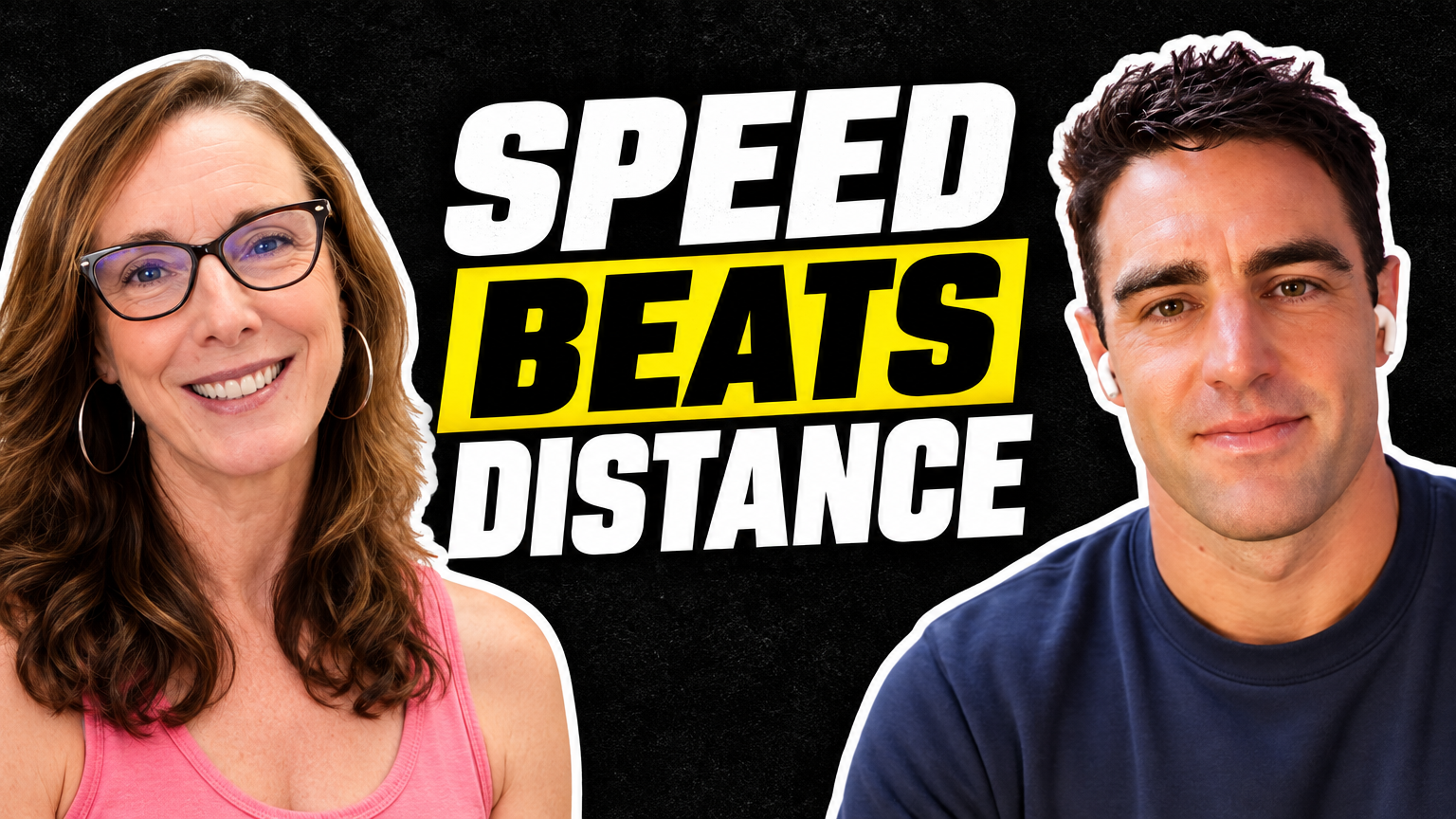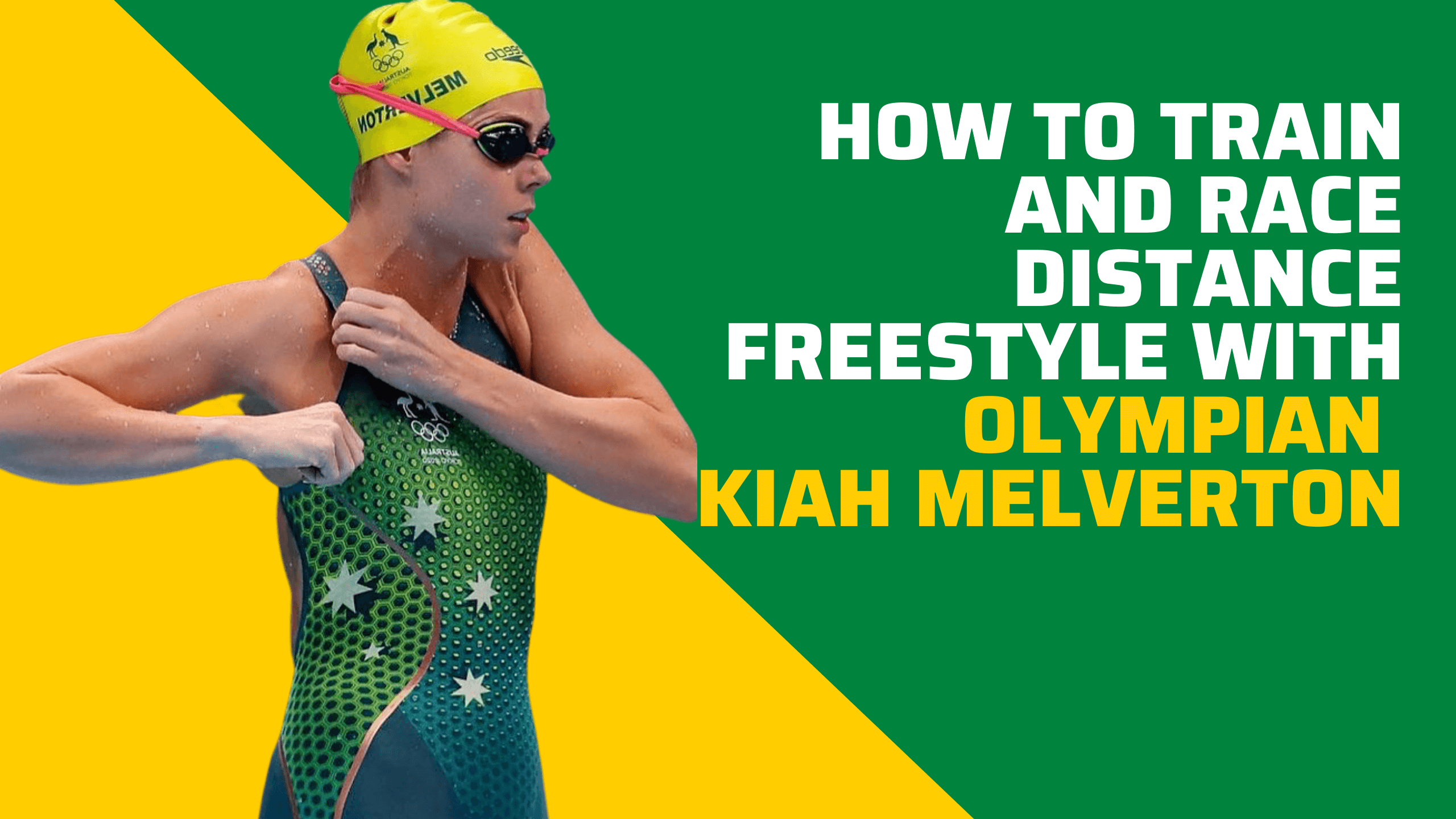









My guest today is Brett Hawke. Brett is a former Australian swimmer, two-time Olympian and Commonwealth Games medalist. He has competed and coached at the elite level and has a number of athletes who did very well at the recent Olympics. In this episode, Brett talks about his coaching, as well as some of the methods he likes to use and how likes to train sprinters.
01:42 Significant Race in 2020 Tokyo Olympics
03:58 Bruno Fratus Winning His First Medal
05:14 From Elite Swimmer To Coaching
07:38 Sometimes You Need To Stop And Let It Go
08:52 Talents In The Australian Team
13:09 Fundamentals Of Sprinting
15:51 Beating World Records
18:08 We Tend To Put Limits With Ourselves
19:29 Favorite Things About Coaching
21:36 Psychology Of Sports
27:48 Coaching Style
Inside with Brett Hawke
Form Goggles
Join the 5 Day Catch Challenge:
Join the Effortless Swimming membership:
Effortless Swimming Freestyle Clinic
Transcript
Read the full transcript
You know, you as an athlete, you go in, you work hard for a couple of hours, you go home, you kind of switch off. Coaches never get to switch off. They’re always thinking, they’re always feeling, they’re always preparing, you know, the next workout and they’ve got multiple athletes to think about. Welcome to the Effortless Swimming Podcast to show that help swimmers and triathletes love the water, become a better swimmer and live a better life. Here’s your host, Brenton Ford. Welcome to the Effortless Swimming Podcast. My guest today is none other than Brett Hawke. Brett is a former Australian swimmer, two-time Olympian and Commonwealth Games medalist. And Brett has competed at the elite level. He’s also coached at the elite level and he had a number of athletes who did very well at the recent Olympics with one of his swimmers, Bruno Fratis, getting a bronze medal in the 50 freestyle at 32 years of age and that’s his first individual medal.
So we talk a bit about those things as well as his coaching, some of the ways and the methods that he likes to use coaching and also how he likes to train sprinters because his primary background and coaching experience is in coaching sprinters. And so we talk about what you can do to become a faster swimmer. So let’s get into the episode with Brett Hawke. He also hosts his own podcast called Inside with Brett Hawke. He has a number of elite coaches and swimmers on the podcast and draws stories out of them in a way that I haven’t heard before on a swimming podcast. So that’s also fantastic if you haven’t come across it. Let’s get into the episode. Welcome to the Effortless Swimming Podcast. My guest today is Brett Hawke. Brett, thanks for being on the podcast. Yeah, Brent, thanks for having me, mate. You’ve been very busy the last 10 days or so, live streaming all of the footage from the Olympics. So watched every race.
Is there anything that stood out to you in terms of, I mean, you know a lot of the athletes there, you’ve probably spoken to a lot of them. What stood out to you was any significant races for you? Yeah, I mean, there was a lot of great racing. I thought it was an excellent Olympics. You never know what you’re going to get kind of coming off the year of training that a lot of these athletes had and the difficulties they faced. So in terms of how fast they’d swim, I think that was surprising. How deep it was going to be. I think that was surprising and just the great racing. You know, I think that’s the one thing you’re never going to take away from us as humans is our ability to rise and compete. And when you put on your country’s colors and the flag and your name on your cap, I mean, you’re going to have epic battle. So I think we saw a lot of that. And there was a couple of surprises. Obviously the first night, the men’s 400 free young kid, 18 year old from Tunisia.
I think we surprised the whole world with with his epic swim. Winning from Lane, nothing didn’t even know he existed, you know, and I saw him saw it, saw him out in Lane, kind of made a bit of a joke of like, oh, this kid’s going to win it from Lane, and then all of a sudden he just he just kept going. It was like, hang on, this thing turned from a joke to a reality real fast. That was pretty epic to watch that. You know, watching Lily King get beat in the hundred breast to young girl, Lydia Jacoby from from out in Alaska. I mean, I thought that was an epic race. And to see to see Lily get beat, I was very shocked with that. And and then look, there was there was great racing throughout a bit. You know, my my boy that I coach had a personal side of it there as well. Bruno Fratis in his third Olympics. Swimming the 50 freestyle for the third time in the final, you know, finally getting on the podium and the emotions that came out from that
was pretty epic to watch all that and be part of that, you know.
Yeah, how is it for you just watching that happen? Because, I mean, for him, it just looked like this meant the world to him. And obviously, you know, third time is 32 years of age to get his first medal. Then how is it for you watching that? It feels the same. Like I feel what he feels, you know, we’re connected spiritually in that moment, you know, like you try and give them everything you can, but you can’t swim the race for them, you know. And so you just have to sit back and watch it unfold. And just to see the outpouring of emotion for him and what it meant to him. We actually did a podcast today and we talked about it and I’m going to release it. And then it’s something to share because I think it’s it’s it’s a great story. But it’s kind of what we all go through, you know, you know, you have success and failure. But ultimately, you know, a lot of a lot of what we do, you know, your identity gets wrapped up in that as well.
And I think for him, he was never going to be fully satisfied with his life in general if he never got on the podium. I think there was there was always going to be something that you know, he’d he’d live live with some sort of regret for the rest of his life if that didn’t happen. So for him to fulfill that was pretty special.
And what about when for you being going from in a competitive summer and elite summer to then coaching? How did your perspective change or what was different for you going from being a competitor to then to then coaching? Because I think like what I found when I started coaching is you you obviously see a very different side of it. And I guess you you’ve got a broader view of things. But when you’re in there in your training, you’re very it’s just single focus and you don’t really get to take a step back and get a look at the bigger picture in a lot of on a lot of occasions. Yeah, I always felt like I was the one that was sacrificing the most as an athlete. Like, you know, like you’re so self-centered, you’re like, I’m the one doing this. It’s me, me, me, me, me. And then when you become a coach, you realize how much your coaches actually put into it and sacrifice. And, you know, you as an athlete, you go in, you you work hard
for a couple of hours, you go home, you kind of switch off. Coaches never get to switch off. They’re always thinking, they’re always feeling, they’re always preparing, you know, the next workout and and and they’ve got multiple athletes to think about. So, you know, when I started coaching, I just went back and started picking up the phone and calling all my old coaches and thanking them, you know, like, I am so sorry, I just didn’t get it, you know. So, yeah, I’ve got a lot more appreciation for the work that put coaches put into this, you know, and I’ve had moments where it’s been, you know, so fulfilling for me. And then I’ve had moments where it’s been completely draining and I’ve wanted to take a step back from it. And, you know, the Aussies right now are in lockdown, you know, coming back from Tokyo, they’ve got a two week quarantine up in Darwin. I think it’s kind of a blessing in disguise for some of the coaches
to be able to just decompress, you know, it’s very emotional to go through an Olympic cycle and then also to go through what they just went through the most successful team in Australian swimming history. So I’ve been able to chat with a couple of them in quarantine and knowing, hearing them, just feeling like it’s been a blessing to just kind of decompress. Yeah, yeah, I spoke to Kim Alburton, the Aussie distance swimmer yesterday. And she, like, she was sort of saying similar thing. It’s like, it’s really quite weird to go from the the biggest moment in your life for a lot of them to then just like pretty much isolation, essentially. But that’s, you know, can can can be quite good. How did how did you go as a swimmer going from those big meets to those real highs to then coming off the back of it? Like in terms of motivation, in terms of going all this all this fanfare to then, you know, pretty quiet.
How’d you balance that? Yeah, it’s tough, mate. You know, whether you have success or, you know, you feel like you fail in some respects, I think there’s a period of time where you just need to just stop and let it go, you know, whether whether it is the crazy success or or the failure. It’s like, you’ve just got to decompress. You got to let it go. And then and then for me, it was always like a three or four week period where I was like, all right, I don’t want to think about it. And then and then, you know, coming at the back end of that, then I’d start to think, all right, before my before my thoughts disappear, I need to write this down. You know, what did I learn? What how how could I improve? And then it was like, OK, I’m ready to get back into it now. But I certainly needed that month away just to just to let all that stuff go. And and sometimes with disappointment, it’s hard, you know, it’s like you want to get straight back into it and get going again.
But I think, you know, especially off an Olympic cycle, you’ve got to take time to decompress.
Yeah, absolutely. Being a part of the 2000 Olympic team, you know, it seems as though in terms of some of the success and then perhaps some of the culture of the Australian team, what we’ve got now was very similar to what happened 21 years ago. Have you sort of seen that that comparison? Or have you sort of thought about that? Yeah, look, I think it certainly helps when you have talent, you know, like I’ve been part of I’ve been part of teams as a coach, where I’ve like, you know, things are running so smoothly because you’ve got all the talent in the world, you know. Back in 2000, with the with the talent we had on that team from from the top down, I mean, it was stacked. I was I was the fastest swimmer in Australia and I wasn’t even, you know, a highly regarded swimmer on that team. You know, it was like we had all these superstars. So, you know, we went through a period where we lost some of that talent.
And I think now where, as you can see, the women’s team, especially is completely stacked. The men are coming into their own, they’re starting to get that talent back. I just think they went through a period of time where it, you know, you got to you got to wait for that talent to emerge again. And now it just seems like there’s a plethora of of of wealth of talent in in Australia right now. And they’re making the most of it, you know. Yeah, yeah, you’re right. It certainly helps. I mean, all it takes is a couple of amazing swimmers on the team. You know, you’ve got you’ve got Titmuss, you’ve got McKay and that alone. It’s like so many gold medals there, right? And that could be the difference between I’ve been the worst Olympics ever to the best one ever. Yeah, that’s what it takes sometimes. Exactly. And look at the US teams, you know, in the past, they’re always writing one particular athlete like even this year,
Caleb Dressel winning five gold, you know, previously, it’s been Michael Phelps that’s been winning multiple. So, you know, it’s not the whole team that ever at the US level. They’re not all winning gold medals. But, you know, they have a couple of athletes that have always done really well. And I think that’s what Australia has has done this time round, too, is like, look, it wasn’t like the whole team swam extraordinarily well, but certainly a good proportion of the team came away with some medals. And I think that was super cool to see. Yeah, watching Dressel swim like in the relays at the start, he was swimming well, but not outstanding in the relays in the beginning. I thought, OK, this would be interesting because from the 2019 World Champs, he dominated or he was dominating. So maybe it was like late 2019. And then I was thinking, OK, we’ll see what happens, you know, at the Olympics. But then he just he worked into the meet and he swam incredibly well.
Yeah, I’ve been fortunate enough to know Caleb, you know, since he was in high school, actually recruited him to try and come and swim for me. I went to his house and had dinner with his parents a couple of times and basically begged him to come swim for me. But he ended up picking Florida. And look, so I’ve seen him from from a young kid all the way to now. And I knew what he was capable of. I knew what he was potentially going to do. And, you know, I was preparing an athlete to beat him. But, you know, I know
Caleb’s talent and and and once he gets going, once he does get in a role, he’s very, very difficult to stop. And I think we saw that in Tokyo.
Yeah, yeah, it’s just incredible. And to get that world record to in the hundred fly. Oh, yeah, I think they saw three three world records, well, not only, but to have one of those was pretty special, especially on the the last of the second last day. Yeah, I was actually disappointed. He didn’t get the hundred hundred freestyle and the 50, you know.
That’s an old athlete of mine. You know, Caesar Ciello, I coached him in 2008. He broke the world records in 2009. And so I would I want those world records to go. And, you know, they came close. Him and Kyle Chalmers both came real close in the hundred. But I certainly felt like they were they’re capable of getting that hundred freestyle world record. I think I think it was a tense action packed hundred. But at some point soon when they get a chance, I think both those guys will knock that off.
Yeah, yeah, I mean, there’s something so fast and it’s so close to it. So it’s going to be good to see what’s what happens there. And with them, I mean, you’re primarily you’re a sprinter. You work with a lot of the best sprinters in the world. What what are some of those things that you you would say kind of like the fundamentals of of sprinting? Some of those things that you try and pass on to the athletes that you work with?
Look, the first thing is with sprinting is if you want to race fast, you’ve got to train fast, you know, like there used to be like when I when I trained back in Australia, we used to a lot of threshold sets. I never do threshold with my sprinters anymore. Like that’s a thing that used to be a big chunk of my training that is completely eliminated these days. So, you know, guys that used to swim 22 seconds in the 50 and 40, 49s, 48 highs, I mean, now everybody’s swimming 21 in the 50 and everybody’s swimming 47 in the 100. So it’s like training has shifted and it’s changed. So, you know, everybody’s training fast now. So that’s an essential element is like you’ve got to go fast in training. Recovery is a huge part of sprint sprinting. You know, like it’s it’s the same thing. If you want to build muscle, you’ve got to recover and then you’ve got to come back and work the muscle again and then you’ve got to recover again.
It’s the same with speed. You know, if you want to get faster, you’ve got to hit the speed and then you’ve got to allow time to rest and recover so that and come back. It’s like a building block. You’re slowly building blocks. And that’s what I do with my sprinters is, you know, at the start of the season, they’re not very strong and powerful and fast. And so we’re trying to build strength. We’re trying to build power, explosiveness. And these are things that you can improve over time. You know, you can get more explosive. You can get stronger, obviously. You can you can hold a lot more water in your training. You can improve your kick. You can improve your pool. I mean, these these are variables that you can manipulate. And that’s what we do is we look at what does it take to swim a really fast 50? What are the components of a fast 50? And where where in those components do I need certain attributes? You know, where do I need to be explosive?
Where do I need endurance? Because you need endurance at the end of a 50. When you’re going at 21 speed for the first 35, it’s very easy to to shorten up. It’s very easy to get out of your technique and break apart and fall apart. And so that’s where the endurance factor comes into speed. You know, speed, endurance is a huge part of our training.
And so we look at all these elements and we kind of build. It’s like building a race car. We build the perfect race car and hopefully at the end, it’s got the most horsepower and it’s got the you know, it’s got the best frame and, you know, it can hold itself together. So, you know, ultimately, we’re always trying to get faster. You know, we never get to a point where we think, all right, that’s the top end of our speed. We’re always like, all right, how can we get faster? And so that’s why for me, it’s like I’m looking at those world records and I’m thinking, you know, I want to go beyond that. I know where the I know where we’ve been, but I want to go here. And so I was like, how do we get there? So part of it is exploratory, you know, like we’re still exploring. But there’s also parts like you said, where you’ve got to have those parts in your training.
That’s what I’ve really enjoyed post. I think what was it 2011 when they got rid of the suit? So to see those world records eventually getting knocked down those old suit records, it’s like, all right, it’s and and previously in 2011, I was like, man, there’s no way that they’re going to be able to to beat these world records without the suit. It’s just it’s not going to happen. But then it’s it’s it’s finding different ways, finding ways to do it better, improve their technique. And, you know, a lot of those world records have have gone. There’s not too many standing, is there? No, you know, and there’s a there’s a psychological part to that, too. A lot of people when they first when we break in war records, people were saying, oh, they’ll never get to those world records. But my my take on that was, well, we’ve seen we’ve seen humans do it, whether they’re in a suit or not. We’ve still seen it with their own eyes.
So, you know, it’s possible. So even removing the suit, it still should be. I’ve seen somebody swim 46 and 100. I know what it looks like. I know it’s humanly possible as well. So once you have somebody break a barrier, it doesn’t matter what the barrier is. Once you see it happen, people tend to flock to the mean, you know, they get closer and closer and and that’s what we’re seeing. I mean, we just saw a 16 year old boy swim 47.3 in the 100 freestyle, you know, a few weeks ago. It’s like, if a 16 year old boy can do it, you know, that fast, then, you know, a man can swim 46 something soon. So it’s coming. And yeah, we’re we’re figuring it out.
Yeah, yeah, some exciting talent coming through. I mean, watching Popovich swim, watching the South Koreans, he just died that last 50 of the 200, but took it out with such speed. And it’s exciting to see what’s what’s what’s coming down the pipeline. And I mean, you got a brief chat to Popovich. I don’t know how much you spoke about this on it, but from what I sort of read, he’s like been training in a 30 he was training in a 33 meter pool. Average blocks like we started out in very humble, humble beginnings by the sounds of it. Yeah, I would I would think so. I haven’t gone too deep into it. I only had about eight minutes with him. So I certainly want to go longer and extend the next time we speak. But and and dig into all that. But, you know, there there are people out in the world that don’t put limitations on themselves. You know, we we tend to put limits on ourselves, you know, but people that have less than us sometimes figure figure figure out ways.
And I think kind of that’s been the story in COVID, too, is like when we’ve had these lockdowns, like I was even training, you know, a guy I’m sure you know the story, Cody Simpson. I was training him. Here’s this musician coming from music, hadn’t hadn’t really swum in 10 years. And we go into a lockdown situation. We have to figure out how to swim fast, you know, under really hard, harsh circumstances. So we did it. Multiple other people did it. I’m sure that you you had your challenges doing what you were doing. So I think you just figure it out and adapt, you know. Yeah, yeah, exactly. And thinking like what have been some of your favorite were some of your favorite things about coaching? What do you what do you really get a kick out of?
That’s a good question. You know, I really enjoy watching people maximise their potential, you know, whatever that potential is. I get a kick out of people breaking their own personal barriers, you know, I do like high end performance. I love that the top end swimming, you know, for me, I’m an Olympic coach and I always will be. I’ll never I’ll never coach club, you know, it’s just I I do clinics now and I go around and I teach young kids, but it’s not something that I’m passionate about. I’m passionate about high level swimming. And so I do like working with professional athletes. I like the professional mindset. That’s probably why I love love Bruno so much. And we have such a great relationship is because he does have such a professional mindset. So for me, you know, the top end of the sport is really exciting. I love competing for Olympic medals. That’s the thing that gets me out of bed in the morning.
You know, like to be the best in the world is something really special for me. And, you know, it’s not for everybody. I’m not saying everybody has to have that approach. But I certainly love competing for a wall, championships and Olympic medals for sure.
I think I remember hearing a story. You might have told on one of your podcast episodes, but it was at one of the meets like maybe Pampax or something where you might have said to Grant Hackett, like you feel like he wasn’t fired up going into the 1500. And so you like said that the US guys would they were talking about this is going to be their meat. Like, yeah. And I think like as an athlete, that’s a really good way to fire people up. But as a coach, like I find that you find that you can sort of press the right buttons. If you know this from a well enough, you know, the right buttons to press, especially those that are so competitive, it’s you can find ways to really cheer them up. So is that would you rather go back to that that story and what happened there? Yeah, listen, the psychology of the sport to me is huge. And, you know, even Bruno, when I was talking to Bruno today about him in the in the ready room at the Olympics, you know,
he could tell who was going to beat and who was going to be tough, you know, like, you, you know, you know, who you’ve got a got a mental edge over. And, you know, other ones that are like, OK, this guy’s switched switched on. But in terms of the Grant Hackett story, it was just like, you know, we have a very close relationship. You know, we were roommates on on occasion on the Australian team. So I had seen him and and the way that he had approached his racing. And he was just very fatigued at the end of a long couple of weeks of racing and were at the Pampax. He was racing the Americans. He hadn’t been beaten in something like six years at the time. And so I knew I was seeing something that was a little bit unusual in him, like fatigue in and a different type of mindset, where he was kind of being a little bit negative. And and so you just use your coaching skills, you know, at that point. And this is when I was a swimmer on the team.
So I was already starting to coach back then. So and I think that’s what I love about coaching is the psychology, the mental side of it. You know, like I don’t think we’re really figured out, you know, the space between our ears right here. Like there’s so much power in here. And so I just used I just used manipulation on Grant to kind of get the best out of him. Told him the Americans I was listening to them on the bus and they were talking about him and saying how they were going to beat him. And and that just got under his skin. Like it was easy. It’s easy to figure out what gets under Grant Hackett skin. You know, who just talk about Americans and being beat. And that’s the end of it. It’s like, so yeah, I think that’s what you do with your athletes is you try and find what what really motivates them, what really is going to get them fired up because you want athletes to feel like they’re invincible, like you want them to feel like they’re unbeatable.
And and if you can if you can pull that out of them, then you’re going to get some extraordinary performances and granted up, you know, when in that race by half a half a pool length and swimming the second fastest time it ever swam, you know, whereas, you know, minutes earlier, he’s completely exhausted on the massage table and out of it. So yeah, it’s it’s pretty extraordinary
what we can get out of ourselves when we really start to use the power of our brain.
Yeah, that’s it. Is there has there been any stories from chatting to some of the swimmers or coaches that you’ve had on your podcast that that you didn’t know? And you’re like, that’s such an amazing, such an interesting story that that you’ve never heard before. Oh, mate, you put me on the spot now. There’s so many of them like it. And I think that’s the thing that I love about talking to all the different athletes is like everybody’s got a story, you know? And I’m kind of excited to to talk to some of the people that just went through Tokyo, you know, and like get some of their stories. And because I’m just a fan like you, I was the first time I hadn’t been to the Olympics in five Olympics. So, you know, I’ve been to five in a row. So this was going to be this was going to be number six for me. And I opted not to go. I wanted to be kind of a spectator and look at it from the other side on this one. So yeah, I just sat back as a fan and watching.
I’d love to speak to Ariane Titmus and and and try and get in her head in terms of, you know, racing a girl or a woman like Katie Ledecky, who’s virtually unbeatable, you know, and racing her at the Olympic Games and then and then beating her at that stage. Like to me, like that’s an incredible story. I want to get to the bottom of that one, you know? So so I’ve been fortunate to to talk to a number of people on my podcast and everybody’s got their own little unique story about how they got to where they were kind of thing. So I wish I could remember something very specific, you know, but like I talked to Emma McKee and 10 months ago. Now, at that stage, 10 months ago, Emma McKee and had never won an individual Olympic gold medal. She’d won relay medals before. She’d won individual medals at the Olympics, but she’d never won an Olympic gold. And I think I think this time she came away with, you know, something like, well, three, maybe three individual gold, I believe.
And she certainly won a couple of relays as well. So, you know, to see someone like that, who 10 months ago had never won an individual gold. Now she’s won it. It’s nice to go back and compare. It’ll be it’ll be interesting to hear what she said back then to now. So yeah, I love the stories.
I think I think that’s a great story, isn’t it? Like to someone who’s been in the sport for a long time and then to become the best in the world in that later stage in her career where she was always she was up there, but she was never a standout or anything like that. But she just she just fired from trials onwards. She just looked like she had so much speed and was there anything that’s like in terms of her training, from what I heard, she had reduced it to like five or six swim sessions a week and had up to a gym. Have you heard anything along those lines of what she’s she’d been doing? And I guess you’re going to talk to Bolly after this. So he’ll probably talk about that. I’m going to talk to Bolly in about an hour from now. So I’m going to get to the bottom of it for sure. But, you know, she she did say that she had worked on her strength, you know, she’s getting stronger. And I think that’s that’s a hallmark of a great champion
is figuring out where are my weaknesses? You know, like where am I? You know, I think a lot of people go through their career and they just they just do the same thing over and over again. And they expect different results where I think champions are like, you know, kind of do the same thing that I did at the end of a, you know, you have this decompressing part and then you have this assessment of like, all right, what have I got it? Where have I got to get better? You know, in order to either compete for medals or compete to be the best, you know? And that’s one thing that I always tried to do in my career is just figure out where’s my weaknesses. And I think probably Emma is a great example of saying, well, I got to get stronger if I want to be a champion. And she’s done that. Yeah. And just going back to it when you first started coach, like you’ve sort of coached under all like Richard Quick, Dave Marsh, like you’ve sort of been there
with some of the best coaches in the world. What kind of, when you first started coaching, what sort of coach did you feel like you were going to be? Like what kind of style? And then did that change at all with those who you coached under or those that you worked with? Yeah, it’s a good question. I never really intended to be a coach. I kind of fell into it under David Marsh. He kind of pulled me into it. And then I just realized pretty early on that I had a talent for it, honestly. I think one of the things that I wanted to do is I wanted to, I wanted my athletes to know that they had a partner, that I was with them in their performance. So it wasn’t just like me preparing them and then me standing on the sideline. I didn’t want that separation. I wanted it to be like, hey, we’re partners here. I watch a lot of UFC now, you know? And I see the fighters coming into the ring and their coaches are right there with them, you know?
And they stand right up against the cage and they’re shouting out details to the fighters as they’re fighting. That’s the kind of coach I want to be. You know, like I want to be that person that walks to the cage with the swimmer and for them to know that, hey, when you get punched, I get punched. When you throw a punch, I throw a punch. You know, it’s like I want that personal connection and that’s the type of coach that I’ve tried to be. And I feel like I’m pretty successful that. It certainly has helped that I came from a very high end type background where I was an Olympic swimmer myself. I think there was trust was easy to build because they’re like, oh yeah, you get it. You understand what I’m going through. But I’m very big on the psychology too. So for me, I mean, a workout is a workout. It’s how you apply the workout. It’s how you perform in the workout. And those things require both a physical and a mental approach to training
that then translates into racing. So like, you know, if I’m energized before practice and during practice, then my athletes are gonna be energized. When they walk in and they sense my energy, then they can feed off that energy. When they see me running up and down the pool deck next to them as they’re swimming, they’re gonna feed off that. It’s very much kind of like a Dean Boxle approach. I can see a lot of similarities with him and myself in the way that he invests in his athletes, you know, is you pour everything into it and you’re there with them and they’ve got a partner.
I remember hearing Bill Sweetnum say something on the lines of as a swim coach, you go in full to the broom with energy and you leave completely wiped and then your swimmers come in low energy and they leave completely pumped up. It’s like, yeah, and you sort, you really feel that after like a really good session as a coach, you’re completely exhausted, but the swimmers are on a high and they feel like they’ve really got a lot from it. I took a lot from that. Whereas I think, particularly at the start, when I started coaching, it’s like I sometimes feel like I would just put too much into it where I’d like just be too wiped at the end of a session in a way and it’s like, all right, gotta get back up for another one. Yeah, for sure. I mean, there are multiple times where I come home and I just be exhausted, you know, and my wife at the time would be like, what’s wrong with you? I’m like, really? Like, do you understand what I just did out there?
I was like, I just poured every ounce of energy I had into that, you know? And that can be tough, you know, in terms of coaching. That’s what gave me an appreciation for the coaches that I had. I never fully realized that they’d go home, just wiped out, you know? So, yeah, it’s a tough profession.
I remember, like my dad was my coach for the majority of when I was swimming and as a teenager, you’ve got everything provided for you. You don’t need to drive. You don’t need to feed yourself. It’s like, everything’s done for you. And so I remember, like my dad, he was working full time. He was coaching seven or eight sessions a week. And, you know, would sometimes get a little bit frustrated, you know, as a coach, you know? And at the time I was like, just chill out, you know? I think it’s easy, you know? I don’t know, I can’t see why you might be a little bit frustrated with things. But then as a coach or as a parent, you’ve got all these responsibilities that’s like, it takes a lot to just keep you cool sometimes. Yeah, for sure. You know, sometimes I didn’t handle that as well as I could have. And you’re like, all right, you got to learn from that, you know, but yeah, it’s tough when you’re doing 10 workouts a week
and then just back to back. And the hard thing for me in the US, in the university system is like, we’d go through the whole college system and then we’d go through the international season. And the international season would then back up into the college season. Then you just go again. So it was like Groundhog Day. You know, every year it was just the same thing. We never got any breaks. Like I didn’t take a holiday in 10 years. And so by the end of it, I just got blown out on that. Yeah. Yeah. It’s great to see so much of Dean Boxall and Ariane, like that relationship together, some of the sort of Australia stuff that they did with the Mic’d Up series and seeing that relationship and how he coaches. I think it’s so good for the sport on many levels. You’ve got parents looking in with their kids like, wouldn’t that be an awesome thing for my kid to be a part of? You’ve got coaches looking in, like a majority of coaches looking in,
going, that’s like, that’s a passionate coach. I can take something from it. I think that insight into it and what we’ve seen recently is going to be really beneficial over the next couple of years. Yeah, for sure. You know, I think it’s been good. You know, we all saw the way he acted after the win and it kind of went viral, you know, but like when you back it up with all the other stuff that he’s done with the Mic’d Up stuff, like you said, when you take the time to watch and listen, I mean, that’s a guy, that’s a coach and that’s a relationship that they’re invested in each other’s performance, you know, like, you know, Dean is just in that performance and so a lot of emotions flood out when you’re that emotionally invested into it, you know. So yeah, a lot of respect for what they did. Yeah, absolutely. Well, I know you’ve got a busy schedule so, Brett, I want to thank you for being on the podcast. What’s maybe one of the last things is,
what are you most looking forward to in the next six to 12 months? Because you’ve got a lot on your plate, but what sort of, what are you looking forward to? You know what, like, I didn’t really know where I was going before COVID hit, you know, and I think when COVID hit, it made me reevaluate a lot of things and it made me realize that, you know, I can put my energies in certain areas and that’s what I’ve done, like I put my energy into coaching a couple of athletes privately, you know, I put my energy into my podcast and it got a lot of success from that. You know, coaching Cody Simpson was very fulfilling, coaching Bruno Fratis has been very fulfilling into the Olympics, doing my podcasts and sharing stories from swimmers and coaches around the world. And so I’m just gonna keep exploring that, man. You know, I’m passionate about swimming. I love the sport, I love the people in it, I love the stories. And like I said, I’m very into the high end
type performance of it, so I’m just gonna keep sharing those stories and so I don’t know where it’s gonna go. We just started a live show, we’re gonna do a weekly live show on swimming and I think, you know, what you’re doing with your podcast and your platform, it’s exciting to see people, you know, doing the things that we’re doing, so I’m just gonna keep exploring this platform and see where it takes us. Yeah, well I think you’re doing an amazing thing for the swimming community as a whole. Speaking of my dad last week and he said, we were talking about the Australian swim team and what Lee Nugent went through in 2012 and then to see the success of the team now and he was saying it’d be amazing to just sit down with Lee and just listen to his stories and see what he’s seen and gone through. And I feel it’s very much like what you’re doing with your podcast is you’re drawing these stories out of people that we wouldn’t otherwise hear.
And I think that’s part, one of the reasons why I think your podcast has blown up over the last 12, 18 months with the guests you’ve had. I think the way that you interview and you draw those questions out of people, it’s amazing to hear them. So as a swimmer and a swim fan, it’s like, I love what you’re doing. So thanks for doing the podcast. It’s inside with Brett Hawke. For those that are listening, if you haven’t heard it yet, but we’ll be sure to link to it in the show notes and yeah, keep it up, it’s unreal. All right, Brenton, you’re a good man, mate. Appreciate it, thank you. Thanks for listening to the Effortless Swimming podcast. If you’d like us to help you become a faster, more efficient swimmer, go to www.effortlesswimming.com.