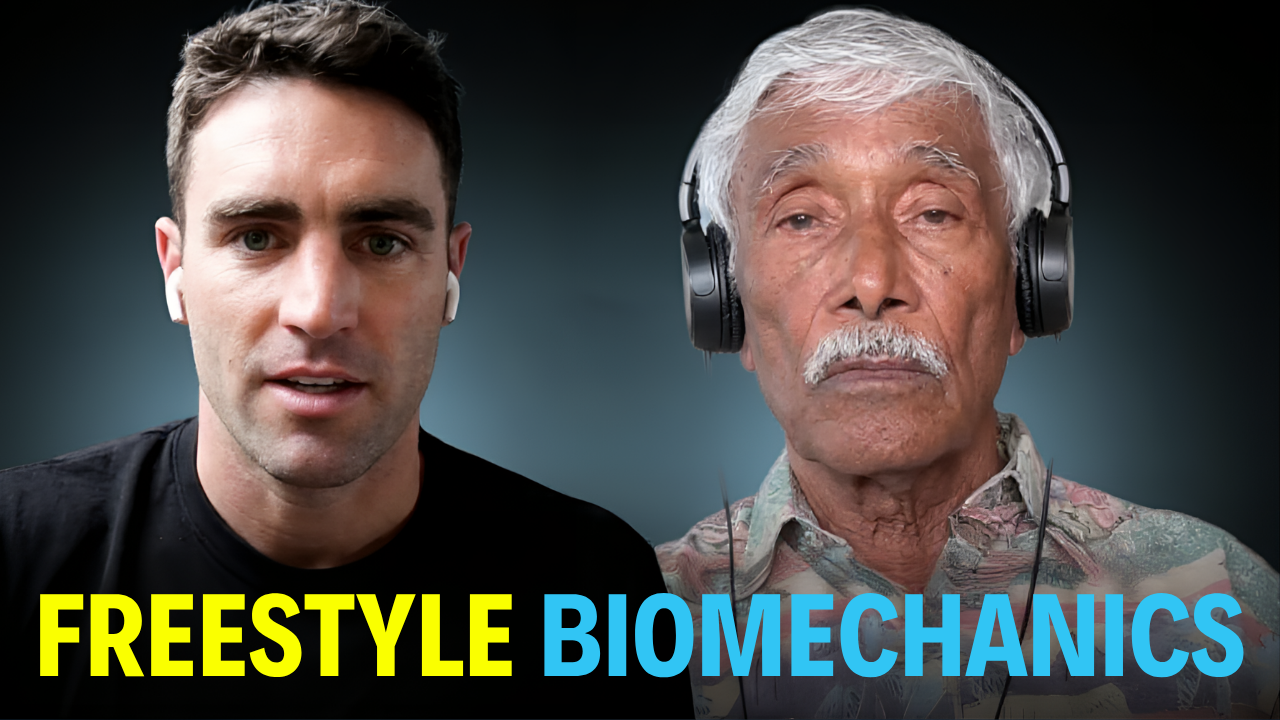








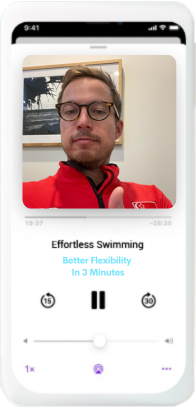
Join us today with Tom Barton, fresh from the US with Australia’s A team! Tom is the founder of the Q Swim app and works as a physiotherapist at The Health Collab. He’s your go-to expert for keeping swimmers and triathletes moving smoothly and injury-free. Today, we’re focusing on how triathletes can step up their range of motion and overall movement. Don’t miss out!
Q Swim:
www.qswim.co
Related Content:
How Australian Olympic Swimmers Improve Mobility with Tom Barton And Jeff Grace
In this episode
- 01:17 Trip to the US for a Swimming Competition
- 03:44 Standout Performances in Swimming at the US Open
- 05:14 The Importance of Mobility Testing for Swimmers and Triathletes
- 8:10 The High Elbow Test and Combined Elevation Test
- 13:03 Improving Combined Elevation and High Elbow Test: Strengthening Antagonist Muscles
- 17:06 Strengthening the Back and Nervous System for Optimal Performance
- 20:23 Incorporating Swimming Exercises into Pre-Swimming Routines
- 23:08 Tips for Overhead Pressing
- 27:11 Improving Hip Flexibility and Activation for Triathletes
- 32:18 Q Swim App and Working with Swimmers in Queensland
- 35:35 Why How You Swim and How You Move in the Water Are Crucial
Links from this episode
- Instagram”>Follow Tom on Change your technique and swim smoother, easier freestyle in the Effortless Swimming membership
- Want to work with me personally to improve your technique? Join my swim technique coaching here
This podcast is brought to you by NanoClear — our own range of anti-fog swim goggles, designed by Effortless Swimming with the anti-fog treatment bonded into the lens itself (not sprayed on, so it doesn’t wear off after a few swims). Check out the NanoClear range here and use code PODCAST15 for 15% off.
Transcript
Read the full transcript
Welcome to the Effortless Swimming Podcast to show that help swimmers and triathletes love the water, become a better swimmer and live a better life. Here’s your host, Brenton Ford.
Welcome to the Effortless Swimming Podcast. My guest today is Tom Barton. And Tom, you’ve just come back from the US with the Australia A team. They were over there racing at the US Open. And you’ve also, you’ve been on the podcast before because you, you do a number of things you’ve found over the Q Swim app, which we’ll talk a little bit about. You’re a physiotherapist at the Health Colab and you do some work with the Queensland Academy of Sport as well. And you’ve got a lot of experience working with high level swimmers and also just general population as well as a physiotherapist. But you’ve really honed in on what swimmers, what swimmers and triathletes need to do in order to move well and to avoid injury. So I really want to dig into some of those topics today, because our audience are primarily triathletes and open water swimmers who are adults. Some of them don’t, most of them I’d say don’t have great range of motion and could
really benefit from moving better. So that’s what I’d like to dig into today. So first of all, welcome to the podcast. Thanks, Brenton. Yeah, happy to be here and look forward to chatting. Tell me a little bit about your trip to the US. What was your role there? How did the team go? And was there anything that you learned while you’re over there, whether it’s from other coaches, seeing what other teams are doing, that kind of thing? Yeah, so we had two weeks over in sunny California, which was nice to, even though we’re escaping Brisbane winter, it’s a nice place to be this time of year. We took about 20 kids over the guys that just missed out basically on going to Japan for Worlds. So the guys that maybe were coming second or third or fourth, or just missing qual times. So they got an opportunity to travel to California and race against the Americans. Obviously, the top Americans were over in Japan. So there’s still some
really good competition. A lot of the colleges were represented there. So the big, big guys like Texas and Cal and Indiana are there. So there’s a lot of good tumors. And yeah, we did really well. I went on the same trip last year. And I think only about 20% of the guys managed to swim PBs from trials to the US. And then this year, I think it was 53% swim PBs. And a bunch of them, you know, swimming times that would have made the Australian team to go to Japan and also times that would have, you know, finaled at Japan, which was pretty exciting for them. And, you know, sort of validates the idea of going over because those are the guys that hopefully going to put pressure on the guys that went to Japan for Paris next year. Is there something that stood out to you and the coaches there as to why that that was the case? Such a big increase in PBs compared to last time? Yeah, last year was tough because COVID was still a
thing. So we had half of our team get knocked over by COVID sort of the week before, which was a bit rough. I think we made some adjustments through to Australia. So they took everyone over a day earlier, which was a really good thing. And they also we sort of had a bit more of a relaxed two or three days post-travel, which I think was a learning from last time. Last time we sort of got there, not that we swam hard in those first few days, but probably didn’t give the athletes enough time to acclimatize. So this time we got there, took it really easy, went for a swim, went down to the beach, had a little paddle in the ocean, which is always a nice way to recover from a 15 hour flight. Yeah, absolutely. And any any sort of stand out performances there or swims that you saw? Yeah, the one that comes to mind, well, the swims that come to mind from the same athlete, Max Giuliani, who’s just moved up from Tassie
to Miami. I was swimming with Richard’s guests in Miami. He swam lights out. I think he PBed his 100 and his 200 and probably PBed in the heats and the finals both with both of those as well. So I think his times would have qualified for finals or probably would have won our 200 freestyle trials. So yeah, right. I’ve met him before. He’s a lovely guy and he’s really focused on making that Paris team. Yeah, yeah, that’s exciting. It’s been such an exciting month of month of swimming with the world’s happening, the Australian team doing so well. And then just so many good consumers from different countries that are all building towards Paris. It’s probably the most excited since Sydney 2000 Olympics that I’ve been for Olympics coming up. There’s a lot of people to look out for. Yeah, absolutely. It was, you know, we were saying we were getting up at four o’clock in the morning to watch the finals before we would train or before we’d go off to
compete. So the coaches and the support staff and myself were living on coffees because we wanted to watch all the great racing. But it was really impressive to watch the guys in Japan and the guys that went to the States are going to be putting pressure on those guys. But it’s a good situation for swimming Australia or Australian swimming to be in at the moment. Yeah, yeah, absolutely. Now I’d love to dig into the first thing is the mobility testing that you do with the elite guys. You were saying before we jumped on this call that you think that the average person, the average swimmer triathlete can get a lot more out of the mobility testing than the elite swimmers because they might have one percent improvements, one percent changes to make. Whereas for general public, it’s like it could be 20 percent, could be 30 percent in terms of if you can improve your range of motion, you can move better, you can get into positions easier, and then you can
swim with better techniques. So I’d love to hear your side of what’s what are some of those tests, what are you looking at, and then perhaps what would be two or three of those key ones that you think for the general person, they could really see some good improvements with their swimming if they improved on them. Yeah, I think the key thing for the triathlete population is they have to run, swim and cycle, whereas our swimmers just have to swim, so they just, our swimmers get the chance to practice being in those long positions all the time. And I think if you were going to try to design a couple of adjunct sports that would make swimming hard, cycling and running would be those two, like you’re adding a lot of flexion, a lot of dorsiflexion through the ankles, thoracic flexion, you know, a lot of positional stuff that is the exact opposite of what you want to do with swimming. So triathletes are in a position where they actually have to
unwind that stuff in order to get into positions, in order to swim fast, and in order to sort of mitigate any of those resistance forces that you’re going to experience in the water. And it’s not just, it’s not just recreational triathletes. I had recently a elite triathlete who was struggling with her swimming. Her coach David Lush is out at Morton Bay, sent me some video and referred her across to me. And yeah, we found some really simple things that enable her now to get into better positions. So her recovery is easier. She can get into a high catch position a whole lot easier. And within the clinic, we sort of have an emphasis on trying to show people how to do that themselves. So in that hour session that I have with people initially, I try to do as little hands-on as possible to see if they can create the change themselves. So whether it’s through exercise or self-mobilization and then we retest. And I think it’s
really empowering if you can come and see me, we do a test. It looks terrible. And then within 20 minutes if you’re doing your own stuff, you can make that look amazing, right? And then I can add the hands-on stuff and make it look a little bit easier and make it get to a slightly better position. But if you can do those big changes yourself, then every time you get to the pool before you jump in the water, you can make those changes and swim faster and swim more technically proficient. And what was that test that you were referring to there? So the big two in terms of that overhead position, we look at just a combined elevation test. So lying on your belly, nose touching the floor, thumbs locked together, elbows straight and you’re lifting your arms up like a stream line. So looking at how high the hands get above the horizontal. For a pool swimmer that’s more important because you’re streamlining a whole lot more. For a
open water swimmer that’s not as important. It’s still important because it does contribute to your efficiency through the water. But I think probably the more important one is in our swim screen it used to be called abduction in internal rotation. So we’d now just called a high elbow test. So we’d pop our thumbs at the front of our shoulder joint and we’d look to elevate our elbows or float our elbows up as high as they go. And with that we’d measure the angle of the the humerus, the arm bone relative to the vertical. And yeah that’s an indicator of how easily they can get into a nice high elbow big armpit catch position to swim fast. And so those that are listening to their the podcast and not watching on YouTube. So you got your thumb touching your shoulder and kind of making a chicken wing I guess with it and then lifting up as high as you can with the with the elbow with the arm. The few common mistakes that we see with that
testing is people sort of poke their chin out as they do that and they also try to keep their elbows too much in this sagittal plane. So too much in a just a perfectly lateral plane. Whereas more functionally for swimming the shoulders on the shoulder blades particularly need to move along the ribcage. So they need to slide a little bit forward as the elbows come up which is what you would see in the water. And it’s just a bit of a hangover both from the physio profession but just generally like in moving in these particular like sagittal frontal planes that don’t actually exist. When we swim we move in spiral sort of movements rather than moving in boxy sort of parallel perpendicular lines. So it’s okay to let that shoulder come off that that plane basically. It’s the elbow. Yeah it’s hugely important you know when I first graduated physio a hundred years ago it was like you’ve got a shoulders have to be kept it back and down all the time
thankfully like that research has been debunked it’s based off pretty poor evidence which some of our some of our bigger moves around like keeping your back straight when you’re deadlift and that sort of stuff is also a bit questionable when it comes to digging into that research. But functionally you can’t be strong and powerful in an overhead position if you don’t allow your shoulder blade to contribute to that movement. So rather than your shoulder blade staying back and down all the time it’s actually the opposite you really want to allow your shoulder blade to slide and we talk about slide and glide or float your shoulder blade as high as you can to allow your hand to be in that easy position as quickly as possible. Yeah that’s good because I I quite often get the question from some of these you know when they’re they’re reaching forwards they ask you do I need to keep my shoulder down and back as I’m reaching it’s like yeah no
you’re going to be 10 15 centimetres shorter with it and you’re just not going to be able to probably can’t rotate very well with it either and you’re not going to get any sort of you know power like you’re not going to have strength through there because you just need to let that shoulder come forward so I like the description of letting it float you say float or float up or float forwards there. Yeah so I think I stole that one what is so Dave like I’ve been really lucky over the my sort of 10 15 years in high performance sport to to work with some amazing coaches here in Australia but also spent some time on deck overseas so I know like David Marsh great coach over in the US he talks about creating a big armpit as one of the big cues for his swimmers and Stefan Widmar who sort of worked within Singapore and also in Queensland he talks about like sliding the scapula that sort of sensation and to me it just makes
perfect sense it positions the the scapula and the the humerus in a really a nice strong position rather than sort of allowing those two pieces to relatively slide away from one another so we want to allow that and it’s a natural movement shoulders backing down as a physio construct from you know the 80s or the 90s that needs to be updated.
Yeah that’s a really good ways to describe it and even just when I think of my own swimming if I’m thinking of like yeah I think like open underarm or open armpit and even similarly over the top in your recovery if you’re closed with it and you’re really sort of jammed up yeah you don’t get much momentum over the top of the water and it’s harder to carry carry the arm over the top so that’s a great way to describe it so you mentioned those two tests you had the combined elevation test and the high elbow test yeah what are some ways that someone can go about improving on those this episode of the podcast is proudly brought to you by our sponsor form smart swim goggles they’re more than a pair of goggles meet the world’s most powerful swim platform see yourself improve with form smart swim goggles including a free one-year membership when you purchase your goggles for only 249 us dollars they’ve currently changed up their offer
where you can now get the goggles and you have one year membership included for free and if you’d like to continue with the membership going forwards it’s only 15 us dollars a month where you get access to their workouts training plans and custom workout builder but you’ll always have access to the real-time data in the goggles so you never lose access to that my favorite thing about the form goggles is having the instant feedback of what times you’re doing what stroke rate you’re doing and also the ability to see what your heart rate is because never before have we been able to have these immediate feedback heads up display where it’s actually telling you what your intervals are so when I wear the goggles in training I like that I know my split for the first 50 and the 100 and the 150 so every single lap I’m getting that feedback on what my pace is and I find it’s such an important tool for being able to not only have different gears where you
can switch between the different speeds that you want to swim but it helps you develop those gears and it helps you intuitively know how fast you need to go before you’re going to blow up or before you’re going to go a little bit too hard so it helps you just get really good at judging your pace for when you do go to a race and even if you’re not wearing the goggles in a race it’s that intuition and that ability to develop your pacing that these goggles can really help with to get your pair of form goggles and save 15% off use our link formswim.com forward slash effortless or use the coupon effortless at checkout and that will get you 15% off your pair of goggles using our special link formswim.com forward slash effortless or the code effortless at checkout there’s a couple of different ways so previously we’d say hey maybe you need to in order to improve those you look at the muscles around there so things like pecs and lats that might
feel like they’re tight and restricting that movement so if i look back at my career if i look back 10 years ago i would have said pec stretch in the doorway and a lat stretch like a kneeling lat stretch which i think are fine like they will work but the things that the thing that’s going to give you more bang for buck is actually doing some active strength work working in the other direction so if the things that are restricting your combined elevation or your high elbow test are tight pecs and tight lats we want to actually and it sounds very counter but you want to strengthen your upper traps and your serratus in order to allow that slide movement and every time you do do that slide movement the pecs and lats naturally stretch with that so you’re getting more bang for buck that you’re getting strength of the the antagonist muscle the opposite muscle which enables the other muscle to stretch out and unless you always think now like
unless you go ahead and strengthen that muscle group you’ll be stuck on the hamster wheel of stretching and triggering and stretching and triggering for the rest of your life whereas if you strengthen to actively be able to control your ability to get into that position you start to create a bit more balance in your in your programming and if if you look at swimming swimming is a pulling dominated sport you pull against resistance against the water and you recovery against fresh air so if you if you don’t do stuff to balance that out you get very strong in pulling and very relatively weak in the pressing or the the positioning movement to that overhead catch
yeah I had probably 12 months ago was having a lot of issues with my lower back and it just turned out was so a lot of it was from just sitting and that sort of thing but I was very weak through my lower back and over the last 12 months and I’ve done a lot of strengthening work and I looked at my I go to a sort of local gym here that has some really good exercises to help strengthen your your back and these other sort of supporting muscles and I’ve done I think 130 gym sessions in the last 12 months or so and my back and I look at the weight that I can now move in this exercise and it’s come up probably double to what it was 12 months ago and I’ve had very very few issues with my lower back now and it’s before that I was I was stretching I was trying to stretch at night and that can certainly help but I think the strengthening side of it is just so much more effective and is that something that you’ve changed over the last couple of
years or when is that way of approaching things sort of come in yeah it’s I think the framework I look at it it’s like you’re creating a more robust body so stretching is great but I would I now look at stretching particularly like that passive stretching and again this is coming from someone who’s a a yoga teacher so I love that movement space but stretching is is really nice to feel good it’s a nice sensation it down regulates your nervous system so it’s good for recovery but if you want to change things you want to always come back to how the nervous system is interpreting what’s going on for the body and creating more flexibility doesn’t create safety for our nervous system I think one of the things our nervous system really wants as a primary goal is to know that you’re safe in a position you’re safe in a position you can relax in a position if you can move safely move in and out of the position then your body is more likely
to stay soft and relaxed and easy with movement whereas conversely if you’re pushing into positions that you know right at the outside of your capability or right at the limit of your capability that starts to become a threat to your nervous system and you know anytime you’re in a threatening space to your nervous system you know you get tight you get tense you start to hold your breath all these things that we definitely don’t want to do with swimming so I try to reframe things now and this for me I was exposed to a lot of like neurology sports neurology stuff five or six years ago now which was a really big reframing for me and it’s basically like if I can strengthen and progressively strengthen from a neutral position into those bigger and more open positions and then strengthen in those positions under fatigue and then ideally add rhythm and tempo and timing to that that’s really my framework for making sure both just general plot
but swimmers and athletes feel strong and safe in the environment that they’re trying to execute a race in
yeah that’s it makes so much sense doesn’t it where you get yourself into a position and you don’t have the strength to probably hold it and the nervous system kind of or the body can kind of freak out and just tighten up and and not want you to go through that that movement again so what do you normally prescribe for people like when should they be doing these types of exercises how often that kind of thing how can people best work it into their their normal routine yeah there’s I guess we can break that down into two different areas so prior to swimming so your pre swim routine and then general strengthening away from the water so you want to do something before you swim to improve your position so you swim faster right and you can technically execute better so but at the same time you don’t want to fatigue yourself so the things that we’d like to see for our athletic population or whoever’s going to the pool is if you know that
things like your combined elevation or your high elbow position or hips or ankles whatever is tight what we try to encourage is you want to get to the pool even if you’ve got two minutes you just quickly test to see how that position is feeling because if it’s feeling terrible out of the water it’s not going to magically change in the water and you’re going to create conversations in the water to try to make that feel better so if we can test it out of the water particularly if you’re thinking say that high elbow test then I would jump straight into if you do have a little weight I try to get people to have a two or three kilo weight with them these days or on pull deck ideally you’ve got some resistance but just doing some single arm overhead press work where you’re really encouraging that really big armpit so almost like your deltoid it’s going to brush next to your ear really good example if you want to watch someone swim perfectly
like underwaters of Cameron McAvoy right he and everyone’s talking about what he’s doing now but here’s a technician like back in 2016 he did it perfectly he’s back doing it perfectly now and part of that is he’s getting the position spot on every time and he’s built endurance and capacity to create power in those positions so we want to think about if I can get into that position and I can reach I’m actively strengthening that position and at the same time I’m creating a little bit of length through pecs and lats I would probably only do 10 or 15 reps of that pre swim obviously time is precious but also you don’t want to get fatigued and then when you get to the gym don’t just go in and do chin-ups or bench press you need to do some overhead pressing people are scared of overhead pressing but again if you’re scared of overhead pressing and you want to be an overhead athlete there’s an incongruence there that needs to be addressed and from a coaching
perspective from if you’re doing video analysis of someone stroking you and you see that they can’t get into those positions one of the things that we want to do is actually take them out of the water and demonstrate that they can get into the position and then create a bit of strength and robustness in that range yeah and the overhead pressing so obviously there’s a number of different ways to do it would you often start with say light dumbbells to begin with or the overhead press machine do you have a preference? yeah big preference for dumbbells to allow a little bit more freedom of movement but also if you are particularly stiff you don’t want to go into a double-handed like a barbell movement because that this allows the option for your thoracic spine to get a bit of lateral flexion a bit of rotation a bit of extension so definitely I generally would go yeah two or three kilos pressing as high as you can really reaching for the ceiling
or the sky when you’re pressing and the thought process with that is you know you want to make sure that you’re creating as much length or more than enough length for out of the water so when you go into the water it feels better and it should feel noticeably better to jump in and swim straight away that’s the idea so we want that immediacy of oh yeah actually I feel better getting into those positions and the beauty of that position and reaching overhead and creating more length through your chest and through your lats is that that also helps your thoracic rotation so your recovery becomes easier it takes pressure off your neck and you know they’re the they’re the problems we see day in day out in the clinic of like when I work primarily with swimmers is neck and shoulder problems and are you are thinking alternating arms or both arms at the same time alternating arms yeah alternating arms and when you’re are they starting with the I don’t know the
the technical term here but your hands this way your hands away from you where do you want to finish is it having that the hands sort of turned in like what’s what’s your preference I like to take away as many rules around that as possible so a lot of people in the clinic when they pick up the dumbbells and I’m asking them to do it overhead press they’ll they’ll sort of naturally come out into this abducted position like a little bit of a bodybuilder sort of position and they’ll press and they’ll naturally if I didn’t give give them any instruction they’ll press out in that that plane and they won’t press very high right that is just the leftover from bodybuilding like if you that’s that’s not how we’re designed to move out of we’re designed to move you know you think about our life we exist in front of us a little bit out to the side but we’re not existing out in this 90 degree to the side plane and that position isn’t very functional for swimming either
right so we want to come into a position that feels comfortable so generally I’d just say dumbbells resting on the shoulders hands in like a relatively neutral grip or whatever feels comfy and then as you press I like to again bring my awareness back to my shoulder weight and suggest that the hand is going along for the ride the shoulder is the driver and the hand is going along for the ride to get into that overhead position and when I did that years ago I was like oh that feels easier and my ability to overhead press 10 kilos started to feel like I was pressing six kilos so my ability that force that power generation it feels easier and it takes the pressure off I think cognitively it’s a nice nice little change up for our brain as well
and would you normally have them sitting down or standing standing yeah standing
again I think seated pressing just doesn’t make much sense to me like it’s okay to do it like I’m not saying you should never do it but if we look at how our bodies are designed to move sitting and pressing overhead doesn’t make sense whereas standing and pressing if I’m trying to reach to put something in the cupboard I want to stand and reach it doesn’t make sense to to sit down and try to reach yeah yeah it’s similar to a lot of the drills that we do in our clinics and when I’m coaching I want them to replicate the stroke as much as as possible so yeah making sure they’re in similar positions in terms of their their rotation on the side the depth of the arm it’s like we want to try and make it as close as we can to swimming so yeah that makes makes a lot of sense and another one that I see quite a bit of is that triathletes are typically very tight through their hip flexors and sometimes struggled to get this horizontal position in the
water because they’ve got a lot of you know bend through their waist some of that’s just through that that tightness and I think some of it’s also just not not knowing how to hold their body in the water to have that little bit of activation through their their glutes and their hamstrings to stay to stay straight they just kind of let that go and so they’ve got this disconnect from the top half to the the bottom half is there anything around that that you could suggest for them yeah a really simple thing to
impact that is doing some like some active lunges so I think most people know like a standard kneeling hip flexor stretch or a couch stretch like they’re they’re nice sort of passive stretches that feel good and will will create that change but again if you’re looking to create some strength in that range of motion then I’d suggest in standing take a big step back so really like maximize the size of the step backwards stand tall so you got your head rib cage and pelvis sort of stacked on top of one another and then just think of if you’re stuck between two panes of glass and you’re just lowering that knee down towards the floor you should feel like pretty strong stretch through that back quadricep hip flexor area and then you come back up reset do the same on the other side literally even like five or six of those is enough on each side to feel like those hips are opening up and again like clinically we do what’s called a Thomas test
which is a hip flexor test sitting on the edge of the bed and having a look at that shape and then if I get people to do half a dozen of those exercises and retest quite often it’s made five or 10 degrees worth of change in you know literally 35 40 seconds so again if you’re looking for bang for buck and you’re looking for looking at an athlete that’s spending time on a bike and particularly spending on time on a bike immediately prior to swimming then doing something like that is yeah it’s really crucial to help improve that that hip range if that allows that that tightness through the front of the hips to be sorted out then then just doing a little supine bridge so lying on your back maybe even hugging one knee to your chest so you’ve got just a single leg glute bridge and then just backing that up by trying to create that hip extension from you know you’re probably working from 30 degrees of hip flexion up towards neutral
or ideally a little bit past neutral so you’re just like waking up those glutes in that position can be really nice as well yeah so you’re saying just before something you can really have some significant improvements in your range of motion by doing these activation exercises and then obviously long term we want to be doing some sort of strengthening outside of that but that pre-activation you can really change the way that you swim by doing just a little bit a couple minutes really of some of the key exercises yeah and it’s it’s hard because people’s time is precious and particularly I know a lot of tricequats get in the water at five o’clock which is just wild but early in the belly I’m sure there’s some people getting it for 30 but yeah but the two to three minutes that you spend addressing those positional faults right so we call them swim-specific shapes if you can address those shapes that will pay dividend for every single stroke
that you take in that session right so it’s improving your efficiency and remembering like it’s it’s very different to running or cycling now you’re moving through a really dense medium so your resistance or your relative positioning in the water is magnified so if you’re off a little bit if your hip flex is a tight or your ankles are tight it’s just creating drag which puts more pressure on your neck put more puts more pressure on your shoulders so we need to look at improving minimizing your resistance to drag and like it like we said from the outset it’s the the triathletes and the recreational swimmers that probably stand to benefit more than the elite guys it’s taken us a while to get through to the elite guys but the biggest thing that I’ve found is if they test some of those positions if they exercise to do something about it before they swim they retest and they feel like it’s a little bit better and then they jump in the water
and they feel like dialed in straight away they’re connected they’re floating through the water nicely then they’ve clicked to the fact that what they did on land is helping them in the water and then I don’t have to you know beg and plead for them to to do the exercises before they swim now yeah it makes a lot of sense it gives them that ownership of it but just a really clear way of saying this is actually making a difference for you what you’re doing here is not going to to waste so yeah get the buy-in to increase a lot which yeah which makes a big difference so that’s yeah that’s some simple really simple things that people can do pre-training and you don’t need much equipment that will make a big big difference going forwards for if you if anyone wants to either get in contact with you you’re based up in in Queensland what’s the best way for them to to do that and how do you work with people I guess in in physiotherapist capacity
but you’ve also got the Q swim map can you talk a bit about that for those that aren’t in Queensland or have access to face to face yeah sure I guess that’s probably the the reason that I’ve made the Q swim map a few years ago was it was originally because of the education stuff I was doing with swimming Queensland going out to you know Cairns and McLean and chatting to athletes and coaches there but I wanted to leave them with something rather than just a sheet of paper with a few exercises on it so we like along with swimming Queensland sort of created the Q swim map to give the information that we’ve talked about today to give the testing protocols and an interactive testing format that swimmers can use to have a look at their body positions their swim specific shapes and how that ideally should look so we split screen that with Mitch Larkin who can move very well in all those shapes and then we give you some exercise interventions
stage it through different levels and then also give you a bunch of different educational resources in order to help you understand why we’re doing these particular things and some of the things I’ve talked about today it’s literally the idea is we I don’t want to see people in five years time like that are coming into the elite system that have been injured that are doing the wrong things we’re sort of a bit selfish I’d really love to see these elite guys come in and we’re working on these tiny little things or sometimes we’re actually working on dealing with injuries that they’ve had for five or six or seven years that have been probably didn’t need to be there for that long they probably should have been addressed differently and it’s purely because swimming a lot of people don’t get exposed to the level of swimming athletes that I have like I’ve been working with swimmers for 10 or 12 years at the elite level
and 50 to 60 percent of my week is either elite swimmers or recreational swimmers so it’s I’ve been really lucky to to have that amount of exposure and then also to learn from these great coaches and physios that have gone before me and it’s just a matter of trying to sort of democratize that information so everyone has access to it if people are in Brisbane I know you come up and do clinics in Brissio treat a couple of your clients and it’s been awesome to actually like I was going to mention to you like I had this athlete that I wanted to have a look she’s had neck pain for a long time done the screening giving her exercises but the contribution of having a look at the swim video and you being able to pick up or head position in the water that’s then taken her pain away which then makes the things that I’m doing more effective so when I can work with someone like yourself or a coach that can provide some feedback as to how the athlete swims or some video
that’s always hugely effective for me and it’s then closing that loop of what they’re doing in the water what they’re doing in their daily environment and then potentially what they’re doing in the gym and if we can sort of close that loop for all of the athletes I think we can make some good changes Yeah that’s great to hear and it quite often when someone comes to me at a clinic and they said I’ve got this issue with my shoulder or this issue with my neck unless it’s from something outside of swimming like the technique that kind of stands out it’s like yeah it’s pretty obvious why that’s happening if you’re spending an hour and a half like this with your head up, your chin up and it’s like yeah imagine walking around like that for an hour and a half it’s just there’s not comfortable and then having someone like you who can give them some exercises to build that strength and through that range of motion they’re going to set themselves up
for a long career in swimming that hopefully that’ll get injured because they’re doing all the right things so it’s a really good combination and the things I often talk about in terms of getting better with swimming it’s techniques the big one that we like to focus on then you’ve got you’ve got the fitness element as well you’ve got to be doing the work but then you’ve also got to be able to move in the right positions and you can’t get into the right you can’t do the right technique if you can’t get into those positions or if you’re in the outer limits of your range of motion so those couple of things I think it’s at the real core of improving your swimming so I think that’s where this stuff comes in it can make a big difference once people start to do it yeah and I think for our elite guys like one of the things I’m trying to get across to them is it’s and I think everyone agrees with it when they think about it but it’s not how fast your swim
it’s how how slow how quickly you slow down relative to the person next year so you look at someone like Cam or Poppovicci last year like it looks like he’s accelerating from away from everyone else but he’s just slowing down so much slower than everyone else everyone else is increasing their resistance increasing their drag and you know that curve it might not be exponential but it really stacks on really quickly if you can manage your position for longer swimming becomes a whole lot easier and then you get to be faster and you don’t have to come and see physios like me because you won’t be injured yeah which is always a a good thing but it’s nice to have you there just just in case
so if you’d like to grab their cues from out you can find it in the app store we’ll put the links in our show notes as well so I really appreciate you coming on that’s so just really I love that the simple stuff the actionable stuff that people can can do to you know to improve their their swimming and improve their range of motion because this stuff it’s so common with what I see when I’m working with people so that’s given me a lot of a lot of ideas and a lot of things that I can share with with our athletes and yeah I really appreciate you sharing that on the podcast pleasure glad to glad to be on and enjoy the Maldives yeah we’ll do that’s not going to be too hard to do so I appreciate that and I know you’ve got a surf trip coming up as well so enjoy that nice warm weather because I’m sitting here with two blankets on I’m in Melbourne and it is it is cold so warm weather I can’t wait yeah awesome good stuff thanks so much see you man
thanks for listening to the effortless swimming podcast if you’d like us to help you become a faster, more efficient swimmer go to www.effortlesswimming.com