







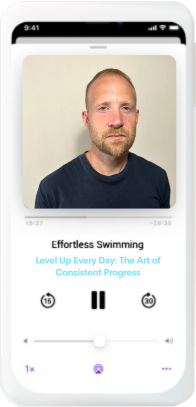
Join us on this podcast episode with Andrew Sheaf, author of “A Constraints-Led Approach to Swim Coaching.” Andrew shares valuable insights and strategies for swim coaches and swimmers. His systematic training and skill development approach helps swimmers achieve tangible results by avoiding the pitfall of abandoning techniques too quickly. This podcast is a must-listen for coaches and swimmers looking to enhance their methods and training.
In this episode
- 01:24 The inspiration behind the book “A Constraints-Led Approach to Swim Coaching”
- 04:16 How to Be the Most Effective Coach When You Manage a Big Swim Team
- 06:39 Techniques for Teaching Swimmers That Are Both Fun and Effective: Contrast Drills and Feedback Exchange
- 09:02 Simplifying Swim Technique Analysis for Effective Coaching
- 11:26 . Improving Body Alignment and Kick Effectiveness in Adult Swimmers
- 14:57 Reversing Swimming Misconceptions
- 16:39 The Nuances and Challenges of Providing Individualized Swimming Instruction
- 18:05 Effective Coaching Language and Analogies for Swimmers
- 22:48 The Power of Questioning in Coaching and Training
- 28:08 Efficient Skill Development for Swimmers with Limited Time: Making the Most of Short Workouts to Improve Technique
- 34:48 Common Mistakes and Challenges in Increasing Speed while Maintaining Stroke Rate
- 39:28 Measuring Progress in Remote Coaching: The Importance of Testing and Consistency
- 42:01 How to Get a Copy of Andrew’s Book and Contact Him
Links from this episode
- HERE“>Get the book Get in touch with Andrew
- Change your technique and swim smoother, easier freestyle in the Effortless Swimming membership
- Want to work with me personally to improve your technique? Join my swim technique coaching here
This podcast is brought to you by NanoClear — our own range of anti-fog swim goggles, designed by Effortless Swimming with the anti-fog treatment bonded into the lens itself (not sprayed on, so it doesn’t wear off after a few swims). Check out the NanoClear range here and use code PODCAST15 for 15% off.
Transcript
Read the full transcript
Welcome to the Effortless Swimming podcast to show that help swimmers and triathletes love the water, become a better swimmer and live a better life. Here’s your host, Brenton Ford.
Welcome to the Effortless Swimming podcast. My guest today is the author of the book called A Constraints Late Approach to Swim Coaching. It’s Andrew Schief. He’s joining me on this podcast. I’m really excited to get into some of the topics that you’ve covered in your book because as a coach of how long now, maybe 17 years, some of the stuff that you’re right about in the book is I’ve learned some of this stuff along the way, but there’s a lot of stuff there that you go into really great detail of that I think, well, there’s so much that coaches can learn from this, but also swimmers and how that they can approach their their training, how they can approach skill development in a systematic way. So they actually see the results rather than trying something for a week and then going, okay, this didn’t work and then just just leaving it. So I’m really excited to get into some of the topics today and thank you for joining me for the podcast.
Yeah, thanks for having me. I appreciate it. So you’ve you’ve coached collegiate swimming for around 15 years. And now you’re focusing on working with coaches and clubs to help them be able to develop their swimmers with better skills. And with the book, you’ve really sort of covered this in a lot of a lot of detail. What inspired you to write the book because it’s a lot of work to write a book, especially of this kind of detail. Yeah, so I had so I’d gotten so pretty early in my career, I started swimming pretty late, and I was a pretty good athlete, but I was a pretty bad swimmer. And so it became pretty obvious to me that like the skill component was really in specific to me holding me back. And then, you know, and I started to see that it was pretty much true of all athletes to varying degrees. And so I became pretty, pretty interested pretty early in how to develop skills. And so that kind of like started the whole process. And that’s
what really kind of got me interested in coaching. And then as I, you know, I learned more, you know, the traditional approach is to just, you know, you identify the skills that need to improve, be improved, you talk to swimmers about it, you provide them feedback to it, provide them feedback about it. And then you’re also, you know, using the drills that that everybody talks about to help develop their strokes. And, you know, there was kind of a lot of problems I kept running into. And to me, you know, if it’s not actually making the better, like I don’t really want to do it, it’s just a waste of time. And so it became about getting as much out of all of the skill work as we could. And some of the problems were, you know, every coach experiences that you tell someone to do something, they do it for a lap, and then they stop doing it. They stop doing it, they just kind of forget about it. You know, that’s one
of the issues, one of the other issues is there’s like 50 kids. And how are you going to, you know, have a conversation? How are you going to teach all of them? You know, that becomes really problematic and you’re not going to be able to do one on one lessons with everybody. And then the other aspect of it is like, you know, a lot of times there’s this disconnect between skill development and training. And if you can’t do the skills in a race, it doesn’t, you know, that doesn’t mean anything. And if their skills are falling apart when they get tired, it doesn’t mean anything. And so, you know, these are kind of things that I’m struggling with as I go through my coaching. And I’m always kind of looking for answers. And then I came across a guy in Keith David’s who’s really involved with kind of some different approaches to skill development. And I got, you know, he wrote a couple books and I read those and I sort of
correspond with him and, you know, kind of develop some of these or apply some of these ideas to swimming. And then, you know, along the way, he basically asked me if I wanted to write a book as part of a series that he was doing. And so that’s kind of how I actually got into writing the book. But the journey about trying to figure out these ideas was basically just how can I find a way that solves all of these problems that I’m facing trying to develop skills, because I was convinced or am convinced that the difference between, you know, fast swimmers are almost always good swimmers. And so we need to develop those skills in everybody and then finding an efficient way to do it that actually creates change, not just in a couple athletes some of the time, but, you know, all the athletes all the time. And so that’s kind of where all of this kind of came from. And that’s, you know, what I’m still interested in. I’d love to dive into what you do when
you’ve got 50 kids in your squad, because that’s what most clubs are. So a whole bunch of kids and one coach. What are some of those things that you would share with a club coach who’s got a whole bunch that they’re trying to work with, but you just can’t give that one-on-one attention? Yeah. So you have to find ways to basically, so you’re not going to be able to like quote-unquote coach all these kids. It’s not possible. You’re not going to be able to teach them. And so what you have to do is try to find activities that basically do teaching do the teaching for you. And so, you know, an example that kind of everyone is familiar with is like, if you have the kids count their strokes, you know, it’s not perfect. They’re, you know, there are ways to cheat it, but nine times out of 10, they tend to lengthen things out. They tend to smooth things out and tends to fix issues. And so that’s a perfect example of, you
know, a simple activity that you can do that starts doing the coaching for you. And so the more times you can find skills that kind of help with that, the more effective, you know, you’re going to be. And so, you know, another example that probably a lot of people are familiar with, you have kids swim with a closed fist. Most times they’re going to do a better job of, you know, using their forearm to pull. And so that’s an example where like you don’t have to tell them to do anything in terms of like, hey, Johnny, make sure you get your elbow up. But you’ve given them an activity where it starts to push them in the direction that you want. And it starts to do a lot of the work for you. And so that’s what I started thinking about is, you know, how can I create activities or drills or sets that almost require swimmers to swim in the way that I want instead of having to actually teach them? And that’s the best place to start. And so, and
the other aspect of it, too, is that when kids have goals, they’re going to perform better as a result. And so, you know, my expectation is always that kids know their times and they know their stroke counts for just about everything. Because then you don’t have to tell them something’s wrong. If all of a sudden they’re swimming two seconds slower or they’re taking three more strokes, they know that and they’re going to change something to do that. And if they’re not aware of those things and you’re not telling them and you’re not providing them feedback, you know, they’re going to be in a lot of land and they’re just going to be sort of there. So having ensure ensuring that they are taking responsibility for the numbers of their swimming can be can be really, really helpful, too. Yeah, I really like that one. Something that we do at clinics and we’ve done for a long time is contrast drills, which I know you talk quite a bit
about, where you get someone to do the right thing and then the wrong thing. It builds up that awareness around then they know whether or not they’re in the right position, they can sense it when they’re starting to slip or fall apart with their stroke. The other thing I’ve used at clinics a couple years ago, pre-COVID, I ran some clinics in New Zealand and we had about 20, 24 or 30 swimmers or something at these clinics. I was really a lot of people compared to what I’m used to with the small groups of six and I got them to pair up and I had them do a certain drill and I had their partner watch them and then give them feedback on how they were doing the drill. It was like a catch drill. So just getting them to give that feedback and then they swap over. And so when they become the coach and they have to understand, they have to learn, all right, well, what’s the right position? They have to be able to identify it. Then they
have to correct someone. They start to, they really can take it on board because I think one of the best ways to learn something is to coach. And I’m sure that’s probably what you’ve seen going from to coach is like, you just don’t know, you just don’t understand how much there is out there when you’re just swimming compared to when you’ve got to become a coach and you’ve got to learn all these things. It’s like, for me, I learned so much just becoming a coach. Whereas as a swimmer, I feel like I knew about 10% of the information. Right. Yeah. And I think, you know, kind of what we’re both saying is like, you have to have you have to really teach them to, you know, basically how to train and how to train part of that is being engaged in what you’re doing and be aware of what you’re doing. And the more, you know, I found that the more like, I don’t like to argue with kids. And so the more quantitative it can be, like you either went this
fast or you didn’t or you either took this many strokes or you didn’t like, then there’s no discussion about that. And I think that can be really helpful because if it’s like, hey, your head’s in the wrong position. And they’re like, well, I thought it was right. Like, you can’t like, I don’t want to get into those discussions where it’s, you know, kind of subjective. Because, you know, as most coaches have experienced, you know, when you’re their coach, they don’t believe you. But if someone else comes and tells them the same thing, then they believe them. And so like, I just like to keep things objective to keep it simple. Yeah, it’s a good way to go about it. And what’s the process that you would often go through, even just if it’s in your mind where if you’re working with this summer, let’s say it’s one on one. And you’re looking at where, where in this chain of chain of technique, where are they falling apart there? How do
you analyze those? Yeah, the summers. Yeah. So again, like with everything, it’s how can I create a way to get long term change? And so a big part of that is like, you got to keep things simple for yourself. And so to me, pretty much every every technical issue is usually one of three things. And that’s their alignment through the water. And so in all the strokes, they’re trying to move through the water as straight as possible. And without any deviations, you know, minimizing deviations up and down left and right. And so if that’s kind of the baseline, if they’re not doing that well, like everything else is going to be, you know, a problem. And so that’s probably the first place I’m looking. And especially with younger swimmers or older, less experienced swimmers, like that can be a big issue where they’re just their, their body positions not good. And that’s making swimming infinitely harder. And usually they’re not really relaxed if they
don’t have that position. So that’s probably the first place I start. And then the second thing that they have to be doing is creating a lot of propulsion. And so I’m just basically looking at are there one, especially with the upper body, are their arms, you know, moving more or less kind of straight backwards? And do they have a big surface area with which they’re doing that? And I’m not too worried about the details. I just kind of want that big picture thing because we can, we can work on that. And then the, the, the last piece is, is kind of the timing of it. And so they can be doing the right things, but doing them at the wrong time. And that’s kind of the final piece that they have to, to, to get set, set together. And, and I skipped over, but, and the breathing is usually pretty important. But to me, that’s usually kind of part of the alignment thing, because a lot of times when people breathe, that’s when they really lose their alignment too.
And, you know, not breathing isn’t a solution. So that needs to be figured out pretty early too. So it’s usually those three things. It’s like, all of their problems are going to be, there are either alignments off, they’re not creating propulsion effectively, or, or the timing of it’s off something. Yeah, I love it. That’s a really simple way to, to approach it. And it’s the, often the simple
solutions are simple, the simple things that will help someone make that, make that change. And I’d like to go to that first one, the, the alignment. Yeah. I work with a lot of adults who didn’t learn to swim as kids. And that, that alignment, that body posture, that the effectiveness of the kick, it’s, it’s not often there initially. And quite often they’re very stiff in their, their ankles and they’re just not, you know, not kicking effectively or can’t hold themselves in a, in a straight body line. They’re bending through the hips or they’ve got too much back arch and it’s, and they’re not holding themselves straight. What are some, what are some
exercises, drills that you would have swimmers do to just work on, work on that? Yeah. So I think a lot of times it comes from a lack of awareness or almost belief that their lungs can actually support them in the water. And so they’re doing everything in anything to like not take advantage of their lungs. And so really helping them understand that they can actually float and do so with like zero effort. And so like doing something where they get a big breath and they grab their knees and they get into a ball and they’re going to float. Some people float a little higher, some people float a little lower but they’re, they’re not going to sink unless they’re literally like, you know, they’ve got the tiniest lungs in their like pure muscle but you know, that’s one percent of the, of the population. So that’s like a foundation. It’s like, oh wow, I can, I can float. And then it’s, it’s kind of, you know, there’s, there’s two aspects of it. So it’s kind of
like a fulcrum and the lungs are holding them up at the surface. Given them activities where they learn how to press the chest a little bit. And so like they could do it, you know, swim a 25 with their head up really high. And then they kind of lower it down like an elevator and now it’s like really low and they can start to feel how that, that change in pressure changes what their hips do and how they can improve their alignment through that. And so like, once you get the, the center or the awareness of the flotation, learning how to push from the front is important and people will need to do different amounts. Like there’s not going to be a right way based upon how people are built. Like if your legs are super long or they’re super short, you’re going to have to do different things but you know, giving them opportunities to explore that is where they figure that out for themselves. And then the other aspect of it is a lot of people that are pretty new to it
just their legs will kind of just like change. And so they have to learn how to like create tension in the back of their legs in the back of their hips to almost like pull them up a little bit. And so what they can do is stuff like they’re in that ball and then they just focus on extending their arms and extending their legs and they have to like keep tension in the back if they don’t they’re not going to be able to do that. And so helping them learn how to just like feel what that’s like and feel how to create that tension and while still using the lungs can be really helpful for helping them try to establish those positions. And then what they do is like you could do a couple reps of that then you do a 50 do a couple reps of that do a 50. So then you’re taking those sensations what you experience and then you’re trying to apply that when you swim. And if you just kind of keep doing that over and over again you know, it might take a week
it might take a month but sooner or later they’re going to figure out something. Yeah, that tension through the through the back in the hips it’s not for someone who’s just started as an adult like it’s not instinctual it’s like it’s it’s just it’s very unusual but well well the problem is is their instinct is to kick but they’re kicking down and so that’s going to create tension on the front of their body because you know they’re kicking down and it’s almost you know kicking can help keep your hips up but it’s almost the opposite of what they need to do and what and when they’re feeling their legs and hips sink like they’re going to panic like maybe not like you know like traditionally panic but like they’re going to know that this is not a good thing and they’re going to try to do something and the first instinct is to just kick when and sometimes that’s the opposite Yeah, that’s so true I have a couple of swimmers who will come to clinics who
they might tire after 50 or 100 meters and the kick is like a nine out of 10 effort Yeah, that’s why it’s no wonder heart rates up and there’s all this this tension but it’s it’s you’ve got to do the opposite you’ve got to relax you’ve got to lighten the kick and you’ve got to and do less of it as well so it’s and that’s one of the tricky things about swimming quite often that you need to do the opposite of what you think you need to do another example of that is like with the with the catch a lot of the guys I initially work with they are trying to rip very hard through that that early movement of the catch and it’s like well no just use that more as the setup and then you can accelerate through and you can apply more power through there because if you’re going for broke straight away it’s not a strong position you’re not set up to be pressing back right so let’s just turn our thinking around to you and just ease off that power in the in the beginning
and there’s quite a few other things there too yeah and I think holding the water is like the most misleading phrase ever because people think it’s going to be a lot of pressure early and they need to like grab on to something when when it’s really just a repositioning and then you apply pressure and and I think that it doesn’t feel like what people think it will feel like because of the terminology and that’s why you get you know that that type of action that you’re describing especially you know because the adults especially if they’re into it like they’re going to read about it and they’re going to try to figure out the problem and then you know unfortunately they misinterpret what what it’s supposed to be and then they end up with these habits that are actually to your point doing the opposite of what what they should be doing yeah that’s right and something we were talking about before the podcast as well is there’s so many so many different things
that you can consider even just let’s say freestyle technique but you it’s going to be different for each person on how right they need to do what they need to do during that part of it there’s so much nuance to it and you know you might take a piece of advice that a coach has given which may be correct for one person but it’s going to be the opposite of what you actually need to do and you know I’ve heard some coaches talk to swimmers and and say you know I just want you to get that hand in and then just rip it straight back and well I wouldn’t really give that advice to you know anyone it’s like well maybe if they’re way too soft and gentle maybe that’s a terminal to need to use yeah exactly yeah so it’s yeah and and and like with like with the head position we were just talking about there are some people that need to you know lower their head and and press into the water with their chest there are some people that need to do the opposite because they’re
totally burying it and and so you know a one size fits all prescription is not going to be effective and and that’s one of the the biggest challenges with with instructing athletes is like sometimes they need the opposite instruction and that can be tough to know what exactly what to tell them because because you don’t even know what they’re you may think you’re telling them what to do but they may be conceptualizing it something like totally different than that what you want them to think about it and like and and and so that can be problematic too I want to dig into some of the the language that you talk about in the book is as a coach there’s yeah a lot of different strategies that you can use to help get a point across and there’s some of those and you’ve got analogies cues got rhetorical questioning can you talk a little bit about that and how you’d use that with swimmers this episode of the podcast is proudly brought to you by our sponsor
form smart swim goggles they’re more than a pair of goggles meet the world’s most powerful swim platform see yourself improve with form smart swim goggles including a free one-year membership when you purchase your goggles for only 249 US dollars they’ve currently changed up their offer where you can now get the goggles and you have one year membership included for free and if you’d like to continue with the membership going forwards it’s only 15 US dollars a month where you get access to their workouts training plans and custom workout builder but you’ll always have access to the real-time data in the goggles so you never lose access to that my favorite thing about the form goggles is having the instant feedback of what times you’re doing what stroke rate you’re doing and also the ability to see what your heart rate is because never before have we’ve been able to have these immediate feedback heads up display where it’s actually telling
you what your intervals are so when I wear the goggles in training I like that I know my split for the first 50 and the 100 and the 150 so every single lap I’m getting that feedback on what my pace is and I find it’s such an important tool for being able to not only have different gears where you can switch between the different speeds that you want to swim but it helps you develop those gears and it helps you intuitively know how fast you need to go to before you’re going to blow up or before you’re going to go a little bit too hard so it helps you just get really good at judging your pace for when you do go to a race and even if you’re not wearing the goggles in a race it’s that intuition and that ability to develop your pacing that these goggles can really help with to get your pair of form goggles and say 15% off use our link formswim.com forward slash effortless or use the coupon effortless at checkout and that will get you 15% off
your pair of goggles using our special link formswim.com forward slash effortless or the code effortless at checkout yeah so if let’s just you know stick with keep it practical we’ll stick with the catch kind of example you know different athletes are going to have different ranges of motion in the shoulder and they’re going to have different range of motions you know in their upper body and their elbow and all of these things and they’re also going to have different levels of strength and so they can you know a good catch position for different athletes is going to be different and so if you’re trying to tell someone to keep your elbow at a 90 degree angle or whatever angle it is that may or may not be appropriate for me and it may or may not be appropriate for you and and so when you’re super specific about how you’re communicating to athletes that can be a challenge because it might not be in alignment with what they need and so instead
you know what’s the basic concept of the catch like you’re kind of just creating a big hook that you’re going to use to move water so you can talk to athletes it’s like I want you to set up your stroke like you’re getting a big hook on the water and and and that’s an analogy that’s going to be it gives them the basic concept but it gives them also it also gives them the freedom to figure out how to make that work for their own body because if you tell someone to do something that they physically can’t do and they’re and you know like Ian Thorpe was always the the poster child for great freestyle technique because he had this ridiculous catch yeah 95% of you know swimmers let alone humans like you can’t get in that position and so like to expect them to try to do that it’s just you know naive but they can use the concept and they can try to figure that out based upon you know the resources that they have yeah it’s it’s such a better way to to approach things
and I think the other benefits that too is they can they can visualize it okay well a hook what’s a hook look like I know what that looks like yeah and then I can just try and create that shape and that and that feel of hooking into something one are like there is thinking of a ladder underneath you where you’re placing your hand on the rung of the ladder as you’re moving along yeah because quite often people try and move their arm through the water rather than right moving their body through the water and anchoring or hooking themselves right right yeah and so and so you know that was you know pretty early on like that was one of the first like big steps I was like all right well I can’t like I’ve got to find ways to like it’s almost like learning a new language so instead of communicating to athletes and you know traditional put your hand here terms it’s like how can I think of like analogies or or you know that type of communication for all
all the things that I want to accomplish and and you know that took some time because it’s like you’re starting to think in a different way and then you know after a while you say it’s just it’s pretty natural yeah and and how about the questioning so I yeah I think when I first started coaching it was it’s like okay I want you I want you to do do this do this so you know that was too slow and it’s like there’s no there’s no back and forth between you and the athlete and you’re just telling them what to do or you’re telling them where they went wrong without actually getting them to take ownership of it but with the right sort of questioning you can really turn that around and give the athlete something that I can I can work with and I can be more aware of what’s happening and you can get much better results that way yeah and and so especially with a new athlete who’s never really thought about that so you you asked them something like how was that one
or like what did that feel like and they literally stare at you like you’re speaking a different language like they have no idea what what to do or say and so you know these are people that are totally unaware of what they’re doing and that’s you know that compromises their performance at some level because you know they’re missing opportunities every time they swim and so you know going back to the to the head position thing so you can have them do that drill when they start off really high and they they go really low and then you just ask them which position did you feel like was most effective versus like you saying I saw your hips come up on you know about halfway through that looked the best you know you just ask them what which one did which where did it feel best and then you know they may say like you know it doesn’t it almost doesn’t matter what they say because they’re going to be talking in terms of their feelings and you just want them
to verbalize that and then you’re like you can just say I do why don’t you do another one so you can get that same feeling again see if it’s in the same place and now you know you’re trying to help them learn how to create awareness of what they’re doing and so whenever they’re exploring that type of like just asking them how things felt and not just like it’s also important to actually like care what they say because sometimes I think people just you know you kind of have to get them to search for for the best thing and that can be really helpful and then another aspect that I like to do with learning in terms of like helping them learn how to train like so you can ask them after say they’re doing 10 100s on the first one you can just say all right well it was good about that and what could be better and so now you’re encouraging them to problem so because you know they’re like well my time was pretty good but I felt like I fell apart in the last 25
it’s like well now they now they’ve verbalized that and now the odds are they’re probably going to try to fix that on the next one and you know if you if you do that enough they start to do that themselves and it’s a way instead of just telling them what to do you’re helping them discover where their opportunities are and because they’ve discovered those and they’ve made the choice to do it they’re a lot more likely to do it it’s just like anyone if you know if you tell me to go I don’t know do some chores like I’m probably not going to do it but if I’m motivated to do if I decide to do it I’ll probably do it and so you know helping them learn how to identify opportunities and engage in what they’re doing you can’t tell them to do that you can only ask yeah I love that it makes me think of when I was coaching a master’s squad and something that I got when I was being coached as a as a swimmer it was always being asked you know let’s say it’s the last
interval of a main set and we need to make this one the fastest one and the question is where can you find an extra half second somewhere okay yeah where can I find it okay maybe the turn you know maybe I can pick up my my stroke rate that’s second 50 right and it’s something that I would do when I was coaching a master’s squad when we’d have a you know good solid workout is asking those questions and then people go through it in their mind and you’re not saying all right work the turn it’s like no they’re thinking about where they can find it and they’re gonna make the choice yeah yeah and then they’re gonna do it because they made the choice to do it yeah it’s yeah it’s one of the real
joys of coaching for me it’s like being able to get people to to do those things and trying to figure out ways to to get them to to make those changes on their own something that we’ll I’ll often do at clinics is after we go through some drills and we’ve worked on a certain aspect of it I’ll get them to chat with the other students in their lane about all right what were you thinking about and how did that feel and then they’re discussing it and they’re having to think about it okay yeah well I was I was trying to go wider with my hands here it felt kind of weird but you know I think it’s going to be be better I think it’s going to be faster so just getting them to verbalize those things as well isn’t is another really good way to be able to get them to kind of think think about it in a different way because swimming is a sport where you’re always in your head and you know you’re thinking so much during it and I think if you can get that out of your head
and just speak with others about it too it’s it’s a good way just about a figure some things out right outside of just being in your head right right your comment about you know how can you find a way to make this last one the best one I read this I don’t remember where but like a lot of times people especially coaches will be like you can do it whereas the better question is can you do it because then then the athlete has to ask themselves can I actually do this and then they have to go through that process that you’re that you were talking about all right well yeah I think I can but how am I going to actually do this and that and that’s going to be you know a lot more powerful than the coach just telling them you can do it because they’re just like no I can’t for you know they’ve got to figure out what to your point like what what solution can I find to make this happen
yeah I love it another thing is a lot of adult swimmers who have maybe been swimmers since they were a kid that want to go to the pool and have a good workout they’re not that interested in yeah swimming slow skill development it’s like no I’m I’ve got my hour I’ve got my 90 minutes I just want to get to the pool and and have a workout what can we do as coaches to or what can those swimmers do to be able to still develop and improve their skills and their technique without doing half an hour of drills each session yeah so so it kind of goes back to to what we’re talking about in the beginning is is fine training tasks that force swimmers to do in this case force yourself to swim well even you know regardless of what it is or how hard it is and so an example is let’s say we’re working on our pool and the you know that you know you just do some drills whatever whatever pulling drills that you’d thought you know that you were told to do like you could just do
those and that would be your basic skill work instead you could do something like 20 25s on you know if you want to go faster like 45 or if you want to go more rubic on 30 you’re going to put a pull buoy in and your goal is to do each and every one of them and you know as few strokes and as fast as possible and so like you know it’s the old swim golf thing where you add up the time then you add up the stroke count but because you’re trying to do that you know the only way to do that that’s a work set that’s 20 25s pretty strong effort pretty fast but you’re having to swim well to do it and so that’s just one example of how you can you know do that with almost any skill if you put stroke counts on it you have times that you’re trying to hit and then you just change the activity slightly so another thing you could do is like if you hold a paddle upside down that’s going to kind of lock your wrist again you’re going to have to use the whole forearm to create propulsion
and so like you could do a set of 4 100s with you know holding your paddles upside down you’re going to descend one to four and you’re going to try to not take any more strokes and like if you can do that successfully that’s going to be hard and you’re probably going to learn how to hold more water when you do that and so it’s just a matter of figuring out how to just get a little bit extra skill work like you can still do the same basic set whatever it is but how can you add another extra challenge to it that forces you or the athletes to swim well when they’re doing yeah and I remember hearing one of your one of the videos that you did as well is why you can use a tempo trainer in say like a set of 12 100s and you can use that to help develop the skills can you talk a bit about you know how you want to use a tempo trainer that’s a and that one’s that’s fun too so like what you can do is to say like it’s 12 100s and so you set the beep so it’s at a certain stroke
rate that’s pretty manageable then you’re going to like you can descend one to three at the same tempo and so the only like you can’t take faster strokes so the only way to go faster is either to be better with your turns or to take longer strokes and so you can’t really cheat it so you have to swim better in order to swim faster and then like to say we’re doing 12 so the next three you can just make the tempo a little bit faster so you should be able to descend down to even faster because your stroke rates a little bit faster and then you just do that for the next three and the next three and you can do that you know with any type of of set you can do that over any type of distance you can do that any type of stroke rate but it’s just this game that’s way more engaging than just swimming and it forces you to swim well because the only way to go faster is you can’t take more strokes you have to be a better swimmer and so that’s a and you can do the same thing
if you don’t have a temperature it’s the same basic idea it’s like you’re gonna take you can only take 15 strokes a lap and you’re gonna descend one to three and then the next set you’re gonna take you can take up to 16 strokes a lap and then you can try to descend one to three and then you should be able to go faster because you got an extra stroke and you know these type of activities are forcing you to work on both your your stroke count your stroke length and you know trying to swim faster as well and so it can be super engaging it’s a lot more you know at least to me anyway it’s a lot more fun than just swimming back and forth and you’re gonna get better at swimming too
yeah that especially for the for adults it’s like that sort of stuff that I have never really done as as kids you know so it’s just it’s brand new and right I would imagine most adult swimmers who’ve learned to adult say they’re gonna be very bad at that to start with but right I’ve got to start somewhere and yeah being able to being able to swim faster while holding the same stroke right it’s like well man okay that’s that’s it’s a pretty tricky thing to do initially but if you can just keep doing stuff like that you’ll be able to have much better awareness around what your your technique is like and that that feel that hold of the water you you’re going to improve that greatly because I think a lot of the people that I coach and come on board with me it’s like initially that’s just they’re just swimming up and down there’s not too much thought about stroke length or stroke count or anything it’s just going back and forth and if we can bring that
attention or they can bring that attention to how well they are swimming technically and put some numbers behind it with either rating or right stroke count it’s they’re really starting to do the things that at least some is are doing and a very good at yeah right right and another one I like too it’s like they can do say you can do five two hundreds and this is short course like you can go either like on the I’ve laps you go 16 strokes and even laps you go 18 strokes and the goal is and you can make the numbers whatever you want and the goal is to like be able to actually do that on command like you have the control over your stroke to actually switch years and change it like and not just kind of be like I hope I get the road stroke count and like so that that develops you know some control over that and a lot of people as you were saying they start out they have no idea how to do that but that’s something that you should be able to do and like and then you can
you can still descend that one to five and so you’re playing with the same you know variation in stroke count and then you’re also trying to get faster with it too and so like there’s all these games that you can play that will actually you know help you learn how to control your swimming and how to actually create change and in some ways that’s a lot more powerful than just thinking about things because you can be thinking about things but not actually changing any and you know sometimes the numbers can be really helpful because it forces people to change and if if they try to do something and it doesn’t work then they need they know they have to do something different and I think that’s what’s super powerful about that is that it forces change and the feedback is immediate and it’s not arguable what would be some of the things that you say happening for someone who is having trouble increasing their speed while keeping the same strike right
where would you say them going wrong yeah so I think a lot of times it’s it can come down so none of this stuff is going to work if they’re if they don’t have some of those alignment and balance issues sorted out because everything they do is basically just a a reaction to not like not drowning kind of almost and and so like their their their heads all over the place and their arms are just basically compensating for for their loss of alignment and and like you said with the kicking like they’re just trying to keep their hips up and they’re just doing everything they can’t so they don’t really have the ability to control anything and so a lot of times with that it’s that they feel out of control and they just keep things moving so that they can kind of stay in control and so I think helping athletes learn to relax and the water could be the first step because you know a lot of with the stroke out stuff is you have to be a little bit more patient
in the front of your stroke and if you are using your arms and your legs to maintain your balance like you can’t afford to do that and so that can be a huge thing and I think a lot of athletes just don’t yeah they just don’t realize that they can be a little bit more patient and sometimes they just have to like force it and and if you know something I do is like if they’re like I just can’t take 20 strokes a lap or whatever it is while you’ve kicked across the pool once probably in less than 20 strokes you probably took zero strokes so just do under 20 I don’t care how terrible it feels or how much it isn’t even swimming it’s just kind of like this kicking with occasional arm movements but just do it and then you can work yourself back into it and then you can start to figure it at least do something different and create a change and then you can work on creating a better change
yeah I really try and encourage the swimmers at the at the our clinics to say this is this is a chance to experiment this is a chance to try something different and if it feels exactly the same it’s going to look exactly the same so I want you to push yourself out of that comfort zone of what you think you should do with your technique and like this is a chance to just try something new and it’s okay if it feels awkward unusual that’s a sign that you’ve at least changed something and like as much as I’d love it to be the case where any change in the right direction feels better it’s not always the case it does yeah sometimes it is but quite often it is not and it’s just your body going hang on this is I’m not used to this and you know so they go okay let’s go back to what we used to because that feels good and so you’ve got to be able to just know that it’s okay to to feel a bit out of balance a bit awkward out of time right things when you’re making
those changes right and and and that’s you know and that’s one thing I love the the numbers aspect of it too is because it’s comforting because athletes I’m like this feels so terrible I’m like well you took two less strokes you went three seconds faster it’s like if you want to keep some in the other way you can I don’t really care and I’m like they’re like all right I’ll do it and and and the other thing that could be helpful too is you know especially with iPhones everywhere it’s like you can just video it and and like like you said if it feels exactly the same it’s going or it’s going to be exactly the same you know I’d almost say that it can feel totally different and it’s still probably going to be exactly the same like people don’t understand how different it’s going to feel for it to actually be different and like you know you have someone it’s like you know say they’re crossing over with their arm it’s like I want you to literally put your arm
like as if you were entering like at two o’clock like way out here and they’re like all right I’ll do it and you film it and they’re entering straight in front of their head or they’re entering straight in front of their shoulders and they’re going to be like well that was a waste of time and then you show them the video and they’re just like oh and so again like they don’t they tend not to
especially when you’re asking for a a big change and so that you know that’s another strategy that can be really helpful too artists from during the week who would normally breathe to the one side and they tried breathing to the to their right hand side which was the side they wouldn’t normally breathe to and they were three seconds faster per hundred and they’re like but it just doesn’t feel good and we’re looking at the footage and it’s like it looks way better than your other side yeah so it’s just so you’re faster yeah exactly it’s just so funny how that can be such a disconnect there feeling and what’s actually happening but as you said the numbers don’t lie and you need some of those numbers to be able to prove a point and and know right not it’s working yeah and especially athletes that are kind of training on their own it’s it’s so helpful to guide what’s happening because you’re not going to have someone providing you feedback but as long as
you know those numbers are doing more or less with what they should be and they’re moving in the right direction like you’re doing the right things regardless of what it feels like or regardless of how sure you are of of what you’re doing let’s say you’re coaching someone remotely what yeah would you have them do as a sign of progress like what sort of testing would you go okay 100 freestyle just to easy I want you I want your time I want your stroke count or would you have them do like a depending on what they’re training for like a 400 time time what are some of those tests that you think would be important and I know it’s going to change depending on what they’re training for but just interested in your perspective yeah and and and I think so it can be helpful one it can be helpful you just ask them what what they know they you know whatever baseline they have so that they can see progress because if you give them a new test you know that can be helpful too
and then you compare it for a lot of times they they have a sense of where they’re at so you know you know a lot of athletes are like well I like 1050s on 45 and I always hold whatever 36 and then you give them something or it’s like I will we’ll do that in a month or something like that and then and the other aspects but too is like I just you know a lot of training is going to be pretty similar and so they should be seeing progress you know not necessarily each and every day but you don’t always you know to me every practice is a test at some point like you’re going to have an awareness of how hard it was you’re going to have an awareness of your performances and so if your performances are getting better then obviously you’re improving and if your performances are similar but all of a sudden it feels way easier like that’s in progress too and so trying to educate leads to you know to be aware of these things can be really helpful because sometimes
like you know you do the first test and for whatever reason they’re just having the best day of their life and they just they do a really good job and then you test them again and you know that was the worst night of their life and it’s just terrible and like you just can run into these situations where you know it looks like there was no progress made just because of outside factors and so I try to place an emphasis on what’s changing you know day to day and any time you repeat a set of similar type like you’re kind of always comparing it and then that way you know you see the trend as opposed to like waiting for this test and I think regardless of you know whatever I’m coaching someone online or in person like that those are the things that I’m looking for is you know on the on the stuff that we’re kind of pretty feed in on is that stuff making progress in some way over time yeah yeah I like it that’s that’s a good one because yeah quite often people have a set
that they go to set they know the pace they’ve got the same right every time yeah yeah good way to really good way to do it Andrew for those that are listening what’s the best way to either grab a copy of your book or get in touch with you you know perhaps they’re a club or a squad or a coach and you know that they’d like to to work with someone like you to help with the skill development of their athletes how can they best get in touch sure my website is coachandrushief.com that’s probably the best way my well my email address is coachandrushief.gmail.com you can just use that and then you know on the website there’s a quick like
50 something minute course that you can do that’s it’s all how to make this stuff really practical you can get the book there and so that’s probably the best way to get in touch with me or you know to learn more about some of this stuff for sure awesome well thanks so much for being on the the podcast I really love talking about this stuff especially from someone who’s who’s started it as deeply as you have and and put the time into such a such a detailed book and I’ve it’s I haven’t read it from cover to cover I’ve looked at different parts where I’m like okay this is this is something I’d like to work on so you know going through the different different sections of it is is how I’ve I’ve gone through the book and I think it’s I think it’s such a valuable skill for coaches to develop because you know before the podcast we’re talking about how it can be it’s just easier to kind of write a good workout that’s easy you know everyone can write a workout
but it’s how can you apply the skills how can you think about that skill development or how can you have your athletes focusing on certain parts of their stroke so it’s not just you telling them what to do and I think if you can develop that as a coach or as an athlete because most the athletes listen to this like how can you be aware of where your stroke is at by using some of these numbers you know how can you use that to get better so it’s something that I really love to talk about so thanks for being on the podcast and down the track I’d love to get you back on we’ll dive deeply into one or two other topics and go about it from there sounds good thanks for having me appreciate it thanks for listening to the effortless swimming podcast if you’d like us to help you become a faster more efficient swimmer go to www.effortlesswimming.com