







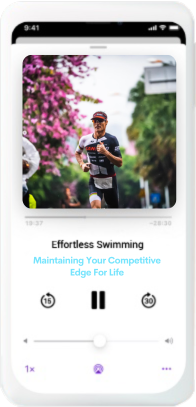
I’m excited to introduce our guest today, the legendary triathlete Craig Alexander. He’s a three-time world Ironman champion and a two-time Ironman 70.3 world champion. Craig shares insights on resilience, perseverance, and the importance of a supportive community. He also talks about how visualization helps in triathlon training and racing, along with a personal mantra that guided him throughout his career. Plus, he provides valuable advice for young triathletes to help them reach their full potential. Tune in now!
In this episode
- 01:05 Racing Through the Ages and the Pandemic Pause
- 03:57 Motivation, Resilience, and the Coach’s Journey
- 08:17 Transitioning from Athlete to Coach: Sharing Knowledge and Inspiring Others
- 11:38 The Guiding Mantras for Triathlon Success
- 14:31 Surrounding Yourself with Good People
- 15:20 The Power of Living in the Present Moment and Making Split-Second Decisions in Races
- 21:21 Visualization and Its Effect on Athletic Performance
- 25:52 Advice for Young Triathletes: Train with Better Athletes and Seek Help from Great Coaches
- 33:28 Motivations Beyond the Finish Line: Family, Community, and Coaching
- 39:12 Growing Old is Not for Sissies
- 40:04 Get in Touch with Craig!
Links from this episode
- Craig Alexander’s Sansego Triathlon Club
- Instagram”>Follow him on Change your technique and swim smoother, easier freestyle in the Effortless Swimming membership
- Want to work with me personally to improve your technique? Join my swim technique coaching here
This podcast is brought to you by NanoClear — our own range of anti-fog swim goggles, designed by Effortless Swimming with the anti-fog treatment bonded into the lens itself (not sprayed on, so it doesn’t wear off after a few swims). Check out the NanoClear range here and use code PODCAST15 for 15% off.
Transcript
Read the full transcript
Welcome to the Effortless Swimming podcast to show that help swimmers and triathletes love the water, become a better swimmer and live a better life. Here’s your host, Brenton Ford. Hello and welcome to the Effortless Swimming podcast. My guest today is three-time World Ironman champion and two-time Ironman 70.3 world champion, Craig Agil-Zander. Welcome to the podcast. Hi, Brenton. How are you? Thanks for having me on. Thanks for being on the podcast. I mean, I’ve seen your name. I’ve seen you about for the last decade, plus that I’ve followed triathlon. And you’ve been an athlete for a very long time and also a coach for a long time, too. And you just got back from the U.S. from a training camp over there. And we’re talking, I’ll fair about your somewhat forced or encouraged retirement due to the pandemic. You were 46 years of age in 2019 and you’re still competing and racing at the professional level, which is incredible.
And you’re still looking to keep going, but that was sort of forced to stop due to the pandemic. What do you want to talk a bit about that and how that all came about and where you were physically and racing-wise in 2019? Yeah, well, I mean, I was in my mid-40s. I was still very competitive, racing 70.3 races on half Ironmans and also Olympic Distance. I stepped back from the Ironman racing almost 10 years ago now. So for a number of reasons, I just wanted to be able to spend more time. I had young children, so I thought I could spend more time with them. You know, I’d scratched the Ironman itch, I guess, is one way of putting it. It was my goal and my dream to race in Hawaii and I’d fulfilled that dream. And I was getting to the point in life where other opportunities were coming along. But I still wasn’t yet finished with the racing. You know, I still was a competitive person. I still am, I think to this day.
I loved challenging myself physically and training each day. I loved setting some racing goals each season. So, you know, when I stepped back from the Ironman racing, I didn’t feel there’s any need to stop racing completely. I still had a real passion for racing at the highest level and racing the best athletes. So, you know, in 2019, my season looked like a lot of those previous seasons looked, which was not too much racing. I’d usually picked five or six races each year that fit in with our family schedule. Races that I knew would have a really competitive field and just races that I wanted to do. I guess one of the benefits of being in a sport and being a pro athlete for 27 years is you have such a huge foundation of fitness. Your aerobic base is enormous. So, I was able, you know, just 15 or 20 really targeted training hours per week to still be competitive. And I was just enjoying it more than ever, to be honest.
That’s the reason I was still doing it. I didn’t really feel I had anything else to prove. I wasn’t, you know, the sole purpose that I kept racing deep into my 40s was just the love of it. So, I didn’t see any real reason to stop. But as you mentioned, when the pandemic hit, it sort of forced a reset upon the whole world. And a lot of things shut down, not just endurance sports, but our events shut down overnight. There was no certainty when they were gonna come back. You know, we went into a period of lockdown here in Sydney. Like, I know a lot of places around the world did we were homeschooling the kids. And I kept training each day just for my own mental health, I think. And just because it was part of my routine, it’d been part of my daily routine for nearly three decades. I didn’t see any real reason to change that. I just, you know, a morning session adds a lot to my day. I really loved getting up in the morning
and getting something done before breakfast. So, I tried to keep that going through the pandemic. But yeah, all the racing aspirations sort of took a back seat at that point. And, you know, at some stage, I was going, I was gonna have to evaluate what I was doing year to year anyway on me. I know Cameron Brown still raced into his 50s. It wasn’t like I had set myself any goals along those lines or anything. I just, as I said, it was a year to year proposition with me, I still loved it. The pandemic forced me to sort of evaluate the things I was doing and kept up with the training, but the racing sort of just fell by the by. You mentioned that we’re doing it for the love of it. If you think back to your early career, were there different motivations there compared to later in your career? Not really, you know, I think the real driving force behind all the habits that I developed and the things that I achieved was just a simple desire or a simple commitment
to get the most out of myself as an athlete. That’s how it really started for me. I guess that came off the back of not having been an endurance athlete as a kid. I played other sports, mainly soccer. I played soccer until I was 20. And that was my main sport. My first sporting dream was to be a professional footballer. And I just, for one reason or another, didn’t fulfill that dream. And usually when you don’t fulfill a sporting dream, it’s, there can be a lot of reasons. The main one is that you weren’t good enough on the days that you needed to be. And I think what I took out of my early soccer career and my early sporting life was that you needed to be resilient. You know, I saw a lot of soccer players who went on to great things just because they kept hanging in there when the going got tough. And, you know, I think going into my triathlon career, that was the really the only sort of idea I had in my head was just to be a little more resilient
than I’d been as a soccer player. So the motivation was just to get the most out of myself and hanging there when the going got tough, which it does, as you know, in sport it does. And I think when we’re young, as athletes, when we’re younger, we look to the people who are, you know, at the forefront of our sport and other sports, these great champions, male and female, and we just think that they’ve always been that way, that they’ve always been either naturally gifted or being winning races, being the first picked in every team. And when you get older and a little more perspective and you dig a little deep, you see that every sporting journey, it’s a big part of success is resilience and just hanging in there. So for me, the only motivation coming into triathlon was just get the most out of myself every day as an athlete and just hanging in there and be resilient. I think obviously as we get older and we change,
as people, motivation can change. Certainly later in my career, when I was married and had kids, I was very motivated by what my family had sacrificed for me to be able to do what I love to do every day. So I drew on that pretty much daily, the sacrifices. My wife had put her career on hold so that we could relocate to the Northern Hemisphere for six months of the year. My oldest daughter was being homeschooled at the time, particularly later in my Ironman career when we were based in Boulder, Colorado. And that was tough for her. She was very social. So being out of school, out of that sort of social setting was hard for her. So I saw the sacrifices that my family made for me. So it was easy for me really to push through every day when the training got hard or when things got tough. And on race day as well, I drew on those memories and those thoughts to keep me on task and to push on and to push through. So yeah, I definitely think as I got older as an athlete
and more mature, my motivations became more centered around the family, but throughout my whole career, just a simple driving force I had was just to get the most out of myself. I think that’s one of the greatest drivers of all because that’s very much driven from within and you haven’t got external forces trying to motivate you or encourage you. If it comes from within, you can keep it going for a long time, which you’ve proved. And I think that’s where it really needs to come from. You’re talking about how you’ve got to be resilient, you’ve got to persist with things. And I think that’s what a good coach can see in other people. And when I think of some of the athletes that I’ve coached or when I’ve been or the coaches that I’ve had, they can see one, two, three, five years ahead and they can see the potential that you’ve got. And a lot of times the athlete can’t see that in themselves because maybe they don’t have the experience
where they can go or they haven’t had enough exposure to other people who have been like them who have gone on to great things. And I think that’s what a good coach can do is they can show that pathway and they can show that you might be right where you need to be right now in order to achieve that thing that you wanna do in five years and it’s possible, you know, we’ve seen it and I can see you doing that. You’ve obviously made that transition or that very slow transition from purely athlete to coach and working with others. What’s that transition been like for you to step onto the other side of things and be the one sort of sharing your knowledge and your wisdom and trying to I guess inspire others or show them what potential they have? Yeah, it’s an interesting transition because I think you’re a hundred percent right. Sometimes as an athlete, you can’t see the forest for the trees. You’re so immersed in right now what you’re doing.
This session, this next main set and the things that you have to check off your list. Whereas the coach and the people around you often are mindful of that but also how it works in with the bigger picture. So, and by definition, I think a lot of the great athletes can really immerse themselves in what they’re doing at that moment and get the most out of themselves. You know, I was coaching before the pandemic and now a lot of our coaching business side, I travel to the training camps, we run and yeah, it’s an interesting transition because I think you’re right, you can see different qualities in different athletes. And I think what a really good coach is, is someone who brings a lot to the table. Not only knows the sport well and the things you need to do to improve over time and also right now, what’s the most urgent thing that we need to focus on as an athlete to improve but they’re great communicators, they get to,
they’re also sort of amateur psychologists, they get to know their athletes very well. What lights each person’s fire is a little bit different. How you communicate with different people is a little bit different. It’s a huge learning curve. I think overseeing your own career and I was self-coached for a large part of my own career only because when I started in the sport of triathlon, it was a completely different landscape to now. There’s a lot more coaches around now and it’s an Olympic sport now so there’s different pathway programs and access to coaching. It wasn’t sort of the case when I started. So it was quite hard to get coaching. So I think one of the great evolutions of our sport has been just the influx of knowledge and great coaches into the sport and the development of great coaches because I think that knowledge base obviously infiltrates down into the athletes and the end result is just a higher level
of performance for the athletes. So I think it’s a tough transition. I just think because you’ve won a race or two, it doesn’t automatically call for you to be a great coach. There’s so much more that goes into it. And my role in our coaching business now, I don’t work with too many athletes day to day. I work with a lot of our coaches and I’m at a lot of the camps and training experiences. So when we do those, they’re usually three, five or seven day experiences that we have with athletes in different parts of the world and so you’re with the athletes 24 seven, living with them, training together, sharing knowledge. So it’s an interesting transition. I think part of me wishes that I had have had a coach earlier in my career because you just see the benefits they bring to the table. And I’m not the sort of person who looks back and has regrets about I should have done this or I should have done that. I think one thing I can say about my career
is I was never scared to ask for help. And I got in the help that I could. I knew my areas of strength but also my weak points and I always sought to get help across the board with all performance areas. So yeah, it’s not like I sit around and have regrets about I should have done this or I should have done that. But I do see the benefits of just having great coaches and mentors involved with athletes and particularly young athletes. You know, I think coaches and mentors bring so much to the table. And did you have a particular mantra or piece of advice that you’d gotten from a coach or you’d come across that you kept close to your heart during your career? Is there something that’s been this thread throughout your career that you’ve used as your philosophy or your way of approaching things as you’ve gone through this triathlon journey? Yeah, there’s been a few things. So one piece of advice I got and I got up early in my Ironman career.
Actually, I just stepped up in distance to do Ironman for the first time and it was just a casual conversation. I was having with the lady called Paul and Yubi Fraser who won Hawaii eight times. What was one of the all-time great triathletes and was still working in and around triathlon in media and doing other things. She just said to me, something she used to ask herself in training every day and also multiple times throughout all her races is, what can I do right now? What can I do right now to improve my situation? I think that’s a good mantra because sometimes we get overwhelmed with the gravity of the task at hand or the length of the race for about one to take off where we arrived at the pool and we got a set of 2,400s to do. The enormity of it can be overwhelming. So it’s good to break it down and it’s a little bite-sized pieces. I always found that asking that question, what can I do right now? What’s my immediate focus
in the next 30 seconds, the next 60 seconds, the next five minutes? What are the things I really need to be focusing on? So that’s something that helped me a lot and I had a couple of really old-school swim coaches, both Olympians had a huge impact on my career and my life. And one used to say, there’s no time like the present. If you’re thinking about changing your swim stroke or changing your training or there’s no time like the present, why put off doing things that we can start working on right now? And another one used to say, don’t quit before the magic happens. It’s a long journey. Nobody becomes a world champion overnight and there’s gonna be, I mean, I guess it’s an analogy I like, an endurance spawning career. It’s like investing in the stock market. There’s gonna be peaks and troughs. You’ve gotta be good enough and lucky enough to be able to ride the waves when they come along them. But you’ve also gotta be robust enough,
and durable enough to ride out the storms when they come along. So you’re still around when the next wave comes. So you just have to hang in there. This coach used to always say to me, when things get really, really difficult, that’s usually when you’re on the cusp of something really special. Either a little leveling up in performance or a performance breakthrough. So yeah, you can’t quit before the magic happens. You gotta hang in there. So I think they’re good mentors to have. I just think a lot of the things we do in life, whether it’s education, academics, sport, business, whatever, they’re long journeys. You don’t send to the great heights overnight. I mean, the great proponents in all those arenas will tell us that. So I think by virtue of the fact it’s a long journey, you just understand there’s gonna be a lot of low points. So you gotta be able to ride them out. One great lesson I also learned is to surround yourself with good people.
Have the best people around you. And that starts at home. It starts at home with your family. And your partner’s husbands, wives, parents. You gotta have great people around you. And that extends in sport to your training partners, your coaches. So having people around you to share the journey when it’s great, but also to help you take some of the lumps when it’s not so great, I think is a good lesson. Yeah, one of the things you mentioned there was just about what can I do in this moment? And one thing I got sort of came across a couple of years ago, it’s about being in the moment where nothing in your past exists, nothing in the future exists. It’s just this moment right now that we’ve actually got. And if you can make the most of that, whether that’s through having that presence there, where you’re not distracted by your phone, you’re not thinking about the future, where you’re just really in the present moment,
that’s where you actually have the power because nothing outside of that exists. Now, I think there’s a certain truth to that. Obviously we wanna be planning for the future and making good decisions for our future, but the only thing you can do right now is what’s in the moment. And I think that applies particularly in training or if you’ve gotta make a split decision in a race as well, it’s like, well, don’t worry, what’s gonna happen 10K down the road on the run? It’s like, well, what can you do right now? Have there been any split decision moments in a race that come to mind where you’ve had to make a certain choice that’s played out in a certain way in a race? Is there any sort of moments throughout important races in your career where you’ve had that split decision or anything like that that comes to mind? Yeah, there’s been a few. I mean, races, I guess, every race is different, but there’s always moments and opportunities in each race
where you have to make decisions. And I know in 2010 in Kona on the bike course, I made a decision not to go with a break just because I thought at that moment, tactically, it was the wrong decision, but it would have been the right decision. And actually staying where I was was the wrong decision. So yeah, there’s those, but you know what? You look back on those moments and not with regret, they’re more like learning moments, I guess, because at the time I felt it was the right decision because I’d made decisions both ways previous to that and some work out some day. And as you know, so I think there’s moments in all races where you, especially those longer races, there can be 100 moments in a race where you have to make a decision. And often they’re not split second, particularly the longer races. You know the moments coming and you give a bit of thought to it. And now with experience, you hope that you pull the right reign,
but there’s a lot of dynamics that go on in races. You know, at that race in 2010, I had won Kona the two previous years. So I was a heavily watched athlete in that race and that changes the dynamic a little bit. And that played into, I guess, the way the race ended up panning out. So there’s always different dynamics. Every year’s a different year. And I think that’s why we do so much preparation, not only physical, but mental as athletes because you’re preparing yourself for those moments and making the right decisions. And I think they call it in sport, now mental contrasting or visualization where you envisage certain moments in a race where you’re presented with a few scenarios and you have to make a decision. And I used to practice that in training all the time. I could easily be at home here in Sydney running in the national park and just imagine that I was on the queen K in Hawaii and in the midst of the marathon.
Same, I could be in the local pool, he’s swimming and just could take myself and mentally and place myself in a race somewhere. So a lot of the times those moments you talk about, I felt a sense of, I wanna say deja vu, but felt like I’d been there before. So I was never really stressed or worried in that moment. I just felt like I had to make a decision and then you make it and move on to the next moment. So I think part of that too is moving on when you make a decision and not dwelling on whether it was a good decision or a bad decision. That’ll become obvious soon enough, but obviously there’s more decisions to make. So, and like you say, some of those decisions happen quick. In the ultra endurance events, they play out a little, they can play out over time. Certainly the shorter races that I used to do early in my career, the sprint distance and Olympic distance races, there’s moments where you have to make
a split second decision and the more experience you have and I always felt the more visualisation or mental prep that I’d done, the better prepared I was for those moments. This episode of the podcast is proudly brought to you by our sponsor, Form Smart Swim Goggles. They’re more than a pair of goggles. Meet the world’s most powerful swim platform. See yourself improve with Form Smart Swim Goggles, including a free one year membership when you purchase your goggles for only 249 US dollars. They’ve currently changed up their offer where you can now get the goggles and you have one year membership included for free. And if you’d like to continue with the membership going forwards, it’s only 15 US dollars a month where you get access to their workouts, training plans and custom workout builder. But you’ll always have access to the real-time data in the goggles, so you never lose access to that. My favourite thing about the Form Goggles
is having the instant feedback of what times you’re doing, what stroke rate you’re doing and also the ability to see what your heart rate is. Because never before have we been able to have these immediate feedback heads-up display where it’s actually telling you what your intervals are. So when I wear the goggles in training, I like that I know my split for the first 50 and the 100 and the 150. So every single lap I’m getting that feedback on what my pace is. And I find it’s such an important tool for being able to not only have different gears where you can switch between the different speeds that you wanna swim, but it helps you develop those gears and it helps you intuitively know how fast you need to go to before you’re going to blow up or before you’re going to go a little bit too hard. So it helps you just get really good at judging your pace for when you do go to a race. And even if you’re not wearing the goggles in a race,
it’s that intuition and that ability to develop your pacing that these goggles can really help with. To get your pair of Form Goggles and save 15% off, use our link formswim.com forward slash effortless or use the coupon effortless at checkout. And that will get you 15% off your pair of goggles using our special link formswim.com forward slash effortless or the code effortless at checkout. It’s such a key thing. I think for me personally, as a more as a teenager when I was competing in swimming, we used to do a lot of that. And I think just moving out of that more sort of structured in environment and high performance environment as an athlete perspective, it tends to tend to think a bit less about it, but it’s such an important thing to do. And the very best race I had in my swimming career was one where 12 months out from the race, I visualized the swim I wanted to do, how it would feel was a 400 medley. And just I visualized every moment of the race.
And when I would visualize that race, I could do it without a clock to within a couple of seconds when I’m playing through that race in my mind. So by the time I got to doing that race, as you said, it feels like I’ve been there before. And I think that brings a level of comfort and it just brings a level of, yeah, it’s just like, well, okay, I know what to expect. And yeah, it’s got that experience. It’s like, maybe it’s your first Iron Man World Championships, but if you’ve played that in your head, well, you could have been there 10, 20, 30 times. And I think that brings that level of experience that you can’t get without visualization in a way. And you hear so many of the top athletes talk about it. And did you have a particular way about going about it? The visualization, yeah, I tried to make it as specific as possible. So I know before I ever raced in Hawaii, I went there 12 months before and trained for two, two and a half weeks
just to get to know the course, the conditions, just familiarize myself with the town itself, be out on the course at the time of the day, the race would be at a particular part of the course when you, where the wind would blow from what the temperature humidity felt like. So, I think they talk about experience is important. I think part of that experience is the mental experience. So if I hadn’t been to a venue before I would often try and go there to do some course reconnaissance and it would just help me make those visualizations more specific and real. And I always felt they were more valuable when they were in context. And I often feel it’s why I raced better when I’d go to a race the second or third time because I’ve just been there before. So I had another 12 months to, I guess, just visualize being on the course in that race. And I think I got that from, I remember speaking to a sports psychologist early in my career and she suggested that visualizations,
yeah, the more real the better and the more specific the better. But I also read, I think it was Mark Chukesbury, the great Canadian swimmer, Olympic gold medalist, a friend of mine who was a triathlete, actually an Olympic gold medal winning triathlete, Simon Whitfield, who was a Canadian. He gave me Mark’s book to read. And Mark talked about, I think he won a gold medal at the Barcelona Olympic Games. So, 30 years ago now, early 90s, but one thing Mark did was, I think two years before the Olympic Games in Barcelona or maybe even three years, he took a trip over to Barcelona from Canada from his training base. And they were still building the Olympic venue. But he walked around, he sort of got familiar with where the athlete village was gonna be, where the accommodation was, the walk you’d have to take over to the pool, where the marshalling area was, where the warm-up pool was, and he had a clear picture of that in his mind.
And I just remember in his book reading about how when it came time for the Olympic Games, he just felt a calmness. Like you mentioned, it lessens the anxiety. He actually referenced that specifically. He said, I just felt very calm and very prepared like I’d been there before. I’d walked that walk from the Olympic village to the venue. I knew where the warm-up pool was, where the marshalling area was, it just felt all very familiar. So, I think there’s a lot to be said
for making those visualisations very specific and real and the performance impact that it has. Yeah, I think it’s incredibly important. And like with, there’s sort of the four things if you can get really detailed about the visual, so what’s it gonna look like, the audio, what’s it gonna sound like, kinesthetic, what will things feel like, and then the smell. So, V-A-K-S fax, it’s just a thing that I remind myself if I’m, whether it’s coaching or say, for me, one of the things I’ve sort of visualised for a long time is, what’s my perfect day look like? And touching on each of those things, the visual, audio, kinesthetic, the smells, that really brings it to life. And that’s how you can make it very vivid and basically live it when you’re not there and it’s a huge thing to be able to do. And if you were to give advice to your younger self as a triathlete, are there any things that come to mind that you think would have benefited you
as a younger athlete? I am, what I would suggest is go and train with better athletes, which is something I did anyway. And part of that was like, I think I just, I didn’t have a coach and I was hungry to learn and I thought, what better way? And I lived in Sydney where some of the best triathletes in the world at the time were living. And if that’s some of the best triathletes in history were living. So I would often make the pilgrimage down from where I lived in the Western suburbs or the inner west to train in Southern Sydney with the likes of Greg Welsh and McKeeley Jones. And there were a lot of training groups down here. So not only some world class triathletes, but a lot of national level athletes and a lot of great swim squads down this way as well. Running groups, a lot of professional cyclists live down this way when they were in, back in Sydney, not in Europe. So, you know, one of those suggestions
that I would make to go train with better athletes and also as a triathlete go and train with great athletes in the single disciplines, I did, I actually did, I took my own advice on that one. And I think the other thing is, and again, I think I did, it was just, don’t be scared to get help. Don’t be scared to go and to surround yourself with the best athletes and the best coaches. And I mean, that’s how you improve. For me, it was very, it was very helpful to get a front row seat at how the best athletes at the time in our sport would operate day to day. The things they did, what set them apart. And part of what I saw very early on was, you know, there were good athletes, there were very, very good athletes. There were great athletes and then there were just all-time great athletes. And you know, the ones at the top of the tree were never just coasting or going through the motions. They were the most driven.
And the most determined, the most professional, the hardest working, regardless of how many world titles they already had on the man or piece, they were not ever coasting or going through the motions. And I found that interesting. I thought it would be the other way. I thought that the athletes in the pecking order below them would be chasing and matching their work ethic, matching their consistency and then adding to it. But no, and I guess it was no surprise that’s why they were where they were. They were never professionally content. It wasn’t just about winning for them. It was about their own performance and always improving. And I guess I adopted that. I wanted, what I saw with the great athletes was that they were very consistent and they’re consistent at a very high level. You know, there were a lot of athletes who could win a race and then maybe disappear for a few months or a few races or even a year or two.
And then they pop up again towards the front of a race and then disappear again. But the great ones were always performing at a high level and always, you know, plus or minus one or 2% from there. Yeah, there was always a small performance variance. They were always, you knew what you were gonna get with them. So that’s, that became my sort of blueprint. I wanted to become a consistent high performer as opposed to just a race winner because I thought there was a big difference. So any advice I would give to younger athletes now is when you get the chance to go into camp or to train with world-class athletes who have a lot of experience, go and do it. When you have the opportunity to go and work out and train with great coaches, go and do it. Because you learn a lot just from watching and observing them. The great catch you learn a lot with what they say to you at the start of the workout, during the workout.
You know, the mental and physical cues that they give you to focus in on the way they communicate, what they communicate, particularly with the coaches. It’s invaluable. So that’d be the two things. And, you know, fortunately, I took my own advice. I did that. And I think a big reason was because I didn’t have a coach. So I was trying to fast track my own learning. What I did have was I was partway through a physiotherapy degree. And we were learning about the principles of endurance training, but also the importance of observation when learning to pick up motor skills. And I thought, well, what better way than go to train with people? And I had the opportunity to do it in Sydney because some of the best triathletes in the world live here. So now I just turn up and jump in with the training groups are often quite large. And I just jump in and then start chatting to the athletes. And I was lucky a lot of them became good friends
and took me under their wing. So that would be my advice to younger athletes. I think older experienced accomplished athletes really like it when young athletes come up and chat to them because they’ve been in that place themselves. So, you know, it was always my experience. I was, the athletes I reached out to were as very gracious and generous with their time and wanted to help. So that would be some advice I’d give to my younger self. But as I said, I took that advice. So it would be advice I’d give to any young athlete. Just go and see firsthand what the great ones do. There’s a lot to learn. Yeah. And there’s a few things there. Like that kind of work ethic can rub off on you and you can just take that on when you’re in that kind of environment, that kind of culture. Then you’re often forced to step up. And I look at someone like Dean Boxall up in Brisbane with his training group. He’s got an immense amount of elite level swimmers there.
And they’re all forced to step up because there’s so many of them at that level and often competing against each other as well. So that kind of environment is gonna force you to perform or you’re just not going to make it. And as you mentioned with the older athletes and even with the coaches, like those more successful coaches, athletes, typically they’re very willing to share their knowledge and to give their time and to help others. Cause it’s quite a compliment to be asked of your opinion or what would you do in this situation? What do you think I can do? That’s a real compliment to someone. It’s not the other way where you’re taking from that person. No, it’s more you giving them the gift of being able to share their knowledge, which I think a lot of people enjoy to do. I certainly know from my swim catching experience, if anyone asks me what do you think I can do here to say five seconds or 10 seconds, it’s like to me it’s like I’m really grateful
that they’ve been willing to ask that because they see me as someone that can help. And to me that’s a big compliment. So I’m certainly willing to give my time and share my knowledge there. So it’s people are more willing to help than you quite often think. But as a young athlete, I think of myself like we’re quite afraid to actually do that and sort of put ourselves out there and ask for that kind of advice because we just think, well, who am I to ask that? And I think of that with my coaching career too. It’s like, well, who am I to wanna work with people and help them get better? It’s like, I haven’t earned that right. So it took me a while to sort of get the confidence to be able to do that. So I think we need to put that on its head. Yeah, I’d agree. And I think most coaches, particularly part of their personality and the profile of being a great coach is you wanna help. You can help and you want to help. But you’re right, it can be intimidating
as a young athlete or a new coach to sort of, I guess, reach out. And but yeah, I had great experiences every time I did it though. So yeah, it was always worth putting myself in that uncomfortable position because yeah, it worked out well. Yeah, no, it’s a testament to that advice, isn’t it? With the success of your career there. What motivates you going forward? So you probably compete in some trail runs and mountain bike races you’ve mentioned as well as continuing to grow the coaching and working with other coaches and athletes to continue to grow that. What’s really driving you at the moment? Yeah, a few things. I mean, I’ve stepped back into doing a couple of things that I didn’t do during my career because there wasn’t time or the danger factor.
You can’t injure yourself doing things in the pre-season or off-season or anytime really. So as an athlete, you often wrap yourself in cotton wool. So got back into a little bit of surfing, playing the guitar and whatever level I do something at, I just, again, it’s just to improve and to get better. That’s the motivation. That’s what keeps me coming back. So I’ve enjoyed getting back into those things. Definitely growing the coaching business. I think just, I really enjoy working with other coaches. It’s a real collaborative what we’ve got with Senseigo. I don’t really feel like I’m the principal. I mean, I guess I’m an athlete who has had a good career and won some big races. But a lot of the coaches I’ve been fortunate enough to bring into the business to some of the best endurance coaches in the world. So I feel very lucky that I get to work with them and learn from them. And just being able to deliver a sort of a collective
or a collaborative of excellence and my brain’s trust to the wider triathlon audience has been fun. So I’m motivated to try and improve on that. Of course, we had a two or three year break over the pandemic where there were no events, but it gave us a chance to look at what we were doing previously and how we want to do it moving forward. So, you know, you can look at the glass half, half empty or half full, however you look at it, you know, you just got to move forward. So, yeah, so the business still motivates me as well. And just being a great parent motivates me to be honest, I love to spend a lot of time with my kids. I coached or help coach both. Well, two of my kids, I got three kids, I shouldn’t say both, two of my two younger kids soccer teams this season. I started a run club at my youngest daughter’s school with one of the other dads there. On Monday mornings, just to get kids involved in running,
you know, it’s not like we were rolling out killer track sets on there was more about just a little bit of technique and just having fun with it. Some running games, you know, we play touch football or frisbee and give the kids a few running drills to this. They’re just motivated by little things like that, giving back to the sport and to the community. I mean, I ended up moving to the south of Sydney because I was driving down here to train so much of my wife got a job at one of the big hospitals down here. She’s been working as an emergency nurse at the two major hospitals in southern Sydney for the last 25 years. So we’re firmly entrenched in the community down here and, you know, I got a lot of support throughout my career. I mean, last weekend, I was actually the guest at the local tri-clubs presentation dinner and that local tri-club were a huge supporter of me during my career. So, yeah, I’m sort of motivated to give back
to the community and to the people who helped me throughout my career. You know, I feel very lucky that I was able to race pro-athlete for 27 years. I mean, that’s a long time to do anything. I think part of it was because I was, like you mentioned, internally motivated, you know, it was all about the journey for me. I think I was more obsessed with improving than I was with actually winning. I dreamt of winning, but I was obsessed with improving, which is why that even when I was able to win and lucky enough to win, I didn’t feel like there’s any need to stop. It’s not like I’d fulfill or check the box. Again, it was just more about the journey and trying to improve year on year. So, yeah, I was very fortunate to have a long career and learned so much. So a lot of the motivation is now is just trying to find areas and add value in areas and different things, whether it be businesses or in the community where I could share that knowledge,
share with that experience, share what I’ve learned. Yeah, and it sounds like you’re able to do a lot of that. And I think for me personally, with having young kids as well, my goals have shifted a bit. I’ve started to realize more the value of community, having people around who you like to be around, who are experts in their field. And I think of their swim camps that we run. Quite often we’ll bring two, three or four coaches along with me to our camps, even the Maldives or Thailand. And when we get a good bunch of coaches together and we have 15, 20 athletes come in, it’s such a great experience, it’s such a great week where you can really create some magic with that sort of environment. And I think it took me a couple of years to learn that it’s about the people that you’re working with. Like I really value that and I value having good people who come in as athletes as well. Like that is something really special.
It’s not necessarily about, well, I wanna make sure that I can give the very best knowledge and just really focusing only on the technical side of things. I think a large part of it is that community, that social aspect of it, because when you get that right, the other stuff, the education, the technical stuff can really be played out in a way where people can take that on board a lot better. So if you have the right, I guess culture, the right people, that’s a really great starting foundation for all the other things to happen. And it certainly took me a long time to realize that. And I think some of that comes with experience, some of it comes with age, some of it comes with having kids as well. Yeah, it takes a while to learn these things, at least for me anyway. No, I agree. It’s interesting, you know, growing old, I was reading this quote the other day, growing old is not for sissies. There’s not too many good things about growing old,
but physically, but what you do gain is better perspective on life, what’s important. And I would agree 100% with that. It’s about the people you’re on the journey with, the people, that’s what elevates the whole thing. So, yeah, I mean, you know, they say surround yourself with great people. And I think it’s one of the best pieces of advice you can have in any walk of life, whether it’s at school, university, in sporting teams. And, you know, when you get a group of people together, you’re right, who share values and they’re just good people in the chemistry there. It’s, you get a certain magic. That’s hard to recreate. Yeah, it’s absolutely right. So, Craig, for those that are listening, what’s their best way to either get in touch or find out more about what you’ve got coming up with camps and get in touch with your coaches? Where’s the best place to find you? Yeah, just head to our website. I mean, punchingsensego, or sensego.co.
You’ll see our coaching platform will come up and yeah, we’ve got a few nice training experiences, training camps planned for next year already. We’re gonna be back in Mallorca in March, which is a beautiful, one thing I like about Europe is they have what’s called sports hotels, which I guess just hotels dedicated to train camps. So, you know, they provide the right sort of food, good food and enough food. And that camp, we run in Mallorca, the cycling effort for Ulysses who know cycling. They will know that that’s one of the best places in the world to ride a bike. So, and then we’re gonna be running some camps over in North Carolina and Virginia in April and May of next year as well. So, yeah, just head to sensego.co. That’s our website and you see all the things we’ve got going on there. We’ve got some great partners and we’ve got some good plans afoot. So, yeah, check in and see what we’ve got going on. Fantastic.
Well, I really appreciate your time and for being on the podcast. It’s been great chatting with you and to watch your career for as long as I’ve been sort of involved in triathlon and watching it to where you are now. It’s incredible to have a 27 year career in anything like you mentioned but to be able to do that in sport and to do that in triathlon is a real testament to I think your consistency, the philosophy of your training and just doing this stuff for life. It’s not just going hard for a year or two. It’s just having that long-term plan and long-term thinking which I’m a big fan of. So, thank you so much for being on the podcast and for sharing everything you’ve shared today and love to get you back on some time to see what you’re up to next. Yeah, mate, I appreciate it. You invite to come on and have a chat and I’d love to come back. So yeah, good luck. Thanks for having me. Thanks for listening to the Effortless Swimming podcast.
If you’d like us to help you become a faster, more efficient swimmer, go to www.effortlesswimming.com.