








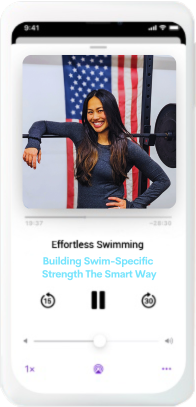
In today’s episode, Dr. Sandra Harrell, a former 5-time NCAA All-American swimmer and physical therapy expert, shares her insights on injury prevention, strength training, and performance optimization. With over 25 years of experience, Dr. Harrell covers the importance of consistent strength training, nutrition, and recovery. Her tips are valuable for athletes and those looking to stay fit as they age. Tune in now!
Website: https://www.theswimmersdoc.com/
Follow her on Instagram and Facebook
In this episode
- 00:00 Introduction
- 02:05 The Importance of Proper Treatment and Care for Injuries
- 06:06 Lessons Learned: How I Would Approach Swimming Injuries Differently
- 08:58 Common Mistakes in Nutrition for Athletes
- 12:02 When and How to Start Strength Training
- 16:46 The Importance of Progressive Loading
- 20:32 The Timeframe for Seeing Results in Strength Training
- 22:33 The Role of Nutrition in Muscle Building and Recovery
- 26:50 How to Make Nutrition and Training Effortless
- 29:14 Customized Programs: Tailoring Training for Athletes’ Goals
- 33:28 Finding the Right Balance: Training vs. Recovery
- 38:19 Success Stories: Overcoming Injuries and Improving Performance
- 42:46 Lifting Weights for Longevity: The Key to Enjoying Activities as We Age
- 48:33 How to Get in Touch with Sandra!
Links from this episode
- Change your technique and swim a smoother, easier freestyle with the Effortless Swimming membership
- Do you want to work with me personally to improve your technique? Join my swim technique coaching here
- View our freestyle clinic schedule around Australia
This podcast is brought to you by NanoClear — our own range of anti-fog swim goggles, designed by Effortless Swimming with the anti-fog treatment bonded into the lens itself (not sprayed on, so it doesn’t wear off after a few swims). Check out the NanoClear range here and use code PODCAST15 for 15% off.
Transcript
Read the full transcript
Summers don’t necessarily take strength training as seriously, nor do they think that they have to because, you know, they think, well, I’m in the water anyway, working out in the gym doesn’t necessarily transfer those same skills in the pool. And that’s far from the truth. The best lessons learned are the ones that you go through the process of. Like you have to figure it out yourself and it’ll always be a part of you. I can tell all of my athletes like, hey, strength training is going to turn your life, turn your swimming career around and they’ll hear it. But yeah, it’s always those that like take that step and they’re like, all right, I actually want to improve my swimming. Welcome to the Effortless Swimming Podcast to show that help swimmers and triathletes love the water, become a better swimmer and live a better life. Here’s your host, Brenton Ford.
In this episode of the Effortless Swimming Podcast, we dive deep into the world of injury prevention, strength training and performance optimization with none other than Dr. Sandra Harrell, a five-time All-American swimmer and expert in physical therapy. With over 25 years of experience and a keen eye for biomechanics, Dr. Harrell has a wealth of knowledge to share, not just about staying injury free, but also about how to maximize your potential in and out of the water. Are you making the most of your strength training routine or could your current habits be setting you up for failure? Dr. Harrell breaks down why consistent strength training is non-negotiable for swimmers and triathletes and how nutrition plays a critical role in muscle recovery and the secrets to building a routine that sticks. Plus, she reveals how to leverage technology to track your progress and ensure that your training smarter, not harder.
If you’re serious about swimming, triathlon, or you just want to stay fit as your age, you don’t want to miss Dr. Harrell’s insights on how to maintain longevity in your sport and keep your body performing at its best. Tune in to discover actionable tips that could transform the way you train and recover. Sandra Harrell, welcome to the podcast. Thanks for jumping on with me. Thank you so much for having me today. So where does this story start for you, your background in swimming? But what caused the transition to come across and start working with athletes on their strength and rehab? Was there a certain moment in your career or in your life where you started to make that transition and thought, this is what I really want to do? Absolutely. I always feel like it starts with personal experience, right? And so I competed and I swam at UC San Diego for four years in my college there and there I was a five time NCAA All-American
and a former two time pull record holder there. And but during those four years, you know, it was a lot of tough swimming but also a lot of injuries and going into college. Actually, I was already injured with the shoulder issue and, you know, I never really got the right treatment. I never sought the right care out. I didn’t know who to look for really. And this was, you know, over a decade ago. So it’s not like social media was a big thing. You really just had to go and look into like the medical directory to figure out what provider you’re even supposed to look for. And so I didn’t get I didn’t have the resources that I needed to compete at my best. So I competed, you know, all four years in college injured and it kind of tainted my experience in swimming. You know, quitting wasn’t really an option. I didn’t want to give up a sport that I love to do. But at the same time, the sport gave me so much pain day in and day out.
And so that’s kind of what I realized near the tail end of my swimming career that, you know, I don’t want future youth athletes. And, you know, collegiate athletes are really any type of athlete, right? You’re a weekend warrior or professional to have to deal with pain while wanting to train at the level of their preference. So I went into physical therapy and rehabilitation. I ended up getting my doctorate there. I also got my master’s in exercise science and health promotion. And so with that, I actually took a step, a big step away from swimming. I kind of forgot about it, actually, during my graduate studies and went into, you know, the clinical aspect and health care and worked in the hospitals for a while. And it just, you know, I just was burning out really quickly in a career that I had just began. And it took a lot of introspection and self reflection for me to realize or remember why I went into the field to begin with.
And so I took about like a year or two off from just seeing patients from working in hospitals and outpatient clinics and realize that, hey, I really missed swimming. That’s still something I was really passionate about. You know, I no longer was competing at that point, but I always looked forward to the chance to swim, you know, whenever I got the chance to and at the time I was lifting a lot more just to help continue maintenance of like my own rehab at one dot. And so, oh, I guess to backtrack, I ended up getting hip surgery because of labral tear in college. And so that’s kind of what led me down the rehab track.
And yeah, so, you know, kind of a long winded story. But ultimately, I came back to swimming and realized like, hey, why not treat the population and kind of give back to the sport that gave me so much, you know, joy in my youth and, you know, give back to these athletes that are super dedicated. But, you know, maybe they don’t have the right provider who understands, you know, the demands of physical and emotional and mental demands of swimming and the sport of swimming. So that’s where we’re at here. Well, hindsight’s always 20-20. When you look back at your own injuries that you had through swimming, what would you do differently now that you’ve got the experience that you have? If I if I had known, I would have looked at my nutrition much differently. I would have integrated strength training much earlier as well as, you know, taking some even minor injuries more seriously because minor injuries tend to be indicative of potentially future
and or reoccurring injuries. So somebody who, you know, may have a, for example, you know, a constantly sprained ankle, right, as a kid. They tend to respray that ankle over and over over time, you know, due to lax ligaments, right, and prior history of injuries, making those ligaments more susceptible to re-injuring. And so that same mindset and that same, you know, idea is, you know, transfers over to swimming as well, you know, somebody who has, quote, unquote, Summers’ Shoulder, which actually is a little bit misleading. You know, most people think, oh, I have Summers’ Shoulder. It’s one singular thing, but it really is just kind of a general name for shoulder pain. And, you know, somebody says, I have shoulder pain. That is not a diagnosis. There’s there’s nothing about it that tells me what you have. And so it can be various things like rotator cuffed hairs. It can be bursitis. It can be labral tears.
It can be impingement. It can just be a whole, a whole host of different injuries and conditions. And so, you know, somebody with, quote, unquote, Summers’ Shoulder. It can be one thing, but now it leads to other things down the line. And so I think, you know, having taken seriously of those things and making sure my nutrition was better, hydration, sleep, you know, stress management and strength training, starting a strength program in high school, you know, would have probably saved a lot of headache and heartache down the line. And I think that that’s still something swimming as a sport, you know, in the world of swimming. That’s still something that isn’t common, I think. Most Summers don’t necessarily take strength training as seriously, nor do they think that they have to, because, you know, they think, well, I’m in the water anyway. Why does the, you know, working out in the gym doesn’t necessarily transfer those same skills in the pool.
And that’s far from the truth.
Yeah, exactly right. But one of the things you mentioned there was nutrition. So what mistakes were you making with your nutrition back then? Was it in terms of the recovery? Was it in terms of having enough protein after you? Oh, you weren’t really probably doing much strength training. But what were those mistakes that you were making early on? It was both, you know, I think as a youth and even well into college to our college university at the time, we didn’t have a dietitian. You know, we didn’t really have any nutrition coaching specifically for our team. And so, you know, with training anywhere from three to six hours a day, you know, between lifting weights in college and swimming, you know, who knows how much yardage and how much distance as well as in the youth, you know, and being also, you know, and unfortunately, being a female, right, we tend to have these societal and cultural pressures to be thin.
And the problem is, you know, being thin and being an athlete, it’s it’s hard to do both. You cannot, you know, be a very strong and high performing athlete if your goals are to remain thin and, you know, just societal pressures of like girls not wanting to bulk up, girls not wanting to eat, you know, because they’re afraid of, say, getting fat or gaining weight. All of those pressures, you know, affected me as well as many of my female teammates. And so a lot of us were, you know, under eating, under eating in terms of maybe calories, but maybe overeating in terms of various macronutrients, right? We maybe were overeating carbs and fats and under eating protein. And it’s making sure that we are having the right ratios of each macronutrient. And that’s what kind of helps best fuel athletes.
Yeah, it’s something that I, when I look back on my early swimming career, I was certainly not having enough fuel during the session, during those bigger sessions where it might be five, six, maybe seven Ks. And we’re working, I think back to how, how hard some of the sessions were, like, it’s like seven or eight, two hundreds of butterfly. We’re doing like some 400 medleys. And it’s just like, it was massive training. And I don’t recall ever having anything during a session. It’s like, and it’s like, but that, as you said, with like social meter and the internet, like it’s just, knowledge has really just, it’s abundant. And I think we can, can be a lot better educated these days and it’s so much easier. So that’s a huge advantage that we have these days. But I think the other, the downside to that is information overload. And it can just feel like it’s too much. So sometimes when we have that information overload, we don’t do anything with it
because we’re afraid to make a decision. I think it might be the wrong decision, but a decision is better than no decision in many cases. So have you seen anything in relation to that in terms of the strength training, in terms of the nutrition where someone comes to you and they’re like, well, I’ve tried this, I’ve tried this, I’ve tried this, but none of it seems to work. Maybe it’s because they haven’t stuck to it for long enough. Like what are you seeing on your end when you have people come to you? Oftentimes, so I’m going to categorize my youth versus my my youth versus like my adult clients and athletes, right? So my youth, in terms of nutrition, they tend to under-consume what they need in terms of energy. These are also these are also the athletes that are consistently swimming two to four hours a day, right? Because they’re on a team, they have the time and the energy to do so. Usually my adult athletes, unless they’re, you know, training for a triathlon,
unless they’re a professional athlete, then they don’t. They really just train like once a day for like maybe an hour with masters, for instance. So for my youth, you know, they tend to be under-consuming in terms of what they should be eating and they are under-hydrating, which will negatively affect their performance as well as cognition and how they do in school too, right? In terms of strength training, you know, it’s it’s non-existent to see a youth athlete’s lift. And that is something that I’m working to change. That is something that I want to integrate into my club team and that I’ve started this year. And that’s something that I want to help and educate to other, you know, swim clubs as well, youth swim clubs that, you know, strength training is just as vital as the amount of hours and the quality of your sets in the pool, you know, it’s people tend to think it’s a supplement if they even include it, but especially for, you know, somebody who’s a sprinter.
So in terms of my very young youth swimmers, you know, who are, you know, say 12, 13 and under, I don’t expect them to specialize. They should probably get some reps swimming the mile as well as the 50 free, you know, as well as the 400 I am. They they need to learn to be versatile. I think that’s really important in terms of just general development as an athlete in terms of mental and physical resilience, right? To be able to do the mile versus like sprinting a 50. But it’s also important in terms of like development of motor control, endurance and, you know, the ability to minimize repetitive stress injuries over time. So it’s crucial there with strength training for them. And that’s something that I want to integrate. And, you know, especially for the maybe teenage swimmers that are 13 and up, where now they start to specialize. And maybe they’re looking into swimming in college, you know, and especially sprinters, you know, strength training
is an equal part in pool training because you don’t necessarily need to be training, you know, 10,000 meters a day as a sprinter, right? You need to be you need to have more specialization in your training. You need to have more power training. And that’s something that, you know, lifting proper strength program and a performance program is going to help you do that without having to add too many repetitive stress injuries, right? And so for my adult athletes and my adult clientele, they tend to, you know, maybe over consume their nutrients, their macronutrients, and they’re not prioritizing the right ones. So they tend to under consume protein and over consume carbohydrates, which isn’t necessarily a bad thing, but that will affect some goals that they would have. You know, should it be weight loss, fat loss, optimizing performance and muscle development? So that’s where I see issues in terms of nutrition for my adult.
As for strength training, I think, you know, it’s fantastic that our society now is embracing lifting a lot more, you know, into your 80s, 70s and 80s, right? And I think that’s fantastic. And it’s embraced now in women as well. So that’s great. But there again is still that stigma that, oh, you know, lifting will make you bulky, you know? And that’s something that I still have to remind and educate many of my female clientele, you know, and athletes that like, hey, you’re going to have to have like a very specific bodybuilder program and lift like seven days a week and lift like two to four hours a day to have that concern for the general population. Absolutely. You get the word to lift seven days a week, you know, and most people don’t. Even if you were to lift seven days a week an hour a day, that is not enough to make you bulky by any means. So those are some of the things that, you know, I enjoy educating my clients with.
And I think that it seems to be always so liberating, you know, when they realize that there are areas that they have yet to maximize to hit their potential. So, yeah. And when you say lifting, are you talking about a certain group of exercises or just you referring to general strength training? General strength training, yes. Gotcha. And where should the average adult start when it comes to strength training? Would it require gym equipment? Could they do body weight work? Where would you tend to start people? So it depends on the age group, right? So for example, if we’re talking about adults in their 20s, most of them tend to be, you know, if we’re talking about the male population, most of them tend to be relatively strong. So you can start with calisthenics and body weights. Sure. Same with women. However, you know, in our younger adult population, they tend to be fairly strong already. So I actually would recommend, you know, doing weights, using free weights,
using machines, something that will provide more resistance than your typical body weight because, you know, you can do as much body weight work as you want. Over time, your body adapts to it. So at some point, it’s like, say, the equivalent would be, say, you know, you haven’t swam in like five years and now you’re doing 10 100s on the 130 meters, 10 100 meters on 130. And that’s tough to do, right? Having not swam for five, you know, five years or so. But then you do that same set day in, day out. You do that for about two years. You know, that’s going to be super easy. It’s the same set, right? But your body has adapted to it. So now, you know, two, three years in doing the same set in the same interval at 130, you’re actually slowing down eventually, right? Because you’re not being challenged. And that’s the same analogy I would provide to, you know, my 20s and 30 year olds who are lifting maybe light weights and body weight because it’s like, you’re strong.
You know, the body is super resilient. Even if you were starting in your 50s and 60s, you’d be surprised with how strong you’d be. You know, you are. So generally, I would say like, you need to lift some sort of weight, whether it’s, whether it’s five, 10 pounds to start off with. And then progressing to more barbell work, doing more compound lifts, you know, getting under heavier weights, you know, that is, it’s loaded. It’s progressive loading, right? Just progressively increasing the load to fit your current capacity. But to challenge it just one step ahead. So your body isn’t adapting necessarily to your current workload.
So yeah, that’s kind of where I would start when it’s critical, especially as we hit 30 for women, because bone density decreases a percentage for every year, starting at 30 for women. And so you run into issues like osteopenia, osteoporosis for women. And then that tends to start for men as they enter their 40s with various changes in their hormones. So very important to start lifting the earlier the better, but it’s never too late to start.
Yeah, definitely. I’ve seen that across the board with athletes or swimmers and triathletes that that have actually started doing some strength training that have gone from essentially none. And the first couple of months, like it’s, I don’t see them get a huge benefit in the first couple of months because they feel a bit heavier, like their body is sort of changing. But then once they get accustomed to it and they get used to it, then we start to see the progression from there. And I’ve got some friends who are going through that now. They’ve just started some strength training, time for a bit slower. They’re a bit sluggish in the water, but as long as I stick through it, they stick to it, they’re going to see some really good results from that. And you know, a general guideline that I tell all of my athletes and my clients is that like you don’t see any there. There is not any notable strength gains until about six to eight weeks of
consistent strength training and consistent strength training would mean you’re lifting at least twice a week, not even once a week. So if you’re just lifting once a week, the amount of work required to see progress is going to take probably double the time, right? You’re just not building, breaking down muscle at a consistent and steady enough pace to see change quick enough. But if you’re lifting at least twice a week to maybe even three times a week, you’re going to see those gains a lot quicker. And so typically I tell my athletes, you know, who are consistent, give yourself about eight weeks, give yourself two months, OK? Of being consistent, stick to it, keep progressing. And then you’re going to really see notable performance differences after that, especially when you are consistent with it. Because the first, you know, one to two months of lifting, a lot of that is just, you know, tearing down your muscles.
You’re just super sore, super stiff all the time, especially if you haven’t lifted in some time, right? And so that’s, you know, and yeah, so that’s the thing people think that, oh, I lift, you know, working out means I’m building muscle. Actually, it’s quite the opposite. You work out and you actually break down muscle. That’s why you get sore. You get micro tears in your muscles. So the more you train, the harder you train, the more you’re breaking down muscles. You’re in more of like a catabolic state. And so that’s where nutrition comes in, right? Nutrition is a thing that helps build muscle. It puts you in an anabolic state. And that is what helps you rebuild your muscle and helps with muscle protein synthesis is really making sure you’re eating enough protein for your particular physique, you know, for your body weight. So for someone who is doing gym, what would you recommend they do to make sure that they can can eventually build that muscle
and that they’re refueling with the right macronutrients afterwards? And when should they take that? So for the general population, I would think that most people are under consuming protein. But if somebody is particularly training hard, both in the pull on and the gym, they really need to prioritize protein. And, you know, research shows that, you know, you need about 30 grams of protein in a single sitting for your body to start that process of muscle building. And it’s not just protein that you need. You also need carbs to help with activating and synthesizing protein to get that process started. So it’s not like I’m saying like cut out carbs, cut out fats. All you need is protein. You need all three macronutrients. It’s all very, very important. The protein is what’s going to help with rebuilding your muscle fibers and helping you to become stronger and whatnot. In terms of how often we should be consuming meals, right?
You you definitely want to train or you don’t want to train when you’re in a catabolic state, meaning, you know, you’re kind of hungry, you haven’t had anything to eat. So the great prime example is training first thing in the morning, right? We wake up and simmers are notorious to go and swim at five in the morning and not eat anything, right? Because who wakes up at three and eats a full on breakfast? Most of us don’t. So they tend to wake up, you know, maybe have some water or and then they head to the pool. And so you are training in a very, you know, a catabolic state and you’ve already been fasting for who knows, six to eight hours of sleeping, right? So your body is further breaking down. You’re not maximizing your training session. And then after that, sometimes, you know, people don’t have an appetite after training so hard, right? And so now you’re further going into a catabolic state and kind of degrading the muscle that you do have, right?
The body, the physique that you had to have. So, you know, I do recommend, you know, having something maybe easy to consume, whether it’s a protein shake, whether it’s, you know, fruit pouches or applesauce, you know, or even like a glass of chocolate milk, something to fuel yourself during practice. And then after practice, you know, as soon as you can have like a solid meal, you know, with protein, with carbs, with fat.
This podcast is proudly brought to you by Form Smart Swim Googles. The Smart Swim, too, is the next generation of Form’s award-winning augmented reality technology. They have an integrated heart rate monitor for constant real time heart rate monitoring, which allows you to accurately train your heart rate zones, which is the first time that you can do this in the pool, something we’ve had when biking and running, but the first time that you can now do it in the pool. Another huge feature that they have released is the swim straight feature. This is something that allows you to swim in a straight line without needing to sight. It’s a digital compass in the goggle display, and it’s race-approved by World Triathlon, USA Triathlon, as well as other leading race organizers. And athletes are already shaving valuable time off their swims by swimming straighter. I’m a huge fan of these goggles. I’ve used them for the last couple of years, and it’s something
that I use each and every week. And even just the simplest features of being able to see your splits after every turn makes a huge difference to not only the way that you train, but the enjoyment that you can have in the pool. And the new Smart Swim 2 has a reduced tech pack size by 15%, making them slightly smaller. The new ice seals fit a wider variety of facial structures. And the new straps and anchor points have been moved and adjusted so that it has a more stable fit. There’s additional features, which I haven’t mentioned, like the head coach workouts, training plans, as well as integrations with training peaks, Strava and more. This is something for all abilities and levels of swimmer and available worldwide from formswim.com forward slash effortless. And to get 10% off the Smart Swim 1 goggles, use the code effortless swim on checkout. That’s formswim.com forward slash effortless and use the code effortless swim on checkout for 10% off the Smart Swim 1 goggles.
And one of the things that I’ve found to be most helpful, not just with nutrition, but also training is having making things as easy as possible. And for me, it’s like I buy these protein bars fairly natural. They’re not too bad. They’re wide in bulk and I’ve just got a couple in the car. I’ve got some of my swim bags so that whenever I’m driving home from training, which might take 20, 25 minutes, I’ve got something there all the time. So it’s just easy and I don’t need to think about it. So same thing with going to training, pack my bag the night before. Put it by the door so I can wake up at 430 in the morning. I’m half asleep, but I don’t have to think. And it’s just this you make things as easy as possible. And then the similar with gym training, I’ll typically do things at the same time on the same days. So I’ve got this routine and the gym that I go to, I’ve got a program that I follow. And it’s just been this incremental buildup in terms of the weights
that I’m doing. So again, I don’t have to think a lot about it. I can just go there and do it. And it sounds silly, but it’s like it’s those little things that make it easier to do that’s going to actually make you follow through with it, because even like I can’t remember where I read it, but it was in a book that it’s like, even if you put like a, if you’ve got a rower or a treadmill and that’s in a room that might be downstairs compared to upstairs where you spend most of your time, even that small thing of having it in a room that’s a little bit further away means you’re 50 percent less likely to use it. It’s like those. Yeah, it seems silly, but you’ve got to make things as accessible, as easy as possible if you’re going to follow through with them. Exactly. Reduce the barriers to entry, right? And this is for anything, whether it is to go to practice, whether it is to eat, it’s just, you know, making it so easy
that it’s, you know, it’s just second nature, just grab something, you know, and not have to plan. So I I highly encourage meal prepping. I think that’s the best way, right? To make sure that you are fueling properly. Does it take a little bit extra effort? Absolutely. But you don’t necessarily have to, like, create a whole new meal, you know, just maybe make a lot of one meal before. And then if you’re open to leftovers, that is your, you know, meal. That is what you consume the next day for lunch and whatnot. And, you know, protein, protein bars are great. You know, they’re a great supplement, especially when, you know, you’re on the go. So I think I think that’s great. Yeah. And in terms of the programming that you’re doing for athletes, how do you make it so that they are progressively overloading so they know exactly what to do? Are you using types of software or apps? Like what’s your standard process there?
Yeah. So currently I’m on Train Heroic. And so that is an online coaching app. And what I do with my athletes is that, especially if I do a lot of one-on-one work with them, right? I the first week that I have with them, you know, well, I get them on boarded, you know, I send them an intake form and I kind of get their baseline level of what I believe or what they think they do, you know, and how they, you know, compete and train and how much they lift. Because most often people tend to overestimate their abilities and that’s OK, you know. And so but I’d like to see where they are mentally and what they, how they perceive themselves, you know, because that’s going to play into how they push themselves later on as well. And then so the first week, I’ll customize a program for them specifically to whatever their goals are, whether it’s athletic, whether it’s health related, whether it’s weight loss, you know,
and I get a list of all the activities that they want to do as well. You know, if they’re just a summer, then my program is going to be specifically strength and mobility. OK, if they’re a triathlete, you know, same thing, you know, if their goals are more, say, health related and weight loss, then I’d be programming some strengths, some mobility and some form of cardio, whether it’s swimming, running, cycling. And if somebody is injured and they’re coming to me for more of like physical therapy or like rehab coaching for an injury, then their program is going to look really different, right? Because it’s going to be very much involved with improving their current condition before I transition them into a full body performance program. But regardless, the first week is always going to be a measure of their baseline of I’ll put in weights of what I believe they are capable of doing just based on what the intake,
what they filled out in the intake. And so and then from there, what’s great about the app is for every session, it calculates a readiness score for me. So I’m able to kind of measure their stress, their mood, their energy, their sleep, their workload and kind of gauge, you know, like if they’re also swimming and training on top of what I’m doing, if they’re overtraining, right? If they’re burning out, if they’re at risk for injuries or illness, especially when they score very low consistently, right? And so that gives me information that like, hey, I need a taper down when I progress you each week, right? I’m going to take all of that data. I’m going to progress you a bit slower or maybe just maintain, all right? That way your body can catch up. You know, maybe we don’t work as hard with me because, you know, maybe during practice or when you’re training with your triathlon club or with your some team, you know,
they’re not going to have one workout and you follow it, right? But if you’re coming to me, I have a more customized approach. I can tailor it to your needs. So if this week you need a little bit more recovery, I tone down the intensity of lifting and I wrap up more mobility, more recovery work, give you more tips and cues on how to increase your nutrition, your hydration and sleep and sleep hygiene, right? And stress management skills. If you’re scoring high on the readiness score, then I know I can push you a little bit the following week, right? Because I know that like, OK, this is way too easy for you. I’m going to push you a little bit harder. Maybe the lifts are a little bit heavier, right? Maintaining still mobility is just as important because mobility and strength training go hand in hand with performance and just general health. And so that’s how we progress from there. So I make note of the weights they use and then I manually progress each
and every one of them so that I know that, you know, they are capable doing those specific weight weights. I don’t blanket just regardless of whoever the athlete that I’m training or coaching, everybody goes up, you know, 50 pounds, for instance. It’s very much tailored to your specific capacity. Yeah. And that’s one thing I’ve found. And I like Joe Frill, he allegedly legendary triathlon coach. He for older athletes, I think he sort of refers to him as anyway, sort of 50 or older. He says it’s like two weeks on one week off. So like one one recovery week with two harder weeks and I’m late 30s. So for me, I think I can probably get away with about three weeks of hard work and one recovery. But I’ve always found that in terms of the gym work, I if I’m going pretty consistently for four, five, six weeks, I start to plateau quite a bit. But then if I say go away on a camp or I’m travelling and I don’t get to the gym for five days or seven days, that recovery time,
I come back and I tend to be able to up the weights. And it’s like my body just needed that rest that needed that recovery time to be able to catch up and then get to the next the next level. So I have to always remind myself. It’s like, all right, just it’s OK to have a lighter week where maybe not going as often or I’m just I drop it down because then the body catches up and then I can start to get to that next level. And the same thing obviously applies in your swim training, too. You don’t want to be going hard every single week. You need to just have a have a recovery week in there. Yep, absolutely. I 100 percent agree. And that’s something that people just totally disregard, right? People just don’t think about or don’t emphasize the importance of recovery. Recovery is just as important as training. It is part of your training, you know, you train what two to four to maybe six hours a day, right? What do you do the other hours of the day?
What do you do the other 20 hours, 18 hours of the day, right? That is just as important, you know, if not arguably more important because quantity wise, right, there’s just more of those hours. So what are you doing with your sleep? Are you prioritizing it, you know, is the quality of your sleep good? Are you getting maybe 10 hours of sleep? But really you’re asleep for like four of those hours because say you have an infant, right, and they’re screaming all the time, right? What are you doing with your nutrition? Are you prioritizing protein for your current age, for your current training requirements and then like hydration, stress management, work, life balance, all these things come into play in those other 18 to 20 hours. And so, yeah, I 100% agree with you, you know, recovery sometimes like recovery is maybe even more important, especially for somebody who is constantly training at a high intensity week on week on week on,
you know, then you’re you should actually probably prioritize recovery a little bit more and then you’re going to see a huge improvement in your performance as opposed to just keeping, keep pushing on, you know, which tends to be the tendency, I think, for a lot of triathletes and summers. I think it’s just that mentality that these athletes have. I think it takes a very specific athlete to go into these types of sports. And unfortunately, we tend to think that more is better when that’s not necessarily the case sometimes. Yeah, that’s exactly right. That’s the typical like a tight personality, like just go, go, go. And if I’m, yeah, if I’m stopping, then I’m going backwards. So, yeah, I can see how it happens. It resonates a lot with what one of our previous guests said, Jared Briffer, he’s a free diver. He coaches people on breathing technique. And one of the things that he mentioned was that he started doing
some breathing training to help with his free diving. But that was only for an hour to two hours a day at max. And he was getting a little bit better, but not much at all. And it was the other 22 hours of the day that he wasn’t looking at. So one of the big issues he had was when he was sleeping, is that he was a mouth breather and he just wasn’t sleeping or resting well. So when he eventually switched to nose breathing, he just taped his mouth. He found that over the course of the next couple of weeks, he just started to really improve in his ability to do what he needed to in free diving, because that was eight to nine hours taken care of with better breathing. And then when he focused on it, when he was awake as well, just having that the nasal breathing really just progressed in massively. And as you said, similar thing for swimming. It’s like there’s he might swim for most adults, right? They might only swim for one hour, two or three times a week.
And you’ve got so many more hours in the day. So how do you what are you doing outside of that strength training? How do you move? What’s your mobility like? There’s so many other other factors there that it’s easy to to ignore. But when you look at it in terms of just quantity of hours, the time they’re actually in the pool is as adults, it’s not a whole lot. So we have to consider those other things. Absolutely. Yeah. And in terms of people you’ve worked with, does anyone stand out in terms of someone who’s either come to you injured and they’ve been able to rehab that and come back stronger or anyone who has just come to you wanting to build their strength and they’ve seen really good results from it? Yes, I have right now. I’ve got a fair number of youth athletes who have found me on Instagram because their parents have been following me and their kids have been hurt. Just repetitive stress injuries, you know, rotator cuff issues,
some tears, some strains. And because this person is a youth, I don’t want to disclose his name. But it’s he’s made significant strides in his program. We’ve been working for about three months now and three to four months now. And he came with very severe shoulder pain. He had pretty severe, you know, like biceps tendonitis, some rotator cuff, some supraspinatus issues as well, as well as other issues, too. There are other medical conditions that he’s dealing with that are contributing to how slow his recovery is. But once we found kind of what the culprit was, he’s he stopped swimming back in December. He started again in June and he has gone PRs in every event that he’s swam. And he hasn’t been swimming. He had to stop swimming for several months because his shoulder just could not tolerate it. And he’s been lifting instead. So just that’s something that people don’t realize that like just because you’re injured, right?
And it’s not the end of your career. You don’t have to push through in the pool, you know, and just to get a PR. In fact, he did quite the opposite. You know, we had talked about not swimming as much and maybe slowly ramping up your yardage, you know, 400 meters at a time for practice. He started swimming like 400 meters to begin with and maybe was just swimming 2000 at the end. And Granite is also a sprinter, right? So it makes it a little bit not easier, but you can kind of get away with doing more strength training outside of the pool to complement what you’re doing in the pool, right? So this would be different for somebody who swims a mile or are endurance swimmers. So with him, he’s just he’s been messaging me and just sharing that he’s been shocked and pleasantly surprised with his capacity and what he’s been able to achieve in the short time that we’ve worked together, even though he’s barely just getting back in the pool.
So it’s, you know, stories like that. It really warms my heart and it’s it’s kind of like a lightbulb that goes off, right? The best lessons learned are the ones that you go through the process of, like you have to figure it out yourself and it’ll always be a part of you. I can tell all my athletes like, hey, strength training is going to turn your life, turn your swimming career around. And they’ll hear it and they some might even agree. And they’re like, yeah, absolutely. But until you do it and realize the potential, it’s always just going to be, you know, I’ll get to it. Yeah, it sounds like a good idea. But yeah, it’s always those that like take that step and they’re like, all right, I actually want to improve my swimming and I want to integrate like a good strength and performance program. And, you know, those the results speak for themselves and they’re happy. I’m happy, you know, I just I just want them to have that tool
in their belt that like our generation of swimmers and generations before us didn’t have, right? Strength training wasn’t that big of a deal. If anything, it was de-emphasized, right? Because we were afraid that we were going to get too bulky and heavy in the pool and we would be swimming slower. And so how far from the truth was that?
Yeah, exactly right. Yeah, so, you know, I think this next generation of swimmers they definitely are embracing more strength training now. And I think that’s great on multiple levels in terms of performance, but just general like learning how to move your body under weight, under resistance is important now. It’s and it’s so much it’s so much easier to to sell the cure. Rather than the prevention. And that’s why, you know, someone who’s come to you with an injury, they’re like, just tell me what to do. I just I don’t care what it is. Just tell me what to do. And someone who’s just looking to maybe prevent injuries, they’re not in that pain. So they’re less likely to to stick to it as diligently is someone who who is injured. But, you know, you learn lessons the the hard way many times. And I mean, the reason I really started to do more strength training was because I kept injuring my back and it was happening every two to three months.
And it would put me out for a couple of days and get really frustrated about it. And then when I actually started to do strength training, I was on this back extension machine. I think I was moving, I need to look back, but I have a feeling it was like 60 to 80 pounds. I think it was on this back extension machine. And now I’m up to almost double that. I’m at more than double that at maybe one one thirty or one forty. And that’s taken nearly two years to get to to that point. But when I look back at how weak I was when I first started strength training on how how did I it was like no wonder I was getting injured. It’s like I was just I thought I was strong because I was I was fit in the pool. But actually looking at what I can move now and what I can do now far beyond what I used to used to be able to do. And that’s two years. You know, it’s a fair it’s a fair fair while, but that time is going to go by regardless of whether I’m in the gym or not.
And if I want to I’m looking forward to the next five, 10, 15 years, like I just I don’t want to get injured because I hate not being able to train. I hate not being able to surf or go for a run. So I just want to be able to do those things that I love. And because I work with a lot of adults who have either taken up swimming because they were running and they’ve gotten injured and they can’t run anymore. Yeah. And I just it just happens. It just happens as we get older. So I’m trying to I’m trying to just prevent that as much as is possible. Because yeah, exactly. That’s what it’s all about. It’s you know, making sure that you are able to do the things you love, like surfing, hiking, running, swimming, competing, you know, like those are all really important things that bring a lot of joy to people’s lives. And that’s what makes up, you know, quality of life as we age to be able to have the independence to do those things.
When we want to, however we want to, you know, and how often we want to end, you know, the sad thing is that for every day and year that goes by, we’re all only getting older, right? That means we all are all also getting a little bit weaker each year. The amount of work to lift, like a barbell, 45 pounds is going to take a lot more for somebody in their 40s than somebody in their 30s, given that they’re equal in terms of training. So somebody who is super fit in their 40s and somebody who is not fit in their 30s. Obviously, that’s going to be different. It’s going to be easier for the 40 year old because they’ve been training. But say the 30 and the 40 year old or the 40 and the 50 year old who is both training, 45 pounds is still going to feel a little bit heavier for the 50 year old. And that’s just because of natural aging processes and something that you brought up that kind of reminded me was that,
like you said, you’re very, you know, most summers are very fit in the pool. They can some laps around the general population. No problem, you know, even without training, right? But when it comes to the gym, you know, we tend to be much weaker, not necessarily than the general population, but we tend to be weaker. And there is a reason why, you know, when you’re swimming, you’re actually anti-gravity. There’s no gravitational pull that you have to deal with. There is no gravitational forces. That your bones and your joints and your body have to, you know, combat against because of that. That increases your risks of osteopenia, osteoporosis. You are losing bone density. So swimmers and cyclists actually are notorious for having less bone density than, say, runners, because runners tend to have that compact, that compact force going into their joints. That builds bones. But as swimmers, when you’re anti-gravity throughout your whole training
and that is all you do, you’re actually putting yourself at risk for developing some of those bone diseases over time. And so which makes it even more important for you to be lifting as we age, especially if you are a swimmer, especially if you’re a triathlete, to fight those fight against normal aging cross and to build longevity and building stronger bodies so that you can do more of the things you love for longer periods of time. So, yeah. Yeah. And that’s what I feel that I’ve transitioned over the last couple of years to that where, you know, before it was about winning races and, you know, doing as best as I possibly could. And now, yeah, it’s just more about I just want to keep doing this. I want to be able to keep doing it as long as I can. So, yeah, so I think I think it’s a great, it’s a great sales pitch for getting people into strength training. Because I think and I’d say like the reason you see a lot of posts on
on Instagram and things like that of people, especially when they first like take something up with it’s going to the gym or something like there’s often a lot of posts there because it’s it’s a good feeling. It’s really addictive. And I think once you get into it, you go, I don’t know how I how I went without this. So it’s really, really important and I think you’re a really important person in that space for people who are doing swimming or triathlon to either overcome those injuries, rehab them or just to keep them strong, keep them going for for life. So for anyone listening to this, what’s the best way to get in touch with you or find out more about what you’re doing? Yes, please either check me out on Instagram and my handle is at the Summers Doc. And if you want to learn more about me, my website is www.thesummersdoc.com. And if you want me to send me a message through Instagram or you can contact me through my website as well.
Sandra, it’s been great having you on. Thank you so much for sharing your experience in the strength and conditioning. So I’m looking forward to having you back on in the future because I’m sure there’s a lot more we can can talk about and get into maybe some of the the nitty gritty, some of the details of strength training. So thank you very much. Absolutely. It has been such a pleasure. Thank you for having me. Thanks for listening to the Effortless Swimming Podcast. If you’d like us to help you become a faster, more efficient swimmer, go to www.effortlesswimming.com.