







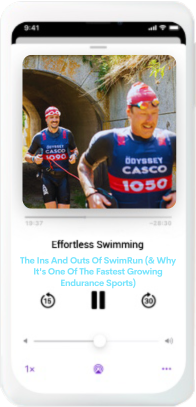
We’re thrilled to have Chipper and Chris, the powerhouse duo behind the Löw Tide Böyz, join us. Based in Northern California, this dynamic SwimRun team is on a mission to grow the sport of SwimRun and bring it to the forefront of endurance athletics. In this episode, we’ll explore why many endurance athletes are making the transition to this sport. We discuss the reasons behind its rapid growth and provide valuable insights for those interested in getting started with SwimRun. Tune in now!
00:54 Introduction to Chipper and Chris, the Löw Tide Böyz
6:27 What is SwimRun? The Basics and Origins
8:29 The Evolution of Equipment and Gear in SwimRun
13:55 Training and Strength Requirements for SwimRun
16:55 The aha moment: falling in love with SwimRun
20:36 Unexpected Challenges and Overcoming Obstacles in SwimRun
26:35 The Success of the Löw Tide Böyz Podcast: Building a Global Community
29:41 The Future of SwimRun: Innovations and Changes
35:04 Your Guide to Starting SwimRun: Resources and Tips
36:38 Get in touch with the Löw Tide Böyz!
Website: https://lowtideboyz.com/
Follow The Löw Tide Böyz on Instagram
Change your technique and swim a smoother, easier freestyle with the Effortless Swimming membership:
https://effortlessswimming.com/training-and-membership-plans/?el=blog
Do you want to work with me personally to improve your technique? Join my swim technique coaching here:
https://effortlessswimming.com/stroke-analysis-membership/?el=blog
View our freestyle clinic schedule around Australia:
https://effortlessswimming.com/freestyle-clinics
Try PILLAR today, head to pillarperformance.shop and enter code EFFORTLESS for 15% off, or for any North American listeners, enter the same code at TheFeed.com.
Watch the episode on YouTube:
Transcript
Read the full transcript
So you’re swimming with your shoes on, you’re running with a wetsuit, so it definitely has a little bit of a unique, you know, some, some might call it dork factor to some of the gear, but it has a unique gear piece to it. But yeah, it’s really just an endurance event, a multi sport endurance event where you’re alternating between running and swimming. Another way to really summarize swim run is sort of like amphibious trail running, where, you know, most of these races are on trails, you get to the water and you just keep going. After you do one transition or two, I mean, Brenton, I’m sure you’ll appreciate this while when you did your swim run, it’s just like, well, isn’t this just like the weirdest thing I’ve ever done? Welcome to the Effortless Swimming Podcast to show that help swimmers and triathletes love the water, become a better swimmer and live a better life. Here’s your host, Brenton Ford.
Chippert and Chris are the duo that make up the low tide boys. Based in Northern California, this dynamic swim run team is dedicated to growing the sport of swim run. They also host their own podcast called the low tide boys. And on this episode, we talk about why a lot of endurance athletes are transitioning across the swim run, why it’s one of the fastest growing endurance sports. And we talk about all the ins and outs that you need to know to get started in swim run. My guests today is Chris and Chippert, the low tide boys. These are the number one swim run experts in the world. They were just telling me how good they, how much they know about swim run. So Chris and Chippert, welcome to the podcast. You’ve got your own podcast on swim run and really sort of well, well followed podcast, but also highly entertaining with some of the content you put out. And just two people who really enjoy swim run. So today on the podcast, I wanted to chat about what swim run is all about
and what got you guys into it and why you’re so hooked on swim run. So welcome to the podcast. Yeah, thanks for, thanks for having us. Of course. Well, it’s, it’s sort of Chris’s story to tell. I was not his original partner, but all that Chris tell that story and then I’ll join in once, once I enter the picture. Yes. So I think it was 2015 or 2016. My wife gave me, you know, a Christmas gift. Essentially, it was this coffee table book called the world’s toughest endurance challenges. And I was into triathlon. Chipper and I were already good friends, training buddies have done a bunch of adventures together, endurance adventures together. And I read about this race called Attila. And it seemed ridiculous to me. I started doing a little bit of research, found the YouTube channel, which is, I think most people’s first entree into swim run or some just crazy hype movies that Attila and other race directors put out. And essentially found that there was this race in Casco Bay. So
I asked a friend of mine, not Chipper, if he wanted to do it. And he said yes, but I ended up being injured. So passing on that first year of that race. And then a few years later in 2018, I still wanted to do it. By that point, Chipper and I had done 200, 200 mile double century bike rides. We’ve done turkey trots. We’ve done ultra marathons, just all kinds of random activities. So I was like, Hey man, what do you think about doing this? Basically, the rest is history. In 2018, we did two races. Yeah, exactly. We did two races. We did California swim run as our first swim run that I was in San Diego. Super funky race, started at like two 18 in the afternoon after the last regatta race or something. And all leading up to Casco Bay 2018, which was really our first like legit swim run. And Chipper, so how do you feel not being the number one pick there? Have you gotten over that? Yeah, lots of therapy. I
finally moved beyond it. But no, Chris and I, like you mentioned, I mean, we had, we had done your triathlons. We were, we had been great training partners for probably five or six years at that point. And it was, Hey, I’m going to, you know, it would be Friday night. We’d be texting. He’s like, Oh, I’m going to do, you know, a 20 mile run in the Marin Headlands. You went in, I’m like, Sure, let’s do it. You know, we would always kind of have these training things. And the swim run just to me seemed like, Oh, that was another, another thing to do. Another way I get to hang out with Chris, basically, and we both had our first children. So we were kind of in the, we were really struggling with finding all the time to do the triathlon training with spending so much hours on the bike and running. So swim run kind of fit like a little, okay, we don’t have to dedicate so much to the bike training. You know, we’ll kind of stay a little bit fresh in the pool and we run,
you know, ultra marathons. So we’ll be fine. It was sort of how we approached that first race at Casco Bay. And, you know, we were, we were rocked. We were, we were, we were humbled, I guess is the best way to put it. Yeah, we were certainly rocked, but at the end of it, we were like, Oh, well, wasn’t that a thing? And when’s the next one? And that pretty much started off on our journey. I’d also really started the journey of the podcast, because as Chipper mentioned, we’re training buddies. And, you know, we’ve had these, these texts threads going is like, Hey, who’s doing what over the weekend? And it was basically fighting your endurance date. And we would also do these race report rides where it’s like, Hey, if anyone did a crazy endurance challenge, it’d be like, you get with your training buddies, and you just like regale them with the saga, you know, whether it doesn’t matter if you won or lost, just like, tell us a story. And we would, you know, invariably, there’d be
some communications like, okay, what was swim run? What’s happening? Like, I don’t understand. Like, well, you know, all the things that we still hear actually, and, you know, fast forward a little while, and we were like, Hey, we’re signed up for Attila Catalina, which was the first time that Attila was coming to do a race in the US. And that was on Catalina Island in California. So we were really excited about that race. A bunch of our friends were asking us what was going on. And Chipper, who already had some previous podcast experience, because he had a show with, with another buddy of his, he was like, why don’t we just do a podcast and just explain what we’re doing and educate some people? Because there really wasn’t anyone in the space with our sort of professional backgrounds. We were like, Hey, we could actually do something that would be useful for the sport that we think it’s cool that nobody knows about.
And kind of the rest is history. And so Chipper, for those that are listening, there might be people who don’t actually know what swim run is all about. It sounds self explanatory, but there’s a little bit more to it than, than yeah. So for someone listening who doesn’t know what swim run is, what would be your sort of 60 seconds on that explaining what it is? What’s the elevator pitch on the swim run? So I’ll start with what it is. And it’s definitely not a triathlon just minus the bike. It’s way more than that. So I think the best way to think about it is it originated in Sweden where there’s a lot of islands there. And they literally would run across the island. They would get to the water. They would swim to the next island, run across that one swim. So you’re alternating between running and swimming. It originally was like a point to point sport, but you do it all in the same gear. So you’re swimming with your shoes on, you’re running with a wetsuit. So it, it definitely has
a little bit of a unique, you know, some, some might call it dork factor to some of the gear, but it has a unique gear piece to it. But yeah, it’s really just an endurance event, a multi-sport endurance event where you’re alternating between running and swimming, where you literally, you get to the water and you hop in, you swim to the next bit of land, you run across there, you get to the water and repeat, rinse and repeat until, until you’re done.
Sowed it well. And the dork factor is 100% there. I can say it because I’ve done one before. And, you know, it’s hard to get away with training, you know, anywhere in public when you’ve got a, you’ve got runners on and you’re jumping in the water swimming, you’ve got a pool billy attached to your hip. That dork factor is certainly there. Certainly. Yeah. I think most people, we usually get three reactions when, when people see us sort of like in the wild training is people think we’re like Navy SEALs or special forces or something and they leave us alone or people just look really confused or the really confused people actually stop us and then be like, Hey, what are you guys doing? So, and of course, chipper, chipper is usually on cons with this is like, well, we’re the low type boys and this is a swim right? You don’t drop that we’re Navy SEALs. This is what we can’t talk about. I don’t think anyone would believe it after seeing us in wet season. In terms of the, the equipment, how’s
that changed and evolved over the last couple of years that, that the sport has evolved because it’s a very fairly new sport and there’s certainly some innovations that are coming out of it. Yeah, absolutely. I mean, from the origin, origination of the sport to where we’re at today, it’s tremendously changed for the first Attila, which means island to island and Swedish was a 70 kilometer race and it used to take folks 24 hours to finish the race. Now the world records like seven hours and they were bringing no joke inflatable air mattresses to lay on to swim in between the islands in, in the Stockholm Archipelago and they would, you know, take their shoes off every time, put them in a bag, you know, they had like more kind of a venture racing style. But once they started kind of figuring out the wetsuit component on chopping the wetsuit off at the knees and then, you know what the elbows and kind of making it a little bit easier to
run and really freeing up the running capabilities, that’s when the times of like the race times really started to drop. And that’s where the gear started to play a bigger factor in it really kind of around the wetsuit. The wetsuit technology really started changing. Then they really started getting much thinner with the neoprene on the on the front panels, not having any neoprene on the lower half. So it’s really almost like a kind of like a swim skin style fabric or textile on your bottom half and then a very thin, you know, two millimeter neoprene kind of upper and that’s pretty much the suit it zips in front. So it’s very, very nimble. You could be very quick in it. In addition to, you know, you use hand paddles and a pull buoy to kind of offset some of the drag of swimming with your shoes. But yeah, the, I would say in the probably the last six years, the technology has really shifted and that’s
with the technology shift and the gear and the equipment, the speed has just come right along with that. And what about the size of the paddles, size of the buoy? Like, has that changed as well over the years? Because there’s some, there’s some huge looking pull buoys, huge paddles. What’s the, what do most people tend to gravitate towards?
Well, I think, you know, the way the sports been evolving and one of the cool things about it, it’s like, there’s still a lot of room for self-expression and a lot of room for iteration in terms of the technology. I think we’re really kind of in the golden age of swimmer right now with people figuring out what’s the optimized kit. And what we’re seeing now as an optimized kit is paddles as big as you can handle and then a pull buoy that allows you to maintain optimal sort of body composition in the water to compensate for swimming and shoes and all the drag that creates. So the pull buoys are pretty big. They’re super buoyant. They’re essentially like flotational devices. You know, no one’s sinking in these things. I mean, if you jump in a pool with one between your legs, you’re like popping out like a, like a dolphin or something. They’re so buoyant. So that’s basically, you know, it’s as big as you can handle. Uptalaw, which is really sort of like the governing body of the sport,
they have a maximum size of a pull buoy and it’s plenty big. It’s plenty big. And our advice is always like, get whatever pool, use as big a pull buoy as you can, as you can handle or as you need. But there’s plenty of options these days. And what about the strength required to swim with really big paddles? Like, is that something you’ve had to develop over time and train? Are you doing anything outside of the pool to develop that strength like that? Because they’re huge paddles. And I know even just swimming with like something as big as your hand or slightly bigger, like you can kind of feel that if you’re overloading. So what, what do you guys do to be able to handle that size paddle? Yeah, I mean, Chris and I aren’t, aren’t swimmers by, you know, by nature, we’re sort of adult onset swimmers that’s like, Oh, we got to swim. There’s a swim like for a triathlon. So we got to like make sure we don’t drown.
And then we’ll get to the bike was sort of always my motto on the swim piece. But I’ve since adjusted my mindset on that. But what we do specifically and kind of the advice that we give to folks is start with what you’re already using. So if you’re already kind of mixing paddles in your normal swim sets and routines, just stick with that same size. You don’t need to go get the big garbage can lid size ones and you know, worry about that. You know, for Chris and I, it’s something that usually kind of in the off season might cycle off a little bit of the paddle work just to maybe focus a little bit more on technique there. But once the season starts up, you know, you will kind of, we have sort of the size of paddles that we normally been using, but you know, doing a little bit of film and underwater analysis with different size paddles, I was able, we were able to tell like, Hey, when we step it up from the medium to the large,
your stroke actually really breaks down. So the largest too big. So, you know, maybe hit the hit the weights a little bit more in the off season or with the with those stretch, stretch bands as well. So yeah, like strength, strength training is something that we’ve been pretty diligent on this year and mobility that definitely helps maintain and helps you hold good, good tension on your, on your stroke there with the, with the bigger paddles. But yeah, go, go with what you can handle is, is our real advice on that piece. Some people, if you’ve never used paddles and you have a race coming up, just no need to, your hands will work just fine. How much of your swimming are you doing with the equipment on versus with, with no equipment? And does that change the close you get to a race? Well, I think, you know, that the way the way we kind of approach it is like, Hey, we’re, we’re swim runners and we’re
training for swim run swimming. So because we’re in season now, I would say a good percentage of our work is using paddles and buoy just to, you know, longer sets at tempo, you know, 400s 500 stuff like that, 800s even just to really get used to sort of the strengths that’s required. I mean, for swim run, you’re not really going ballistic for 23 seconds. A lot of the swims are longer. So it’s really about trying to keep a low heart rate and a good stroke rate to just like keep it in zone two while you’re moving as quickly through the water. So a lot of it is really optimized for that. I mean, could, could we probably do a better job working on technique by not using as much gear for sure. But I think during the season, we’re just optimizing for what we’re going to be doing. Well, that’s the thing. Swims are so long, right? Like it’s not, these are not short events that you’re doing. Yeah. I mean, to a lot of the world
championship there that Chris and I have done the past two years, it’s coming up here. It’s the first Monday in September, but a total of 10 kilometers swimming and about 60 kilometers running between 26 different islands. So the first swim of the day is a cool 1600 meters to start you off. And then there’s a swim that’s, you know, as short as 25 that you’re really just, you know, we don’t even put our goggles on for that one. You just kind of jump in, you get wet and you hop right out and everything in between the mile and the 25 meters. So yeah, it’s really the variance of it is part of kind of what makes the sport really exciting and fun to do. This episode is brought to you by Pillar Performance. Our new sponsors Pillar are a sports micronutrition company. And the easiest way to describe it is that while hydration and carbohydrates products will take you through to touch the wall as fast as possible. Pillar’s
mission is to get swimmers to the starting blocks in the best condition over and over again. I recently started taking Pillar triple magnesium after a friend had recommended it and it’s been a game changer for my sleep and recovery. I take one scoop 30 minutes before bed each night in the same way that you might start your day with a coffee. I finish it up with the magnesium and recover better for tomorrow’s session in the pool. Pillar performance is used by some of the biggest names in swimming and triathlon, including Zack Stubble to Cook, Jan Frodeno, Ben Canute, Ash Gentle, Taylor Nib amongst the host of other well-known swimmers and triathletes. Where Pillar differs from other micronutrition you may have taken before is both the quality of the types of magnesium and the tangible results that I see on my garment each morning. If you’d like to try Pillar today, head to pillarperformance.shop and enter code effortless for 15% off. That’s effortless
for 15% off all first-time purchases or for anyone in North America. Enter the same code at thefeed.com. Was there an aha moment where you fell in love with Swimrun for either of you?
Yeah, and I think it’s probably the same story for a lot of people. It’s the same thing for a lot of people. Once you do your first transition, another way to really summarize Swimrun is amphibious trail running where most of these races are on trails, you get to the water and you just keep going. After you do one transition or two, I mean, Brenton, I’m sure you’ll appreciate it as well. When you did your Swimrun, it’s just like, well, isn’t this just like the weirdest thing I’ve ever done? And there’s this sort of magic to it, which is just like, wow, that was really something. And then we’ve done a bunch of Swimruns at this point. And that transition is really being able to transition well. That’s really when you’re not swimming, then running, then swimming, then running. You’re swim running because moving through nature as seamlessly as possible is just something really, really cool like that. Yeah, but that aha moment, I think, and we mentioned a little bit earlier that Casco Bay
2018 was our first big Swimrun. That one took us seven hours probably. And we were,
yeah, I mean, we were, we looked at each other before the last swim and I’m like, well, my shoulders are pretty blasted. Chris, your feeling blasted like, just go until you can’t and then I’ll take over. So we were like physically challenged and conquered actually, to be honest. But yeah, once we got across that finish line, it was like, oh my God, I’m glad we’re done. But it was just like, we got to do this again. It was just such
magical experience doing that, that it instantly wanted to go back and do it again. You know, and I think to that point, Chipper, I think we haven’t really talked about it, but really one of the most unique aspects of Swimrun and what we really think is the best part of it is really the partner aspect where, you know, I’ve done, Chipper and I have done 19 Swimruns together. We do a lot of training. We’ve done 50 mile, like I mentioned, all sorts of things together. But this is something that we do together is really good friends and we’ve experienced and we’ve gone to all these places. We’ve gone to Sweden and everywhere else, right? And crossing that finish line with Chipper and not having to be a time trial like a triathlon or anything else, you know, that really adds to sort of like the magic of it. And, you know, taking care of your partner, your partner’s taking care of you. You’re really bringing out, you know,
you’re more than the sum of your parts in many ways. And it’s just really, it’s a beautiful thing. I’m obviously like a Chief Swimrun Evangelist. Yeah, we’re kind of biased, I guess.
Oh, that element of team though, in sports where, you know, typically it’s very individual if it’s triathlon, if it’s swimming, you know, you see it in the Olympics at the moment, you’ve got, I’m watching the swimming, we’ve had one relay so far. And just, and whenever I’ve spoken to people who have made it to that level, they’re always like it, like the relays, that is what really drive them. And that’s when they can pull out these amazing performances because they’re doing it for other people. So the fact that every race for you is with someone else, I think that’s a huge benefit. And when I train for a long distance from that, I did a couple of years back, I did a lot of my training with a friend and obviously the race wasn’t as a team, but the training was and that made those long, you know, 10, 15 K swims pretty easy to do because I had someone there with me. So it makes that time really fly. And you’re not going to miss a training session
if you know the other person’s going to be there. So I think it makes it a lot easier. Yep. In terms of any races, can you share an unexpected challenge that you faced and how you overcame it? Because over the course of 19 races, I’m sure there’s been a few moments where something didn’t go as planned. And that’s every race. Pretty much. Every, I can imagine. And that’s, I think that’s part of the, part of the beauty of it as well is that because nothing is fixed and you’re really just approaching nature as it exists, there’s no, oh, we have to make this bike length, you know, 25 miles or whatever. You just are approaching it how it is. You sort of have to be really, if you do a lot of Sormons, you start to be really good about sort of rolling with the punches and knowing when, when there’s a, when there’s a, you know, an issue or an obstacle to overcome, like how are you going to do that? I mean, I would say probably every race we, we’ve had something come up that was,
that was an obstacle, but I think one race that really sticks out. And this is, you know, this was in Washington state. So the Pacific Northwest and the United States here off the, on the Orcas Islands and the San Juan Islands, just an amazing bit of country up there. And literally part of the race, you think you’re in like the return of the Jedi, you’re just in the forest. There’s no one around. But I, and you’re running in a wetsuit. With your friend attached to you, but I, I mismanaged my, my fueling pretty, pretty, pretty well. So I had a solid four hour bonk on my hands and that wasn’t great for me at the time, but, you know, using the sum of your parts and Chris really, you know, got the gold star for the day on that one, but really took the charge, let all the swims, let all the runs really drag my ass all over Washington there. But although I was in the cellar for a good part of it, like still we had a lot of great learning experiences and a lot of good memories from that race,
despite it being a difficult one, but it was still a really amazing shared experience that we had. That was in 2021. That was, yeah, that was 2021. Yeah. And I think, you know, what that race really taught us, and that was really the, I would say that was the one where we faced the most adversity, except for maybe the first one where we were just like, oh my God, this thing’s crazy. It’s really this, this idea that, you know, you can’t prepare for every possibility that’s going to happen in a swim run. I mean, so much of it is just being comfortable with ambiguity and then also kind of trusting that you’re going to make the best decision you can with information you have at that moment. So whether that’s like, let’s, you know, the longer the race, the more problem solving you have to do, similar in triathlon, like, you know, you can get, you can feel good, you can feel bad, you feel great again, you can, you know,
as long as you’re both not feeling bad at the same time, then you have, you stay in the chance. But yeah, as Chipper mentioned, I think like every race, there’s something where it’s like, oh, I kind of screwed that one up, or I forgot to put my earplugs in, or I forgot to zip up my wetsuit for the super cold swim, you know, I dropped my paddle. There’s always something, and it’s, that’s kind of the sort of the ambiguity of not knowing when it’s going to go sideways. It’s just kind of the fun of it as well.
Yeah, that unpredictability where, yeah, anything could happen. That’s kind of a reason, like I love to surf. And one of the things I like about it is like, you don’t know when the set’s going to come, you don’t know how they’re going to break. It’s like, that’s kind of like, not gambling in a way, but it’s kind of like rolling the dice. It’s like, you don’t know what’s going to happen. And it sounds like there’s a lot of that in, in swim runs. So that can be, that makes it, makes it quite interesting. Yeah, in terms of your, your training routine, is there anything unconventional or surprising that you believe gives you an edge in races? Well, I don’t know. I think as a team, I would say doing our hard sessions together. We haven’t done it as much this year, but in the, you know, when we were training for world champs and stuff like that, like every time we had to do like the eight by 10 hill repeat
or the track workout or the five hour swim run practice, anything that was just like, all right, it’s time to show up. Like we would always try to do those together because again, as you mentioned, Brenton, like it’s, you’re showing up if your partner’s showing up. And that was always great for us for a couple of reasons that would, we’d motivate each other, but then we also kind of knew where each other was. So in a race, we could sort of calibrate our effort. So I think that’s probably something that, that we didn’t realize how useful that was in races where it’s like, okay, you know, chipper is really crushing the swim. So I got to make sure that I’m on top of what I’m doing other swim or if I’m feeling really strong on the run and chipper, chipper isn’t, then it’s like, okay, well, where’s he at? Because that’s the level I want to be at so we can perform better as a team kind of thing. So in terms of swim run, from what I understand, it’s a very tight knit community.
Is there any stories or things that come to mind where you’ve, you’ve seen this well represented and maybe being at different races where like, I’m sure a lot of people know who you are when you turn out to races. So have you got any examples of that sort of community that swim run has? Well, we got a Rolodex full of them. But yeah, I think one that really, that really highlights the community aspect was at this Catalina in 2020, literally a week before the pandemic struck in March. And there was, it’s an island off Southern California there. And one of the swim sections is this really rough water swim. They had like, for a 400 meter swim, they probably had like six kayaks out there, like they were really concerned about people. But someone had lost their goggles, or they had, you know, float, float, and another team that someone came out like, Oh my God, I lost my goggles. Another team gave them their goggles off their head and just said, here you go,
because both people had lost their goggles. So one team went off with just one pair. And then the other other team had had another pair to go with. So like just literally giving your goggles off. You’re missing a key feature of that story. Okay, finish it, finish it. You’re missing the keyest feature. So the team that lost the goggle, they were they were probably they were probably going to win the race. The team that gave them a goggle was actually the husband of the person who lost the goggles. So in his chivalry as his husband, he gave the goggles to his wife so that she could continue her race. And yeah, so, you know, that’s a husband of the year award for that. That’s a lot of branding points. That’s yeah, yeah, but that’s the right, that’s the right move for sure. What about any sort of surprising or unexpected outcomes of starting the low tide boys podcast? You sort of referred to a few things before, but what’s what’s been
some of the best things for you having started that podcast and built a community around it? Well, honestly, for us, it’s it’s all kind of been a surprise. To be honest, like when we started this, we thought we were doing it for our friends. And you know, we wanted to do a good job. We love the sport. We think it’s we think it’s really fun. And we want people to try it. Our initial goals for the show were to grow the sport and help grow the sport in the US and try to have as much fun as possible, sort of chronicling our own journey within the sport. You know, now it’s, it’s, you know, people are listening to it all over the world. For a while, we were the only podcast. Now there’s some more, which is amazing. And I think the fact that we kind of did it, we held ourselves to sort of our own standard. And I think the fact that people really appreciated that and were super supportive of us, you know, we had guests on that at first we were like, thank you so much for returning our email
type of thing. You know, now now it’s like, I kind of feel like we can get whoever we want, which is kind of funny. Or before it’s like, do you think they’re going to respond now? It’s like, you know, for the most part, people want to be on the show, right? So I think the fact that it started from that and the fact that so many people appreciate it and ask us, you know, send us their questions and, you know, buy our merch or get our stickers in the mail, whatever it is and come up to us at races and thank us. I mean, every single time that happens, I know I can speak for Chipper, we’re just like kind of gobsmacked, which is like, wow, we’re so happy it helped, you know, and that you’re here and you had a great time. Because that’s really what we’re trying to do. Yeah, it is really, yeah, we were just at a race in Folsom, California, a little local, the Folsom swim run. And yeah, whenever someone comes up and they’re like, Oh, well, thanks so much for your videos.
I learned how to do my buoy. What do you think? Like look at my paddles. It’s like, Oh, you helped me so much. And that kind of stuff is just so, you know, really just fills Chris’s eye, like refills our gratitude cup up. And we’re like, okay, yeah, like that’s kind of what keeps us motivated to keep doing it now is the positive community and the reinforcement and how people really seem to get a lot of value out of what we’re doing. And we see them enjoying the sport the way that we’re enjoying it as well. And that’s, that’s why keeps us keeps us going, I think, from the community aspect. Sure. And if you imagine some running 10 years, what sort of innovations and changes do you see happening in the future with the sport? Wow, that’s a really good question. That’s a really good question. I think I’d like to tell you one thing that I don’t think will change. And that’s really this community feel. I think, you know, we’ve got erasers all over the place
and the community vibe is the same. And I think it’s on all swim runners to maintain that and not turn it into, you know, I don’t know, like, whatever, like some some measure is sick or whatever, what might have you. So I don’t think that’s going to change. I think what we will keep seeing is swim runs in new locations, different formats, we’re already seeing some super short course formats, which are sort of like heat based and really fun to watch. We’re seeing these like ultra swim runs, like the one water race, which is happening in a couple of weeks. It’s a 250 kilometer swim run, you know, it’s just it’s the hours bonkers. So last year, only one team finished out of like 10 teams or something. It was crazy, you know, so they’re all these different formats that I think people keep trying to find new ways to do it. And because swim run is unique to the environment that you’re in, you know, as Chipper mentioned, Orcas Island, it’s like a mountain island swim run where
you’re swimming in mountain lakes and the ocean. It’s ridiculous. Casco Bay, you’re swimming across the Portland Sound, like around all these islands. You know, there’s one in Austin, Texas where you’re swimming in the Colorado River and they’re making it work. So because you have to use the environment that you’re in, really the options are kind of limitless. If you can just see it from the perspective of a swim runner, which Chipper does this all the time, every time we’re on a trail run or something, he’s like, Hey, we could probably swim across that and do this and do that. And that’s just, you know, it’s one of the cool things of it for sure. Yeah, yeah, definitely. It’s always like, you know, if you go for a run somewhere new, look on the Strava map and it’s kind of cool to see where you’ve gone. And I think, especially with the options that the swim run opens up, I can only imagine what you’re
looking at there on there on the maps and going, Oh, yeah, we could, we could do this, we could go here. So that’s, that’s really exciting. And what are either of you both looking forward to the most in the next six to 12 months in terms of your own racing, what you’re doing with the podcast? Like what are you guys really looking forwards to? Yeah, we got, we got, we have a full calendar of races this year. We’ve already done three,
I think, and we have three or four more, including one that was actually took a break last year, a swim run in sea for North Carolina, which is again, another really unique swim run. And I think that’s what keeps the sport. And, you know, you know, we’ve been doing this for, for a couple of years, but you really don’t get that tired of doing the races because every race is so different and it’s in a different location. And there’s some a little bit of flavor difference on it. But yeah, the Casco Bay race we have literally coming up in the first week of August off in Portland, Maine. And that’s one that Chris and I have been doing every year since, since 2018 every year they’ve offered it. So that always has like a special place in our heart and we’re always loved to win the line at that one. And, you know, getting, getting a few more races in this year is, is really what we’re looking forward to. We’re not doing the world
champs this year. We’re taking a break, but Chris and I are already having a FOMO over the race. We already know we’re going to be missing it for sure because that’s quite an experience. We certainly have race FOMO, but we don’t have the training FOMO. I’m totally fine not doing that volume of training for a year. How many hours would you typically try and for if you’re trying towards world champs? Yeah, I think, I think we were topping out with some of the big swim run weekends, probably at like 12 to 15 hours, especially on some of those big, big weeks. But I think on average, probably closer to eight to 10. Yeah. And that’s a lot because you’d like, you think of maybe a professional triathlete, they might be doing somewhere in the mid teens in terms of hours, maybe up to, up to 20 hours possibly, but a lot of that’s on the bike and that’s not necessarily easy. But when it’s all swim and run, that is, that’s some pretty solid training.
Yeah, we’re, you know, we’re a couple of dads too. So we got families and we got jobs as well. But yeah, some of those big weeks, I think peak, we were probably 50 miles out running on the trails and 20, 25 K in the pool over, you know, 10, 12 hours for, for some of the higher weeks there. But yeah, but you know, there’s 40 or 60 Ks of, of running there between those islands on that world championship race. So you really need to kind of be trained up like an ultra marathoner from a run perspective. Hmm. And yeah, but I will say, you know, there’s a bunch of shorter swim runs. So you know, if you’re listening to this and you’re a triathlete, you’re already prepared to do a swim run, you just have to borrow a suit from a buddy and do it. Tons of shorter races, it’s super accessible. I think the world champs, it’s a magical course. And if you want that to be on your sort of, you know, side quests as an endurance athlete,
can’t recommend it enough. It’s an amazing experience. But, but yeah, by no means, by no means do you need to be training that much for the sport. Yeah, scaring too many people, you might be attracting more people that way, probably. That’s true. Do you, in terms of someone looking to get started, is there a good resource that you have or podcast or video where you sort of detail the basics of what someone needs to get started in swim run? So in terms of resources, so on our website, low tide boys.com, and this is really chippers, you know, chippers area, we have a resource guide, we have gear guides, we have how to videos, we have all sorts of stuff, we have, you know, a page that just explains what swim run is. So, you know, that’s a good place to start, I think, not not to be so, you know, shamelessly self promoting. But yeah, our website has everything you need to know about the sport, local races, everything.
Yeah, it’s really, really listener driven, because we’ll get people send us an email, Hey, what’s the, what sock shall I wear? Am I going to get blisters or what’s the shoes? And we’re like, Hey, well, let’s do a video about that. It’s really listener driven from what we, what we get questions about or what we hear about at swim runs or what we kind of observe people doing and just, you know, or thinking on it. A lot of it has evolved as, you know, we’ve had, we’ve had a lot of reps, I guess, in the swim run game. So things have kind of evolved for us and the sport has changed even since we’ve been in it. But yeah, we try to, we try to have a lot of useful, we got audio, video, written word, whatever your, whatever your method is, we got it all for you.
Slam poetry, any, any way you want to. Actually, Chris did write a poem once, I will say. I did. I hope that’s on the website.
Chris Chippart, thank you so much for being on the podcast. It’s, it’s a sport that I’ve seen grow a lot over the last couple of years. I think the one and only one I did was back, I’d need to check dates now, but probably like 2017 or something like that. But yeah, a really good experience, kind of like you guys had no idea what I was doing when I first got into it. When my buddy told me what I needed, it’s like, you need to have shoes and you’re not going to take them off and you’re going to have this cool billy attached to your hip and I’m just like, what, this, what are we doing here? But for all the reasons that you’ve sort of talked about a really fun, enjoyable, challenging sport to do. So I can see why it’s why it’s growing. So thanks so much for sharing your experience on the podcast. Go check him out. The low tide boys have a podcast. I want your content as well. So go give them a follow. Guys, thanks very much for being a guest on the podcast.
Of course, thanks for having us. Thanks for listening to the effortless swimming podcast. If you’d like us to help you become a faster, more efficient swimmer, go to www.effortlesswimming.com.